
Tag Archives: Sen. Cory Booker

Change Reasearch Three-State Polling Shows Interesting Results

By Jim Ellis

July 15, 2019 — Just before the July 4th holiday break Change Research conducted a series of research studies in three of the first four Democratic presidential caucus and primary states.

The firm tested either 420 or 421 likely Democratic nomination event voters in each place during the period of June 29-July 4: in Iowa (420 respondents), New Hampshire (420), and South Carolina (420).

Iowa is, as we know, the site of the first caucus vote, which is scheduled for Feb. 3, 2020. This will be followed by the New Hampshire primary on Feb. 11 and the South Carolina primary pegged for Saturday, Feb. 29. The Nevada Democratic electorate, with their caucus placed on the calendar for Saturday, Feb. 22, was not polled.

Part of the media coverage surrounding these surveys looks at the aggregate numbers that these three individual places produced. The three states are highly important because they, together, will set the race’s early tone. But, from a statistical perspective, the aggregate total has little bearing as to who would eventually become the Democratic nominee.

These aggregate Change Research numbers, however irrelevant to the actual race trajectory, have captured some attention because they are so close. The sum of the candidates’ support percentages from the combined three states, from a total of 1,261 respondents, find Sens. Bernie Sanders (I-VT) and Elizabeth Warren (D-MA) leading the group with 19 percent apiece, closely followed by former Vice President Joe Biden at 18 percent, Sen. Kamala Harris (D-CA) with 17 percent, and South Bend Mayor Pete Buttigieg posting a combined 15 percent preference. No other even candidate breaks the three percent level.

What carries much greater weight, however, is the individual candidates’ status in the individual early trend-setter states. As has been prevalent in Iowa’s electoral history, neighboring regional Midwestern candidates have typically done well in the first caucus. Such is the case again according to this Change Research poll.

Continue reading

Debates Begin; Some Polls Tighten

By Jim Ellis

June 28, 2019 — Several polls were released just before the presidential debate series began and we see some inconsistency. Former Vice President Joe Biden leads in the most recent national surveys, but by varying margins.

The closest poll comes from YouGov (June 22-25; 522 likely US Democratic primary voters) and finds Biden’s lead over Sen. Elizabeth Warren to be 24-18 percent. In a close third place is Vermont Sen. Bernie Sanders with 15 percent.

All other candidates are in single digits. Those who have been experiencing a recent downward trend, Sen. Kamala Harris, and ex-Rep. Beto O’Rourke, again posted poor support scores, this time seven and three percent, respectively. South Bend Mayor Pete Buttigieg has been polling inconsistently in recent surveys. Here, we see downward movement, as he registers only five percent support, a polling range that has also been detected in other late June polling.

YouGov also finds two of the lower-tier candidates performing a bit better in this survey. Hawaii Rep. Tulsi Gabbard reaches three percent national support, and Sen. Cory Booker posts two percent support. All others are at one percent or below.

But the Morning Consult data, with a much larger survey sample, tells a much different story. Their poll (June 19-26; 7,150 likely US Democratic primary voters via automated response device) detects a much larger Biden lead. The results find the former vice president at 35 percent support with Sen. Sanders in second place – as he has been in most national polls – with 18 percent, and Sen. Warren in third at 12 percent. Like in the YouGov poll, only the top three finishers posted double-digit support numbers.

The lower tier is very similar to the YouGov results sans Gabbard. They find Sen. Harris (six percent), Mayor Buttigieg (six percent), O’Rourke (four percent), and Sen. Booker (three percent) comprising a second tier. All the rest are at one percent or less.

The HarrisX survey (June 24-26; 892 self-identified Democratic registered voters) brandished a middle-sized sample with commensurate results. HarrisX also finds Biden leading the Democratic race, but his 29 percent support factor falls virtually evenly between what was found in YouGov and Morning Consult.

Continue reading

Democrats Up the Debate Ante

By Jim Ellis

May 31, 2019 — The Democratic National Committee just announced the imposition of new requirements for presidential candidates to participate in the series of subsequent debates to begin in mid-September. The first two sessions are scheduled for June 26-27 and July 30-31 in Miami and Detroit, respectively.
The field is close to being set for the initial forums with 20 candidates qualifying according to the Intelligencer publication, the personnel from which have been tracking the debate process since the schedule was first announced.

To earn a podium in the first two debates, the candidates are required to either score one percent support in three of eight designated polls or reach 65,000 donors, of which at least 200 must come from 20 specific states.

The participants will include some of the more obscure candidates including author Marianne Williamson, New York City businessman Andrew Yang, and the two western governors, Jay Inslee of Washington, and Steve Bullock from Montana.

This means that Sen. Michael Bennet (D-CO), Rep. Seth Moulton (D-MA), former Sen. Mike Gravel (D-AK), and Miramar, Fla., Mayor Wayne Messam likely will not be part of the first forum, though time remains for them to still qualify.

Continue reading

The Scorecard – Part I

By Jim Ellis

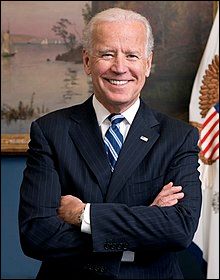
Former vice president and ex-Delaware senator Joe Biden is the Democratic front-runner in the 2020 presidential campaign.

May 20, 2019 — It is often said, “you can’t tell the players without a scorecard,” and that is certainly becoming the case with the presidential campaign. A 24th candidate entered the national political fray just late last week — New York City Mayor Bill de Blasio.

Greeted with the reminder that the last Quinnipiac University poll of New York City residents found that 76 percent of those polled didn’t want the mayor to run for president, de Blasio launched his late-starting campaign with a video of him talking about “putting working people first,” interspersed with video footage of being chauffeured around the city in a limousine. Saddled with poor approval ratings within his home base and a late start, de Blasio is the longest of shots to become a viable candidate.

It is likely that the de Blasio declaration is the last significant announcement, meaning all of the major players are finally in the race. Seeing two dozen candidates – and while many media networks report different numbers, the total clearly exceeds 20 – it is a good time to review the field (alphabetically) and summarize how the plethora of candidates is doing. We’ll go through the first 12, and tomorrow finish up the field:

• Former Vice President Joe Biden: The clear early race leader. Biden received the announcement bump that he desired and is proving to be the man to beat. Still, much will happen before he can legitimately clinch the party nomination. In the first 24 hours after his announcement, the former VP raised $6.3 million.

• Sen. Michael Bennet (D-CO): A prostate cancer diagnosis and surgery delayed Sen. Bennet’s entry into the race, so his campaign is just getting underway. He is a second-tier candidate who is unlikely to seriously challenge for the nomination.

• Sen. Cory Booker (D-NJ): Has not gotten much early attention, but reports suggest his campaign is among the best organized in terms of ground operation. Sen. Booker could surprise in the national candidate forums and, despite current low polling performance, might become a factor as the campaign develops.

Continue reading

Biden’s Drastically Changed Picture

By Jim Ellis

Former vice president and ex-Delaware senator Joe Biden

May 9, 2019 — Recent polling has seen former Vice President Joe Biden take full advantage of his announcement tour. While the pre-race appeared to be settling into a battle between Biden and Sen. Bernie Sanders (I-VT), once the ex-VP became an active candidate the picture drastically changed.

Several polls were taken during the last days of April and into early May. The HarrisX research organization and the Morning Consult firm conducted national surveys while Firehouse Strategies/Optimus commissioned Democratic primary polls in three of the first four nomination venues: Iowa, New Hampshire, and South Carolina. All of these polls produced big leads for Biden in contrast to what we were seeing just two weeks ago.

But, Change Research, in a slightly later New Hampshire poll with a larger sample (May 3-5; 864 likely New Hampshire Democratic primary voters), finds Sen. Sanders still on top, 30-26-12 percent over Biden and South Bend (IN) Mayor Pete Buttigieg.

The HarrisX national poll (May 3-4; 440 registered voters in the US) gives Biden a whopping 44-14 percent lead over Sen. Sanders with all others following in single-digits. The third-place finisher, Mayor Buttigieg has only eight percent support. Sens. Elizabeth Warren (D-MA) and Kamala Harris (D-CA) have seven percent and six percent, respectively, while former Rep. Beto O’Rourke (D-TX) has dropped to just three percent, tied with New Jersey Sen. Cory Booker.

Continue reading

We Now Have Candidate #22 In
The Race, And Sanders is Falling

By Jim Ellis

May 6, 2019 — A new Democratic presidential candidate entered the race late last week, one whom we didn’t expect to see this soon.

Colorado Sen. Michael Bennet

Despite undergoing prostate cancer surgery last month, Colorado Sen. Michael Bennet says he has already received a “clean bill of health” and is embarking upon his national political effort. Now at 22 candidates in the field of Democrats seeking their party’s nomination for the 2020 presidential election, eyes turn to Montana Gov. Steve Bullock who could be the last widely discussed potential candidate yet to make a decision about forming a campaign.

It’s difficult to see how Sen. Bennet breaks through to the top tier, however. He is not well known outside of Colorado and starts well behind most of the field, putting him in a difficult position from which to even qualify for the first two debate forums scheduled for late June and the end of July.

To earn a debate podium, all candidates must either tally at least one percent support in three Democratic National Committee designated polls, or attract financial support from 65,000 donors, from which they must have a minimum of 200 in at least 20 states. For the lesser known candidates, debate participation is a necessity in order to propel themselves into serious contention for the nomination.

Furthermore, Sen. Bennet doesn’t even have his home state electorate to himself. Former Colorado Gov. John Hickenlooper is also in the race, a man who Bennet once served as chief of staff. Just two days ago, Colorado moved its new primary – they used to apportion delegates through the caucus system – to March 3, the 2020 campaign’s Super Tuesday, which could serve to boost one of the two Centennial State candidates. Yet, with both men in the race, the state’s 67 first-ballot delegate contingent will prove less of a base for either one.

Continue reading

A Momentum Poll For the Democrats

By Jim Ellis

April 23, 2019 — A new poll was released at week’s end last week, and it may be our best glimpse of the national Democratic presidential picture. As we know, the national count matters little in how the individual states will select delegates, but this polling category does provide a sound measurement of candidate momentum.

Change Research (April 12-15; 2,519 likely Democratic primary voters) just returned results from their latest field poll. Though the 538 statistical research organization only rates Change Research as a C+ pollster, the large respondent universe of just over 2,500 participants certainly gives us the largest national sample sector producing data. Contrast this, for example, with Emerson College’s national primary poll released last week that segmented only 356 respondents.

The Change results find Sen. Bernie Sanders (I-VT) pulling into a virtual tie with former Vice President Joe Biden. Looking at the numbers, Sen. Sanders polls 20 percent, just one point behind Biden’s 21 percent.

Jumping all the way to third place is South Bend (IN) Mayor Pete Buttigieg with a healthy 17 percent support factor. Dropping back into single-digits (nine percent) is former Rep. Beto O’Rourke (D-TX). Massachusetts Sen. Elizabeth Warren records her typical eight percent, within the tight range she finds in most surveys, which, in this case, is one point ahead of Sen. Kamala Harris (D-CA). The latter senator’s seven percent also represents a considerable support drop, as much as 50 percent when compared to early surveys.

Change also surveyed the field without Biden included. Under this scenario, Sen. Sanders pulls just over a quarter of the sampling universe at 26 percent with Mayor Buttigieg moving into a strong second place with 21 percent, and O’Rourke rebounding to secure 14 percent and third place. Sens. Harris and Warren tie for fourth place with 10 percent.

From a momentum perspective, the Change poll provides further evidence that Sen. Sanders is clearly on the upswing, Biden has stalled just before what is expected to be his official announcement week, Buttigieg is the candidate leaping forward from the back, Harris and O’Rourke appear to be losing support, and Warren remains stagnant at a low level.

Continue reading