Tag Archives: Sen. Bernie Sanders

New CNN National Numbers Are Out

By Jim Ellis

March 22, 2019 — The CNN television network released their new national survey of the Democratic presidential contest (conducted by SSRS research company; March 14-17; 1,003 US adults, 456 self-identified Democrats and those Independents who lean to the Democratic Party, 448 self-identified Republicans and those Independents who lean to the Republican Party), and while the ballot test results were consistent with most other polling, some different and interesting questions were asked.

CNN compared this poll to their previous study conducted during the Dec. 6-9 period. The first four finishers remain in relatively the same order, but the percentages have shifted and some significantly.

In the current poll, former Vice President Joe Biden continues to lead the pack of 17 tested candidates. He tops the field with 28 percent, down from the 30 percent support he held in December. Sen. Bernie Sanders (I-VT) is second with 20 percent, making a big jump from the 14 percent base CNN found three months earlier.

Sen. Kamala Harris (D-CA) surpasses former US Rep. Beto O’Rourke (D-TX), and tripled her preference from December. Sen. Harris leaps from 4 to 12 percent support. For his part, O’Rourke drops to fourth but still gains two percentage points in comparison to December (rising from 9 to 11 percent). All of the others remain in single-digits, though Sen. Elizabeth Warren (D-MA) doubled her support from 3 to 6 percent.

Continue reading

Biden’s Strong Rebound, and a
Michigan Senate Surprise

By Jim Ellis

March 21, 2019 — Earlier this week, Emerson College Polling released a survey of Wisconsin Democrats that found Sen. Bernie Sanders (I-VT) leading former Vice President Joe Biden, 39-24 percent, but an even newer Emerson offering detects that the tables have already turned.

According to the latest Emerson Michigan poll (March 7-10; 743 registered Michigan voters; 317 likely Michigan Democratic presidential primary voters), it is Biden who is claiming 40 percent support within the Democratic sample, while Sen. Sanders pulls 23 percent. As is the case with the Wisconsin poll, California Sen. Kamala Harris is third, well back with 12 percent, and Sen. Elizabeth Warren (D-MA) follows with 11 percent. All others fall into low single digits. New entry Beto O’Rourke was not included on the survey questionnaire.

The results are not surprising. Biden has long been a favorite of the private sector unions, which are a strong force in Michigan politics. Additionally, President Obama, with Biden on the ticket, ran strongly here. In 2012, he defeated Mitt Romney, 54-45 percent. The former Republican nominee’s father, George Romney, is a past governor of Michigan. Four years earlier, Obama’s margin over John McCain was an even greater 57-41 percent.

Michigan is an important state on the Democratic nomination circuit, eighth largest of the 57 voting entities. Currently scheduled for a March 10 primary, the Wolverine State is awarded 125 elected delegates, ballooning to an aggregate 147 when Super Delegates are added to the total. The Super Delegates, or party leaders, may not vote on the first ballot, but are eligible if more than one roll call becomes necessary.

Continue reading

Now That Beto Is In,
What Are His Chances?

Beto O’Rourke | Facebook Photo

By Jim Ellis

March 18, 2019 — Former Texas Congressman Beto O’Rourke, as expected, officially joined the Democratic presidential race with a formal announcement while traveling to Iowa to begin campaigning.

O’Rourke’s entry now means that the Democratic field features 14 candidates, with more, including former Vice President Joe Biden, soon to join.

O’Rourke comes into the field generally viewed as a top-tier candidate, though he has been dropping into mid-single digits in the latest national polls. He appears to be battling Massachusetts Sen. Elizabeth Warren for fourth position behind Biden, Sen. Bernie Sanders (I/D-VT), and Sen. Kamala Harris (D-CA).

As we remember, O’Rourke was hyped as a major US Senate candidate with the opportunity of converting Republican Texas to the Democratic column with an upset win over first-term incumbent and 2016 presidential candidate Ted Cruz (R).

Though he fell three points short of victory, losing to Cruz 51-48%, he did prove his prowess as a national fundraiser. O’Rourke attracted over $80 million from across the country for his Senate race.

In the Texas campaign, then-Rep. O’Rourke moved left to appeal to the national Democratic donor constituency, which worked. And, his voting record over three terms in the House supported the issue positions he was advocating during his statewide campaign.

Continue reading

Beto Heads to Iowa:
The Latest Candidate Scorecard

By Jim Ellis

March 14, 2019 — As the old saying goes, “you can’t tell the players without a scorecard,” which is quickly becoming the case with respect to the Democratic presidential nomination campaign.

With the announcement that former US representative and 2018 Texas Senate nominee Beto O’Rourke is making his first trip to Iowa this weekend and is joining the presidential fray, it’s a good time to recap exactly who is in, out, and still straddling the fence.

Counting an O’Rourke for President operation, there are now 14 active Democratic presidential candidates. Former Vice President Joe Biden looks to be weeks away from announcing his candidacy, while at least two others are also making moves to enter. And, an additional five more could also become contenders before the first televised debates begin in June of this year.

Here’s where they currently stand:
Continue reading

With Brown Bowing Out,
Does That Mean Biden Will Begin?

By Jim Ellis

Ohio Sen. Sherrod Brown (D) – not running for president

March 11, 2019 — Ohio Sen. Sherrod Brown, another of the potential Democratic presidential candidates who most observers thought would enter the race, is not.

His announcement late last week was a bit surprising considering his home state with 136 first-ballot delegates and 153 overall (the seventh largest state delegation at the Democratic National Convention) moved the primary to March 10, partially with the idea of giving him a boost.

Sen. Brown’s decision provides us a clue as to what else may happen, however. He, like former New York City Mayor Michael Bloomberg, basically said the reason for not becoming a candidate is that the victory path is not evident. The underlying conclusion is they obviously believe former Vice President Joe Biden will enter the race.

Though all three men (Biden, Bloomberg, and Brown) certainly must be considered liberals on the ideological scale, they are not part of the far-left faction that Sens. Bernie Sanders, Kamala Harris, Elizabeth Warren, Cory Booker, and others are attempting to attract. Therefore, if the Bloomberg and Brown paths are blocked, then it is Biden who is their most formidable impediment.

If the former vice president and Delaware senator enters the race, and some say he will do so early next month, is he a lock for the nomination? Polling indicates he would jump to the top of the current heap but would be nowhere close to the majority of delegate votes required to win the nomination on the first convention ballot. In four late February national polls of likely Democratic primary voters, Biden tops them all but with preference percentages of 27, 30, 29, and 31 – hardly dominating numbers.

Continue reading

Hickenlooper & Inslee:
Former Governor & Governor
Join Democratic Presidential Fray

By Jim Ellis

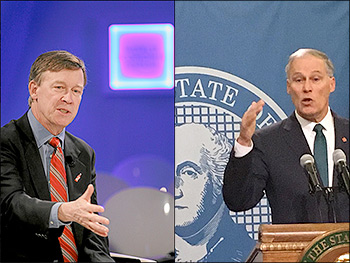
Left: Former Colorado Gov. John Hickenlooper (Photo, Moritz Hager) Right: Washington Gov. Jay Inslee

March 6, 2019 — Former Colorado Gov. John Hickenlooper joined the Democratic presidential field over the weekend, following Washington Gov. Jay Inslee who jumped in last Friday. The pair became the 12th and 13th official Democratic presidential candidates, and the first governor and former governor to join the campaign.

But what are the paths to actual nomination for each man? Neither has high national name identification and both are from states moderate in size: Washington has 107 total Democratic National Convention delegates, and Colorado 80. This places them as the 14th and 17th largest states among the 57 voting entities that will comprise the Democratic delegate pool.

It’s hard to see a viable way to the nomination for Gov. Inslee. Without a strong geographical base or high name ID, the two-term Pacific Northwest governor is attempting to carve a niche for himself as the climate change candidate, but that is a space already heavily populated. Sen. Bernie Sanders in particular stresses the climate change issues as part of his portfolio, as do most of the other candidates at least to a degree.

It’s possible Inslee also doesn’t see much of a path for himself, which explains why he answered so vociferously that he is not ruling out running for a third term in his present position when asked during his announcement event. With almost two-thirds of the bound delegate votes likely being decided on or before March 17, 2020, Inslee will have plenty of time to pivot back into a governor’s race because the Washington candidate filing deadline doesn’t elapse until May of that year.

Continue reading

PA-12 NOMINEE KELLER IMMEDIATELY HITS OPPONENT, PELOSI, SANDERS, CORTEZ

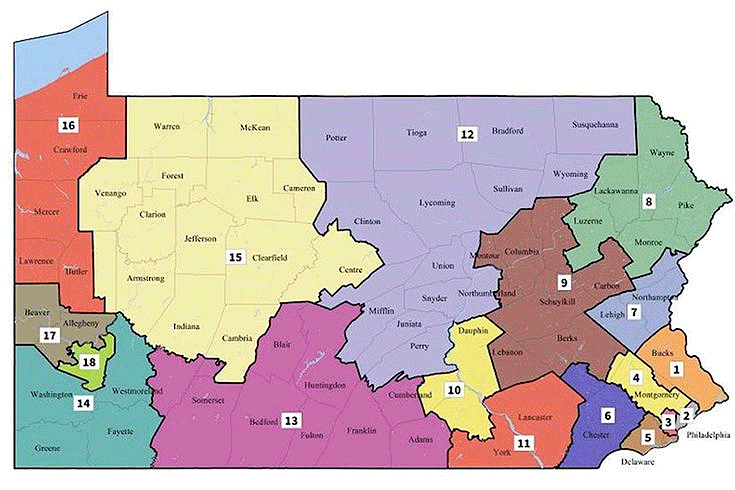
Pennsylvania Congressional Map | Source: Pennsylvania State Supreme Court (click on image to see full size)

By Jim Ellis

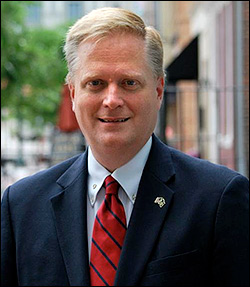
Pennsylvania state Rep. Fred Keller
(R-Mifflinburg)

March 5, 2019 — On Saturday, during a seven-hour marathon special district convention marked with controversy, the central Pennsylvania Republican delegates chose state Rep. Fred Keller (R-Mifflinburg) as the party nominee for 12th District Congressman Tom Marino’s (R-Williamsport) vacated seat. Marino resigned from the House at the end of January due to professional and health reasons.

Gov. Tom Wolf (D) scheduled the replacement special election for May 21. Under Pennsylvania election law, the various political parties call a district convention or meeting for purposes of choosing a special election nominee. Originally, 24 potential Republican candidates expressed interest in running, but only 14 were successful in having their names placed into nomination before the 200-plus assembled delegates.

After Rep. Marino’s unexpected announcement, Democrats responded quickly and re-nominated their 2018 candidate, local college professor Marc Friedenberg, who advances into the special general election hoping to perform better than he did against Marino. In November, Friedenberg lost 66-34 percent while spending just over $90,000 on his federal campaign.

Saturday’s convention became controversial once the Club for Growth organization began sending mailers to the delegates attacking state Rep. Jeff Wheeland (R-Williamsport), over his record on tax issues as a legislator first elected in 2014. Prior to gathering in Williamsport, Wheeland appeared as the candidate most likely to become the delegates’ choice.

But, the convention was rocked when the representative’s stepson distributed a letter detailing how Wheeland abused he and his mother. The combination attack was enough to drive Wheeland from the race just before the fourth ballot, yielding the victory for Keller.

Continue reading

As Joe Goes, So Go the Democratic Presidential Contenders

By Jim Ellis

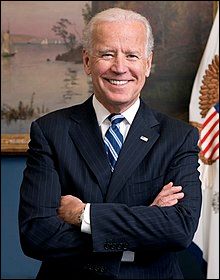
Former vice president and ex-Delaware senator Joe Biden: is he in or out of the 2020 presidential campaign?

Feb. 28, 2019 — A new national Morning Consult poll (Feb. 18-24; 15,642 registered US voters likely to vote in a Democratic primary via online questionnaire) finds former Vice President Joe Biden and Vermont Sen. Bernie Sanders pulling away from the rest of the Democratic presidential field.

Sen. Sanders is clearly getting a boost from his formal announcement. According to the Morning Consult regular tracking, he is up six points from just before he became an official candidate. It remains to be seen if his rise begins a trend or is just a polling blip because of increased media attention.

Overall, the MC data finds Biden’s national lead among the segmented Democratic voters dropping to just two points over Sen. Sanders, 29-27 percent. But, the pair are now well ahead of the remaining contenders. Sen. Kamala Harris (D-CA) drops a point in her own support, meaning she lost a net seven percent to Sanders from the last poll. Her new national total is 10 percent, three points ahead of both Sen. Elizabeth Warren (D-MA) and former US Rep. Beto O’Rourke (D-TX).

Continue reading

Alabama Senate Race Begins

By Jim Ellis

Rep. Bradley Byrne, a Republican, formally announced his candidacy for the Senate.

Feb. 25, 2019 — One of the critical 2020 US Senate contests is beginning to take shape. Over the past few days, Alabama Rep. Bradley Byrne (R-Mobile) formally announced his statewide candidacy with the goal of opposing Democratic Sen. Doug Jones, who won the controversial 2017 special election that attracted national attention.

The Jones victory, defeating beleaguered Republican Roy Moore, a former state Supreme Court Chief Justice, represented the first time a Democrat won an Alabama statewide federal election since incumbent Sen. Howell Heflin secured his final term in 1990.

Prior to that, Richard Shelby, then a Democratic congressman, unseated Republican Sen. Jeremiah Denton in 1986. Shelby then switched to the Republican Party immediately after the 1994 election. Prior to the Denton victory on the same night that Ronald Reagan was first elected president, no Republican had won an Alabama seat for more than 100 years.

The Yellowhammer State Senate race could well be the lynchpin to determining which party will control the chamber after the 2020 election. With the electoral map favoring the Democrats because Republicans must defend 22 of the 34 in-cycle seats, including the Arizona special Senate election, Alabama becomes a virtual “must-win” for the GOP.

Continue reading

Sanders’ Problem as an Independent

By Jim Ellis

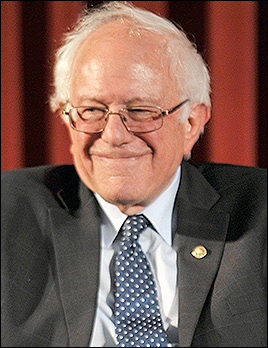
Sen. Bernie Sanders of Vermont — an Independent, not a Democrat

Feb. 22, 2019 — A day after announcing his entry into the 2020 presidential campaign, Vermont Sen. Bernie Sanders jumped off to a strong start, raising a reported $6 million in just his first 24 hours as a repeat candidate. But, a technical problem also looms in the distance.

Last year, the Democratic National Committee adopted a new party rule that states any future presidential nominee must be an official Democratic Party member or, if an office holder, must have served as a Democrat. Sen. Sanders meets neither requirement.

Vermont has no party registration, so he is not a party member in that regard, and has continually, including during the present time, represented Vermont as an Independent. In fact, when offered the Vermont Democratic senatorial nomination for his re-election campaign in 2018, Sanders turned down the overture.

The fact that Sanders is still not a Democrat is confirmed when looking at the list of unpledged delegate slots, those commonly referred to as “Super Delegates.” An unpledged delegate is one who can vote as he or she pleases and is not subject to any binding vote law their particular state may have enacted.

Those who qualify as Super Delegates are Democratic National Committee members (430), every elected Democratic US senator (45), the two District of Columbia “Shadow” senators, all elected Dems in the House of Representatives (235 at the present time), the four Democratic delegates to the US House (District of Columbia, Guam, the Northern Marianas Islands, and the US Virgin Islands), and all of the party’s elected governors (26, including the District of Columbia mayor, and the territorial governors from American Samoa and Puerto Rico).

Continue reading