
Tag Archives: Gov. Jim Justice

Warnock Leads in New Runoff Poll; WVa. Gov. Considers Senate Race;
Kiley Wins CA-3 – Republican Majority Now at 221; Questions Over McCarthy’s Leadership

By Jim Ellis — Monday, Nov. 28, 2022

Senate
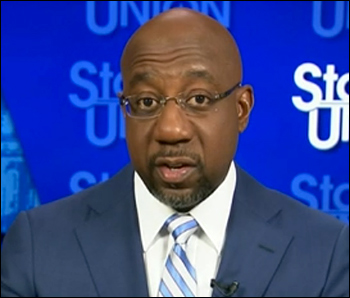
Georgia freshman Sen. Raphael Warnock (D)

Georgia: Sen. Warnock Leads in New Poll — The Fabrizio Lee (R) and Impact Research (D) polling team conducted another survey for the AARP organization, this time of the Georgia Senate runoff election scheduled for Dec. 6.

According to the joint poll (Nov. 11-17; 500 likely Georgia runoff voters; live interview), the first published study of this race since the general election yielded a 49.4 – 48.5 percent result for Sen. Raphael Warnock (D) over retired professional football player Herschel Walker (R), the incumbent again posts a small advantage. The AARP ballot test finds Sen. Warnock’s lead a reaching 51-47 percent. As is the case with all runoff elections, voter turnout will likely be the determining factor.

West Virginia: Gov. Justice Considering Senate Race — While Rep. Alex Mooney (R-Charles Town) has already announced his bid to challenge Sen. Joe Manchin (D) next year, Gov. Jim Justice (R), who is ineligible to seek re-election in 2024, indicated last week that he, too, is considering launching a Senate campaign.

Gov. Justice’s approval numbers are high – rated as the sixth most popular governor nationally at 65:29 percent favorable to unfavorable according to the Morning Consult quarterly ratings for the period ending Sept. 30, 2022 – so he would certainly be a formidable candidate for the Republican nomination and against Sen. Manchin. A Triton Polling & Research organization August poll found Gov. Justice leading Sen. Manchin 47-32 percent in an early hypothetical race survey, for example.

House

CA-3: Republican Kevin Kiley Declared Winner — The Associated Press, in a race that appeared to be clinched days ago, finally projected California Republican state Assemblyman Kevin Kiley (R-Granite Bay/Sacramento) as the winner of the newly created open 3rd Congressional District that stretches from the northern Sacramento suburbs all the way into southern California via the Nevada border. The FiveThirtyEight data organization rates CA-3 as an R+8 district, so the outcome of Kiley defeating Democratic physician and Iraq War veteran Kermit Jones is hardly a surprise result.

The Kiley victory brings the Republican House total to 221 with two races outstanding, the CA-13 seat that is a close contest between agri-businessman John Duarte (R) and state Assemblyman Adam Gray (D-Merced), and the at-large Alaska seat of Rep. Mary Peltola (D-Bethel).

Once the Alaska contest advances into the Ranked Choice Voting rounds, which began right after Thanksgiving, the system will produce another victory for Peltola. Therefore, count her in the Democratic column. The race between Duarte and Gray is very tight: Duarte has an 852-vote lead with an estimated 93 percent of the vote counted. Therefore, this contest can still go either way when examining from where the outstanding votes lay.

Speakership: More Republicans Express Negative Views Toward McCarthy — Last week we covered a story indicating that three Republicans were headed toward a “No” vote for House Minority Leader Kevin McCarthy (R-CA) in his quest to become Speaker of the House. Reps. Andy Biggs (R-AZ) and Matt Gaetz (R-FL) publicly announced their opposition to McCarthy, while Rep. Matt Rosendale (R-MT) said he does not believe McCarthy would be a successful Speaker.

Now joining the “No” chorus are Reps. Ralph Norman (R-SC) and Bob Good (R-VA). Texas Rep. Chip Roy (R-Austin) was among those expressing similar feelings of failure regarding a McCarthy Speakership. With the Republicans having a 222-member conference at best (if John Duarte holds his lead in the CA-13 outstanding race), McCarthy has little margin with which to play in order to secure his 218 votes to be elected Speaker during the Jan. 3 initial roll call of members.

Delegate Reallocation
Brings Increase to 4,750

By Jim Ellis

Jan. 22, 2020 — As we approach the first votes being cast for the Democratic presidential nomination next month, the Democratic National Committee has reallocated delegate slots among certain state contingents, thus increasing the size of the overall delegate universe to 4,750.

The changes are relatively substantial within the states when compared to the last national convention in 2016, while the recent Super Delegate total sees an increase of five new votes. The alterations within the state counts — an increase in every affected place but California — feature an additional 210 delegate votes when compared with the totals from four years ago.

Most of the boosts reflect a reward for increased Democratic votes in the 2016 and 2018 elections. The calculations include results in the recent races for president, US Senate, US House, governor, and for state legislature. States that hold their presidential nominating event after April 1 are also rewarded.

The largest increases are found in New York, Pennsylvania, and New Jersey where their respective delegations have grown by 50, 33, and 19 slots respectively, largely due to Democratic gains in the US House and state legislatures particularly from the 2018 elections. New Jersey, for example, converted a governor’s chair to the Democratic column in their 2019 election, after gaining five congressional seats in 2018 and ‘16, thus accounting for their delegation increase. And, all three states vote after April 1.

California’s regular delegate total has been reduced by one vote, possibly for moving their previous June primary to before April 1, on Super Tuesday, March 3. The state still has, by far, the largest contingent with 494 total delegates and 415 of those voting on the first ballot. The next largest delegation, after calculating their increase, is New York with 320 overall delegate slots, 274 of which are eligible to cast first-ballot votes.

Continue reading

Another Trump Appointment;
A Double-Digit West Virginia Poll

By Jim Ellis

Sept. 7, 2017 — White House personnel this week announced that President Trump will nominate Pennsylvania Rep. Tom Marino (R-Williamsport) as the new director of the Office of National Drug Control Policy. The appointment was expected to happen much earlier in the year, but a serious illness in the congressman’s family forced him to ask the administration for a postponement.

Should Rep. Marino move quickly through the confirmation process we would likely see another congressional special election called, similar to the situation involving Rep. Jim Bridenstine’s (R-OK) appointment as NASA administrator, in order to fill the remainder of the current term.

There is a good bet, however, that Senate Democrats will want to delay Marino’s confirmation as long as possible. With a live redistricting lawsuit making its way through the Pennsylvania court system, the Dems hope a potential re-draw will significantly change the statewide map, and specifically this district, in time for the 2018 regular election.

The 10th District, which contains 10 complete Pennsylania counties and parts of five others, occupies the entire northeastern corner of the Keystone State that borders New York and New Jersey, encompasses the territory around the cities of Scranton and Wilkes-Barre, and then shoots southwest past the Harrisburg-Carlisle area as far as the Tuscarora State Forest. Since 1952 inclusive, the district has voted Democratic only three times in congressional elections. During much of the succeeding six decades, veteran Rep. Joe McDade (R-Scranton) represented the region. He was in office for 36 years from the early 60s to the late 90s.

Continue reading

A New Republican Governor

By Jim Ellis

Aug. 7, 2017 — West Virginia Gov. Jim Justice made national news the other night at President Trump’s rally in Huntington, WV, when the Democratic state chief executive took the stage to announce that he is switching to the Republican Party.

When addressing the Trump rally, Justice said, “like it or not, but the Democrats walked away from me … West Virginia, I can’t help you anymore by being a Democratic governor.”

The move now gives Republicans control of the entire West Virginia governmental apparatus, owning both houses of the state legislature and the governor’s office. Factoring Justice’s party change, the GOP holds the West Virginia chief executive post for the first time since Gov. Arch Moore (R) was defeated for re-election in 1988. There are now 26 states where Republicans control the legislature and governor’s office, including Nebraska where the legislature only has one ostensibly non-partisan legislative chamber but is clearly overwhelmingly Republican. In contrast, Democrats have full power in only five states.

The development means the Democrats drop to holding just 15 governors, an all-time low number for the party. Republicans, on the other hand, reach their historical apex with 34 governors as party members. The 50th governor, Bill Walker of Alaska, is an Independent.

Continue reading