Category Archives: Primary

The Turnout Report:
Signs of a “Blue Wave”?

By Jim Ellis

May 10, 2018
— Looking at the voting patterns for Tuesday’s primaries in the four states holding elections, we see little evidence of the reported “blue wave” often discussed in media analyst reports — meaning a surge in Democratic Party voter turnout — but there is also sparse information to determine specific participation trends in many of the noted places.
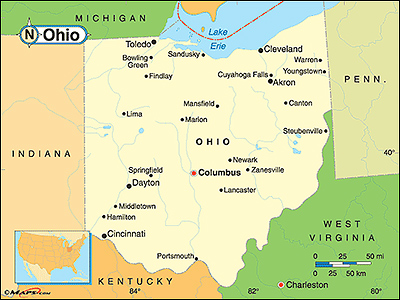
state-of-ohio-mapOhio has the most complete data to compare totals for midterm elections dating back to 2006. On Tuesday, 1,506,777 people voted in the two major party primary elections, with just about 55 percent recorded in the Republican gubernatorial contest. The current grand total was the second largest participation figure in the four midterms since 2006, inclusive. The 1.506 million aggregate total was second only to the 2006 turnout that saw 1.626 million Ohioans voting. This year, both parties featured open gubernatorial primaries, each with a clear leader heading into Election Day.

In all four of the tested Ohio midterms, more people voted in the Republican primary. The 54.9 percent participation factor when measuring the two parties against each other on Tuesday night was the second highest of the sampled four. Only the Republicans’ 56.0 percent participation rate in 2014 was stronger. To put the current rate in perspective, the GOP low occurred in 2006 when 50.8 percent of primary voters cast a Republican ballot. In the succeeding general election, Democrat Ted Strickland would win the governor’s campaign, making the result consistent with the higher Democratic primary participation rate.

In the Buckeye State House races, eight of the 16 districts featured primary elections for both parties. In each of the districts holding primaries for both parties, the political entity controlling the seat before the election saw more people vote in that party’s primary. The most significant race was the special primary election in the 12th District, the seat former Rep. Pat Tiberi (R) vacated to return to the private sector. There, 23,902 more people voted in the Republican primary, thus providing some tangible support for predicting the state Sen. Troy Balderson (R-Zanesville) is favored to win the seat in the Aug. 7 special general vote.

Continue reading

The Coming New Specials

By Jim Ellis

May 1, 2018 — Just when we thought the number of special elections was lessening when Debbie Lesko won the AZ-8 election last week to replace resigned Arizona Rep. Trent Franks (R-Peoria), new vacancies are popping up.

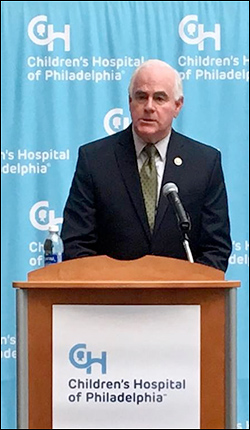
Pennsylvania Rep. Pat Meehan (R-Chadds Ford), abruptly resigned Friday.

Pennsylvania Rep. Pat Meehan (R-Chadds Ford), abruptly resigned Friday.

On Friday, Pennsylvania Rep. Pat Meehan (R-Chadds Ford), who had previously announced his retirement for term’s end, abruptly resigned when learning the House Ethics Committee was going to launch an investigation into the severance payment awarded to one of his staff employees. The source of this particular recompense was the special taxpayer funded congressional account found to cover members’ special staff settlements.

Meehan also pledged to repay the $39,000 payment that is the investigation’s basis within the next 30 days. Now that Meehan has exited the House, the Ethics Committee no longer has jurisdiction. He joins former Texas Congressman Blake Farenthold (R-Corpus Christi) who resigned in early April also to avoid a congressional investigation.

Oklahoma Rep. Jim Bridenstine (R-Tulsa) resigned his seat in late April to accept his position in the Trump Administration as the new NASA Administrator. Pennsylvania Rep. Charlie Dent (R-Allentown) says he will resign his seat at an unspecified date in early May, presumably because he will be accepting a position in the private sector. As we know, the late New York Rep. Louise Slaughter (D-Rochester) passed away on March 16.

Continue reading

The Coming Primaries

By Jim Ellis

2018-elections-open-seats-185April 30, 2018 — Completing the Arizona special congressional election earlier this week is the precursor to the beginning of the primary season’s most prolific period: the nomination voting scheduled for May and June.

With two primary elections already in the books — the March nomination contests in Texas (March 6) and Illinois (March 20) — 11 additional states vote in May with 18 more coming in June. Once the final June primaries are completed on June 26, a total of 31 states will have nominees.

There are only run-offs scheduled in July before 14 more states vote in August. Massachusetts, Delaware, New Hampshire, and Rhode Island still hold September primaries, while the unique Louisiana election calendar continues to feature a jungle primary concurrent with the general election followed by a December run-off for those races where a candidate does not obtain a majority.

New York is the only state with two primaries. The federal primary for the Senate and House is scheduled for June 26. The statewide contests, including the governor’s race, will nominate in a separate vote on Sept. 13.

Continue reading

More on the Illinois Primary Results

By Jim Ellis

March 22, 2018 — Tuesday night’s big stories in the Illinois primary were Gov. Bruce Rauner (R) having a difficult time in winning a close Republican primary, and Rep. Dan Lipinski (D-Western Springs) just barely surviving his Democratic primary challenge. Venture capitalist J.B. Pritzker successfully captured the Democratic gubernatorial nomination with a margin greater than polling had predicted.

Gov. Bruce Rauner (R) | RGA

Gov. Bruce Rauner (R) | RGA

Gov. Rauner scored only a 51.5 – 48.5 percent win over state Rep. Jeanne Ives (R-Wheaton) in a primary result that finds the state chief executive’s GOP political base eroding. While spending over $60 million in the primary campaign against just $3 million-plus for Ives, the 20:1 resource advantage only proved good for a three percentage point win with still 294 precincts not fully reporting as of this writing. The 351,086 to 330,227 vote totals represent 97 percent of the recorded voting universe. Mathematically, however, there are not enough uncounted votes remaining in Ives’ areas of strength for her to overcome the current statewide deficit.

In the 3rd District House race, seven-term Rep. Lipinski appears to have scored a narrow victory with almost all Cook County precincts reporting. Lipinski carried Cook County with 51.7 percent, a total that will likely rise a bit once all the votes are counted. His opponent, media consultant Marie Newman, won Will County with 58.6 percent of the vote and took the district’s sliver of DuPage County with a mere 55 to 34 vote margin. But, her 1,256 vote lead coming into Cook County was not substantial enough to defeat Lipinski there, which resulted in her district-wide loss.

Lipinski is one of the few remaining Blue Dog Democrats, while Newman enjoyed support from the Bernie Sanders’ wing of the Democratic Party along with major backing from national liberal organizations. The turnout will exceed 90,000 voters once all of the ballots are recorded. When all totals are official, the voter turnout percentage here will hover somewhere in the 45-50 percent range.

In other key congressional races, the Democratic primary in the state’s 6th District has flip-flopped back and forth in a very close contest between financial advisor Kelly Mazeski and clean energy company executive Sean Casten. Mazeski initially was in the lead but in the end, Casten pulled ahead when all 640 precincts were able to report vote totals. Casten captured about 30 percent of the vote (18,863) to Mazeski’s 26.5 percent (16,686). Five other candidates were on the ballot, and cumulatively they garnered 44.2 percent of the vote. Now Casten will challenge veteran Rep. Peter Roskam (R-Wheaton) who was unopposed in his primary.

Continue reading

Yesterday’s Illinois Primary

By Jim Ellis

March 21, 2018 — Land of Lincoln voters went to the polls yesterday to vote in the nation’s second primary of the 2018 midterm election season.

2018-elections-open-seats-185The headliner of Election Day was the gubernatorial primary, as Gov. Bruce Rauner (R), sporting poor job approval ratings but having virtually unlimited financial resources, squared off against conservative state Rep. Jeanne Ives (R-Wheaton). Ives received early support in the form of a $2.5 million donation from mega-donor Dick Uihlein, but her standing did not greatly improve in the past weeks, meaning her long-shot campaign remained as such entering Election Day.

Because of significant dissatisfaction with Gov. Rauner within the GOP base constituency, Ives was projected to perform better than a typical candidate challenging a sitting governor in a party primary. Yet, her performance was not strong enough to deny Rauner from advancing into the general election. Rauner scored only a 51.5 – 48.5 percent win over Ives in a primary result that indicates the state chief executive’s GOP political base is eroding.

Yesterday’s most competitive race wasn’t the one most had predicted — on the Democratic side of the gubernatorial primary. Venture capitalist J.B. Pritzker had spent over $65 million of his own money in this campaign, and was fortunate to have drawn two equivalently strong intra-party opponents.

A new poll from Victory Research (March 13-16; 1,204 registered Illinois voters) — the last before the vote — found Pritzker with only a 32-26-22 percent lead over Chicago businessman Chris Kennedy, who had advertised heavily and featured footage in his promotional ads of his late father, US attorney general and Sen. Robert F. Kennedy, and state Sen. Daniel Biss (D-Chicago). Biss had shown surprising strength for a legislator without statewide name identification. But Pritzker won the party nomination with 45.4 percent of the vote, a much larger total than the polling had predicted.

Continue reading

PA: Lamb, Saccone Decide; Others, Too

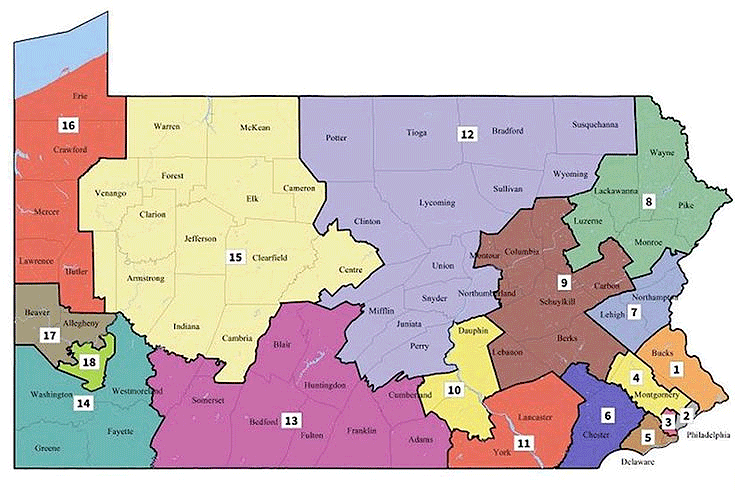
New Pennsylvania Congressional Map | Source: Pennsylvania State Supreme Court

New Pennsylvania Congressional Map | Source: Pennsylvania State Supreme Court


By Jim Ellis

March 19, 2018 — Though Tuesday’s special election results in western Pennsylvania are not yet even finalized, the two candidates, and others, are making decisions about where to run in the regular election cycle. After the state Supreme Court created a new congressional map for the coming election, they lengthened the candidate filing period from one that closed March 6 to a new deadline of tomorrow, Tuesday, March 20.

Republicans are formally challenging the new map in federal court. A three-judge federal panel has already heard their arguments and the GOP leaders also filed a motion to stay the state court’s mapping decision with the US Supreme Court. Since no ruling has yet come from either judicial panel, incumbents and candidates must move forward with the qualifying process assuming the new map will stand.

Under Pennsylvania election law, congressional candidates must obtain 1,000 valid signatures from registered party members to qualify for the ballot. Since such a process obviously requires time, all candidates, including Rep.-Elect Conor Lamb (D-Pittsburgh) and defeated Republican candidate Rick Saccone, must determine where they will run under this new and very different Keystone State congressional map.

Continue reading

The California Candidates

By Jim Ellis

March 13, 2018 — California candidate filing closed on Friday, and the jungle primary scheduled for June 5 will be a crowded affair.

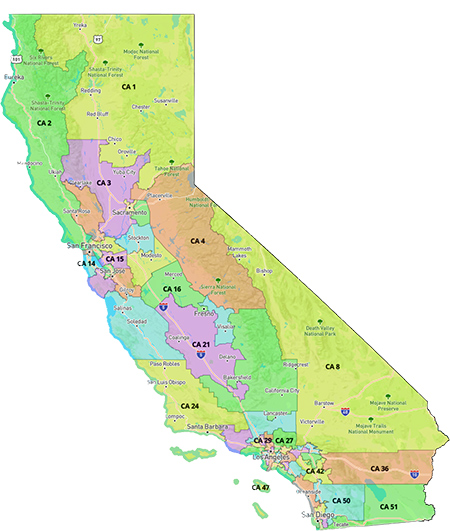
California Congressional Districts

                                    California Congressional Districts

Sen. Dianne Feinstein (D), seeking a fifth full term in office, will face 39 Democrat, Republican, minor party, and Independent opponents on the qualifying election ballot. The top two finishers on June 5, regardless of political party affiliation, will advance to the general election. At this point, chances are strong that Sen. Feinstein and state Senate President Kevin de Leon (D-Los Angeles) will be the qualifying candidates.

The open governor’s race is even more crowded. Sixty candidates returned documents for ballot placement. Lt. Gov. Gavin Newsom (D) is favored to finish first, but the major remaining question concerns whether Republicans can coalesce behind one candidate to at least compete in the general election. Seventeen Republicans and 15 Democrats will be listed on the ballot if all submitted the proper qualifying documentation. The remaining contenders belong to a minor party or are Independents. The most likely pair to advance is Lt. Gov. Newsom and former Los Angeles Mayor Antonio Villaraigosa, thus creating the double-Democratic general election campaign that Republican leaders hope to avoid.

Continue reading