Category Archives: Presidential campaign

McDaniel Reported Out at RNC; Trump Way Ahead in New Poll; Schiff Helps Garvey; Another Close Ohio Poll; Utah’s Tight Senate Race; House News

By Jim Ellis — Thursday, Feb. 8, 2024

President

Ronna McDaniel / Photo by Gage Skidmore

Republican National Committee: Trump Recommends New Chairman — As reports intensify that RNC chair Ronna McDaniel will be leaving the committee after the South Carolina primary, former President Donald Trump has made a replacement recommendation.

The news media is reporting that North Carolina Republican Party chairman Michael Whatley is Trump’s choice largely because he was “so powerful on election fraud” in 2020, according to the ex-president’s statement. It is a virtual certainty that the committee members will adopt Trump’s recommendation, but the question to be asked is how strong a fundraiser is Whatley? While Trump may be most concerned with his election fraud narrative, the RNC is under-performing in the campaign resource battle and must quickly upgrade their efforts.

South Carolina: Trump Way Ahead in New Poll — A new Monmouth University poll for the Washington Post (Jan. 26-30; 815 registered South Carolina voters; live interview & online) sees former President Donald Trump posting a significant 58-32 percent lead over former Gov. Nikki Haley in her home state of South Carolina leading to the Feb. 24 Republican primary election.

Trump holds an advantage among both men and women in the statewide voter sample, and within all age groups. He trails Haley only among college-educated voters, but by only two points, and certain non-evangelical voter groups. Additionally, 90 percent of the respondents saying they would vote for Trump in the primary election would do so in the general election even if he is convicted of some of the many legal charges he faces.

Senate

California: Schiff Helps Garvey — Confident he will finish first in the March 5 open California US Senate primary, Rep. Adam Schiff (D-Burbank) is running ads “against” Republican baseball great Steve Garvey claiming he is too conservative for California in that he twice voted for Donald Trump. In reality, Schiff is attempting to help Garvey finish second in the top two jungle primary, thus eliminating Rep. Katie Porter (D-Irvine), which would allow him to escape having to run a double-Democratic general election.

Having Garvey, or any Republican as an opponent, would virtually guarantee that Schiff would win the seat in November. The ads’ actual purpose is to move more Republicans to Garvey, and thus edge him into second place.

A new University of Southern California for the Center for Urban Politics and Policy at California State University at Long Beach (Jan. 21-29; 1,416 likely Califoria jungle primary voters) survey sees Rep. Schiff holding a 25-15-15-7 percent lead over Garvey and Rep. Porter (D-Irvine). Congresswoman Barbara Lee (D-Oakland) trailed the other major candidates in fourth position. Therefore, a small push from Schiff might just help Garvey succeed.

Ohio: Another Close Poll — The March 19 Ohio Republican primary will be a hugely important election. Among other races, it will decide which GOP candidate will challenge Sen. Sherrod Brown (D) in one of the country’s most compelling statewide campaigns. The Emerson College poll (Jan. 23-25; 1,844 registered Ohio voters; multiple sampling techniques) sees all three Republican candidates coming to within one or two points of Sen. Brown with the incumbent failing to reach 40 percent support in all iterations.

In the Republican primary, the battle is equally close. Businessman Bernie Moreno, who former President Trump and Sen. J.D. Vance support, nips Secretary of State Frank LaRose, 22-21 percent, with state Sen. Matt Dolan (R-Chagrin Falls) trailing with 15 percent. In 2022, Sen. Dolan came on strong at the end, failing to reach second place by one percentage point after lagging during the early part of the campaign. Therefore, the Republican nomination is still very much in doubt.

Ohio features a modified primary system that allows voters to change their registration on the day of the election in order to choose a selected primary.

Utah: Rep. Curtis Begins with Small Lead — Dan Jones & Associates, Utah’s top media polling firm, released a new US Senate Republican primary survey, the first since US Rep. John Curtis (R-Provo) joined the field. The survey (Jan. 16-21; 428 registered Utah Republican voters) finds Rep. Curtis posting a tepid 18-14 percent lead over attorney Brent Orrin Hatch, the son of the late seven-term Sen. Orrin Hatch (R). Following at eight percent is former state House Speaker Brad Wilson. With a majority of the Republican voters still undecided, this contest is wide open.

The state’s April Republican nominating convention will send two candidates to the primary ballot. The others will have to petition for a ballot line. The Utah primary is scheduled for June 25. Sen. Mitt Romney (R) is retiring after one term.
Continue reading

In Nevada, Haley Loses to “None of These Candidates”; Biden Romps Again

By Jim Ellis — Wednesday, Feb. 7, 2024

President

Nikki Haley loses to “None of These Candidates.” / Photo by Gage Skidmore

Nevada Primary: Haley’s Big “Beauty Contest” Loss — Former President Donald Trump at least indirectly won a primary last night without his name even appearing on the ballot.

In the Nevada Republican election, the names of former UN Ambassador Nikki Haley, ex-Vice President Mike Pence, and Sen. Tim Scott (R-SC) were on the ballot, along with the option, “None of These Candidates,” a voting choice unique to Nevada elections. The candidate filing deadline was in October, thus explaining why Pence and Scott, though now withdrawn from the presidential campaign, are still on the Silver State ballot.

In the new Nevada system, Republicans held what is commonly referred to as a “beauty contest” primary, meaning an election that does not apportion delegates from the popular vote totals. An accompanying caucus system will be in place tomorrow night, which is the Republican mechanism that has the power to apportion delegates. Under the party rules, candidates could enter the primary or the caucuses, but not both.

On the caucus ballot will be the names of only Donald Trump and also-ran candidate Ryan Binkley. Therefore, expect Trump to sweep all of Nevada’s 26 Republican delegates.

Clearly, most of the “None of These Candidates” voters were Trump supporters. They were likely following Gov. Joe Lombardo’s (R) lead who announced days before the primary that he would vote in the beauty contest event and choose the “None of These Candidates” options.

It appears that the “None of These Candidates” ballot line will end the counting with approximately 63 percent of the vote as compared to Haley’s 31 percent, and place first in all 17 of Nevada’s counties.

The primary was held because a new Nevada election law required presidential primary elections for all political parties. The Nevada Republican Party, however, chose to continue effectively operating through their traditional caucus system; hence, the reason for their beauty contest-style vote prior to tomorrow’s caucus meetings.

Turnout is difficult to gauge. Approximately 70,000 total votes will be cast in this first-ever Nevada Republican presidential primary once the final tally is recorded. This number must then be added to those who will attend Thursday’s caucus meetings to draw a true picture of the Nevada GOP participation rate. At that point, we will be able to measure this state’s 2024 voter enthusiasm.

The Democrats — President Biden easily won the party primary with approximately 89 percent of the vote, defeating “None of These Candidates” (six percent) and author Marianne Williamson (three percent). Rep. Dean Phillips (D-MN) was not on the ballot because he became a candidate after the state’s filing deadline had closed.

Since this is the first Democratic presidential primary, as well, it is again difficult to gauge turnout. It appears the complete participation total could end as high as 114,000. In comparison, when then-Gov. Steve Sisolak (D) was running for re-election in 2022, the Democratic primary participation number topped 157,000, in a race featuring only the governor and a minor candidate. Sisolak would then go onto lose to Lombardo, who at the time was the Clark County Sheriff, in the general election.

The big question concerning Haley is to see how long she will continue her campaign, since it is abundantly clear that the national Republican electorate favors Trump. The next Republican primary is scheduled for Feb. 24 in Haley’s home state of South Carolina.

With polling suggesting leads for Trump approaching a 2:1 ratio in the Palmetto State, will she risk losing before a partisan electorate that has twice propelled her to the governorship? This may be the last remaining unanswered question of the 2024 Republican presidential nomination campaign.

Nevada Primary Underway, Caucus Begins Thursday; Spartz “Un-Retires”; Louisiana Redistricting Fight;
Strong Challenger in MI-3

By Jim Ellis — Tuesday, Feb. 6, 2024

President

Nevada: Primary Today; GOP Caucus Thursday — Nevada voters will cast their votes for a Democratic presidential nominee with 49 delegates at stake in their primary, while Republicans will be participating in what is termed as only a “beauty contest” primary because delegate apportionment will not correspond to the cast ballots. The delegates will be awarded in a caucus system with meetings scheduled for Thursday.

President Joe Biden will easily sweep the small Democratic field, maybe not to the point of getting 97 percent support as he did in South Carolina, but he will win in a substantial landslide. On the Republican side, where the candidates chose to enter either the primary or caucus, sees ex-UN Ambassador Nikki Haley on the outside; she will win a virtually meaningless primary, against virtually meaningless minor candidates, while former President Donald Trump opted to enter the caucus and is likely to sweep Nevada’s 26 convention delegates.

House

IN-5: Rep. Spartz “Un-Retires” — In early 2023, Indiana sophomore US Rep. Victoria Spartz (R-Noblesville) became the session’s first lame duck House member when announcing that she would not seek a third term in order to spend more time with her two daughters who are entering their teenage years. Yesterday, Spartz reversed course and now becomes the first of the burgeoning departing group of members to “unretire.”

Rep. Spartz said the urging from many of her constituents to run again and what she termed as the “failed leadership in Washington,” were her reasons for deciding to stand for another term just as the Indiana candidate filing deadline approaches on Friday.

The focus now turns to the 10 Republicans who are vying to succeed Spartz and see just how many, if any, will terminate their campaigns. State Rep. Chuck Goodrich (R-Noblesville) is viewed as the leading contender and has already spent over $1 million on his congressional effort. He also has more than twice the amount of money in the bank than does Rep. Spartz ($679,000 to $313,000) according to the year-end (2023) Federal Election Commission disclosure report. No other candidate has significant resources.

Louisiana: New Map Challenged — While the Louisiana legislature and governor complied with a court order to draw a new majority minority seat in the congressional delegation, a group of “non African-American voters” have filed suit against the new plan as a racial gerrymander.

A different three-judge panel will hear the lawsuit suggesting the possibility that this map could be rendered illegal, too. The plaintiffs site a 1994 case where a similarly drawn district, one that stretches from Baton Rouge to Shreveport to create a black majority district, was in fact declared a racial gerrymander, which forced a redraw then. This lawsuit suggests that Louisiana congressional redistricting may not be quite over.

Now, House Speaker Mike Johnson (R-LA) weighed in on “X” saying, “there are multiple other map options that are legally compliant and do not require the unnecessary surrender of a Republican seat in Congress.” The new 6th District virtually cuts Johnson’s 4th District into two parts, driving through the middle of the Speaker’s current territory in order to annex the black dominated precincts in Shreveport.

MI-13: A Second Strong Democrat to Challenge Rep. Thanedar — In 2022, then-Detroit state Rep. Shri Thanedar won an eight-person Democratic congressional primary with 28 percent of the vote to claim his seat in the US House. In doing so, Thanedar self-financed his effort to the tune of $9.1 million.

In October, Rep. Thanedar’s top 2022 challenger, former state Sen. Adam Hollier, announced that he would return for a Democratic primary rematch. Yesterday, another major Detroit political figure joined the primary race. Detroit City council member and former state House Minority Leader Mary Waters filed a congressional campaign committee with the FEC. She did not run in 2022. Another potential entry is two-time former candidate John Conyers III, the son of the late Congressman John Conyers (D-Detroit), who held the seat from his initial election in 1964 to his resignation from the House in 2017.

From the freshman incumbent’s perspective, he benefits from having more opponents that will split the vote just the way the 2022 race unfolded.

Regardless of his number of opponents, the congressman looks again to be the biggest spender. According to the year-end (2023) Federal Election Commission campaign finance disclosure report, Rep. Thanedar shows $2.6 million in his political committee bank account. The Michigan candidate filing deadline is April 23 in conjunction with the Aug. 6 primary election.

Biden Sweeps SC Amid Low Turnout; Sen. Hawley Up 13; Sen. Bob Menendez Can’t Escape Single-Digit Support;
Sen. Bob Casey Jr.’s Strong Showing

By Jim Ellis — Monday, Feb. 5, 2024

President

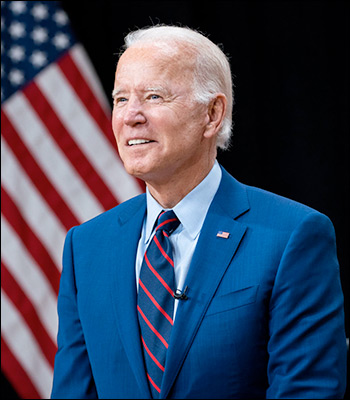
President Joe Biden

South Carolina: Biden Romps in Dem Primary — President Joe Biden claimed Saturday’s South Carolina Democratic presidential primary, capturing an almost unanimous vote share. Biden recorded a 97 percent support figure over author Marianne Williamson (2.1 percent) and Minnesota Congressman Dean Phillips (1.7 percent). Not surprisingly, the president swept all 55 of the state’s national Democratic delegate votes and placed first in each of the Palmetto State’s 46 counties.

Turnout, however, was extremely low with only about 131,000 ballots being cast. The unofficial count represents just 24 percent of the number of voters when compared to the 2020 South Carolina Democratic primary. The president was virtually unopposed in terms of the campaign efforts from Williamson and Phillips; therefore, it is not surprising to see a low participation rate. Still, three-quarters of the past electorate failing to return in 2024 does suggest a lack of enthusiasm for the pending national election.

Next, the candidates move to the Nevada primary on Tuesday where a similar result is expected. Unlike the Republicans, the Democratic primary is a delegate-apportionment event, so all candidates will be on the ballot. On the Republican side, the Nevada delegates will be awarded from the accompanying caucus events scheduled two days later, on Feb. 8. GOP candidate Nikki Haley chose to enter the primary and not the caucus, so former President Donald Trump is virtually assured of a Nevada delegate sweep.

Senate

Missouri: Sen. Hawley Up 13 — Emerson College released the first Missouri polling results of the new year. In the state’s US Senate campaign, the Emerson poll (Jan. 3-28; 1,830 registered Missouri voters; multiple sampling techniques) yields Sen. Josh Hawley (R) a 43-30 percent lead over attorney and Afghan/Iraq War veteran Lucas Kunce (D).

In 2022, Kunce ran for the Senate and performed well on the fundraising circuit, raising $5.7 million, but lost the Democratic nomination to philanthropist Trudy Busch Valentine, who was a late entry into the race. He now returns in better position to win the party nomination and has already almost equaled his 2022 fundraising total but remains a severe underdog to Sen. Hawley in a state where the Biden national campaign is sure to concede.

Therefore, considering Sen. Hawley’s incumbency and the political winds blowing against the Democrats in the Show Me State, this race is not likely to become a battleground Senate contest.

New Jersey: Sen. Menendez Again Languishing in Single Digits — Madison, New Jersey-based Fairleigh Dickinson University went into the field to test the Garden State’s Democratic electorate pertaining to the upcoming US Senate race. The survey (Braun Research conducting; Jan. 21-28; 504 likely New Jersey Democratic primary voters; live interview & text) projects US Rep. Andy Kim (D-Moorestown) to be opening a double-digit lead over New Jersey First Lady Tammy Murphy of 32-20 percent, while indicted incumbent Sen. Bob Menendez can outpace little-known labor union official Patricia Campos-Medina by only a single point, as he again polls under 10 percent.

According to the just-released Federal Election Commission year-end campaign finance reports, both Rep. Kim and Murphy held $2.7 million cash-on-hand at the end of 2023. Largely due to funds raised before being indicted, Sen. Menendez has just over $6.1 million in his campaign account.

The New Jersey primary is June 4. At this point, Sen. Menendez maintains that he is running for re-election, but a final decision from him will be likely be made just before the March 25 candidate filing deadline.

Pennsylvania: Sen. Casey Again Posts Double Digit Lead — Franklin & Marshall College, a regular Pennsylvania pollster, just released their latest statewide research iteration. The survey (Jan. 17-28; 1,006 registered Pennsylvania voters; live interview) sees Sen. Bob Casey Jr. (D) again posting a sizable lead over former hedge fund CEO David McCormick (R). The ballot test gives Sen. Casey a 12-point advantage, 47-35 percent. This counters Susquehanna Polling & Research’s findings in their Pennsylvania poll, taken partially within the same sampling period, that showed only a four-point separation between the two candidates.

The F&M result is more consistent with other released polls since mid-December. The Bullfinch Group saw a 15-point Casey margin, while Quinnipiac University projected a 10-point split. The Pennsylvania Senate race could become a top-tier contest assuming the presidential race here remains close in polling. In both the presidential and Senate contests, however, the Democratic candidate maintains the edge.

Is RFK Jr. Going Libertarian? Conflicting Presidential Polling; Trone Expands Lead in Maryland; Special Election Ad Spending in NY

By Jim Ellis — Friday, Feb. 2, 2024

President

Will Robert F. Kennedy Jr., currently running as an Independent general election candidate, switch to the Libertarian Party?

RFK Jr.: Flirting with Libertarian Party — Presidential candidate Robert F. Kennedy Jr. (I) and Libertarian Party leaders confirm they are discussing the possibility of Kennedy becoming the party’s presidential nominee. They are likely still a long way from coming to an agreement, though, mostly because some of Kennedy’s major issue positions such as climate change and gun control do not align with the party leadership; the move, however, makes practical sense for both entities.

First, being the Libertarian Party nominee would give Kennedy ballot access in all 50 states, something that is difficult for any Independent to obtain. The Libertarian Party was the only non-Democratic or Republican entity to achieve universal ballot status in 2020 (Libertarian nominee Jo Jorgensen appeared on the Libertarian line in 48 states and the District of Columbia; in Alabama and Tennessee, she appeared as an Independent), and they again would with Kennedy as their nominee.

Additionally, featuring RFK Jr. as their candidate, it is highly likely that the Libertarian Party would attract its highest historical number of votes. This is important for the organization’s future because many states base future party status upon performance in the national election.

Morning Consult/Bloomberg/Quinnipiac Polls: Any Given Poll — It’s a common saying in the NFL that “on any given Sunday any team can beat another.” A similar phrase appears applicable in political polling, as well. On almost any given day, we can find polls that disagree over outcome even though conducted during the same time period. Wednesday’s Morning Consult/Bloomberg News and Quinnipiac University are good examples.

The day began with Morning Consult/Bloomberg releasing their new regional survey series (Jan. 16-22; 4,596 registered voters in Arizona, Georgia, Michigan, Nevada, North Carolina, Pennsylvania, and Wisconsin; online; part of regular tracking), which finds former President Donald Trump leading in all of the key swing states with margins between three (Arizona, Pennsylvania) at 10 percentage points (North Carolina). Georgia, Michigan, and Wisconsin each posted five-point Trump margins, while Georgia and Nevada were closer to the North Carolina number at plus-eight. Turning to their national track, MC/Bloomberg posted Trump to a two-point advantage over President Joe Biden in the head-to-head ballot test.

Yet in the Quinnipiac University release, a poll that was in the field within a similar same time frame as MC/Bloomberg, though earlier in January (Jan. 4-8; 1,680 US registered voters; live interview), President Biden posted his biggest national popular vote lead of any recent poll, 50-44 percent. When the Independent and minor party candidates were added in, such as RFK Jr., for example, the Biden edge shrinks to just two percentage points, which is much more in line with other pollsters.

Senate

Maryland: Rep. Trone Expands Lead — A new internal Hickman Analytics poll for the David Trone for Senate campaign (Jan. 18-24; 1,500 likely Maryland Democratic primary voters; live interview) sees Trone, the 6th District Congressman, leading Prince Georges County Executive Angela Alsobrooks by a 45-34 percent margin in the open Democratic US Senate primary. The question, however, is for how long? The poll contained an over-sample of African Americans and females to emphasize the groups with which Rep. Trone is weakest.

Though the early numbers look good for the congressman, it must be understood that his campaign has spent well over $15 million to date, and $7 million alone just since November according to the Inside Elections publication. Trone began advertising a year before the primary election.

The Alsobrooks campaign has yet to run an ad. Since it is clear that she cannot match the congressman in an ad war with him self-financing the race from his huge personal wealth, the Alsobrooks strategists are waiting until late in the contest to unleash their own ad buys. She will be competitive as we get closer to the May 14th primary, so despite Trone’s polling and resource lead, this primary battle is far from over.

House

NY-3: Special Election Ad Spending Update — The Daily Kos Elections and AdImpact organizations charted the spending in the special congressional election to replace expelled Rep. George Santos (R-Long Island) as we approach the Feb. 13 election. According to their data, the overall Democratic operation is outspending the encompassing Republican effort by a large amount, $9.6 million to $5.7 million. The two candidates are former US Rep. Tom Suozzi for the Democrats, and Nassau County Legislator Mazi Melesa Pilip for the GOP.

The Congressional Leadership Fund, however, is coming in late to help even the score. They have reserved $2.6 million in television and digital ads to bring the final days spending into parity. In terms of spending booked for the final two weeks, the Democratic advantage narrows to $2.8 to $2.44 million.

First Post-New Hampshire GOP Poll Released; Battle For California Senate Seat; Ruppersberger to Retire; Field in NJ-7 Now Down to Two

By Jim Ellis — Tuesday, Jan. 30, 2024

President

Former South Carolina governor and current Republican presidential candidate Nikki Haley lags 27 points behind former President Trump in her home state. / Photo by Gage Skidmore

South Carolina: First Post-NH GOP Poll Released — The first post-New Hampshire primary survey is out, and we see former President Donald Trump performing well in former South Carolina Gov. Nikki Haley’s home state. The Tyson Group tested the Palmetto State Republican electorate immediately after the New Hampshire vote (Jan. 24-26; 543 likely South Carolina Republican primary voters; online) and found Trump holding a large 58-31 percent advantage over Haley.

The poll sample, including Independents who say they will vote in the Republican primary, hold both presidential candidates in high regard. Trump’s approval index is 68:27 percent favorable to unfavorable, while Haley’s is slightly worse at 56:33 percent. In comparison, Sen. Tim Scott’s (R) rating is 57:20 percent.

The South Carolina Republican primary is scheduled for Feb. 24 while the Democrats vote on Feb. 3, so the state’s residents can expect a great deal of political action coming their way in the next few weeks.

Senate

California: Second-Place Flipping — As the March 5 Super Tuesday vote approaches, polling in the California Senate jungle primary consistently shows Rep. Adam Schiff (D-Burbank) nailing down first place, but second place as undecided. The latest released survey, from Emerson College (Jan. 11-14; 1,087 registered California voters; multiple sampling techniques) sees Rep. Schiff holding a 25-18-13-8 percent lead over Republican baseball great Steve Garvey (R), while US Reps. Katie Porter (D-Irvine) and Barbara Lee (D-Oakland) trail with their respective support percentages.

A similar poll from The LA Times (UC Berkeley Institute of Government Studies; Jan. 4-8; 8,199 registered California voters; 4,470 likely March 5 primary voters; online) released 10 days earlier than the Emerson data found Rep. Schiff leading Rep. Porter, Garvey, and Rep. Lee in a 21-17-13-9 percent spread.

Comparing the current Emerson poll with their November California survey, Garvey gained eight percentage points, while Rep. Porter remained stagnant. Under the California system, all primary contenders compete on the same ballot, with the top two — regardless of percentage attained and party affiliation — advancing to the Nov. 5 general election.

House

MD-2: Rep. Dutch Ruppersberger (D) to Retire — Maryland US Rep. Charles A. “Dutch” Ruppersberger (D-Cockeysville) announced on Friday that he will not seek a 12th term in the House, thus completing what will be 30 consecutive years in elective office counting his time in Congress and as Baltimore County Executive. He leaves a northern Maryland congressional district that could be on the cusp of competitiveness, but Baltimore County Executive Johnny Olszewski (D) appears primed as Rep. Ruppersberger’s heir apparent.

The 2nd District covers the area just north of Baltimore city and extends all the way to the Pennsylvania border. It includes about two-thirds of Baltimore County, 90 percent of Carroll County, and about 30,000 residents in Baltimore City. The FiveThirtyEight data organization rates the seat as D+11. Dave’s Redistricting App calculates a 52.5D – 41.4R partisan lean, and the Daily Kos Elections site ranks MD-2 as the 62nd most vulnerable seat in the House Democratic Conference.

NJ-7: Dem Field Winnows to Two — Democrats want to make a strong run against freshman New Jersey US Rep. Tom Kean Jr. (R-Westfield), but one of their candidates just decided to end his congressional bid. Summit Township Councilman Greg Vartan announced on Friday that he will suspend his campaign, leaving former State Department official Jason Blazakis and ex-Working Families Party state director Sue Altman as the two competing Democrats.

Former Congressman Tom Malinowski (D), the man Rep. Kean unseated in 2022, just announced he would not enter the Senate race. Speculation has surrounded him about seeking a congressional rematch, but there is no tangible evidence that the former representative is planning to make a 2024 comeback.

Pennsylvania Poll Shows Biden Over Trump Signifigantly With Senate Race Tightening; More New Hampshire News; NJ, VA House Polling

By Jim Ellis — Thursday, Jan. 25, 2024

President

President Joe Biden / Photo by Gage Skidmore

Pennsylvania: Biden Lengthens Polling Lead — Susquehanna Polling & Research released the results of their latest Pennsylvania statewide survey (Jan. 15-21; 745 registered Pennsylvania voters; live interview & online) and finds a surprising result. The Susquehanna data sees President Joe Biden assuming an eight-point lead over former President Donald Trump, 47-39 percent, which is well beyond other pollsters’ findings during the past month.

During that time span, the Bullfinch Group, Redfield and Wilton Strategies, and Quinnipiac University were all testing the Keystone State electorate and determined much closer ballot test results. Those firms saw results ranging from even support between the two candidates (Bullfinch), to Trump leading by one point (Redfield), and Biden up two (Q-Poll). We can expect to see regular Pennsylvania polling from now to Election Day producing a myriad of results that will, at one time or another, favor each candidate.

Senate

Pennsylvania: Senate Race Tightening — In the same Susquehanna Polling & Research study that produced an eight-point lead for president, the data firm returned the closest US Senate poll we’ve seen from Pennsylvania in more than a month. According to the Susquehanna results, Sen. Bob Casey, Jr. (D) edges Republican David McCormick by only a four-point margin, 46-42 percent. This is a surprising result from the same sample that produced an eight-point lead for President Biden.

Other pollsters during the past 30-day period see the race trending significantly more one-sided than Susquehanna. The Bullfinch Group in mid-December found Sen. Casey holding a 15-point lead, while Quinnipiac University, which produced a similar ballot test result for the Biden campaign, projects Sen. Casey to be leading McCormick, 53-43 percent. The Susquehanna poll is the first poll within the current time frame to find the Pennsylvania Senate race falling within the polling margin of error.

Governor

New Hampshire: Ex-Sen. Ayotte Leads in GOP Primary Poll — A new University of Massachusetts at Lowell survey (Jan. 6-16; 600 likely New Hampshire Republican primary voters; online) finds former US Sen. Kelly Ayotte establishing a big lead over former state Senate president and 2022 US Senate candidate Chuck Morse. According to the survey results, Ayotte is staked to a 54-22 percent advantage.

The New Hampshire regular primary cycle is a long one, with the election not scheduled until Sept. 10. Democrats also feature two major candidates, Executive Councilor Cinde Warmington and former Manchester Mayor Joyce Craig. Gov. Chris Sununu (R) is retiring after what will be four complete terms.

House

NJ-7: Early Polling Data Favors Rep. Kean — While many political prognosticators rate New Jersey’s 7th District race as a toss-up campaign for freshman incumbent Rep. Tom Kean Jr. (R-Westfield), a recent Public Policy Polling survey (Jan. 16-7; 608 NJ-7 voters; multiple sampling techniques) casts the GOP congressman to a lead well beyond the polling margin of error. According to the PPP results, Rep. Kean would hold a 41-33 percent lead over former US State Department official Jason Blazakis (D).

In other 7th District news, the man who Rep. Kean unseated, two-term Rep. Tom Malinowski (D) this week ended his flirtation with entering the US Senate race and endorsed his former colleague, US Rep. Andy Kim (D-Moorestown) in his Democratic primary challenge to embattled Sen. Bob Menendez. While Malinowski has not firmly rejected running for his former House seat, there is no tangible evidence suggesting he is preparing a House run. In addition to Blazakis, progressive activist Sue Altman is a declared candidate.

VA-7: 2022 GOP Nominee Endorses Another — Prince William County Supervisor Vesli Vega, the 2022 Republican congressional nominee who held Rep. Abigail Spanberger (D-Glen Allen) to a 52-48 percent re-election victory in what many believed was an under-performance for the GOP in a more favorable post-redistricting 7th CD, issued a statement earlier this week. Many believed that she would again enter the crowded candidate field but instead she endorsed defense contractor and retired Navy SEAL Cameron Hamilton (R).

Though we see a field of eight announced Republicans for what is now an open seat, the Vega endorsement will help Hamilton unite GOP voters behind his campaign. Six Democrats have announced for their party’s nomination including state Del. Briana Sewell (D-Woodbridge), Prince William County Supervisor Margaret Franklin, ex-state Delegate Elizabeth Guzman, and retired Army colonel and National Security Council official Eugene Vindman.