Category Archives: Polling

New North Carolina Senate Data

By Jim Ellis — Tuesday, Nov. 18, 2025

Senate

A new Harper Polling survey of North Carolina likely voters produced positive numbers for Democrats, but other factors suggest the open Senate race is far from over.

Former North Carolina Gov. Roy Cooper (R)

Harper projects former Gov. Roy Cooper (D) to a lead beyond the polling margin of error for the 2026 Senate race. The underlying numbers, however, suggest that the Tar Heel State electorate could again generate another of its typically close finishes on Election Day.

The Harper Polling survey, conducted for the Carolina Journal online news site (Nov. 9-10; 600 likely North Carolina general election voters; live interview & online), finds Cooper posting a 47-39 percent lead over former Republican National Committee chairman Michael Whatley (R). The North Carolina open Senate race is one of only two competitive Senate campaigns — Ohio being the other — that already sees its general election pairing because currently neither party is hosting a seriously competitive nomination battle.

Clearly, the Democrats have successfully recruited their best candidate. Roy Cooper has won six statewide races, two as Governor and four as Attorney General including the 2012 contest when he was unopposed. There was some speculation that Cooper would eschew a Senate run to enter the 2028 presidential contest, but apparently the national party leadership was able to convince him to stay home and attempt to flip the Senate majority.

Cooper’s 2020 re-election race, however, was an underperformance, thus giving Republicans a potential area of weakness to probe. While being considered a heavy favorite for re-election to a second term, he only won with a 51-47 percent margin over then-Lt. Gov. Dan Forest (R).

In mid to latter October of 2020, four polls were conducted in the state and then-Gov. Cooper led by an average of just below 13 percentage points. Yet, he only won with a four-point spread. That year, however, the turnout model favored the North Carolina Republicans as both President Trump and Sen. Thom Tillis (R) carried the state by small margins.

There are several further points to consider about the current Harper Polling survey. First, the eight-point Democratic spread is not particularly unusual for an early North Carolina poll. The state typically over-polls for Democrats, at least by two percentage points, which partially accounts for the Cooper margin in this poll.

Secondly, an unusually high 54 percent of the polling universe is female, which again pushes the ballot test toward the Democratic candidate.

Third, though not tested, Whatley’s name identification is obviously low. The evidence comes from the second ballot test question that pitted retired Navy JAG officer and author Don Brown (R), who has no statewide presence, against Cooper. Brown’s chances of winning the Republican nomination are virtually nil, so testing him against Cooper provides a base GOP benchmark.

In the Cooper-Brown ballot test, the Democratic former Governor leads by a similar 48-38 percent. The fact that Whatley and Brown post similar numbers and deficit margins is an indication that the Whatley name ID is low, thus his support level reverts to a benchmark figure.

Moreover, there are warning signs detected for all Republicans from this survey. The national right track-wrong track question that tests attitude shows 55 percent of the Harper, North Carolina respondents believe the country is on the wrong track. When asked the same about the state of North Carolina, 48 percent answered wrong track.

While these numbers are an improvement over what we were seeing during the end of the Biden Administration, they are not positive for the Trump presidency and largely confirms some of the trends we saw in the Nov. 4 elections from New Jersey, Virginia, and New York City.

Another warning sign for Republicans, and the heart of the negative trend, is the impression of today’s economy. Among these respondents, 58 percent said they are not confident about the economy as compared with 40 percent who said they are.

HP also asked an interesting question to better understand how the respondents feel about the economy. They found that 67 percent said they are planning to spend less for the upcoming holidays compared to only 14 percent who say they will spend more.

Finally, and still pertaining to the economy, the tariff policy is not popular with this North Carolina polling sample. A total of 53 percent said the tariffs hurt the national economy versus 38 percent who believe they help.

This poll, in a state that more often than not votes Republican by small margins, again highlights the economy as the most difficult issue the GOP candidates face.

Unless they can tell an improved story about how the Administration’s policies are improving everyone’s lifestyle especially when remembering that President Trump predicted his policies will create a “roaring American economy,” then the 2026 election results could well reflect the recent Nov. 4 electoral outcome.

Texas Rep. Jodey Arrington to Retire

By Jim Ellis — Wednesday, Nov. 12, 2025

House

Texas Rep. Jodey Arrington (R-Lubbock)

The number of US House members announcing they won’t seek re-election next year is beginning to form a cavalcade.

Five-term Texas Rep. Jodey Arrington (R-Lubbock), chairman of the House Budget Committee, yesterday announcing that he won’t seek re-election next year, increased the number of retirement decisions to six in just the past 10 days.

In his retirement announcement, Rep. Arrington said, “I believe, as our founding fathers did, in citizen leadership – temporary service, not a career; and, it’s time to do what George Washington did, and to ride off into that big, beautiful West Texas sunset, and to live under the laws that I passed.”

Since 2010, we have seen the number of House open seats fall to anywhere between 48 and 64 in each election cycle. This year the pace of those voluntarily leaving Congress was slower until recently.

Now, the open-seat count, adding the newly drawn seats in Texas and California but not including the vacant districts in special elections (TN-7; TX-18) and the soon-to-be open seat in New Jersey (NJ-11; Governor-Elect Mikie Sherrill), lies at 40 with others to follow once candidate filing deadlines begin to appear on the political horizon.

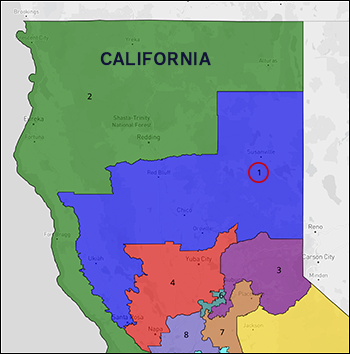
We are about to see other seats open in California once members decide where they will run under the new map. We have already seen two Golden State members, Reps. Ami Bera (D-Sacramento) and Ken Calvert (R-Corona), switch districts.

In northern California, Rep. Bera is eschewing his Sacramento County 6th District, where he would be the lone incumbent, to challenge 3rd District Republican Rep. Kevin Kiley (R-Rocklin/ Sacramento) in a district that now favors the Democrats.

Speculation is underway that Rep. Kiley may depart his 3rd District for another seat, possibly even challenging fellow Republican Rep. Tom McClintock (R-Elk Grove) in the new 5th CD that stretches from the Sacramento suburbs south into the San Joaquin Valley of Central California.

In Southern California, Rep. Calvert found his 41st District broken into several pieces, thus forcing him into new District 40 to challenge fellow Republican Young Kim (R-La Habra). Other Los Angeles County members could be shifted to other seats as well and we may see Rep. Linda Sanchez (D-Whittier) run in what is now a Democratic version of District 41. Expect to witness several interesting political musical chairs moves once the California redistricting dust begins to settle.

Of the 40 open seats, counting the three newly created seats from Texas redistricting, we see Rep. Arrington becoming the 12th exiting House member to retire from elective politics. Eleven are running for the Senate, an additional 11 have entered their state’s gubernatorial campaign, two are running for election in a different congressional district than the one they currently represent, and one, Texas Rep. Chip Roy (R-Austin), is running for state Attorney General.

In terms of the two special election districts, a new poll was released for the TN-7 race in the western Tennessee district from which four-term Rep. Mark Green (R) resigned to accept a position in the private sector.

A Workbench Strategy survey (Oct. 15-19; 400 likely TN-7 special election voters; 100 oversample of Democratic voters; live interview & text) found Republican former state cabinet official Matt Van Epps leading state Rep. Aftyn Behn (D-Nashville) by a 52-44 percent count.

A segment defined as “the most motivated voters” found the two candidates tied. This suggests that the Democrats have an enthusiasm edge, meaning this Dec. 2 general election could be closer than the Republican historical voting patterns would suggest.

The TX-18 race will go to a double Democratic runoff between Harris County Attorney Christian Menefee and former Houston City Councilwoman Amanda Edwards. When the final totals become official, Gov. Greg Abbott (R) will schedule the runoff election, likely for a date in January.

With New Jersey Rep. Mike Sherrill (D-Montclair) being elected Governor last week, expect her to resign her congressional seat in mid-January just before taking the oath of office. She will then schedule a special election for voters to choose her successor.

NJ Rep. Coleman to Retire; Rogers Up in Michigan; Allred Down in Texas

By Jim Ellis — Tuesday, Nov. 11, 2025

A congressional retirement announcement from New Jersey, ex-US Rep. Mike Rogers (R) taking the lead in a new Michigan Senate general election poll, and a Texas Senate survey that finds 2024 US Senate nominee and ex-Congressman Colin Allred again trailing in the Democratic primary, are outlined in this round up. These are the top political stories coming from the early part of the Veterans Day weekend. Also, overnight, Republican House Budget Committee Chairman Jodey Arrington (TX-19) announced that he will not seek re-election in 2026. Arrington has served for nearly a decade in the US House. More on his retirement in an upcoming post.

NJ-12

New Jersey Rep. Rep. Bonnie Watson Coleman (NJ-12)

Yesterday, saying “it’s time to pass the torch,” six-term Rep. Bonnie Watson Coleman (D-Ewing Township/Trenton), 80, announced that she will not seek re-election next year.

Prior to her election to the US House in 2014, she served 17 years in the New Jersey General Assembly, four years as Majority Leader. From 2002-06, Watson Coleman chaired the New Jersey Democratic Party.

The Garden State’s 12th District, which includes the capital city of Trenton, Princeton University; and North, East, and South Brunswick; is reliably Democratic. The Dave’s Redistricting App statisticians calculate a 56.5D – 43.5R partisan lean.

The central New Jersey district was at one time a Republican domain but redistricting and a change in voting patterns have yielded Democratic representation since the beginning of 1999. Therefore, Rep. Watson Coleman’s successor will almost assuredly come from winning what promises to be a hotly contested Democratic primary.

The Watson Coleman retirement means 39 seats will be open in 2026, not counting the CDs headed to special elections in Tennessee and Texas, along with New Jersey’s 11th District seat when Gov-Elect Mikie Sherrill (D) resigns from the House.

From the group of 2026 open seat members, Rep. Watson Coleman becomes the 15th Democrat not to seek re-election and the 11th to retire from politics. The other 28 are seeking a different office or moving to a congressional district other than the one they currently represent.

Michigan Senate

The Rosetta Stone polling organization released the results of an independent poll that finds Republican former Rep. Mike Rogers polling ahead of all three Democratic US Senate contenders.

Rogers, who served seven terms in the House before retiring, returned to enter elective politics with his run for the Senate in 2024. In an open-seat battle with then-Rep. Elissa Slotkin (D), Rogers came within 19,006 votes from just under 5.6 million votes cast of winning the race, a percentage margin of 48.6 – 48.3.

The Rosetta Stone poll, released over the weekend, (Oct. 23-25; 637 likely Michigan general election voters) finds Rogers, who is virtually unopposed for the Republican nomination, ahead beyond the polling margin of error individually against each of the Democrats: Rep. Haley Stevens (D-Birmingham), state Sen. Mallory McMorrow (D-Royal Oak), and former Wayne County Health Director Abdul El-Sayed.

Opposite Rep. Stevens, Rogers leads 47-40 percent. If Sen. McMorrow was his opponent, the Rogers edge would be a similar 46-39 percent. The Rogers’ advantage grows if El-Sayed becomes his general election opponent. Under this scenario, the former Congressman posts a 45-31 percent margin.

Other polls have shown this race much closer, but this is the first publicly released statewide poll since June.

Rosetta Stone tested the Democratic Senate primary, but the sample size of only 287 likely Democratic primary voters indicates the results should be considered statistically insignificant in a state the size of Michigan.

Texas Senate

New polling in the Texas Senate Democratic primary again shows trouble for 2024 Senate nominee Colin Allred.

The Impact Research survey conducted for the James Talarico Senate campaign (Oct. 23-29; 836 likely Texas Democratic primary voters; live interview & text) finds state Rep. Talarico taking a 48-42 percent lead over Allred.

In a late September survey from the University of Houston and Texas Southern University, the academic pollsters found Allred lagging in last place if the Democratic field consisted of he, Rep. Jasmine Crockett (D-Dallas), former El Paso Rep. and statewide candidate Beto O’Rourke, and state Rep. Talarico. For her part, Rep. Crockett says she is considering the Senate race. Crockett has led several Democratic statewide polls.

It has been known for some time that the Republican Senate primary would be a hard-fought contest between four-term incumbent Sen. John Cornyn, Attorney General Ken Paxton, and recently entered Rep. Wesley Hunt (R-Houston). Now, however, analyzing the available polling data leads to the conclusion that the Democratic primary appears just as competitive as the Republican contest.

New York Poll: Stefanik Over Hochul

By Jim Ellis — Friday, Oct. 31, 2025

Governor

Rep. Elise Stefanik / Photo by Gage Skidmore, Flickr

Unofficial 2026 New York gubernatorial candidate Elise Stefanik, the North Country (NY-21) Republican Congresswoman, has taken a small lead over Gov. Kathy Hochul (D) according to a Manhattan Institute survey. The poll (Oct. 22-26; 900 likely New York voters; live interview & text) finds Stefanik carrying a 43-42 percent edge over the Governor who is seeking a second full four-year term.

The margin is more significant than a simple one-point lead, however. The polling universe is over-sampled toward New York City. Of the 900 people in the sampling pool, only 300 are outside of New York City. The fact that Stefanik is even close, let alone virtually even with the Governor, when two-thirds of the polling sample comes from a population universe where only 11 percent are registered as Republicans is surprising to say the least.

The result is even more unexpected when the most recently released gubernatorial polls, from GrayHouse Polling (Sept. 20-26; 900 registered New York voters) and Siena College (Sept. 8-10; 802 registered New York voters) projected Gov. Hochul leading by five points (48-43 percent) and a whopping 25 points (52-27 percent), respectively.

It is highly unusual to see a poll such as the Manhattan Institute’s that would split their polling sample in a manner where two-thirds of the respondents are located in one area when such a region comprises only 46 percent of the state population.

To counter for the oversample, the Manhattan pollsters said they have weighted the responses to reflect the proper population dispersion geographically and demographically.

While the sample is unusual, the poll’s main objective was to survey the current NYC Mayor’s race. Relating to the local ballot test question, asked only of the New York City respondents, state Assemblyman Zohran Mamdani (D) leads former Gov. Andrew Cuomo (I) and Republican Curtis Sliwa, 43-28-19 percent.

The mayoral ballot test does, to an extent, help explain Stefanik’s vastly improved standing. While Assemblyman Mamdani leads the race and is likely to win the mayoral position with a plurality, the majority of the polling respondents, and likely the actual voters culminating on the Nov. 4 Election Day, appear to be voting for a different candidate.

With Gov. Hochul now publicly endorsing the self-proclaimed socialist Mamdani, it is not as surprising that the non-Mamdani voters might look beyond the incumbent in the next Governor’s race.

With Stefanik closing a gap of at least five percentage points, and arguably more in a short period (the 25-point lead that Siena College found in early September, however, is likely an outlier at least in the context of the present time), suggests something major has occurred to sway opinions.

It is reasonable to believe that the negative public talk and coverage describing how Mamdani’s policies would affect the New York City citizenry has certainly contributed to the political wind beginning to blow in Congresswoman Stefanik’s favor.

A Mamdani election victory will be transformational, but the negatives could conceivably outweigh the positives if the critics’ analyses prove accurate. Furthermore, the effects of what will be newly implemented policies involving the economy, housing, and policing, will be at least somewhat evident before voters again go to the polls in November 2026 to choose a Governor.

Considering this new gubernatorial election polling data, and assuming the Stefanik organization internal surveys are in sync with the public results, it is probable that we will see an official gubernatorial campaign announcement coming from the North Country Congresswoman after the mayoral election and before the end of the year.

With the Mamdani candidacy igniting new political fires for both liberals and conservatives, the 2026 New York Governor’s race will assume a much different posture, and one sure to have national political implications.

New Jersey Getting Closer

By Jim Ellis — Thursday, Oct. 30, 2025

Governor

(L-R) New Jersey gubernatorial candidates Jack Ciattarelli (R) and Mikie Sherrill (D)

With Garden State early voting just getting underway in earnest, the three latest publicly released New Jersey Governor polls are all showing a tightening contest between Democratic Rep. Mikie Sherrill (D-Montclair) and Republican gubernatorial nominee Jack Ciattarelli.

The three polls were conducted between the Oct. 23-27 period from a trio of individual survey research entities. The margin between the two candidates ranged from one to four percentage points. While the margin has closed, Rep. Sherrill continues to post a lead in virtually every survey.

The most recent study, from Quantus Insights (Oct. 26-27; 1,380 likely New Jersey voters), sees the Sherrill lead at 49-46 percent. The co/efficient firm (Oct. 23-27; 995 likely New Jersey voters) projects an even closer 48-47 percent. Within the same time realm, A2 Insights (Oct. 24-26; 812 likely New Jersey voters) shows the four-point spread for Sherrill at 51-47 percent.

These latest three studies show a significant closing of the race when compared with the three surveys released days before. Each of those found Sherrill holding a much more substantial lead.

The previous set of three polls were conducted during the Oct. 3-20 period, though the final two were fully sampled between Oct. 16-20. The Rutgers-Eagleton poll (Oct. 3-17; 795 likely New Jersey voters) featured a long sampling period that consumed the predominant portion of the sampling time listed above. The R-E results found Sherrill topping Ciattarelli, 50-45 percent.

The other two polls were from Concord Public Opinion Partners (Oct. 16-18; 605 likely New Jersey voters) and GQR Research, the latter formerly known as Greenberg Quinlan Rosner Research but now has two new principal partners (Oct. 15-20; 1,000 likely New Jersey voters). While Concord saw a nine-point Sherrill advantage at 49-40 percent, GQR projected an even wider Sherrill margin at 52-40 percent.

Therefore, among the six polls commissioned throughout the preponderance of October’s days, we see a net six-point swing in Ciattarelli’s favor. This suggests the important closing momentum may be turning in his direction.

Additionally, keep in mind that the polling history involving political campaigns with Ciattarelli on the ballot has woefully underestimated his electoral strength. In his 2021 challenge to Gov. Phil Murphy (D), polling pegged Ciattarelli posting an average of approximately 43 percent support. His actual vote total was 48.0 percent.

The 2025 Republican primary election provided even more stark evidence of under-assessing a candidate’s strength. While the polls leading up to the June primary election found Ciattarelli with high-water final polling marks of 54, 50, and 44 percent within the five-candidate primary election field, Ciattarelli’s actual percentage was 67.8, and far beyond what pollsters cumulatively predicted.

Therefore, if past polling history is any indication of what may happen in Tuesday’s final result, we could see a very close finish or even a Ciattarelli upset.

Despite New Jersey being a reliably Democratic state in federal and national elections, a single party has not won three consecutive gubernatorial elections since a pair of Republican Governors together served 10 consecutive years in office from 1944-1954.

Should Sherrill win next week, giving the Democrats three consecutive terms counting outgoing Gov. Murphy’s two election wins, she will have broken the alternating streak that has remained intact for 71 years.

Surprising Maine Polling

By Jim Ellis — Monday, Oct. 27, 2025

Senate

Graham Platner

A just released University of New Hampshire’s Pine Tree State Poll (Oct. 16-21; 1,094 Maine residents; 1,015 likely Maine voters; 510 likely Maine Democratic primary voters; online) delivers some unexpected ballot test results in two key Maine races.

The biggest surprise is how badly Gov. Janet Mills fares in a Democratic gubernatorial primary. Gov. Mills recently announced for Senate after being the top recruit prospect for the national Democratic leadership. Yet, in this UNH poll, she trails businessman Graham Platner by a whopping 58-24 percent clip.

Platner is the choice of the party’s Bernie Sanders wing and carries the Vermont Senator’s endorsement. The poll was conducted, however, before damaging information came to light against Platner including the presence of a skull and crossbones tattoo on his chest, which has been tied to Nazi police, and past disparaging remarks made about key Democratic constituencies. Chances are good that the next released Maine survey will show Platner substantially falling.

Irrespective of Platner’s current standing, Gov. Mills performs poorly against a first-time candidate within her own party. While the Governor records a favorable personal approval index (65:16 favorable to unfavorable), she managed to post only a 24 percent vote preference on the related ballot test before the same Democratic sampling universe. This is largely due to her poor job approval rating of 43:55 percent favorable to unfavorable.

The pollsters apparently did not test the general election featuring Sen. Susan Collins (R) individually against the Democrats, but the fact that Gov. Mills fares this poorly in her own primary suggests her standing statewide would be below par.

House

The second surprise comes in the state’s 2nd Congressional District where Rep. Jared Golden (D-Lewiston) is facing a challenge from former two-term Gov. Paul LePage (R).

While other polls have found the two locked in a virtual dead heat, the UNH data sees LePage pulling five points ahead of the four-term incumbent, 49-44 percent, which is beyond the stated polling margin of error for this survey (plus or minus 3.1 percent).

From the LePage perspective, the ballot test result should not be considered an unusually positive outlier. In his three statewide races – 2 victories and 1 defeat, the latter at the hands of Gov. Mills in 2022 – LePage carried the 2nd District. Additionally, ME-2 is the most Republican district in the country where the electorate sends a Democrat to the US House.

What is troubling for Rep. Golden and his allies are the responses to the re-elect questions. When asked if Rep. Golden deserves to be re-elected, only 26 percent answered affirmatively while 57 percent said no.

Most of the negative number comes from Republicans, 75 percent of whom said Rep. Golden does not deserve re-election. Such is to be expected, however, in this age of political polarization. A major negative for the Golden camp, however, is that 66 percent of Independents and more than a third (36 percent) of Democrats also say the Congressman “doesn’t deserve re-election.”

The fundraising totals favor Rep. Golden, however. The Congressman has raised over $2.3 million for his 2026 campaign and holds just under $1.7 million cash-on-hand. LePage has attracted $917,000 for the campaign and holds less than half of Golden’s treasury figure at $716,000.

The ME-2 race will be a national campaign and one of the Republicans’ top conversion opportunities. Therefore, it is reasonable to assume that LePage will correct the resource imbalance as compared to Rep. Golden’s financial totals either through enhanced national fundraising or with non-connected outside groups coming into the northern Maine district to aid the former Governor’s congressional efforts.

It is clear that both the Maine Senate and 2nd District House campaigns will draw a great deal of national attention during 2026 political prime time. Both eventual winners will be significant players in determining which party will control the legislative power levers in the 120th Congress.

Gov. Mills Announces … Again

By Jim Ellis — Wednesday, Oct. 15, 2025

Senate

Maine Gov. Janet Mills (D) | Facebook photo

Maine Gov. Janet Mills (D), after a premature social media Senate announcement message over the weekend was pulled back, yesterday formally declared her intention to challenge veteran Sen. Susan Collins (R). The Governor was Senate Minority Leader Chuck Schumer’s top choice to challenge Sen. Collins who overcame a massive attack campaign in 2020 to secure a fifth term.

Sen. Collins was first elected in 1996 and has announced plans to run again for a sixth term next year. Gov. Mills was elected in 2018, re-elected four years later, and is ineligible to seek a third term under the state’s election system.

In 2020, the Democrats and their candidate, then-state House Speaker Sara Gideon, spent over $60 million against Sen. Collins in a state of just over a million people. In fact, Gideon had so much money that her campaign coffers still possessed more than $9 million after the election. Under criticism from Democrats because she had so much money left over, the party nominee explained “there was simply nothing left to buy” as hundreds of thousands of dollars flowed into her campaign coffers from all over the country during the 2020 campaign’s last week.

Though every poll but one showed Gideon winning, Sen. Collins went on to score what had to be considered an upset win despite her long-term incumbency with a 50-42 percent victory margin.

Gov. Mills averaged 53.3 percent of the vote in her two victorious gubernatorial elections, which includes her 55.7 – 42.4 percent re-election victory over former two-term Republican Governor Paul LePage. The ex-state chief executive is now running for the US House in the state’s northern district. Before serving as Governor, Mills was a state legislative-appointed Attorney General, a state legislator, and a former local county district attorney.

While Sen. Collins’ age (she will be 73 at the time of the next election) might be an issue in other states as candidates prepare for the 2026 midterm elections, it will not be a factor in the Maine Senate race. Gov. Mills herself will be 78 years old at the time of the November 2026 election.

Gov. Mills began her campaign with the typical attacks levied against Republicans, saying they are cutting Medicaid so the wealthiest can have tax breaks, and “threatening democracy.” The Governor, however, is saddled with at least two major negatives of her own that will be front and center in the Collins campaign arsenal, added to a national GOP attack theme.

As we remember, Gov. Mills attracted national attention by defying President Trump over the “men in women’s sports” issue. Even in Maine, the Mills position favoring transgenders participating in women’s sports polls negatively. She also promoted an energy transmission issue that her opponents said favored Massachusetts to Maine’s detriment. The associated ballot initiative she supported was subsequently soundly defeated.

Today, Maine’s political campaigns are clearly defined. The state has two congressional districts, which are politically opposite. The southern 1st District that includes the state’s largest metropolitan area of Portland, is heavily Democratic. The northern 2nd District, which begins in the Lewiston-Auburn area and moves all the way to Canada, features the most Republican electorate in the country that sends a Democrat to the House.

Statewide, Democrats win by securing a larger majority in the 1st District than Republicans record in the 2nd. Sen. Collins habitually wins by running up her positive vote total in the 2nd District and reducing her margin of defeat in the 1st. As the political polarization grows nationally and in Maine, the 1st becomes more Democratic and the 2nd more Republican.

With former Gov. LePage running unopposed for the GOP congressional nomination in District 2, thus uniting the party behind his candidacy, Republican turnout in the general election could be spurred.

In LePage’s three gubernatorial elections, including his landslide loss to Mills, he carried the 2nd District, and he currently is the most prolific fundraiser among all Republican congressional challengers. His race against four-term Rep. Jared Golden (D-Lewiston) promises to be close and could arguably be the Republicans’ best national US House conversion opportunity.

While the Democrats are successful in recruiting their top Maine Senate prospect, we can expect another brutal campaign to begin in the Pine Tree State. Heading into the election year, the Maine Senate campaign must be rated as a toss-up. Expect the polling to favor Mills, as it consistently favored the Democratic nominee in 2020, but history shows that the Republican turnout typically well exceeds projected polling results.