Tag Archives: Graham Platner

A Bit More Senate Clarity

By Jim Ellis — Tuesday, July 14, 2026

The South Carolina Republicans and Maine Democrats have made decisions about plans for replacing their respective US Senate nominees, bringing greater logistical clarity to both states’ 2026 US Senate political landscapes.

South Carolina
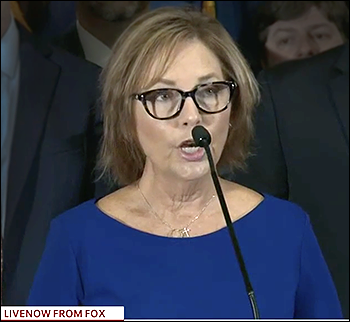
Darline Graham Nordone

Sen. Lindsey Graham’s death has thrown the South Carolina Republican Party into turmoil, and party leaders have now opted to hold an irregular, expedited primary to select a new US Senate nominee. Candidate filing will close on July 28 for a statewide Aug. 11 primary, followed by an Aug. 25 runoff if no contender wins a majority. The eventual Republican nominee will face pediatrician Annie Andrews, who won the Democratic primary on June 9.

The party is working with the Department of War to satisfy the Uniformed and Overseas Citizens Absentee Voting Act (UOCAVA), which requires adequate notice and ballot access for covered voters. Meeting these requirements under such a compressed timeline remains a major challenge.

In the interim, Gov. Henry McMaster (R) has appointed the late Sen. Graham’s sister, Darline Graham Nordone, to fill the vacancy. She will serve until Jan. 3, 2027, unless she chooses to enter the special primary. Nordone has not announced her intentions, but she is not expected to run.

Most early interest in the Republican nomination is coming from the US House delegation, which creates additional logistical complications for both the state party and House GOP leadership. Reps. Ralph Norman (R‑Rock Hill) and Nancy Mace (R‑Charleston), both of whom ran for Governor – Norman finishing a close third and Mace placing a distant fifth – are unencumbered because they are not seeking House re-election.

Other members expressing varying degrees of interest include Reps. Joe Wilson (R‑Springdale), William Timmons (R‑Greenville), and Russell Fry (R‑Murrells Inlet/Myrtle Beach), with Fry appearing the most serious about entering the race.

Each of these three, however, faces a significant hurdle: they are already the official Republican nominees in their respective House districts. Because a candidate cannot seek two federal offices in the same election, entering the Senate primary would require withdrawing their congressional nominations.

While the Republican primary is a stand-alone vote, the regular general election, where Sen. Graham’s successor will ultimately be chosen, would feature both the US Senate and congressional contests.

Thus, should one or all of the aforementioned three House members enter the Senate special – win or lose – they would have to resign as the congressional district party nominee. This would lead to the district Republican Party apparatus also having to choose new nominees in the affected districts.

More developments are expected in the coming days as the party works to stabilize its nomination process and navigate the legal and logistical challenges because of Sen. Graham’s passing.

Maine

The Maine Democratic Party has scheduled a snap convention in Bangor on July 25 to select a replacement for withdrawn US Senate nominee Graham Platner. After delivering a video address late last week, Platner formally submitted his withdrawal papers to the Maine Secretary of State.

The convention will consist of 601 voting delegates: the 101 members of the Democratic State Committee and 500 county‑based delegates apportioned according to the raw vote totals Kamala Harris received in 2024. Because Harris performed strongest in southern Maine, the delegate pool will be heavily weighted toward that region, even though the in‑person convention is being held in Bangor. The northern location may simply reflect the challenge of securing a large venue on short notice.

In order to receive convention delegate votes, each individual must obtain 500 petition signatures from registered Democratic voters, with at least 50 coming from eight different counties. All signatures must be collected and returned to the proper election authorities by July 21.

This is a more difficult task than the seemingly small numbers indicate because the time frame is so short. Therefore, it is unclear exactly how many prospective candidates will qualify for the convention.

Under the party’s announced rules, once the candidate field is finalized, the five contenders receiving the most votes on the first ballot will advance to subsequent rounds. Voting will continue until one candidate secures a majority of the 601 delegates, assuming full attendance.

Several individuals have already begun positioning themselves for the nomination. Three losing gubernatorial candidates – former Maine Health Director Nirav Shah, who finished first in the initial vote but lost under Ranked Choice Voting; former state Senate President Troy Jackson, who placed third; and Secretary of State Shenna Bellows, who finished fourth – are taking steps toward entering the race. Former congressional aide Jordan Wood, who placed a close third in the initial 2nd District primary vote, and fourth‑place finisher Paige Loud have also expressed interest.


Platner Withdraws

Graham Platner, Democratic nominee for Maine’s US Senate seat, announces he is withdrawing from the race.

By Jim Ellis — Thursday, July 9, 2026

Senate

After issuing yesterday an 11-minute video to announce that he is withdrawing from the Maine US Senate race, Democratic nominee Graham Platner is under increased criticism for refusing to take individual responsibility for his once promising campaign crashing and burning.

Instead, Platner spent most of his video time blaming “they,” who he says made it impossible for him to continue his campaign. The reference is apparently directed toward the Democratic leaders who stated they would not spend national or state party money to help him if he remained in the race.

In the video, Platner categorically denied the “serious accusations” – presumably referring to Jenny Racicot’s statements alleging that he raped her earlier this decade – saying that “the things that have been claimed did not happen … it is not real.” Platner then went on to blame much “larger world forces” that are targeting him and rebuffed the accusations as “not remotely true.”

Platner further said, “it is not the false allegations that have brought us to where we are, it is the fact that they are being used by the political establishment to put structural pressure on us…those in power are using these allegations as an excuse to take away all of the things we need to run a campaign…on the basic level simply to function.”

He went on to say that “we went toe to toe with one of the most entrenched political systems in the history of the world and we won.” Is he referring to the Democratic National Committee? To the Maine Democratic Party? Now, Platner says, “those in power” are taking away his ability to continue, which is why he is suspending the campaign.

If the allegations are false as Platner says, then why leave the race? He claims he has no ability to continue the campaign because he will be cut off from funding, but with the amount of free earned media he draws and the “movement” of people behind him, it seems possible that he could traverse this rocky period.

If so, the money would return because the national Democrats need this seat if they are to have any chance of flipping the Senate majority and would certainly find a way to fund the effort. With last week’s US Supreme Court decision making party communication and candidate coordination much freer, the national and state Democratic party structure could move quickly with less legal impediments toward supporting a rebounding campaign.

It will now be interesting to see if Platner will face any legal consequences involving the rape accusations, and whether more women will come forward. In his video, Platner basically calls Racicot a liar. His action could encourage her to continue to further speak out and put pressure on the local authorities to investigate the situation as the crime that she claims his action to be.

In the immediate term, however, the Maine Democratic Party leaders must now decide upon a system to choose a new nominee without any direction from state law. They are apparently looking toward calling a snap convention to choose a nominee, hoping to attract as many as 500 delegates from the various counties and localities.

Their principal problem, however, is the clock. They have only until July 27, at the latest, to replace Platner assuming he turns in his withdrawal paperwork at the Monday, July 13 deadline. Logistically, this will require a major effort replete with criticism no matter how they proceed.

For his part, Platner says that he is not demanding any specific person be chosen as his replacement, rather, that the process be “open, transparent, and democratic.”

In that regard, another solution would be to have Gov. Janet Mills (D) call a special legislative session to institute a special Ranked Choice primary election for a point in August or even early September, just as the other New England states all have (Connecticut and Vermont: Aug 11; Massachusetts: Sept 1; New Hampshire: Sept 8; Rhode Island: Sept 9).

With Democrats holding the Governorship and majorities in both houses of the legislature, it seems this option would be the most open and transparent, while giving the people the opportunity of choosing the replacement nominee.

During this period of Democratic indecision, Maine voters can expect to see a wave of positive ads coming from Sen. Susan Collins’ campaign.

Platner Plotting; McMorrow Out

By Jim Ellis — Wednesday, July 8, 2026

Senate

While the Graham Platner Senate candidacy saga continues in Maine, another US Senate campaign development is unfolding in Michigan, the site of another critical 2026 contest.

Michigan State Sen. Mallory McMorrow

Wolverine State Sen. Mallory McMorrow (D-Royal Oak), after seeing her fortunes tumble recently with poor polling results, announced that she is suspending her US Senate campaign. The move means that what was an interesting three-way Democratic primary has now been boiled down to a race between Rep. Haley Stevens (D-Birmingham) and former Wayne County Health Director Abdul El-Sayed, which won’t be decided until Aug. 4.

The plot thickens in Maine after most Democratic leaders are calling for Senate nominee Platner to withdraw from the race after yet another sexual assault incident, this time referenced as a rape, became public this week as victim Jenny Racicot came forward to tell her story.

Time is of the essence in Maine because the deadline for nominees to withdraw from their respective campaigns is Monday, July 13. While party leaders call for Platner to leave the race so they can choose a replacement nominee before July 27, the party nominee who received 72 percent of the primary vote on June 9th has yet to acquiesce to the withdrawal demands.

At least until Monday, Platner is in the power position since he does not have to withdraw because he is the official nominee and is apparently making current demands of the party leadership.

While reports are surfacing that many supporters, including his campaign manager, are telling Platner that he can overcome the current bad publicity over the rape accusation – he publicly denies Racicot’s accounting of her story – the nominee is reportedly telling the party leaders that one price for him leaving the race is that he be allowed to choose his own successor.

Withdrawal deadlines are stated under Maine’s election law, and the party is given a time period – in 2026, until July 27 – to choose a new nominee; but the law is silent regarding the replacement procedure. The deadline exists, but not the method by which Maine would replace Platner should he resign.

While many Democratic politicians are beginning to position themselves in an attempt to succeed Platner, including many of the gubernatorial candidates who lost on June 9, such moves become moot if the nominee refuses to withdraw by Monday. Therefore, if Platner does nothing between now and Monday afternoon, he remains the Democratic US Senate nominee.

In certain ways, the Michigan race is the harbinger of which party will control the Senate in the next Congress. While Republicans currently hold a 53-47 majority margin, a party loss in North Carolina to Democratic former Gov. Roy Cooper, which appears likely at this point, will pull the Democrats within a 52-48 deficit.

Among the three competitive Democratic defense states this year – Michigan, Georgia, and New Hampshire – the Republicans’ best chance at scoring a conversion comes in the Wolverine State where former Congressman and 2024 US Senate nominee Mike Rogers has a legitimate chance to win the general election.

Before Sen. McMorrow made the move to end her active campaign, the battle appeared as a tight three-way contest among McMorrow, Stevens, and El-Sayed. Recent polling, however, detected McMorrow falling significantly behind, leading to her early exit.

Eight polls, from seven different pollsters over a period beginning in mid-May to the present. find El-Sayed leading the race with McMorrow now trailing far behind, averaging just 13 percent support and placing third in each of these Democratic Senate race polls.

The Democratic battle will now continue as Rep. Stevens will attempt to attract the McMorrow support in order to overcome El-Sayed’s lead. We can expect a close outcome on Aug. 4.

With Democrats having ongoing problems in these two critical Senate races, Republican prospects of holding their small majority have improved. Next week is sure to bring further interesting developments in both Michigan and Maine.

Platner Under Pressure

Maine Democratic Senate nominee Graham Platner’s video response to yesterday’s rape allegations.

By Jim Ellis — Tuesday, July 7 2026

US Senate

Maine Democratic Senate nominee Graham Platner is now under extreme pressure to end his campaign and do so before July 13 so the Maine Democratic Party can choose a replacement. If Platner does leave the race, the party must replace him by July 27. Therefore, Platner’s decision and the party working to replace him must happen quickly.

A parade of Democrats, led by Senate Minority Leader Chuck Schumer (D-NY), Democratic Senatorial Campaign Committee chair Kirsten Gillibrand (D-NY), Sen. Elizabeth Warren (D-MA), and many other congressional and left-of-center organization leaders are now calling for Platner to withdraw from the race.

After a series of past behavioral issues involving women, claiming a fellow soldier should have died on the battlefield for disobeying military procedure even though the soldier was drawing enemy fire onto himself in order to save others, and claiming he is an oyster farmer when he only has one customer, his mother’s restaurant, the latest accusation may be the final blow.

Yesterday, Maine resident Jenny Rocicot said, according to CBS News, that “[Platner] violated multiple layers of consent that night. By coming into my home when I asked him not to, and by advancing on me when I told him not to, and furthermore, another incident that I had told him not to do.” She further said that Platner “raped her by definition.”

Platner responded by saying the allegation is “categorically false.” He further said, “regardless of the inaccuracy of the reporting, but mindful of the political reality it will inflict, we are taking the time to reflect on the best path forward for the state that I love, the people that I love, the movement I belong to, and the goal of defeating [Senator] Susan Collins. Those were the goals when we launched this campaign, and they remain my goals today,” Platner recited in a publicly released video message.

Reports are also surfacing indicating that Platner will leave the race by the end of the week. The candidate, however, has not yet confirmed that he will do so.

If he does suspend his campaign, the Maine Democratic Party will have to navigate uncharted waters. Maine election law gives no direction as to how a party must replace a withdrawn candidate, only that it must do so by the second Monday after the contender’s official resignation of candidacy statement, in this case July 27.

Therefore, the Maine Democratic leadership has no procedural guidelines. They are reportedly considering developing a type of caucus vote, or possibly a snap state convention. Another report says the state party leaders have already rejected giving the power to choose the replacement nominee to the 100-member Maine State Democratic Committee.

The Caucus idea seems fraught with peril. Initial challenges could arise since they would be unlikely to adhere to Maine’s deadlines for a candidate filing period and not giving potential candidates time to gather ballot access petition signatures.

Furthermore, any type of election would be subject to Ranked Choice Voting, which would take effect if no candidate reached 50 percent in an election. The RCV period would consume too much time after the vote to fall within the candidate replacement time parameters that state law sets.

Thus, aside from having the state chairman and/or state executive committee naming the replacement nominee, the most viable option would likely be hosting a snap convention. With only two weeks to prepare, however, logistics such as where to hold the heavily attended event and who would be allowed to participate could derail any type of major gathering.

In short, because there are no legal guidelines regarding replacing a nominated candidate, virtually any decision the state party leaders make will be open to question and perhaps legal challenges.

Additionally, if the party does find a way to replace Platner by the 27th, we can expect the Susan Collins campaign to attack their disregard of democracy. Protecting democracy is a major Democratic talking point, and the party would be vulnerable to an attack that highlights the hypocrisy of their rhetoric.

The Collins campaign, for example, could point to the national Democratic Party jettisoning President Biden from the 2024 national ticket after 14-plus million people had voted for him in party primaries and caucuses, and now the Maine Democratic Party is disregarding the votes of 156,084 Maine Democrats who awarded Platner 72.1 percent of the primary vote on June 9.

If so, the argument would be that both men were forced from their nominated position once it became evident that neither could win their respective general election thus making the people’s votes dispensable.

Regardless of what happens, the Maine situation will develop very quickly and promises to be a major political story for the next several weeks.

The Democrats’ Maine Dilemma

By Jim Ellis — Wednesday, Dec. 10, 2025

Senate

Maine Gov. Janet Mills (D) | Facebook photo

Another recent poll has been released showing Maine Gov. Janet Mills trailing her top Democratic Senate nomination opponent, and this time the margin isn’t even close.

While the surveys have been wildly inconsistent so far in this race, the latest Z to A Research study (Nov. 14-18; 845 likely Maine Democratic primary voters) finds businessman Graham Platner now taking a 20-point lead over the Governor, 58-38 percent. Originally thinking that Gov. Mills would have a clear path for the party nomination in preparation of challenging veteran Sen. Susan Collins (R), the Democratic leadership now sees what promises to be a bruising battle in the June 9 primary.

You’ll remember Platner as being embroiled in a controversy pertaining to a particular chest tattoo that is associated with the Nazis. He claimed to not realize there was a connection. He also apologized for posting a series of past offensive tweets. The negative publicity surrounding the tattoo and tweets largely explain the polling downturn in mid-October. The current Z to A poll suggests that he has overcome the flap.

Five different pollsters tested the Maine Democratic electorate from mid-October to late November, and while four of the five found Platner leading, his advantage range is very wide.

As mentioned above, the Z to A Research poll posts Platner to a 20-point lead, 58-38 percent. Maine’s People’s Resource Center (Oct. 26-29; 783 registered Maine voters) finds an obviously much smaller 41-39 percent ballot test in Platner’s favor.

SoCal Strategies sees a different outcome. Their poll (Oct. 21-25; 500 likely Maine Democratic primary voters) projects Gov. Mills with a five-point lead, 41-36 percent.

The National Republican Senatorial Committee polled the Democratic primary (Oct. 22-23; 647 likely Maine Democratic primary voters) and also sees Platner holding a major double-digit lead, 46-25 percent.

Finally, the first poll taken during this period, from the neighboring University of New Hampshire (Oct. 16-21; 510 likely Maine Democratic primary voters), also records Mr. Platner with a huge lead, 58-24 percent.

The wild swings seen within these five polls all conducted within a relatively consistent time frame provides evidence that Maine is a difficult state to poll. In the 2020 Senate race, literally every published survey – 14 of them according to the Real Clear Politics Polling Archives – showed Sen. Collins trailing 2020 Democratic nominee Sara Gideon, the state House Speaker, by an average of almost five percentage points. Yet, Sen. Collins won the election with an 8.6-point spread. Only her internal pollster, Moore Information, correctly projected the outcome in the election’s final polling phase.

While Platner is a first-time candidate, he already has attracted support from Sen. Bernie Sanders (I-VT) and the Democratic Party’s far left faction. The Maine Democratic primary is one of a number of situations that feature a populist left-wing candidate challenging a more establishment oriented liberal.

Although it looks like Platner may now have the inside track to upending Gov. Mills for the party nomination, defeating Sen. Collins may be another story.

Maine is a two-congressional district state, and the 1st and 2nd districts are politically very different. The southern 1st CD, which houses the Pine Tree State’s largest city of Portland, is solidly liberal. The Dave’s Redistricting App statisticians calculate a ME-1 partisan lean of 53.6D – 40.8R.

The northern 2nd District, which stretches from the Lewiston-Auburn area to the Canadian border, is conservative, but often swings between candidates. The 2nd is the most Republican seat in the country that sends a Democrat (Rep. Jared Golden) to the House of Representatives. Conversely, President Trump has easily carried ME-2 in all three of his campaigns. The DRA partisan lean for this seat is 52.9R – 41.1D.

To win a statewide race in Maine, each party must outperform his or her opponent to the largest degree in the district that typically favors its party’s candidates. Sen. Collins’ overwhelming win in ME-2 five years ago allowed her to overcome losing ME-1. In the presidential races, the Democratic nominee in each of Trump’s three campaigns carried ME-1 with a greater percentage than he took ME-2, thus allowing Hillary Clinton, Joe Biden, and Kamala Harris to win the statewide vote tally.

The Maine Senate race promises to be one of the most-covered campaigns of the 2026 election cycle. While the Republicans currently look secure to hold chamber control, the 53-47 majority margin could certainly change. The Maine result will go a long way to determining the final partisan division numbers and the new majority’s size.

Surprising Maine Polling

By Jim Ellis — Monday, Oct. 27, 2025

Senate

Graham Platner

A just released University of New Hampshire’s Pine Tree State Poll (Oct. 16-21; 1,094 Maine residents; 1,015 likely Maine voters; 510 likely Maine Democratic primary voters; online) delivers some unexpected ballot test results in two key Maine races.

The biggest surprise is how badly Gov. Janet Mills fares in a Democratic gubernatorial primary. Gov. Mills recently announced for Senate after being the top recruit prospect for the national Democratic leadership. Yet, in this UNH poll, she trails businessman Graham Platner by a whopping 58-24 percent clip.

Platner is the choice of the party’s Bernie Sanders wing and carries the Vermont Senator’s endorsement. The poll was conducted, however, before damaging information came to light against Platner including the presence of a skull and crossbones tattoo on his chest, which has been tied to Nazi police, and past disparaging remarks made about key Democratic constituencies. Chances are good that the next released Maine survey will show Platner substantially falling.

Irrespective of Platner’s current standing, Gov. Mills performs poorly against a first-time candidate within her own party. While the Governor records a favorable personal approval index (65:16 favorable to unfavorable), she managed to post only a 24 percent vote preference on the related ballot test before the same Democratic sampling universe. This is largely due to her poor job approval rating of 43:55 percent favorable to unfavorable.

The pollsters apparently did not test the general election featuring Sen. Susan Collins (R) individually against the Democrats, but the fact that Gov. Mills fares this poorly in her own primary suggests her standing statewide would be below par.

House

The second surprise comes in the state’s 2nd Congressional District where Rep. Jared Golden (D-Lewiston) is facing a challenge from former two-term Gov. Paul LePage (R).

While other polls have found the two locked in a virtual dead heat, the UNH data sees LePage pulling five points ahead of the four-term incumbent, 49-44 percent, which is beyond the stated polling margin of error for this survey (plus or minus 3.1 percent).

From the LePage perspective, the ballot test result should not be considered an unusually positive outlier. In his three statewide races – 2 victories and 1 defeat, the latter at the hands of Gov. Mills in 2022 – LePage carried the 2nd District. Additionally, ME-2 is the most Republican district in the country where the electorate sends a Democrat to the US House.

What is troubling for Rep. Golden and his allies are the responses to the re-elect questions. When asked if Rep. Golden deserves to be re-elected, only 26 percent answered affirmatively while 57 percent said no.

Most of the negative number comes from Republicans, 75 percent of whom said Rep. Golden does not deserve re-election. Such is to be expected, however, in this age of political polarization. A major negative for the Golden camp, however, is that 66 percent of Independents and more than a third (36 percent) of Democrats also say the Congressman “doesn’t deserve re-election.”

The fundraising totals favor Rep. Golden, however. The Congressman has raised over $2.3 million for his 2026 campaign and holds just under $1.7 million cash-on-hand. LePage has attracted $917,000 for the campaign and holds less than half of Golden’s treasury figure at $716,000.

The ME-2 race will be a national campaign and one of the Republicans’ top conversion opportunities. Therefore, it is reasonable to assume that LePage will correct the resource imbalance as compared to Rep. Golden’s financial totals either through enhanced national fundraising or with non-connected outside groups coming into the northern Maine district to aid the former Governor’s congressional efforts.

It is clear that both the Maine Senate and 2nd District House campaigns will draw a great deal of national attention during 2026 political prime time. Both eventual winners will be significant players in determining which party will control the legislative power levers in the 120th Congress.