Category Archives: House

House: Opening with a Vacancy

By Jim Ellis

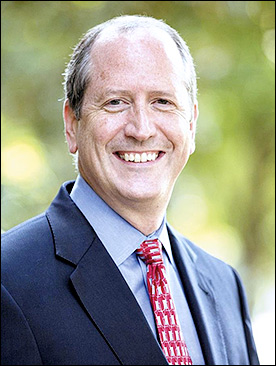
North Carolina Republican Mark Harris

Jan. 7, 2019 — When the new House of Representatives convened last week, they did so with only 434 voting members, not 435, as the situation in North Carolina’s 9th District remains unresolved.

To recap, Republican Mark Harris scored an apparent 905-vote victory over Democrat Dan McCready on election night, but the results remain uncertified due to what a majority of Board of Elections panel members are citing as voting irregularities in one county. The panel is scheduled to next meet this Friday, Jan. 11th, and organizing a new election is the likely resolution.

Previously, the Board only had the power to order a rerun of the general election. Hence, the subsequent election would have included only Harris, McCready, and Libertarian Jeff Scott. Considering the media hit that Harris has received over the election irregularity controversy, his chances of winning the rerun are slim. (He hired the Red Dome Consulting firm, which contracted with the individual accused of orchestrating the ballot harvesting operation, McCrae Dowless, the vice chairman of the Bladen County Soil and Water Conservation Board.)

Therefore, with Republicans controlling the legislature, they quickly constructed a legislative package that would give Democratic Gov. Roy Cooper largely what he wanted in naming a new Board of Elections panel, while changing the post-election law to allow open primaries. This would give the GOP the opportunity of replacing Harris in the general election.

The legislature quickly passed the reform package at the end of the year with an overwhelming margin, because most Democrats voted for the bill as it included their much-wanted Board of Elections changes. The legislation was sent to Gov. Cooper with veto-proof majorities in both houses.

Continue reading

Potential Specials in North Carolina

By Jim Ellis

Dec. 12, 2018 — Rep. Mark Meadows (R-Skyland/Asheville) being mentioned as a possible successor to outgoing White House chief of staff John Kelly means that a special election would be called for western North Carolina if the congressman were to vacate his district. Should this come to pass, the state may be forced to host two congressional special elections but possibly under different rules.

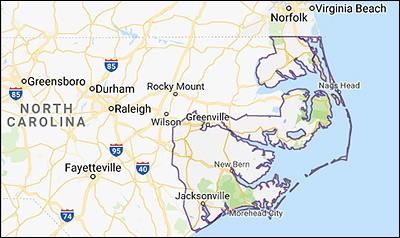
North Carolina Congressional Districts

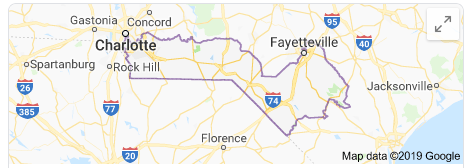
The 9th District, which stretches from Charlotte to Fayetteville along the South Carolina border, is likely headed to a new vote since the state Board of Elections refuses to certify Republican Mark Harris’ 905-vote lead over Democrat Dan McCready due to election irregularities in one county.

Though the two potential elections could reasonably be held under the same schedule, the process parameters surrounding each are likely to be different.

If Rep. Meadows’ district opens, the special election will be run under traditional rules, meaning open partisan primaries and a general election once nominees are chosen. But, not so in the 9th District.

Under North Carolina law, should the Board of Elections declare the original election null and void after their investigation into the alleged irregularities concludes, a new special election would be a rerun of the 2018 general election, meaning the candidates would be Harris, McCready, and Libertarian nominee Jeff Scott.

Continue reading

Two House Races Still Not Decided

By Jim Ellis

Dec. 6, 2018 — Two House races are still not finalized, with one possibly headed for a new election. In California, action is still not complete now almost a month after Election Day. Democrat T.J. Cox leads Rep. David Valadao (R-Hanford/Bakersfield) by 843 votes in the 21st District with an undetermined number of ballots remaining to be counted. It does appear that Cox will be declared the winner, but the election officials actually doing finalizing the race still have not done so.

In North Carolina, the state Board of Elections has blocked certifying Republican Mark Harris’ victory over Democratic businessman Dan McCready in the state’s open 9th District. The seat went to open status after the North Carolina primary in May when Harris, formerly a Baptist pastor, upset Rep. Bob Pittenger (R-Charlotte) in the Republican primary.

Ironically, a practice referred to as “ballot harvesting” appears to be at the heart of the California political overtime races and this one suspended result in North Carolina. Ballot harvesting is the act of an individual gathering absentee ballots from voters, bundling them together, and turning them over to election officers for counting purposes. In California, ballot harvesting is now legal. In North Carolina, it is not.

In the Golden State, the Valadao district is the last to turn. In five other seats, all Republican held, the GOP candidate led through Election Day and mail counting, only to see the tables turn when provisional ballots were added. Statewide, almost 2 million votes were in this category, so an average of approximately 35,000 such votes were present in most congressional districts.

Continue reading

Setting the 2020 Stage – Part I

By Jim Ellis

Dec. 3, 2018 — The election of Rep. Cheri Bustos (D-IL) as the new Democratic Congressional Campaign Committee (DCCC) chair at last week’s House Democratic Conference, and Rep. Tom Emmer’s (R-MN) previous selection to lead the National Republican Congressional Committee (NRCC) for the coming election cycle means the national players are coming into focus for the next campaign year.

Bustos topped Washington Reps. Denny Heck (D-Olympia) and Suzan DelBene (D-Medina/Redmond) 117-83-32 in the conference election to officially head the DCCC. Rep. Sean Patrick Maloney (D-NY) was also a candidate, but he is hospitalized recovering from a bacterial infection and was unable to attend the meeting. He failed to convince the membership to postpone the internal election.

With a partisan division of 235D – 200R in the 116th Congress, the Republicans will need a net gain of at least 18 seats to re-take the House majority. With 43 seats that flipped from Republican to Democrat in the November election, the field would appear ripe for GOP challenge efforts.

The first category that we cover today is comprised of the most obvious seats that will be battleground districts in 2020. A total of 18 seats can currently be considered for this category and again figure to be among the most competitive districts in the next election cycle.

Continue reading

NC-9: Certification Problems

By Jim Ellis

North Carolina Republican Mark Harris

Nov. 30, 2018 — The North Carolina Board of Elections has failed to certify Republican Mark Harris’ victory in the open 9th Congressional District, action that may initiate a long legal battle.

Board Vice Chairman Joshua Malcolm (D) objected to certifying Harris’ 905-vote victory over businessman Dan McCready (D) from 282,717 total votes cast. The seat was open after Harris, a Baptist former pastor and ex-US Senate and congressional candidate, defeated Rep. Bob Pittenger (R-Charlotte) in the May Republican primary.

Malcolm cited “irregularities” in Republican Bladen County, an entity that Harris carried by 1,557 votes, obviously more than his district-wide margin, as his reasoning to the other board members as to why the result should be at least temporarily suspended.

The 9th District begins in Mecklenburg County and then travels down the South Carolina border to the Fayetteville area. It includes five complete counties and parts of three others including Mecklenburg and Bladen. Harris carried only Union County and Bladen’s 9th District section, but his margins were large enough in these two places to overcome McCready’s advantage in the other six local entities.

The North Carolina Board of Elections (BoE) is a nine-member panel that has been at the center of controversy between Gov. Roy Cooper (D) and the Republican legislature. After Cooper defeated then-Gov. Pat McCrory (R), the legislators passed a series of bills that limited some of the governor’s power. One of the measures involved changing how the Board of Elections’ membership was appointed.

Continue reading

Looks Like the House Settles at 235

California Congressional Districts


By Jim Ellis

Nov. 29, 2018 — The 2018 House election cycle is finally drawing to a close, and it looks like the Democrats are gaining their 40th conversion seat. Monday night in California, as the state’s marathon vote counting process meanders on, Democratic challenger T.J. Cox overtook Rep. David Valadao (R-Hanford/Bakersfield) and may well be headed toward victory.

Rep. Valadao, who had earlier been projected as the winner, trails his opponent by 438 votes, but the counting is still not complete. New votes were counted in Kern County that greatly favored Cox, allowing him to take the lead for the first time.

The California counting system literally takes weeks because the state allows voters to postmark their mail ballots on Election Day, and the counties only process ballots on certain days. The 21st District is split among four counties, so it is difficult to know exactly how many mail, overseas, and provisional ballots still remain since the numbers are only released by complete county domain.

It is probable that we will not have a final result until next week because Kern won’t release more totals until Monday. The remaining counties: Fresno, Kings, and Tulare, should record their final numbers this week.

Continue reading

Mia Love Falls in UT-4

Utah Rep. Mia Love (R-Saratoga Springs)

By Jim Ellis

Nov. 21, 2018 — It appears the final undecided House race has now come to at least an unofficial end, and the result is a bit surprising.

Some, including me, were predicting the culminating vote tabulation trend in Utah’s UT-4 District would favor incumbent US Rep. Mia Love (R-Saratoga Springs), based upon her overwhelming performance from the late votes in the 4th District’s two rural counties and the more populous Utah County. But the substantial number of remaining ballots in Salt Lake County proved decisive in that Democratic nominee Ben McAdams over-performed, which flipped the race back in his direction as the count concluded.

On election night, it appeared that Rep. Love had been defeated when she fell almost 9,000 votes behind as Salt Lake County was being tabulated. But she came roaring back when the outlying counties’ votes were counted. As the late votes were finally being recorded, Love rebounded to forge a 1,615 district-wide vote edge. Her advantageous situation was precarious, however, as thousands of same-day registration, absentee, and provisional votes still remained in Salt Lake County.

Yesterday, those latter votes were counted while Love found herself slightly under-performing within the last group of Utah County votes. She garnered only 66 percent in the final Utah County vote pool, below the 74% she was posting in previous totals within this entity.

According to local reports, this meant that Democrat McAdams, the Salt Lake County mayor, could overtake the congresswoman should he score approximately 59 percent from the remaining votes. This, he did, and then some, as McAdams erased MLove’s previous lead and ended the counting day with a 739-vote advantage.

McAdam’s surge was largely due to approximately 9,000 same-day registrants, many of whom were coming to the polls to vote for the medical marijuana ballot proposal that passed the state 53-47 percent but was overwhelmingly approved in Salt Lake County. It is evident that a strong majority of these voters supported McAdams.

Continue reading