Category Archives: House

The Maine Event

By Jim Ellis

Maine Congressional Districts

May 20, 2020 — The small state of Maine, with its two congressional districts, is going to attract a great deal of political attention between now and the election. Not only is the Pine Tree State one of the firewalls for Republican Senate majority hopes, the domain, one of two places that splits its electoral votes, will likely play a major role in determining the presidential election outcome, as well.

Maine and Nebraska divide their electoral votes such that the winning statewide candidate earns two electoral votes, while the victor in each congressional district is awarded one EV for as many districts as they carry. Maine, as mentioned, has two districts, and Nebraska three.

These districts came into play both in 2008 and 2016, when Barack Obama carried the 2nd District of Nebraska against John McCain in the former year, and Donald Trump took the 2nd District of Maine opposite Hillary Clinton in 2016. While neither CD became a factor in determining each of those elections, these CDs breaking differently than their state in a tight national election could result in the Electoral College ending in a tie.

The 48 other states and the District of Columbia use the winner-take-all system. Any state could divide their electoral votes like Maine and Nebraska, but those are the only two who choose the split vote method.

In the current presidential election scenarios, whether or not President Trump again carries ME-2 could determine if he is re-elected. Under one scenario, former vice president Joe Biden could win the national race even if he failed to carry Wisconsin so long as he takes the 2nd District of Maine and 2nd District of Nebraska. Doing so, along with winning the other swing states that touch a Great Lake, meaning Michigan and Pennsylvania, he would secure exactly 270 electoral votes, the bare minimum to claim national victory.

Continue reading

Is A Budding Red Rebound Emerging?

By Jim Ellis

May 19, 2020 — Two years ago, several national political prognosticators were predicting a strong Democratic election, i.e., “a blue wave,” by using special election results, mostly from state legislative campaigns, as one of their fundamental support arguments. As we know, the forecast proved correct.

To what degree the special election totals were a precursor is difficult to say, but it is reasonable to believe that real-time results are a better voting trend indicator than publicly released polls, many of which are methodologically flawed. Therefore, it is worth analyzing similar voting patterns as we approach the 2020 election.

North Carolina Rep. Dan Bishop (R-Charlotte)

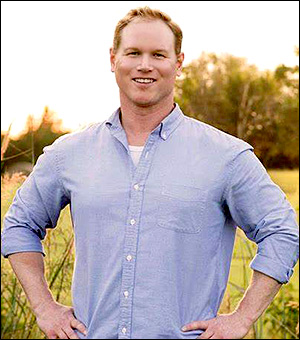
The victory of Republican Mike Garcia in California last week marked the first congressional special election of this election cycle to flip from one party to the other. Republicans have won five of the six special US House contests, including those of Garcia and Wisconsin state Sen. Tom Tiffany (R-Minocqua), who easily claimed his state’s vacant 7th District, last Tuesday.

The other significant special election occurred late last year. Though Rep. Dan Bishop’s (R-Charlotte) victory in North Carolina came in a seat that historically produced Republican victories, he was certainly considered an underdog at the outset of the special election campaign. He rebounded, however, to score a two-point victory, nonetheless, which in many ways makes it as noteworthy as the Garcia win.

The NC-9 election was necessitated because voter fraud in the 2018 general election prevented the Republican candidate from being certified the winner. After almost a year of keeping the seat vacant, the state’s Board of Elections called a new election that Gov. Roy Cooper (D) scheduled for Sept. 10, 2019.

In the campaign, Bishop was outspent $7.5 million to $2.7 million and that was on top of the $6.1 million Democrat Dan McCready expended in the 2018 general election. Furthermore, Democratic strategists predicted victory in this race because the Charlotte-Fayetteville seat contains a large suburban population, the type of district where their candidates certainly excelled in 2018, and President Trump’s job approval ratings were languishing around the 40 percent mark at the time. All things considered, the Bishop victory should not be characterized as a routine Republican hold.

According to the Ballotpedia election research organization, during the 2018 voting cycle, 197 special state legislative elections were held around the country, 98 of them in 2017, and 99 in 2018. Republicans risked 110 of the seats, substantially higher than the 87 the Democrats were forced to defend. In 2017, Democrats gained a net 11 legislative seats nationally, and eight more in 2018 for a cycle total of 19 net flips (Democrats actually won 26 Republican-held seats, but the GOP took back seven Democratic districts). It was these numbers that largely led the prognosticators to point to changing trends.

Continue reading

An Upset Win in California for Garcia

By Jim Ellis

California Republican Mike Garcia

May 14, 2020 — Despite thousands of ballots still to be received and tabulated, California Democratic Assemblywoman Christy Smith (D-Newhall) conceded the 25th Congressional District special election race to Republican Mike Garcia late yesterday, making this the first time in decades that the GOP has converted a Democratic seat in the deep blue state.

According to the California Secretary of State, the semi-official preliminary totals showed Garcia, a retired Navy fighter pilot, taking 56 percent of the vote from the 143,335 tabulated ballots. Though votes will be flowing into the election center through Friday evening, it became obvious to Smith that there would not be enough late ballots to overcome Garcia’s substantial 17,339-vote advantage.

Though the California registration figures show 420,928 individuals on the voter rolls in this congressional district, meaning a current turnout of 34.1 percent with many more ballots coming, the progression did not appear to yield the huge participation factor Smith needs to turnaround the final election result.

In the March 3 state primary, 156,550 CA-25 voters participated in the regular election, a total not far from the preliminary tabulation we saw in Tuesday’s special general, remembering that the 3/3 vote, at the time, featured a competitive Democratic presidential nomination event. Of the total, 81,994 voted in the Democratic presidential primary in a CD that Sen. Bernie Sanders (I-VT) carried over former vice president Joe Biden, 35.6 – 33.6 percent.

On the Republican side, in their non-competitive race, 64,138 individuals voted in the presidential primary with incumbent Donald Trump taking 92.3 percent of the cast ballots.

Other past races find that this special election turnout could still grow substantially. In the 2018 midterm general election that elected Rep. Katie Hill (D), who would become embroiled in a sex scandal that forced her to resign a year later, 245,022 people participated. In the 2016 presidential election year, 261,161 voters cast their ballots in the congressional race.

Therefore, these latter turnout figures imply the participation rate could still grow, but even the larger historical numbers suggest that CA-25 is a mid-level turnout district in relation to the other California congressional districts. In the presidential election year, the district ranked 24th of the state’s 53 CDs in voter participation. In 2018, with their turnout figure approaching presidential election level voting, CD 25 reached 22nd position within the California district universe.

Continue reading

Mfume Elected; Ohio Races Set

By Jim Ellis

Kwesi Mfume

April 30, 2020 — Maryland held a stand-alone special election Tuesday in the state’s 7th Congressional District to replace the late Rep. Elijah Cummings (D-Baltimore) for the balance of the term. Cummings passed away in October and the original special primary was held on Feb. 4.

With more than 100,000 votes counted and more remaining to be tabulated from the all-mail balloting, former congressman Kweisi Mfume returns to the House with 73 percent of the vote. Mfume defeated Republican nominee Kimberly Klacik who did not have a realistic chance in the heavily Democratic district, but she did manage to raise just about $200,000 for her effort.

Candidates for the full term now move onto the June 2 state primary, an election that was originally scheduled to be held yesterday. Gov. Larry Hogan (R) re-scheduled the primary as part of his series of his COVID-19 disease precautions.

In Ohio, Rep. Joyce Beatty (D-Columbus) was in a competitive primary against Morgan Harper, a former Consumer Financial Protection Bureau official who raised over $800,000 for his primary challenge. The four-term congresswoman had little trouble winning re-nomination, however, as she captured more than 68 percent of the vote. She is now the prohibitive favorite in the general election against banker Mark Richardson in what is a safe Democratic seat.

Reps. Brad Wenstrup (R-Cincinnati), Bill Johnson (R-Marietta), Warren Davidson (R-Troy), Marcy Kaptur (D-Toledo), Mike Turner (R-Dayton), Marcia Fudge (D-Cleveland), Troy Balderson (R-Zanesville), David Joyce (R-Russell Township), and Steve Stivers (R-Columbus) all had minor primary opposition. Each won with between 83 and 94 percent of the vote.

In the 1st District, two Democrats were vying for the opportunity of challenging veteran Rep. Steve Chabot (R-Cincinnati). Healthcare company executive Kate Schroder claimed the primary with an unofficial and likely incomplete 68-32 percent victory over engineer and Air Force Reserve officer Nikki Foster. The 1st District has become more competitive as evidenced in Rep. Chabot’s 51-47 percent re-election victory in 2018. Therefore, we can expect another hotly contested campaign later this year in the Cincinnati area.

Continue reading

Utah Convention Results

By Jim Ellis

Utah House Distrits

April 28, 2020 — The Beehive State Republicans and Democrats gathered in respective virtual settings to conduct their nominating conventions on Saturday and posted record delegate participation figures. Both parties were looking to advance candidates into an open Utah gubernatorial primary and in four congressional districts where three incumbents are seeking re-election. A total of 93 percent of 3,850 eligible Republican delegates cast their votes online, while 85 percent of the 2,203 Democratic delegates did the same.

In both parties, if a candidate receives 60 percent of the delegate support the individual is automatically advanced into the June 30 primary election. This year, the vote will be conducted through an all-mail procedure under emergency legislation that Gov. Gary Herbert (R) signed on Friday. Additionally, candidates who have qualified through the signature petition process also earn a primary ballot position. Candidates have the choice of only participating in the convention, only gathering signatures, or doing both.

If no one receives 60 percent, the top two finishers advance into the primary. The delegates used the ranked choice format to prioritize their votes, since multiple rounds were needed in most races. In a round, the last place candidate is eliminated and the remainder advance to the next vote. The process ends with either one candidate advancing to the primary ballot outright, or the top two moving forward if no one reaches 60 percent but a pair at least touch 40 percent.

The open Republican gubernatorial race was the main attraction as seven candidates competed for convention votes including Lt. Gov. Spencer Cox, who has retiring Gov. Herbert’s endorsement and leads in the most recent polling, and former governor, US ambassador, and 2012 presidential candidate Jon Huntsman.

Continue reading

Jersey House Competition

By Jim Ellis

April 27, 2020 — The Monmouth University Polling Institute conducted a statewide poll of the New Jersey electorate (April 16-19; 704 New Jersey adults, 635 registered New Jersey voters, 96 percent of whom said they are certain or likely to vote in November) and while the results returned predictable figures in the presidential and Senate races, an interesting tidbit about the House races came to light.

In the presidential race, former vice president Joe Biden led President Trump 54-38 percent according to Monmouth’s latest New Jersey poll, and Sen. Cory Booker (D) led his strongest potential Republican opponent, 55-32 percent. Both sets of numbers were predictable and consistent with recent Garden State voting history.

New Jersey congressional districts: Districts 1, 6, 8, 9, 10, and 12 are the six safe seats. Districts 2, 3, 4, 5, 7, and 11 comprise the competitive sector.

Though the Monmouth pollsters didn’t test the individual House races, they did ask the partisan preference question and segmented the congressional districts into two campaign categories, the competitive group and the non-competitive group.

Statewide, 50 percent of the respondents said they would vote for the Democratic candidate for the US House of Representatives as compared to 38 percent who would choose the Republican contender. But when looking at the competitive House category, Republicans look to have a glimmer of hope of potentially recapturing some of the seats they lost in the 2018 election.

In that year, Democrats converted Districts 2, 3, 7, and 11, gaining four seats and leaving the 12-member NJ federal delegation with only one Republican member at the outset, Rep. Chris Smith (R-Hamilton) in the 4th CD. Since the election, Rep. Jeff Van Drew (R-Dennis Township/Atlantic City) changed parties after being elected as a Democrat. All of these seats, including District 4, and 5 in northern New Jersey (Rep. Josh Gottheimer-D), comprise the competitive sector. Districts 1, 6, 8, 9, 10, and 12 are the six safe seats.

In the “safe” House category, 56 percent of respondents said they would vote for the Democratic candidate as compared to 31 percent who aligned themselves with the eventual Republican general election candidate. In the competitive districts, however, by a 46-45 percent plurality, the respondents said they would vote for the Republican candidate. Considering that Rep. Gottheimer will not be seriously challenged, the GOP numbers in the truly contested districts should even be stronger. This type of result should continue to make many of the Garden State seats prime 2020 Republican national targets.

The safe seats, with all incumbents seeking re-election, are held by Reps. Donald Norcross (D-Camden City), Frank Pallone (D-Long Branch), Albio Sires (D-West New York), Bill Pascrell (D-Paterson), Donald Payne (D-Newark), and Bonnie Coleman Watson (D-Ewing Township).

The competitive seats feature party-switching Rep. Van Drew seeking his first re-election. He looks strong in the Republican primary – a first vote as a party’s new incumbent can be difficult – and will face either college professor Brigid Callahan Harrison or Amy Kennedy, wife of former US Rep. Patrick Kennedy (D-RI), in what should be a competitive general election. With a solid Republican primary victory, Rep. Van Drew will be favored in November.

The 3rd District may be the Democrats’ most vulnerable seat. Freshman Rep. Andy Kim (D-Bordentown) upset then-Rep. Tom MacArthur (R) in 2018, and now faces what should be a strong GOP opponent. Venture capitalist David Richter, who was originally running in the 2nd District until Rep. Van Drew became a Republican, is considered the favorite for the GOP primary, and he appears to be a strong challenger for Rep. Kim but will have less time to develop the campaign. Gov. Phil Murphy (D) has moved the state primary from June 2 to July 7.

NJ-3 looks to be the most likely of the New Jersey seats to flip. Until Kim won here two years ago, and except for a one-term lag, Republicans had held this southern New Jersey seat since 1979.

Rep. Chris Smith (R-Hamilton), who was first elected to the House in 1980, looks to face an easier re-election contest this year than he did two years ago. In an election when he was the Republicans’ lone survivor, Rep. Smith scored a 55-43 percent victory.

Freshman Rep. Tom Malinowski (D-Rocky Hill) will almost assuredly face state Senate Minority Leader and former statewide candidate Tom Kean Jr. Sen. Kean’s father, Tom Kean, served as New Jersey’s governor from 1982-1990. This race promises to be a premier contest in a district that a Republican has represented since 1981 until Malinowski won in the most recent vote.

In northern New Jersey’s 11th District, freshman Rep. Mikie Sherrill (D-Montclair/Morristown) who won another traditionally strong Republican seat that the party had held since consecutively since 1985, stands for her first re-election. Her challenger is consensus Republican candidate Rosemary Becchi, an attorney and former Capitol Hill committee staff member, who was originally challenging Tom Kean Jr. for the party nod in the 7th District.

Party leaders were able to convince her to run in the 11th CD and helped clear the field. She will be a credible challenger to Rep. Sherrill, but the congresswoman is such a strong fundraiser (already has raised $3.4 million for this election) that the race will be a difficult one for Sherrill despite what should be a favorable district.

With Republicans developing a strong slate of New Jersey US House candidates in places where they have traditionally been successful, the Garden State elections will go a long way toward determining if the GOP has any chance of re-claiming the House majority. If the Democrats stem the tide here, they very likely will retain control.

Money Report: The Runoffs

By Jim Ellis

April 22, 2020 — Continuing with our analysis of certain 1st quarter 2020 fundraising numbers, today we look at the upcoming runoff elections that are happening in Alabama, North Carolina, and Texas.

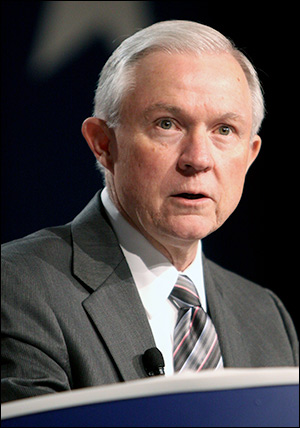
In Alabama, former US attorney general and ex-three term senator Jeff Sessions, and retired Auburn University head football coach Tommy Tuberville move to a postponed July 14 runoff that was originally scheduled for March 31. Tuberville placed first in the primary election by one percentage point over former Sen. Sessions, attempting to make a political comeback and overcome his national feud with President Trump. The longer runoff cycle may give Sessions the opportunity for a rebound.

Though Tuberville finished first, he is behind Sessions in campaign resources though both have plenty with which to compete. For the campaign, Sessions has spent $3.81 million as compared to Tuberville’s $2.84 million. In the first quarter, Tuberville outraised Sessions by just over $40,000. Tuberville raised $785,513 in the first quarter and had $458,519 in his campaign account at the end of March. While Sessions posted a bit less at $743,861, he has more cash-on-hand: $749,235. These numbers tell us that both men will be able to deliver their respective campaign messages before the July 14 vote.

In the Alabama House runoffs, Mobile County Commissioner Jerry Carl (R) outpolled former state senator Bill Hightower (R-Mobile) but not in first quarter fundraising. Hightower led the dollar pace with $344,627 raised versus $169,785, but as a local political official, Carl has been attracting a great deal of earned media because of area coronavirus protection messages. Cash-on-hand is virtually equal, with both men holding slightly more than $200,000. Carl spent $1.3 million in the primary opposite Hightower’s $858,000.

The 2nd District runoff features self-funding businessman Jeff Coleman, who placed first in the Republican primary against former state representative, Barry Moore. The big story here is Coleman financing just short of $1 million for his almost $2 million primary campaign. With Moore raising only $46,137 for the entire 1st quarter, it appears Coleman will be very difficult to overcome in the runoff election.

In North Carolina just one run-off is occurring — in White House Chief of Staff Mark Meadows’ former 11th District. The Republican contest features Meadows’ endorsed candidate, former Haywood County Republican Party chair Lynda Bennett and real estate company owner Madison Cawthorn. Bennett placed first in the primary, and has an edge in fundraising, but Cawthorn was able to self-fund to a degree of $311,000.

Continue reading