Category Archives: Governor

Yesterday’s Odd-Year Election Day

Kentucky Gov. Matt Bevin (L) and Attorney General Andy Beshear

By Jim Ellis

Nov. 6, 2019 — The odd-year Election Day hit yesterday, with voters going to the polls in Kentucky, Mississippi, New Jersey, and Virginia. Governors’ chairs were at stake in Kentucky and Mississippi, while state legislators were on the ballot in all of the aforementioned with the exception of Kentucky.

Bluegrass State Gov. Matt Bevin (R) ran for a second term after a tenure that has seen him dwell at the bottom of the 50-state approval polls for almost his entire time in office. Bevin was a surprise winner in 2015, defeating then-Attorney General Jack Conway (D) who was viewed as the favorite for the entire campaign. Similarly, Gov. Bevin again faced a Democratic Attorney General in this election, Andy Beshear, the son of the man who he replaced in Frankfort, former Gov. Steve Beshear (D).

Polling suggested a close race. Polling was right. As of publish time, the election still was too close to call despite Beshear claiming victory. Bevin would not concede. Fewer than 5,000 votes separate the two candidates, the advantage going to Beshear at the moment.

Bevin lagged behind early in the general election cycle, but returned to parity. The polling pattern was similar in Bevin’s last contest, so he is obviously hoping for a repeat performance. In 2015, Bevin defeated AG Conway by a surprisingly large 52-44 percent spread, a margin that surprised pollsters.

Mississippi featured an interesting gubernatorial campaign between GOP Lt. Gov. Tate Reeves, who attempted to succeed term-limited Gov. Phil Bryant (R), and state Attorney General Jim Hood (D), serving his fourth consecutive term. This race, as in Kentucky, has been close in the polls with Reeves maintaining a small lead. And Reeves is ahead with 53 percent of the vote.

The Mississippi race included a budding controversy that could take shape after the election. Under state law, a gubernatorial candidate must not only win a popular vote majority at the statewide level, he or she must also carry a majority of the 122 state House districts. A federal judge appears ready to strike down the result if the state legislature is forced to decide because no candidate wins both a majority in the statewide vote and in the state House districts.

The entire Virginia House of Delegates and state Senate was on the ballot, and Democrats were confident that they would assume the majority in both houses. Before yesterday, Republicans held a 20-19 edge in the state Senate with one vacancy, and a three-seat margin in the House with one vacancy. The latter majority was literally decided by pulling lots from a hat when the final 2015 Delegate race ended in a tie. The Democrats took back both the House and Senate; it looks like the Democrats will win 21 seats in the state Senate, with the Republicans holding on to 19. In the House, the Democrats are ahead with 53 seats to the Republicans 43 seats with a few races still outstanding.

It was estimated that the redistricting decision since the last election, which mandated the re-drawing of several Delegate districts, would likely give the Democrats an extra boost.

New Jersey voters selected state Assembly members, however the state Senate won’t come before the electorate until 2021. Democrats maintain a huge 54-25 majority with one vacancy, and that could increase. Republican chances of winning a majority in the state Assembly were nil.

Continue reading

New Data in Mississippi Gov. Race

By Jim Ellis

Mississippi Lt. Gov. Tate Reeves (R)

Oct. 24, 2019 — One of the more intriguing current elections is the Mississippi governor’s campaign. Here, GOP Lt. Gov. Tate Reeves is attempting to continue the Magnolia State Republican advantage, since the only Democrat to clinch the top elected job since the 1991 election is Ronnie Musgrove in 1999. Prior to Kirk Fordice winning in ’91, Democrats had held the governorship for 116 consecutive years.

Reeves arguably faces the strongest Mississippi Democratic opponent in this century’s state politics. Attorney General Jim Hood (D) has won four consecutive statewide elections to his current position, making him the most successful Democratic politician in the Deep South.

A just released Mason-Dixon Polling & Strategy survey (Oct. 17-19; 625 registered Mississippi voters) finds the electorate breaking closely between the two contenders, as Reeves leads AG Hood, 46-43 percent according to the ballot test responses.

But the Mississippi election, going to the voters on Nov. 5, has an interesting caveat. Winning a statewide majority is not enough to be elected governor. In addition to reaching the 50 percent plateau for the statewide vote, a candidate also must carry a majority of the state’s 122 (meaning 62) state House of Representatives’ districts.

If neither candidate wins both a majority of votes and districts, then the state House members will cast their own votes to choose the next governor. With Republicans holding a 74-44 state House majority with 2 Independents and two vacancies, the chances of the GOP nominee carrying the majority of districts are high, and the Republican winning a vote among House members is a virtual certainty.

According to Mason-Dixon, the two candidates’ favorability indexes are similar. Reeves records a 41:26 percent positive to negative ratio, while Hood posts a 39:29 percent favorable score.

Most of the segments break as one would expect: Democrats going for Hood, 87-2 percent; Republicans favoring Reeves, 82-8 percent. Men favor Reeves, 50-38 percent, while women choose Hood in a 47-43 percent cut. The under 50 years of age segment leans to Hood 46-41 percent, while the over 50 group chooses Reeves, 51-39 percent. Whites support Reeves, 66-24 percent, and blacks back Democrat Hood in their typical division, 80-7 percent.

Continue reading

Gov. Bevin Pulls Even in Kentucky

By Jim Ellis

Oct. 18, 2019 — Though the Louisiana governor’s race has received most of the recent national political attention largely because of their just concluded jungle primary election that somewhat surprisingly forced Gov. John Bel Edwards (D) into a run-off, news is now breaking in the Kentucky statewide electoral contest.

Kentucky Gov. Matt Bevin (L) and Attorney General Andy Beshear

Democrats have been outwardly predicting that Kentucky Attorney General Andy Beshear, the son of former two-term Gov. Steve Beshear (D), would oust Gov. Matt Bevin (R) in the coming election.

They first cited a pair of August polls that projected Beshear to be holding a substantial nine percentage point advantage over the governor (Garin-Hart-Yang Research and Clarity Campaign Labs both found Beshear leading 48-39 percent). Additionally, they point to the Morning Consult gubernatorial surveys that ranked Bevin dead last in job approval among the 50 state chief executives with a 34:53 percent favorable to unfavorable ratio.

Now, however, the race appears to be reversing course less than a month before the Nov. 5 election. Mason-Dixon Polling & Strategy just released their latest data (Oct. 10-13; 625 registered Kentucky voters) finding that the two major party candidates have fallen into a tie at 46 percent apiece, meaning Gov. Bevin has captured current momentum.

Both parties will spend heavily to help their respective candidate cross the finish line first, but Bevin has at least two tangential points going for him in the final weeks.

First, independently wealthy, the governor has the ability to self-fund his race, which largely accounts for his $1.58 million to just over $628,000 cash-on-hand advantage as revealed in the final regular pre-election financial disclosure report.

Continue reading

New NC State Poll

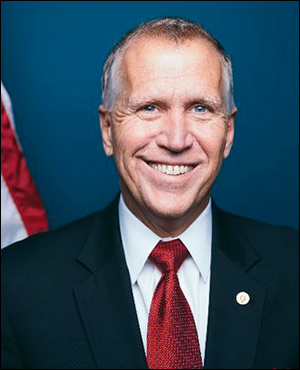
North Carolina Sen. Thom Tillis (R)

By Jim Ellis

Oct. 16, 2019 — A new Meredith College political survey (Sept. 29-Oct. 7; 998 registered North Carolina voters) shows electoral weakness for Sen. Thom Tillis (R) as he seeks a second term next year.

The poll places the first-term US senator in a statistical tie with both of his potential Democratic opponents, state Sen. Erika Smith (D-Gaston) and former state Sen. Cal Cunningham. The large number of uncommitted voters, however, suggests the race could go to either party and will likely break late, similar to many previous North Carolina election results.

According to the Meredith data, Sen. Tillis would tie both Smith and Cunningham with each of the three candidates receiving 33 percent support in all pairings. Obviously, these are not particularly favorable numbers for any incumbent and must be taken more seriously in this instance because of North Carolina’s history of either defeating its senators or seeing them not serve a second term for another reason.

In fact, the only two Tar Heel senators who have been re-elected since 1974 are Jesse Helms (R) and current three-term incumbent Richard Burr (R). During that span, the following senators were no longer in office after one term:

ONE-TERM NORTH CAROLINA SENATORS

  • Robert Morgan (D), 1980 – lost re-election
  • John East (R), 1986 – committed suicide in June before seeking a second term
  • Jim Broyhill (R), 1986 – appointed to fill Sen. East’s term; lost 1986 election)
  • Terry Sanford (D), 1992 – lost re-election
  • Lauch Faircloth (R), 1998 – lost re-election
  • John Edwards (D), 2004 – did not seek a second term to instead run for president
  • Elizabeth Dole (R), 2008 – lost re-election
  • Kay Hagan (D), 2014 – lost re-election

The Meredith College pollsters also tested Gov. Roy Cooper (D) as he fights for a second term likely against Lt. Gov. Dan Forest (R). Here, Meredith finds the incumbent holding a 46-33 percent margin over his eventual GOP challenger.

Continue reading

First-Term Louisiana Gov. Edwards Forced to Run-Off Against Rispone

Republican challenger Eddie Rispone (R) and Louisiana Gov. John Bel-Edwards (D)

By Jim Ellis

Oct. 15, 2019 — Saturday’s Louisiana statewide open primary election found first-term Gov. John Bel Edwards (D) failing to win re-election outright, meaning he and the second-place finisher, businessman Eddie Rispone (R), will advance to a Nov. 16 secondary vote.

The result suggests Edwards’ bid for re-election is in trouble since no governor in Louisiana history has won a secondary vote when forced into a run-off. The governor received 46.6 percent of the vote in the primary, an election where all candidates are placed on the same ballot irrespective of political party affiliation. If no contender receives majority support, as was the case on Saturday, the top two finishers advance to a second election.

Rispone (pronounced: ris-pony), a Baton Rouge-area developer who reportedly spent more than $11 million of his own money on the gubernatorial campaign, garnered 27.4 percent of the vote, more than 51,000 votes ahead of third place finisher and fellow Republican Ralph Abraham, a northern Louisiana US congressman. The remaining two-plus percentage points were spread among a minor Democrat, Republican, and Independent.

Combined, the Democratic vote, despite featuring the incumbent at the top of the ticket, reached only 47.4 percent, compared to the combined Republican percentage of 51.8. Upon being eliminated, Congressman Abraham, who did not have to risk his federal position to run for governor, immediately endorsed Rispone. The two appeared together at President Trump’s Louisiana rally on Friday night, at which point the president urged the attenders to vote for either GOP candidate.

Polling appeared to correctly predict the race. Going into the final campaign days, nine different pollsters through 11 separate polls surveyed the Louisiana electorate. Nine of the 11 predicted Edwards to finish below 50 percent. Eight of the surveys projected Rispone to finish second with Rep. Abraham close behind. The Trafalgar Group and Data for Progress firms predicted the final result almost exactly.

Continue reading

Lt. Gov. Reeves Advances in Mississippi

By Jim Ellis

Mississippi Lt. Gov. Tate Reeves (R)

Aug. 29, 2019 — As expected, Mississippi Lt. Gov. Tate Reeves won Tuesday’s Republican gubernatorial run-off election, defeating former state Supreme Court judge Bill Waller Jr. by a 54-46 percent count. During the Aug. 6 primary, Reeves captured 49 percent of the vote, just one point shy of being nominated outright in the first election.

Lt. Gov. Reeves had the Republican establishment behind him, including public support from term-limited Gov. Phil Bryant and former governor and ex-Republican National Committee chairman Haley Barbour. Additionally, both he and Waller attempted to be viewed as the most conservative candidate in the race and ran as strong supporters of President Trump.

Therefore, a 54-46 percent win appears to be a slight under-performance, particularly when the drop-off turnout rate when compared to the primary election was only 15.3 percent. Tuesday’s turnout reached 324,353 voters, meaning that 58,727 fewer people cast ballots when compared to the early August Republican primary, which is a relatively small number.

Reeves now advances into the Nov. 5 general election where he will face the Democratic nominee, Attorney General Jim Hood. Hood has been commonly referred to as the “most successful Democrat in the South” because he has won four consecutive statewide elections in Mississippi. He was easily nominated in this year’s original gubernatorial primary, winning 69 percent of the vote against seven opponents, but the total vote in the Democratic primary was less – 21,963 votes less — than even last night’s Republican run-off.

The lieutenant governor carried 65 of Mississippi’s 82 counties against Judge Waller, though five of the locality results denoted a winner garnering less than 51 percent of the vote. In one county, Quitman, Reeves’ victory margin was just one vote.

In what could be a rather ominous sign for the general election, Reeves did poorly in and around the state’s capital and largest city, Jackson, its county (Hinds) and the two suburban entities bordering it, Madison and Rankin counties. He lost all three of these counties, though the aggregate vote totals in Hinds were low.

Continue reading

Mississippi Governor Primary Results

By Jim Ellis

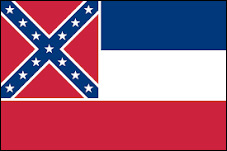
Mississippi state flag

Aug. 8, 2019 — Voters in the Magnolia State of Mississippi went to the polls to choose open race nominees for the first time in eight years on Tuesday. Incumbent Gov. Phil Bryant (R) is term-limited and ineligible to seek re-election in 2019.

As expected, Attorney General Jim Hood easily dispatched seven Democratic opponents and captured the party nomination outright with a 69 percent statewide win. Hood, often called “the most successful Democratic politician in the South” because of winning four consecutive statewide elections as Mississippi’s AG, scored majority support in all but six of the 80 reporting counties. At this writing, two counties still had not released their vote counts.

The Republican side is headed for an Aug. 27 run-off, as Lt. Gov. Tate Reeves, who earned Gov. Bryant’s backing for this election campaign, looks to be falling just a point short of securing the nomination. Of the estimated outstanding votes, Reeves would have to garner about 81 percent in order to win outright. Since his strongest county, tiny Coahoma, gave him 67.5 percent of the vote but from a total universe of only 120 voters, it indicates that attracting 81 percent of the outstanding ballots is not mathematically feasible.

Therefore, Reeves advances into the secondary election against former state Supreme Court Justice Bill Waller Jr., who placed second with 33 percent of the vote compared to Reeves’ 49 percent. The third candidate in the race, state Rep. Robert Foster (R-Hernando), captured 18 percent and won two counties. Judge Waller finished first in seven counties.

Obviously, Reeves’ dominant showing in carrying 71 counties, which was almost enough for him to claim the nomination, now makes him a heavy favorite for the run-off. It will be interesting to see if Judge Waller comes under pressure not to force the secondary vote and an award the nomination to Reeves in order to unify the party and better prepare for the campaign to oppose Hood.

Turnout proved high in comparison with other races of note, at least for Republicans. The still growing turnout figure of 366,477 Republican voters tops the last open gubernatorial race back in 2011 when just under 290,000 individuals voted in that particular Republican primary. The Democrats’ 276,664 voter turnout figure increases the total participation figure in yesterday’s vote to 643,141 individuals with the two counties still outstanding.

Continue reading