Category Archives: Election Analysis

Monday’s Retirement

California Rep. Ed Royce (R-Yorba Linda/Fullerton) | Facebook

California Rep. Ed Royce (R-Yorba Linda/Fullerton) | Facebook

By Jim Ellis

Jan. 10, 2018 — It’s getting to the point where literally every day we witness a new retirement announcement from Congress, and Monday was no exception.

In another surprise political decision, veteran California Rep. Ed Royce (R-Yorba Linda/Fullerton), the chairman of the House Foreign Affairs Committee, disclosed that he will not seek a 14th term this year, preferring to dedicate his last year in Congress to finishing his committee agenda.

The move was unexpected in that Royce appeared to be preparing his political operation for a major battle. Reportedly through the year-end financial disclosure period, he already amassed a treasury exceeding $3.5 million. Until this week, his actions suggested that he was well equipped to run a strong re-election campaign.

Unlike most of the other 31 Republican seats that are being vacated for the next election, Royce’s California district has strong Democratic conversion potential. The constituency voted 51-43 percent for Hillary Clinton, but backed Mitt Romney 51-47 percent in 2012, and gave John McCain a 49-47 percent margin four years earlier. The Romney and McCain votes are more consistent with the district electorate’s long-term political performance history, but this area of the state, like many regions in the nation’s most populous domain, is turning more Democratic as significant demographic change continues.

Continue reading

An Ohio Curve Ball

Ohio Senate Candidate Josh Mandel

Ohio State treasurer and presumed Senate candidate Josh Mandel

By Jim Ellis

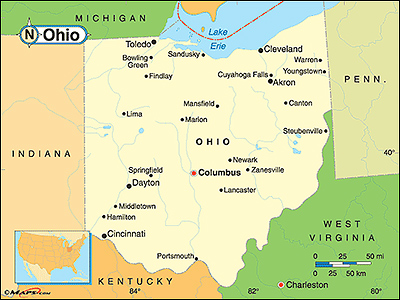
Jan. 9, 2018 — Most people believed the 2018 Ohio Senate general election would be a re-match of the 2012 contest, but now big changes are afoot. On Friday, presumed Republican nominee Josh Mandel, the Ohio State treasurer, announced that he will not file for the Senate race when the deadline expires on Feb. 7. Unfortunately, Mandel says that his wife’s undisclosed health situation, apparently just recently diagnosed, has forced him to the political sideline. He did not indicate whether or not he would seek re-election to his current position.

Mandel was quoted as saying, “[I] recently learned that my wife has a health issue that will require my time, attention and presence,” and that it “has become clear to us that it’s no longer possible for me to be away from home and on the campaign trail for the time needed to run a US Senate race,” as reported on the Daily Kos Elections website.

This means there will not be a repeat performance between Mandel and Sen. Sherrod Brown (D). The two ran against each other six years ago, with the Democratic incumbent winning 51-45 percent. At the time, Mandel, a first-term state treasurer elected only two years before, raised an impressive $18.9 million for the race, losing by only six points while Sen. Brown had the advantage of President Obama topping the Democratic ticket and carrying the Buckeye State. In comparison, Sen. Brown expended just under $21.5 million to secure his first re-election.

Continue reading

New Year House Preview

US-House-of-Representatives-balance-of-power-January-2018By Jim Ellis

Jan. 8, 2018 — Continuing our federal race outlook to set the political stage in this first week of the actual midterm election year, we now turn to the House races.

Republicans have a 24-seat margin (counting their three vacant seats that will go to special election in the early part of this year: PA-18, AZ-8, and OH-12), and though Democrats and most in the media claim that a new majority is just around the corner, a race-by-race House analysis shows that the road to converting the majority remains difficult to attain. This is so for several key reasons, not the least of which is the typical House incumbent retention factor. In 2016 the rate hit 97 percent (377 victories for the 389 House members who ran for re-election).

Additionally, even though President Trump’s job approval rating is historically low, we must remember that he won the 2016 national election with a personal approval index no higher than his present positive to negative ratios. And, even though congressional approval was well below 20 percent for the entire 2016 election year, Republicans lost only six House seats from their previous modern era record majority of 247 that was attained in the 2014 election.

When we have seen major seat changes occur in past elections, the winning party has done well in converting open seats. For the fourth election cycle in a row, the 2018 House cycle features an above average quantity of incumbent-less US House campaigns – the current number is 45, counting the two latest announced retirees, Reps. Bill Shuster (R-PA) and Gregg Harper (R-MS).

Continue reading

New Year Senate Preview – Part II

By Jim Ellis

Jan. 5, 2018 — Continuing our New Year’s preview, today we look at the 2018 Senate races from the Democrats’ perspective.

THE DEMOCRATS

Sen. Claire McKaskill | (Facebook)

Sen. Claire McKaskill | (Facebook)

Because they are now defending 26 of the 34 in-cycle seats, with the addition of the Minnesota special election, the Dems must primarily develop a solid defense before venturing into attack mode. If they are to have any chance of gaining a 51-49 majority, they will realistically have to win all 26 of the incumbent and open seat races they are forced to risk. This includes three contests already considered toss-up campaigns: Missouri Sen. Claire McCaskill likely facing Attorney General Josh Hawley (R), Sen. Joe Donnelly in the Indiana race, and the budding Florida campaign likely between Sen. Bill Nelson and Gov. Rick Scott.

Regardless of whom Sen. Donnelly ultimately faces in the Hoosier State, he will draw a top-tier opponent. Reps. Todd Rokita (R-Brownsburg/Lafayette) and Luke Messer (R-Greensburg/Muncie) battle for the Republican senatorial nomination, and they also face a credible third challenger in former state Rep. Mike Braun (R-Jasper). Braun has the strong ability to finance his own campaign, thus allowing him to adequately compete with the two congressmen. Since he has the promise of becoming his own force, Braun could conceivably strike a chord with the Republican electorate if the two congressmen continue fighting amongst themselves and allow him to slip by both of them.

Republicans will also be competitive in several other Senate races, as they project to have a strong opponent against West Virginia Sen. Joe Manchin (Attorney General Patrick Morrisey and Rep. Evan Jenkins battle for the GOP nomination to be decided in May), while state Treasurer Josh Mandel looks to provide a stronger challenge to Ohio Sen. Sherrod Brown (D) than he did in 2012 when he fell 51-45 percent. The Pennsylvania GOP electorate looks to be coalescing behind Rep. Lou Barletta (R-Hazelton) but upsetting Sen. Bob Casey Jr. is still a highly formidable task, and this developing contest must be considered a long shot as the new year begins.

Continue reading

New Year Senate Preview – Part I

By Jim Ellis

Jan. 4, 2018 — Now that we are officially in election year 2018, it is a good time to set the stage for the coming campaign season. With Democrat Doug Jones converting the Alabama special election last month, and new Sen. Tina Smith (D-MN) standing for a concurrent special election this November, a different picture exists for the coming Senate election campaigns.

THE REPUBLICANS

Sen. Dean Heller (R-NV)

Sen. Dean Heller (R-NV)

Before Alabama, it was a virtual mathematical certainty that the Republicans would retain Senate control after the 2018 vote because the Democrats had too few viable conversion targets. The Jones’ special election victory to permanently replace Attorney General Jeff Sessions, who left the Senate in order to accept his Trump Administration position, now gives the Democrats a path to attaining the majority but they still must overcome the GOP’s strong defensive wall.

Only forced to defend eight of the now 34 in-cycle seats, the Republicans are most at risk in Nevada and Arizona.

In the Silver State, first-term Sen. Dean Heller (R) currently defends his statewide position against two known opponents, only one of which is a Democrat.

Perennial candidate Danny Tarkanian, who has lost campaigns for five different offices (state Senate, Secretary of State, US Senate, Congressional District 4, and Congressional District 3), is nevertheless 4-1 in Republican primaries. Therefore, Sen. Heller’s first task is to secure the GOP nomination in June. Already we have seen erratic polling, with the Tarkanian camp and some national pollsters posting him ahead of Heller, but the senator and other independent research firms countering with the opposite result.

Continue reading

Southern Polls

By Jim Ellis

Dec. 22, 2017 — If the Democrats are going to make a concerted run at the Senate majority, they must protect all 10, and possibly 11, of their vulnerable states, and then convert both the Arizona and Nevada Republican seats. Or, they must score at least one major upset in what should be a safe Republican domain if they don’t succeed in achieving all of the aforementioned.

democrat-conversion-opportunities-mississippi-tennesseeAlabama Senator-Elect Doug Jones’ (D) victory earlier this month makes attaining a Democratic majority mathematically possible even though the party must now defend 26 of 34 in-cycle seats next year when adding the new Minnesota special election to the calendar.

Wednesday, two polls were reported in 2018 southern Republican states: Tennessee and Mississippi.

The Democrats’ chances in the Volunteer State, though still in the long-shot sphere, have improved since former Gov. Phil Bredesen agreed to run for the Senate.

WPA Intelligence, polling for the Super PAC, Defend the President, a group supporting Rep. Marsha Blackburn (R-Brentwood) in her battle for the open Senate seat (Dec. 13,14,17; 500 likely Tennessee general election voters) found the congresswoman leading former Gov. Bredesen by a healthy 43-34 percent margin. If ex-Rep. Stephen Fincher (R-Crockett County) were the Republican nominee, however, the race flips. Here, Bredesen would hold a 42-30 percent advantage.

Continue reading

A One-Vote Victory in Virginia;
The Texas Challenge

By Jim Ellis

Dec. 21, 2017 — It now appears that an incredible finish has occurred in the Virginia state elections even though voting ended six weeks ago. The House of Delegates’ majority has come down to literally one single vote from one of the 100 districts according to a just-completed recount.

virginia-shelly-simonds-david-yancey-delegatesIn Newport News Delegate District 94, an incredible one-vote victory for Democrat Shelly Simonds was declared as the final recount tally Tuesday, but this result still won’t become official until the certification process concludes. Simonds is a Newport News School Board member who has apparently defeated incumbent Republican David Yancey by the slimmest possible margin. On election night, and through most of the process, Yancey led the count by 10 votes.

Since the election on Nov. 7, the canvassing and subsequent recount process had been underway with election officials attempting to agree upon a final determination as to who actually won the 94th District race where an apparent 23,912 individuals cast their ballots.

Continue reading

Democratic Enthusiasm: Overblown?

By Jim Ellis

Dec. 20, 2017 — In attempting to objectively look at the current electorate now one year before the next election, is Democratic enthusiasm about the party’s prospects of capturing the US House majority accurate or does their optimism exceed what the numbers actually say?

Several points need to be dispelled before examining the latest NBC News/Wall Street Journal national poll that gives the Democrats a 10-point advantage in the “enthusiasm gap.”

partisan polling splitFirst, let’s remember in looking at the current cycle’s House special election results that neither party lost a seat they previously held. This is particularly significant when Democrats use the argument in reference to the Kansas, Montana, and Georgia special elections that they over-performed even though failing to win any of the seats.

While they may have over-performed in relation to the Trump presidential percentage in Kansas and Montana, when looking back to the last time those particular seats were open the 2017 Republican special election performance was actually within the consistent realm. Therefore, as the Democratic strategists often say themselves, and correctly so, it is the Trump percentage that is generally the political anomaly and not the historical results.

” … a one-point victory in an election with such a flawed candidate, irrespective of Alabama’s voting history, simply cannot be considered the emerging beacon of a coming wave for the 2018 midterm elections.”

In Georgia, the Democrats and their allies spent a record $35 million on that particular special election campaign and still lost by four percentage points. The one seat where they unmistakably over-performed was the only special election where the party’s political apparatus didn’t target: the three-point Republican victory in the South Carolina electoral contest.

Continue reading

Another Falls — What are the Odds?

Nevada Rep. Ruben Kihuen (D--Las Vegas) | Facebook

Nevada Rep. Ruben Kihuen
(D–Las Vegas) | Facebook

By Jim Ellis

Dec. 19, 2017 — Freshman Nevada Rep. Ruben Kihuen (D-Las Vegas), who previously said he would not resign when sexual impropriety allegations were made against him, became the sixth current House member to either leave Congress or retire unexpectedly due to harassment claims. Sen. Al Franken (D-MN) and Alabama special election candidate Roy Moore (R) also succumbed to accusations that fall within this same category either through resignation or defeat at the polls.

Kihuen was accused of aggressive behavior with a former campaign staffer. When a second woman came forward with a similar story, the freshman Representative decided to end his current congressional tenure when this session adjourns. His 4th CD is a marginal political district.

When Nevada was awarded a fourth seat in 2010 reapportionment, it appeared that the new Las Vegas-anchored seat would favor the Democrats because the Hispanic population tops 29.1 percent in addition to an African American component of 15.6 percent. But, the district hasn’t always been reliable.

Despite their partisan opponents carrying the seat in the two presidential elections since its creation (Clinton: 49-45 percent; Obama: 54-44 percent), Republicans prevailed here in several statewide elections, and GOP congressional candidate Cresent Hardy (R-Mesquite) defeated one-term Rep. Steven Horsford (D-Las Vegas) in the GOP landslide year before Kihuen turned the tables on the freshman incumbent in 2016. In the district’s short history, the electorate has yet to re-elect an incumbent House member.

Continue reading

Alabama Stats;
Minnesota’s New Senator

By Jim Ellis

Dec. 15, 2017 — Predictably, Democrats and media commentators are promoting the premise that Doug Jones’ victory in Tuesday’s Alabama special Senate election is another sign that a Democratic wave is building to transform the minority party into one that wins control of at least one congressional chamber next year. But the actual numbers do not provide evidence for such an analysis.

In actuality, Sen. Ron Johnson (R-WI) may have succinctly and correctly described what happened in the Alabama election, which caused Republicans to lose one of their safest seats in the nation. During an interview with NBC News, Sen. Johnson simply said, “Alabamians didn’t want somebody who dated 14-year-old girls.”

Looking at the actual figures, there is more supporting data for the supposition that Jones’ win is more likely due to Republican defections from former state Supreme Court Chief Justice Roy Moore, rather than a massive increase in Democratic turnout. While the Alabama special did feature a higher turnout than the last midterm election (2014), we also saw this phenomenon occur in two earlier special elections: the Montana at-large and GA-6 congressional contests. Republicans won both of those votes, proving that the GOP base was sufficiently energized in those two places to withstand increased Democratic turnout. But, Alabama doesn’t fit that same model either in the mode of Republican loyalty or an energized Democratic base.

Continue reading