Category Archives: Apportionment

Census Patterns

By Jim Ellis

April 30, 2021 — Monday’s Census Bureau’s congressional apportionment and state population report continues to be digested, and its many surprises will potentially lead to legal action from unanticipated sources.

First, the ongoing Alabama lawsuit against the census counting methodology, among other issues, will likely be drastically altered since the Yellowhammer State did not lose its seventh district. An in-person hearing has been scheduled for Monday, May 3, in the state capital of Montgomery.

Second, New York Gov. Andrew Cuomo (D) is already making noises that his state will sue over the apportionment formula that eliminated one of his state’s congressional districts by just 89 individuals. Others are questioning how the state, where projections forecast a loss of potentially two congressional districts, landed exactly on the national growth average and came within just a few people of not even losing one seat.

The 50-state population segmentation is interesting in that it again provides us clear growth and mobility patterns. Regionally, the immense area starting in the center of the country and moving west to the Pacific Ocean is the big population gainer. The Midwest and Northeast is the major loser, with the South and Southeast producing mixed data.

In the 17 states beginning at the eastern border of North Dakota and moving down all the way to Texas’ eastern border and then back through the entire west but not including Alaska and Hawaii, the regional population growth rate was 10.6 percent, or 3.2 points above the national growth rate of 7.4 percent.

If, however, the five states within this sector that fell below the national growth rate are removed, California (6.1 percent growth rate), Oklahoma (5.5 percent), Kansas (3.0 percent), New Mexico (2.8 percent), and Wyoming (2.3 percent), the regional average for the 12 states that exceeded the national growth rate becomes 13.4 percent, or a full six points above the US benchmark.

Therefore, the fact that this western region gained five of the seven new congressional seats is consistent with the recorded sector growth data.

The South/Southeast segment, which includes 11 states, produced inconsistent regional data. Area-wide, the average growth rate was 6.7 percent, or 0.7 percent below the national average. This is a surprising number considering the region gained two congressional seats in reapportionment.

Continue reading

Senate Action

Ohio Rep. Tim Ryan (D-Warren/Youngstown)

By Jim Ellis

April 29, 2021 — While most of the political world was focused on the census’s national apportionment announcement, several Senate moves of merit were also made this week.

In Ohio, US Rep. Tim Ryan (D-Warren/Youngstown) finally made his fledgling US Senate campaign official. Originally saying he would announce sometime in March only to postpone formal entry to an undetermined time, Ryan finally made his declaration on Monday. Once former Ohio Health Director Amy Acton — who was running slightly ahead of Rep. Ryan in early Democratic primary polling — said that she was not going to run, that paved the way for the 10-term congressman to open with an apparently clear path to the Democratic nomination.

Simultaneously, in Georgia, another announcement was made but one that contained a surprising message. Former Rep. Doug Collins (R), who placed third in the 2020 US Senate jungle primary, also declared his political intentions for 2022 on Monday. While observers were expecting the former four-term congressman to enter the current Senate race, he instead said he will not run for any office next year but didn’t close the door on returning to elective politics in another election cycle.

Yesterday, in another largely expected move, former North Carolina state Supreme Court Chief Justice Cheri Beasley (D), who lost her position in November by a scant 401 votes statewide, announced via video that she will enter the open Tar Heel State Senate race.

The three moves help further set the stage for a trio of critical Senate contests that will each contribute mightily toward determining which party breaks the 50-50 tie and assumes control of the body after the next election.

Despite Rep. Ryan looking as the candidate to beat for the Ohio Democratic nomination, the general election won’t be easy. Additionally, this political cycle could be different in terms of political options for Ryan. He has several times dipped his toe in the statewide or national waters only to return to the safety of his House district. With it now a certainty that Ohio will lose another congressional seat, and with at least one scenario suggesting that the eliminated seat could become Rep. Ryan’s 13th District, his usual fail-safe move might not again be available.

Continue reading

Apportionment Surprises


By Jim Ellis

April 28, 2021 — In virtually every 10-year apportionment announcement at least one surprise occurs, but the census unveiling Monday contained multiple blockbusters.

For example, two states had their final number of congressional districts determined by less than 90 people. Reportedly, if New York had just had 89 more people, that would have saved an Empire State congressional seat. Minnesota becomes the beneficiary allowing the state to barely hold its eighth district.

Instead of 10 seats changing states as had been forecast, only seven, affecting 13 domains, switched. Perhaps the main reason for the lower number is the decade population growth rate. According to yesterday’s final report, the nation grew at only a 7.4 percent rate, the lowest since the 1930 census’s 7.3 percent. By contrast, the population increase from the 2010 total was 9.7 percent.

Pre-census projections, for better than a year, had been predicting that Texas would gain three seats, Florida two, and Arizona one. The analysts also estimated seat losses for Alabama, Minnesota, and Rhode Island. None of these projections proved accurate.

On the other hand, prognostications for the balance of the map were accurate. Texas, and Florida did gain, but two and one, respectively, instead of three and two seats. Colorado, Montana, North Carolina, and Oregon each added one district apiece as expected. The one-seat losers were California, for the first time in history, Illinois, Michigan, New York, Ohio, Pennsylvania, and West Virginia.

It’s a bit too soon to determine which party will benefit the most from these numbers at the congressional level, though Republicans should be up slightly in the Electoral College for the next presidential campaign. Once we see how the population is distributed within the states will better tell us whether Democrats or Republicans will take the most advantage of the apportionment. This will depend upon how the population spreads through the cities, suburbs, and rural regions.

Continue reading

Ohio Rep. Stivers to Resign

By Jim Ellis

Ohio Rep. Steve Stivers (R-Columbus)

April 21, 2021 — The growing list of US House vacancies has risen again, but this one came as a surprise. Ohio Rep. Steve Stivers (R-Columbus), who had raised close to $1.4 million in the first quarter of 2021 in testing the waters for a possible US Senate campaign, has decided to leave elective politics altogether.

Effective May 16, Stivers will resign from the 15th District in the Buckeye State’s US House delegation in order to become President/CEO of the Ohio Chamber of Commerce. His about-face from joining the open Senate race leaves former Ohio Republican Party chair Jane Timken and ex-state Treasurer Josh Mandel in the GOP field along with author and venture capitalist J.D. Vance, who appears ready to enter.

Also in the contest are businessmen Mike Gibbons, a 2018 US Senate candidate, and Bernie Moreno. North Ohio state senator and Cleveland Indians baseball club minority owner Matt Dolan is also a possible Republican candidate. Democrats appear to be coalescing around Rep. Tim Ryan (D-Warren/Youngstown), though he has yet to formally announce his Senate campaign.

The Stivers move could open the door for one or more of his congressional colleagues who have been considering the Senate race, namely Reps. Mike Turner (R-Dayton), Bill Johnson (R-Marietta), and David Joyce (R-Russell Township).

The Stivers’ seat will become the fifth vacated House district once he departs in the middle of May and the Louisiana congressional vacancy (LA-2) is filled in a special election this Saturday, April 24. Currently, in addition to Rep. Stivers, seven House members have announced they will not be standing for re-election in 2022, either retiring or seeking a different office.

Once Rep. Stivers officially resigns, Gov. Mike DeWine (R) will schedule a replacement special election for the balance of the term. It is more than likely he will follow the same calendar set for the state’s other congressional vacancy, the 11th District of former representative and now-Housing & Urban Development Secretary Marcia Fudge (D-Cleveland/Akron).

The 11th CD schedule calls for a partisan primary on Aug. 3 with the general election Nov. 2. Ohio election law allows for special elections to be called only in certain months, hence the long cycle for these vacant seats.

The 15th District sits largely in the center of the state and occupies approximately 20 percent of Franklin County, including part of the city of Columbus, and also contains all or portions of 11 other counties. The seat encompasses the rural areas west, southwest, and southeast of the Columbus metro area. It is traditionally Republican, though a version of the seat elected Democrat Mary Jo Kilroy in the 2008 election after eight-term Rep. Deborah Pryce (R) had retired. Kilroy defeated Stivers, then a state senator, in a close 46-45 percent result. He returned for a re-match in 2010 and won a convincing 13-point victory, ousting Kilroy after just her first term in office. Since his first victorious congressional election, Stivers averaged 63.1 percent of the vote over five re-election campaigns.

In presidential elections, the 15th District backed Donald Trump in both of his national elections, 56-42 percent last November, and 55-40 percent against Hillary Clinton in 2016. We can expect a crowded special Republican primary with the eventual nominee beginning the general cycle as the favorite. Democrats can be expected, however, to field a credible nominee and will likely make a concerted effort to win the special election.

Though Ohio is set to lose a congressional district in reapportionment, the 15th, which touches the main growth region of the state, in and around Columbus, will likely remain relatively intact. According to the latest available Census records, the 15th would need to gain less than 10,000 residents, while adjacent Districts 3 (Rep. Joyce Beatty-D) and 12 (Rep. Troy Balderson-R), the only two over-populated CDs in Ohio, must shed people.

The Impeachment Ten

By Jim Ellis

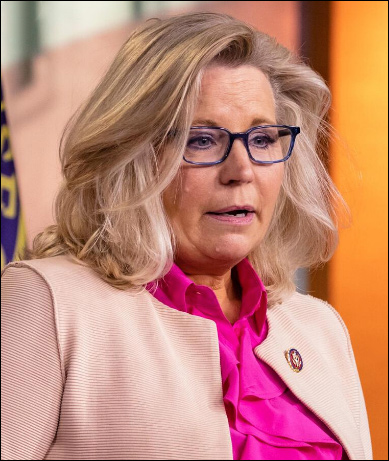
Rep. Liz Cheney, (R-WY)

March 4, 2021 — Another credible opponent for Wyoming at-large Rep. Liz Cheney (R-Wilson/Jackson) came forward earlier this week, which continues the onslaught of political activity against the 10 House Republicans who voted in favor of impeaching then-President Donald Trump for his perceived role in the Jan. 6 Capitol uprising.

Already, Rep. Cheney has four credible opponents. The latest to announce is state Rep. Chuck Gray (R-Casper). He joins state Sen. Anthony Bouchard (R-Laramie), former Pavillion mayor Marissa Joy Selvig, and energy consultant Bryan Miller.

Of the four, Sen. Bouchard and Rep. Gray are the most credible, but the large field assembling against her actually helps Rep. Cheney. Considering that Wyoming is a plurality primary state, a person is nominated by simply obtaining the highest number of votes regardless of percentage attained. Therefore, with Cheney’s opposition split among multiple candidates, the chances of her winning re-nomination with less than a majority becomes a plausible outcome.

The other nine pro-impeachment members are in different situations. From this group, only New York Rep. John Katko (R-Syracuse) has not yet drawn Republican primary opposition.

Three others are from states with primary structures that will help them advance into the general election. Reps. David Valadao (R-CA), Jaime Herrera Beutler (R-WA), and Dan Newhouse (R-WA) will file under a top-two qualifying system.

Rep. Valadao represents a Bakersfield-Fresno district that voted heavily in favor of both President Biden and Hillary Clinton, the latter back in 2016. With all candidates on the same ballot, and not being from a strong Trump district, it is less likely that his vote to impeach the sitting Republican president will greatly affect him.

In the race are former Rep. T.J. Cox (D), the man who lost to Valadao by a percentage point in 2020 after defeating him by an even closer split in 2018, former state Assemblywoman Nicole Parra (D), and ex-Fresno City Councilman and 2020 congressional candidate Chris Mathys (R).

Washington Rep. Beutler, under the same top-two primary system as California’s Valadao, has already drawn three Republican opponents, none of whom have held elective office. We can expect a strong Democrat to emerge here, meaning the eventual preliminary vote division should provide Rep. Beutler with a relatively easy road into the general election.

Continue reading

How Low Can You Go? Below 50% …

By Jim Ellis

Feb. 22, 2021 — Now that the 2020 vote totals are finalized, analysis can be conducted to unearth what clues the election just completed provides for the 2022 cycle.

In looking at all 435 US House districts, we see that 168 electoral contests were decided with the winner receiving less than 60 percent of the vote. A total of 53 campaigns featured the victor receiving 52 percent or less. These 53 results yielded 27 Democratic wins and 26 for the Republicans. Of those, eight, four for each party, produced a plurality result with neither candidate obtaining majority support. It is these latter eight elections where we concentrate our focus.

A ninth seat, that of Iowa Rep. Mariannette Miller-Meeks (R-Ottumwa), did yield a majority winner, but with a scant six-vote margin, which was obviously the closest election of the 2020 cycle. Democrat Rita Hart is challenging the outcome before the House Administration Committee claiming that 22 uncounted ballots would give her a nine-vote victory, but so far, the situation has not been addressed. It goes without saying that Iowa’s 2nd District will be a major target for both parties in 2022.

Below is a quick synopsis of what one would think are top electoral targets for 2022, but, as you will see, many of these seats will either drop from the competition board or become a lesser target due to redistricting and other factors.


IA-3: Rep. Cindy Axne (D-Des Moines) – 48.9%

Rep. Axne was re-elected to a second term in a virtual rerun of her 2018 campaign against then-Rep. David Young (R). As one of four top Iowa Democratic office holders, rumors are already surfacing that Rep. Axne could run for the Senate or governor, particularly if octogenarian Sen. Charles Grassley (R) decides to retire. Axne is not closing the door on a statewide run.

If she does run for the Senate or challenge Gov. Kim Reynolds (R), a 3rd District congressional race becomes very different. Additionally, it appears that this Des Moines-anchored seat will have to yield approximately 60,000 residents to the adjacent seats in redistricting. The three other Hawkeye State CDs all need more population, from between 5 and 40,000 people per seat. Losing this many 3rd District inhabitants could make the seat less Democratic depending upon how the lines are drawn.

Iowa has the reputation of having the fairest redistricting system. A state legislative committee staff is given authority to draw maps based upon the straight census numbers without deference to the incumbent’s political standing or personal residence. The legislature, without amendment, must then approve or disapprove of the committee staff’s new map.

Regardless of the redistricting outcome, the IA-3 race again promises to be a national congressional campaign.


MN-1: Rep. Jim Hagedorn (R-Blue Earth/Rochester) – 48.6%;

MN-2: Rep. Angie Craig (D-Eagan) – 48.2%

The two plurality Minnesota seats will undergo drastic redistricting changes as their state appears set to lose a CD in reapportionment. With the 1st District requiring more than 125,000 additional inhabitants and the 2nd as many as 90,000, the two southern Minnesota seats will look very different in 2022. Additionally, with the legislature being the only one in the country where each political party controls one legislative chamber, the configuration of the next congressional map could be drawn in many different ways.

Obviously, both Reps. Hagedorn and Craig are in vulnerable political situations, with the former wanting to see more Republicans added to his district, while the latter needs an influx of Democrats coming her way.

Regardless the redistricting picture, these two seats will again likely be prime electoral targets.


NV-3: Rep. Susie Lee (D-Las Vegas) – 48.7%

Nevada’s 3rd Congressional District has been the site of close elections throughout the previous decade. Containing part of southern Las Vegas, the seat covers all of the state’s southern triangle region that lies between California and Arizona.

Nevada will not gain a seat in this year’s reapportionment as it has in the past two census decennials. There will be significant movement among the districts, however, with the 3rd being the prime focus. The latest population figures suggest that CD-3 will have to shed approximately 90,000 residents to other districts.

Continue reading

More Redistricting Delays – Part II

By Jim Ellis

Feb. 20, 2021 — Yesterday, we covered the Census Bureau announcement that delivering new population data to the individual states will again be postponed, and what effect receiving numbers in October, if then, will have on the redistricting process.

Today, after previously analyzing the states that appear poised to gain seats, we look at those that will probably lose districts. At this point, estimates project that 10 seats will be transferred. This, however, is only a projection as the current published numbers do not include the final changes in the previous decade’s last year.

At this point, all of the succeeding states appear positioned to lose one seat. The individual state logistical data comes from a study that the Brennan Center for Justice just released.


Alabama

It appears that Alabama is on the cusp of losing a seat depending upon who is counted and where they reside. This specifically refers to college students and non-citizens. President Biden’s executive order countermanding President Trump’s directive not to count non-citizens may have an effect upon Alabama’s status. Officials there may sue over the apportionment if, in the final count, the state loses one of their seven districts.

It is likely that Alabama redistricting will be pushed into 2022 irrespective of the apportionment decision because the legislature will be out of session when the data is finally delivered. The state’s May 24 primary could conceivably be postponed.


California

For the first time in history, California is likely to lose a seat in apportionment. The 2010 apportionment cycle was the first in which the state did not gain representation. In the 1980 census, for example, California gained seven seats.

The Golden State has a redistricting commission, but the data postponement may force the process into a secondary mode since the redistricting completion deadline is Aug. 15. Unless the deadlines are changed, the state Supreme Court will appoint a special master to draw the map. California’s March 8, 2022 primary may have to be postponed, and almost assuredly their Dec. 10 candidate filing deadline will have to move.


Illinois

The state legislature has the redistricting pen, but Illinois also has a backup commission empowered in case the regular process is not completed. A March 15, 2022 primary and certainly a Nov. 29 candidate filing deadline, however, could and will face postponement.


Michigan

Voters previously adopted the institution of a 13-member commission to draw maps. The commissioners, now appointed, consist of four Democrats, four Republicans, and five unaffiliated voters.

With an April 1, 2022 candidate filing deadline and an Aug. 2 state primary, the Michigan system should have time to complete the redistricting process without changing their election cycle calendar.
Continue reading