Author Archives: Jim Ellis

Gallup Shows Likely Voters Skew to Romney

Source: Gallup

The Gallup organization released their likely voter model on Oct. 26, which, along with Rasmussen Reports, has consistently shown much better numbers for Mitt Romney than other national polls. It is important to note that Gallup and Rasmussen are the only two pollsters that have tracked the presidential race every day for the entire election cycle. Both have found consistently similar results, too. The myriad of other pollsters have conducted benchmark or brush fire polls, meaning they are surveying the national electorate for just a short period in time and producing a snapshot of the voters’ intentions rather than a trend.

Right now, all of the polling suggests a Romney lead in the national popular vote among those considering themselves likely to vote, with Pres. Barack Obama doing better in the critical states and among the registered voter universe. The likely voter numbers are producing a very unique and inverted situation because similar situations in the past have always shown the Democratic candidate leading the popular vote, while the Republican fared better in the states.

According to the Gallup analysis, the electorate looks virtually the same as it did in 2008, but the voting intensity model is quite different. There is either no, or only a one-point, difference in the demographic categories when comparing today with four years ago, and as much as a four-point increase among non-white voters when overlaying 2012 data against what was found within the 2004 electorate that re-elected George W. Bush.

Gallup maintains that their likely voter model, culled from a series of seven screening questions (see below), has correctly predicted the final trend in the past two elections. Their 2004 pre-election projection suggested a two-point Bush popular vote win, which is what happened. In 2008, the final data correctly predicted Obama’s win, but over-shot his performance. The Gallup data predicted an 11-point Obama spread; in actuality the final count was +7 points over Republican John McCain.

Today’s model shows virtually no demographic difference between 2008 and 2012, but a major swing in terms of self-identified party registration. Four years ago, 39 percent of the likely voter sample considered themselves Democrats to only 29 percent for Republicans.

According to Gallup’s latest data, the 2012 partisan self-identified likely voter ratio breaks Republican 36-35 percent, a swing of 11 net points for the GOP (+7R; -4D) in comparison to 2008. When the “lean Democrats” and “lean Republicans” are added, the model expands to 49-46 percent Republican (based upon tracking data collected over the Oct. 1-24 period). This is highly significant in detecting electoral intensity. If correct, the 2012 vote will be very different from 2008 and much more Republican. Today, Gallup shows a 50-46 percent spread in Romney’s favor among likely voters. Rasmussen finds Romney’s lead to be a similar 49-47 percent.

But, it all comes down to which of the pollsters’ likely voter model is correct. Gallup has actually posted the seven questions they ask to determine voter participation intent, as reported on Gallup.com.

They are:

  1. Thought given to election (quite a lot, some)
  2. Know where people in neighborhood go to vote (yes)
  3. Voted in election precinct before (yes)
  4. How often vote (always, nearly always)
  5. Plan to vote in 2012 election (yes)
  6. Likelihood of voting on a 10-point scale (7-10)
  7. Voted in last presidential election (yes)

Answers are graded on a scale of 1-7 and the results categorized accordingly. The latest numbers from their registered voter pool gives Obama a 48-47 percent edge, but the likely voter group goes significantly for Romney, as previously mentioned, 50-46 percent.

It’s going to be a very close and interesting election. Next week will determine which of all predictions are correct, but Gallup has already provided the most information to help us understand their support methodology.

Obama Will Not Be Fired

On Wednesday, Republican lobbyist Mike Barbera contributed a guest column that shared his views about the presidential election. Today, we feature a response from Democratic lobbyist Tom Hogan.

By Tom Hogan

Michael Barbera’s insightful piece “What the Polls Are Really Saying,” reveals a frightening proposition for today’s political observers: repeating polling data is insufficient and, to be credible, we may also have to think about and analyze political races using our own brains and original thoughts. Blasphemy. That would be like asking me to voluntarily leave my iPhone at home for a whole day. Just imagine that for a moment, like a boy in a plastic bubble, living in the real world but detached from what is being said or reported on RCP, NYT, RC, CQ, NJ, MSNBC. I could survive in there without any Fox News, but I would be cordoned off from important political babble.

I. REPUBLICANS HESITATED — I put in my notes the header, “Republicans Eat Their Own,” but this morning I softened it. The GOP abandoned McCain and Palin in 2008 and they never heartily embraced Mitt Romney in 2012, until the first debate concluded. Too little, too late. Back in 2008, with some help from Lehman Bros., Katie Couric and Tina Fey, sprinkled with some Bush fatigue, the R’s boat sank early. In 2012, the Rs toyed with B-listers, Newt, Rick and Michele. Mitt did not eat their brand of red meat, but as it has turned out they all miscalculated.

The only reason Mitt is in the game is because of Mitt. The sheer force of his skills, talent, and dogged determination won him the nomination in spite of his party’s true feelings. They finally snapped to attention the night of the first debate. A baseball bat to the head of the GOP one might say.

Most athletes and politicians will tell you that if you hesitate, even slightly, the consequences can be disastrous. Holding back support for Romney also caused Mitt to waste a draft pick. He wasted his VP pick trying to shore up conservative support in his own party. Mitt could have selected a woman, Latino, or someone who would add value in the general election. Failing to embrace Romney forced another tactical error.

The Rs used their resources to attack and demonize Pres. Barack Obama as they could not bring themselves to build Mitt’s profile. Obama boxed out criticism of his foreign policy issues as he dispatched Osama Bin Laden. So the Rs fixated on Obamacare. I can’t defend the entire 2000-plus page bill. I can, however, ask questions of those spewing invectives about it to tell me, for example: 1) What year in the past 10 did your premiums go down under the old system? 2) Which page or section of the bill can you explain is so horrible, or is the entire piece unacceptable, and why specifically? 3) Lastly, if Obama agrees to burn the law at the stake, what brilliant alternative do you have to put in place, or do we go back to old system (see question 1)?

II. PERSONAL CONNECTION — My instincts lead me to conclude that more people connect personally to Obama. I use the example of the socially awkward high school cafeteria where a new student with his tray of food looks around for a place to sit. Obama’s table looks promising. He has a diverse group of people who look and dress in varying styles, and seem laid back and inviting. Mitt’s table has the upper crust, athletic-looking guys comparing sports cars they drive, and discussing which country their families plan to visit on break.

This is simply a personal, not partisan, attribute that is more instinctive than measurable. Recall that fateful Monday in South Philly when Dem candidate John Kerry stepped to the window of the infamous Pat’s King of Steaks and ordered one of their iconic cheesesteaks. He then leaned in and requested Swiss cheese. With cameras rolling, he erred in not knowing that cheese whiz is the widely accepted cheese option (or perhaps provolone or American, but certainly NOT Swiss) in Philadelphia. I suspect Mitt would request Jarlsburg.

III. PEOPLE TEND TO AVOID CHANGE — First, to qualify what I am not talking about in reference to change, the hopey-changey mantra of 2008, was a different notion than I mean in this context. In a tip of the hat to our founding fathers’ foresight, eight years of any president leads us all to yearn for change. In a different respect, people tend to like patterns, habits, familiarity, and traditions. People seem to need a compelling reason to make drastic change, particularly when firing the president of the US is suggested.

While I agree with Mr. Barbera’s assertion that Obama may not be winning today, remember that he does not have to win until Nov. 6. One bad night in 2012 does not etch-a-sketch away all he has accomplished. It is humbling to see that he screws up like the rest of us on occasion. People are not blaming Obama entirely for international unrest, attacks on our foreign service folks, or gridlock in Congress. Speaker John Boehner was more constrained by his rigid, recalcitrant band of Tea Partiers who viewed any compromise as a sign of girly man capitulation. Give Americans more credit than to blame all this and the common cold on Obama. He has not performed well enough to earn a landslide, but he has not performed badly enough to get fired.

Lastly, how can I resist comment on The Donald. The Rs are showing signs of desperation. I first glanced at the TV and thought he was starring in the Blair Witch Project with its grainy, shaky video. Then I thought he was kidnapped by Somali pirates, but alas, he was offering $5 million for Obama’s school transcripts. Please Donald, withdraw your request for the sake of the children, or at least my children.

So, without support of polls to help me think and sound informed, I suggest that Mitt is a competent candidate, but it is not his time. Obama will not get fired, and he will win on Nov. 6.

Tom Hogan is an attorney and lobbyist with F/S Capitol Consulting in Washington, DC.

Nevada Early Voting

© Google

The Silver State of Nevada has become a key state in this presidential election. Part of the secondary group of states that will have a major impact in determining the eventual winner, its state election officials have released the early voting return numbers relating to party registration. No tabulation has begun, but knowing from whom the ballots come does tell a significant part of the story.

So far, the Democrats have a big lead in returned ballots. That’s not too surprising because the party traditionally tends to do better with this voting medium than Republicans. Additionally, Democrats have the better ground operation in Nevada as was evidenced in the 2010 Senate race when Majority Leader Harry Reid was re-elected in the face of a strong GOP head wind.

According to yesterday morning’s release, 210,484 ballots have been returned, with 48 percent of those coming from registered Democrats versus 35.5 percent from Republicans. In Democratic Clark County, registered Ds have returned 50 percent of the 146,337 early and absentee ballots as compared to 33 percent from Republicans. Despite the lopsided margin, Republicans are returning at a rate of two points above their Clark County registration figure. Democrats are even better at +4 percent.

Though the race here will be tight and many more ballots will be cast, the early numbers tell us that the Nevada Dems’ ground organization is meeting or exceeding their pre-election goals.

What the Polls are Really Saying

Republican lobbyist Mike Barbera contributes a guest column today, sharing his views about the presidential election. On Friday, we will feature a piece reflecting the Democratic perspective.

By Michael Barbera

It doesn’t seem to make any sense …

The American economy is burdened with sustained unemployment at levels never before seen in American history. Gas prices are through the roof. The budget deficit and national debt are both sky-high. Household incomes are down, and the housing market is still decimated all over the country. And that’s just the news here at home. Overseas, our embassies are attacked, our diplomats assassinated and our soldiers in Afghanistan are slaughtered by our so-called “allies.”

And yet according to the polls, until his poor debate performance in the first debate, Barack Obama was winning the race for the White House. In some polls he was ahead narrowly, in others he was ahead comfortably — but he was always ahead. How can that be right?

The simple fact is, it’s not. The president may or may not be ahead, but he is not winning. In fact, anyone who looks at the numbers closely realizes that the president’s electoral standing is perilous at best.

Why is it that so many talking heads have spent much time telling us that the president was winning? Quite simply, most of them read polls in a lazy and simplistic manner. Most observers only focus on the “horse race” — who is ahead and by how much. And for most of 2012, the president was ahead. So pundits simply regurgitate the numbers and pretend they know something.

At this stage of the race, horse race reporting doesn’t tell us very much. It doesn’t matter if Pres. Barack Obama leads former Massachusetts Gov. Mitt Romney by three points in Ohio or by six in Wisconsin, or whether he is ahead by one point in the Gallup poll or by five in the latest poll by the AP.

Here is what matters: how far is Pres. Obama from getting over 50 percent of the vote? And the answer, based on any fair reading of the evidence, is that he has a lot of work to do.

Look at the Real Clear Politics averages in the key battleground states. Even before Romney’s recent surge, the president was stuck between 47.1 percent and 48.8 percent in Florida, Virginia, Ohio, North Carolina, Iowa and Colorado. Karl Rove reported in the Wall Street Journal the day before the Denver debate that in 91 recent national polls “Mr. Obama was at or above the magic number of 50 percent in just 20. His average was 47.9 percent. Mr. Romney’s was 45.5 percent.”

The polls have now shifted after Romney’s strong debate performance and the president’s weak one in the first debate. The challenger cut into the president’s lead and in some cases erased it altogether.

That brings us to another popular myth about the polls — that they are constantly shifting. In fact, the president’s numbers have remained very steady. With the exception of a slight spike after the Democratic convention, the president is where he has always been — in the mid-to-high 40s. He has a solid base of loyalists, but he has not yet closed the deal with most voters — despite dominating the airwaves. According to the National Journal, as of Oct. 1, the Obama campaign spent a total of $285 million on broadcast and cable television, in addition to radio advertising, while the Romney camp spent just $117 million — and still the president was well-below the magical 50 percent mark. An incumbent stuck below 50 percent in October is an incumbent in trouble.

What has changed throughout the course of the campaign is the level of Romney’s support. This is no surprise. Like it or not, the American people have seen Obama in action. Most voters know whether they like him and whether they think he is doing a good job. Very few voters are truly undecided about him. Until very recently, many voters were very much undecided about Mitt Romney, however. That is why the president spent so much money over the summer on a steady drumbeat of negative advertising. The American people were not convinced by those ads, many of which were powerful. They wanted to decide for themselves about Mitt Romney, and a record 67 million people watched the first debate. Mitt Romney picked a good day to have a good day — and the president picked a bad day to have a bad one. Romney’s strong performance shook up the race, and he is almost certain to win decisively among late-deciding voters.

Many polls are also overstating the president’s support. These polls are using turnout models based on the 2008 election, which means the pollsters are betting that the electorate of 2012 will look a lot like the electorate of 2008. This is likely to be a losing bet.

The 2008 election featured the following: a historically unpopular Republican president, an economic meltdown one month before the election, an incredibly motivated Democratic base, a demoralized Republican base, record turnout of young voters, blacks and Latinos, and a sizable number of Republican crossover votes for Barack Obama. Does that sound like the electorate we have today? Yet many seemingly reputable pollsters construct their polling around 2008 models. I believe the technical polling term for this is “wishful thinking.”

If we look at the polls with a trained eye — and not simply repeat the horse race numbers fed to us by lazy pundits — it is clear that Obama is not winning. And if he isn’t winning now, he’s not likely to be ahead on Nov. 6.
_______________________

Michael Barbera is a lobbyist and consultant with the American Continental Group.

Tracking Ohio

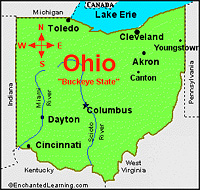
It can be argued that the presidential election is coming down to Ohio. It is very likely that the eventual winner will carry the Buckeye State, and that entity will be enough to put Pres. Barack Obama or Mitt Romney over the top nationally. There are other scenarios — either candidate losing Ohio but carrying Wisconsin and Colorado, for example – but the voting patterns suggest that Ohio will choose the winner.

That being the case, let’s check the latest Ohio polls. Six separate polls measuring the Obama-Romney campaign were just released and these are the results:

• Angus Reid (Oct. 18-20; 550 likely Ohio voters):
  Obama 48%; Romney 48%
• Gravis Marketing (Oct. 18-19; 1,923 likely Ohio voters via automated calls):
  47% Tie
• Public Policy Polling (Oct. 18-20; 523 likely Ohio voters):
  Obama 49%; Romney 48%
• Pulse Opinion Research for Let Freedom Ring organization (Oct. 15; 1,000 likely Ohio voters):
  Romney 47%; Obama 46%
• Quinnipiac University (Oct. 17-20; 1,548 likely Ohio voters):
  Obama 50%; Romney 45%
• Suffolk University (Oct. 18-21; 600 likely Ohio voters):
  47% Tie

Can it be any closer? For the second time in 12 years, deciding the presidency could come down to just a handful of votes.

A Close Look at Swing State Electoral Votes

Let’s assume, for the sake of argument, that all of the latest publicly released presidential election state polls are accurate. If so, then the nationwide electoral vote count would post Pres. Barack Obama and Mitt Romney to within four votes of each other.

First, from a national popular vote perspective, seven polls have been completed within the past few days (Gallup, Rasmussen Reports, Investors Business Daily TIPP, Gravis Marketing, Ipsos Reuters, Public Policy Polling, and the University of Connecticut) and the president leads in four of them, Romney two, and one is tied. Obama’s largest lead is three points. Romney’s best margin, via Gallup, is six points, 51-45 percent. This tells us that with two weeks remaining, the presidential race is still undecided.

Turning to the all-important swing states, the CNN/ORC Florida poll (Oct. 17-18; 681 likely Florida voters) gives Romney a 49-48 percent lead. Fox News (Oct. 17-18; 1,130 likely Florida voters) posts the Republican to a 48-45 percent advantage. Rasmussen Reports (Oct. 18; 750 likely Florida voters) registers a 51-45 percent spread, also in Romney’s favor.

Turning to Iowa, Public Policy Polling (Oct. 17-19; 869 likely Iowa voters) finds Romney holding a 49-48 percent razor-thin margin over the president.

The Mellman Group, polling for the liberal Americans United for Change organization (Oct. 15-17; 600 likely Nevada voters) finds the president commanding the advantage within the Nevada electorate by a 51-43 percent margin. This is the largest Nevada spread shown for either candidate in quite some time, so the result should be looked at skeptically. For the sake of our model, however, we will place Nevada in the president’s column.

Public Policy Polling, also during the Oct. 17-19 period, surveyed 1,036 likely voters in New Hampshire. There, they found Romney leading Obama 49-48 percent.

In North Carolina, we have split results. Grove Insight, polling for the liberal Project New America (Oct. 17-18; 500 likely North Carolina voters) actually gives Obama a slight lead, 47-44 percent. More in line with all other polls conducted in the Tar Heel State, TelOpinion for the North Carolina Republican Party (Oct. 12-13; 500 likely North Carolina voters) projects Romney with a 49-45 percent advantage. Since the preponderance of recent polling gives Romney the edge here, we will project North Carolina in the Republican column for the purposes of this spot analysis.

Looking at critical Ohio, the Fox News Poll (Oct. 17-18; 1,131 likely Ohio voters) continues to show the president holding a small advantage, 46-43 percent. While other places seem to be leaning toward Romney, Ohio has not fully turned. It is this state that could be the determining factor, as it is one of the few big states that does vote for both parties.

Virginia is another swing state that could be determinative and the new Rasmussen Reports data (Oct. 18; 750 likely Virginia voters) puts Romney ahead of the President 50-47 percent.

And, in Wisconsin, Rasmussen Reports (Oct. 18; 500 likely Wisconsin voters) gives the president the slightest of leads, 50-48 percent.

Understanding that a two- or three-point poll is within the margin of error, the actual vote could go either way; however, we can develop an electoral vote model based upon the above data just presented. Remember, for the sake of our analysis exercise, we are going to presume that all of these polls are exactly accurate, with the one exception of placing North Carolina in the Romney column because more polls favor Romney.

Factoring the aforementioned states as they are currently polling, and using the 2008 results for the ones not recently surveyed, with the exception of adding Indiana and the 2nd Congressional District of Nebraska to the Romney column, the national count would give the president 271 electoral votes and Romney 268. This means that any additional Obama state converting to Romney would give the national victory to the challenger.

It will be an interesting two weeks.

House Surprises

Surprising trends: Ricky Gill (left) / Rep. Scott DesJarlais

With only 18 days remaining in the current election cycle, changing House races are putting strategists and campaign experts in a state of flux. In certain places we have seen significant change and major surges from unexpected candidates. Below we review two Red and Blue examples of potential seat changes that political experts originally did not forecast, but which have suddenly become key races to watch.

Initially considered a long shot, Ricky Gill, the 25-year-old Lodi, Calif., resident challenging Rep. Jerry McNerney (D-CA-9), has proven his viability. Gill’s parents, immigrants from India and Uganda, are both obstetricians who also own a vineyard and an RV park in the local community. Gill has raised $2.3 million during the campaign, while Rep. McNerney, who has served almost six years in Congress, raised just under $2 million. Gill has approximately $1.1 million left to run his campaign, which is about $108,000 more than the Democratic incumbent according to campaign disclosure statements for the period ending Sept. 30th.

His impressive fundraising made him a star candidate within the National Republican Congressional Committee, and the party responded by financing a media advertising and robo-call program to help Gill gain the offensive against McNerney.

Given the district’s Democratic tilt (56 percent Obama ’08), Gill was originally not expected to fare particularly well. With a surge of fundraising power, youthful candor, and strong GOP establishment backing, the young challenger has made the battle with McNerney a neck-and neck race.

Moving to a very red district in middle Tennessee, freshman Rep. Scott DesJarlais dodged a major redistricting bullet when the state senator who helped design the new seat that spread 65 percent of the congressman’s district into other areas, failed to challenge him. However, DesJarlais now finds himself dealing with another set of problems.

Campaigning as a family values pro-life candidate, DesJarlais has now been accused of having an extra-marital affair and subsequently encouraging his mistress to have an abortion — before discovering that she was not pregnant. Obviously the scandal has caused DesJarlais immediate political problems, and even though Mitt Romney is likely to rack up percentages exceeding 60+ percent in CD-4, DesJarlais is starting to feel pressure from Democratic state Sen. Eric Stewart. In fact, a new post-scandal revelation poll just released earlier this week (Myers Research & Strategic Services; Oct. 14-15; 400 TN-4 likely voters) reveals only a five-point spread between the two candidates, with DesJarlais leading 49-44 percent. We can expect to see a quick influx of Democratic money moving into this district as they attempt to steal this strongly Republican seat.

The parties are also likely to trade a pair of scandal-tainted seats on the eastern seaboard. The respective parties appear to have conceded the FL-26 seat to Democrat Joe Garcia as he battles freshman Rep. David Rivera (R). Allegations of financial scandal never materialized, but charges that the Florida congressman attempted to funnel money to a straw man Democratic primary candidate have come to light and, with his associate who was apparently managing this straw man candidate’s campaign who then fled when the FBI wanted to question her, has turned the 26th District race into a circus. All Garcia needs to do his remain quiet and he will claim victory on Nov. 6.

In New England, the tax fraud conviction and jail sentence of Rep. John Tierney’s (D-MA-6) wife will almost assuredly now cost the congressman his seat. The Democratic Congressional Campaign Committee (DCCC) has already cancelled more than $600,000 of television advertising, and Tierney himself withdrew over $300,000 of this own ad time. This is a clear signal that Republican
Richard Tisei’s poll showing him leading by a substantial margin (50-33 percent) is likely accurate.

With three weeks to go until Election Day, other races could also develop.