Tag Archives: YouGov

Buttigieg a Clear Factor in Iowa

By Jim Ellis

Nov. 19, 2019 — Selzer & Company, again polling for the Des Moines Register publication (Nov. 8-13; 2,012 active registered Iowa voters, 500 likely Democratic Caucus attenders), finds South Bend Mayor Pete Buttigieg pulling away from the rest of the field. YouGov, polling for CBS News (Nov. 6-13; 856 registered Democratic voters), projects a different perspective, however, in finding a virtual four-way tie.

Selzer sees Mayor Buttigieg leading the pack with 25 percent, nine points ahead of Sen. Elizabeth Warren (D-MA) and 10 points beyond both Sen. Bernie Sanders (I-VT) and former Vice President Joe Biden.

YouGov, however, finds Sanders and Biden tied at the top with 22 percent, while Buttigieg is only one point behind. The top pair leads Sen. Warren by four points. All are clearly within the polling margin of error.

The numbers again suggest that the Democratic caucus, now less than three months away on February 3rd, is a wide-open affair. All of the most recent polling also yields that Mayor Buttigieg has transformed the campaign, at least in Iowa, into a legitimate four-way race. There is also no recent poll suggesting that any one candidate is in position to secure a majority vote among the prospective Iowa Caucus attenders.

How the Iowa vote will affect the rest of the primaries is anybody’s guess at this point, but the state has proven to be a trend-setter in the past. Whether a strong showing for Mayor Buttigieg will keep him in the top tier as the process moves through New Hampshire, Nevada, and South Carolina prior to Super Tuesday is difficult to currently assess.

A Biden Resurgence?

Former Vice President, Joe Biden

By Jim Ellis

Oct. 25, 2019 — A series of recently released national political polls finds former Vice President Joe Biden re-establishing the type of horse race leads over the Democratic field that he enjoyed before the debate process first began. Yet, how reliable are the polls?

CNN, YouGov, Emerson College, and HarrisX, all report new data and see Biden again posting significant leads, two of which are well beyond the polling margin of error.

CNN (Oct. 17-20; 424 US Democratic registered voters) gives the ex-VP a 34-19-16 percent lead over Sens. Elizabeth Warren (D-MA) and Bernie Sanders (I-VT). HarrisX (Oct. 21-22; 440 US registered Democratic voters) finds the Biden lead reaching 27-19-14 percent over Warren and Sanders. Emerson College (Oct. 18-21; 430 US Democratic likely voters) sees a similarly close cut among the top three candidates, but they find Sen. Sanders slipping past Warren into second place. The Emerson split shows Biden up 27-25-21 percent over Sanders and Warren, respectively.

Looking more closely at the polling methodology for each, we find that all three of these surveys have very low sample sizes, which means the error factor is high. The respective respondent universes are only between 424 and 440 people from which to derive a national trend. These numbers are more typically found in a congressional district or small state survey.

The YouGov poll (Oct. 20-22; 628 US Democratic likely voters) used a larger national sample and found a much tighter standing among the candidates, but with the prevalent Biden-Warren-Sanders order intact through a 24-21-15 percent result. In all of the aforementioned surveys, no other candidate reaches double-digit support.

Continue reading

Multiple Choice, Multiple Candidates

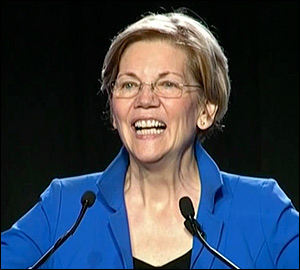
Sen. Elizabeth Warren (D-MA)

By Jim Ellis

Sept. 16, 2019 — The international polling firm YouGov for The Economist magazine just completed a major 86-question survey of 1,500 US adults (Sept. 8-10; online through an opt-in panel), 1,182 of whom are registered voters and found many interesting results. The most unique, however, might be their question asking the self-identified primary or caucus attending Democrats and Democratic-leaning Independents (632) just how many of their party’s presidential candidates they would consider supporting.

The purpose of the question was to test for multiple responses; therefore, most respondents named several candidates. Possibly the most interesting phase of the response process was that only one candidate exceeded 50 percent under this format, and the person receiving the 55 percent consideration factor might not be who you would name with your first guess.

Of the 20 candidates identified in the questionnaire, 10 broke into double digits. This is not particularly surprising when remembering that respondents were encouraged to give more than one candidate they are considering and, in fact, could name as many individuals as they liked.

But the candidate receiving the 55 percent mention factor was not former Vice President Joe Biden. Rather, it was Massachusetts Sen. Elizabeth Warren, and this type of outcome could be quite significant in determining who people might ultimately support. Biden was second but failed to reach a majority even from a respondent pool who could render multiple choices. He posted a 48 percent score.

In third position was Vermont Sen. Bernie Sanders (40 percent), so here again we see these three candidates, Warren, Biden, and Sanders, capturing the top positions by a wide margin.

Sen. Kamala Harris (D-CA) was fourth with 32 percent followed by South Bend Mayor Pete Buttigieg who was named by 27 percent of the sample. Others in double digits were New Jersey Sen. Cory Booker at 18 percent, ex-Rep. Beto O’Rourke recording 14 percent, and former HUD Secretary Julian Castro posting 13 percent, with Minnesota Sen. Amy Klobuchar and New York City businessman Andrew Yang both registering 11 percent under this format.

Continue reading

The “First Four” And The Scramble
For Delegate Apportionment

By Jim Ellis

Sept. 11, 2019 — The YouGov international polling organization conducted four simultaneous surveys in the states whose electorates will cast presidential nominating ballots in February of next year, referred to in the college basketball tournament vernacular as “the First Four”. The quartet of states are Iowa, New Hampshire, Nevada, and South Carolina.

Looking at the polls’ aggregate totals, it appears the contest is already gelling into a three-way race that could meld into a free-for-all should this particular YouGov polling trend translate into actual results.
All of the polling was conducted during the Aug. 28 – Sept. 4 period, and sampled between 492 (New Hampshire) and 785 (South Carolina) likely Democratic primary voters or caucus participants. All four polls found former Vice President Joe Biden, and Sens. Bernie Sanders (I-VT) and Elizabeth Warren (D-MA) occupying the first three positions, but in different orders.

Sen. Kamala Harris (D-CA) and South Bend Mayor Pete Buttigieg placed in the fourth and fifth positions in each entity, again not in the same order in all four states, yet neither reached double-digit percentages in any of the polls. Under this set of data, neither Harris nor Buttigieg would qualify for at-large delegates in any of the First Four states.

To reach the at-large delegate apportionment plateau, a candidate must receive 15 percent of the statewide vote. Candidates can also qualify for individual congressional district delegates, but those projections are not readily available from these polling results.

In Iowa, scheduled for caucus meetings on Feb. 3, Biden begins with a small lead according to the YouGov research. From the 682 individuals surveyed, the former vice president would score 29 percent, with Sanders closely following with 26 percent, and Warren posting 17 percent. Iowa has 41 delegates, and if the congressional district result followed the statewide percentage, Biden would receive 16 delegate votes, Sanders 15, and Warren 10.

Moving to New Hampshire, which will host the first-in-the-nation primary on Feb. 11, 2020, it is Sen. Warren who places first, but the result among the trio is a virtual three-way tie. Warren recorded 27 percent in the YouGov poll, with Biden getting 26 percent, and Sanders 25 percent. Again, assuming New Hampshire’s two congressional districts would vote in the same proportion as the state, each candidate would receive eight delegate votes, equally splitting the state’s 24-person delegation.

Continue reading

The Trump Issues

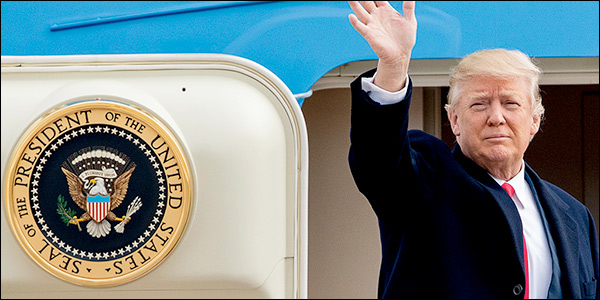
President Donald Trump | whitehouse.gov


By Jim Ellis

July 12, 2019 — International pollster YouGov, surveying for The Economist magazine (July 7-9; 1,500 US adults from the YouGov opt-in Internet panel, 1,140 US registered voters, 592 likely Democratic primary voters) finds former Vice President Joe Biden maintaining a lead over the nomination field, but his margin is dissipating.

In this poll, Biden has a 22-17-14-11-5 percent advantage over Sens. Elizabeth Warren (D-MA), Kamala Harris (D-CA), Bernie Sanders (I-VT), and South Bend Mayor Pete Buttigieg, respectively, but the survey contains much more information.

This YouGov poll presents an exhaustive study of the electorate and some of the more interesting findings containing the respondents’ views regarding President Trump’s performance in certain key issue areas. In fact, the YouGov pollsters queried the respondents on 17 different subjects that yielded various conclusions.

In almost every poll, President Trump records upside-down overall job approval ratings. In this particular survey, his approval index is 43:53 percent (-10) positive to negative within the registered voter sample.

Continue reading

Debates Begin; Some Polls Tighten

By Jim Ellis

June 28, 2019 — Several polls were released just before the presidential debate series began and we see some inconsistency. Former Vice President Joe Biden leads in the most recent national surveys, but by varying margins.

The closest poll comes from YouGov (June 22-25; 522 likely US Democratic primary voters) and finds Biden’s lead over Sen. Elizabeth Warren to be 24-18 percent. In a close third place is Vermont Sen. Bernie Sanders with 15 percent.

All other candidates are in single digits. Those who have been experiencing a recent downward trend, Sen. Kamala Harris, and ex-Rep. Beto O’Rourke, again posted poor support scores, this time seven and three percent, respectively. South Bend Mayor Pete Buttigieg has been polling inconsistently in recent surveys. Here, we see downward movement, as he registers only five percent support, a polling range that has also been detected in other late June polling.

YouGov also finds two of the lower-tier candidates performing a bit better in this survey. Hawaii Rep. Tulsi Gabbard reaches three percent national support, and Sen. Cory Booker posts two percent support. All others are at one percent or below.

But the Morning Consult data, with a much larger survey sample, tells a much different story. Their poll (June 19-26; 7,150 likely US Democratic primary voters via automated response device) detects a much larger Biden lead. The results find the former vice president at 35 percent support with Sen. Sanders in second place – as he has been in most national polls – with 18 percent, and Sen. Warren in third at 12 percent. Like in the YouGov poll, only the top three finishers posted double-digit support numbers.

The lower tier is very similar to the YouGov results sans Gabbard. They find Sen. Harris (six percent), Mayor Buttigieg (six percent), O’Rourke (four percent), and Sen. Booker (three percent) comprising a second tier. All the rest are at one percent or less.

The HarrisX survey (June 24-26; 892 self-identified Democratic registered voters) brandished a middle-sized sample with commensurate results. HarrisX also finds Biden leading the Democratic race, but his 29 percent support factor falls virtually evenly between what was found in YouGov and Morning Consult.

Continue reading

Swalwell In; Sanders Up in Bay State

By Jim Ellis

California Rep. Eric Swalwell (D)

April 10, 2019 — California Rep. Eric Swalwell (D-Dublin/Hayward), who for many months has been indicating that he would run for president, finally announced his intentions Tuesday and becomes the 18th Democratic candidate.

Swalwell, who will likely be a minor candidate throughout the process, has said he will not run for both president and the US House simultaneously. Therefore, expect him to depart the presidential race well in advance of the California congressional candidate filing deadline on Dec. 6.

The Golden State will now hold its presidential and state primary on March 3, since the legislature and governor changed the schedule in order to provide them more influence in the presidential nomination process. But Swalwell will have to decide well in advance of the first national votes being cast as to whether he wants to relinquish a safe US House seat in order to continue in what will likely be a long shot presidential effort with little realistic hope of success.

Emerson College released a new Massachusetts poll (April 4-7; 371 likely Democratic Massachusetts primary voters) that projects Sen. Bernie Sanders overtaking former Vice President Joe Biden and finding home state Sen. Elizabeth Warren running a distant third.

According to the Emerson results, Sen. Sanders leads 26-23-14-11 percent over ex-VP Biden, Sen. Warren, and South Bend (IN) Mayor Pete Buttigieg. All others, including Texas former congressman, Beto O’Rourke, and Sen. Kamala Harris (D-CA), record only single-digit support.

Continue reading

McSally Surges in New Arizona Poll

By Jim Ellis

Rep. Martha McSally (R-Tucson)

Rep. Martha McSally (R-Tucson)

Oct. 12, 2018 — A new OH Predictive Insights survey for ABC News 15 in Phoenix (Oct. 1-2; 600 likely Arizona voters) brings new information about the open Arizona Senate race. According to the ballot test results, Rep. Martha McSally (R-Tucson) has overcome Rep. Kyrsten Sinema’s (D-Phoenix) consistent small lead in the battle to replace retiring Sen. Jeff Flake (R) and claims a six-point advantage, 47-41 percent.

Though this is the first time that Rep. McSally has scored a lead beyond the polling margin of error, the new result is plausible.

For several weeks, surveys have projected that Gov. Doug Ducey (R) is expanding his small advantage over Arizona State University professor and Democratic gubernatorial nominee David Garcia into a double-digit lead, but the same polls continued to forecast Rep. Sinema with a tight edge in the Senate race. It seemed only a matter of time before the act of Ducey cementing his margin would begin to help McSally.

Rep. Kyrsten Sinema (D-AZ)

Rep. Kyrsten Sinema (D-AZ)

Secondly, McSally, a retired Air Force colonel and the first woman to fly a combat mission and command a flight squadron, has been hitting Sinema over her role as a war protester prior to the latter woman being elected to the state legislature. The contrast is a compelling one and should play to McSally’s favor. Arizona may be more politically competitive that in past years, but Republicans still maintain a statewide advantage here. Additionally, the death of Arizona Sen. John McCain brings greater attention to those engaged in military careers, thus further helping McSally.

An outside conservative organization then began attacking Sinema over legislation she drafted while in the legislature that made it more difficult to charge individuals in child prostitution cases. Sinema’s argument was that men should not be held totally responsible for engaging in such a crime if the prostitute in question is made to look much older than her true age. This attack appears relatively weak and may miss the mark, but it adds to the multi-pronged strategy to cast Rep. Sinema in a negative light.

Continue reading

The CBS/YouGov Series

By Jim Ellis

Oct. 9, 2018
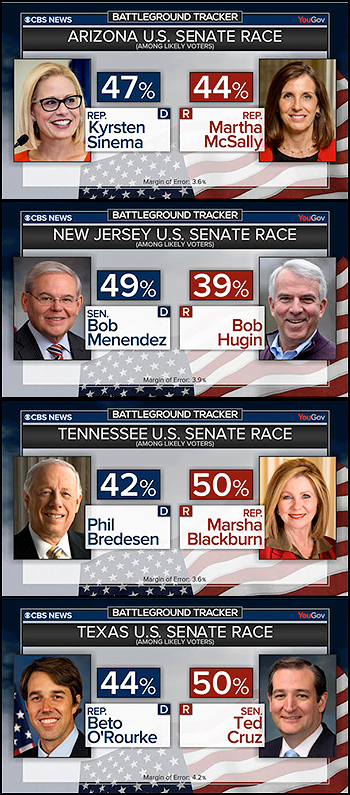
CBS News and the YouGov international online pollster again teamed to test four key US Senate races as part of the former’s Battleground Tracker series and finds Republican and Democratic candidates both leading in two states. All of the polls were conducted between Oct. 2-5. The polling margin of error ranges from 3.4 to 3.9 percent. The responses were submitted online and not via live telephone operators.

CBS News/YouGov Poll

CBS News/YouGov poll results (click image above to see full results posted on CBSNEWS.com)

In Arizona (1,010 registered Arizona voters), Rep. Kyrsten Sinema (D-Phoenix) continues to lead Rep. Martha McSally (R-Tucson) by a small plurality. According to this poll, which is consistent with other known data, Sinema claims a 47-44 percent edge.

Regarding the economy, 80 percent of the Arizona respondents believe the economy is very good (26 percent) or somewhat good (54 percent). Rep. McSally is viewed as the stronger candidate on immigration, crime, and gun policy. Rep. Sinema is considered to be the stronger candidate with regard to healthcare, which is the most important issue cited.

The respondents are breaking evenly about supporting or opposing President Trump, though his job approval is an upside down 46:53 percent favorable to unfavorable.

CBS/YouGov then surveyed Sen. Bob Menendez’s (D) chances of winning re-election in New Jersey (1,009 registered New Jersey voters). Here, the senator scores a 49-39 percent advantage, one of the better reported polls for him during this election cycle.

Continue reading

Texas Sen. Ted Cruz Rebounds

By Jim Ellis

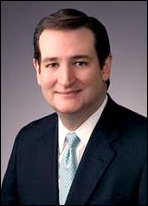
Sen. Ted Cruz (R-TX)

Sen. Ted Cruz (R-TX)

Sept. 20, 2018 — A new Quinnipiac University poll (Sept. 11-17; 807 likely Texas voters) finds that Sen. Ted Cruz (R), after languishing in a rather prolonged syndrome where he was only posting small single-digit leads over US Rep. Beto O’Rourke (D-El Paso), has opened a much larger advantage in his campaign for re-election.

The latest Q-Poll finds Sen. Cruz now topping Rep. O’Rourke, 54-45 percent, his strongest advantage since two polls (Gravis Marketing and YouGov) put him nine and 10 points ahead in early July.

It remains to be seen whether this Quinnipiac poll proves to be an outlier. Up until this release, seven Texas statewide polls had been conducted since early July, all with a mean average of 3.4 percentage points separating Cruz and O’Rourke, but always in the senator’s favor.

This poll suggests that Texas is one of the most polarized states in the country. Both parties produce almost unanimous support for their individual nominee. Sen. Cruz, by a whopping margin of 94-6 percent, commands Republican support. By the same token, Rep. O’Rourke sees virtually the same split forming behind him among Democrats, 94-4 percent. The Independents are leaning toward O’Rourke, 51-47 percent, but the larger number of Lone Star State Republican voters catapults Cruz into a comfortable lead.

Continue reading