
Tag Archives: Wisconsin

Presidential Popular Vote is Even

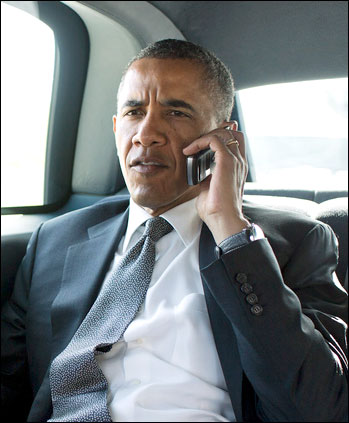
President Obama. / Photo: The White House

A series of new presidential election polls reveals a further tightening of the campaign on the national level, though President Obama maintains a lead over Mitt Romney in the most competitive states.

The two daily tracking pollsters, Gallup and Rasmussen Reports, both give the president only a one-point national lead, 46-45 percent and 45-44 percent, respectively. Looking at an actual benchmark survey, Public Policy Polling, conducting their study (July 19-22; 1,000 registered voters) for the Daily Kos national liberal blog and the Service Employees International Union, projects a flat 46-46 percent tie.

The only national poll not showing a dead heat, taken over virtually the same time frame as PPP’s survey with an identical sample size (July 18-22; 1,000 registered voters) from Republican pollster Bill McInturff and his Democratic counterpart Peter Hart, actually stakes the president to a 49-43 percent advantage. Based upon the available data, though the polling methodology appears sound, the McInturff/Hart result appears to be an outlier.

National Public Radio released their poll of the 12 commonly viewed battleground states (conducted by the Resurgent Republic and Democracy Corps organizations, July 7-12; 1,000 voters nationwide with an oversample of 462 from the battleground states) but its aggregate result is of little consequence. Though this poll, too, shows an Obama-Romney tie at 46 percent, such a figure is virtually useless because the combined popular vote in the most hotly contested states doesn’t translate into specific electoral votes.

What is valuable are battleground voters’ perceptions and attitudes about the candidates. As we have seen for months, there is severe polarization between the two major parties. By almost a 9:1 majority, Democrats believe the president has performed well in office. Conversely, the same virtual ratio of Republicans believes he has not. Independents tend to fall more on the Republican side, slightly rating Obama’s job performance more negative than positive. Also, Independents in these states generally oppose the Obama healthcare law and, by a slight margin, believe that the Supreme Court decision upholding the law is incorrect. This could prove significant as the campaign continues to evolve.

One thing that does deviate somewhat from at least the conventional wisdom, the NPR battleground state poll does show that both candidates have a strong base. Especially for Romney, this is a change. Before, most data indicated weakness among Republicans for their presumptive nominee, but the NPR data gives both contenders right around 90 percent support within their own party voter cell sample. This finding is good news for both men.

New individual key state surveys stack up relatively well for the president in the fact that he leads in most, but in no case is his advantage more than mid-level single-digit numbers.

Rasmussen Reports gives the President a six-point, 48-42 percent advantage in Michigan. Survey USA finds a similar five-point, 48-43 percent margin for Obama in all-important Florida; and We Ask America returns similar 49-42 percent and 49-43 percent spreads (in Obama’s favor) in Wisconsin and Nevada, respectively. Magellan Strategies produced a much closer 50-46 percent Nevada model. Quinnipiac University shows a tie in Virginia, and the Civitas Institute projects Romney to a one point, 49-48 percent razor-thin edge in North Carolina. Though it’s not a battleground state, Survey USA detects only a 46-40 percent advantage for the president in liberal Minnesota, which is a surprise.

The cumulative effect of the most recent survey data makes the president and his advisers uncomfortable. These are not the type of results strong incumbents would be seeing at this point in the election cycle. It’s going to be quite a remainder of the year.

Countervailing Polls in Texas, Wisconsin

Earlier in the week we presented surveys from Texas and Wisconsin that showed underdog Republican Senatorial candidates Ted Cruz (Texas, vs. Lt. Gov. David Dewhurst) and Eric Hovde (Wisconsin, vs. Tommy Thompson, Mark Neumann and Jeff Fitzgerald) surging to the lead in their respective campaigns. Yesterday, their main opponents, both considered heavy favorites when their efforts began, cited polls that produced a different result.

In Texas, Dewhurst, stung by the Cruz campaign’s Wilson Perkins Allen poll showing him trailing 40-49 percent, countered with his own Baselice & Associates data (July 5-8; 601 likely Texas GOP run-off voters) that posts him to a 50-42 percent lead. In comparison, the Cruz poll is likely the better of the two. Wilson Perkins Allen drew their sample from only those people who actually voted in the May 29 primary. Dewhurst’s survey is pulled from a larger universe and then screened for likely run-off participants. Though non-primary voters have the right to vote in a run-off election, it seldom happens. The overwhelming majority of people casting ballots in the July 31 election will be those who previously voted.

In Wisconsin, Marquette University Law School released a new survey (July 5-8; 1,000 Wisconsin adults, 949 registered voters), that puts former governor Thompson back into the lead. Yesterday, we covered a new Public Policy Polling study that showed businessman Eric Hovde holding a two-point advantage. According to Marquette, Thompson has a 35-23 percent lead over Hovde among the 427 people who identified themselves as planning to vote in the Aug. 14 Republican primary.

Like the PPP survey of yesterday, Marquette, too, shows Democratic Rep. Tammy Baldwin (D-WI-2) in very tight races with all four Republican candidates. Against Thompson, among likely voters (799), she trails 41-45 percent. When paired with Hovde, she leads 44-38 percent.

The Republican primary will be decided as a matter of turnout, but it is more plausible to believe that Thompson has the advantage. Both PPP and Marquette are in the same range for the general election, thus confirming all previous polls projecting that the two parties are in a close contest.

Hovde Surges Past Thompson in Wisconsin

Photo: Hovde Campaign

Public Policy Polling (July 5-8; 1,057 registered Wisconsin voters; 564 “usual” Republican primary voters) just confirmed what two previous campaign surveys claimed last week. That is, upstart hedge fund manager Eric Hovde is gaining in the Wisconsin Senate race and now is a legitimate top-tier candidate.

According to PPP, Hovde has actually overtaken former governor Tommy Thompson in the Republican primary. Ex-representative Mark Neumann (R-WI-1) and Assembly Speaker Jeff Fitzgerald have dropped back into a clear second tier. The numbers give Hovde a 31-29-15-9 percent lead over Thompson, Neumann, and Fitzgerald, respectively. If Hovde and Thompson were in a two-way race, the newcomer would lead the former Wisconsin chief executive 46-39 percent.

Though the spread is virtually even between Hovde and Thompson, the momentum is not. When compared to PPP’s April 13-15 poll, one that did not test Hovde, Thompson has fallen 10 points. Neumann has dropped seven points in support, and Fitzgerald 13. Two other research studies released last week, one from Democratic candidate Tammy Baldwin and the other from Hovde’s campaign, also showed a change in the Republican field. Baldwin’s data showed Hovde leading Thompson. The businessman’s own poll had him close to, but still behind, the former four-term Governor.

Mr. Hovde has been dominating the airwaves with a series of ads focusing on government spending and the debt crisis, while others offered a vigorous defense of Gov. Scott Walker. As you will remember, the governor successfully repelled a recall effort that gained national attention.

In his best series of spots, Hovde’s daughters talk about their father in the family kitchen with the candidate in the background reading the newspaper at the counter. They banter back and forth about how Hovde won’t be liked in the Senate because he won’t vote for increased debt and more government spending, at which point Hovde chimes in about not caring if he’s liked but certainly approves of their message.

Clearly Mr. Hovde’s campaign strategy is working as evidenced by his move past the other candidates and because his substantial personal favorability rating, at 50:9 percent positive to negative, is better than all of the other candidates including Democrat Baldwin.

The Wisconsin Senate race, open because four-term incumbent Herb Kohl (D) is retiring, is one of the most important in the nation and its result will go a long way toward determining which party will control the chamber in January.

The current Public Policy Polling survey, as found in other polls, continues to detect weakness for Tammy Baldwin. The consensus Democratic candidate, a seven-term congresswoman from Madison, again fails to take command on the general election ballot test. A Democrat leading in the early going of a Wisconsin general election is expected. The fact that Baldwin is virtually tied with all four GOP candidates is a troublesome sign for her. In the latest PPP poll, Hovde leads the Madison Representative 45-44 percent. Thompson and Baldwin are tied at 44 percent. The congresswoman leads both Neumann and Fitzgerald by only four points apiece.

Clearly the conglomeration of polls is making several things clear. First, whether he has overtaken Thompson or not, Hovde clearly has positive momentum in the Republican race. Second, Rep. Baldwin is under-performing for a Democrat at this point in a Wisconsin statewide race, and third, the GOP has a strong chance of winning this open seat, which would constitute a major step in wresting the Senate majority away from the Democrats.

The Wisconsin primary is Aug. 14, and its result will be significant in shaping the national political landscape.

Polling the Other Side in Wisconsin Senate Race

It doesn’t often happen that one major party candidate releases a poll of the other party’s primary, but that is exactly what Rep. Tammy Baldwin (D-WI-2), the consensus Wisconsin Democratic Senate nominee, just did.

Not surprisingly, the Baldwin poll shows something different than the numerous Wisconsin Senate polls already in the public domain. According to her Feldman Group poll (June 19-21; 507 Wisconsin GOP primary voters via Interactive Voice Response system) it is venture capitalist Eric Hovde who has now pulled even with former governor Tommy Thompson and forged well ahead of former representative Mark Neumann (R-WI-1) and Assembly Speaker Jeff Fitzgerald.

Hovde is committing millions of his own money to the race and positioning himself to the right of the field. There is no question that his spending will make him a factor in the campaign, but it is questionable as to whether he has rundown Thompson at this point in time. According to the Feldman Group poll, Hovde actually holds a 27-26-13-9 percent lead over the former governor, Neumann, and Fitzgerald, respectively.

It is unlikely that the Feldman poll is correct. For the past year, six different public polls have been released from three independent pollsters and all show ex-governor Thompson with a formidable Republican primary lead. Though none of them project him topping the majority mark, they all post him to spreads between six and eighteen points.

The latest survey, from Marquette Law School (June 13-16; 344 Wisconsin GOP primary voters), taken in virtually the same time period as the Baldwin poll, tells a much different story. This study posts Thompson to a 34-16-14-10 percent lead over Neumann, Hovde, and Fitzgerald.

A couple of key points must be examined about the Baldwin poll. First, the numbers tell the story Baldwin wants told, but that may not be the precise election status. Since most of the general election surveys give Thompson a growing lead over her, it would be in Baldwin’s interest to see him defeated in the Republican primary. The same polls that indicate she is trailing Thompson by a relatively substantial margin have her running even or slightly ahead of the other GOP candidates. Ms. Baldwin usually fares best against Hovde, the man her poll now casts to be in a dead heat with Thompson.

Secondly, the Interactive Voice Response system is fully automated and normally not viewed to be as reliable as the live interview surveys. This, in and of itself, does not invalidate the poll, but it’s very different result when matched to the aforementioned Marquette Law School survey must be scrutinized. Though the Marquette sample size is smaller than the Feldman Group poll for Baldwin, it still tells the more plausible story because it closely reflects the patterns reflected in the other available data.

Right now, with Thompson enjoying very high name ID and acceptable favorability ratings, it is reasonable to conclude that he is the likely Republican nominee. The crowded GOP field will actually help him secure the nomination because the anti-Thompson vote will split among more than one opponent. Though he might not obtain a majority of the vote, it is clear, six weeks away from the election, that Tommy Thompson has the inside track toward the nomination and, despite what the Baldwin campaign says, the four-term Republican governor is the most likely GOP Senatorial nominee.

Exit Polling: Not So Fast

One of the postscripts of Wisconsin Gov. Scott Walker’s recall election victory yesterday was the news media’s prodigious reporting of the associated exit polling. Along with coverage of Walker being re-elected was their secondary story that President Obama leads Mitt Romney within this same voting universe, 51-44 percent. But, just how accurate are typical exit poll findings?

As we have seen in many elections, early exit poll reporting has been wrong. Most famously was the networks calling the state of Florida for Al Gore back in 2000, based upon exit polling, and announcing that the then-vice president had defeated George W. Bush. But, there have been many other incorrect predictions based upon this type of electoral polling over the years, just not as famous as in the Bush-Gore contest.

Exit data is sometimes flawed because the polling samples are not randomly selected. This lessens the reliability factor. Survey firms will choose polling places based upon electoral voting history, selecting precincts that accurately reflect the statewide voting patterns. While at the polling stations, it is the voters themselves that volunteer to answer the survey questions instead of the pollsters conducting more random sorting procedures within the sample cell. Therefore, the data found in these polls should not be considered in the same reliability category as benchmark or even tracking surveys that are conducted over a long period of time. That’s not to say exit polling has little value. One simply must take into account that their reliability factor is much lower.

Walker’s Convincing Win in Wisconsin; NJ-9 Surprise

Wisconsin Gov. Scott Walker (R) handily repelled his recall challenge with a 53-46 percent victory over Milwaukee Mayor Tom Barrett (D) with a turnout larger than the 2010 midterm vote that originally elected him. The extraordinary outcome yielded a voter participation rate exceeding 2.5 million voters. In the 2010 midterm election, the total turnout was just under 2.2 million. Walker won that election over Barrett 52-46 percent, so he even slightly increased his margin of victory, too. The 2008 presidential election year turnout saw 2.9 million Wisconsin voters going to the polls, putting the size of the recall participation rate into perspective.

In a separate race, even though the two ran as a team in the midterm, Lt. Gov. Rebecca Kleefisch (R) also survived her recall, 53-47 percent. Three of the four Republican state senators who were facing recalls also won, but the lone Democratic victory does flip majority control by one vote. Much more in-depth analysis will be forthcoming about this race in the coming days.

In New Jersey’s new 9th Congressional District, in what was projected as a close contest between paired incumbents Steve Rothman (D-NJ-9) and Bill Pascrell (D-NJ-8), recorded the exact opposite result. Veteran Rep. Pascrell, trumpeting his backing from former President Bill Clinton but long thought to be the underdog here, scored an impressive 61-39 percent victory over Rep. Rothman. This is especially stunning considering that two of the three Democratic county party structures officially endorsed Rothman. Pascrell rode a huge turnout and overwhelming 92 percent loyalty factor from his Democratic voting base in Passaic County, thus leading to his strong victory. He will now cruise in the general election.

Major Primary Voting Today

Today, Gov. Scott Walker (R) faces Wisconsin voters to determine whether he should be recalled from office. All late polling shows a very close race, with Walker right at the 50 percent mark and his Democratic opponent, Milwaukee Mayor Tom Barrett, hovering in the high 40s. Clearly, this race will come down to favoring the side that does the best job of turning out its votes.

In New Jersey, 9th District Democratic voters are forced to choose between incumbent Reps. Bill Pascrell (D-NJ-8) and Steve Rothman (D-NJ-9). The winner of today’s vote will claim the seat in the November general election. A tight finish is forecast. New Jersey lost a district in reapportionment, which forced these two incumbents to fight for one seat.

Turning to Iowa, Rep. David Loebsack (D-IA-2) is the prohibitive favorite to repel a primary challenge from state Sen. Joe Seng. The state legislator appears strong on paper but is making little effort to secure the congressional nomination.

Out west, New Mexico’s 1st District open seat Democratic primary is in toss-up mode. Statewide, Rep. Martin Heinrich (D-NM-1) and former representative Heather Wilson (R-NM-1) will win their respective parties’ Senatorial nominations. Likewise for Rep. Denny Rehberg (R) and Sen. Jon Tester (D) in Montana. Voters will also nominate a Democrat and Republican in the open at-large Treasure State House seat tonight. South Dakota voters will choose a Democratic opponent for freshman Rep. Kristi Noem (R-SD-AL).

But the state with the most elections is California, where a new primary election law is changing the face of Golden State politics. Today, the top two finishers in every district election will qualify for the November vote regardless of political party affiliation. This will likely lead to at least seven Democrat vs. Democrat general elections and possibly two Republican vs. Republican. See yesterday’s post for a breakdown of how the races look going into the election there.