Tag Archives: Sen. John Cornyn

Committee Continuity – Part I

By Jim Ellis

July 28, 2020 — Since elections always bring changes in the House and Senate committee structures, it is appropriate to begin looking at which key policy panels have the most known approaching changes.

In today’s Update, we begin to look at two anchor financial committees in each house and touch upon the internal political musical chairs. We look at the known committee vacancies due to retirement or primary defeat and identify the members who face competitive political situations. Obviously, a change in party control will fundamentally cause the greatest change, but we will look at those effects once we are closer to the election.


SENATE FINANCE

• Republicans – The GOP has a 15-13 majority on the Finance Committee under the leadership of veteran Sen. Chuck Grassley (R-IA). Two Republicans are retiring, Sens. Pat Roberts (R-KS) and Mike Enzi (R-WY), and one, Montana Sen. Steve Daines is in a highly competitive re-election contest against term-limited governor and former presidential candidate Steve Bullock (D). Sen. John Cornyn (R-TX) will have a substantial amount of money spent against him, but he is considered a likely winner at this time. Of the committee’s 15 Republicans, only four are in-cycle this year.

• Democrats – This side is even more stable. None are retiring, and just one of their 13 members, Virginia Sen. Mark Warner, is in-cycle. He is in a non-competitive situation. Should the Democrats gain the majority, Sen. Ron Wyden (D-OR) would become the new Finance Committee chairman.


HOUSE WAYS & MEANS

• Democrats – On this important exclusive committee, the majority Democrats command a 25-17 advantage. They have only one sure vacancy, and that because of Rep. John Lewis’ (D-GA) recent death. Just two of the members have re-election races that can be considered competitive. Ironically, one of those is a Democratic primary challenge to committee chairman Richard Neal (D-MA-2).

Though it is unlikely that Neal will be denied re-nomination in the Massachusetts primary on Sept. 1, his opponent, Holyoke Mayor Alex Morse, has managed to raise over $840,000 for his campaign at the June 30 second quarter financial reporting deadline. If Neal is upset in the primary, Rep. Lloyd Doggett (D-TX-35) would be the next most senior member since Rep. Lewis has passed.

Rep. Steven Horsford (D-NV-4) has already lost this seat once as an incumbent. He faces former state assemblyman Jim Marchant in a northern Las Vegas-anchored district that has yet to re-elect an incumbent since its creation in the 2011 redistricting plan. Rep. Horsford is the clear favorite, but the contest merits attention.

Continue reading

Tuberville, Sessions & Sessions;
Moore, Hegar & Valenzuela

By Jim Ellis

Former Auburn Football coach Tommy Tuberville (center) overwhelms Jeff Sessions in Alabama.

July 15, 2020 — The Texas and Alabama runoffs were held yesterday along with the postponed Maine primary, and we have some winners and cliff hangers.

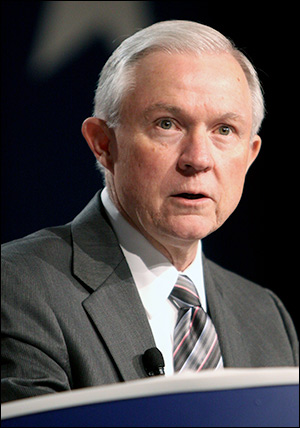
In Alabama, retired Auburn University head football coach Tommy Tuberville, as expected, pretty much demolished former US attorney general and ex-Alabama senator Jeff Sessions last night with the margin of victory being larger than expected. Though earlier polls had predicted spreads as large as 22 points, a 61-39 percent Tuberville victory margin was not forecast even though every pollster found the former coach leading the race. The Tuberville victory was so complete that Sessions, a man who ran unopposed in his previous Senate re-election campaign (2014), was limited to winning only three counties.

Tuberville advances into the general election to face incumbent Democrat, Sen. Doug Jones, who won a special election in 2017 ironically to replace Sessions after he was appointed to his Trump Administration position. Early polling suggests Tuberville will open the general election with a discernible lead over Sen. Jones in what will likely be a top-three state for President Trump.

Alabama hosted two significant Republican runoff elections last night, both of which almost assuredly identified a pair of new congressmen. In the Mobile-anchored 1st District, Mobile County Commissioner Jerry Carl topped former state senator Bill Hightower, 52-48 percent, and will easily win the general election in November. In the adjoining 2nd District, despite being outspent by a 5:1 ratio, former state Rep. Barry Moore (R-Enterprise) easily defeated moving company owner Jeff Coleman who finished first in the regular primary.

Moore scored a 60-40 percent win over Coleman who dropped more than $1 million of his own money into his campaign and earned retiring Rep. Martha Roby’s (R-Montgomery) endorsement. Moore ran as a Trump Republican and mixed his campaign message with attacks on DC and clever issue targeting. He did not run a negative race against Coleman who had been attacked in the primary. Coleman attracted 38 percent on March 3 but could only expand his runoff vote to 40 percent. Moore, on the other hand, who barely qualified for the runoff – just 591 votes ahead of third place finisher Jessica Taylor – was able to build a winning runoff coalition of 60 percent as compared to his 20 percent in the primary.

Turning to the Texas Senate Democratic runoff, retired Army helicopter pilot M.J. Hegar defeated state Sen. Royce West (D-Dallas) by only about 40,000 votes statewide with further precincts to count. Hegar was mathematically projected the winner, but her margin could continue to shrink once the final tabulations are calculated and reported. She will now challenge Sen. John Cornyn (R) in a race that should break the incumbent’s way by a comfortable margin in November.

Continue reading

Texas Runoff Tomorrow

By Jim Ellis

Texas Sen. John Cornyn (R)

July 13, 2020 — The general election is finally getting underway in Texas. The long-awaited Lone Star State runoff elections are tomorrow, postponed from May 26. At the federal level, 16 nominations will be decided, one for the Senate and 15 more in US House races.

In Texas, if no candidate secures a 50 percent majority in the primary, which, in 2020, was all the way back on Super Tuesday, March 3, a runoff election between the top two finishers is then conducted within 12 weeks. Because of COVID-19 precautions, the extended runoff cycle has consumed 19 weeks.

Sen. John Cornyn (R) will learn the identity of his general election opponent tomorrow night, and the incumbent’s campaign has seemingly involved itself in the Democratic runoff. The Cornyn team released a poll at the end of last week that contained ballot test results for the Democratic runoff, a race that seemingly favored original first-place finisher M.J. Hegar, but closer examination leads one to believe that the Cornyn forces would prefer to run against state Sen. Royce West (D-Dallas).

The TargetPoint survey identified Hegar as a 33-29 percent leader but points out that among those respondents who claim to have already voted, the two candidates were tied at 50 percent apiece. They further used the poll to identify Sen. West as the most “liberal” candidate in the race as an apparent way to influence Democratic voters that he is closer to them than Hegar.

We have seen this type of tactic used in other states. In New Mexico, the EMILY’s List organization was running ads against former state Rep. Yvette Herrell, saying she was the “true Trump candidate” in the Republican primary. This was done to convince Republican voters to support Herrell, a candidate the progressive left organization, and many others, believed to be the weaker opponent for incumbent Rep. Xochitl Torres Small (D-Las Cruces).

Regardless of who wins the Texas Senate Democratic runoff tomorrow night, Sen. Cornyn will be a clear favorite for re-election on Nov. 3.

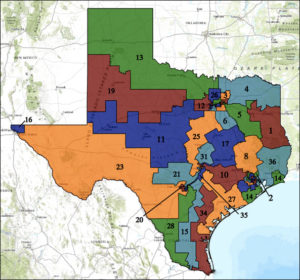
In the House, six districts host runoffs in seats that will result in a substantial incumbent victory this Fall. Therefore, runoff winners in the 3rd (Rep. Van Taylor-R), 15th (Rep. Vicente Gonzalez-D), 16th (Rep. Veronica Escobar-D), 18th (Rep. Sheila Jackson Lee-D), 20th (Rep. Joaquin Castro-D), and 35th Districts (Rep. Lloyd Doggett-D) will become largely inconsequential in November.

The 2nd District originally was advancing to a secondary election, but candidate Elisa Cardnell barely qualified for the Democratic runoff and decided to concede the race to attorney and former Beto O’Rourke advisor Sima Ladjevardian. Therefore, Ladjevardian became the party nominee against freshman Rep. Dan Crenshaw (R-Houston) without having to face a second election. The congressman is a strong favorite for re-election, but Ladjevardian had already raised will over $1 million for just her primary election.

Continue reading

Runoff Review – Part II

Map of US Congressional districts in Texas

By Jim Ellis

March 26, 2020 — With Gov. Greg Abbott (R) moving the Texas runoff election date, it has drastically changed the short-term Lone Star State political scene. At the end of last week, Abbott transferred the post-primary runoff election date from May 26 to July 14 in consideration of COVID-19 virus precautions.

Statewide, the US Senate Democratic primary is headed to a runoff election, as well as 15 different congressional campaigns.

In the Senate race, retired Army helicopter pilot M.J. Hegar, who held Rep. John Carter (R-Georgetown) to a 51-48 percent re-election victory in 2018, placed first in the Democratic primary with 22.4 percent of the vote, but a long way from the 50 percent plateau a candidate needs to claim a party nomination. She will face state Sen. Royce West (D-Dallas) who slipped into second place by just over a percentage point in the 12-candidate field. Sen. Royce scored 14.5 percent statewide.

The eventual nominee faces three-term Sen. John Cornyn (R), who easily secured re-nomination in his Republican primary (76 percent over four opponents). The longer runoff cycle should typically help the second place finisher, since the individual has more time to change the campaign’s flow. In this case, however, the Democratic nominee, who already starts as a severe underdog to Sen. Cornyn, would lose valuable general election time with the later runoff, thus making the task of overcoming the incumbent even more formidable.

Of the 15 House runoffs, nine are viable to some degree. The six that are not lie in districts that are safe for one party or the other. For example, it matters little which Democrat wins the 13th District runoff (Trump ’16: 79.9 percent), or who eventually becomes the victorious Republican in the 18th CD secondary vote (Clinton ’16: 76.5 percent).

Rep. Van Taylor’s (R-Plano) north Texas seat is typically thought of as safely Republican, but his 54 percent win percentage in 2018 was considerably below the average GOP vote. Two attorneys, Sean McCaffity and Lulu Seikaly will now do battle until July 14 to see who faces Rep. Taylor in his first re-election bid. The two were virtually tied in the Democratic primary, 44.5 – 43.7 percent, with the slight edge going to McCaffity. Rep. Taylor will be the decided favorite in November.

Continue reading

Texas Turnout

By Jim Ellis

Map of US Congressional districts in Texas

March 16, 2020 — There is some budding political chatter promoting a theory that the 2020 Texas primary turnout numbers suggest Democrats are poised for a good election later this year in the Lone Star State, but a deeper dive into the numbers and patterns doesn’t clearly support such a conclusion.

The turnout theory loses its steam when actually comparing the participation numbers not only with 2020 Republican turnout and understanding that the GOP has a virtually unopposed presidential candidate for its nomination, but also when overlaying recent political history.

When studying the numbers, one sees that the 2008 Democratic primary’s participation rate between Barack Obama and Hillary Clinton far exceeded the numbers posted in this year’s primary, which was held on March 3 – Super Tuesday. In 2008, we see that 33.2 percent of the registered voters participated in one of the major party primaries. This year, the combined turnout represented 25.2 percent of the registered voter pool.

And, 12 years ago, according to figures published in this March 6 Texas Tribune article, two-thirds of those voters chose a Democratic ballot to vote in the Obama-Clinton primary versus just one-third who entered the Republican primary to support John McCain over former Arkansas governor, Mike Huckabee.

This year, 12.8 percent of the registered Texas voters chose the Democratic primary versus 12.4 percent who picked a Republican ballot even though there was no competitive GOP contest. Furthermore, the combined 25.2 percent total participation factor is actually the second-lowest turnout in the past four elections.

Most importantly, however, as a gauge toward predicting general election turnout and result, while two-thirds of the 2008 voters chose the Democratic ballot in the primary in the largest percentage turnout of the century, Republican John McCain would later post a 55-44 percent general election victory within the Texas electorate.

While Democratic statewide turnout did exceed the number of Republicans voting early or visiting the polls this year, the difference was minuscule. A total of 2,071,745 individuals voted in the Democratic primary while 2,008,385 participated on the Republican side. Since the presidential race was likely the turnout driver, the fact that a highly charged Democratic primary among several competitive contenders barely out-polled a Republican race where the incumbent president was virtually unopposed is of no tangible significance as a predictor of general election preference.

Continue reading

Primary Money Count – Senate

By Jim Ellis

Former Alabama senator, Jeff Sessions (R)

Feb. 7, 2020 — The 4th Quarter campaign disclosure reports are published and today we look at the key early primary Senate states, those that will have an initial vote on Super Tuesday, March 3.

Five states will hold their regular primaries on that day, and four of them have Senate elections. Voters in Alabama, Arkansas, North Carolina, and Texas will take at least the first step in choosing their statewide nominees on Super Tuesday. California, which also holds its regular primary that day does not have a Senate race in this cycle. In Arkansas, Democrats failed to produce a candidate, meaning that Sen. Tom Cotton (R) will head into the general election as a virtually unopposed candidate.

ALABAMA

Alabama hosts a major Republican primary featuring former US attorney general and senator, Jeff Sessions. He is running for the seat he vacated to accept his federal appointment. Sessions is being fiercely challenged, however. Two serious candidates are also vying for the party nomination, US Rep. Bradley Byrne (R-Mobile) and retired Auburn University head football coach Tommy Tuberville. Ex-state Supreme Court chief judge and 2017 Senate special election nominee Roy Moore is back for another attempt, but his previous poor performance and lack of funding has relegated him to lower-tier status.

On the fundraising front, the Federal Election Commission reports find Sessions raising more than $530,000 but has spent more than $812,000. At the end of the year, he held over $2.5 million in cash, but most of those funds were raised during his time as an incumbent Senator.

Coach Tuberville has done an outstanding job of fundraising for a first-time candidate in a crowded field, raising over $1.3 million from individuals and loaning his campaign $1 million. His year-end cash-on-hand (CoH) figure was $1.52 million.

Rep. Byrne has accumulated over $3.3 million for his campaign, including transferring more than $2.2 million from his US House committee. His CoH total is just under $2.1 million.

Continue reading

Rep. Yoho to Retire; Texas Filings

By Jim Ellis

Dec. 12, 2019 — Keeping his pledge to serve only four terms in the House, Florida Rep. Ted Yoho (R-Gainesville) announced in a local radio interview earlier this week that he will not seek re-election next year. Also, the 2020 Texas candidate filing deadline came on Monday, and lists of the qualifying candidates are now becoming public.

REP. YOHO, FL-3

Florida Rep. Ted Yoho (R-Gainesville)

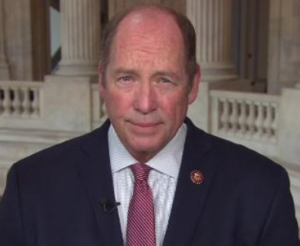
There had been some speculation brewing as to Yoho’s plans for 2020 with some suggesting he might eschew his original pledge. Making this now the 37th open House seat and second in Florida, potential candidates will have until May 1 to file for the Aug. 25 primary.

The eventual Republican nominee will clearly have the inside track to hold this seat for the GOP. Florida’s 3rd District is strongly, and consistently, Republican. President Trump scored 56.2 percent of the vote in 2016. This number is almost identical to the 56.6 percent that Mitt Romney posted against President Obama in 2012, and John McCain’s 54.6 percent that he garnered in the 2008 presidential election.

Rep. Yoho has averaged 61.0 percent of the vote here over four elections, but the district was significantly changed in the 2015 mid-decade court-ordered redistricting plan. In the current configuration, Yoho averaged almost exactly what the Republican presidential candidates scored: 57.2 percent in his two elections since the boundary alteration.

The 3rd District occupies five whole counties and parts of a sixth. The major population center is the city of Gainesville in Alachua County. The remaining portion of the CD is nestled squarely in the north/central section of the Florida peninsula.

Three Republicans had already announced their candidacies, but none seems particularly viable. The contender raising the most money through the Sept. 30 financial disclosure period is businesswoman Amy Pope Wells, but her receipts showed just under $40,000 raised for the campaign with a cash-on-hand figure of just under $8,500.

Continue reading

Super Tuesday Senate Primaries

Super Tuesday 2020 States and Territories; *Important Senate primaries will also be occurring in four states — Texas, Arkansas, Alabama & North Carolina


By Jim Ellis

Nov. 26, 2019 — Super Tuesday is scheduled for March 3, and while the national focus will be on the 14 states and one territory whose electorates will vote in the Democratic presidential nomination contest, important Senate primaries will also be occurring in four states. Five places moved their regular-cycle primary to run concurrently with the early March presidential vote, and four from this group host 2020 Senate campaigns. The lone exception is California.

The Alabama Senate contest has drawn much attention lately since former US Attorney General and ex-Sen. Jeff Sessions has re-emerged as a candidate. His nomination is not a foregone conclusion, however. He faces a significant field of Republican opponents on March 3, all of whom became candidates before he decided to run again.

Along with Sessions, Alabama Secretary of State John Merrill, US Rep. Bradley Byrne (R-Mobile), retired Auburn University head football coach Tommy Tuberville, former state Supreme Court Chief Judge and 2017 Senate special election nominee Roy Moore, and state Rep. Arnold Mooney (R-Shelby County) comprise the credible candidate field.

Polling since Sessions returned to the race suggests that both the former senator and Coach Tuberville would advance to an April 14 run-off, but campaign prime time still remains, and much could change. Though Sessions has a residual base, he is unlikely to win the nomination outright against this field, none of whom have departed the race since his return. Therefore, the eventual nomination victor is still in doubt. The winner will face Sen. Doug Jones (D) in the general election.

Arkansas Sen. Tom Cotton (R) stands for a second term and currently has no opponent. Democratic businessman and former congressional candidate Josh Mahony had been traveling the state to organize support from local party leaders and became the sole filer at the deadline against Sen. Cotton, but then ended his effort just two hours after submitting his candidate documentation citing family issues. Since the Democrats have no candidate, the party will convene to choose a replacement nominee. Regardless of whom they select, Sen. Cotton looks solid for re-election.

Continue reading

Filings & Primaries

By Jim Ellis

Nov. 22, 2019 — As we approach the end of this year, two states have already held their 2020 candidate filings and six more will do so in December. This sets the stage for eight statewide primaries in March, four from large states. Mississippi, with a March 10 primary, set its filing deadline for Jan. 10.

In total, and in addition to the presidential campaign, filings during this period in these states have occurred or will occur for six Senate races and 151 US House districts. All five Super Tuesday primary states will host US Senate contests and hold an aggregate of 113 congressional districts.

Alabama and Arkansas have already filed, and the major stories coming from these places as already covered were former US Attorney General and senator, Jeff Sessions, again declaring for his former position and the lone Democrat challenging Arkansas Sen. Tom Cotton (R) dropping out of the race just two hours after he had filed. In the pair of states, two House incumbents, Alabama Rep. Terri Sewell (D-Birmingham) and Arkansas Rep. Rick Crawford (R-Jonesboro), are totally unopposed in their 2020 campaigns.

The other states heading for December candidate filing deadlines are Illinois on Dec. 2; California, Dec. 6; Texas, Dec. 9; and Ohio, Dec. 11. North Carolina is currently scheduled for Dec. 20, but it is conceivable that the pending redistricting lawsuits could potentially postpone the state primary and thus the qualifying candidate deadline.

The five Super Tuesday (March 3) primary states are: Alabama, Arkansas, California, North Carolina, and Texas.

Alabama has the first Senate primary and that will likely determine which two of the six major Republican candidates move into an April 14 run-off election. Currently, polling suggests that former Sen. Sessions and Auburn University retired head football coach Tommy Tuberville would advance to a run-off. Secretary of State John Merrill, US Rep. Bradley Byrne (R-Mobile), and former state Supreme Court Chief Judge and 2017 US Senate special election nominee Roy Moore round out the group of main competitors. The eventual nominee will face Sen. Doug Jones (D) in the November campaign.

Two open seat congressional races, both in South Alabama, will almost assuredly go to run-offs, though the eventual Republican nominee in the respective districts will be heavily favored to replace Reps. Byrne and Martha Roby (R-Montgomery), who is retiring.

The March 3 primary is relatively inconsequential in Arkansas since it appears the general election is relatively set. Since the Democrats have no candidate in the Senate race, the party structure will meet to nominate a consensus candidate for a ballot slot in the general election.

Continue reading

With Beto Out … Will the Rest
of the Dominoes Start to Fall?

Beto O’Rourke | Facebook Photo

By Jim Ellis

Nov. 5, 2019 — Former US Rep. Beto O’Rourke (D-TX) ended his presidential campaign Friday, joining Rep. Eric Swalwell (D-CA), ex-Colorado Gov. John Hickenlooper, Washington Gov. Jay Inslee, US Rep. Seth Moulton (D-MA), New York Sen. Kirsten Gillibrand, New York City Mayor Bill de Blasio, and US Rep. Tim Ryan (D-OH) as 2020 national contenders who are no longer in the race.

O’Rourke’s concession statement made reference to departing because he no longer possesses adequate resources with which to compete. Beginning as a top tier candidate with a strong financial base, his effort rapidly crumbled largely due to ill-advised comments, poor debate performance, and calling for assault weapon confiscation, which did not reinvigorate his campaign as he expected. O’Rourke had hoped to use the latter issue to begin cracking into the party’s far-left faction that Sens. Elizabeth Warren (D-MA) and Bernie Sanders (I-VT) seemingly have cornered.

Democratic leaders had from the outset attempted to persuade O’Rourke to challenge Texas Sen. John Cornyn (R) instead of running for president, but they were ignored. In his statement announcing the end of his national campaign, the former congressman addressed the speculation that he might return to Texas to challenge Cornyn, but again ruled out running for that office or any other in 2020.

How does the Democratic race change now that O’Rourke has departed? Largely, his move could be a precursor of many more exits to come. At this point, it is clear three candidates occupy the top tier and separation exists between them and the rest of the pack. Former Vice President Joe Biden and Sens. Warren and Sanders maintain the top three positions in virtually every poll, and it is reasonable to expect that one of them will eventually become the Democratic nominee.

South Bend Mayor Pete Buttigieg has recently made a resurgence after lagging in single digits since the second nationally televised debate in July. Concentrating on fundraising and organization, Buttigieg’s efforts have proven worthwhile. Raising $19.1 million just in the third quarter, placing him behind only Sanders ($25.3 million raised in Quarter 3) and Warren ($24.6 million) during that period, the mid-size city mayor has brought in over $51.5 million since the onset of his presidential campaign.

Continue reading