Tag Archives: President Obama

The Senate Scorecard

With most of the primary season now behind us and all of the Senate match-ups in place, sans Arizona and Wyoming, it’s time to examine the national outlook.

After seeing several competitive primaries decided in the past several weeks, we now sit on the cusp of the final short sprint to Election Day with Senate control still considered to be in “toss-up” mode. As we know, 33 Senate races are standing for election in November with 11 of those seats being open due to retirement and defeat, thus giving more conversion opportunities for each side. Of the 33 Senate races, a little under half of them are considered safe for the respective incumbent and, according to our count, six of the races are rated as toss-ups (Ind., Mass., Mo., Mont., Va., and Wis.).

If the Democrats were to win all of the “lean Dem” and toss-up races, and Independent former governor Angus King clinches the Maine race and decides to caucus with them, the Senate Democrats would actually add a net of three seats to their conference, bringing the total majority number to 56. Early in the election cycle it looked extremely unlikely that the Democrats would pick up any seats, however, as this year has unfolded, more Republican-held seats have come into play and some of the Democratic seats initially thought to be potentially vulnerable like Connecticut, Washington, and Pennsylvania are all trending more solidly leftward. Democrats also are in much better shape in North Dakota, as former attorney general Heidi Heitkamp continues to perform well against at-large Rep. Rick Berg (R), who began the race as a big favorite.

Conversely, if Republicans sweep the toss-ups and “lean R” races they would have a net gain of eight seats, bringing their total to 55 seats, even if King wins and caucuses with the Democrats. Thus, 56D to 55R appear to be the extreme swing parameters for the two parties.

While most political pundits still can’t say with any certainty who is going to control the Senate come January, it is becoming obvious that the ratio will be close. Neither party has so far broken out with the kind of drive to create a sweep, and several other campaigns have unfolded differently than originally predicted. It seems when one party makes a gain or falls behind, the other experiences a similar action, thus keeping the balance between the two in check.

For example, the political climate has become better for Republican candidates in Nebraska and Florida, while Democrats are approaching lock-down positions in Connecticut and Washington.

In the Cornhusker State we see that former senator Bob Kerrey’s return to politics after a 12-year absence while living in New York City has not been well received. GOP nominee Deb Fischer consistently holds polling leads that exceed the 18-20 point range. The best poll, from a Nebraska Democratic perspective, is the June Garin Hart Yang survey that put Kerrey within 12 points of his Republican opponent.

Turning to the Sunshine State, two-term incumbent Sen. Bill Nelson, who has a substantial campaign resource advantage over his new official Republican opponent, Rep. Connie Mack IV (R-FL-14), fresh from his solid primary victory earlier in the week, has failed to establish a firm lead. Polling consistently shows this race moving much closer to toss-up status, and while Sen. Nelson maintains a slight advantage, his edge is minimal and this campaign is quickly becoming as hot as a typical Florida summer.

In Connecticut earlier this week, GOP primary voters, by an overwhelming 73-27 percent margin, again fielded their losing 2010 candidate, former wrestling company executive Linda McMahon, this time to compete against newly nominated Rep. Chris Murphy (D-CT-5). The two are vying for retiring Sen. Joe Lieberman’s open seat. In recent polling, Murphy has opened up a strong lead when paired against McMahon. Former Rep. Chris Shays (R-CT-4) consistently polled better in general election match-ups with Murphy, but he fared poorly in his nomination battle. With President Obama sure to run well in Connecticut and thus setting the tone for the entire Nutmeg State Democratic ticket, Rep. Murphy has established himself as the clear front-runner. Seeing him fall would now be considered a major upset.

Sen. Maria Cantwell, who serves the Evergreen State of Washington, has historically not been the most popular of incumbents. Her re-election prospects have improved considerably, however, since drawing a second-tier opponent in the person of state Sen. Michael Baumgartner. The senator placed almost 26 percentage points ahead of Baumgartner in the jungle primary earlier this month. While Washington originally had the potential of becoming a competitive race, Sen. Cantwell has considerably strengthened her position and this contest is virtually out of reach for the GOP.

As Election Day draws nearer, we continue to see a Senate that is still very much in play for both parties. Right now, it appears the Democrats are safe, likely, or lean winners in 18 states, while Republicans have that same status in nine. This means the Democrats are hovering around the 48 mark and the GOP is closer to 46. Of the six toss-ups, Democrats currently hold four states and Republicans two. Remember, Democrats must defend 23 of the in-cycle seats versus just 10 for their counterparts.

With Ryan, the Battle Lines are Drawn

Rep. Paul Ryan

Mitt Romney’s selection of House Budget Committee Chairman Paul Ryan (R-WI-1) as his vice-presidential nominee has drawn clear battle lines for the remainder of the presidential election campaign. With Ryan being best known for the “Ryan Budget” that passed the House last year and his attempts to restructure the federal budget platform, including entitlement programs, both sides will now focus on the country’s long-term economic direction and try to accuse the other of “destroying Medicare.” President Obama and the Democrats will continue their claim that the Ryan Budget ends Medicare “as we know it.” Republicans will counter that Obama and his congressional allies, by introducing and passing the Affordable Healthcare Act, voted to cut over $500 billion in the Medicare program. One thing is now certain: the voters will have a clear ideological choice to make in November.

Questions have arisen as to what now happens to Ryan’s congressional seat, since he is on the ballot today for renomination. Since Wisconsin law is silent on the subject of running nationally and simultaneously for Congress, and because there is no mechanism for removing a person from the Badger State ballot once they are nominated, Ryan’s name will appear for both the vice presidency and the 1st Congressional District. Should he win both elections, then the 1st CD would go to special election in early 2013 upon the congressman’s official resignation from the House.

Hawaii Primary Results

Mazie Hirono

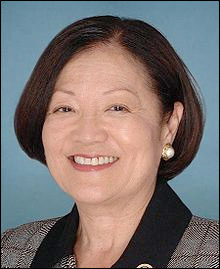
Hawaii voters went to the polls on Saturday and selected federal nominees. Throughout the entire election cycle, polling had been erratic, to say the least. Each candidate would release polls favoring them, even up until the eve of the primary election. It appears the pollsters for Senatorial candidate and US Representative Mazie Hirono (D-HI-2) and Honolulu City Councilwoman Tulsi Gabbard, in the open 2nd District, possessed the better polling data.

Hirono won a 58-41 percent landslide victory over former representative Ed Case (D-HI-2) and wins the right to face former Republican governor Linda Lingle in the general election. The two battled each other in the 2002 governor’s race, a contest Lingle won. President Obama’s presence on the Democratic ticket, in the sense that he will likely poll in the 70 percentile here as he did last election, will be a boon to Hirono.

In the seat Hirono is vacating to run statewide, Gabbard defeated former Honolulu Mayor Mufi Hannemann (D), in what turned into a nasty campaign and could signify a changing of the guard in Hawaii politics. The old-school Hannemann was originally viewed to be the favorite but lost big to Gabbard, 55-34 percent. Gabbard will easily win the general election.

The 1st District will feature a re-match between Rep. Colleen Hanabusa (D) and former representative Charles Djou (R). Hanabusa is likely to win re-election.

Can a Weak McCaskill Hold Onto Missouri?

The Missouri Senate race is shaping up to be one of the most interesting in the country. With the Senate majority hanging in the balance, all of the closest election competitors in the 14 states where campaign action is most furious can legitimately lay claim to the argument that their own campaign can determine which party controls the body in the next Congress. The Show Me State of Missouri is certainly in this category, as first-term incumbent Sen. Claire McCaskill, who may be the weakest of all Democrat candidates standing for re-election, fights for her political life.

Earlier this week, Rep. Todd Akin (R-MO-2) surprised many political pundits by defeating wealthy businessman John Brunner and former state treasurer Sarah Steelman 36-30-29 percent, to capture the Republican Senatorial nomination. Akin rode a strong wave at the end of the campaign, peaking at exactly the right time. After trailing for most of the race, he finished a step ahead of both Brunner and Steelman as the trio almost simultaneously crossed the political finish line.

Interestingly, Akin had help from an unlikely source. McCaskill and her Democratic allies pejoratively repeated their belief that Akin is the most conservative candidate in the Republican field, ironically a message that the congressman himself was also trying to sell to the GOP electorate. The Democratic Senatorial Campaign Committee (DSCC) actually advertised in the Republican primary to that effect, saying Akin is too conservative for the state. It is clear the Democratic leadership and activist organizations, along with McCaskill herself, believe Akin to be the weakest candidate in the Republican field and desire him as their general election opponent. It remains to be seen if their analysis proves correct.

For several decades, Missouri was known as a political bellwether. Now, however, the state seems to be trending more Republican. After 14 statewide races between 2000 and 2008 that were decided by less than two percentage points, with each party winning seven times, John McCain’s razor-thin 2008 victory here and then-Rep. Roy Blunt’s big win in the 2010 Senate contest could be a Missouri realignment harbinger. In fact, in voting for McCain, the state failed to support the winning presidential candidate for only the second time since 1900.

With this backdrop, we enter the 2012 general election campaign. Since Team Obama does not have Missouri high on its target list, there may be less of a presidential presence here than in previous years. The state is a must-win for Republican Mitt Romney, so expect him to be more active here than President Obama. Outside groups are expected to play a major role, as a highly competitive Senate race in what is perceived to be a toss-up campaign will precipitate a great deal of action from many issue perspectives.

But it may be Akin who becomes the beneficiary of the greater outside group spending. McCaskill, who wrapped herself around candidate Barack Obama in 2008 appears to be running away from him in 2012, going so far as to say she won’t even attend the Democratic National Convention. While voting for all of the early Obama initiatives and now trying to create distance between herself and the party’s liberal wing, leftward activist groups may find other places to expend advocacy dollars.

Small business groups, church organizations steamed at the Obama Administration for the health care law that forces them into expenditures that conflict with many of their religious tenets, and the coal industry could become major players in this race, all on Akin’s behalf.

For example, the National Mining Association, through its Count on Coal program, is expected to be highly active in Missouri educating the constituency on the mineral’s importance to daily life. The state ranks sixth nationally in coal usage, as 81 percent of its electrical power is generated from the substance. Count on Coal is taking it to the Obama Administration for what the NMA believes are its destructive energy policies. Regardless of whether they actively enter the Senate race, McCaskill is likely to be put on the defensive and absorb political damage from the coal program’s aggressive contrast effort toward the Obama Administration.

Sen. McCaskill has been polling poorly against all general election configurations. Now that she has Rep. Akin as her November opponent, expect a hard-hitting campaign from both sides. The race is a toss-up, and has to be considered a must-win for the Republicans. It is clearly one of the most important Senate races of the year.

Colorado Crazy


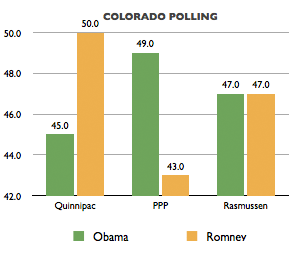
A trio of national pollsters just descended upon the swing state of Colorado and produced wildly divergent presidential campaign results. During the period of July 31 – Aug. 6, three national survey research firms each conducted a separate study of likely Colorado general election voters.

Quinnipiac University (July 31 – Aug. 6) surveyed a sample cell of 1,463 likely voters and actually found Republican Mitt Romney to be leading President Obama 50-45 percent. Public Policy Polling (Aug. 2-5; 779 likely Colorado voters), also in the field during the same period, found the exact opposite result: Obama ahead 49-43 percent. Finally, on Aug. 6, Rasmussen Reports conducted a one-day survey of 500 likely Colorado voters and projected the two candidates to be tied at 47 percent apiece.

The differing results tell us several things. First, the fact that we see the President leading by six in one poll, trailing by five in another, and tied in a third likely tells us that the Colorado electorate is split very finely between the two men. Second, all three polls reveal a very high degree of commitment. Those not expressing a defined choice were only in single-digit percentiles for all three polls. Third, the data also suggests that this state, which typically splits its votes rather evenly between candidates of the two parties, is clearly in play for both presidential contenders. In 2008, then-Sen. Barack Obama carried Colorado over his colleague John McCain by a 54-45 percent margin but, today, it appears the 2012 result will be much closer.

Presidential Popular Vote is Even

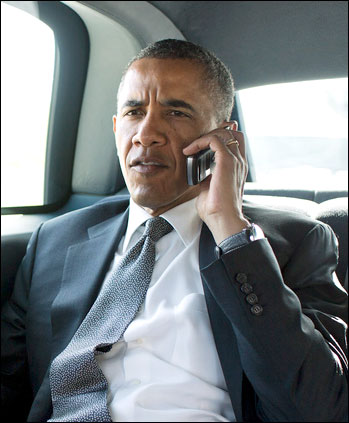
President Obama. / Photo: The White House

A series of new presidential election polls reveals a further tightening of the campaign on the national level, though President Obama maintains a lead over Mitt Romney in the most competitive states.

The two daily tracking pollsters, Gallup and Rasmussen Reports, both give the president only a one-point national lead, 46-45 percent and 45-44 percent, respectively. Looking at an actual benchmark survey, Public Policy Polling, conducting their study (July 19-22; 1,000 registered voters) for the Daily Kos national liberal blog and the Service Employees International Union, projects a flat 46-46 percent tie.

The only national poll not showing a dead heat, taken over virtually the same time frame as PPP’s survey with an identical sample size (July 18-22; 1,000 registered voters) from Republican pollster Bill McInturff and his Democratic counterpart Peter Hart, actually stakes the president to a 49-43 percent advantage. Based upon the available data, though the polling methodology appears sound, the McInturff/Hart result appears to be an outlier.

National Public Radio released their poll of the 12 commonly viewed battleground states (conducted by the Resurgent Republic and Democracy Corps organizations, July 7-12; 1,000 voters nationwide with an oversample of 462 from the battleground states) but its aggregate result is of little consequence. Though this poll, too, shows an Obama-Romney tie at 46 percent, such a figure is virtually useless because the combined popular vote in the most hotly contested states doesn’t translate into specific electoral votes.

What is valuable are battleground voters’ perceptions and attitudes about the candidates. As we have seen for months, there is severe polarization between the two major parties. By almost a 9:1 majority, Democrats believe the president has performed well in office. Conversely, the same virtual ratio of Republicans believes he has not. Independents tend to fall more on the Republican side, slightly rating Obama’s job performance more negative than positive. Also, Independents in these states generally oppose the Obama healthcare law and, by a slight margin, believe that the Supreme Court decision upholding the law is incorrect. This could prove significant as the campaign continues to evolve.

One thing that does deviate somewhat from at least the conventional wisdom, the NPR battleground state poll does show that both candidates have a strong base. Especially for Romney, this is a change. Before, most data indicated weakness among Republicans for their presumptive nominee, but the NPR data gives both contenders right around 90 percent support within their own party voter cell sample. This finding is good news for both men.

New individual key state surveys stack up relatively well for the president in the fact that he leads in most, but in no case is his advantage more than mid-level single-digit numbers.

Rasmussen Reports gives the President a six-point, 48-42 percent advantage in Michigan. Survey USA finds a similar five-point, 48-43 percent margin for Obama in all-important Florida; and We Ask America returns similar 49-42 percent and 49-43 percent spreads (in Obama’s favor) in Wisconsin and Nevada, respectively. Magellan Strategies produced a much closer 50-46 percent Nevada model. Quinnipiac University shows a tie in Virginia, and the Civitas Institute projects Romney to a one point, 49-48 percent razor-thin edge in North Carolina. Though it’s not a battleground state, Survey USA detects only a 46-40 percent advantage for the president in liberal Minnesota, which is a surprise.

The cumulative effect of the most recent survey data makes the president and his advisers uncomfortable. These are not the type of results strong incumbents would be seeing at this point in the election cycle. It’s going to be quite a remainder of the year.

Is a Serious Race Developing in PA?

Yesterday, we mentioned two Senate races bridging the gap toward competitiveness, Florida and Ohio, but is a third campaign on the cusp of becoming a serious? A new Rasmussen Reports survey suggests that the Pennsylvania Senate contest, despite incumbent Bob Casey Jr. (D) holding a comfortable lead, is not yet clinched. Though Sen. Casey has had a controversy-free first term, he still does not exceed 50 percent support in various statewide polls. Rasmussen Reports (July 18; 500 likely Pennsylvania voters) gives Casey a 49-38 percent lead over the Republican nominee, businessman Tom Smith.

Casey destroyed former senator Rick Santorum 59-41 percent in 2006, but the 2012 political climate may be different. If this year is anything like 2010, when Republicans captured the other Senate seat, the governorship, gained five congressional seats, and won both houses of the state legislature, the Senate campaign could be headed toward battle status.

With President Obama running ahead in the Keystone State, but lagging behind where most Democrats begin in the state, Smith could become the beneficiary of a hard-fought, polarizing national campaign. Having enough personal money to become relevant, Smith may just seize the opportunity of putting this state in play. The period between now and Sept. 1 is a critical positioning time for the challenger. If he proves his viability during the current segment, then count on a wild finish.