Tag Archives: New York

Is Biden’s Victory Secure?

By Jim Ellis

Former VP Joe Biden

March 30, 2020 — Articles have appeared in publications on successive days that somewhat surprisingly contemplate whether former vice president Joe Biden will actually reach majority delegate support for a first ballot win at the Democratic National Convention still scheduled to begin in mid-July.

Should the former VP somehow fail to obtain 1,991 votes on the first roll call a contested convention would begin, and some are introducing the idea that a deadlock could lead toward New York Gov. Andrew Cuomo emerging as an alternative to Biden.

Gov. Cuomo is receiving favorable media coverage for his handling of the COVID-19 virus situation in his state, which is one of the hardest hit areas in the country. Originally thought of as a possible presidential candidate at the very beginning of the process, Cuomo was first of the potential contenders to definitively pull his name from consideration.

Arriving at a contested convention at this stage of the process when calculating the delegate numbers is not a reasonable conclusion, however. While true that approximately half the states and territories still have not voted in their respective presidential primary, only 42 percent of the delegate universe (1,688) remains unclaimed. With Biden 777 votes away from the victory number according to the Green Papers election stats firm, it would take quite a negative swing for him to lose at this point.

Using simple arithmetic calculations, Biden needs only to secure 46 percent of the remaining bound first ballot delegates to win the party nomination. While he still must participate in the various primaries and attain that total, the chances of him winning are far greater than not. Post-Super Tuesday, his cumulative percentage among the nine states voting is 53.9 meaning that the future results would have to completely reverse for him to somehow lose the nomination.

Continue reading

Special Election Nominees Chosen
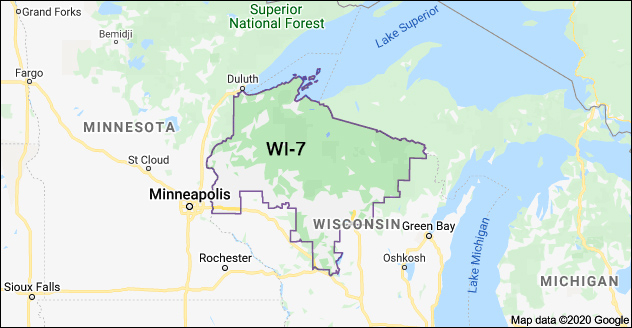
In WI-7: Tiffany (R), Zunker (D)

By Jim Ellis

Feb. 20, 2020 — Wisconsin Republican state Sen. Tom Tiffany (R-Minocqua) and Wausau School Board member Tricia Zunker (D) won their respective party primaries Tuesday night and now head to the special general election scheduled for May 12. The winner of the succeeding contest replaces resigned Rep. Sean Duffy (R-Wausau) in WI-7 who departed Congress earlier in the year for family reasons.

Sen. Tiffany recorded a 57-43 percent win over Army veteran Jason Church who was previously a staff member for Sen. Ron Johnson (R-WI). Church, who lost both legs in Afghanistan, made military service the centerpiece of his campaign. Sen. Tiffany was originally elected to the state assembly in 2010. He won his state Senate seat in 2012 and was re-elected in 2016.

Zunker was an easy winner on the Democratic side, amassing a landslide 89-11 percent victory margin in a race where she became the obvious consensus candidate early in the process.

Sen. Tiffany now becomes the heavy favorite to win the seat in May. The northern Wisconsin region has transformed into a dependable Republican area after this district laid in Democratic hands from early 1969 all the way to the beginning of 2011 in the person of former House Appropriations Committee chairman David Obey.

Over his five elections here, Rep. Duffy averaged 57.9 percent of the vote. President Trump carried the 7th with a 58-37 percent majority, which was a substantial upgrade over Mitt Romney’s 51-48 percent performance. The Republican trend has clearly grown as the decade progressed.

Turnout in the primary election greatly favored the Republican candidates. When the final count is tabulated, the combined GOP participation factor looks to be well over 76,000 as compared to the Democratic total of just over 40,000 votes. The turnout ratio is another factor that provides Sen. Tiffany with a major advantage heading into the special general election.

Continue reading

Mfume’s Maryland Comeback

By Jim Ellis

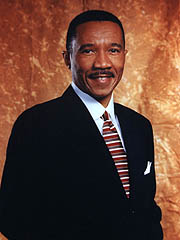
Former congressman Kwesi Mfume looks to be headed back to represent Maryland on Capitol Hill.

Feb. 6 2020 — In the midst of the Iowa counting fiasco and President Trump’s State of the Union Address, a special primary election was also held in the state of Maryland. For all intents and purposes, the Democratic primary is the determining factor regarding who will succeed the late Congressman Elijah Cummings (D-Baltimore). Twenty-four candidates qualified for the Democratic ballot, but the contest narrowed to three serious contenders.

Former US representative, Kweisi Mfume, who originally served in the House for nine years beginning in 1987, was victorious in his comeback attempt. He resigned the seat in 1996 to become president of the NAACP, a position he would hold until 2006 when he ran unsuccessfully for the US Senate, losing to current Maryland Sen. Ben Cardin in the Democratic primary. Cummings would then win the special election to replace then-Rep. Mfume, and now the tables turn.

Mfume captured 43 percent of the vote, far ahead of Cummings’ widow, Maya Rockeymoore Cummings, who posted 17 percent support. Maryland state Sen. Jill Carter (D-Baltimore) was third with 16 percent. None of the other candidates broke into double digits.

With Hillary Clinton scoring a 76-20 percent victory over President Trump in 2016, it is a foregone conclusion that Mfume will easily win the special general election on April 28. He will also seek re-nomination for the full term beginning in 2021 on that same day. Upon winning the special election, Mfume will be sworn into office and serve the balance of the current term.

The next special election will occur in Wisconsin on Feb. 18, in a race that should favor the Republicans. State Sen. Tom Tiffany (R-Minocqua) will square off against disabled Afghanistan War veteran Jason Church in the GOP primary. The winner advances to the May 12 special general election. Wausau School Board member Tricia Zunker is favored to win the Democratic primary.

The California and New York special congressional elections will follow in March and April, respectively. Resigned California representative, Duncan Hunter’s 50th District in San Diego County will remain vacant for the rest of this year.

Delegate Reallocation
Brings Increase to 4,750

By Jim Ellis

Jan. 22, 2020 — As we approach the first votes being cast for the Democratic presidential nomination next month, the Democratic National Committee has reallocated delegate slots among certain state contingents, thus increasing the size of the overall delegate universe to 4,750.

The changes are relatively substantial within the states when compared to the last national convention in 2016, while the recent Super Delegate total sees an increase of five new votes. The alterations within the state counts — an increase in every affected place but California — feature an additional 210 delegate votes when compared with the totals from four years ago.

Most of the boosts reflect a reward for increased Democratic votes in the 2016 and 2018 elections. The calculations include results in the recent races for president, US Senate, US House, governor, and for state legislature. States that hold their presidential nominating event after April 1 are also rewarded.

The largest increases are found in New York, Pennsylvania, and New Jersey where their respective delegations have grown by 50, 33, and 19 slots respectively, largely due to Democratic gains in the US House and state legislatures particularly from the 2018 elections. New Jersey, for example, converted a governor’s chair to the Democratic column in their 2019 election, after gaining five congressional seats in 2018 and ‘16, thus accounting for their delegation increase. And, all three states vote after April 1.

California’s regular delegate total has been reduced by one vote, possibly for moving their previous June primary to before April 1, on Super Tuesday, March 3. The state still has, by far, the largest contingent with 494 total delegates and 415 of those voting on the first ballot. The next largest delegation, after calculating their increase, is New York with 320 overall delegate slots, 274 of which are eligible to cast first-ballot votes.

Continue reading

New House Census Projections

By Jim Ellis

Jan. 3, 2020 — The Census Bureau just released its new population growth estimates for the 12-month period between July 1, 2018 and July 1, 2019. Their data allows us to assess just which states will likely gain and lose congressional districts in 2020 reapportionment, both in terms of the real numbers just presented and for projecting the final count once the decade’s final-year patterns are calculated and the census is actually conducted.

The national population growth rate was analyzed to be 0.5 percent, down from the peak period of the decade, the July 1, 2014 through July 1, 2015 time segment, when the growth factor reached 0.73 percent. The population patterns of movement to the south and west continue, with the northeast actually seeing a population decrease during the aforementioned reported 12-month period that ended on July 1. The Midwest is not keeping up with the national rate of growth, either, but not losing overall population.

Ten states actually lost population during the reported period, led by West Virginia’s 0.7 percent drop. Alaska declined by 0.5 percent, with New York and Illinois each losing 0.4 percent. Hawaii dropped by 0.3 percent, Connecticut, Louisiana and Mississippi 0.2 percent, and Vermont (0.1 percent). New Jersey is the tenth population reduction state, but it lost only 3,835 people from a population of more than 8.9 million individuals for a 0.0004 percent decrease.

The fastest growing states at this point in the decade are Idaho (2.1 percent since July 1, 2010), Nevada, Arizona, and Utah (all at 1.7 percent increase during the same period), Texas and South Carolina (1.3 percent), Washington and Colorado (1.2 percent), Florida (1.1 percent), and North Carolina (1.0 percent).

Continue reading

Impeachment Politics

By Jim Ellis

Dec. 20, 2019 — As the most recent polling from national research sources and in key states shows President Trump gaining political strength, the US House last night, on a virtual party line vote, approved the resolution to send the Articles of Impeachment to the US Senate for trial.

The vote was 229-198, with three Democrats voting against the articles and one Republican-turned-Independent, Michigan’s Justin Amash, supporting the measures. Presidential candidate Tulsi Gabbard, who represents the 2nd District of Hawaii, voted “Present”. Three members, two Republicans and one Democrat, were absent. Rep. Duncan Hunter (R-CA) will soon resign his seat due to pleading guilty to a federal campaign finance charge. Retiring Reps. Jose Serrano (D-NY) and John Shimkus (R-IL) were the others who did not vote. All present and voting Republicans opposed the impeachment measures.

Two of the three opposition Democrats were expected to vote no, Reps. Collin Peterson (D-MN) who represents the strongest Trump district in the country to elect a Democrat to the House, and New Jersey’s Jeff Van Drew who is about to leave his party to join the Republicans. The third no vote came from freshman Rep. Jared Golden (D-ME), who represents the northern district in Maine that delivered its electoral vote to Trump in 2016 even though the state voted for Hillary Clinton. Maine and Nebraska are the only two states that choose to divide their electoral votes.

Two pollsters who had been showing national political support for the impeachment are now projecting a swing toward the opposite conclusion.

The CNN poll, conducted by their usual research partner, the SSRS firm, surveyed 1,005 adult respondents over the Dec. 12-15 period. A total of 45 percent of the respondents favored impeaching the president, while 47 percent said, “they don’t feel that way.” In contrast, their Nov. 21-24 survey found 50 percent favoring impeachment while 43 percent said they didn’t agree with the move. Previously, the CNN polls had reported positions consistently favoring impeachment since late September.

Continue reading

NY-2: Trump for Congress?

NOTE: Happy Thanksgiving. Our Political Updates will return on Monday, Dec. 2.

By Jim Ellis

Lara Trump

Nov. 27, 2019 — Action about who the Republicans might nominate to succeed retiring New York Rep. Peter King (R-Seaford) is beginning to simmer, especially since the Club for Growth released a poll of the district’s GOP electorate late last week.

The Club contracted with WPA Intelligence to test Lara Trump, wife of Eric Trump and daughter-in-law of President Trump. Rumors had been surfacing that she might be contemplating running in the 2nd District; hence, the interest in gauging what type of support she might have for such a race. WPAi paired Lara with former congressman, Rick Lazio, who is considering becoming a candidate, in a hypothetical Republican primary. According to their data (Nov. 17-18; 400 likely NY-2 Republican primary voters), Lara Trump would lead Lazio by a whopping 53-19 percent.

The result is not particularly surprising because Donald Trump has a solid Republican base in the district. The WPAi survey finds the president’s favorability ratio at 78:19 percent within this GOP primary voter sample.

In response to the poll, Lara told Breitbart News that she’s, “ … incredibly honored by this showing of support from my fellow New Yorkers. While I would never close the door on anything in the future, right now I am focused on winning a second term for President Trump.” Lara serves as an advisor to the president’s re-election campaign.

So far, Islip Town Councilwoman Trish Bergin Weichbrodt and Suffolk County Elections Commissioner Nick LaLota are announced Republican candidates. State Assemblyman Mike LiPetri (R-Massapequa) has formed a congressional exploratory committee and is expected to join the race. Early last week, former Suffolk County executive, Steve Levy, and County Legislature Minority Leader Tom Cilmi both said they would not run for the seat.

The Democrats appear to be coalescing around Babylon Town Councilwoman Jackie Gordon, who is a retired Army officer. Gordon had announced a challenge campaign against Rep. King and raised just under $188,000 through the Sept. 30 deadline. The 2018 Democratic nominee, Liuba Grechen Shirley, who held the congressman to a surprisingly close 53-47 percent victory, has already announced that she will not enter the 2020 open seat campaign.

Continue reading