
Tag Archives: Mayor Pete Buttigieg

Biden’s Early Obstacle

By Jim Ellis

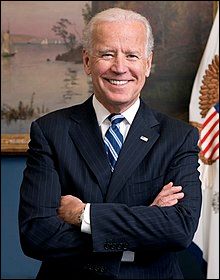
Former vice president and ex-Delaware senator Joe Biden

June 27, 2019 — One of the reasons that Hillary Clinton’s campaign began to come unglued in 2016 was failing to meet expectations in the early places.

Unfortunately for her, Iowa was always one of her weakest states and the fact that it is first on the voting schedule caused her air of inevitability to be pierced rather quickly.

As you may remember, Clinton won the Iowa Caucus, but the result was a virtual tie with Sen. Bernie Sanders, forcing the local committee people to decide some precinct results with the flip of a coin — tosses in which Clinton prevailed every time. With her inevitability veil coming off, Clinton then headed to New Hampshire where she would lose 60-38 percent.

Because the race winnowed to a two-person affair, Clinton was successfully able to rebound, scoring early victories in Nevada and South Carolina to get her campaign back on track.

Two new polls suggest that former Vice President Joe Biden may be facing a similar pattern in the early states, and being mired in a crowded field suggests we may see a different final result than what Clinton achieved.

Two new surveys suggest that Biden may already be weakening in the first two states. Though small in terms of first ballot delegate votes (Iowa, 41; New Hampshire, 24), the pair are critically important in casting early momentum. With 25 candidates now beginning the campaign, and at least six appearing viable, developing early momentum is more important than within the much smaller 2016 nomination field.

Change Research conducted the Iowa and New Hampshire polls (along with one in South Carolina where Biden has a comfortable 39-15-13-11 percent edge over Warren, Sanders, and Buttigieg) and their findings suggest that Biden could have some early trouble. Though the polling samples are small — 308 respondents for each state — the sample size may accurately reflect the diminutive voting universes found in the two places. All the surveys were conducted from June 17-20.

In Iowa, Biden leads, but with only a 27-20-18-17 percent margin over Sens. Elizabeth Warren and Sanders, while South Bend Mayor Pete Buttigieg posts a close 17 percent support. Having four candidates within 10 points suggests that any one of them could break out with a win, especially with the Feb. 3 Caucus still months away.

Continue reading

The Early Delegate Projections

By Jim Ellis

June 25, 2019 — There have been several important state polls recently released that provide us data about where the Democratic presidential candidates stand in relation to popular preference. But that is only half the story.
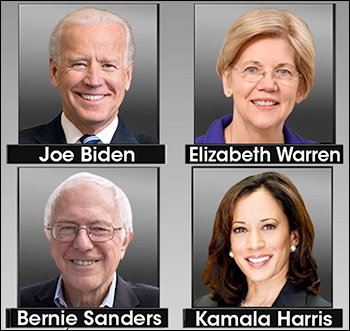
In order to gauge where the candidates might stand in terms of delegate apportionment, we have taken the available published polls from 16 states and began extrapolating a reasonable delegate projection for each.

For purposes of this exercise, all of the polling data is considered accurate, even though in some instances such a conclusion is a stretch. Additionally, these projections were only based upon the at-large numbers but understand more than half of the delegates come from the state’s chosen districts (usually congressional district, though Texas uses their state Senate seats).

It is reasonable to believe, however, that the district apportionment will, in most cases, be similar to the statewide total. At this point, the at-large ratios are the only data set from which we can begin to draw statistical conclusions.

With that short background, the states and their most recent polling result are listed below along with our unofficial delegate projections listed in chronological order based upon voting schedule:

February 3

Iowa Caucus

(YouGov – May 31-June 12; 587 likely Iowa Democratic primary voters)
• First-Ballot Delegates: 41

Biden 30%
Sanders 22%
Warren 12%
Buttigieg 11%

Delegate Projection:

Biden 15
Sanders 11
Warren   8
Buttigieg   7

Continue reading

Florida: Biden Up

Former vice president, Joe Biden (Getty Images)


By Jim Ellis

June 20, 2019 — Quinnipiac University surveyed the Florida electorate (June 12-17; 1,279 registered Florida voters, 417 self-identified Democrats) and found former Vice President Joe Biden opening a substantial lead over Sens. Bernie Sanders (I-VT) and Elizabeth Warren (D-MA) there. He also posts a healthy advantage against President Trump in a hypothetical general election pairing in what is always a critical voting domain.

The Q-Poll numbers find Biden scoring a 41-14-12 percent advantage over Sens. Sanders and Warren, respectively, with South Bend Mayor Pete Buttigieg and Sen. Kamala Harris (D-CA) trailing in single-digits with eight and six percent, sequentially.

As Nate Silver, founder of the 538 statistical website, said in an interview this week that looking at general election polling this early is basically a futile exercise. It does, however, provide us a clue into candidates’ strengths and weaknesses. In the general election Q-Poll pairing, Biden records a 50-41 percent advantage over President Trump in Florida. This poll, of course, was taken before Trump’s Florida rally Tuesday night in which he kicked off his 2020 campaign.

Silver’s spoken sentiments are true because, among other reasons, so much time remains between now and the 2020 Nov. 3 election, and so many unknown events will occur that could alter the final outcome. Additionally, the campaign will drastically change when both parties have nominees and voters begin paying serious attention to the race.

Continue reading

California Already Tightening

By Jim Ellis

June 17, 2019 — A new large-sample Golden State poll released from the University of California at Berkeley and the Los Angeles Times (June 4-10; 2,131 likely California Democratic primary voters from a pool of 4,435 registered voters) yields some surprising results. The three most unexpected findings first show a tight race among the four top contenders, Sen. Elizabeth Warren (D-MA) surging into second place, and home-state Sen. Kamala Harris only finishing fourth but not substantially behind.

The California primary, scheduled for March 3, possesses the largest number of first-ballot delegates of any state or territory. The state’s 416 first-ballot delegates, 272 of whom are divided among the 53 congressional districts and 144 at-large, will certainly help set the tone over how the Democratic National Convention unfolds.

Sen. Harris, who could well be the indicator candidate as to what scenario will occur at the convention, (i.e., will one candidate be able to coalesce a majority coalition on the first or second ballot or does the nomination battle fall into a multi-ballot contest) must score big in her home state, and this latest survey suggests her path is challenging but doable.

The Berkeley/LA Times study sees former Vice President Joe Biden holding a smaller lead than in past surveys, as he polls 22 percent first-choice responses. Sen. Warren makes a major jump into second place and records 18 percent, one of her best showings in any poll. Sen. Bernie Sanders (I-VT), who has been dipping in polling across the country, places third at 17 percent, and Sen. Harris trails in fourth position, but is still clearly in the game at 13 percent.

Polling from around the country within the last 10 days, and this California study is obviously no exception, has been projecting a tighter Democratic race. Though Biden still leads, his advantage is lessening.

Continue reading

Biden Beginning to Show Cracks

By Jim Ellis

Former vice president and ex-Delaware senator Joe Biden is the Democratic front-runner in the 2020 presidential bid.

June 11, 2019 — Two polls were just released in critical Democratic primary states that find former Vice President Joe Biden’s standing to be weaker than his latest national polling results.

In Texas, the Change Research poll (May 20-June 3; 1,218 likely Texas Democratic primary voters) projects that former Rep. Beto O’Rourke (D-TX) has risen to the top of his home state electorate, leading Biden, 27-24 percent with Sen. Bernie Sanders (I-VT) posting 13 percent support. Sen. Elizabeth Warren (D-MA) is right behind with 12 percent, while California Sen. Kamala Harris records only eight percent backing.

Turning to Iowa, Selzer & Company released another of their Iowa Polls (June 2-5; 600 likely Iowa Caucus attenders; 433 saying they would personally attend their precinct caucus meeting while another 167 said they were interested in participating in the new virtual caucus that will be an Iowa Caucus feature for the first time) and while Biden leads the group of Democratic candidates, the combined numbers from the second, third, and fourth place finishers outpaces the leader by almost a 2:1 ratio.

In the Iowa Poll, conducted for CNN, the Des Moines Register newspaper, and Mediacom, Biden posts only 24 percent support. He is followed by Sen. Sanders at 16 percent, Sen. Warren notching 15 percent, and South Bend Mayor Pete Buttigieg trailing closely with 14 percent. But, Sens. Sanders and Warren together top Biden by seven percentage points and when Buttigieg is added, the trio comes close to denying Biden even the possibility of reaching majority status.

Continue reading

Democrat Debate Friction


By Jim Ellis

June 10, 2019 — The Politico publication ran a story late last week detailing building friction between the Democratic National Committee and Montana Gov. Steve Bullock, a late-entering Democratic presidential candidate, over the committee leaders apparently axing the western governor from the first debate forum coming later this month.

The source of controversy is the party leadership contending that Gov. Bullock, who looked to have qualified for the debate under the outlined criteria, now has not. Instead, New York City Mayor Bill de Blasio is in position to capture the 20th and final debate podium for the upcoming June 26-27 candidate forums from Miami.

As we have previously reported, the qualifications the party leaders have placed upon the candidates require them to either build a fundraising organization of 65,000 donors, with a minimum of 200 coming from 20 states, or score one percent support in at least three surveys from eight designated pollsters.

Gov. Bullock appeared to have met the polling requirement. He exceeded the one percent threshold in the ABC/Washington Post survey in January. But, the DNC is now disallowing this particular poll, and the action probably eliminates him from the debate.

Their reasoning is that the ABC/Post poll asked an open-ended presidential ballot test question — that is, where the names of the candidates are not read, but the respondents must voluntarily state a name. This type of question is usually employed to test hard name identification and candidate strength.

Continue reading

Democrats Up the Debate Ante

By Jim Ellis

May 31, 2019 — The Democratic National Committee just announced the imposition of new requirements for presidential candidates to participate in the series of subsequent debates to begin in mid-September. The first two sessions are scheduled for June 26-27 and July 30-31 in Miami and Detroit, respectively.

The field is close to being set for the initial forums with 20 candidates qualifying according to the Intelligencer publication, the personnel from which have been tracking the debate process since the schedule was first announced.

To earn a podium in the first two debates, the candidates are required to either score one percent support in three of eight designated polls or reach 65,000 donors, of which at least 200 must come from 20 specific states.

The participants will include some of the more obscure candidates including author Marianne Williamson, New York City businessman Andrew Yang, and the two western governors, Jay Inslee of Washington, and Steve Bullock from Montana.

This means that Sen. Michael Bennet (D-CO), Rep. Seth Moulton (D-MA), former Sen. Mike Gravel (D-AK), and Miramar, Fla., Mayor Wayne Messam likely will not be part of the first forum, though time remains for them to still qualify.

Continue reading