Category Archives: Polling

Once Again, Ernst Polling Is Close

By Jim Ellis — Thursday, Aug. 28, 2025

Senate

Sen. Joni Ernst (R-IA)

In her two previous victorious Iowa US Senate races, Republican Joni Ernst defied the aggregate polling universe, and a new Public Policy Polling survey of the 2026 campaign suggests we may see this familiar pattern repeat.

As a whole in both 2014 and 2020, the pollster universe underestimated Ernst’s political strength and miscast her campaigns as being too close to call when they weren’t.

In Sen. Ernst’s first statewide election, running from her position as a state Senator, she defeated then-US Rep. Bruce Braley (D) by more than eight percentage points, or a full six points above her average polling lead according to the Real Clear Politics Polling Archives.

In her re-election bid from five years ago against Des Moines businesswoman Theresa Greenfield, Sen. Ernst headed into Election Day with just over a one point average edge, again according to the RCP Polling Archives, yet won with close to a seven-point cushion.

The new PPP Iowa poll (Aug. 18-19; 572 registered Iowa voters; live interview and text) finds Sen. Ernst with only toss-up leads over a series of largely unknown, from a statewide perspective, Democratic candidates.

According to the Public Policy Polling results, Sen. Ernst would lead state Sen. Zach Wahls (D-Des Moines), only 43-42 percent; she tops Des Moines School Board chair Jackie Norris, 45-42 percent; and posts a pair of 45-41 percent advantages over local Chamber of Commerce executive Nathan Sage and state Rep. Josh Turek (D-Council Bluffs).

In reviewing the Polling Archives from her two previous statewide races, we saw Sen. Ernst beginning well behind.

In 2014, against Braley, Sen. Ernst trailed in the first published poll – in July of 2013 and again according to PPP – by a 13 percentage point margin, 45-33. Over the course of the 2014 campaign, 45 statewide surveys were publicly released from 14 different pollsters.

Within the 45 poll universe, Sen. Ernst led in 19, but none among the first nine released surveys (down an average of 7.1 points). In the campaign’s closing stage, her average percentage lead was 2.3 from the six polls released during the Oct. 27 to Nov. 3 period, yet her actual victory margin over Braley was 8.5 percent.

In 2020, this time as the incumbent seeking her first re-election, we saw a similar pattern unfold. In the ’20 race, the Real Clear Polling Archives reports a total of 19 Iowa Senate race polls being released from nine different polling organizations beginning in early April of the election year.

The first released poll again came from PPP with a survey ending on May 1, 2020. It projected Sen. Ernst as having a 43-42 percent edge over Greenfield, the same percentage this new 2025 poll finds her leading opposite state Sen. Wahls.

Within the 19-poll universe that the RCP Polling Archives tracked in the 2020 campaign, Sen. Ernst led in only seven of the polls and trailed by an average of just under three percentage points through the period ending Oct. 24 (a total of 14 released polls). In the final five polls, during the Oct. 27 through Nov. 2 period, Sen. Ernst built an average polling point lead of only 1.4 according to the Archives’ calculations but won the race on Nov. 3 by 6.6 percent.

We saw similar polling underestimates in President Trump’s three Iowa campaigns. In 2016, again with data from the Polling Archives, 26 presidential polls were conducted in the Hawkeye State from Aug. 9, 2015 through Nov. 4, 2016. Within the 26-poll universe, Hillary Clinton led in 10 with four ties. Looking at the final three polls from Nov. 1 through Nov. 4, Trump led in two with an average three-poll lead of three percentage points. On Nov. 8, 2016, he carried Iowa with a 9.5 percent margin spread.

In 2020, though Trump would lose the national election, he again carried Iowa with a greater than predicted margin. In this election, 27 polls were conducted from the period of Feb. 2, 2020 through Nov. 2. The polling universe was better in this election, as they forecast Trump to be leading Joe Biden in 15 of the polls with three ties. In the final five polls from Oct. 27 through Nov. 2, he led in four of the surveys with an average edge of two percentage points. Again, his final margin on Nov. 3 was much larger: 8.5 points.

In 2024, Iowa polling became a point of national contention as the state’s pollster deemed most accurate, Selzer & Company, projected a Kamala Harris lead of three percentage points in a poll concluded on Oct. 31.

President Trump would carry the state on Nov. 5 by a 13.2 percent margin, meaning the Selzer miss was a whopping 16-plus points.

Only three presidential polls were released during the closing days of the Iowa 2024 cycle. The other two pollsters, Emerson College and Insider Advantage, were much closer to the final result (Trump plus-10 and plus-6, respectively), but even they underestimated the Republican strength.

While the early 2025 Public Policy Polling survey again depicts Sen. Ernst in a potentially close race, this is nothing new for her Iowa Senate campaigns. If polling history is any indication, the end result will likely tell a much different story.

Husted, Ramaswamy Lead in New Poll

By Jim Ellis — Tuesday, Aug. 26, 2025

Senate

Republican Vivek Ramaswamy / Photo by Gage Skidmore

Both appointed Sen. Jon Husted (R) and businessman Vivek Ramaswamy (R) lead in a new statewide Ohio 2026 general election poll, and the data also contain some interesting ancillary results.

Emerson College conducted the new statewide Ohio poll (Aug. 18-19; 1,000 registered Ohio voters; 490 likely OH Republican primary voters; 383 likely Ohio Democratic primary voters; multiple sampling techniques) and the results project Sen. Husted leading former Sen. Sherrod Brown (D), 50-44 percent. This is the first Senate survey released since Brown officially announced that he will make a political comeback.

In the Governor’s contest, Ramaswamy, the endorsed Ohio Republican Party candidate, leads former state Health Director Amy Acton (D) 49-39 percent, and former Congressman and ex-US Senate candidate Tim Ryan (D) 49-41 percent. Last week, Ryan said he would make a decision about entering the Governor’s race by the end of September.

President Trump’s job approval score was 49:42 positive to negative, with unsurprisingly almost all of the Republicans approving and a near unanimous Democratic segment disapproving. As part of the survey, Emerson then tested the personal approval index of nine Buckeye State public figures.

In the Senate race, appointed incumbent Husted’s favorability index is 33:28 positive to negative, while former Sen. Brown is better known but has a tighter favorable lean, 44:42.

Interestingly, the only one of the nine tested political personalities to post an upside-down personal rating was first-term Sen. Bernie Moreno (R) at 38:42. On the job approval score, Gov. Mike DeWine (R) also scored in negative territory, 32:40.

The political figure with the lowest unfavorable personal rating (17 percent), is Lt. Gov. Jim Tressel (R), the former Ohio State University head football coach. Tressel still has not completely ruled out running for Governor, but it appears highly unlikely that he will enter the statewide race.

Vice President and former Ohio Sen. J.D. Vance (R) posted a 48:43 percent favorability index, which also is the highest individual negative score of anyone tested but, again, the split is purely partisan with Republicans overwhelmingly favorable and Democrats viewing him unfavorably in virtually equal proportions.

To underscore the partisanship view, when asking this sample of Ohio Republican voters who they would favor to succeed President Trump in 2028, favorite son Vance was the overpowering choice, 55-9-7-6-4 percent over Secretary of State Marco Rubio, Florida Gov. Ron DeSantis, Ohio gubernatorial candidate Ramaswamy, and former UN Ambassador and 2024 presidential candidate Nikki Haley, respectively.

The Democratic sample was also polled regarding their next presidential preference. On this question it is California Gov. Gavin Newsom who placed first within the Democratic sample of 388 respondents, which is a low number for a state the size of Ohio. Irrespective of the potential sampling flaw, Newsom captured a 20 percent preference figure. Obviously, this is a very low number, but it is still tops among the tested potential candidates.

In what should be considered bad news for ex-US Transportation Secretary and former South Bend, Indiana Mayor Pete Buttigieg, he finished behind Newsom with only 15 percent support. Rep. Alexandria Ocasio-Cortez (D-NY) was third with eight percent, followed by a three-way tie with seven percent apiece among Sen. Bernie Sanders (I-VT), a two-time presidential candidate, former Vice President and 2024 Democratic presidential nominee Kamala Harris, and Minnesota Governor and 2024 Democratic Vice Presidential nominee Tim Walz.

Sen. Sanders, referring to his age (he will be 87 years old during the 2028 campaign), is indicating that he will not run for President again. The Harris-Walz showing is particularly poor for the most recent presidential ticket nominees within a Democratic Party segment cell.

Cornyn Rebounds

By Jim Ellis — Wednesday, Aug. 20, 2025

Senate

Texas Sen. John Cornyn (R)

For the first time this year, Sen. John Cornyn has posted a polling lead over Attorney General Ken Paxton in their 2026 Texas Republican primary battle.

Emerson College tested the Lone Star State electorate (Aug. 11-12; 1,000 registered Texas voters; 491 self-identified Texas Republican voters; multiple sampling techniques) and the results project Sen. Cornyn only edging AG Paxton by a scant 30-29 percent, but the survey clearly shows positive movement for the veteran incumbent.

A dozen Republican primary polls, including the current Emerson College study, have been released since the beginning of the year from 12 different pollsters (eight Republican firms, one Democratic pollster, and three university research departments).

Though the Emerson data still shows weakness for Sen. Cornyn, it detects a vastly improved incumbent standing. In the 11 polls conducted prior to Emerson’s, Paxton averaged a lead of just under 16 percentage points. In seven of the 11, the three-term AG reached or topped the 50 percent mark.

More data needs to be studied in order to confirm this new trend, especially since the Emerson poll consisted of registered voters as opposed to those likely to cast their ballot in a Republican primary. Additionally, the sample size of 491 self-identified Republicans is low for a state the size of Texas and one where GOP primary turnout reached almost 2 million voters the last time Sen. Cornyn appeared on the ballot (2020). Furthermore, the fact that Sen. Cornyn only reached a 30 percent preference figure is also a negative sign for a four-term incumbent within his own party.

Conversely, the results clearly show movement in Cornyn’s favor and coincide with a recent Cornyn campaign blitz designed to intensify a Paxton negative personal image. The new poll results suggest the Cornyn campaign strategy is working as Paxton is losing support even though the Senator’s preference number doesn’t yet appear to be rising. In the previously mentioned dozen polls, Emerson inclusive, Sen. Cornyn’s average is 33.2 percent.

The 2026 Texas Senate race will be exorbitantly expensive. In 2024, Sen. Ted Cruz (R) and then-Rep. Colin Allred (D), including approximately $64 million in outside expenditures that helped both candidates, spent an aggregate of $266 million. It is probable that such an amount will be equaled or topped in 2026.

According to the 2nd Quarter Federal Election Commission financial disclosure reports for the current election cycle, Sen. Cornyn has raised over $9.8 million for the 2026 campaign and holds almost $9 million in his campaign account. Paxton reported campaign receipts of $2.9 million with slightly over $2.5 million cash-on-hand.

Because he is a recently announced 2026 candidate, Allred has not yet had to file a disclosure report for the current campaign. For his 2024 effort, Allred raised over $94 million, a total that ranked as fourth-best among all Senate candidates. Therefore, we can again expect to see him well-funded for the coming campaign.

There is still some discussion that former Congressman, ex-US Senate, and former presidential candidate Beto O’Rourke could enter the ’26 Senate campaign. If he were to become a candidate, the Democratic primary would also become competitive. Since the Allred announcement, however, talk of an O’Rourke Senate campaign has faded, though the former El Paso Congressman is certainly politically active.

O’Rourke began raising money to fund the state House Representatives who fled Texas in order to prevent obtaining a quorum in the special legislative session. The politicians made their move to at least postpone the legislature from passing a new congressional redistricting map.

Because a law was passed to fine any member who purposely missed session for legislative purposes, O’Rourke went to work funding a non-profit political organization to pay the amassed fines. A Texas judge has struck down his effort, however, since the law purposely prevented political money from being used to pay the personal fines.

Along with Arkansas and North Carolina, the March 3 Texas primary is the earliest in the nation. Therefore, we can expect to see heavy political action coming from the Lone Star State during the latter half of this year.

Krishnamoorthi Expands Lead;
A Crowded 32-Candidate TX-18 Field

By Jim Ellis — Friday, Aug. 15, 2025

Senate

Illinois Rep. Raja Krishnamoorthi (D-Schaumburg)

A new survey conducted for a Super PAC supporting Illinois Rep. Raja Krishnamoorthi (D-Schaumburg) finds the Congressman expanding his previous lead in the open US Senate Democratic primary. Three major candidates are vying for the opportunity of succeeding retiring Sen. Dick Durbin (D).

According to the A to Z poll (conducted for the Impact Fund Super PAC; Aug. 8-10; 615 likely Illinois Democratic primary voters; online), Rep. Krishnamoorthi holds a 38-17-7 percent lead over Lt. Gov. Juliana Stratton and Rep. Robin Kelly (D-Matteson/Chicago), respectively. When those leaning to one of the candidates are added, the Krishnamoorthi advantage expands to 51-28-13 percent.

In June, the GBAO research firm released an Illinois Senate survey (June 5-10; 1,200 likely Illinois Democratic primary voters) that posted Krishnamoorthi to a 32-19-14 percent edge over Lt. Gov. Stratton and Rep. Kelly.

The northern Illinois Congressman also leads in another critical category, that of fundraising. According to the 2nd Quarter Federal Election Commission campaign finance disclosure reports, Rep. Krishnamoorthi had raised at the June 30 reporting deadline almost $12.7 million with a cash-on-hand figure of $11.76 million, far above his two opponents. Stratton, who entered the race in late April, attracted just over $1 million and held $666,000 in her federal campaign account. Rep. Kelly posted $2.4 million in receipts and $2.2 million cash-on-hand.

It is likely that each candidate will see support coming from outside organizations, and it is a certainty that the Impact Fund will be spending to help Krishnamoorthi.

Stratton is counting on Gov. J.B. Pritzker (D), who has endorsed her candidacy, and his allies to come to the table with financial support, but such has yet to materialize. Rep. Kelly will likely have enough in the way of financial backing to be competitive, but the early indicators are certainly pointing Rep. Krishnamoorthi’s way.

The March 17 plurality primary is the actual election in Illinois since it is unlikely the Republican Party will be able to field a credible candidate to compete in a state so solidly in the Democratic camp. The Dave’s Redistricting App statisticians calculate a 55.5D – 39.9R Illinois partisan lean.

In the past two national elections, President Trump lost in the Land of Lincoln. In 2020, President Biden defeated him 57-41 percent, and Kamala Harris posted a 54-43 percent victory margin last November.

TX-18

A new internal campaign poll was released of the TX-18 special election scheduled for Nov. 4. A large field of 32 announced candidates are competing for the opportunity of replacing the late Rep. Sylvester Turner (D-Houston). The eventual winner, however, may have a very short tenure in Congress.

Former Houston City Councilwoman and ex-statewide candidate Amanda Edwards (D) released the results of her campaign’s Brilliant Corners survey (July 20-23; 500 likely TX-18 special election voters; live interview) and found Edwards leading former Miss Universe contestant Carmen Maria Montiel (R), state Rep. Jolanda Jones (D-Houston), Harris County Attorney Christian Menefee (D), and George Foreman IV (I), 18-12-11-10-6 percent, respectively.

The results slightly conflict with a University of Houston poll conducted earlier in July (July 9-18; 400 likely TX-18 registered voters from a sample pool of 2,300 Harris County registered voters; SMS text) that found Edwards and Menefee tied with 19 percent, Montiel and Jones deadlocked at 14 percent preference, and Foreman posting four percent support.

The concluding analysis suggests that no one even reaching the 20 percent support plateau translates into a wide open race with much time remaining before voters begin to cast their ballots. Considering the volume of candidates, even if several do not ultimately qualify, it becomes a foregone conclusion that the contest will advance to a runoff election between the top two finishers regardless of political party affiliation. After the initial vote, Gov. Greg Abbott (R) will schedule the runoff once the primary result becomes official.

Yet, regardless of the special election outcome it is likely when the new redistricting map passes that the winner will be paired in a new 18th District with Rep. Al Green (D-Houston).

Therefore, the new congressional member will immediately find him or herself in a primary campaign, likely against Rep. Green, that will be held March 3. Thus, having to compete in a runoff election probably in early January only then be forced to face Rep. Green in a partisan Democratic primary just weeks later will likely be enough to yield the special election winner a very limited congressional tenure.

Murkowski for Governor?

By Jim Ellis — Wednesday, Aug. 13, 2025

Governor

Alaska Sen. Lisa Murkowski (R)

It might have been an off-handed comment in response to a reporter’s question, but late last week Sen. Lisa Murkowski (R) confirmed that she is “considering” entering the open Alaska Governor’s race next year.

Almost simultaneously, a Data for Progress survey from July was publicly released (July 21-27; 678 likely Alaska jungle primary voters; text from an online sample pool) and it finds former Rep. Mary Peltola (D) leading businesswoman and former radio talk show host Bernadette Wilson (R) and Lt. Gov. Nancy Dahlstrom (R) 40-11-10 percent in a hypothetical 2026 gubernatorial jungle primary poll.

Most believe the Governor’s race would dramatically change if Sen. Murkowski were to enter, though she was not added to the DfP ballot test. For her part, Peltola, who was defeated for re-election in November but still maintains positive name identification, has yet to officially enter the Governor’s race though recent comments lead most observers to believe that she will run.

Should Sen. Murkowski enter the Governor’s race, that would certainly change the budding campaign’s trajectory. The Republican candidates appear weak, at least in the early phase, and adding Sen. Murkowski to the candidate list would certainly make a more interesting contest. Yet, would she overtake Peltola?

According to the Data for Progress poll, Sen. Murkowski is not popular right now and certainly not with Republican voters. DfP tested 13 well-known Alaska political figures and Sen. Murkowski posted a 37:60 percent favorable to unfavorable image, the worst among all who were included. It in important to note, however, that only four of the 13 tested individuals scored in positive numbers (Peltola, President Trump, former state Sen. Tom Begich, and Wilson) and only Peltola had a positive rating of more than plus-5 percentage points.

Examining the poll’s crosstabs, we see in terms of partisan support that Sen. Murkowski performs better among Democrats than she does with Independents and her own Republican Party voters. Within the Democratic cell segment, her favorability index is 61:35 percent favorable to unfavorable. This compares with a 38:59 percent ratio among self-identified Independent survey respondents and a terrible 23:74 percent among Republicans.

Despite her poor ratings, the unique Alaska election system plays to Sen. Murkowski’s favor. A 2020 ballot initiative that the Murkowski forces supported created a Top Four jungle primary system that adds Ranked Choice Voting rounds if no one receives majority support on the initial vote. The measure was adopted with 50.5 percent of the statewide vote.

In 2024, the Top Four system opponents qualified a ballot initiative to return to the previous partisan primary system. The Top Four survived with a bare 50.1 percent of the vote.

Sen. Murkowski is the chief beneficiary of the Alaska system because she no longer must win renomination in a Republican primary. Therefore, if she were to enter an open Governor’s election, Murkowski would again easily capture one of the four available positions for advancement into the general election. Once in the November campaign, her ability to win general elections would again come to the forefront.

In her career after her father, then-Governor and former US Sen. Frank Murkowski (R), appointed her to the Senate in 2002, Lisa Murkowski has only averaged 46.6 percent of the vote in winning largely plurality elections mostly because Alaska typically features many Independent and minor party candidates in its elections.

The Murkowski average includes the 53.7 percent she received in 2022, but that higher percentage came through three rounds of Ranked Choice Voting. Her initial 2022 percentage prior to advancing into the RCV rounds was 43.4 percent. Therefore, her four-election average without the Ranked Choice system would be 44.0 percent. In 2010, she was upset in the Republican primary but won the general election as a write-in Independent candidate with only 39.7 percent of the vote but topping both a Republican and Democratic nominee.

The Dave’s Redistricting App statisticians calculate an Alaska partisan lean of 52.8R – 41.8D. President Trump slightly exceeded the aggregate partisan lean in all three of his elections (54.5 – 41.4 percent over Kamala Harris; 53.1 – 43.0 percent opposite President Biden; and 51.3 – 36.6 percent against Hillary Clinton), while Sen. Murkowski typically runs significantly below the Republican benchmark.

Soon we will see if the Senator’s comment about “considering” the Governor’s race will prove more than a flippant response. If so, then the open Alaska Governor’s campaign will certainly become more interesting.

New Georgia Senate Polling

By Jim Ellis — Tuesday, Aug. 12, 2025

Senate

One of the tightest 2026 US Senate races is sure to be found in the Peach State of Georgia and a new statewide poll already confirms a developing toss-up general election.

The TIPP Poll organization released the results of their new survey (July 28-Aug. 1; 2,956 registered Georgia voters; online) that forecasts Rep. Mike Collins (R-Jackson) potentially as Sen. Jon Ossoff’s (D) top challenger. According to the related ballot test, Sen. Ossoff’s edge over Rep. Collins would be a scant 45-44 percent.

The other Republican candidates also poll well against Sen. Ossoff but draw less support than Rep. Collins. Savannah area Congressman Buddy Carter (R-Pooler) would pull within 44-40 percent of Sen. Ossoff. Former University of Tennessee head football coach Derek Dooley, son of legendary Georgia University football coach Vince Dooley, would trail 44-39 percent in a hypothetical general election pairing with the first-term incumbent.

The results are not surprising. The Georgia electorate has returned some of the closest election results in the country since the 2018 Governor’s race that found current incumbent Brian Kemp (R) nipping Democrat Stacey Abrams by just over one percentage point.

The 2020 presidential race saw Joe Biden slipping past President Trump by only 11,779 votes from almost 5 million cast ballots.

Both 2020 Senate races were forced to runoff elections (Georgia had a special election that year to replace Sen. Johnny Isakson (R) who had resigned for health reasons prior to him passing away). Two years later, the race for a full term between Sen. Raphael Warnock (D) and Republican Herschel Walker also moved into a post-election runoff.

In the 2024 presidential vote, Trump defeated President Biden, 50.7 – 48.5 percent by a more comfortable margin of 115,100 votes from more than 5.2 million cast ballots, but still a close final tally.

Additionally, Georgia is also one of the few states that holds a post-general election runoff should no candidate receive majority support (Mississippi is another and Louisiana is changing from their jungle primary/December runoff system to a traditional primary and general election beginning in 2026), and the ’26 Senate race advancing into political overtime is certainly a distinct possibility.

With this backdrop, we can expect another series of close Peach State elections led by its Senate and open Governor races. Therefore, the early TIPP general election poll already showing a dead heat comes with little surprise.

Before the general election begins, Republicans are likely to face a tough primary campaign where the top two finishers in the May 19 GOP nomination contest advance into a June 16 runoff election.

TIPP also surveyed the likely Republican primary voters and found Rep. Collins leading Rep. Carter and Mr. Dooley, 25-19-7 percent. Familiarity with the Republican candidates is not particularly high, however. This means the candidates will have to spend heavily in the primary just to win the right to challenge Sen. Ossoff.

A total of 44 percent of the tested polling sample expressed familiarity with Rep. Carter, 42 percent could identify Rep. Collins, and 37 percent recognized Derek Dooley’s name. The latter man won Gov. Kemp’s endorsement, and the Kemp leadership PAC is pledging to spend early to help educate the voters about Dooley. At this point, President Trump has not endorsed a Republican primary candidate, but all are seeking his support.

Resources in the general election, though both sides can expect millions of outside Super PAC money coming into the state to assist their efforts, will likely favor the incumbent Democrat. Already, Sen. Ossoff is the top fundraiser in the country after the latest disclosure reports became public.

The Senator, since his original election in 2020, has raised almost $42 million, but spent $30.8 million largely to clear expenses from the ’20 campaign and to support his substantial fundraising operation. Still, the Senator holds almost $15.5 million in his campaign account according to the June 30 Federal Election Commission finance report.

Rep. Carter is in the strongest financial position among Republicans. His receipts through the second quarter of 2025 top $3.5 million, but that includes a loan to the campaign of $2 million. His cash-on-hand total exceeds $4 million.

Rep. Collins is considerably behind, raising $745,883 since the beginning of the year and posting just over $1 million in the bank. Dooley, who recently became an official candidate, will file his first campaign financial disclosure report on Sept. 30.

Along with the Michigan and North Carolina Senate races, we can count on the Georgia Senate contest attracting a major share of national political attention next year.

Roundup: Senate, House, Governor

By Jim Ellis — Wednesday, Aug. 6, 2025

Senate

Sen. Bill Cassidy (R-LA) faces challenge to hold US Senate seat.


Louisiana — Public Service Commissioner Eric Skrmetta announced that he will enter the US Senate Republican primary to challenge Sen. Bill Cassidy (R). At the end of 2024, State Treasurer John Fleming declared his primary challenge to Sen. Cassidy. So far, the opposition has yet to score many points against the Senator, an incumbent unlikely to receive President Trump’s support because he voted in favor of impeaching the President after the January 6 march on the Capitol.

House

CT-1 — Former Hartford Mayor Luke Bronin became the third Democrat to announce a primary challenge to veteran Connecticut Rep. John Larson (D-Hartford). Also in the race are Hartford School Board member Ruth Fortune and Southington Town Councilman Jack Perry. Clearly, however, Bronin will be the Congressman’s most formidable challenger. At the age of 77, with health issues and now a serious primary challenge, Rep. Larson is viewed as a top retirement prospect.

HI-1 — Rep. Ed Case (D-Kaneohe) has drawn a Democratic primary challenge from state Sen. Jarrett Keohokalole (D-Kaneohe). Keohokalole also served in the state House and is an attorney. This race could become serious, but Hawaii voters rarely unseat an incumbent. Incidentally, neither man lives in the 1st District, which is anchored in Honolulu.

IL-7 — Veteran Rep. Danny Davis (D-Chicago) announced that he will not seek re-election next year, ending what will be a 30-year congressional career at the end of the current Congress. Davis was originally elected to the Chicago City Council in 1979 and then moved to the Cook County Commission in 1990 before winning his congressional seat in 1996. Over his long career, he averaged 85.9 percent of the vote in his 15 federal general elections and broke the 80 percent barrier each time. In his last two Democratic primaries, however, where multiple challengers competed, his renomination percentage dropped to 52.4 and 51.9 percent.

We can expect a crowded Democratic primary field to form vying to replace the 83-year-old Congressman. The eventual Democratic nominee becomes the prohibitive favorite in November of 2026 to hold the seat.

MI-10 — Action is beginning to happen in the very competitive open 10th Congressional District. Former two-term Rep. Mike Bishop (R) confirms he is considering entering the race. Mike Bouchard, Jr. (R), son of 26-year Oakland County Sheriff Mike Bouchard, Sr., is expected to announce his campaign when he returns from overseas deployment with the Army National Guard. Macomb County prosecutor Robert Lulgjuraj this week declared his candidacy for the GOP nomination.

Five Democrats, led by ex-Commerce Department official Eric Chung and Pontiac Mayor Tim Greimel, comprise the party’s candidate field. Incumbent Rep. John James (R-Farmington Hills) is running for Governor. The Dave’s Redistricting App statisticians calculate a 49.5D – 47.9R partisan lean, one of the tightest in the nation. This race will be rated a toss-up all the way through the 2026 election.

MN-5 — Labor leader Latonya Reeves announced that she will wage a Democratic primary battle against controversial Rep. Ilhan Omar (D-Minneapolis). The Congresswoman quickly responded in announcing endorsements from Gov. Tim Walz, US Senators Amy Klobuchar and Tina Smith, and Attorney General and previous 5th District Congressman Keith Ellison. Rep. Omar has won consecutive close primary elections against former Minneapolis City Councilman Don Samuels, who is not returning for a third run.

NE-2 — State Sen. John Cavanaugh (D-Omaha) has released the results of his internal GBAO Strategies poll (July 21-23; 400 likely NE-2 Democratic primary voters; live interview & text), which find him leading his principal primary opponent, Douglas County District Court Clerk Crystal Rhoades by a 36-15 percent count with a name ID of 71 percent within the polling universe. Cavanaugh’s father, John Cavanaugh, III, represented the Omaha-anchored 2nd District for two terms in the late 1970s.

TX-18 — The Hobby School of Public Affairs at the University of Houston released the results of their just completed special congressional election survey (July 9-18; 2,300 Harris County registered voters; online & text) that unsurprisingly suggests the race will advance into a secondary runoff election.

Within the crowded field of 28 announced jungle election candidates, not all of whom will eventually qualify for the ballot, Harris County Attorney Christian Menefee (D) and former Houston City Councilwoman and ex-statewide candidate Amanda Edwards (D) are leading all contenders with each posting a 19 percent preference factor. Former Miss Universe contestant and previous congressional candidate Carmen Maria Montiel and state Rep. Jolanda Jones (D-Houston) are tied for third place with 14 percent apiece. No other candidate receives double digit support. George Foreman IV, son of the late famous boxer, is running as an Independent and attracts four percent support.

Governor

California — Former Vice President and 2024 Democratic presidential nominee Kamala Harris has announced that she will not enter the open 2026 California Governor’s race. The move further drives political speculation that she will begin building another national campaign for the 2028 open presidential race. Harris was also elected as California’s Attorney General and to the US Senate before being tabbed as Joe Biden’s 2020 Vice Presidential running mate.

With Gov. Gavin Newsom (D) ineligible to seek a third term, an incredible 72 individuals, according to the Politics1 political blog, have already announced they will enter the 2026 statewide gubernatorial jungle primary. The prominent Democrats include Lt. Gov. Eleni Kounalakis, state Senate President Toni Atkins (D-San Diego), ex-Health and Human Services Secretary, ex-Attorney General, and ex-US Congressman Xavier Becerra, ex-Congresswoman Katie Porter, along with former Los Angeles Mayor Antonio Villaraigosa. For the Republicans, Riverside County Sheriff Chad Bianco and Fox News personality Steve Hilton lead the group of 24 declared contenders.

Georgia — Rep. Marjorie Taylor Greene (R-Rome) announced that she will not enter the open gubernatorial race next year. This likely leaves the GOP field to Attorney General Chris Carr, the first to announce his gubernatorial intentions, and Lt. Gov. Burt Jones, who entered the campaign within the last month.

Rep. Greene not entering the race is a plus for Jones since they both come from the party’s right faction. The likely Democratic leader is former Atlanta Mayor Keisha Lance Bottoms. Two-time Democratic gubernatorial nominee Stacey Abrams, however, has not ruled out entering the race.

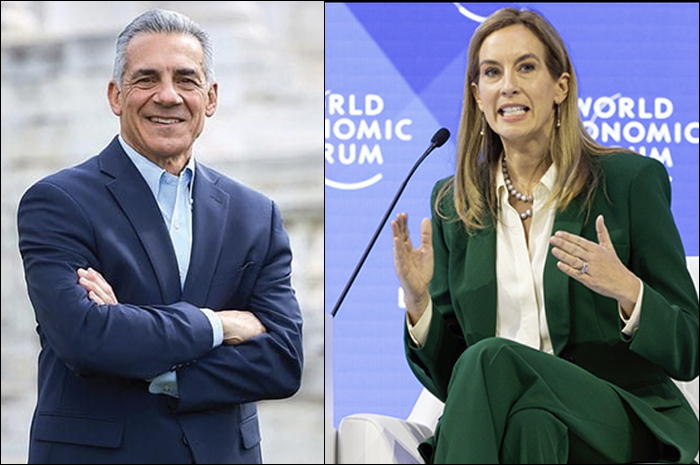
New Jersey — A Fairleigh Dickinson University poll (July 17-23; 806 likely New Jersey gubernatorial election voters; live interview & text) again finds Rep. Mikie Sherrill (D-Montclair) leading 2021 gubernatorial nominee and ex-Assemblyman Jack Ciattarelli (R) by a 45-37 percent clip. Within the sampling universe, 35 percent said they would “definitely” vote for Sherrill while 25 percent said the same for Ciattarelli.

Since Ciattarelli has repeatedly under-polled his actual performance, the split between the two could be smaller. This race will be decided on Nov. 4.

South Carolina — The South Carolina Policy Council released a Targoz Market Research survey (July 21-25; 1,200 likely South Carolina voters; compensated respondents; online) that finds candidate and Congresswoman Nancy Mace (R-Charleston) and Attorney General Alan Wilson locked in a virtual dead heat for the Republican gubernatorial nomination.

According to the poll, Mace would lead Wilson 16-15 percent, with Lt. Gov. Paula Evette, Rep. Ralph Norman (R-Rock Hill), who formally announced this week, and state Sen. Josh Kimbrell (R-Spartanburg) trailing with eight, six, and three percent support, respectively. The eventual Republican nominee will likely succeed Gov. Henry McMaster (R) who is ineligible to seek a third full term. McMaster will retire as the longest-serving Governor in South Carolina history.

Nebraska Senate:
Independent Osborn to Return

By Jim Ellis — Thursday, July 10, 2025

Senate

Nebraska US Senate candidate Dan Osborn (I)

Nebraska US Senate candidate Dan Osborn (I)

We’re about to see a partial rerun in the upcoming Nebraska Senate race.

For a time during the 2024 election cycle, Nebraska Independent US Senate candidate Dan Osborn looked like he might pull a stunning upset. Towards the end, the momentum fundamentally shifted, and he lost to Sen. Deb Fischer (R) by a 53.2 – 46.5 percent margin. Osborn announced on Tuesday that he would return for a second try, this time against Republican Senator and former two-term Gov. Pete Ricketts.

Throughout the previous campaign cycle’s latter stage, Osborn was posting strong poll numbers and attracting viable financial support in his race against Sen. Fischer. He was also the beneficiary of significant national political attention.

Though an Independent, he was the de facto Democratic nominee since the party did not file a candidate in the Fischer race, which obviously helped transform Osborn into a major contender. Osborn claimed, however, that he did not accept the Democratic endorsement.

Additionally, even his last name helped him for a time. In the early part of the 2024 cycle, there was confusion among some thinking that Osborn was, or is related to, Hall of Fame college football coach, former Congressman, and Nebraska legend Tom Osborne. An ad from Coach Osborne for the Fischer campaign clarified the matter.

Characterizing his new campaign against Sen. Ricketts as “The Billionaire Class vs. The Working Class,” Osborn formally announced that he would return to again campaign for the Senate in 2026.

In his ’24 race, the Osborn campaign reported total financial receipts of $15.13 million, largely from Democratic sources outside of the state. The Ricketts campaign was quick to jump on Osborn through spokesman Will Coup saying, “Dan Osborn is bought and paid for by his liberal, out-of-state, coastal donors. Dan Osborn will side with Chuck Schumer over Nebraska families and vote with Democrats to open the border, hike taxes, and stop the America First agenda.”

Osborn retorted saying, “I didn’t ask for that money. This time around, I’m not going to ask for it again. The Democrats are going to do what the Democrats do, and Republicans are going to do what the Republicans are going to do. And I just want to show the people that an Independent can win in a state like Nebraska or any state, for that matter.” Yet Osborn did not refuse to accept any of the Democratic money that came into the campaign and likely won’t this time, either.

Earlier this year, Osborn was assessing his chances in the state’s politically marginal 2nd Congressional District, a seat he carried against Sen. Fischer with a margin greater than 42,000 votes.

The Nebraska Democratic Party leadership, however, said the organization would not endorse Osborn in a 2nd District race because a Democratic nominee has a good chance of winning the congressional campaign. They would be open, however, to supporting him in a race against Ricketts or GOP Gov. Jim Pillen.

Considering how well Osborn performed in the 2nd District during the 2024 campaign, his decision to bypass the open House seat and run again for the Senate is curious. Even though he wouldn’t have Democratic Party support, it is reasonable to believe his chances of winning a competitive three-way race in the Omaha anchored US House seat are better than waging a long-shot challenge against Sen. Ricketts.

While Osborn will likely attract a significant amount of national political publicity based upon his previous campaign, and money will certainly come from national liberal individuals and sources, a race against Sen. Ricketts will be considerably difficult irrespective of how the national political climate might develop.

In his three statewide races since first being elected Governor in 2014, Ricketts has averaged 59.6% of the vote. This figure includes his 62.6 – 37.4 percent lone US Senate victory in 2024. Ricketts entered the Senate as the appointed replacement for incumbent Ben Sasse (R) when Sasse resigned to head the University of Florida. As such, Sen. Ricketts had to run in 2024 to fill the balance of the unexpired term and now must enter into another campaign to secure a full six-year stint.

The 2026 Nebraska Senate race again promises to launch some political fireworks, but it is highly likely that the end result will once again place Pete Ricketts in the winner’s circle on election night.

Senate Happenings: Florida, Illinois

By Jim Ellis — Friday, June 20, 2025

Senate

Democrats now have a credible US Senate candidate in Florida, and a new Illinois Democratic primary poll finds Rep. Raja Krishnamoorthi (D-Schaumburg) expanding upon his early lead.

Florida

Josh Weil (D), Florida

Josh Weil (D), Florida

Josh Weil (D), who labeled himself “a badass teacher,” and subsequently lost to freshman Rep. Randy Fine (R-Melbourne Beach) 57-43 percent in the Florida district’s April 1 special election, now returns to elective politics. Late this week, Weil announced that he will enter the Senate race with the goal of opposing appointed Sen. Ashley Moody (R), who will be on the federal ballot for the first time.

Weil attracted national attention for his special election campaign to succeed then-Rep. Mike Waltz (R-FL-6), with his national fundraising program that accumulated well over $15 million in campaign receipts. Polling suggested a close finish, and even a possible upset, but as we have seen in many Florida elections, the pollsters often underestimate Republican voter strength.

In the end, Weil even failed to perform as well as a Democratic predecessor the last time the 6th District seat was open. While party nominee Nancy Soderberg garnered 44 percent of the vote against Waltz when he first won in 2018, Weil managed to only record 43 percent in voter support in his special election campaign effort.

According to The Down Ballot political blog prognosticators, the Weil campaign’s actual spending on voter contact media during the April election was only in the $4 million realm because such a large percentage of his receipts went toward fundraising expenses and campaign overhead.

It remains to be seen if Weil can raise the kind of money he did for the special congressional race when his federal campaign was only one of two occurring nationally, and news reports were suggesting an upset was possible. Additionally, Weil ran far to the left in the special election, which in the end didn’t work in the conservative 6th District and he won’t likely fare any better statewide with such a strategy.

Weil’s other major obstacle is the voter registration trends in the state. At the end of May, the latest Sunshine State registration figures give Republicans a 1.31 million voter advantage in partisan affiliation over Democrats.

Considering Florida’s recent electoral history, Sen. Moody is favored in the succeeding election, though it is clear that Weil looks to be the most credible Democrat coming forward to date.

Illinois

Rep. Raja Krishnamoorthi’s Senate campaign late this week released the results of its recent internal GBAO Strategies statewide poll (June 5-10; 1,200 likely Illinois Democratic primary voters; live interview & text). The ballot test posts the Congressman to a 32-19-14 percent advantage over Lt. Gov. Juliana Stratton, who has Gov. J.B. Pritzker and Sen. Tammy Duckworth’s (D-IL) endorsements, as well as Rep. Robin Kelly’s (D-Matteson/Chicago).

With Republicans not bringing forth a credible candidate to date, next year’s March 17 Democratic plurality primary will also effectively determine the general election outcome, and the winner will succeed retiring Sen. Dick Durbin (D).

The new research data reveals Krishnamoorthi momentum. In the GBAO April survey (April 24-28; 800 likely Illinois Democratic primary voters; live interview & text) the Congressman topped Lt. Gov. Stratton and Rep. Kelly, but with a 27-18-11 percent margin, some five points under Krishnamoorthi’s current standing, though his opponents have also gained some support during the interval between polls.

The upcoming 2nd Quarter campaign disclosure reports, which will be made public on or around July 15, will give us further clues as to how this campaign is progressing. At the end of the 1st Quarter, Rep. Krishnamoorthi held a huge campaign resource lead with a cash-on-hand figure of $19.4 million in his congressional account, which is fully transferable to a Senate campaign committee. Rep. Kelly reported $2.0 million in her account, which will have to substantially improve if she is to become a strong contender.

Lt. Gov. Stratton was not a federal candidate at the 1st Quarter filing deadline, so the June 30 numbers will provide a glimpse into her support level. Early rumors suggested that she would receive more than just an endorsement from Gov. Pritzker. Many believe he will fund a Super PAC to assist her in the primary, but such has yet to materialize.

With the competitive Texas Republican Senate primary occurring on March 3 and the Illinois Democratic contest two weeks later, it is clear that these two big state Senate primaries will dominate the early part of the 2026 election cycle.

Two Polls, One Surprise

By Jim Ellis — Wednesday, June 18, 2025

Polling

Two gubernatorial political surveys have just been released. One came from Colorado with predictable results and the other, testing the New Jersey electorate, produced an unexpected tally.

New Jersey

Newly nominated Republican gubernatorial candidate Jack Ciattarelli’s campaign publicized its internal post-primary National Research poll (June 10-11; 600 likely New Jersey general election voters; live interview & text) that projected Rep. Mikie Sherrill (D-Montclair), the now official Democratic gubernatorial nominee, leading their general election battle by only a 45-42 percent margin.

The bigger surprise is found in the crosstabs. While both candidates are doing as well as expected within their respective party bases (among Republicans in the polling sample, Ciattarelli is getting 82 percent of their votes and Sherrill five percent — among Democrats, Sherrill is getting 81 percent of their votes and Ciattarelli 10 percent), it is the Republican who holds an unanticipated edge among the non-affiliated voters.

According to the National Research data, Ciattarelli would lead Sherrill within this cell by a 44-36 percent clip. Historically, polling a New Jersey non-affiliated/Independent voter segment would typically reveal a strong lead for the Democratic candidate.

Providing more evidence of what possibly appears as a developing political and demographic realignment, the Democratic nominee has the advantage among the voter cell defined as “Upper Class” (48-35 percent) and the “Upper Middle Class” (50-40 percent), while the Republican nominee breaks even within the “Working/Middle Class” (43-43 percent) cell.

Another troubling point for the Democrats, and likely a reflection of how term-limited incumbent Gov. Phil Murphy (D) is viewed, the sampling universe believes New Jersey is on the “wrong track” by a whopping 72-14 percent count.

The National Research poll results, however, are at odds with a different survey conducted before the primary election. Survey USA tested the New Jersey electorate (May 28-30; 576 likely New Jersey general election voters; online internet panel) and found Rep. Sherrill leading Ciattarelli by a substantial 51-38 percent result.

Assuming both studies are accurate within the polling margin of error, a suggested conclusion points to Ciattarelli being the candidate receiving a post-primary support boost. While Rep. Sherril received just under 34 percent of the vote over a field of five other candidates from a larger turnout universe, Ciattarelli exceeded all polling predictions in recording a victory percentage almost touching 68 opposite four Republican primary contenders.

Colorado

The other released poll, from Colorado Sen. Michael Bennet’s gubernatorial campaign, finds the three-plus term federal incumbent posting a large lead over his Democratic primary opponent, state Attorney General Phil Weiser.

The Global Strategy Group conducted the poll for the Bennet campaign (June 9-11; 600 likely Colorado Democratic primary voters; live interview) and projects their client leading AG Weiser 53-22 percent and possessing, also unsurprisingly, a very large name identification advantage.

In terms of personal favorability within the Democratic polling sample, Sen. Bennet recorded a 74:13 positive to negative ratio, while AG Reiser also posted a respectable but much smaller 45:7 index. A total of 87 percent responded that they are totally familiar with Sen. Bennet, while only 52 percent of the sample logged a similar recognition of Weiser.

Michael Bennet was first appointed to the Senate in 2009 to replace then-Sen. Ken Salazar (D) who resigned to become US Interior Secretary in the Obama Administration. The new Senator went on to defeat then-Colorado Republican Party chairman Ken Buck in a close 48-46 percent result in the 2010 general election. Sen. Bennet scored a closer than expected 50-44 percent re-election victory in 2016, and a more substantial 56-41 percent win six years later.

As the Colorado electorate continues to move leftward, the 2026 gubernatorial general election will feature the eventual Democratic nominee as a prohibitive favorite. Therefore, the chances of Sen. Bennet winning both the Democratic gubernatorial primary and general election, at this early point in the 2026 election cycle, appear extremely high.

The prospects also suggest that the most interesting point about the Colorado gubernatorial general election may well be the speculation over who Bennet would appoint to replace himself in the US Senate. Assuming he wins the Governorship, whomever Bennet appoints in 2027 would serve the balance of the current term and be eligible to seek a full six-year term in 2028 when the seat next comes in-cycle.