Category Archives: Election Analysis

The Remaining Primaries in 2018

the-primariesPrimaries are going to take place on at least a weekly basis beginning in early August with Tennessee’s Aug. 2 Thursday primary, continuing into mid-September.
Here’s a look ahead at the remaining scheduled primary dates finishing out this midterm election runup:


2018 STATE PRIMARY ELECTION DATES

STATE PRIMARY | RUNOFF DATE
Tennessee Aug. 2 (Thursday)
Kansas Aug. 7 (Tuesday)
Michigan Aug. 7
Missouri Aug. 7
Washington Aug. 7
Hawaii Aug. 11 (Saturday)
Connecticut Aug. 14 (Tuesday)
Minnesota Aug. 14
Vermont Aug. 14
Wisconsin Aug. 14
Alaska Aug. 21 (Tuesday)
Wyoming Aug. 21
Arizona Aug. 28 (Tuesday)
Florida Aug. 28
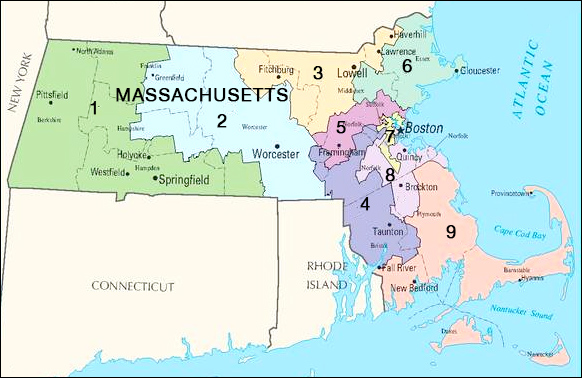
Massachusetts Sept. 4 (Tuesday)
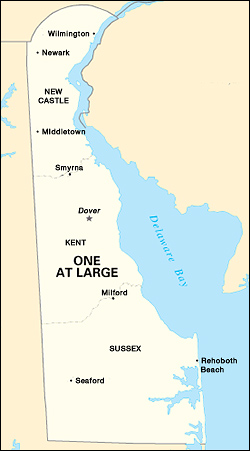
Delaware Sept. 6 (Thursday)
New Hampshire Sept. 11 (Tuesday)
Rhode Island Sept. 12 (Wednesday)
New York Sept. 13 (Thursday)*
Louisiana Nov. 6 (Tuesday) | Dec. 8** (Saturday)

* New York held its primary for federal offices on June 26; its primary for state and local elections is Sept. 13.

** Louisiana holds its primary for all parties on the same day the rest of the country holds the general election. If needed, a runoff is held in December.

Previewing Tennessee Thursday

By Jim Ellis

Tennessee state flag

Tennessee state flag

July 26, 2018 — Next Thursday, Volunteer State voters head to the polls in the only place that holds its statewide primary on a day other than a Tuesday or Saturday. The Aug. 2 Tennessee political card features some intense races, including an open US Senate and governor’s race, along with three open-seat House races in addition to one significant incumbent challenge.

Though the Senate race is open and will be hard fought through November, the primary is set for both parties so we won’t see the usual uptick in activity here next week. Former two-term Gov. Phil Bredesen has the Democratic nomination sewn up, as does US Rep. Marsha Blackburn (R-Brentwood) on the Republican side.

In the open governor’s race, US Rep. Diane Black (R-Gallatin) and businessman Randy Boyd appear to be the two front-runners, and the two are zeroing in on each other. Boyd, and fellow candidate Bill Lee, are both being hit over making past contributions to Democratic candidates. Rep. Black, running as the most conservative candidate, is taking flack for her role in an unpopular Congress. Former Nashville Mayor Karl Deen and state House Minority Leader Craig Fitzhugh (D-Ripley), emphasizing his “Tennessee Always” slogan, are the top Democratic candidates. But, the real battle to replace term-limited Gov. Bill Haslam (R) lies in Thursday’s Republican primary.

Though many names will appear on the ballot in Tennessee’s nine congressional races, only a few candidates are legitimately competitive.

Reps. Phil Roe (R-Johnson City), Chuck Fleischmann (R-Chattanooga), Scott DesJarlais (R-South Pittsburg), and Steve Cohen (D-Memphis) all have primary opponents, but none appear particularly strong. In the case of Reps. Fleischmann and DesJarlais, both face an easy primary run for the first time in their congressional careers.

Continue reading

The Georgia Run-off

By Jim Ellis

Georgia-mapJuly 25, 2018 — Peach State voters went to the polls yesterday, in a place where Republicans will choose a gubernatorial nominee while Democrats pick congressional candidates in Atlanta suburban districts 6 and 7.

Secretary of State Brian Kemp defeated Lt. Gov. Casey Cagle to win the Republican gubernatorial nomination. His landslide victory produced a more dramatic point spread than even the most optimistic poll for Kemp had predicted. In the May 22 Republican statewide primary, Lt. Gov. Cagle placed first in a field of six candidates with 39 percent of the vote. Placing second in the gubernatorial primary was Secretary of State Kemp with 26 percent of the vote. Under Georgia election law, to win a party nomination, a candidate must receive majority support. Because no one in the Republican primary topped 50 percent, the top two finishers advanced to yesterday’s run-off.

Kemp scored a crushing 69.4 – 30.6 percent win over Cagle, even though the latter began the race as the favorite for the nomination and placed first in the primary election. In that electoral contest, Cagle carried 123 of the state’s 159 counties. To best illustrate how far he dropped during the two-month run-off period, Cagle managed to win only two counties last night, Monroe, just north of Macon, and small Stephens County, a northeast Georgia political entity that hugs the South Carolina border.

Pre-election polls suggested that Kemp would win the run-off last night, as the latest publicly released survey research studies found him leading the lieutenant governor in a range between three and 18 points. The latest poll came Monday from the Trafalgar Group (July 21-22; 1,177 likely Georgia Republican run-off voters) and found Kemp topping Cagle 59-41 percent when leaners were included.
Continue reading

Against Pelosi? Maybe Not

By Jim Ellis

Minority Leader Nancy Pelosi (D-CA)

Minority Leader Nancy Pelosi (D-CA)

July 24 2018 — Several media stories have already been written about Democratic House candidates reportedly saying they will not support Minority Leader Nancy Pelosi (D-CA) for leadership elections scheduled in November. Their actual utterances require closer examination, however.

The Vox news organization tallied the list of such candidates earlier in the month and found 25 who they record as stating opposition to Rep. Pelosi. But examining the actual candidates’ statements indicate that most are leaving themselves some wiggle room when it comes to actually voting against her, while many others in this group are simply not in a strong position to win.

According to Vox, the following Democrats have clearly stated their intention not to support Pelosi for a leadership position, including Speaker:

AR-2: State Rep. Clarke Tucker (D-Little Rock)
Opponent: Rep. French Hill (R-Little Rock)
Race Outlook: Likely Hill
• Tucker is running a television ad opening with a statement that he will not vote for Nancy Pelosi.


CA-39: Retired Naval Officer Gil Cisneros
Opponent: Former Assemblywoman Young Kim (R)
Incumbent: Rep. Ed Royce (R-Yorba Linda) – retiring
Race Outlook: Toss-up
• When asked in a Politico interview if he would support Pelosi, Cisneros answered, “No.” Then he thanked her for serving California, but said new leadership is needed.


ME-2: State Rep. Jared Golden (D-Lewiston)
Opponent: Rep. Bruce Poliquin (R-Oakland/Bangor)
Race Outook: Poliquin Favored
• Vox quotes Golden in an interview with the Lewiston Sun Journal as saying he has “no intention of voting for Nancy Pelosi. None at all.”


NC-9: Businessman Dan McCready
Opponent: Baptist former Pastor Mark Harris
Incumbent: Rep. Bob Pittenger (R-Charlotte) – defeated in Republican primary
Race Outlook: Toss-up
Continue reading

West Viginia Poll: The SCOTUS Effect

By Jim Ellis

July 23, 2018 — The Trafalgar Group surveyed the West Virginia US Senate campaign (July 13-16; 1,158 likely West Virginia general election voters) and tested — for what may be the first time any pollster has done so since President Trump officially nominated Appeals Court Judge Brett Kavanaugh to replace retiring Justice Anthony Kennedy — how the impending Supreme Court confirmation vote will affect a US Senate election.

Trafalgar’s initial ballot test response is consistent with other released polls regarding the race itself. That is, Sen. Joe Manchin (D) leads Attorney General Patrick Morrisey (R) 50-40 percent when the question is first posed. For the past month, all West Virginia surveys have delivered results in a similar range.

Polling chart courtesy Trafalgar Group

Polling chart courtesy Trafalgar Group. Click on the Trafalgar Group link or the graphic above to see more details.

However, the question also was asked of each individual respondent how he or she would would view the Senate race through the prism of whether or not Sen. Manchin would vote for or against confirming Judge Kavanaugh for the US Supreme Court. How much would the answer to that question sway a voter? The answer is: greatly.

At this point, the senator has not yet indicated how he will vote. Immediately after the nomination became public, Sen. Manchin stated that he wanted Judge Kavanaugh to complete the hearing process and publicly answer specific questions (Sen. Manchin is not a member of the Judiciary Committee).

According to Trafalgar, should he vote to confirm Judge Kavanaugh to serve on the Supreme Court, Sen. Manchin’s support within the electorate would substantially grow. However, if he opposes the judge, his campaign against Morrisey falls into the toss-up category.

Continue reading

New York Polling Data:
Gov. Cuomo & Rep. Maloney

By Jim Ellis

July 20, 2018
— Though New Yorkers have already gone to the polls to choose their federal nominees, they must return on Sept. 13 to vote for their final state candidates. The Empire State is the only domain in the country that conducts separate primaries for federal and then state and local offices.

Actress Cynthia Nixon & New York Gov. Andrew Cuomo (D)

Actress Cynthia Nixon & New York Gov. Andrew Cuomo

With that in mind, Gov. Andrew Cuomo faces Democratic primary opposition against a well-known candidate who will appear on the general election ballot regardless of what happens on Sept. 13. Actress Cynthia Nixon is challenging the governor for the party nomination, but a new poll suggests that she is actually losing ground as the campaign progresses.

In a statewide race that might affect a congressional campaign, Rep. Sean Patrick Maloney (D-Cold Spring/West Point), after winning the Democratic nomination for re-election on June 26, announced that he would enter the open Sept. 13 primary for state attorney general. If he is successful in winning the party nomination, Maloney says he will end his congressional campaign. This will force the local Democratic leadership from the four counties that combine to form the 18th Congressional District to convene and choose a new nominee with barely a month remaining in the general election cycle.

With this background, Quinnipiac University comes forth with their latest New York survey (July 12-16; 934 registered New York voters, 415 likely New York Democratic primary voters). The pollsters see Gov. Cuomo expanding his Democratic primary advantage over Nixon. According to the May Q-Poll, Cuomo led Nixon 50-28 percent. In their new July study, the governor posts a stronger 59-23 percent margin, meaning a net gain of 14 percentage points. Because Nixon controls the Working Families Party ballot line, however, she will advance to the general election no matter what happens in the September state Democratic primary.

Continue reading

Roby Wins Run-off

By Jim Ellis

Rep. Martha Roby (R-Montgomery)

Rep. Martha Roby (R-Montgomery)

July 19, 2018 — Alabama voters went to the polls Tuesday to settle run-off elections, and the only congressional race on the ballot featured a Republican contest in the state’s southeastern 2nd District.

Rep. Martha Roby (R-Montgomery), who fared poorly in the June 5th GOP primary in scoring only 39 percent of the vote against four opponents – a clear danger sign for any incumbent – rebounded to post a 68-32 percent victory over former one-term Rep. Bobby Bright, the man Roby unseated back in 2010. At the time, Bright served as a Democrat. He changed parties and entered the Republican primary to challenge Rep. Roby and forced a political re-match eight years after the original contest.

The 2nd District is comprised of 14 southeastern Alabama counties and part of Montgomery County. The largest communities are the cities of Montgomery (part), Dothan, and Enterprise. Roby carried all 15 local entities within a turnout of just over 71,000 voters. The congresswoman spent over $1.5 million, after obtaining more than $1 million in just the 2nd quarter. Her fundraising totals $2.2 million since the beginning of the campaign cycle.

In contrast, Bright raised just $406,000 through the June 27 pre-election report, and almost $309,000 of that total came in the form of a candidate loan.

Roby is a former Montgomery City Council member who decided to challenge then-Rep. Bright in the 2010 election. She defeated him that year, 51-49 percent, in the Republican wave election. Two years later, she scored 64 percent in her first re-election campaign, followed by a 67 percent win in 2014. Her victory margin dropped to 49-40 percent in 2016, largely because she came out against then-candidate Donald Trump after the Access Hollywood videotape became public.

Continue reading

Governors’ Ratings

By Jim Ellis

To see the full-size map, go to governing.com

To see the full-size map, click on the image above
or go to governing.com

July 18, 2018 — A new set of governors’ race ratings were released from the Governing.com website, and while nine of the 36 campaigns are placed in the toss-up category, it is arguable that possibly two others could be added.

The governors’ races are of note because, primarily, 2018 is a redistricting election, meaning the state chief executives elected this year, for the most part, will hold veto power when the new congressional and state legislature districts are re-drawn in 2021 following the impending 2020 national census.

Additionally, the two parties are in exact opposite positions in defending seats when comparing the governors’ campaigns to those in the US Senate. While Democrats must risk and defend 26 Senate states, Republicans must protect the identical number of governors’ mansions.

According to governing.com, eight states are now in toss-up mode:

Alaska: Gov. Bill Walker (I); Party Primary, Aug. 21

Colorado (Open): Treasurer Walker Stapleton (R) vs. Rep. Jared Polis (D)

Connecticut (Open): Party Primary, Aug. 14

Florida (Open): Party Primary, Aug. 28

Iowa: Gov. Kim Reynolds (R) vs. Businessman Fred Hubbell (D)
Continue reading

Feinstein Loses

By Jim Ellis

California Sen. Dianne Feinstein (D)

California Sen. Dianne Feinstein (D)

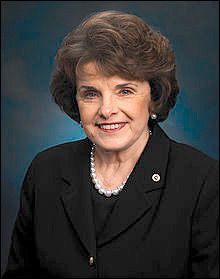
July 17, 2018 — Five-term Sen. Dianne Feinstein (D) lost the official California Democratic Party endorsement to her general election rival and fellow Democrat, state Sen. Kevin de Leon (D-Los Angeles), this past weekend in Oakland, attracting an embarrassing seven percent of the vote among the Democratic Party delegates.

Sen. Feinstein knew she was headed for defeat within the party structure formal endorsement process, so she was campaigning for the delegates to vote “no endorsement.” This ploy garnered more votes than she received, as 28 percent of the delegates supported the party taking no official action in the Senate race. Thus, Sen. de Leon received 65 percent of the delegate vote, exceeding the minimum threshold of 60 percent to claim the party endorsement.

The action means that de Leon will be designated the official party candidate on the ballot, obviously an unusual situation for a challenging Democrat opposing an incumbent of the same party. So unusual, in fact, that in no other race where two Democrats are facing each other in the general election, from the statewide contests through the state assembly races, did the party delegates choose the challenger over the incumbent.

In winning the party endorsement, Sen. de Leon will be entitled to direct party funding and access to the state party’s fundraising and voter databases. Though having access to these resources should result in him raising an estimated several hundred thousand dollars, such an amount is just a drop in the bucket as to what a candidate in the nation’s most populous state needs in terms of financial resources necessary to compete.

Continue reading

Crowley: Still on the Ballot

By Jim Ellis

Democrat-Socialist Alexandria Ocasio-Cortez

Democrat-Socialist Alexandria Ocasio-Cortez

July 16, 2018 — As has been extensively covered in the national media, Democratic socialist Alexandria Ocasio-Cortez upset 10-term Rep. Joe Crowley (D-Queens) in the June 26 New York federal primary, but the winner is now claiming the defeated congressman may still oppose her in the general election.

As we detailed in our own report about the 14th Congressional District result, Rep. Crowley could still force a general election campaign because he became the Working Families Party nominee on the same night that he was losing the Democratic Party nomination. Under New York election law, candidates may simultaneously appear on the ballot as the nominee of more than one party.

The congressman, however, still maintains that he is not running but simultaneously has refused to resign from the WFP line — even when the party leadership asked him to do so.

Ocasio-Cortez is accusing the congressman of launching a minor party general election effort because he has, according to her, refused to follow through on scheduled calls to discuss his support for her despite his public comments to the contrary. Crowley said, via Twitter, that it is Ocasio-Cortez’s people who have “not followed through,” with scheduling the appointments.

Swept up in the national media coverage that has engulfed her since denying Rep. Crowley re-nomination, Ocasio-Cortez is already moving onto the national stage and still challenging the party establishment. She has already dispersed staff members to Delaware to help US Senate candidate Kerri Harris who is challenging Sen. Tom Carper in the Sept. 6 Democratic primary. She is doing the same for Bernie Sanders activist Brent Welder, one of the far left candidates hoping for the chance to unseat GOP Rep. Kevin Yoder in Kansas.

Continue reading