
Category Archives: 2022

Early House Outlook – Part I

By Jim Ellis

Jan. 20, 2021 — With the presidential Inauguration dominating political attention this week, it is a good time to set the upcoming electoral stage for the US House on a 50-state basis. Today, a first of a four-part series, will begin to look at the 13 western states. During the rest of the week, we will move eastward.


• Alaska – 1 Seat (1R)
Rep. Don Young (R-Ft. Yukon), the Dean of the House, won his 25th term in November with a 54-45 percent victory in a competitive race. With Alaska being an at-large state, reapportionment and redistricting won’t change the political situation. The big question surrounding the 87-year-old congressional veteran is when will he retire?


• Arizona – 9 Seats (5D4R)
The Arizona population growth rate makes them a cinch to gain a 10th District in reapportionment. It is also clear that the new seat will be placed in the Phoenix metropolitan area. Arizona has a redistricting commission comprised of two Democrats, two Republicans, and one Independent. The latter member becomes the chairman. The membership has not yet been chosen.

The state’s marginal nature suggests that we will see a very competitive state once all 10 seats are in place. Currently, there are two districts where the winning House member received 52 percent of the vote or less. This means GOP Rep. David Schweikert (2020 winning percentage: 52.2) and Democratic incumbent Tom O’Halleran (2020 winning percentage: 51.6) will be looking to add more Republicans and Democrats to their seats, respectively.

An open governor’s race (Republican Gov. Doug Ducey ineligible to seek a third term) and what should be a competitive re-election for Sen. Mark Kelly (D) could cause open seats in the House delegation should any of the sitting members attempt to run statewide.


• California – 53 Seats (42D11R)
For the first time in history, the Golden State appears positioned to lose a seat in their US House delegation. With migration exiting the state exceeding those incoming, it appears the California growth rate did not keep up with the specified threshold in order to keep all of their 53 seats. The Los Angeles area is likely to absorb the loss of the seat, but which member will be paired with another is an open question.

California voters adopted an initiative before the 2010 census that established a citizens’ commission to administer redistricting under strict parameters that emphasizes keeping cities and counties whole when possible and irrespective of where any particular incumbent may reside. Therefore, with the mapping power removed from the legislature, it is possible that inside Democratic politics might play a lesser role in the redistricting process.

Continue reading

Early Senate 2022 Previews:
Florida & North Carolina

By Jim Ellis

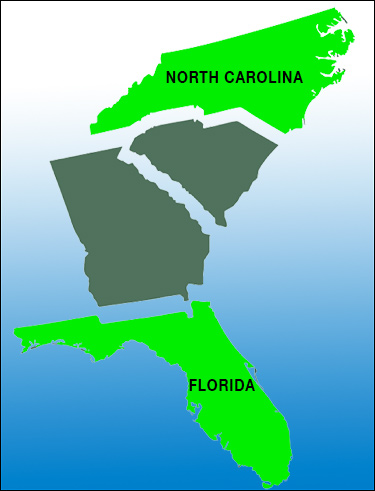
Jan. 14, 2021 — Regardless of how many in-cycle Senate seats – there are 34 in the 2022 election cycle – come into political play, we can count on seeing Florida and North Carolina once again hosting crucial battleground campaigns.

Florida is always consistent in their close vote totals, particularly when remembering the 2000 presidential campaign — and pollsters, while typically forecasting tight finishes, have often missed the outcomes. In fact, the cumulative polling community has predicted close Democratic victories in the last four key statewide elections: two presidential (2016 & 2020), one senatorial (2018), one gubernatorial (2018), and been wrong on each occasion.

Since 2016, inclusive, Florida has hosted eight statewide races with Republicans winning seven. Yet, their average cumulative vote percentage for these eight victorious campaigns was just 50.7 percent, with the high point being 52.0 percent (Sen. Marco Rubio-R, 2016). Democrats recorded the low winning total: 50.04 percent — 6,753 votes from 8,059,155 votes cast; agriculture commissioner, 2018; winner Nikki Fried (D) vs. Matt Caldwell (R). The aggregate average among the statewide contests in these three most recent election years is 50.7 – 47.9 percent in the GOP’s favor.

With this background, Sen. Rubio will presumably seek a third term next year against what will surely be a highly competitive Democratic opponent. At this point, most of the speculation surrounds two Democratic House members, neither of whom has closed the door on either running for the Senate or challenging Gov. Ron DeSantis (R) as he seeks a second term.

Reps. Stephanie Murphy (D-Winter Park) and Val Demings (D-Orlando) are the two most prominently mentioned prospective contenders, and it wouldn’t be surprising to see one run for Senate and the other for governor. It is less likely that we would see a primary developing between the pair in one of the races.

Other names being floated are Rep. Charlie Crist (D-St. Petersburg), who is always mentioned as a potential statewide candidate because he previously served both as attorney general and governor and lost two other statewide campaigns. Other potential contenders are Rep. Ted Deutch (D-Boca Raton) and former Rep. Debbie Mucarsel-Powell (D-Miami). The state’s lone Democratic office holder, Agriculture Commissioner Nikki Fried, is more often associated with running for governor as opposed to the Senate contest.

Continue reading

Sights on 2022: The 52 Percent Club

By Jim Ellis

Nov. 12, 2020 — The 2020 election isn’t officially even in the books yet, but we do have enough info to surmise who might be some of the most competitive early targets in the 2022 elections.

Looking at the non-incoming freshmen House members, we see 24 Democratic and four Republican districts where the incumbent recorded 52 percent of the vote and below. Such a re-election performance paints a target on these members in anticipation of the next campaign.

Redistricting, however, will be a wild card for many members and potential candidates, and some who found themselves locked in close 2020 contests could greatly benefit from a re-draw. Of the 24 Democrats in this category, 10 are located in states that are positioned to lose congressional representation, which could possibly make the affected districts even more vulnerable.

Conversely, three of these incumbents are in states projected to gain additional seats, thus likely making it easier for them to improve their political standing.

Only four veteran Republicans found themselves falling in the 52 percent or below group, and two of the four are from states that will lose congressional representation.

Illinois, Michigan, Minnesota, New York, Ohio, and Pennsylvania are expected to lose seats while look to gain one apiece. Texas could add as many as three to its delegation.

Below are the affected members who would become potential early 2022 cycle political targets:


DEMOCRATS

STATE-DISTRICT WINNER PERCENT
AZ-1 Tom O’Halleran (D) 51.7
IA-3 Rep. Cindy Axne (D) 49.0
IL-14 Rep. Lauren Underwood (D) 50.4
IL-17 Rep. Cheri Bustos (D) 51.9
MI-11 Rep. Haley Stevens (D) 50.2
MI-8 Rep. Elissa Slotkin (D) 50.9
MN-2 Rep. Angie Craig (D) 48.2
NH-1 Rep. Chris Pappas (D) 51.4
NJ-7 Rep. Tom Malinowski (D) 51.5
NV-3 Rep. Susie Lee (D) 49.2
NV-4 Rep. Steven Horsford (D) 50.8
NY-19 Rep Antonio Delgado (D) 50.3
NY-4 Rep. Kathleen Rice (D) 52.0
OR-4 Rep. Peter DeFazio (D) 51.7
OR-5 Rep. Kurt Schrader (D) 52.0
PA-17 Rep. Conor Lamb (D) 51.1
PA-8 Rep. Matt Cartwright (D) 51.7
PA-7 Rep. Susan Wild (D) 51.8
TX-7 Rep. Lizzie Fletcher (D) 50.7
TX-32 Rep. Colin Allred (D) 51.9
VA-7 Rep. Abigail Spanberger (D) 51.0
VA-2 Rep. Elaine Luria (D) 51.6
WA-8 Rep. Kim Schrier (D) 51.8
WI-3 Rep. Ron Kind (D) 51.5

GOP

STATE-DISTRICT WINNER PERCENT
MN-1 Rep. Jim Hagedorn (R) 48.6
NE-2 Rep. Don Bacon (R) 50.9
OH-1 Rep. Steve Chabot (R) 51.9
MO-2 Rep. Ann Wagner (R) 52.0