Category Archives: 2022

Illinois Redistricting Map Released

By Jim Ellis

The new Illinois redistricting plan, featuring 17 new districts that twist, turn, and meander throughout the state.

Oct. 19, 2021 — It had been speculated that the Illinois Democrats were attempting to draw a new congressional map to reduce the state’s Republican contingent from five members to three. The new plan, featuring 17 new districts that twist, turn, and meander throughout the state, appears to accomplish their goal.

Democratic leaders from the House and Senate Redistricting committees defend their actions, saying the plan is “designed to comply with federal law and ensure the broad diversity of the state is reflected in the elected officials sent to represent Illinois in Washington, D.C.” The map must still clear both houses of the Illinois legislature and obtain Gov. J.B. Pritzker’s (D) signature before becoming law but with Democrats holding big partisan majorities, enactment seems certain.

Republicans and even some analytical observers say the map is a blatant partisan gerrymander designed to net the Democrats three seats nationally. Under this plan, 14 at least “lean Democratic” districts are created opposite three Republicans. The current map stands at 13D-5R, but Illinois loses a congressional seat in reapportionment.

Therefore, if the map performs as designed, the Republicans will be down a net three seats nationally because the Democrats would convert two GOP districts while the latter party absorbs the loss of the 18th seat that went to another state.

A potential legal problem, in addition to a political gerrymandering lawsuit, is the lack of drawing a second Hispanic seat in Chicago, and the Mexican American Legal Defense Foundation (MALDEF) is reportedly poised to file suit. As was the case in the last decade, the demographic numbers appear high enough for Hispanics to have two seats within Chicago. Such a second seat was not drawn in 2011, and it is again not created on this map, but the black majority seats are reinforced.

One of the re-draw’s top targets is Rep. Adam Kinzinger (R-Channahon). His current 16th District is divided into several parts in an effort to sustain the marginal Democratic district that Rep. Cheri Bustos (D-Moline) is relinquishing in western Illinois, and help strengthen Rep. Lauren Underwood’s (D-Naperville) district in the Chicago metro area. Under the current map, Underwood won a second term with just a 51-49 percent margin.

Continue reading

Michigan’s Redistricting Complexities

One of the draft Congressional maps put forward by the Michigan Independent Citizens Redistricting Commission for public review this week.

By Jim Ellis

Oct. 18, 2021 — In this redistricting cycle’s early going, one state appears to be adopting a unique map-drawing approach, and its design likely assures a long and challenging legal process to follow.

The 13-member Michigan Independent Citizens Redistricting Commission has drafted 10 maps of the congressional, state Senate, and state House maps and made them available for public testimony and comments at a series of upcoming public hearings. Within the series, four relate to the congressional boundaries with the remaining six being divided evenly between the state Senate and House.

The multiple congressional maps go in several different geographical directions and radically alter the state’s district layout to the point of even changing the entire numbering system.

It appears the basis could be in place for many lawsuits and possibly from people or organizations associated with both parties, since the final version will likely draw complaints from both Republicans and Democrats. This would be particularly true if the final map collapses a Voting Rights Act minority district as one version features.

While four draft maps were released, the congressional plan base outline seems to be in place. Remember that Michigan will lose one congressional seat, reducing the delegation size to 13 members, and we will inevitably see at least one pairing of incumbents. At this point, no sitting member has indicated that he or she will retire.

The map versions suggest several options for the Detroit metro area; for example, meaning Reps. Rashida Tlaib (D-Detroit) Brenda Lawrence (D-Southfield), Andy Levin (D-Bloomfield Township), Debbie Dingell (D-Dearborn), and Haley Stevens (D-Rochester Hills) could all find themselves in some type of a paired situation.

Looking at what little partisan political numbers are available, most of the maps point to the Democrats gaining a net of one seat, but some of the districts would be competitive to the degree of making the final outcome unclear.

Below is a synopsis of where each current member could land:

• District 1: Rep. Jack Bergman (R) – looks to receive a strongly Republican northern Michigan seat bordering Canada from the upper peninsula that will drop even further into the lower peninsula. Labeled District 12.

• District 2: Rep. Bill Huizenga (R) – could be in a paired situation with either Reps. Fred Upton (R) or John Moolenaar (R), as the commissioners take his current 2nd District to the southeast instead of due east or north as expected. The primary winner would get a safe Republican district. Labeled District 9, though Huizenga could run in a new District 13 in a potential pairing with Moolenaar.

Continue reading

Impeachment Republicans’ Trouble

By Jim Ellis

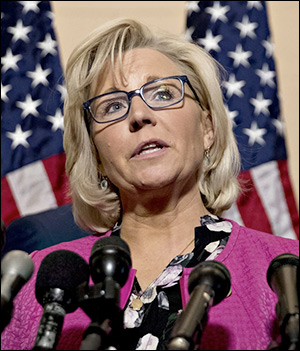
Rep. Liz Cheney (R-WY), one of 10 Republican House members who voted to impeach former President Donald Trump

Oct. 15, 2021 — As we know, 10 House Republicans voted to impeach then-President Donald Trump over the Jan. 6 US Capitol controversy and now it appears that the nine running for re-election are currently facing a bumpy political road.

Reports have surfaced in the political media that identify billionaire Peter Thiel, a Trump supporter, as contributing to the campaigns of the Trump-endorsed candidate opposing at least two of the Impeachment Republicans, Reps. Liz Cheney (R-WY) and Jaime Herrera Beutler (R-WA). The big question is whether Thiel and other like-minded mega donors will fund Super PAC efforts against the House incumbents who supported the impeachment resolution.

Already, Thiel is reportedly committing $10 million to a Super PAC supporting Arizona Senate candidate Blake Masters. He faces a credible field in the GOP primary, including Attorney General Mark Brnovich, solar company owner Jim Lamon, retired Arizona National Guard Adjutant General Mick McGuire, and State Corporation Commission member Justin Olson.

It is unknown whether Thiel will put that type of money behind the Trump endorsed House candidates trying to deny the impeachment Republicans re-nomination, but he has made the maximum campaign contribution to at least two of the contenders, Harriet Hageman, who is opposing Rep. Cheney, and retired Army officer Joe Kent, Rep. Herrera Beutler’s GOP challenger.

Let’s look at how the 10 are currently faring in their re-election efforts:

• CA-21 – Rep. David Valadao: With California’s top-two qualifying system there are effectively no Republican or Democratic primaries. The candidates finishing first and second from the June primary will advance into the general election regardless of party affiliation. There is little chance of denying Rep. Valadao one of the two finalist positions, but he will face a difficult general election campaign irrespective of the Trump-backed efforts.

• IL-16 – Rep. Adam Kinzinger: Reports suggest that the Democratic state legislative leadership is attempting to collapse Rep. Kinzinger’s seat since Illinois loses a seat in reapportionment. He faces a multi-candidate Republican field, but the redistricting lines will be the biggest factor in whether or not Rep. Kinzinger continues his congressional career. The situation won’t be fully known until the redistricting plan is formally introduced and passed into law.

• MI-3 – Rep. Peter Meijer: Freshman Rep. Meijer may have the most favorable situation of all the impeachment Republicans. While he does have primary opposition, none of the candidates appear particularly formidable. Additionally, the preliminary redistricting maps suggest that while Meijer’s district will significantly change, he will still have a Republican seat anchored in Grand Rapids. Adding the city of Kalamazoo would make re-election more competitive, but the overall district would still favor a Republican nominee in most instances.

• MI-6 – Rep. Fred Upton: Multiple Republican candidates have surfaced against Rep. Upton, but his bigger problem may be redistricting. The Michigan Independent Citizens Commission has released four draft maps, and all pair Rep. Upton with another Republican incumbent, either Reps. Bill Huizenga (R-Holland) or John Moolenaar (R-Midland).

Though Trump has endorsed state Rep. Steve Carra (R-Kalamazoo), Upton’s bigger problem would likely be facing another incumbent. It is also possible that Carra finds himself placed in another district.

• NY-24 – Rep. John Katko: Like Rep. Upton, Katko’s biggest re-election problem appears to be redistricting and not the two Republicans who have announced against him. Though the New York preliminary congressional redistricting map has not yet been released, it appears the Democratic leadership is looking to take as many as five of the eight Republican seats away from the GOP.

This very likely means that Rep. Katko would find himself paired with another Republican incumbent, even potentially House Republican Conference Chair Elise Stefanik. Redistricting will likely be the key factor in whether or not Rep. Katko returns to Congress after the next election.

Continue reading

New Redistricting Numbers

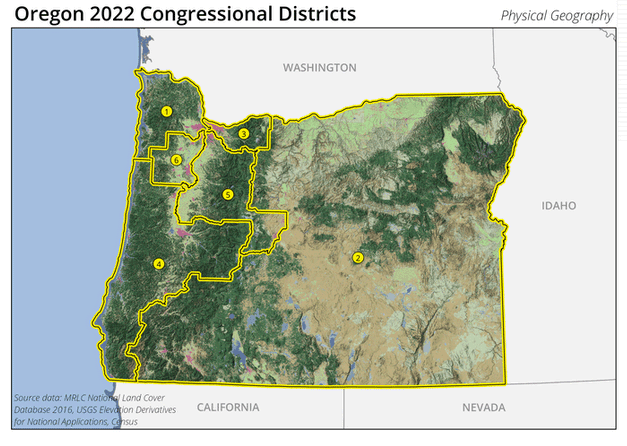
Oregon 2022 Congressional Districts (Go to Daily Kos story on Oregon’s new House map)

By Jim Ellis

Oct. 12, 2021 — The Daily Kos Elections website’s statistical team has already published presidential election numbers for some of the states that have completed their redistricting process. Therefore, we have a bit more information about the new districts in Oregon and Maine, which allows us to better analyze the political landscape.

In Oregon, the Daily Kos team has published the Biden-Trump 2020 numbers for the new six Beaver State congressional districts, which makes comparing with previous data possible.

Rep. Suzanne Bonamici’s (D-Washington County) 1st District actually makes her previously safe northwestern Oregon seat even stronger. This new district gives her all of downtown Portland. President Biden posted a 68-29 percent margin in the new 1st, a net 10-point increase from his spread in the current district (63-34 percent).

The state’s lone Republican district, OR-2, also sees its percentages increasing for the incumbent’s benefit, who is freshman Rep. Cliff Bentz (R-Ontario/East Oregon). Instead of finding a 56-42 percent margin in former President Donald Trump’s favor, the new 2nd expands to 61-37 percent, a similar net 10-point improvement for the GOP as the Democrats saw in District 1.

Making the 2nd District so overwhelmingly Republican is reflective of the Democratic legislature’s plan to pack as many GOP voters as possible into the 2nd to facilitate achieving their goal of drawing a 5D-1R statewide map.

Rep. Earl Blumenauer’s (D-Portland) 3rd District, previously the Democrats’ safest Oregon seat, remains so, but with a slightly smaller margin. Under the newly adopted district lines, President Biden would have recorded a 73-25 percent victory as opposed to his 74-23 percent spread under the current map.

Perhaps the biggest change on the Oregon map, other than adding a new district, was making the Eugene-anchored 4th District safer for veteran representative and House Transportation and Infrastructure Committee Chairman Peter DeFazio (D-Springfield).

The Biden margin in the previous 4th was 51-47 percent, and the congressman only recorded 51.5 percent in his 2020 re-election victory, one of the smallest of his 18 electoral triumphs. In the new 4th, President Biden’s victory spread would have been 55-42 percent, a net Democratic gain of nine percentage points.

Continue reading

Youngkin Closing on McAuliffe

By Jim Ellis

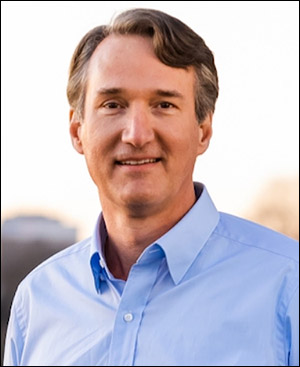
Glenn Youngkin, Virginia Republican governor candidate

Oct. 8, 2021 — A new Emerson College poll (Oct. 1-3; 620 likely Virginia voters, live interview and online panel with weighted responses) finds former Virginia Gov. Terry McAuliffe and ex-hedge fund CEO Glenn Youngkin in a virtual dead heat on the ballot test. McAuliffe is clinging to a bare 49-48 percent edge, but the underlying numbers suggest Youngkin may not be quite that close.

While Youngkin enjoys a very strong lead in the rural areas (57-42 percent) McAuliffe does better than he in the much larger urban areas (59-36 percent) thus negating, and then some, any edge the challenger may have established.

Surprisingly, considering recent poor Republican performance among suburban voters, Youngkin pulls slightly ahead of McAuliffe, 49-48 percent, within this category. Breaking even here would be a huge benefit for Youngkin should this trend prove real and is sustained.

Among women, McAuliffe has a 51-45 percent edge, which is actually a credible split for a Republican nominee in a Democratic state. Youngkin, however, needs to perform better among men than his 50-46 percent split found in this survey. Targeting men should be a key focal point for the Youngkin campaign in the closing days of the race.

Among minority groups, Emerson finds that Youngkin is outperforming a typical Republican candidate. The split among blacks, however, of 72-25 percent in McAuliffe’s favor, is suspect. Usually a Republican candidate is closer to the 10 percent level within this cell segment. It is not particularly unusual, however, to see a Republican polling better among blacks than what would be the actual performance factor once the votes are cast, and that pattern may appear again when the final votes are recorded in this contest.

The Hispanic segmentation is interesting. Republicans have been doing better within the Hispanic cell, and particularly so in 2020; so Youngkin actually leading McAuliffe within this group, 55-45 percent, may not be shocking but certainly appears inflated.

It wouldn’t be particularly surprising to see Youngkin pull more votes from Hispanics than a typical Republican candidate, but it is unlikely he would post a majority within this group. Still, while probably not as rosy a picture as this poll paints for Youngkin, it is probable that he will draw a greater Hispanic share than originally projected for him at the beginning of this campaign.

Continue reading

New Tight Nevada Polling

By Jim Ellis

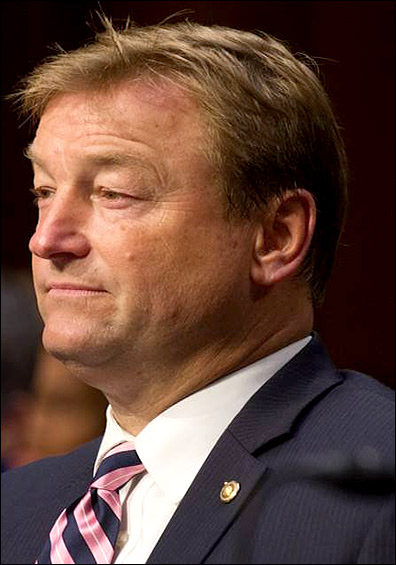
Former Sen. Dean Heller (R-NV)

Oct. 6, 2021 — The Nevada Independent online news site commissioned a September Mellman Group statewide poll (Sept. 15-22; 600 likely Nevada voters, live interview) just as former US Sen. Dean Heller (R) was announcing that he will join the Republican field vying to challenge Gov. Steve Sisolak (D). The results and analysis were released Monday.

The pollsters also tested the US Senate race between first-term Democratic incumbent Sen. Catherine Cortez Masto and former Attorney General Adam Laxalt (R). Both the gubernatorial and the US Senate contest returned close general election projections.

Nevada has featured close elections in the previous decade leading up to the 2022 voting cycle. Of the 18 statewide electoral contests between and including 2012 and 2020, Democrats have averaged 49.0 percent of the vote and Republicans’ 45.2 percent. In eight of the 18 campaigns, the winner recorded only plurality support.

During the time span, Democrats won 10 statewide races and Republicans won eight, but the GOP has scored only one victory since 2016. Therefore, it is not surprising to again see close polling data, and we can expect similar results throughout the campaign cycle.

According to the Mellman data, Gov. Sisolak would lead ex-Sen. Heller, 46-43 percent, but the small margin tightens even further if Clark County Sheriff Joe Lombardo were to win the Republican nomination. In the Sisolak-Lombardo pairing, the governor edges the sheriff by half a percentage point, 44.9 – 44.4 percent.

In the Republican primary, asked of only those who said they plan to vote in that contest though the sample number was not released, Heller led Sheriff Lombardo, 31-23 percent, with former professional boxer Joey Gilbert and North Las Vegas Mayor John Lee trailing with 11 and three percent, respectively.

On the positive side for Gov. Sisolak, his favorability index is only slightly upside-down at 46:48 percent, despite his handling of the COVID-19 virus getting a heavy 38:59 percent negative rating. He leads in all-important Clark County by 10 and seven points against Heller and Lombardo, respectively.

The governor saw a negative reading coming from Washoe County (Reno), however, which tends to act as a bellwether of the Nevada vote and an entity that Sisolak carried in 2018 against then-Attorney General Laxalt. The Mellman poll posted Heller to an eight-point lead over Sisolak in Washoe, while Sheriff Lombardo enjoyed a six-point edge.

Continue reading

Nebraska Redistricting Map Set; Surprises in Arizona Senate Polling

Nebraska’s new three-district congressional map

By Jim Ellis

Oct. 4, 2021 — The Cornhusker State of Nebraska has joined Oregon and Colorado in completing its redistricting process as Gov. Pete Ricketts (R) late last week signed into law the new three-district congressional map.

The new map is similar to the previous plan. It slightly improves Rep. Don Bacon’s (R-Papillon/Omaha) 2nd District while keeping the Omaha metro area together as a complete unit. The 2nd will remain competitive, though Rep. Bacon will be in stronger position to seek a fourth term. He was re-elected last November with a 51-46 percent margin in defeating Democrat Kara Eastman for the second time and defending himself against a $4.5 million opposition campaign.

Rep. Adrian Smith’s (R-Gering) 3rd District again stretches the width of the state, from Colorado and Wyoming all the way to Iowa and the northwestern corner of Missouri. This time the 3rd even goes so far as to border Omaha’s Douglas County.

It is likely the new Nebraska map will continue to send three Republicans to the House, though Democrats will undoubtedly return to target Rep. Bacon in District 2.

Arizona Senate

Phoenix-based OH Predictive Insights tested the Arizona electorate as they regularly do (released Sept. 29 & Sept. 7-12; 882 registered Arizona voters, online opt-in panel) and finds freshman Sen. Mark Kelly (D) leading all potential Republican general election opponents, but with percentages well below majority support in all tested instances.

As you will remember, Sen. Kelly, after a difficult and expensive 2020 campaign in which he raised an incredible $101 million to defeat appointed Martha McSally (R), won the special election, 51-49 percent, to fill the remainder of the late Sen. John McCain’s (R) final term. He now returns to the campaign trail in order to win a full six-year term in 2022.

At this point, Attorney General Mark Brnovich, venture capitalist Blake Masters, solar energy company Jim Lamon, and retired Arizona National Guard Adjutant General Mick McGuire comprise the top tier of the Republican field. OHPI tested each man individually opposite Sen. Kelly.

Continue reading