Author Archives: Jim Ellis

Ohio’s Significance

Ohio Congressional redistricting map. To see interactive map, click on image above or here: Dave’s Redistricting App.

By Jim Ellis — Wednesday, Dec. 17, 2025

Ohio

The Buckeye State of Ohio is another key 2026 electoral state. With an open Governor’s race, an appointed Senator seeking his first federal election, and as many as three top congressional campaigns, Ohio is clearly a place of significance in determining how the 2026 election will unfold.

A new Emerson College poll (Dec. 6-8; 850 likely Ohio general election voters; multiple sampling techniques) tested both the state’s open Governor’s race and how appointed Sen. Jon Husted (R) is faring opposite former Sen. Sherrod Brown (D).

The Ohio political polling history typically features closely competing contests that tend to break, usually toward the Republican candidate, in the last two weeks of the campaign. While Ohio elections have been close over the years, few results have been forced into recounts.

The familiar polling pattern is already beginning. It remains to be seen if the elections will end in a similarly historical fashion.

According to Emerson, Democratic former state Health Director Amy Acton leads businessman and former presidential candidate Vivek Ramaswamy, 46-45 percent, meaning the open Governor’s contest is a virtual tie. Incumbent Gov. Mike DeWine (R) is ineligible to seek a third term.

Looking at the Senate race, appointed incumbent Husted records a three point, 49-46 percent, edge over former Sen. Brown. It is important to remember that in Brown’s losing 2024 effort, he received more votes than he did for his last re-election victory (2018) yet still lost to current Sen. Bernie Moreno (R) by six percentage points.

As we know, Sen. Husted, at the time of appointment was the state’s sitting Lieutenant Governor, replaced resigned-Sen. J.D. Vance who, of course, left the legislative body to become Vice President. Sen. Husted must now run in 2026 to serve the balance of the current term. He will be eligible to seek a full six-year stint in 2028.

Ohio has also enacted a new congressional redistricting map, an exercise required under state law. Because the 2021 plan was adopted with only majority support in both houses of the legislature, and not a three-fifths count, the congressional map could stand for only two elections, meaning 2022 and 2024.

Last month, the bipartisan elected official redistricting commission, which includes Gov. DeWine, unanimously agreed upon a new map. Since every commissioner supported the new plan, legislative approval was not required under the state’s procedure, meaning the new map automatically became law.

The Ohio US House delegation currently stands at 10R-5D. Republican strategists hoped a new map would yield a two-seat gain, but such a final result could be a stretch under the new design. It does appear the Republicans will net at least one new seat, that of veteran Rep. Marcy Kaptur (D-Toledo). Competition opposite Reps. Greg Landsman (D-Cincinnati) and Emilia Sykes (D-Akron) is also possible, particularly for the former.

In 2024, Rep. Kaptur, in a 9th District where the Dave’s Redistricting App partisan lean calculation was 48.8D – 48.6R, won re-election with just a 48.3 – 47.6 percent margin over then-state Rep. Derek Merrin (R). Under the new 2025 enacted plan, the DRA partisan lean is 55.2R – 44.0D, obviously a strong swing toward the eventual Republican nominee.

In Cincinnati’s 1st Congressional District, two-term Rep. Landsman sees his district transform from one that carried a DRA partisan lean 49.9D – 47.9R to a Republican majority seat at 51.6R – 47.5D. With a candidate filing deadline of Feb. 4 for the May 5 primary, the Republican leadership still has some time to find a highly credible challenger to the now vulnerable Democratic Congressman.

The original Republican plan objective called for targeting two-term Rep. Sykes, who had won two close elections from her northern Ohio 13th District. Republicans had a strong candidate in 2024 nominee and former state legislator Kevin Coughlin who came within two percentage points of upsetting Rep. Sykes.

After seeing the new partisan lean calculation of 51.0D – 48.2R, however, Coughlin decided that even this slight swing toward making the district more Democratic was a bridge too far for him to overcome in a midterm election. The previous DRA partisan lean for District 13 was 50.7D – 47.0R. Therefore, he withdrew from the race. Republican leaders are also looking to recruit a strong candidate for this seat.

As you can see, the Buckeye State has a number of crucial races that will determine the state’s direction in electing a new Governor, and possibly the federal outcome, too, with an important Senate race and several hot congressional campaigns.

Redistricting Becoming Clearer

By Jim Ellis — Tuesday, Dec. 16, 2025

Redistricting

Putting together the redistricting puzzle

The redistricting wars may be coming to a head. Recent action has occurred in several states providing a better national redistricting picture in preparation for the 2026 election.

Below is a synopsis of the latest developments:

California: After a majority of California voters approved the special election redistricting referendum, a racial gerrymandering lawsuit was filed against the state’s new map.

Meanwhile, the US Supreme Court issued a stay on the Texas racial gerrymandering lawsuit, with a rebuke from Justice Samuel Alito to the three-judge panel in El Paso for rendering a decision before the high court ruled on a related Louisiana racial gerrymandering case. Thus, it became clear that all other cases would be held until the high court issues what could be a landmark ruling.

The judicial action likely means the new California map will be in place for the 2026 election. The original map proponents believe the plan will return five more seats for the Democrats, reducing the Republicans to just four of 52 Golden State districts.

Florida: Late last week, Gov. Ron DeSantis (R) said that the state will redistrict the congressional map and do so during the Spring. The Florida primary is not scheduled until Aug. 18, so time remains to complete the redistricting process. It is possible that Republicans could gain two seats from a new map.

Georgia: A new Georgia map has been completed. The legislature made minor changes to the existing plan that will not likely affect the current partisan division (9R-5D).

Indiana: Late last week, the Indiana state Senate defeated a redistricting map that the state House passed. The plan would have converted two Democratic seats to Republican, thus sweeping the nine-member delegation. Unless the Senate reconsiders the action, the current 7R-2D map will remain intact for the 2026 election.

Louisiana: The US Supreme Court is considering the Callais racial gerrymandering case that could become the vehicle for the justices to render a landmark racial gerrymandering decision. A ruling was expected in June, but the justices postponed their opinion and ordered a second round of oral arguments. The subsequent hearing was held Oct. 15, and all await a final determination.

If the court upholds the lower court decision, the current Louisiana map will be invalidated, meaning the Republicans will likely gain one seat. Should this be the Supreme Court’s ultimate decision, then the possibility exists that the Alabama map will also be redrawn because its plan is virtually identical to Louisiana’s.

Maryland: In a situation similar to what is found in Indiana, most of the Maryland Democratic political establishment favors attempting to collapse their one Republican congressional district, but the state Senate leadership refuses to take action. Therefore, unless the Senate President completely reverses himself, a new redistricting map will not be enacted.

Missouri: The Missouri legislature and Governor have enacted a new map that will likely convert the Kansas City anchored 5th CD from Democratic to Republican. Opponents of the map, officially organized under a group name entitled People Not Politicians, have collected double the number of signatures needed to force a special election initiative vote with the goal of repealing the new map. If a ruling is made qualifying the initiative for the ballot, voters will then decide if the new map will stand.

Under Missouri procedure, simply qualifying the initiative will suspend the new map. This means the state would be forced to revert to the 2021 map for the 2026 election. An initiative vote would occur in the regular election cycle. If the voters adopt the new plan, it would take effect in the 2028 election cycle.

North Carolina: The legislature’s new congressional map will almost assuredly stand for the 2026 election. The initial complaint protesting the plan was rejected at the lower court level. The US Supreme Court’s action involving the Texas case suggests that no further judicial movement will occur on the new North Carolina plan before the candidate filing deadline on Dec. 19. Therefore, it is likely that Republicans will gain one seat in the Tar Heel delegation.

Ohio: The bipartisan elected official redistricting commission unanimously agreed upon a new congressional map, one that state law mandated be drawn. Under the Ohio procedure, a unanimous decision from the redistricting panel, which included Gov. Mike DeWine (R), means the map is officially enacted without action from the state legislature. The new plan will likely produce a one seat gain for Republicans in western Ohio, with the outside possibility of a second conversion in Cincinnati.

Texas: As discussed above, the Supreme Court stayed the three-judge panel decision that ruled the new map a racial gerrymander. Candidate filing has concluded, so the new 2025 map will be in place for the 2026 elections. The original map proponents believe the plan will return five more seats for the Republicans.

Utah: A state court ruled that the legislature ignored certain criteria that voters adopted in a previous redistricting initiative. Therefore, the 2021 map was declared invalid, a ruling that the state Supreme Court sustained. The court then adopted a new map that created a Salt Lake City Democratic seat. The new plan will produce a 3R-1D map for the 2026 election, which is a gain of one Democratic seat.

Virginia: The Old Dominion redistricting effort may determine which party wins the national redistricting wars. With the Democrats gaining full control of the state government, the new legislature must pass a referendum for the ballot when they convene in January. The measure will have to fulfill other legal requirements, and a special statewide referendum election is required. Voters would have to approve a new map before the April 2 candidate filing deadline for the June 16 primary election.

Democrats claim they can draw a map that will relegate Republicans to just one seat in the 11-member delegation. Currently, the Virginia congressional districts split 6D-5R. A four-seat swing in this state could tip the balance of power toward the Democrats in their quest for the US House majority.

Ex-Rep. David Trone Launches
Comeback in MD-6

By Jim Ellis — Monday, Dec. 15, 2025

House

David Trone (D), former Maryland Congressman / Facebook photo

A new Democratic congressional primary is taking shape, and one not based upon ideology or the incumbent’s age as are most others.

Former Maryland Congressman David Trone (D), the founder of what is now the Total Wine & More company, lost the 2024 Democratic US Senate primary to now-Sen. Angela Alsobrooks despite spending almost $63 million of his own money on his campaign.

Trone, who served as the 6th District Congressman for three terms, has now formally announced that he will enter the 2026 Democratic primary in an attempt to regain his former position. To do so, he will have to deny freshman Rep. April McClain Delaney (D-Potomac) renomination.

After spending $62 million-plus on his Senate campaign, which included running a barrage of ads throughout the state and the Washington, DC media market for the last two months of the 2024 primary campaign, Trone managed to lose to Alsobrooks, then the Prince Georges County Executive, by a 10-point 53-43 percent margin. In terms of spending, Trone outspent Alsobrooks by a 6:1 margin and most observers thought his huge expenditure created a backlash because the campaign oversaturated the political media market.

Now, in a race against Rep. Delaney, the question is, how much will Trone spend? If he overspends again, will the result be similar?

Rep. Delaney is the wife of former Congressman John Delaney who represented the district for three terms before leaving Congress in 2018 to begin an ill-fated 2020 presidential campaign. Trone succeeded Rep. Delaney in the 2018 election.

With Trone opting for the Senate race in 2024, April McClain Delaney, a media lawyer and former Department of Commerce official in the Biden Administration, won the open Democratic US House primary against 11 opponents, recording 40.4 percent of the vote in the plurality primary. Her closest competitor, state Delegate Joe Vogel, finished with 26.3 percent.

Delaney would then win the general election with a 53-47 percent margin over former state Delegate Neil Parrott (R), who has lost the district in three consecutive elections.

Maryland’s 6th District begins in the state’s western panhandle and stretches east and southeast, capturing the population centers of Hagerstown, Frederick, Germantown, and Gaithersburg. Potomac, where both Rep. Delaney and Trone live, is not part of the 6th District.

The Dave’s Redistricting App partisan lean calculations yield a very close political district. According to the DRA statisticians, Democrats hold only a 48.9 to 48.0 edge. Kamala Harris, however, carried the seat with a 51.6 – 45.8 percent margin, but this was substantially below her 63-34 percent statewide performance. Trone averaged 57.5 percent of the vote in his three victorious congressional elections. For his part, Rep. John Delaney averaged 54.8 percent in his three winning campaigns.

During his time in Congress, Rep. Trone was viewed as a centrist because he supported some pro-business legislation largely because of his experience in founding a highly successful company. In the Senate campaign, however, he attempted to capture the party’s left faction but clearly failed.

Against Rep. Delaney, who is a centrist and supports policies that are largely representative of her district, it will be interesting to see what campaign strategy Trone employs. The campaign plan must position Trone to overcome the perception that he wants to return to Congress simply to further his own career and also explain why replacing Rep. Delaney with himself benefits the constituency.

The Maryland primary is scheduled for June 23, and the 6th District Democratic primary campaign promises to be an expensive and hard-fought affair.


Correction: In yesterday’s update, we indicated that TX-18 special election candidate Amanda Edwards, a former Houston City Councilmember, had not filed for the regular election because her name was not on the candidate’s list. The Edwards campaign informed us that she has, in fact, filed for the regular term and the Harris County Democratic Party will report her name to the Texas Secretary of State’s office.

The special election is scheduled for Jan. 31 between she and Harris County Attorney Christian Menefee, and the winner will serve the balance of the current term.

In the regular primary election scheduled for March 3, both she and Menefee will advance into the Democratic primary against Rep. Al Green (D-Houston) regardless of how they finish in the special election. The new 2025 redistricting map substantially changed District 18, which has led to this unusual circumstance.

The Third Hot State

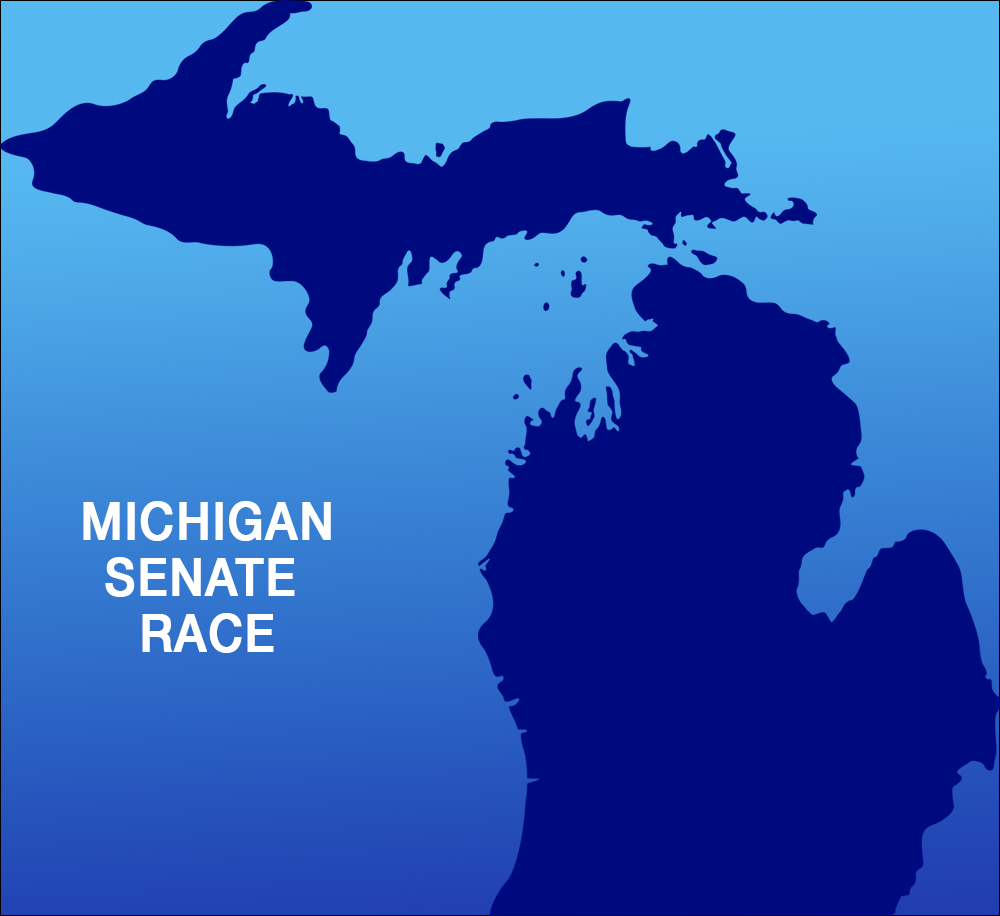
Michigan Congressional Map / To see interactive map, go to: Dave’s Redistricting App, Michigan

By Jim Ellis — Friday, Dec. 12, 2025

US House

While the most recent attention for flipping the US House has been devoted to the redistricting changes in California and Texas, a third state that did not redistrict will have an equivalent effect upon the 2026 national US House picture.

The Wolverine State of Michigan will be one of the hottest political states in the country for the 2026 election from the top of the ballot to the bottom. Because of the domain’s later April 21 candidate filing deadline and Aug. 4 partisan primary schedule, the early national political focus has been elsewhere, but such does not diminish Michigan’s importance as a ‘26 electoral player.

At the top of the ticket, and for the first time in the modern political era, Michigan will host an open Governor and Senate race in the same election cycle. In the House races, we could see major competition in five of the state’s 13 congressional districts. One of those CDs is open, and two others feature freshman members seeking their first re-election.

The Governor’s race will be unique in that it not only projects to be close, but three-term former Detroit Mayor Mike Duggan running as an Independent instead of a Democrat means we will see a competitive statewide campaign not just between two candidates, but three.

At this point, it appears that Secretary of State Jocelyn Benson and Rep. John James (R-Farmington Hills) will be the respective Democratic and Republican gubernatorial nominees. Incumbent Gov. Gretchen Whitmer (D) is ineligible to compete for a third term, but we are likely to see more of her as a probable 2028 presidential candidate.

Sen. Gary Peters (D) retiring after two terms has made the Michigan open Senate campaign one of the most competitive in the country and may be the Republicans’ best chance to convert a Democratic seat.

The latest published poll, from Mitchell Research & Communications (Nov. 18-21; 616 likely Michigan general election voters), projects Republican former Rep. Mike Rogers to small leads each over Rep. Haley Stevens (D-Birmingham), state Sen. Mallory McMorrow (D-Royal Oak), and former Wayne County Health Director Abdul El-Sayed (D). The latter three are already embroiled in a close primary that won’t be decided until Aug. 4.

The lateness of the Michigan primary is another break for Rogers since he is the prohibitive favorite for the Republican nomination and can stockpile resources for the general election.

The five competitive races that will have a major effect upon which party controls the next House majority begins in western Michigan with Districts 3 and 4.

In the Grand Rapids anchored 3rd District, which is rated as Lean Democratic (Dave’s Redistricting App partisan lean: 50.2D – 46.6R), Rep. Hillary Scholten (D-Grand Rapids), after briefly considering a Senate run, will seek a third term. Republicans don’t yet have a strong candidate capable of converting the seat, but this district is a top GOP recruitment priority.

In the 4th District, veteran Rep. Bill Huizenga (R-Holland), who seriously tested the US Senate waters before turning back under GOP party leadership pressure, has not yet officially announced that he will seek re-election in what again promises to be a competitive general election. In 2024, Huizenga won with a 55-43 percent majority against a weak opponent whom he outspent by a 3:1 ratio.

The Dave’s Redistricting App (DRA) partisan lean for CD-4 is 51.8R – 45.1D meaning the Republicans have a clear advantage but a strong Democrat would have a credible chance of securing an upset victory. Should Huizenga decide to retire, this race will likely go into toss-up mode. Democrats have four announced candidates including state Sen. Sean McCann (D-Kalamazoo), who is already polling close to Huizenga.

The area encompassing the cities of Flint, Lansing, and the northern Detroit suburbs will feature potentially the three hottest Michigan US House campaigns.

In the Lansing anchored 7th District, freshman Rep. Tom Barrett (R-Charlotte) was the only 2024 candidate to convert an open seat. He will now defend his position within a hot political climate in what promises to be one of the top national congressional campaigns. Six Democrats have announced their candidacies and the leading contender for the party nomination appears to be former US Ambassador to Ukraine Bridget Brink. The DRA partisan lean for this toss-up seat is 49.3D – 47.9R.

The Flint-anchored 8th CD saw Democrat Kristen McDonald Rivet (D), then a sitting state Senator, defeat three-time GOP congressional candidate Paul Junge by a 51-45 percent margin. The DRA partisan lean of 51.0D – 46.2R, however, suggests the race could have been a bit closer. Republicans have yet to file a top contender, but this contest will again be close and is, like MI-3, at the top of the GOP candidate recruitment list.

Rep. James departing the 10th District to run for Governor leaves what could become one of the closest open seat races in the country. The DRA partisan lean here is 49.5D – 47.9R which has led to two close James’ victories.

Both parties already have five announced candidates. Republicans feature Mike Bouchard Jr., whose father is the Oakland County Sheriff and a former statewide candidate, while Democrats see former US Commerce Department Eric Chung and Pontiac Mayor Tim Greimel as their current top candidates.

Potential Republican contenders include former Congressman Mike Bishop and ex-gubernatorial candidate Kevin Rinke. Much will happen in MI-10 before the filing deadline as the candidates and potential candidates continue to test the political waters.

Regardless of how the national redistricting wars end, the US House majority will likely come down to just a few seats. It is clear that Michigan will play a pivotal role in determining which party will ultimately claim control of the House chamber at the beginning of 2027.

The Texas Surprises

By Jim Ellis — Thursday, Dec. 11, 2025

Texas Elections

Texas Sen. John Cornyn (R)

The old saying, “you can’t tell the players without a scorecard,” certainly applies to the 2026 Texas federal office slate. Now that candidate filing is closed, the clouded political situation is becoming a bit clearer.

Texas has a unique filing system that makes following which candidate is running where confusing. Instead of filing with a government agency, the candidates file with their political party. Yet, the process is further complicated.

Candidates filing for offices where the jurisdiction covers more than one county turn their qualifying documents in to their state party office. If a district is fully contained within a single county, the candidates file with their county political party. Once the paperwork is received, the political party entities eventually report the qualified candidates’ names and particulars to the Secretary of State. Therefore, the process takes longer to determine who will be on the ballot than it does in most other states.

In the Senate race, we now have a clear picture for the March 3 partisan primaries. For the Republicans, amidst minor candidates the three major participants, Sen. John Cornyn, Attorney General Ken Paxton, and Rep. Wesley Hunt (R-Houston), are vying for the party nomination. This race is expected to be close and moving toward a runoff, which is necessary if no candidate receives majority support in the first vote. At this point, it appears that Sen. Cornyn and AG Paxton will advance to the secondary election.

For the Democrats, we see a battle between Rep. Jasmine Crockett (D-Dallas) and state Rep. James Talarico (D-Austin). Five minor candidates have filed, and it is unclear just how many will qualify for the ballot. Irrespective of these latter candidates’ presence, it is likely that we will see either Rep. Crockett or state Rep. Talarico claim the party nomination on March 3.

In the House delegation, 11 seats are open with the addition of TX-30, the seat that Rep. Crockett is leaving to run statewide. It appeared that Rep. Marc Veasey (D-Ft. Worth) would move into that district, but he surprisingly chose not to file. Instead, Veasey decided to run for Tarrant County Judge (Executive) where he will face a Republican incumbent and other significant candidates.

The Veasey move allows Rep. Julie Johnson (D-Farmers Branch), who sees her 32nd District transform into a Republican domain and stretch into East Texas, to run in District 33, which is fully contained within Dallas County. Her major obstacle to winning a second term in Congress is former Representative and 2024 US Senate Democratic nominee Colin Allred. Though announcing for the Senate in October, Allred instead changed his mind at the last minute and filed to return to the House, this time in District 33. Also in the race is former state Representative and ex-Dallas City Councilman Domingo Garcia. Therefore, the top two candidates falling into a runoff becomes a possibility. The eventual Democratic nominee will easily win the seat in the general election.

Another new development is the return to the political wars of former Congressman Steve Stockman (R). He has filed in new open District 9. Stockman was twice elected to Congress in non-consecutive elections. He was convicted of violating certain financial laws, but President Trump commuted his 10-year prison sentence. The other major candidate within the crowded field is state Rep. Briscoe Cain (R-Deer Park).

With 11 filed candidates in the CD-9 race, advancing to a runoff election is probable. It remains to be seen how many of the filed candidates qualify for the ballot. Under the new redistricting plan, the 9th District should be one of the seats that Republicans gain.

Another surprising move came in Houston’s 18th District. This seat is currently in special election mode, with Harris County Attorney Christian Menefee (D) and former Houston City Councilwoman Amanda Edwards (D) vying to replace the late Congressman Sylvester Turner (D). Immediately after the special election, it was thought the winner would then face Rep. Al Green (D-Houston) in a battle for the new 18th District. The regular primary is scheduled for March 3 after a special election winner is declared on Jan. 31.

Only Menefee, however, filed in new District 18. Therefore, should Edwards win the special election, she will only serve the balance of the current term. Win or lose on Jan. 31, Menefee will advance into the regular Democratic primary against Rep. Green.

The truly surprising facet from the Texas congressional filings is the fact that only two state legislators, Cain and state Rep. John Lujan (R-San Antonio; open new District 35), entered one of the 11 open-seat congressional campaigns. Therefore, the Texas delegation will feature a large number of incoming freshmen entering the House with no legislative experience.

The Democrats’ Maine Dilemma

By Jim Ellis — Wednesday, Dec. 10, 2025

Senate

Maine Gov. Janet Mills (D) | Facebook photo

Another recent poll has been released showing Maine Gov. Janet Mills trailing her top Democratic Senate nomination opponent, and this time the margin isn’t even close.

While the surveys have been wildly inconsistent so far in this race, the latest Z to A Research study (Nov. 14-18; 845 likely Maine Democratic primary voters) finds businessman Graham Platner now taking a 20-point lead over the Governor, 58-38 percent. Originally thinking that Gov. Mills would have a clear path for the party nomination in preparation of challenging veteran Sen. Susan Collins (R), the Democratic leadership now sees what promises to be a bruising battle in the June 9 primary.

You’ll remember Platner as being embroiled in a controversy pertaining to a particular chest tattoo that is associated with the Nazis. He claimed to not realize there was a connection. He also apologized for posting a series of past offensive tweets. The negative publicity surrounding the tattoo and tweets largely explain the polling downturn in mid-October. The current Z to A poll suggests that he has overcome the flap.

Five different pollsters tested the Maine Democratic electorate from mid-October to late November, and while four of the five found Platner leading, his advantage range is very wide.

As mentioned above, the Z to A Research poll posts Platner to a 20-point lead, 58-38 percent. Maine’s People’s Resource Center (Oct. 26-29; 783 registered Maine voters) finds an obviously much smaller 41-39 percent ballot test in Platner’s favor.

SoCal Strategies sees a different outcome. Their poll (Oct. 21-25; 500 likely Maine Democratic primary voters) projects Gov. Mills with a five-point lead, 41-36 percent.

The National Republican Senatorial Committee polled the Democratic primary (Oct. 22-23; 647 likely Maine Democratic primary voters) and also sees Platner holding a major double-digit lead, 46-25 percent.

Finally, the first poll taken during this period, from the neighboring University of New Hampshire (Oct. 16-21; 510 likely Maine Democratic primary voters), also records Mr. Platner with a huge lead, 58-24 percent.

The wild swings seen within these five polls all conducted within a relatively consistent time frame provides evidence that Maine is a difficult state to poll. In the 2020 Senate race, literally every published survey – 14 of them according to the Real Clear Politics Polling Archives – showed Sen. Collins trailing 2020 Democratic nominee Sara Gideon, the state House Speaker, by an average of almost five percentage points. Yet, Sen. Collins won the election with an 8.6-point spread. Only her internal pollster, Moore Information, correctly projected the outcome in the election’s final polling phase.

While Platner is a first-time candidate, he already has attracted support from Sen. Bernie Sanders (I-VT) and the Democratic Party’s far left faction. The Maine Democratic primary is one of a number of situations that feature a populist left-wing candidate challenging a more establishment oriented liberal.

Although it looks like Platner may now have the inside track to upending Gov. Mills for the party nomination, defeating Sen. Collins may be another story.

Maine is a two-congressional district state, and the 1st and 2nd districts are politically very different. The southern 1st CD, which houses the Pine Tree State’s largest city of Portland, is solidly liberal. The Dave’s Redistricting App statisticians calculate a ME-1 partisan lean of 53.6D – 40.8R.

The northern 2nd District, which stretches from the Lewiston-Auburn area to the Canadian border, is conservative, but often swings between candidates. The 2nd is the most Republican seat in the country that sends a Democrat (Rep. Jared Golden) to the House of Representatives. Conversely, President Trump has easily carried ME-2 in all three of his campaigns. The DRA partisan lean for this seat is 52.9R – 41.1D.

To win a statewide race in Maine, each party must outperform his or her opponent to the largest degree in the district that typically favors its party’s candidates. Sen. Collins’ overwhelming win in ME-2 five years ago allowed her to overcome losing ME-1. In the presidential races, the Democratic nominee in each of Trump’s three campaigns carried ME-1 with a greater percentage than he took ME-2, thus allowing Hillary Clinton, Joe Biden, and Kamala Harris to win the statewide vote tally.

The Maine Senate race promises to be one of the most-covered campaigns of the 2026 election cycle. While the Republicans currently look secure to hold chamber control, the 53-47 majority margin could certainly change. The Maine result will go a long way to determining the final partisan division numbers and the new majority’s size.

Texas: Crockett Announces for Senate, Allred Moves Campaign to House

By Jim Ellis — Tuesday, Dec. 9, 2025

Senate/House

Rep. Jasmine Crockett (D-Dallas) / Photo by Gage Skidmore, Flickr

As expected, Rep. Jasmine Crockett (D-Dallas) just as candidate filing was closing in Texas, yesterday entered the US Senate race; unexpectedly, former Congressman Colin Allred, who announced his Senate campaign in October, dropped his statewide bid and filed in the new open 33rd US House District.

Also, as he promised, Rep. Marc Veasey (D-Fort Worth) left his 33rd CD to file in Rep Crockett’s 30th District. The new 33rd is now fully contained in Dallas County, thus robbing Veasey of his Tarrant County base. The new 30th ventures into Tarrant suggesting Rep. Veasey believes his re-election chances are better in CD-30.

Freshman Rep. Julie Johnson (D-Farmers Branch) eschews her 32nd District, which is now a Republican seat that stretches from Dallas County well into East Texas, to run in the 33rd. This creates a competitive Democratic primary between her and Allred.

There is some speculation that Rep. Johnson could have switched to the 24th CD in yesterday’s filing to challenge Rep. Beth Van Duyne (R-Irving), thus avoiding a Democratic primary. It remains to be seen where candidates are running until the political party entities release the qualified candidates’ names.

By running for the Senate, Rep. Crockett has certainly upset the Democratic apple cart. The national party leaders had hoped to find Allred facing a field of minor candidates similar to those opposing him in 2024 when he easily won the statewide party nomination. Allred, then risking a safely Democratic 32nd district that Johnson would later win, lost to Sen. Ted Cruz (R) by just over eight percentage points after polling suggested the contest would be much closer.

The Democratic leadership plans were thwarted this year when state Rep. James Talarico (D-Austin), a media star among Texas political prognosticators and commentators, announced for the Senate and immediately began performing well in research surveys that pitted him opposite Allred.

Once the Senate race pollsters began to include Rep. Crockett, it became clear that it was she, and not Allred as the party leaders had hoped, who was consistently leading the candidate field.

Now, the Democratic primary will feature a competitive battle between Rep. Crockett and state Rep. Talarico. Since the field will likely evolve into a two-way contest, it is probable that a runoff will not be necessary, meaning the Democrats will probably see a nominee emerge in the March 3 party primary.

On the Republican side, Sen. John Cornyn, running for a fifth six-year term, faces Attorney General Ken Paxton and Rep. Wesley Hunt (R-Houston). Early polling suggests this race will proceed to a May 26 runoff election from the March 3 primary.

At this point, it appears Sen. Cornyn and AG Paxton will advance, but Rep. Hunt is hoping to come from the outside as a positive alternative to what promises to be a negative battle between his two principal opponents.

There are 10 open US House districts in the Texas delegation, but the full candidate complement for each of those races won’t be known until later in the week.

Uniquely, Texas candidates file for office with their political party and not a government agency. In a multi-county race, candidates file with their state party. If the office for which a candidate is running is fully contained within a county, the competing individuals file with their local county political party.

In terms of incumbent primary challenges, most US House members have drawn minor primary opposition. The first of three serious March 3 intra-party skirmishes appear in the Houston area’s District 2 where four-term Rep. Dan Crenshaw (R-Humble), state Rep. Steve Toth (R-Spring), and several others will compete. The question here is whether Crenshaw can avoid being forced into a runoff.

The second primary incumbent challenge to watch is again TX-23. In 2024, Rep. Tony Gonzales (R-San Antonio) survived a Republican runoff defeat by just 734 votes opposite businessman Brandon Herrera. The 2026 contest will feature a re-match between the two, and another close election is expected.

Additionally, Rep. Sylvia Garcia (D-Houston) has drawn a significant Democratic challenger in a newly configured District 29. Former state Representative and ex-Houston City Councilman Jarvis Johnson is challenging Rep. Garcia for the party nomination, and this race has the potential of developing into a serious campaign within a significantly changed Harris County congressional district.

Some of the more interesting general election projected pairings come in South Texas. In District 15, two-term Rep. Monica De La Cruz (R-McAllen) will likely face regional entertainer Bobby Pulido (D) in a district that changed very little under the new map. Rep. De La Cruz was re-elected in 2024 with 57 percent of the vote.

Rep. Henry Cuellar (D-Laredo), who President Trump just pardoned from a federal indictment, will likely face Webb County Judge (Executive) Tano Tijerina (R) in a district that is actually 10.7 data points more Democratic, according to the Dave’s Redistricting App organization calculations. The partisan lean numbers best explain why Rep. Cuellar again filed as a Democrat after the Trump pardon.

In new District 34, a coastal seat anchored in Brownsville, we are likely to see Round 3 between Rep. Vicente Gonzalez (D-McAllen) and former Rep. Mayra Flores (R). The 34th is now 18.4 data points more Republican, and since the 2024 race recorded a tight 51 to 49 percent finish, Flores’ chances, assuming she wins the party nomination, are therefore significantly enhanced.

Much more to come on the unfolding Texas political situation later in the week when the qualifying candidates for ballot placement are declared official.