Author Archives: Jim Ellis

Hawaii Primary Results

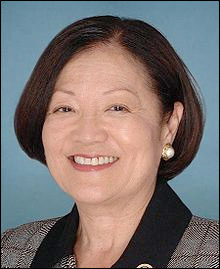
Mazie Hirono

Hawaii voters went to the polls on Saturday and selected federal nominees. Throughout the entire election cycle, polling had been erratic, to say the least. Each candidate would release polls favoring them, even up until the eve of the primary election. It appears the pollsters for Senatorial candidate and US Representative Mazie Hirono (D-HI-2) and Honolulu City Councilwoman Tulsi Gabbard, in the open 2nd District, possessed the better polling data.

Hirono won a 58-41 percent landslide victory over former representative Ed Case (D-HI-2) and wins the right to face former Republican governor Linda Lingle in the general election. The two battled each other in the 2002 governor’s race, a contest Lingle won. President Obama’s presence on the Democratic ticket, in the sense that he will likely poll in the 70 percentile here as he did last election, will be a boon to Hirono.

In the seat Hirono is vacating to run statewide, Gabbard defeated former Honolulu Mayor Mufi Hannemann (D), in what turned into a nasty campaign and could signify a changing of the guard in Hawaii politics. The old-school Hannemann was originally viewed to be the favorite but lost big to Gabbard, 55-34 percent. Gabbard will easily win the general election.

The 1st District will feature a re-match between Rep. Colleen Hanabusa (D) and former representative Charles Djou (R). Hanabusa is likely to win re-election.

Can a Weak McCaskill Hold Onto Missouri?

The Missouri Senate race is shaping up to be one of the most interesting in the country. With the Senate majority hanging in the balance, all of the closest election competitors in the 14 states where campaign action is most furious can legitimately lay claim to the argument that their own campaign can determine which party controls the body in the next Congress. The Show Me State of Missouri is certainly in this category, as first-term incumbent Sen. Claire McCaskill, who may be the weakest of all Democrat candidates standing for re-election, fights for her political life.

Earlier this week, Rep. Todd Akin (R-MO-2) surprised many political pundits by defeating wealthy businessman John Brunner and former state treasurer Sarah Steelman 36-30-29 percent, to capture the Republican Senatorial nomination. Akin rode a strong wave at the end of the campaign, peaking at exactly the right time. After trailing for most of the race, he finished a step ahead of both Brunner and Steelman as the trio almost simultaneously crossed the political finish line.

Interestingly, Akin had help from an unlikely source. McCaskill and her Democratic allies pejoratively repeated their belief that Akin is the most conservative candidate in the Republican field, ironically a message that the congressman himself was also trying to sell to the GOP electorate. The Democratic Senatorial Campaign Committee (DSCC) actually advertised in the Republican primary to that effect, saying Akin is too conservative for the state. It is clear the Democratic leadership and activist organizations, along with McCaskill herself, believe Akin to be the weakest candidate in the Republican field and desire him as their general election opponent. It remains to be seen if their analysis proves correct.

For several decades, Missouri was known as a political bellwether. Now, however, the state seems to be trending more Republican. After 14 statewide races between 2000 and 2008 that were decided by less than two percentage points, with each party winning seven times, John McCain’s razor-thin 2008 victory here and then-Rep. Roy Blunt’s big win in the 2010 Senate contest could be a Missouri realignment harbinger. In fact, in voting for McCain, the state failed to support the winning presidential candidate for only the second time since 1900.

With this backdrop, we enter the 2012 general election campaign. Since Team Obama does not have Missouri high on its target list, there may be less of a presidential presence here than in previous years. The state is a must-win for Republican Mitt Romney, so expect him to be more active here than President Obama. Outside groups are expected to play a major role, as a highly competitive Senate race in what is perceived to be a toss-up campaign will precipitate a great deal of action from many issue perspectives.

But it may be Akin who becomes the beneficiary of the greater outside group spending. McCaskill, who wrapped herself around candidate Barack Obama in 2008 appears to be running away from him in 2012, going so far as to say she won’t even attend the Democratic National Convention. While voting for all of the early Obama initiatives and now trying to create distance between herself and the party’s liberal wing, leftward activist groups may find other places to expend advocacy dollars.

Small business groups, church organizations steamed at the Obama Administration for the health care law that forces them into expenditures that conflict with many of their religious tenets, and the coal industry could become major players in this race, all on Akin’s behalf.

For example, the National Mining Association, through its Count on Coal program, is expected to be highly active in Missouri educating the constituency on the mineral’s importance to daily life. The state ranks sixth nationally in coal usage, as 81 percent of its electrical power is generated from the substance. Count on Coal is taking it to the Obama Administration for what the NMA believes are its destructive energy policies. Regardless of whether they actively enter the Senate race, McCaskill is likely to be put on the defensive and absorb political damage from the coal program’s aggressive contrast effort toward the Obama Administration.

Sen. McCaskill has been polling poorly against all general election configurations. Now that she has Rep. Akin as her November opponent, expect a hard-hitting campaign from both sides. The race is a toss-up, and has to be considered a must-win for the Republicans. It is clearly one of the most important Senate races of the year.

Colorado Crazy


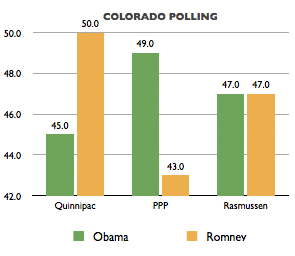
A trio of national pollsters just descended upon the swing state of Colorado and produced wildly divergent presidential campaign results. During the period of July 31 – Aug. 6, three national survey research firms each conducted a separate study of likely Colorado general election voters.

Quinnipiac University (July 31 – Aug. 6) surveyed a sample cell of 1,463 likely voters and actually found Republican Mitt Romney to be leading President Obama 50-45 percent. Public Policy Polling (Aug. 2-5; 779 likely Colorado voters), also in the field during the same period, found the exact opposite result: Obama ahead 49-43 percent. Finally, on Aug. 6, Rasmussen Reports conducted a one-day survey of 500 likely Colorado voters and projected the two candidates to be tied at 47 percent apiece.

The differing results tell us several things. First, the fact that we see the President leading by six in one poll, trailing by five in another, and tied in a third likely tells us that the Colorado electorate is split very finely between the two men. Second, all three polls reveal a very high degree of commitment. Those not expressing a defined choice were only in single-digit percentiles for all three polls. Third, the data also suggests that this state, which typically splits its votes rather evenly between candidates of the two parties, is clearly in play for both presidential contenders. In 2008, then-Sen. Barack Obama carried Colorado over his colleague John McCain by a 54-45 percent margin but, today, it appears the 2012 result will be much closer.

Primary Tipping Points: Mo., Mich., Wash.

Missouri: The polling was right. During the final week of the Missouri Senate Republican primary, late surveys from research organizations such as Public Policy Polling detected Rep. Todd Akin (R-MO-2) mounting a serious come-from-behind surge. Akin, who billed himself as the campaign’s “true conservative,” had not led for any substantial period of time, but his campaign peaked at exactly the right moment. Last night, Akin notched a 36-30-29 percent GOP nomination win over St. Louis businessman John Brunner and ex-state treasurer Sarah Steelman, respectively.

The victory sends Akin to the general election against first-term incumbent Claire McCaskill (D), who may be the weakest Democrat incumbent currently seeking re-election. While Sen. McCaskill’s party leaders and political activists believe Akin is the best Republican for her to run against, the Missouri voting trends may tell a different story come November. This will be a hard-fought campaign and one in which the presidential contest will play a major role. The real race begins today.

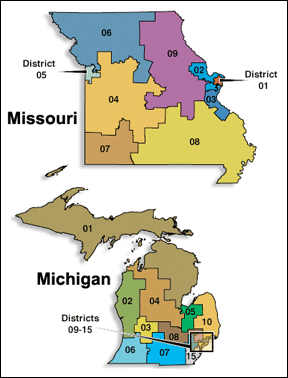
Turning to the paired House races, in Missouri’s St. Louis-anchored 1st Congressional District, veteran Rep. Lacy Clay (D) easily turned back a challenge from fellow Democrat, Rep. Russ Carnahan (D-MO-3) who chose to run in a contested primary after his seat was collapsed in reapportionment. Clay was renominated 63-34 percent, amongst a turnout of about 90,000 voters. Late polling was predicting a decisive Clay win and such occurred mostly due to overwhelming support within the African-American community.

Michigan: As expected, former Rep. Pete Hoekstra (R-MI-2) scored an easy 54-34 percent victory over charter school advocate Clark Durant in the contest for the Senate. The retired congressman will now face two-term incumbent Debbie Stabenow in what will be a major uphill battle. Sen. Stabenow is the clear favorite for re-election.

In Detroit, also as local polling predicted, two-term Rep. Gary Peters (D-MI-9), who was paired with veteran Rep. Sander Levin (D-MI-12) in the new 9th District but chose to run in the Detroit/Oakland County CD because he believed he could take advantage of a split within the African-American community, saw his strategy bear fruit last night. Mr. Peters defeated freshman Rep. Hansen Clarke (D-MI-13) 46-36 percent in a field of five candidates, three of whom are African-American.

In the adjacent 13th District, 24-term Rep. John Conyers, who will now likely complete at least 50 years of service in the House, defeated a field of four challengers, garnering a clear majority 57 percent of the vote. State Sen. Glenn Anderson, Mr. Conyers’ strongest opponent, only managed 15 percent, again just as the late polls were predicting.

North of Detroit in suburban Oakland County, former state Senate majority leader Nancy Cassis’ (R) late-developing write-in campaign fell way short as reindeer rancher and staunch Ron Paul supporter, Kerry Bentivolio, the only person who officially qualified for the Republican primary ballot, looks to be in the 65 percent range when all of the votes are finally counted. Physician Syed Taj won the Democratic primary and this has the potential of becoming a hotly contested general election campaign. Incumbent Rep. Thaddeus McCotter (R-MI-11), reeling from a disastrous six-week presidential campaign, failed to qualify for the congressional ballot and then subsequently resigned his seat. This will be an interesting general election race between two people, neither of whom was expected to be a serious candidate. Democrats have a chance to snatch this seat even though it historically votes Republican.

Washington: Sen. Maria Cantwell (D) will face state Sen. Michael Baumgartner (R) in her bid for a third term. Such is not expected to be a highly competitive race. In House races, all incumbents secured a general election ballot position in this top-two primary format. As in California and Louisiana, the candidates finishing first and second, regardless of political party preference, advance to the general election. All seven incumbents seeking re-election placed first with percentages exceeding 50 percent.

In the three open seats, Republican John Koster placed first in the new 1st District that gives the GOP a much better chance of securing a general election victory. He will face Democratic former congressional nominee Suzan DelBene who placed ahead of two-time congressional nominee Darcy Burner.

With Rep. Norm Dicks (D-WA-6) retiring after 36 years of congressional service, it appears that Democrat state Sen. Derek Kilmer, as predicted, will become his successor. Kilmer placed first in the jungle primary and becomes the prohibitive favorite in what is a heavily Democratic district.

In the new 10th District, awarded the fast-growing state in reapportionment, former state House majority leader and 2010 congressional nominee Denny Heck (D) placed first in the low 40-percentile range and will face Pierce County Councilor Dick Muri (R) in what shapes up as a reliable Democratic district. The Washington delegation is likely to split with five Democrats, four Republicans, and one marginal district (the 1st to be decided in the tough Koster-DelBene contest).

Late Primary Polling in Mo., Mich.

Several polls have just been released about today’s primary elections in Missouri and Michigan.

First, Public Policy Polling (Aug. 4-5; 590 likely Missouri GOP primary voters) gives businessman John Brunner a slight 35-30-25 percent lead over Rep. Todd Akin (R-MO-2) and former state treasurer Sarah Steelman in the Missouri Senate Republican primary. The race is anybody’s game, however. Rep. Akin actually leads Brunner by two points in the category of those most excited to vote. Brunner’s edge is much larger among lower propensity voters, thus accounting for his overall advantage. More upward momentum has been detected for Akin during the last two weeks than Brunner. Steelman, according to the PPP data, is actually losing support in comparison to previous polls of the race during the same period.

In the 1st Congressional District, Survey USA, polling for St. Louis television station KDSK (Aug. 2-4; 490 likely MO-1 Democratic primary voters), gives Rep. Lacy Clay (D) a huge 56-35 percent lead over his Democratic colleague, Rep. Russ Carnahan (D-MO-3). The two were paired because Missouri lost a seat in national reapportionment. Among African-Americans, who will be the largest demographic sector participating in the primary, Clay leads 81-12 percent.

Turning to Michigan, EPIC-MRA released two congressional polls, both for the Detroit based districts. In the 13th (Aug. 4-5; 800 likely MI-13 Democratic primary voters via automated interviews), 24-term incumbent John Conyers (D) commands a 57-17 percent lead over his nearest rival, state Sen. Glenn Anderson. The remaining three candidates are in single-digits.

In the new Wayne/Oakland County-based 14th CD, Rep. Gary Peters (D-MI-9) appears poised to win this incumbent pairing campaign as he leads fellow Rep. Hansen Clarke (D-MI-13) 52-33 percent according to EPIC-MRA (Aug. 4-5; 800 likely MI-14 Democratic primary voters via automated interviews). Even among African-Americans Clarke fares poorly, leading Peters only 38-34 percent. Peters, who is white, hoped to split the black vote among the three African-American candidates and it appears that his strategy is working.

Missouri, Michigan Highlight Another Primary Day

Voters in four more states go to the polls tomorrow, and the most exciting races are in Missouri and Michigan. In the Show Me State, Sen. Claire McCaskill, quite possibly the most vulnerable of Democratic incumbents standing for re-election, will soon know who she will face in the fall. A close Republican contest among three candidates is trending toward an uncertain result even the day before the vote. Rep. Todd Akin (R-MO-2), former state treasurer Sarah Steelman, and St. Louis businessman John Brunner vie for the nomination.

Brunner is by far spending the most money, already over $7 million; Steelman is attempting to run furthest to the right and now brandishes Sarah Palin’s endorsement; and Rep. Akin emphasizes his conservative record as a six-term veteran member of the House. All three are leading McCaskill in the latest polling.

In the St. Louis-based 1st Congressional District, a Democratic incumbent pairing is occurring because the national reapportionment formula cost Missouri a seat. Reps. Lacy Clay (D-MO-1) and Russ Carnahan (D-MO-3) are pitted against each other in the city district, a re-draw that clearly favors the former. Rep. Clay has consolidated the dominant African-American constituency and enjoys the support of most of the local political establishment including St. Louis Mayor Francis Slay.
Former Republican National Committee co-chair Ann Wagner will capture the GOP nomination in Rep. Akin’s open 2nd District and is expected to win the general election, as well.

In Michigan, former Rep. Pete Hoekstra (R-MI-2) is the heavy favorite in the Senate Republican primary, but he will be a decided underdog in the general election against two-term Sen. Debbie Stabenow (D).

But the bigger Michigan story is likely to be in the Detroit area congressional districts, particularly in new Districts 11 and 14.

The resignation of Rep. Thaddeus McCotter (R) has ignited a free-for-all in the Oakland-Wayne County 11th District. Since McCotter did not qualify for the ballot, only Tea Party activist and reindeer rancher Kerry Bentivolio’s name will officially appear. Former state Senate majority leader Nancy Cassis is running an establishment-backed write-in campaign in hopes of taking the nomination and giving the GOP a stronger chance of holding the seat in November. Local physician Syed Taj is the favored Democratic candidate. The situation here is chaotic. Tomorrow’s vote will provide some answers but the 11th, which should be a reliable Republican district, is now likely to host a competitive general election.

In the Detroit-based 14th CD, another incumbent Democratic pairing will be decided. Reps. Gary Peters (D-MI-9) and freshman Hansen Clarke (D-MI-13) face each other along with three other candidates. Peters, who was originally paired with veteran Rep. Sander Levin (D-MI-12) in the new 9th CD, decided to run in the 14th with the idea of splitting the majority African-American vote among the three significant black candidates, including his colleague Clarke. The strategy may work, as Peters appears poised to win the Democratic nomination tomorrow according to several late polls.

In Rep. Dale Kildee’s (D) open 5th District, Dan Kildee, a former Genesee County official in several positions and nephew of the congressman, is unopposed for the Democratic nomination. Since the 5th is a heavily Democratic district, the younger Kildee will virtually clinch victory in November with his win tomorrow night.

House Energy and Commerce Committee Chairman Fred Upton (R-MI-6) again faces a Republican primary challenge from former state representative Jack Hoogendyk, the man who held him to a 57 percent victory two years ago. It appears Upton will win by a much larger margin this time.

Finally, in the new 13th District, 24-term Rep. John Conyers (D) finds himself facing four strong primary challengers, two state senators, a state representative, and a school board trustee. As is often the case in races where a group of candidates run in a system without a run-off, the incumbent normally wins because the pro-challenger vote is split among too many contenders.

In the state of Washington, Sen. Maria Cantwell (D) stands for election to a third term in what should be a relatively easy campaign bid. The Republicans will nominate a candidate on Tuesday. In the state’s two open congressional seats, Democrats will choose state Sen. Derek Kilmer to succeed veteran Rep. Norm Dicks (D-WA-6). In the new 10th District, the additional seat awarded to the state in reapportionment, former state House majority leader Denny Heck is poised to win the Democratic nomination, which is tantamount to election in November.

Kansas is also holding a primary election tomorrow, but all federal incumbents lack serious competition.

Incumbent Pairing Too Close to Call in OH-16

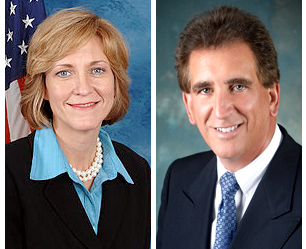
Sutton | Renacci


In Ohio’s only general election congressional race pitting two incumbent members against each other, a new poll reveals a very tight contest with tremendously high stakes.

A GBA Strategies internal poll (July 15-19; 500 likely OH-16 voters; margin of error plus-or-minus 4.4 percentage points) conducted for Democratic Rep. Betty Sutton shows her to be in a statistical dead-heat against GOP freshman Rep. Jim Renacci. The data gives Sutton 42 percent as compared to Renacci’s 40 percent.

Surprisingly, Libertarian candidate Jeff Blevins is taking a sizable 12 percent of the sampled voters. This latter number causes some to question the poll’s methodology because, for a sole independent candidate, these figures are much higher than what is normally seen. Third-party candidates have shown to typically under-perform in their poll results, so it is likely his actual vote total will return to the low single-digit percentages that are normally recorded for such candidates. Interestingly, GBA projects Blevins to be drawing his support equally from both Democrats and Republicans.

The current results show little change from GBA’s October poll that projected the race to be tied, with each candidate attracting 45 percent of the vote. Blevins, however, was not factored into the earlier poll. The numbers are also in line with a June poll from Normington Petts & Associates, a Democratic survey research firm, that found Sutton to be leading Renacci 41-38 percent. In July, the Democratic-leaning House Majority PAC further confirmed Sutton and Renacci were statistically tied at 40 percent, with Blevins taking a much smaller share of the vote.

The 2011 redistricting plan paired Sutton and Renacci as a result of Ohio losing two congressional seats in reapportionment due to slow population growth. With a Republican legislature in control of the redistricting pen, the two were placed in a seat that favors Renacci in a head-to-head race with Sutton. Renacci carries over 41.8 percent residents from his current seat, while Sutton has far fewer constituents in the new 16th. Her carry-over figure is half that of Renacci’s, at 20.6 percent.

With polling leaving us in a statistically deadlocked race, we turn to the importance of spending and fundraising. Renacci was the stronger fundraiser last quarter according to the latest Federal Election Commission financial disclosure reports (closed June 30). He reported raising approximately $502,000 compared to Sutton’s $293,000. Additionally, Renacci ended the quarter with approximately $1.5 million cash on hand, compared to Sutton’s $900,000. Contrary to 2010 when the Republican self-contributed more than $752,000, this year he has only invested $2,500 into his re-election campaign.

Both campaigns and outside liberal and conservative groups already have reserved millions of dollars in TV advertising time in the Cleveland media market. Groups such as the Democratic Congressional Campaign Committee (DCCC) already have reserved over $3 million in Cleveland ad time and similarly the National Republican Congressional Committee (NRCC) as well as other groups has reserved $2 million buys thus far.

This member vs. member match-up has been a tight battle since the seat was redrawn and guarantees to be a horse race until the end. Both candidates have the experience, resources, outside support, and staff to run strong campaigns. OH-16 is considered to be a top race for both the DCCC and NRCC this fall, so stay tuned.