Monthly Archives: August 2024

Harris Momentum is Up, However So is the Voter Registration Gap in Battleground States: What It Means

By Jim Ellis — Friday, August 16, 2024

Voter Registration

Vice President Kamala Harris / Photo by Gage Skidmore

While Vice President Kamala Harris is riding a momentum wave in polling that puts her slightly ahead of former President Donald Trump in most places, one element trending against her is the battleground states partisan registration gap.

Voters in only 30 states register by political party designation, and several of them are in the most competitive category. Arizona, Maine, Nebraska, Nevada, New Hampshire, New Mexico, North Carolina, and Pennsylvania, all of which are either hotly contested or showing signs of potential swing voting, require partisan registration designations on the voter registration forms. (Maine and Nebraska are included here because they split their electoral votes, meaning allowing each congressional district to carry its own vote. Both states have districts that tend to swing opposite of the statewide tally.)

In some cases, both parties have fewer members in these swing domains than they did in 2020, largely due to the election authorities conducting list purges to eliminate people who no longer live at the stated address, have passed away, or have not voted in a specific number of consecutive elections (state laws differ on the criteria listed last).

All of the aforementioned states have fewer registered Democrats than they did at the beginning of 2021. Arizona, North Carolina, and Pennsylvania show a greater number of registered Republicans on their most recent registration report as opposed to where they stood at the beginning of 2021. Arizona, Nevada, North Carolina, and Pennsylvania also have more unaffiliated voters than they did at the beginning of 2021.

The statistic of particular interest comes in the states where the raw number registration gap between Democrats and Republicans has significantly changed. It is here where the Republicans benefit substantially, and this is a statistical category that will not necessarily be reflected in polling.

In Arizona, New Hampshire (which is a new entry in this category), and the 2nd District of Nebraska, Republican registrants outnumber Democrats. With New Hampshire flipping to plurality Republican since 2021, that could signal a different vote pattern in 2024, and that could make a major difference in several races including the presidential campaign.

If Trump were to convert Arizona, Georgia, Nevada, and New Hampshire — while assuming he kept all 25 states and the 2nd District of Maine in his column, all of which have voted for him twice — he would win a 272-268 electoral vote victory, and can do so without carrying any of the key Great Lakes states that are typically highlighted as the deciding factor in the national race.

In all of the remaining swing or potentially swing domains: Maine, Nevada, New Mexico, North Carolina, and Pennsylvania, Democrats still outnumber Republicans, but the registration gap between the two parties is much smaller denoting Republican gains in each place.

Most significantly, in three states, Arizona, Nevada, and New Hampshire, the net Republican registration gain is larger than the number of votes that separated Joe Biden and Donald Trump in the 2020 election. Therefore, these states become obvious Trump conversion targets.

The Republican registration gap in North Carolina has also improved for the party. Though still behind the Democrats by more than 132,000 registrants, the new numbers represent a net GOP gain of 111,066 individuals than at the beginning of 2021. Therefore, while Trump twice carried the Tar Heel State, his margins were small and the boost in registration should make this critical state a bit safer for his Republican team in 2024.

The state of Florida is the most extreme registration change example and is generally what takes the state out of play not only for Democrats at the presidential level, but also in the US Senate race between incumbent Sen. Rick Scott (R) and his most likely opponent, former US Rep. Debbie Mucarsel-Powell (D).

Since 2021, the registration gap has grown in the Republicans favor by a net 940,005 individuals, which gives the Republicans a registration advantage over the Democrats of just over one million partisan voters.

While polling detects the Harris surge in the presidential race, the Republicans closing the registration gap in all of the battleground states where registered partisanship can be measured should be considered at least one significant neutralizing factor of the polling numbers as we head toward early voting month in October.

RFK JR. Disqualified in New York; Green Party on Ballot in Nevada; Senate Incumbent Way Up in North Dakota; Finally, A Winner in UT-2

By Jim Ellis — Thursday, August 15, 2024

President

Robert F. Kennedy Jr. Photo by Gage Skidmore

Robert F. Kennedy Jr: New York Disqualification — A New York judge has disqualified Robert F. Kennedy Jr. from appearing on the New York election ballot, ruling the address the candidate used in his submission documentation is not valid. This is yet another blow to Kennedy’s flailing campaign and further underscores the difficult road any non-major party contender is forced to traverse just to obtain ballot access in all 50 states.

Although with Kennedy not appearing on the New York ballot, it will have little effect upon the final results. As we know, the Empire State is one of the Democratic strongholds, and Vice President Kamala Harris will have little trouble in capturing the domain’s 28 electoral votes.

Kennedy has qualified for the ballot in 16 states, including three that appear as highly competitive: Michigan, New Mexico, and North Carolina.

Green Party: On Ballot in Nevada — A Nevada judge has ruled against the Nevada Democratic Party’s lawsuit that would have disqualified the Green Party from being on the state’s 2024 ballot. The judge ruled that the party’s ballot line will remain intact.

The judicial order means that Green Party candidate Jill Stein will be on the Silver State ballot, which Democrats obviously believe will hurt Kamala Harris. According to the national Green Party, the entity has secured a 2024 ballot line in 21 states and Stein will appear on four more ballots as an Independent. The party leadership is actively petitioning or awaiting certification in an additional 18 states.

Senate

North Dakota: Dem Poll Finds Cramer Well Up — A just-released Lake Partners Research survey of the North Dakota Senate race, the first published poll since mid-June (for the Katrina Christiansen campaign; July 28-Aug. 2; 500 likely North Dakota voters), sees movement toward the Democratic candidate while still yielding incumbent Sen. Kevin Cramer (R) a double-digit lead. The ballot test finds the senator’s lead at 51-38 percent. The previously released poll, from Public Opinion Strategies (June 15-19; 500 likely North Dakota voters; live interview), projected Sen. Cramer’s lead at 37 points.

Very likely, the ultimate outcome will fall somewhere in between these two surveys. Look for Sen. Cramer to easily win re-election to a second six-year term in a state that the FiveThirtyEight data organization rates as R+37.

House

UT-2: Recount Finally Yields Winner — Seven weeks after the Utah primary, a winner has finally been determined in the state’s 2nd Congressional District. Businessman Colby Jenkins (R) yesterday conceded the race to Rep. Celeste Maloy (R-Cedar City) ending a counting period that continued to drag onward.

The final vote count saw the two candidates separated by just 176 votes, which is still enough for Maloy to clinch her renomination bid. She is now a strong favorite to win a full term in the general election against Democratic nominee Nathaniel Woodward, an attorney. The FiveThirtyEight data organization rates UT-2 as R+23. The Daily Kos Elections statisticians rank the seat as 81st most vulnerable in the House Republican Conference.

Primary Results: Connecticut, Minnesota, Vermont, and Wisconsin

By Jim Ellis — Wednesday, August 14, 2024

Primary Results

Overview: Four States and One CD — Voters in Connecticut, Minnesota, Vermont, and Wisconsin nominated candidates yesterday while the Harris County, Texas Democratic Party chose a general election nominee to replace the late Rep. Sheila Jackson Lee (D-Houston). Little in the way of competition was found in Connecticut and Vermont, meaning all of the incumbents easily advanced into the general election.

Minnesota Sen. Amy Klobuchar (D) / Photo by Gage Skidmore

• Minnesota: Sen. Amy Klobuchar (D) captured over 90 percent of the vote in her Democratic primary and is a heavy favorite to defeat the new Republican nominee, former NBA professional basketball player Royce White, who defeated banker Joe Fraser and six other contenders to claim his party’s nomination.

After 2nd District Republican Taylor Rahm dropped his congressional bid to join the Trump campaign staff, it became evident that attorney Joe Teirab would be the Republican to challenge Rep. Angie Craig (D-Prior Lake) in what could become a competitive general election.

Though the safely Democratic 3rd District was open because Rep. Dean Phillips (D-Plymouth) chose not to seek re-election, state Sen. Kelly Morrison (D-Deephaven) surprisingly found herself unopposed in the party primary. She will be a strong favorite to defeat Republican former judge and legislator Tad Jude in the general election.

Though facing credible opposition, polling was projecting that three-term Rep. Ilhan Omar (D-Minneapolis) would score a big victory. Her 56 percent vote total was certainly enough to clinch a comfortable win but not as wide as the pre-election polling had projected. She will easily win the general election to secure a fourth two-year term.

In the expansive western state 7th District, Rep. Michelle Fishbach (R-Regal), who lost the official party endorsement at the Republican state convention earlier in the year, rebounded to score a primary win that was just short of a 2:1 drubbing over businessman Steve Boyd. Fishbach will easily win her third term in November.

• Wisconsin: With Sen. Tammy Baldwin (D) running unopposed in the Democratic primary, Republican businessman pounded his two minor GOP opponents to post an 87 percent victory percentage. Sen. Baldwin is the clear favorite to win the general election, but Hovde will be able to keep pace in advertising with his strong self-funded media campaign.

In the competitive 3rd Congressional District, business owner Rebecca Cooke, who had strong outside support, recorded large percentages in the rural areas to overcome state Rep. Katrina Shankland’s (D-Steven’s Point) overwhelming strength in Portage County to score a 49-42 percent Democratic primary victory. Cooke will now face freshman Rep. Derrick Van Orden (R-Prairie du Chien) in what should be a hotly contested general election.

In the Green Bay anchored 8th CD, businessman Tony Wied, with an endorsement from former President Donald Trump, slipped past former state Senate President Roger Roth and state Sen. Andre Jacque (R-Green Bay) to clinch the open Republican nomination and become the heavy favorite to win the general election in November. Assuming his success, Wied will succeed resigned Rep. Mike Gallagher (R) in the seat that the FiveThirtyEight data organization rates as R+20.

• TX-18: Battling several prominent candidates before the 88 Harris County Democratic Party convention delegates, former two-term Houston Mayor Sylvester Turner was chosen as the party standard bearer in the general election to replace the late US Rep. Sheila Jackson Lee (D-Houston).

Turner and former city councilwoman, ex-US Senate candidate, and previous congressional contender Amanda Edwards tied on the first ballot, necessitating a runoff vote because the deadlock prevented either from securing majority support. Turner then won the runoff vote. He proceeds into the general election as a prohibitive favorite opposite Republican nominee Lana Centonze.

Primaries in Four States Today; Conflicting Polls in Michigan;
Casey Up Double Digits;
New Jersey’s Governor’s Race

By Jim Ellis — Tuesday, August 13, 2024

Primaries

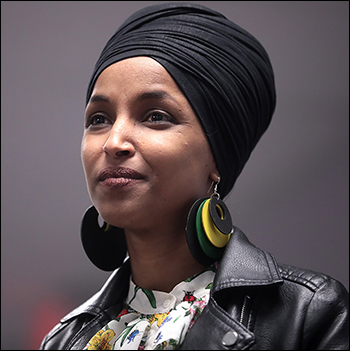
Rep. Ilhan Omar (D-Minneapolis) is expected to record a substantial primary victory today. / Photo by Gage Skidmore

Voting Today: Four States and One CD — Voters in Connecticut, Minnesota, Vermont, and Wisconsin will vote today while the Harris County, Texas Democratic Party members are choosing a general election nominee to replace the late Rep. Sheila Jackson Lee (D-Houston).

The primaries will be quiet affairs in Connecticut and Vermont as all incumbents are running either unopposed or against minor opposition. Minnesota US Reps. Ilhan Omar (D-Minneapolis) and Michelle Fishbach (R-Regal) face primary opposition that looked interesting for a time, but now both incumbents are expected to record substantial victories.

The WI-8 open seat Republican primary will attract the most attention in the Badger State. There former state Senate President Roger Roth, state Sen Andre Jacque (R-Green Bay), and businessman Tony Wied are vying for the party nomination. The winner will very likely succeed resigned Rep. Mike Gallagher (R).

The Democrats have a contested primary in the state’s western 3rd District where state Rep. Katrina Shankland (D-Stevens Point) and business owner Rebecca Cooke are vying for the opportunity to challenge freshman Rep. Derrick Van Orden (R-Prairie du Chien).

Former Houston Mayor Sylvester Turner appears to be the favorite to come through the party nomination convention as the congressional nominee, though several state Representatives and Houston City council members are also vying for support from the 88 voting members.

Senate

Michigan: Conflicting Polls — Two surveys were released in the past three days, and while both find Rep. Elissa Slotkin (D-Lansing) leading former Rep. Mike Rogers (R), the margin between the two studies is highly inconsistent. The New York Times/Siena College (Aug. 5-8; 619 likely Michigan voters) found Rep. Slotkin leading 46-43 percent, which is in line with most other polls conducted of the race.

The Bullfinch Group, however, also tested the Michigan electorate in early August (polling for the Independent Center; part of a three swing state polling series; Aug. 8-11; 500 registered Michigan voters; online) and sees Rep. Slotkin posting a much larger 48-38 percent lead. The error factor in the latter poll, with a small online sample size, is much greater than the NYT/Siena College study, so it is likely that this survey is an anomaly.

Pennsylvania: Casey Up Double Digits in Two Surveys — A pair of research studies were also released in the Keystone State and produced similar results, the best so far for Sen. Bob Casey Jr. (D). As in Michigan, the two were from the New York Times/Siena College (Aug. 6-8; 693 likely Pennsylvania voters) and the Bullfinch Group (polling for the Independent Center; part of a three swing state polling series; Aug. 8-11; 500 registered Michigan voters; online).

The NYT/Siena ballot test projected Sen. Casey’s lead to be a whopping 51-37 percent over former hedge fund CEO David McCormick (R). Bullfinch found an almost identical result, recording the senator’s advantage at 51-39 percent over challenger McCormick. This was always going to be a tough race for Republicans, and now the McCormick campaign must make a serious move to tighten the race to ensure the candidate is positioned to potentially score an upset victory. Currently, Sen. Casey appears to be in the driver’s seat as he strives to clinch a fourth term.

Governor

New Jersey: Rep. Sherrill Preparing Statewide Run — As has long been anticipated, Rep. Mikie Sherrill (D-Montclair) yesterday signaled that she will launch a 2025 campaign for governor soon after the November 2024 general election. Also expected to run is US Rep. Josh Gottheimer (D-Wycoff). Already announced are Democratic mayors Ras Baraka (Newark), Steve Fulop (Jersey City), and Sean Spiller (Montclair), in addition to former state Senate President Steve Sweeney.

The Republicans will feature 2021 GOP nominee Jack Ciattarelli, state Sen. Jon Bramnick (R-Westfield), former state Senator Ed Durr, and radio talk show host Bill Spadea. Gov. Phil Murphy (D) is ineligible to seek a third term, hence the large forming candidate field especially on the Democratic side. This will be an intense gubernatorial contest.

Swing State Seesaw; Hawaii’s Election Results; New Leader in Delaware Governor’s Race, While North Carolina Stays Consistent

By Jim Ellis — Monday, August 12, 2024

President

Polling: Swing State Seesaw — The presidential race continues to behave like a seesaw with regard to cumulative polling data. The most recent New York Times/Siena College polling series finds Vice President Kamala Harris leading former President Donald Trump by identical 50-46 percent counts in the critical Great Lakes states of Michigan, Pennsylvania, and Wisconsin from their results released Aug. 10.

Yet, the Trafalgar Group and Insider Advantage released their cumulative data in the same states on Aug. 9. Trafalgar found Trump leading 46-44 percent in Pennsylvania, while IA sees Trump with a 49-48 percent edge in Wisconsin. The Insider Advantage Michigan result, Harris leading 49-47 percent, confirmed the NYT/Siena Wolverine State conclusion. With the race leaders varying literally by the day, at this point the contest appears to be a dead heat.

Primary Results

Hawaii: Electorate Voted Saturday — There was not a great deal of competition in Saturday’s Aloha State primary. Sen. Mazie Hirono (D), on the ballot seeking a third term was renominated with a landslide 90.5 percent of the Democratic primary vote. She will now face former state representative and ex-US Senate nominee Bob McDermott, who captured 52 percent of the vote in a six-way Republican primary. In 2022, McDermott lost to Sen. Brian Schatz (D), 69-25 percent. Another similar outcome is forecast for his race against Sen. Hirono. The only interesting Hawaii primary political news is the state House Speaker, Scott Saiki (D-Downtown Honolulu), losing his bid for renomination to state Board of Education member Kim Coco Iwamoto.

Governor

Delaware: New Polling Leader — According to a Concord Public Opinion Partners survey (conducted for the Education Reform Now Advocacy organization; Aug. 2-4; 453 registered Delaware voters; live interview & text), the negative publicity surrounding Lt. Gov. Bethany Hall-Long’s alleged campaign finance violations in not disclosing money paid to her husband has hurt her bid for governor.

The Concord poll finds New Castle County Executive Matt Meyer leading the open Democratic gubernatorial primary with a 30-23 percent spread as the two battle to win the Sept. 10 primary election. The winner will become the clear favorite to claim the general election in November. Gov. John Carney (D) is ineligible to seek a third term. Instead, he is running for mayor of Wilmington, the small state’s largest city.

North Carolina: AG Stein (D) Opening Consistent Lead — The Cygnal polling organization released a statewide Tar Heel State survey, and their data finds Republican Lt. Gov. Mark Robinson falling further behind Attorney General Josh Stein (D) in their race to succeed term-limited Gov. Roy Cooper (D). The poll (Aug. 4-5; 600 likely North Carolina general election voters) finds AG Stein topping Robinson, 43-38 percent, even though all other Republicans are leading.

In the presidential race, former President Trump runs ahead of Vice President Kamala Harris, 47-44 percent. In the open attorney’s general contest, GOP Rep. Dan Bishop (R-Charlotte) holds a 42-38 percent advantage over Democratic Rep. Jeff Jackson (D-Charlotte). And, in a race for state Supreme Court, the Republican contender, Jefferson Griffin, posts a 40-37 percent edge over Democrat Allison Riggs.

Debatable Debates; Montana’s Sheehy Still Leads; Shah Declared Dem Winner in AZ-1; Rivet Trailing in MI-8

By Jim Ellis — Friday, August 9, 2024

President

Debates: Conflicting Messages — We are again seeing conflicting statements about who is debating when and where. Former President Donald Trump announced yesterday that there will be three debates, on Sept. 4 (Fox News), 10 (NBC News), and 25 (ABC News). Vice President Kamala Harris indicated that she is pleased that “… Donald Trump has finally committed to debating me on Sept. 10.”

It is unlikely that Harris will appear on Fox News, and there is a story indicating the Trump lawyers have told the former president that he cannot debate on ABC because they are involved in an active lawsuit against the network. Therefore, the only common ground appears to be on Sept. 10, meaning NBC News’ reporters will moderate.

Senate

Montana: First Harris Poll; Sheehy Still Leads — The first Montana poll featuring Vice President Harris as the Democratic presidential nominee has been released. Emerson College tested the Big Sky electorate (polling for The Hill Newspaper; Aug. 5-6; 1,000 likely Montana general election voters; multiple sampling techniques) and found that former President Trump’s lead in the state has remained relatively consistent when pitted against Harris versus President Joe Biden.

The new numbers project Trump leading VP Harris, 55-40 percent. The Senate pattern is a familiar one found here and in other competitive states. That is, the Republican candidate running substantially behind Trump’s standing. In this case, however, retired Navy SEAL and aerospace company CEO Tim Sheehy (R) continues to forge a small lead over Sen. Jon Tester (D).

The ballot test for the Montana Senate campaign found Sheehy posting a slight 48-46 percent edge over the three-term Democratic incumbent. With the Trump margin expected to grow as the campaign matures, Sheehy’s position should improve, as well. Therefore, this Senate race has strong potential to flip from D to R. Doing so would clinch an outright majority in the new Senate. Coupled with West Virginia, which is a sure flip, a Montana victory would give the GOP at least 51 seats.

House

AZ-1: Shah Declared Dem Winner — As the Arizona ballot verification and counting process slowly continues, another race has been officially called. Physician and former state Rep. Amish Shah (D), who led throughout the counting process, has defeated former Arizona Democratic Party chairman Andre Cherni and ex-television journalist Marlene Galan-Woods to claim the party nomination.

Dr. Shah only captured 23.5 percent of the vote in the crowded field, but the total was enough to score a plurality victory. Dr. Shah finished two percentage points ahead of both Cherni and Galan-Woods. The latter two were separated by only 106 votes.

The count is still not final, but Dr. Shah’s margin over his two closest competitors is larger than the number of ballots that remain uncounted. Therefore, Dr. Shah will advance into the general election to wage a competitive battle against veteran Rep. David Schweikert (R-Fountain Hills) in a district that only leans Republican.

MI-8: Candidate Released Poll Showing Her Trailing — A rather surprising poll was released from a new Democratic congressional nominee. State Sen. Kristen McDonald Rivet (D-Bay City), who won the open 8th District Democratic primary with 53.3 percent of the vote, just released her internal Global Strategy Group poll (July 29-Aug. 1; 500 likely MI-8 voters; live interview & online) that shows her trailing new Republican nominee Paul Junge, 44-45 percent.

Releasing data that shows the principal trailing is curious considering that Democratic primary turnout was seven percentage points (58.5 percent) higher than the Republican participation factor. This number appears even stronger when compared with the statewide turnout partisan division. In the overall Michigan primary, the Democratic turnout advantage only reached 51.5 percent.

The argument for releasing the virtual dead heat data was that Junge, a former news anchorman and two-time Republican nominee, has better name identification throughout the district than Sen. Rivet. While this is a valid point, the turnout favoring Rivet’s party to a large degree suggests that her standing should be stronger.

How the Incumbents Fell

By Jim Ellis — Thursday, August 8, 2024

Incumbents

Rep. Cori Bush (D-MO) gives a controversial, fiery speech after losing her primary.

Rep. Cori Bush (D-MO) in losing her primary Tuesday night became the third incumbent during this campaign year to fall to an intra-party challenger and similarities are present in each of the situations.

In addition to Rep. Bush, Reps. Jamaal Bowman (D-NY) and Bob Good (R-VA) also lost their primary elections. All three were members of the most extreme caucuses within their respective party conferences. Reps. Bush and Bowman were members of the Socialist Democrat “Squad” ad hoc coalition, while Rep. Good was chairman of the conservative House Freedom Caucus.

Opposition resources were key factors in each race, and most of the funding to defeat the incumbents came from outside groups. In fact, the Bowman and Bush races became the most expensive primaries in campaign history. In both of these cases, the United Democracy Project, the political arm for the American Israel Public Affairs Committee (AIPAC), was the big spender.

In each race, the UDP used the identical tactic, attacking the incumbent for not being a strong enough supporter of President Biden’s legislative initiatives. Though the reason for the UDP’s involvement was because of Reps. Bush and Bowman’s anti-Israel sentiments and public comments, that particular issue was never even portrayed in a campaign ad.

While the message was geared to the two incumbents opposing the Biden agenda in their heavily Democratic districts, the designed negative image stuck because the challengers’ coalitions spent massive amounts of advertising dollars in the respective media markets.

The combined total of reported outside spending, according to the Open Secrets organization, was just over $7 million against Bush as compared to $2 million in support. Once the final reports are published the outside spending number will rise to the $10 million range.

These figures are in addition to the individual campaign figures. While Rep. Bush raised $2.9 million for her campaign according to the pre-primary campaign finance disclosure report, former St. Louis County prosecutor Wesley Bell raised over $4.7 million for his campaign committee. Therefore, the resource imbalance was clearly in the challenger’s favor.

We see a similar pattern in the other races. The United Democracy Project used the similar tactic of attacking the incumbent, in this case Rep. Bowman, as being weak in supporting the Biden Administration’s economic objectives, particularly in relation to the infrastructure spending legislation. Both he and Rep. Bush opposed the various funding packages because they said the legislation did not go far enough in supporting the inner city constituencies of their districts.

In the Bowman race, just about $14 million was spent from outside sources, and the imbalance here was even more substantial in the challenger’s, Westchester County Executive George Latimer, favor. The outside dollars broke 12:2 against Rep. Bowman, and the Latimer campaign outraised Rep. Bowman’s political effort by more than $1 million.

The campaign to defeat Republican Rep. Good was obviously different. Good was one of the House leaders that led the effort to oust then-Speaker Kevin McCarthy, so the outside coalition came largely from organizations loyal to the ex-Speaker, and with his assistance.

Here we see smaller spending totals, but the imbalance still favored challenger John McGuire, a state senator. The Open Secrets tally finds Rep. Good on the short end of a 2:1 outside spending ratio, with the pro-McGuire/anti-Good coalition spending just under $4 million and the pro-Good Super PACs spending just under half that amount.

One other key to defeating the incumbents was recruiting strong challengers. Wesley Bell, who defeated Rep. Bush, was a St. Louis County prosecutor. He was originally planning to become a US Senate candidate against Sen. Josh Hawley (R), but instead saw the opportunity to run for the House against Rep. Bush.

George Latimer is the Westchester County Executive. Prior to his service in local government, Latimer was elected to the New York State Senate and Assembly. Likewise in Virginia, McGuire was an elected veteran of both Virginia legislative chambers.

The combination of strong challenger candidates and huge resource advantages both inside the campaign and most particularly from outside sources, along with crafting strong messages against an extreme incumbent were the key components for all three challenge efforts to achieve success.

Next week in Minnesota, Rep. Ilhan Omar (D-Minneapolis) faces the Democratic voters. No such result is expected here since the outside money did not materialize. Though she only won renomination by two percentage points in 2022, this year’s campaign did not develop. Therefore, we saw no major outside spending commitment, her fundraising is strong, and polling suggests that she will win easily next Tuesday.

In a year when it appears incumbent defeats in the general election will again be few and far between, these three primary challenge victories will prove a significant part of the 2024 election cycle’s post-election analysis.

Missouri’s Cori Bush Out in Primary; Other Primary Results From Kansas, Washington, Michigan

By Jim Ellis — Wednesday, August 7, 2024

Primary Results

Missouri Rep. Cori Bush (D-St. Louis)

Missouri: Rep. Bush Unseated — In an expensive race where the incumbent was heavily outspent, former St. Louis County prosecutor Wesley Bell denied two-term Rep. Cori Bush (D-St. Louis) renomination by just over 6,800 votes. Rep. Bush is the third incumbent to lose to an intra-party challenger, joining Reps. Jamaal Bowman (D-NY) and Bob Good (R-VA) as defeated incumbents. Rep. Jerry Carl (R-AL) also lost his bid for renomination, but that race was an incumbent pairing due to a new redistricting map.

In the open 3rd District, in a race that winnowed down to two former state senators vying to replace retiring Rep. Blaine Luetkemeyer (R-St. Elizabeth), Bob Onder, armed with an endorsement from former President Donald Trump, saw a late vote surge propel him over Kurt Schaefer for a Republican nomination win, which is tantamount to winning the November election.

In the open governor’s race, Lt. Gov. Mike Kehoe defeated state Sen. Bill Eigel (R-Weldon Spring) and Secretary of State Jay Ashcroft in a close three-way result. Kehoe advances into the general election as the favorite against state House Minority Leader Crystal Quade (D-Springfield). Gov. Mike Parson (R), who endorsed Lt. Gov. Kehoe, was ineligible to seek a third term.

Kansas: Schmidt Clinches GOP Primary — In Kansas’ open 2nd District, former Attorney General and ex-Republican gubernatorial nominee Derek Schmidt easily won the open Republican nomination. Schmidt was topping the 53 percent mark in a field of five candidates. The former statewide official is now a clear favorite to win the general election and keep the seat in the Republican column.

For the Democrats, former Rep. Nancy Boyda won a close primary with just over 51 percent of the vote in her political comeback attempt. Advancing to the general election, Boyda will be a big underdog to Schmidt in a 2nd District that is much different than the seat she represented for one term 16 years ago. Two-term Rep. Jake LaTurner (R-Topeka) chose not to seek re-election.

Washington: Rep. Newhouse Trails in Jungle Primary — The Washington jungle primary featured a full slate of races. Sen. Maria Cantwell (D) captured first place in the Senate race, with 58 percent at this writing. She will face Republican physician Raul Garcia in the general election. Sen. Cantwell is now a prohibitive favorite to capture a fifth term.

The competitive House races find five-term Rep. Dan Newhouse (R-Sunnyside) fighting to finish second in the jungle primary and advance to the general election against retired NASCAR driver Jerrod Sessler (R), who was one of two candidates who former President Donald Trump endorsed.

In the state’s southwestern District 3, Rep. Marie Glusenkamp Perez (D-Skamania County) placed first over technology company executive Joe Kent (R), the man she upset in the general election from two years ago. While she captured just over 10,000 votes compared to Kent, the combined Republican turnout was almost 5,000 votes larger than the Democratic participation figure. Therefore, we can surmise that the Perez-Kent re-match will again end in close fashion, just as in 2022.

In the open 5th District, Spokane County Treasurer Mike Baumgartner (R), who had the backing of most conservative activists, placed first in the crowded jungle primary and will face Democrat Carmela Conroy, the Spokane County Democratic chair, in the general election. Because he drew a Democratic opponent in the general election in this safely Republican seat, Baumgartner is now the clear favorite to succeed retiring Rep. Cathy McMorris Rodgers (R-Spokane).

In the open 6th, with candidates vying to succeed retiring six-term Rep. Derek Kilmer (D-Gig Harbor), it appears that two state senators, Emily Randall (D-Bremerton) and Drew MacEwen (R-Union) will advance into the general election. State Land Commissioner Hilary Franz (D) lies about 5,500 votes behind MacEwen. With a large percentage of the vote left unreceived and uncounted, this race is not yet over, but the early numbers suggest the order will not change.

In the governor’s race, Attorney General Bob Ferguson (D) easily outpaced former Congressman Dave Reichert (R), but both will advance to the general election. With Democrats comprising 56 percent of the early turnout figure, Ferguson will be difficult to defeat in the November election especially with Vice President Kamala Harris likely to record a big Washington state win over former President Trump.

Michigan: No Surprises — In the open Senate race, both Rep. Elissa Slotkin (D-Lansing) and former Rep. Mike Rogers (R) won landslide victories in their respective primaries. A tight general election is expected between these two top performing candidates.

The House races concluded as expected.

In what is sure to be a toss-up general election campaign, both former state senators Tom Barrett (R) and Curtis Hertel (D) were unopposed for their respective party nominations. The November battle will determine Rep. Elissa Slotkin’s (D-Lansing) successor.

In the competitive 8th District, as expected state Sen. Kristen McDonald Rivet (D-Bay City) and former news anchor and two-time congressional nominee Paul Junge (R) won their respective primaries. Both the 7th and 8th districts will carry toss-up ratings into the general election. Overall Democratic turnout in the 8th CD was higher than the Republican participation rate which is a good sign for Rivet especially because, at this writing, GOP statewide turnout is higher than the Democratic number.

In the competitive 10th District, we will see a rematch between former judge and Macomb County prosecutor Carl Marlinga (D), who easily topped a crowded Democratic field, and freshman Rep. John James (R-Fountain Hills). In District 13, freshman Rep. Shri Thanedar (D-Detroit) turned back two Democratic challengers to virtually clinch a second term.

Polling Mish-Mash in PA; Trump Up, Moreno Down in Ohio; Toss-up in PA-7; Special Election Called in TX-18

By Jim Ellis — Tuesday, August 6, 2024

President

Pennsylvania: A Polling Mish-Mash — Four pollsters released late July Pennsylvania results, and while Susquehanna Polling & Research and Public Opinion Strategies find Vice President Kamala Harris leading the state, Bloomberg/Morning Consult and Public Policy Polling still see former President Donald Trump having a slight advantage.

Susquehanna (July 22-28; 600 likely Pennsylvania voters) sees Harris leading 47-43 percent. Public Opinion Strategies (7/23-29; 400 likely Pennsylvania voters; live interview) posts the Vice President to a 48-45 percent edge. Bloomberg/Morning Consult (July 24-28; 800 likely Pennsylvania voters; online) sees a four point Trump lead, 50-46 percent, and Public Policy Polling (July 29-30; 627 registered Pennsylvania voters; live interview & text) also finds Trump with the slight edge, 48-47 percent. Combining all of this recent data suggests the race is a virtual dead heat and a long way from being decided.

Senate

Ohio: Trump, Brown Up — The familiar President-US Senate pattern we have witnessed in several states is again present even with a new Democratic presidential nominee. The bipartisan poll from Fabrizio Lee (R) and Impact Research (D) for AARP (July 23-29; 600 likely Ohio voters; live interview and text) finds former President Trump leading Vice President Harris by nine percentage points, 48-39 percent, while Republican US Senate nominee Bernie Moreno continues to trail Sen. Sherrod Brown (D). In the Senate ballot test, Democrat Sen. Brown’s lead is four points, 46-42 percent.

The Ohio margin spread is a net swing of 13 points, and a bit exaggerated from the other states exhibiting a similar pattern. In order to capitalize on Trump’s Ohio lead, the Moreno campaign must find a better way of painting Sen. Brown in a negative light in order to move the election toward the GOP challenger. So far, such has not occurred.

House

PA-7: District Continues Toss-Up Trend — The latest Tarrance Group poll (July 21-24; 404 likely PA-7 voters; live interview) sees Rep. Susan Wild (D-Allentown) again embroiled in a tight re-election contest. In her last two races, Rep. Wild has won with 51-49 percent margins over the same GOP opponent, businesswoman Lisa Scheller. This time, she faces a different competitor, state Rep. Ryan Mackenzie (R-Macungie Township). The Tarrance ballot test finds Rep. Wild’s lead at only 47-45 percent despite a large disparity in campaign resources, while former President Trump has a similar sized lead over Vice President Harris within the 7th District, 48-46 percent.

TX-18: Special Election Called — Texas Gov. Greg Abbott (R) announced that he will schedule the special election to fill the balance of the late Rep. Sheila Jackson Lee’s (D-Houston) term to run concurrently with the general election. If no one secures a majority on Nov. 5, a runoff will be scheduled. At that point, however, there will only be a few days remaining in the current term. The Harris County Democratic Party will choose a regular general election replacement for Rep. Jackson Lee.

The seat is heavily Democratic, so the field will consist almost entirely of that party’s members. Former Houston Mayor Sylvester Turner is an announced contender as are Houston Democratic state representatives Jarvis Johnson and Christina Morales. Houston City Councilwoman Letitia Plummer is also an announced candidate along with former City Council members Amanda Edwards and Dwight Boykins. The party committee nomination process will occur before Aug. 17 according to the county chairman. Whoever the committee members choose will go a long way toward determining the special election winner, as well.

The New Mexico Factor

By Jim Ellis — Monday, August 5, 2024

President

Former President Donald Trump / Photo by Gage Skidmore

The Land of Enchantment, as the state of New Mexico is known, does not attract a great deal of attention in a national presidential campaign, but 2024 may prove different.

Looking at the presidential map, it previously was a foregone conclusion that to win the national election, former President Donald Trump would have to covert one of the key Great Lakes States, either Michigan, Pennsylvania, or Wisconsin. Now that the Trump campaign has apparently expanded the map, such may not be the case.

To win, Trump needs to convert states that Joe Biden carried in 2020 with a minimum cumulative total of 35 electoral votes. For presumed Democratic nominee Kamala Harris to win, she would only need to keep 90 percent of Joe Biden’s electoral vote total.

Looking at the polling since the beginning of 2024, Trump has been consistently ahead in the swing states of Arizona, Georgia, and Nevada. Each voted for President Biden with small margins and now all three appear headed toward Trump.

New Arizona polling confirms that, at least in the early going, Trump would perform as well against Harris as he did against President Biden. The latest Public Policy Polling survey (for the Clean and Prosperous America PAC; July 19-20; 736 registered Arizona voters; live interview & text) sees Trump holding a 46-40 percent lead over Vice President Harris with Harris carrying a poor favorability index of 38:55 percent positive to negative. For his part, Trump posts an improved 47:49 percent ratio.

In Nevada, Trump recorded a 10-point spread over VP Harris according to the latest Insider Advantage survey (July 15-16; 800 registered Nevada voters; Trump 50; Harris 40 percent). The Georgia numbers are also trending toward Trump. The University of Georgia (for the Atlanta Journal-Constitution; July 9-18; 1,000 registered Georgia voters; live interview) found the former president holding a five-point lead over Harris, 51-46 percent.

Should these patterns continue, and Trump converts the three states, he would gain 33 electoral votes, or just two short of the minimum 270 needed to secure election. Doing so would then mean he would need only one other state to clinch victory.

Capturing New Mexico, with its five electoral votes, would allow Trump to win the national election even if Vice President Harris is successful in keeping Michigan, Pennsylvania, and Wisconsin in the Democratic column. Therefore, the ability to expand the map could fundamentally change the outcome.

Several points suggest New Mexico will become a major Trump target. First, the polling is now showing a much closer race than expected. In 2020, President Biden defeated Trump here, 54-43 percent, and the state was never seriously in play for the then-incumbent president.

This year, however, the numbers appear different. The most recent study was conducted in June from the 1892 Polling firm (June 19-24; 600 likely New Mexico voters). The results found Trump trailing President Biden by a scant one percentage point in the multi-candidate field. In the Senate contest, Republican Nella Domenici, the daughter of the late Sen. Pete Domenici (R-NM), trailed Sen. Martin Heinrich (D) by only a 46-42 percent margin.

Secondly, New Mexico is a plurality Hispanic state (Voting Age Population figures: 44.3 percent Hispanic; 40.5 percent White; 11.5 percent Native American; 2.8 percent Black; 2.5 percent Asian), and Republicans are faring better within the community than in past elections. A significant Trump improvement among New Mexico Hispanics could provide enough of a margin to boost him over the top.

Third, the state having only three congressional districts and a total population of just over 2.1 million individuals means campaigning here is inexpensive. This is especially true considering almost the entire domain is virtually self-contained within the Albuquerque and El Paso media markets. Therefore, targeting the state would not require large expenditures but the return on such an investment could be major.

Furthermore, developing voter coalitions would be relatively easy because 63 percent of the population lives in just five counties, and basically one-third of New Mexicans live in the Albuquerque metropolitan area.

With an expanding map, the campaign will spread to many more places. Expect a major Trump effort targeted for the Land of Enchantment with potentially a big payoff.