Tag Archives: Sen. Amy Klobuchar

The September Debate:
Who’s In and Who’s Out

By Jim Ellis

Aug. 16, 2019 — It appears the Democratic National Committee’s move to increase the presidential debate qualifications in order to decrease the number of participants is working.

With the first two debates featuring 20 candidates over a two-night process, party leaders obviously wanted to cull the field in order to attract a large viewership and host a more serious single forum. Thus, the debate qualifications were doubled in order to ensure that only the most competitive candidates would be included in the succeeding candidate events.

Originally, in order to earn a debate podium, the contenders had to recruit 65,000 donors or score at least one percent support within a series of designated polls. For the third debate scheduled over two days — Sept. 12-13 from Houston — the minimum qualification standards were doubled. Now, the candidates must prove they have at least 130,000 donors, 400 of whom come from at least 20 states, and receive two percent support on four of eight designated polls during the period of June 28 and Aug. 28.

At this point, nine candidates have already officially qualified for the September forum and three more have clinched one of the two platforms. Most of the nine were expected to earn their debate positions, but there is at least one major surprise, and some believe two minor ones.

The next debate will feature no fewer than the
following candidates (alphabetically listed):
• Former Vice President Joe Biden
• Sen. Cory Booker (NJ)
• Mayor Pete Buttigieg
• Sen. Kamala Harris (CA)
• Sen. Amy Klobuchar (MN)
• Ex-Rep. Beto O’Rourke (TX)
• Sen. Bernie Sanders (VT)
• Sen. Elizabeth Warren (MA)
• Businessman Andrew Yang

Continue reading

Poll: Biden Falling

By Jim Ellis

July 2, 2019 — The Morning Consult organization immediately went into the field after the second night of the Democratic presidential forum (June 27-28; 2,407 US self-identified Democratic registered voters) and found that former Vice President Joe Biden’s support slipped, at least as an immediate reaction to what is commonly viewed as his poor debate performance, while Sen. Kamala Harris (D-CA), evaluated as performing quite well, gained.

The MC data still finds Biden in first place, but down five points from their previous survey. On June 23, just three days before the first forum, Biden led Sen. Bernie Sanders (I-VT), 38-19 percent while Sen. Harris lagged at six percent support. Just after the debate, when completing the poll on June 28, Biden dropped to 33 percent, but Sanders remained constant at the 19 percent level. Conversely, Sen. Harris doubled her past support to 12 percent.

MORNING CONSULT POLL RESULTS:

Click on above graphic to go to complete Media Consult poll results story.

In the Morning Consult survey, Sen. Elizabeth Warren (D-MA) also posted 12 percent support, which was virtually on par with her standing in their June 23 poll when she recorded 13 percent preference. South Bend Mayor Pete Buttigieg, who actually scored well on the second debate night, had a similar result to Sen. Warren. While he was polling seven percent on the June 23 poll, he basically remained constant one week later, dropping to six percent on the MC June 28 survey.

Former Texas representative, Beto O’Rourke, who was dogged with poor debate reviews from his first night performance, also dropped in the Morning Consult polling. Before the forum, O’Rourke was only in the four percent range, and after, even lost half that support base, dropping to two percent.

Continue reading

The Early Delegate Projections

By Jim Ellis

June 25, 2019 — There have been several important state polls recently released that provide us data about where the Democratic presidential candidates stand in relation to popular preference. But that is only half the story.
In order to gauge where the candidates might stand in terms of delegate apportionment, we have taken the available published polls from 16 states and began extrapolating a reasonable delegate projection for each.

For purposes of this exercise, all of the polling data is considered accurate, even though in some instances such a conclusion is a stretch. Additionally, these projections were only based upon the at-large numbers but understand more than half of the delegates come from the state’s chosen districts (usually congressional district, though Texas uses their state Senate seats).

It is reasonable to believe, however, that the district apportionment will, in most cases, be similar to the statewide total. At this point, the at-large ratios are the only data set from which we can begin to draw statistical conclusions.

With that short background, the states and their most recent polling result are listed below along with our unofficial delegate projections listed in chronological order based upon voting schedule:

February 3

Iowa Caucus

(YouGov – May 31-June 12; 587 likely Iowa Democratic primary voters)
• First-Ballot Delegates: 41

Biden 30%
Sanders 22%
Warren 12%
Buttigieg 11%

Delegate Projection:

Biden 15
Sanders 11
Warren   8
Buttigieg   7

Continue reading

Democrats Up the Debate Ante

By Jim Ellis

May 31, 2019 — The Democratic National Committee just announced the imposition of new requirements for presidential candidates to participate in the series of subsequent debates to begin in mid-September. The first two sessions are scheduled for June 26-27 and July 30-31 in Miami and Detroit, respectively.

The field is close to being set for the initial forums with 20 candidates qualifying according to the Intelligencer publication, the personnel from which have been tracking the debate process since the schedule was first announced.

To earn a podium in the first two debates, the candidates are required to either score one percent support in three of eight designated polls or reach 65,000 donors, of which at least 200 must come from 20 specific states.

The participants will include some of the more obscure candidates including author Marianne Williamson, New York City businessman Andrew Yang, and the two western governors, Jay Inslee of Washington, and Steve Bullock from Montana.

This means that Sen. Michael Bennet (D-CO), Rep. Seth Moulton (D-MA), former Sen. Mike Gravel (D-AK), and Miramar, Fla., Mayor Wayne Messam likely will not be part of the first forum, though time remains for them to still qualify.

Continue reading

The Scorecard – Part II

By Jim Ellis

May 21, 2019 — Today we continue with our overview of the 24 Democratic presidential candidates. Yesterday we outlined the first 12, and today we’ll finish up with the remaining candidates (listed alphabetically):

• Ex-Gov. John Hickenlooper (D-CO): Eschewing a Senate race against first-term Republican incumbent Cory Gardner, Hickenlooper, after leaving the Colorado governor’s office in January, became a presidential candidate in early March. But, his early results have been uninspiring.
Lagging in the polls but getting just enough to qualify for a debate podium, Hickenlooper is attempting to establish himself as a reasonable left-of-center candidate, but the constituent segment responding to such a message may simply be too small to make him viable. Colorado Sen. Michael Bennet’s presence in the race even cuts into Hickenlooper’s geographic support base. It is likely that the former two-term Colorado governor and Denver mayor will continue to languish in the second tier for the duration of his candidacy.

• Gov. Jay Inslee (D-WA): One of the also-ran candidates, Gov. Inslee, one of only two state chief executives in the field, is not a factor for the nomination. In fact, he has previously indicated that he would not rule out running for a third term as Washington’s governor next year if he fares poorly in the early presidential voting. It appears barely registering on key polls will be enough to place him in the presidential forums, but it is unlikely that he will receive enough of a boost from those events to make him a viable candidate.

• Sen. Amy Klobuchar (D-MN): From her announcement event where she spoke at an outside podium in a Minnesota snow storm, Sen. Klobuchar has yet to catch fire in any meaningful way. As the only candidate from the Midwest, Klobuchar has the opportunity of cobbling together a geographic coalition. The Iowa Caucus will be an important event for her to establish a legitimacy foothold. The Hawkeye State presidential electorate usually looks favorably on neighboring candidates, so it will be important for her to use this first-in-the-nation caucus as a way to become a top-tier candidate.

• Mayor Wayne Messam (D-Miramar, Fla.): Though Miramar is larger than Mayor Pete Buttigieg’s South Bend, Indiana, this local mayor has yet to catch fire. Many media publications do not even count him as part of the candidates’ list. Mayor Messam is unlikely to qualify for the candidate forums and faces major obstacles in developing national credibility for this presidential race.
Continue reading

Biden’s Drastically Changed Picture

By Jim Ellis

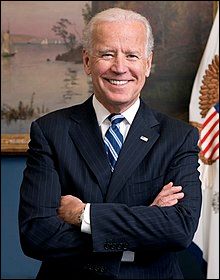
Former vice president and ex-Delaware senator Joe Biden

May 9, 2019 — Recent polling has seen former Vice President Joe Biden take full advantage of his announcement tour. While the pre-race appeared to be settling into a battle between Biden and Sen. Bernie Sanders (I-VT), once the ex-VP became an active candidate the picture drastically changed.

Several polls were taken during the last days of April and into early May. The HarrisX research organization and the Morning Consult firm conducted national surveys while Firehouse Strategies/Optimus commissioned Democratic primary polls in three of the first four nomination venues: Iowa, New Hampshire, and South Carolina. All of these polls produced big leads for Biden in contrast to what we were seeing just two weeks ago.

But, Change Research, in a slightly later New Hampshire poll with a larger sample (May 3-5; 864 likely New Hampshire Democratic primary voters), finds Sen. Sanders still on top, 30-26-12 percent over Biden and South Bend (IN) Mayor Pete Buttigieg.

The HarrisX national poll (May 3-4; 440 registered voters in the US) gives Biden a whopping 44-14 percent lead over Sen. Sanders with all others following in single-digits. The third-place finisher, Mayor Buttigieg has only eight percent support. Sens. Elizabeth Warren (D-MA) and Kamala Harris (D-CA) have seven percent and six percent, respectively, while former Rep. Beto O’Rourke (D-TX) has dropped to just three percent, tied with New Jersey Sen. Cory Booker.

Continue reading

We Now Have Candidate #22 In
The Race, And Sanders is Falling

By Jim Ellis

May 6, 2019 — A new Democratic presidential candidate entered the race late last week, one whom we didn’t expect to see this soon.

Colorado Sen. Michael Bennet

Despite undergoing prostate cancer surgery last month, Colorado Sen. Michael Bennet says he has already received a “clean bill of health” and is embarking upon his national political effort. Now at 22 candidates in the field of Democrats seeking their party’s nomination for the 2020 presidential election, eyes turn to Montana Gov. Steve Bullock who could be the last widely discussed potential candidate yet to make a decision about forming a campaign.

It’s difficult to see how Sen. Bennet breaks through to the top tier, however. He is not well known outside of Colorado and starts well behind most of the field, putting him in a difficult position from which to even qualify for the first two debate forums scheduled for late June and the end of July.

To earn a debate podium, all candidates must either tally at least one percent support in three Democratic National Committee designated polls, or attract financial support from 65,000 donors, from which they must have a minimum of 200 in at least 20 states. For the lesser known candidates, debate participation is a necessity in order to propel themselves into serious contention for the nomination.

Furthermore, Sen. Bennet doesn’t even have his home state electorate to himself. Former Colorado Gov. John Hickenlooper is also in the race, a man who Bennet once served as chief of staff. Just two days ago, Colorado moved its new primary – they used to apportion delegates through the caucus system – to March 3, the 2020 campaign’s Super Tuesday, which could serve to boost one of the two Centennial State candidates. Yet, with both men in the race, the state’s 67 first-ballot delegate contingent will prove less of a base for either one.

Continue reading