Tag Archives: Ohio

Early Votes: Key Senate States

By Jim Ellis — Friday, Oct. 28, 2022
Early Voting Statistics — The Target Smart data organization continues to update early voting statistics from around the country, and we see several situations for both parties where the early vote totals in what should be more favorable states are showing a greater surge for the opposing party.

Of the key Senate races, we see four states where Republicans are either the incumbent party or should have a more favorable early vote performance, but Democrats are gaining the early edge: Iowa, Ohio, Pennsylvania, and Wisconsin. In four others, the GOP is performing better in places that are typically better for Democrats or where they have the incumbent candidate: Arizona, Colorado, Nevada, and New Hampshire.

Before delving into these key states, let’s take an updated look at Target Smart’s national report. Through Wednesday, Oct. 26, a total of 12,751,622 individuals have cast early votes in the 42 reporting states that employ an early voting procedure or are accepting and reporting mailed absentee ballots. At this point, 52.2 percent of the returned ballots come from Democrats, 37.9 percent from Republicans, and 9.9 percent from non-affiliated or independent voters.

Such a partisan pattern is consistent with previous years. Democrats tend to use early voting in a more prevalent manner than Republicans, with the GOP then dominating election day turnout. In comparison to the partisan complexion seen in 2020, so far, Democrats are up one full percentage point in the national early voting turnout while Republicans are down .4 percent. The non-affiliated total is down .6 percent.

These numbers are changing day by day, and now just about half-way through the early voting calendar, we can expect to see many differences occurring within the next week. The grand early vote total so far represents 31.1 percent of the aggregate number of people who voted early in the 2020 election.

Of the four states where Democrats have at least a preliminary advantage in early voting, the most significant are Pennsylvania and Wisconsin.

Pennsylvania — In the Keystone State, more than 683,000 people already have cast ballots. In 2020, a total of 1.179 million voted early according to Target Smart, so the 2022 number is a large sample. In 2020, just over 17 percent of the total electorate voted early.

Here, the Democrats have a wide advantage. A total of 73.4 percent of the recorded early vote are registered Democrats versus just 23.0 percent who are Republicans. These numbers represent a 6.3 percent increase in Democratic performance based upon 2020, while Republicans are down 2.8 percent.

Wisconsin — A little more than 302,000 people already have voted. Here, 39.9 percent of the early voters are Democrats, an improvement of 3.8 percentage points based upon their 2020 performance rate. Republicans are down a whopping 11.8 percentage points.

Iowa — Fewer than 100,000 people already have voted. Of those, 58.7 percent are registered Democrats, an improvement of 7.8 percentage points over the party’s 2020 performance. Republicans are just about even with their 2020 mark, down just half a percentage point.

Ohio — Numbers here also favor the Democrats. More than 529,000 people already have voted, which represents about 30 percent of the total early votes in 2020. A total of 44.2 percent of this year’s early voters are Democrats versus 40.3 percent who are Republican. This translates into a 3.0 percentage improvement for Democrats over their 2020 number, and a decline of 3.9 points for Republicans.

Republicans, however, are outperforming Democrats in another set of key Senate states.

Arizona — More than 530,000 people already have cast their 2022 midterm election ballot. This so far represents just over 50 percent of the number who voted early two years ago. Here, 48.0 percent of the voters are Republican, and 47.0 percent Democratic. These numbers represent a 2.6 percent increase for Republicans and a 1.2 percent decrease for Democrats.

Colorado — Surprising numbers are being seen here. In a state that has been moving decidedly toward the Democrats, it is the Republicans who have so far greatly increased their early voting participation rate.

Some 266,000 people have voted early this year in the Centennial State. This number represents just under a quarter of the number who voted early in 2022. A total of 49.3 percent of this year’s early voters are Democrats, down 4.4 points from two years ago. For Republicans, 43.2 percent of the early voters are their registrants. This represents a GOP increase of 5.8 percentage points from their 2020 performance.

Nevada — Home of another key Senate race, the GOP has an early vote growth advantage in the Silver State. At this point, Target Smart records slightly more than 142,000 early votes, meaning just over 32 percent of the 2020 aggregate early number. The breakdown is 50.8 percent for Democrats and 42.7 percent for Republicans. This means Democrats are down about .3 percent from their 2020 participation rate, while Republicans are up just under two full percentage points. Nevada elections are always tight, so even small fluctuations like these can mean a great deal.

New Hampshire — Our final state in this report; though the early totals are small, about 21,000 voters, which represents only about 16.5 percent of the 2020 early aggregate, the trends are significant. A total of 54.0 percent of the new early voters are Democratic, down .7 percent from 2020, while the Republican total has grown 4.7 percentage points.

While none of these numbers are indicative of the final vote totals in any of the eight states, the early totals have given us previous clues as to which party has the momentum and enthusiasm in a particular place. We will continue to monitor these and other important states through the early voting process.
Lake Leads in Arizona Poll, Masters Closes In; Illinois Gov. Pritzker’s Lead Shrinks; Identical Poll Results Show Dixon Closing on Gov. Whitmer

By Jim Ellis — Friday, Oct. 21, 2022

Senate

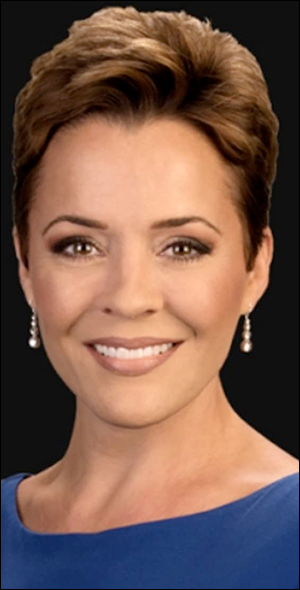
Former newscaster Kari Lake (R) now running as the open gubernatorial race leader over Arizona Secretary of State Katie Hobbs (D).

Arizona: More GOP Movement — The Trafalgar Group is reporting on their latest Arizona survey (Oct. 16-17; 1,078 likely Arizona general election voters; multiple sampling techniques) that finds venture capitalist Blake Masters (R) pulling to within one point of Democratic Sen. Mark Kelly (D), 47-46 percent. This race is closing and the Trafalgar poll is not an outlier. Since Oct. 10, four research studies have shown chronological deficits for Masters of only 3, 4, 2, and now 1 percentage point.

Additionally, Trafalgar finds former newscaster Kari Lake (R) now running as the open gubernatorial race leader over Secretary of State Katie Hobbs (D). In this poll, Lake carries a 49-46 percent edge, again consistent with recent trends that other pollsters also detect.

House

OH-1: Rep. Chabot Drops Behind — Despite state legislative Republicans drawing the congressional map, veteran GOP Rep. Steve Chabot (R-Cincinnati), due to political changes within the Queen City, saw his new district become more Democratic. The FiveThirtyEight organization rates the new OH-1 as D+3, which is the exact margin a new Impact Research internal poll revealed.

The IR survey, conducted for the Greg Landsman (D) campaign (Oct. 13-16; 504 likely OH-1 general election voters; live interview & text), posts the Cincinnati City councilman to a 49-46 percent lead over Rep. Chabot. While the turnout model may provide a different result than what this poll finds, we can count on a close result coming here in November.

Governor

Illinois: Likely an Outlier — An Osage Research survey (Oct. 13-15; 600 likely Illinois general election voters; live interview) reports a ballot test that posts Gov. J.B. Pritzker (D) to only a 44-42 percent lead over state Sen. Darren Bailey (R-Louisville) with a right and wrong track result trending 35:56 percent in the downward direction. The ballot test is likely an outlier because the previous six polls, taken during the months of September and October, give Gov. Pritzker an average lead of 13 percentage points. This, however, is yet another piece of survey research showing a resurgence around the country for GOP candidates.

Michigan: Exact Polling — It’s rare to see two pollsters in the field at the same time producing a duplicate result. That’s what we have seen in the Michigan governor’s race, however. Emerson College and the Cygnal research firm surveyed the Wolverine State electorate over the same Oct. 12-14 period, and both found Democratic Gov. Gretchen Whitmer leading Republican nominee Tudor Dixon by a 49-44 percent count. This represents one of the closest results we’ve seen for this race and is more credible since two independent pollsters each detected the identical result.

Surprising New Poll in NY-19;
Chabot Falls Behind in OH-1;
Okla. Gov. Stitt Faces Strong Opposition; Race Stabilizing in Texas Gubernatorial Battle

By Jim Ellis — Wednesday, Sept. 28, 2022

House

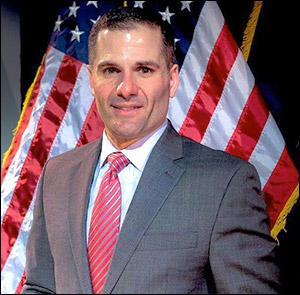
Dutchess County (NY) Executive Marc Molinaro (R)

NY-19: Surprising New Poll — In August, Democrat Pat Ryan (D) won the 19th District special election against Dutchess County Executive Marc Molinaro (R). Democratic strategists were claiming the result was an upset and a precursor of good things to come for their party in the 2022 general election. In actuality, President Biden carried the district by two percentage points in 2020 and the Democrats won the previous two congressional elections, so declaring a Democratic victory in such a seat as an upset is a bit of a stretch.

The new 19th District, which has some additional territory stretching along the Pennsylvania border, is actually more Democratic (D+4) than the special election seat that Molinaro lost. Since Rep. Ryan decided to seek re-election in the 18th District, Molinaro has a new opponent in attorney Josh Riley (D). Despite his loss, a new Triton Polling & Research survey (Sept. 20-22; 658 likely NY-19 general election voters; interactive voice response system) posts Molinaro to a surprisingly large 51-42 percent majority. The GOP nominee winning this seat would be a huge step toward Republicans claiming the House majority with a substantial margin.

OH-1: Rep. Chabot Falls Behind — The court-drawn Ohio congressional map was not kind to veteran Rep. Steve Chabot (R-Cincinnati). The new 1st District now leans toward the Democrats with a three-point margin. The latest Impact Research internal poll for the Greg Landsman campaign (Sept. 17-21; 506 likely OH-1 general election voters; live interview & text) gives the Democratic challenger a predicted 49-46 percent lead over the congressman.

Chabot was first elected in 1994, but lost the seat in 2008. He regained it in the 2010 election, and has been re-elected in the past five consecutive elections against formidable opponents. Winning this race is critical to Republican majority prospects.

Governor

Oklahoma: Gov. Stitt Facing Strong Opposition — At the beginning of September, the media sponsored Sooner Poll sounded the alarm bell for Gov. Kevin Stitt (R) by publishing their poll giving the incumbent only a one-point lead over Democratic Superintendent of Public Instruction Joy Hofmeister (D). Since the polling sample was small (402 respondents statewide), only minimal attention was paid to the results. However, an Amber Integrated survey was released Tuesday (Sept. 19-21; 500 likely Oklahoma general election voters; live interview & online) that found the governor leading Hofmeister with a similar 47-44 percent margin.

With two polls showing the same basic result, we can expect the Stitt campaign to unleash a major advertising blitz to strengthen his areas of weakness within the traditional Republican voter base.

Texas: Race Stabilizing — Another Texas gubernatorial survey was released in the Lone Star State, and it again shows Gov. Greg Abbott (R) maintaining a significant but not particularly large lead over former US representative and short-term 2020 presidential candidate Beto O’Rourke (D). The Texas Hispanic Policy Foundation conducted a survey of the state electorate (Sept. 6-15; 1,172 likely Texas general election voters; online) and found Gov. Abbott leading well beyond the polling margin of error in this study, 51-44 percent.

Since Sept. 6, four Texas gubernatorial surveys have been commissioned from four different polling entities and they post Gov. Abbott to an advantage between five and nine percentage points. Expect this trend to continue until the final two weeks of the campaign. At that time, we will likely see the governor pull away from O’Rourke and record his traditional 10-plus point victory margin as he has in his first two terms.

Boozman Looks to be in Strong Shape in Arkansas; Two Pollsters, Same Tight Result in Arizona; Minnesota Gov. Walz Has Comfortable Lead

By Jim Ellis — Sept. 21, 2022

Senate

Arkansas Sen. John Boozman (R)

Arkansas: Rare Data — It has been assumed that Sen. John Boozman (R) secured a third term in office when he won his contested Republican primary back in March. A Hendrix College/Talk Business Net survey, from the organizations that regularly sponsor Arkansas political polls, finds Boozman in predictably strong shape for the November election. The survey (Sept. 12; 835 likely Arkansas general election voters) gives the senator a 44-31 percent advantage over civil rights activist and realtor Natalie James (D).

Arizona: Two Pollsters, Same Tight Result — The Trafalgar Group’s new Arizona survey (Sept. 14-17; 1,080 likely Arizona general election voters; multiple sampling techniques) sees Sen. Mark Kelly’s (D) previously large lead dwindling to 47-45 percent over Republican venture capitalist Blake Masters.

Earlier in September, Emerson College (Sept. 6-7; 627 likely Arizona general election voters; multiple sampling techniques) arrived at exactly the same conclusion: Sen. Kelly leading 47-45 percent. Remembering that the 2020 Senate race closed quickly against Kelly, limiting him to a 51-49 percent victory over appointed Sen. Martha McSally (R) after leading by an average margin of 6.6 percent through 21 October polls according to the Real Clear Politics polling archives, the 2022 race looks to be headed toward a very interesting conclusion.

House

IA-3: An Unsurprising Dead Heat — In one of America’s tightest congressional districts, Rep. Cindy Axne’s (D-Des Moines) campaign just made an interesting move. The congresswoman’s political leadership yesterday released Rep. Axne’s new internal Impact Research survey (Sept. 7-11; 500 likely IA-3 voters; live interview & text) that reports she and her Republican challenger, state Sen. Zach Nunn (R-Bondurant), are tied at 47 percent apiece.

The point of releasing the poll, however, is to show emphasis on the abortion issue among the respondents, which the campaign strategists believe will swing voters to the Democratic incumbent. Even when knowing Sen. Nunn’s abortion position, however, the best Rep. Axne can do is tie, suggesting that despite deep disagreements over the issue in the central Iowa region it does not appear to be bringing any more voters into Axne’s camp. Her 47 percent support figure quoted in this poll is consistent with her two 49 percent victory percentages in 2020 and 2018.

Governor

Minnesota: Gov. Walz With Comfortable Lead — In a race where the polling has been inconsistent during the past few months, Mason-Dixon Polling & Strategy has released a new ballot test result from their research study conducted for the Minneapolis Star Review and Minnesota Public Radio (Sept. 12-14; 800 likely Minnesota general election voters; live interview). The M-D conclusion finds Gov. Tim Walz (D) leading former state Sen. Scott Jensen (R), 48-41 percent.

The governor’s job approval score is 52:42 percent favorable to unfavorable. President Biden remains upside-down in Minnesota on his favorability index, but the number is improving. In this M-D poll, 46 percent approve of the job the president is doing and 49 percent disapprove.

Ohio: Conflicting Surveys — We are seeing places around the country where pollsters are producing very diverse ballot test results even when testing an electorate within the same time realm. The Ohio governor’s race is another such example. A Civiqs organization poll, surveying for the Daily Kos Elections site (Sept. 10-13; 780 likely Ohio general election voters; online) projects a close race developing between Gov. Mike DeWine (R) and Dayton Mayor Nan Whaley (D). The Civiqs ballot test projects Gov. DeWine to hold only a 44-41 percent edge.

Emerson College, however, sees a much different margin when polling within exactly the same time frame. Their poll (Sept. 10-13; 1,000 likely Ohio general election voters; multiple sampling techniques) yields the governor a wide 50-33 percent spread over Mayor Whaley. The latter poll result is more consistent with other publicly released surveys for this campaign.

Conflicting Trends in Ohio; Johnson Opening Advantage in Wisconsin; Dead Heat in Pennsylvania

By Jim Ellis — Tuesday, Sept. 20, 2022

Senate

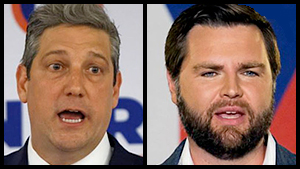
Ohio 2022 Senate candidates Rep. Tim Ryan (D) and author J.D. Vance (R)

Ohio: Conflicting Trends — In the mid-August through early September period, three pollsters found US Rep. Tim Ryan (D-Warren/Youngstown) snatching the polling lead away from GOP author J.D. Vance. The research entities Impact Research, Suffolk University, and Fallon Research, in studies conducted during the Aug. 17 through Sept. 11 time realm, found Rep. Ryan trending ahead with margins between one and six points.

Two news polls, however, see the race flipping back to Vance. Emerson College (Sept. 10-13; 1,000 likely Ohio voters; multiple sampling techniques) and the Civiqs survey research entity, polling for the Daily Kos Election site (Sept. 10-13; 780 likely Ohio general election voters), and in the field during the same period, see Vance now holding close leads of 44-40 and 48-45 percent, respectively.

Wisconsin: Trend Favors Sen. Johnson — Since the Aug. 9 Wisconsin primary, we’ve seen several polls conducted of the Wisconsin Senate campaign. Immediately after the nomination vote, Lt. Gov. Mandela Barnes (D) opened the general election cycle with a polling lead. Marquette University Law School, a regular Wisconsin pollster, found Barnes holding a 52-45 percent advantage over Sen. Ron Johnson (R) in their Aug. 10-15 poll of 713 likely Wisconsin general election voters.

Late last week, Marquette released a new survey (Sept. 6-11; 801 registered Wisconsin voters; live interview) and the law school research organization now posts Sen. Johnson to a slight 48-47 percent advantage. Civiqs, polling for the Daily Kos Election site (Sept. 10-13; 780 likely Wisconsin general election voters), confirms the Marquette result. They find Sen. Johnson up 49-48 percent. Though the lead is small, the Johnson trend line is positive.

House

OR-5: Getting Closer — The Democratic survey research firm Global Strategy Group, polling for the 314 Action super PAC (Sept. 1-8; 400 likely OR-5 general election voters) finds Democrat Jamie McLeod-Skinner, who defeated Rep. Kurt Schrader (D-Canby) in the May primary election, leading businesswoman and former local mayor Lori Chavez-DeRemer (R), by a tight 41-38 percent margin.

GSG finds the district statistics even closer, however. They see a Democratic partisan edge of just one percentage point, even though the party has a five-point voter registration advantage. In terms of the generic congressional vote, the Republicans have a one-point lead. Under various turnout models according to the GSG research, the race changes. If the turnout model is closer to what was found in the New Jersey and Virginia governors’ races (2021), a Biden+5 model, the congressional race becomes a dead heat at 40-40 percent. Under both a 2014 and 2020 turnout model (Biden+10), McLeod-Skinner would establish a 42-38 percent spread. The trouble for McLeod-Skinner, in a district that slightly leans Democratic, is that she doesn’t reach beyond the low 40s under any turnout model. This suggests that Chavez-DeRemer has serious upset potential.

PA-8: Dead Heat Developing — In what is appearing to be a classic example of a Democratic incumbent claiming independence but seeing Republican forces producing stats showing total compliance with the Biden agenda, the people of Pennsylvania’s northeast 8th Congressional District are dividing evenly.

The Republican polling entity, Cygnal, surveying for the Jim Bognet campaign (Sept. 6-8; 440 likely PA-8 general election voters), finds the two candidates, Rep. Matt Cartwright (D-Moosic/Scranton) and Bognet, tied at 48-48 percent. At an R+8 partisan rating according to the FiveThirtyEight polling organization, PA-8 is the second-most Republican district in the country that elects a Democrat to the House.

Ohio Senate Race Flip-Flopping; NY-19 Close; Zeldin-Hochul Race Tightens

By Jim Ellis — Friday, Sept. 16, 2022

Senate

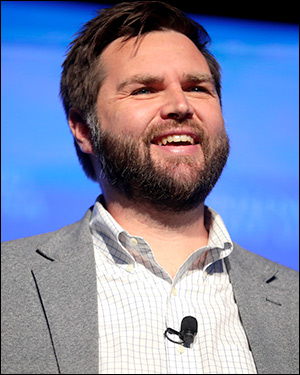
Author J.D. Vance, Ohio Senate Candidate

Ohio: Senate Race Flip-Flopping — After most polling had given author J.D. Vance (R) a small lead in the Senate race, Suffolk University’s new survey (Sept. 5-7; 500 likely Ohio general election voters; live interview) finds US Rep. Tim Ryan (D-Warren/Youngstown) claiming a slim one-point, 47-46 percent advantage. Additionally, the Democratic firm, Impact Research, also went into the field (Aug. 17-23; 800 likely Ohio general election voters) finds Rep. Ryan holding a slightly larger 50-47 percent margin. This race continues to seesaw between the two candidates.

Alaska: Sen. Murkowski Falls Behind — A new poll from the Fabrizio Ward/Impact Research organizations for AARP (Sept. 6-11; 1,050 likely Alaska voters; 500 statewide sample; 550 voters 50 years of age and older; live interview & text) sees the Alaska Senate race heading in a much different direction than even the jungle primary results revealed. The AARP poll finds former Alaska Administration Director Kelly Tshibaka (R) leading Sen. Lisa Murkowski (R), 43-35 percent, which is a significant change from the Aug. 16 primary vote when the senator topped her main opponent, 45-39 percent.

The AARP pollsters delved into the Ranked Choice rounds and found that in the final vote, Murkowski and Tshibaka fall into a virtual dead heat tie. The pollsters indicated the internal raw number final round count among the survey participants was 227 for Sen. Murkowski and 224 for Tshibaka. The pollsters then stated that it is “an understatement to call that within the margin of error.” Because the race is coming down to a pair of Republicans battling, the partisan context is not an issue. Still, the implications associated with this major contest are of national political interest.

House

NY-19: Another Race Brandishing a Close Poll — Though Rep. Pat Ryan (D-Poughkeepsie) won the NY-19 special election in late August, he is seeking re-election in the 18th District. Attorney Josh Riley is the succeeding Democratic nominee who is opposing Dutchess County Executive Marc Molinaro (R). A new Garin Hart Yang Research Group poll (Aug. 29-Sept. 1; 403 NY-19 likely general election voters; live interview) again finds the race within the polling margin of error, like most competitive races around the country. The GHY data finds Riley leading Molinaro, 47-44 percent.

The new 19th CD has only 43 percent carryover from the current 19th where the August special election was held. Therefore, this race with a new candidate lineup is a much different campaign. The special election ended in a 51-49 percent Democratic victory. The new 19th is slightly more Democratic but still very much in play during the general election. This is yet another key House race carrying national implications toward determining the next majority.

Governor

New York: Becoming Closer — A new survey, this one from the Republican survey research firm co/efficient, confirms an earlier poll that Gov. Kathy Hochul’s (D) lead over US Rep. Lee Zeldin (R-Shirley/East Long Island) is down to single digits. The co/efficient survey (Sept. 5-7; 1,194 likely New York general election voters; live interview & text) posts the governor to only a 49-43 percent lead. Last week, the Trafalgar Group released their poll (Aug. 31-Sept. 1; 1,091 likely New York general election voters; multiple sampling techniques) that gave the governor a similar 48-43 percent edge. In between, however, Emerson College (Sept. 4-6; 1,000 likely New York general election voters; online, text & interactive voice response system) produced a 50-35 percent ballot test in Gov. Hochul’s favor.

Vance Surges in Ohio; Hill Withdraws in SC-4; Ohio Gov. DeWine With a Double Digit Lead; Term Limits

By Jim Ellis — Thursday, Aug. 25, 2022

Senate

Author J.D. Vance, Ohio Senate Candidate

Ohio: Vance Tilts Up — After a series of polls from the end of June through early August found US Rep. Tim Ryan (D-Warren/Youngstown) leading the Ohio US Senate general election, a second survey this week sees Republican J.D. Vance surging ahead. For the early part of the campaign, Ryan was spending heavily on advertising that Vance and his Republican allies left unchecked, thus largely explaining why the Democrat was able to build a lead. Now that Vance has countered, he has already moved past the veteran congressman.

The new Trafalgar Group survey (Aug. 16-19; 1,087 likely Ohio general election voters; multi-sampling techniques) finds Vance topping Ryan, 50-45 percent. This largely confirms the Emerson College poll released earlier in the week that saw Vance holding a similar 45-42 percent advantage.

SC-4: Rep. Timmons Catches Break — South Carolina Rep. William Timmons (R-Greenville) caught a major re-election break earlier this week when his Democratic opponent, Ken Hill, withdrew from the race. Hill said his business responsibilities, which now require him to spend substantial time in New York, make it impossible for him to continue his congressional campaign.

Rep. Timmons won a closer-than-expected Republican primary in June, avoiding a runoff with just 52.7 percent of the vote, largely due to extramarital affair allegations and related unproven claims that he was improperly using his congressional power. Now, he will run without having a Democratic opponent. Businesswoman Lee Turner (D) says she will run as a write-in candidate, however. Under South Carolina election procedure, it is too late for the Democratic Party to officially replace Hill on the ballot.

Governor

Ohio: Gov. DeWine Leading In Double-Digits — A week after a Lake Research Partners (D) survey found Gov. Mike DeWine (R) edging Dayton Mayor Nan Whaley (D) by a slim 44-43 percent margin, the aforementioned Trafalgar Group Ohio survey (see Ohio Senate above) and an Emerson College poll (Aug. 15-16; 925 likely Ohio general election voters; multi-sampling techniques) see the governor pulling away to a pair of substantial leads. Trafalgar projects a 16-point advantage for Gov. DeWine at 54-38 percent. Emerson College posts a similar 49-33 percent spread.

House

US Term Limits’ Polling Series: Six New August Polls — The US Term Limits organization has been conducting a series of US House polls around the nation. RMG Research conducted the House campaign surveys for the group and released the results of six new polls conducted between July 31 and Aug. 15. All included 400 likely general election voters, but how the polling samples were surveyed was not disclosed.

Of the six August polls, two incumbents were ahead, two were behind, and one was tied. The other study surveyed a North Carolina open-seat electorate. In Arizona, Rep. Greg Stanton (D-Phoenix) leads businessman Kelly Cooper (R), 46-39 percent. Washington Rep. Kim Schrier (D-Sammamish) held a 47-43 percent edge over Matt Larkin (R), the 2020 finalist in the attorney general’s race.

The two trailing incumbents are Reps. Susan Wild (D-PA) and David Trone (D-MD). The tied incumbent is Nevada Rep. Steven Horsford (D-Las Vegas). In the Allentown-Bethlehem district, GOP challenger Lisa Scheller held a 47-43 percent advantage over Wild. Maryland state Delegate Neil Parrott (R-Frederick) topped Rep. Trone, 45-43 percent, while Rep. Horsford and insurance agency owner Sam Peters (R) were tied at 43 percent preference. In the lone released open seat poll, Republican Bo Hines held a 44-39 percent lead over North Carolina state Sen. Wiley Nickel (D-Raleigh).