
Tag Archives: New York

Apportionment Surprises


By Jim Ellis

April 28, 2021 — In virtually every 10-year apportionment announcement at least one surprise occurs, but the census unveiling Monday contained multiple blockbusters.

For example, two states had their final number of congressional districts determined by less than 90 people. Reportedly, if New York had just had 89 more people, that would have saved an Empire State congressional seat. Minnesota becomes the beneficiary allowing the state to barely hold its eighth district.

Instead of 10 seats changing states as had been forecast, only seven, affecting 13 domains, switched. Perhaps the main reason for the lower number is the decade population growth rate. According to yesterday’s final report, the nation grew at only a 7.4 percent rate, the lowest since the 1930 census’s 7.3 percent. By contrast, the population increase from the 2010 total was 9.7 percent.

Pre-census projections, for better than a year, had been predicting that Texas would gain three seats, Florida two, and Arizona one. The analysts also estimated seat losses for Alabama, Minnesota, and Rhode Island. None of these projections proved accurate.

On the other hand, prognostications for the balance of the map were accurate. Texas, and Florida did gain, but two and one, respectively, instead of three and two seats. Colorado, Montana, North Carolina, and Oregon each added one district apiece as expected. The one-seat losers were California, for the first time in history, Illinois, Michigan, New York, Ohio, Pennsylvania, and West Virginia.

It’s a bit too soon to determine which party will benefit the most from these numbers at the congressional level, though Republicans should be up slightly in the Electoral College for the next presidential campaign. Once we see how the population is distributed within the states will better tell us whether Democrats or Republicans will take the most advantage of the apportionment. This will depend upon how the population spreads through the cities, suburbs, and rural regions.

Continue reading

Rep. Zeldin Declares for Governor

By Jim Ellis

Rep. Lee Zeldin (R-Shirley)

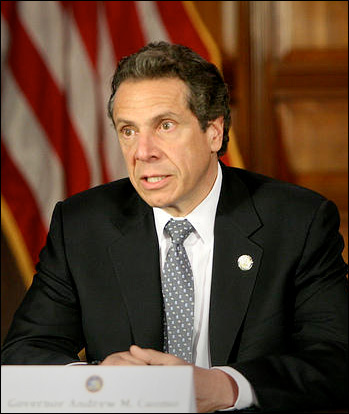
April 12, 2021 — Long Island US Rep. Lee Zeldin (R-Shirley) announced late last week that he will run for governor next year in hopes of facing beleaguered New York Gov. Andrew Cuomo (D). The move appears to be a risky one in that Zeldin would be jettisoning a relatively safe Republican congressional seat that is almost redistricting proof for a statewide race in very unfriendly political territory for his party.

Should Gov. Cuomo survive the impeachment offensive against him and seek and win re-nomination, then Zeldin would be in position to wage a competitive challenge campaign. Against any other Democrat, however, the pendulum undeniably swings back to the left.

Rep. Zeldin’s 1st Congressional District is essentially secure under almost any potential redistricting map because water borders the far eastern Long Island seat on three sides. Therefore, the only way the district can move is west meaning the core constituency remains intact. Of course, a lot depends upon whether New York loses one or two seats in reapportionment.

The only way to fundamentally change the 1st is to cut Districts 1 and 2 (Rep. Andrew Garbarino; R-Sayville/Islip) horizontally but doing so could conceivably make Democratic Reps. Tom Suozzi (D-Glen Cove) and Kathleen Rice’s (D-Garden City) districts more Republican. Irrespective of what occurs with redistricting, Rep. Zeldin is likely risking a relatively secure political future in what possibly becomes a Republican controlled House of Representatives.

The Zeldin announcement, however, doesn’t mean he, or any other potential candidate, couldn’t change their minds. Candidate filing in New York for the 2022 election cycle will be set for April of next year prior to the June primary, and the region’s politics will change a great deal during the time interval between now and then.

At this point, the Cuomo situation seems to have stabilized. No longer are we seeing daily announcements of different women coming forward to accuse the governor of inappropriate sexual oriented behavior. Furthermore, the investigation into the COVID-related nursing home deaths, a more serious situation than the sexual impropriety allegations, will take a long time to unfold.

With the governor steadfastly refusing to resign, the state Assembly has introduced articles of impeachment against him. In the past two weeks, key legislative leaders have said that such a procedure is likely to consume months rather than weeks, so the odds of Cuomo being able to hold on throughout the remainder of the term are increasing.

Continue reading

Cuomo Poll: Retirement Seen As
Preferential Over Resignation

By Jim Ellis

New York Gov. Andrew Cuomo (D)

March 8, 2021 — A new Quinnipiac University poll of the New York electorate (March 2-3; 935 self-identified NY registered voters, live interview) was released late last week after his press conference with mixed results for embattled Gov. Andrew Cuomo (D).

While his numbers are consistently bad with Republicans and Independents, the governor remains strong with his dominant Democratic base. Thus, while a majority of the Q-Poll respondents don’t favor the governor resigning, a large number believes he should not seek re-election in 2022.

To begin, the governor’s favorability ratio is 45:46 percent favorable to unfavorable, which is not particularly bad considering the negative effects of his dual-scandal situation, one involving COVID-related nursing home deaths and the other sexual harassment claims from former staff members.

The positive rating, however, is almost exclusively from Democrats. By a margin of 65:27 percent, self-identified Democrats still view the governor’s job performance positively. Republicans are wholly opposed, 13:82 percent positive to negative, and Cuomo is also decidedly upside-down with Independents, 33:57 percent.

Surprisingly, the polling sample still gives him positive reviews for his handling of the Coronavirus situation (56:41 percent), but, again, most of the favorable ratings come from Democrats, 80:18 percent, while Republicans and Independents both hold strongly negative opinions about how the governor has managed COVID-19: 17:80 percent among tested Republicans; 42:54 percent among Independents.

Once a small number of Democratic officials opened the spigot of dissent toward the governor, many more joined to form a high-flowing chorus. The calls for Cuomo’s resignation aren’t having much effect, however, as a majority, 55:40 percent, do not favor the governor giving up his office before his term ends. As mentioned above, however, the same polling sample does believe he should not seek a fourth term next year, and on this question, even the Democratic response is close.

Overall, 59 percent of the respondents say he should retire at the end of this term, while 36 percent believe he should run again. The Republican pro-retirement ratio registers 90:9 percent. Virtually two-thirds of the Independents (66:28%) say he should retire at the end of next year, while Democrats still barely back him remaining in office after the next election, 50:44 percent.

Continue reading

More Redistricting Delays – Part II

By Jim Ellis

Feb. 20, 2021 — Yesterday, we covered the Census Bureau announcement that delivering new population data to the individual states will again be postponed, and what effect receiving numbers in October, if then, will have on the redistricting process.


Today, after previously analyzing the states that appear poised to gain seats, we look at those that will probably lose districts. At this point, estimates project that 10 seats will be transferred. This, however, is only a projection as the current published numbers do not include the final changes in the previous decade’s last year.

At this point, all of the succeeding states appear positioned to lose one seat. The individual state logistical data comes from a study that the Brennan Center for Justice just released.


Alabama

It appears that Alabama is on the cusp of losing a seat depending upon who is counted and where they reside. This specifically refers to college students and non-citizens. President Biden’s executive order countermanding President Trump’s directive not to count non-citizens may have an effect upon Alabama’s status. Officials there may sue over the apportionment if, in the final count, the state loses one of their seven districts.

It is likely that Alabama redistricting will be pushed into 2022 irrespective of the apportionment decision because the legislature will be out of session when the data is finally delivered. The state’s May 24 primary could conceivably be postponed.


California

For the first time in history, California is likely to lose a seat in apportionment. The 2010 apportionment cycle was the first in which the state did not gain representation. In the 1980 census, for example, California gained seven seats.

The Golden State has a redistricting commission, but the data postponement may force the process into a secondary mode since the redistricting completion deadline is Aug. 15. Unless the deadlines are changed, the state Supreme Court will appoint a special master to draw the map. California’s March 8, 2022 primary may have to be postponed, and almost assuredly their Dec. 10 candidate filing deadline will have to move.


Illinois

The state legislature has the redistricting pen, but Illinois also has a backup commission empowered in case the regular process is not completed. A March 15, 2022 primary and certainly a Nov. 29 candidate filing deadline, however, could and will face postponement.


Michigan

Voters previously adopted the institution of a 13-member commission to draw maps. The commissioners, now appointed, consist of four Democrats, four Republicans, and five unaffiliated voters.

With an April 1, 2022 candidate filing deadline and an Aug. 2 state primary, the Michigan system should have time to complete the redistricting process without changing their election cycle calendar.
Continue reading

New York Voting Patterns

New York’s Congressional Districts

By Jim Ellis

Feb. 11, 2021 — The Daily Kos Elections researchers are converting the 2020 presidential returns into congressional district totals, as they have successfully done in past election years. This allows us to compare the 2020 voting patterns with those from four years ago. Doing so reveals some interesting conclusions.

As you can see from the chart below of all 27 New York congressional seats, the patterns are striking, and while former President Trump met and exceeded his projected vote goals within his worst performing districts in New York City, he underperformed by similar ratios in the regions that should have been his strongest.

The NY congressional delegation is split 19-8 in the Democrats’ favor. When comparing the districts that President Joe Biden and former President Trump each won, we see that they match almost identically to the partisan choices those electorates made for the House of Representatives.

There is one exception, however, in addition to a pair of districts that Trump carried in 2016 but switched to President Biden in 2020. The Syracuse-anchored congressional seat that Republican John Katko (R) represents is the only New York district that split its presidential and congressional vote.

While Biden was carrying the CD with a nine-point margin, a net 3.6 percent Democratic improvement from Hillary Clinton’s 2016 result in this 24th District, Rep. Katko was re-elected to a fourth term with a 52-42 percent margin over college professor Dana Balter (D), his 2018 opponent who returned for a re-match. The result was a net four-point improvement for the GOP incumbent from 2018 his victory.

The two seats Trump won in 2016 that switched to President Biden in 2020 are the 18th and 19th Districts, those of Reps. Sean Patrick Maloney (D-Cold Spring/Peekskill) and Antonio Delgado (D-Rhinebeck) — CDs that bridge the city districts with those in the upstate region.

As the chart below shows, the striking point is that the net gains or losses in almost every 2020 district when compared to 2016 is almost opposite of what an analyst would have predicted. Former President Trump underperformed on Long Island as well as upstate, areas where he should have shown greater strength; and he over-performed in all of the New York City districts.

Trump lost the NYC seats by substantial margins, a heavily minority region, but his improvement ranged from a net 0.5 percent in Rep. Carolyn Maloney’s (D-Manhattan) Silk Stocking district to 15.5 percent in the Bronx CD of freshman Rep. Ritchie Torres (D). Four years ago, the latter NY-15 CD was the former president’s worst-performing district in the entire country.

These particular results show that despite the media image of Trump being America’s most racist president, the numbers generally depict clear improvement among people of color in New York State.

The explanation for his lesser performance on Long Island and upstate traces back to a familiar Trump 2020 problem: performing worse among women, those aged 65 years and older, in addition to right-of-center unaffiliated and minor party voters. It was his failure to equal his 2016 performance with these voting segments that cost him his re-election victory.

As we look at other numbers from across the country, we will see the patterns uncovered in New York also becoming prevalent in most other regions.


New York

INCUMBENT BIDEN ’20 CLINTON ’16 TRUMP ’20 TRUMP ’16 NET
1 – ZELDIN 47.3 42.2 51.5 54.5 8.1
2 – GARBARINO 47.4 43.9 53.0 51.6 2.1
3 – SUOZZI 54.7 51.6 44.3 45.5 4.6
4 – RICE 55.6 53.4 43.4 43.8 2.6
5 – MEEKS 83.3 85.7 16.2 12.7 5.9
6 – MENG 61.8 65.1 37.4 32.1 8.6
7 – VAZQUEZ 81.8 84.6 16.5 13.5 4.4
8 – JEFFRIES 82.9 86.9 17.3 10.4 12.0
9 – CLARKE 81.4 83.5 17.8 14.4 5.5
10 – NADLER 76.1 78.3 22.9 18.8 6.3
11 – MALLIOTAKIS 44.3 43.8 54.8 53.6 0.7
12 – MALONEY, C. 84.1 83.3 14.8 13.5 0.5
13 – ESPAILLAT 88.1 92.3 11.2 5.4 10.0
14 – OCCASIO-CORTEZ 73.3 77.7 25.9 19.8 10.5
15 – TORRES 86.5 93.8 13.1 4.9 15.5
16 – BOWMAN 75.3 75.1 23.8 22.5 1.1
17 – JONES 59.6 58.6 39.4 38.4 0.0
18 – JONES 51.8 47.1 46.8 49.0 6.9
19 – DELGADO 49.8 44.0 48.3 50.8 8.3
20 – TONKO 59.3 54.0 38.7 40.5 7.1
21 – STEFANIK 43.8 40.0 54.2 53.9 3.5
22 – TENNEY 43.3 39.3 54.7 54.8 3.9
23 – REED 43.3 39.7 54.6 54.5 3.5
24 – KATKO 53.4 48.9 44.4 45.3 3.6
25 – MORRELLE 60.1 55.5 37.8 39.1 5.9
26 – HIGGINS 62.6 57.6 35.6 38.0 7.4
27 – JACOBS 41.1 35.2 56.8 59.7 8.8

Judge Orders Tenney Certified

By Jim Ellis

Former New York Rep. Claudia Tenney (R)

Feb. 9, 2021 — After more than three months of legal wrangling about whether former Rep. Claudia Tenney (R) defeated 116th Congress Rep. Anthony Brindisi (D-Utica) in New York’s 22nd Congressional District, a judicial ruling on Friday afternoon at last paves the way for a final certification from the New York State Board of Elections.

The NY-22 campaign is obviously the last to receive an initial final count. Another result, from the IA-2 contest that came down to a six-vote margin, is before in the House of Representatives. In this instance, the state of Iowa long ago certified that victory margin and Rep. Mariannette Miller-Meeks (R-Ottumwa) is provisionally seated pending a challenge referred to the House Administration Committee.

Returning to the New York situation, State Supreme Court of Oswego County Justice Scott DelConte early last week ordered election representatives from the eight counties, all or parts of which comprise the 22nd District, to appear in his court and certify the final totals, but he then suspended the order. This, after Brindisi appealed indicating that such a decision would cause him “irreparable harm.” Justice DelConte responded, saying he would take the motion under advisement until Feb. 5.

With his new ruling, Justice DelConte re-affirmed the previous order for the counties to send their certified totals to the state Board of Elections. The aggregate electoral sum will reflect a Tenney victory margin of 109 votes. The initial public count on Election Night ended with her leading by over 28,000 votes, which would drop to her trailing by just 14 tallies when the outstanding mail ballots from several counties were added. The post-election tabulation that included late-arriving votes from overseas and other ancillary ballots was then adjusted into a Tenney 12-vote edge and later 29, before yielding to an unofficial preliminary final count of a 122-vote spread.

Now, after the Justice has ruled on all contested votes – more than 600 after the two parties agreed on resolutions to an additional 500-plus ballots – a Tenney victory margin of 109 votes becomes the official final tally that will be transmitted to the state.

Continue reading

Another Delay in NY-22 Certification;
Rep. Ryan to Announce Senate Run

By Jim Ellis

Feb. 4, 2021 — After ordering the eight NY-22 counties to certify their final congressional election results by yesterday afternoon and now surpassing 90 days after the votes were cast, State Supreme Court of Oswego County Justice Scott DelConte has reversed course. Yesterday, he instructed the county election officials to suspend their certification process.

Justice DelConte said he now wants to consider at least until Friday the effect of 116th Congress incumbent Anthony Brindisi (D-Utica) possibly winning his motions for legal relief at the appellate level after race leader Claudia Tenney (R) is certified the winner and takes office. This new direction suggests it could be several more weeks before we see a member sworn into the House from this particular Upstate New York district.


OHIO SENATE

Ohio Rep. Tim Ryan (D-Warren/Youngstown)[/caption]Yesterday, Ohio Rep. Tim Ryan (D-Warren/Youngstown) indicated that he will officially announce a campaign for the state’s open Senate seat in March. Ryan becomes the first prominent Democrat to begin organizing a campaign.

Ohio Rep. Tim Ryan (D-Warren/Youngstown)

As we will remember, Rep. Ryan joined the Democratic presidential field attempting to approach the electorate from a union jobs, more centrist perspective. His campaign failed to gain legs and he dropped out well before the first votes were cast in the Iowa Caucuses. During his 10 terms in the House, Ryan has publicly considered running for lieutenant governor, governor, and the Senate, only to back away each time in order to seek re-election to the House.

This time, however, his statement is definitive about running, and such a move makes political sense. Ohio is slated to lose another congressional seat in reapportionment and there is reason to believe that Rep. Ryan’s 13th District seat could be the one collapsed.

OH-13 begins at the Pennsylvania border and immediately encompasses the cities of Youngstown, Niles and Warren. Then the district moves further west to capture more than 228,000 individuals in the Akron metro area. Most of Akron city is shared with Rep. Marcia Fudge’s (D-Cleveland) 11th District, which is the least populated CD in the state. The 11th will likely need an influx of about 100,000 people to become compliant with the projected per district population number for the current decade under the new redistricting plan when adopted.

Continue reading