Tag Archives: Hillary Clinton

GA Poll: Senate/Trump

By Jim Ellis

Georgia Sen. Kelly Loeffler (R) in serious political trouble

April 7, 2020 — The Battleground Connect consulting firm that predominately polls for Republican clients in the South again surveyed the impending Georgia special Senate election as they did on March 24, but this time added questions about the presidential race.

The survey data (March 31-April 1; 1,03 likely Georgia general election voters, live interviews) confirm the previous results that found appointed Sen. Kelly Loeffler (R) languishing in deep political trouble presumably because of her highly publicized stock transactions reportedly executed after receiving Senate COVID-19 briefings. Much of this poll’s analytical coverage, however, highlights that President Trump leads former vice president Joe Biden only by two percentage points in one of his must-win states.

The Senate numbers show some changes from Battleground’s last poll conducted on March 24. Rep. Doug Collins (R-Gainesville) continues to hold first place and increases his support by two points to 36 percent in the jungle primary. Rev. Raphael Warnock (D), who the Democratic Senatorial Campaign Committee has already endorsed, moves into second place (16 percent) but remains a full 20 points behind the leader.

Sen. Loeffler pulls just 13 percent preference while Atlanta businessman Matt Lieberman, son of former Connecticut senator and 2000 vice presidential nominee Joe Lieberman who was in second position in the last poll, drops to 11 percent. Former US Attorney Ed Tarver (D) then falls to just three percent preference.

In the presidential race, President Trump leads Biden 48-46 percent. Trump’s favorability index is the same as the ballot test, 48:46 percent favorable to unfavorable. Biden’s favorability was not tested, but Rep. Collins posted a 35:29 percent positive ratio while Gov. Brian Kemp (R) recorded a relatively strong 50:32 percent. Sen. Loeffler, on the other hand, notched a very poor 20:55 percent, thus providing further statistical evidence of the appointed incumbent’s recent severe downward trend.

The president’s numbers are not particularly surprising even though some analysts are pointing out that his small margin is a warning sign toward potentially losing the state in the fall. Looking back to 2016, however, suggests that a two-point lead seven months before the general election in a southern state where Republicans typically under-poll tracks with where Trump found himself at a commensurate time four years ago.

Continue reading

Will Michigan & Wisconsin Voters Determine 2020 Presidential Election?

By Jim Ellis

April 6, 2020 — Polls were just released in both Michigan and Wisconsin, obviously two critically important states that will weigh heavily in determining the final outcome of the next presidential election. While it’s too early to take any general election poll as a true projection of what may happen in November, particularly in light of the current unique situation, the survey did reveal some interesting points.

Progress Michigan’s Lake Effect newsletter: “The governors’ approval ratings pertaining to the [coronavirus] crisis are better than those of the president.”

Public Policy Polling tested the Michigan electorate for the Progress Michigan progressive left organization (March 31-April 1; 1,01 registered Michigan voters) and Marquette Law School just completed their quarterly survey of Wisconsin voters (March 24-29; 81 registered Wisconsin voters). Both made public their results.

We won’t pay too much attention to the ballot tests because it is so far away from the actual vote and the political situation is obviously going to change during the coming months, but the two pollsters found President Trump and former vice president Joe Biden within the margin of error in each state. In both cases, it was Biden who enjoyed a three-point lead.

Within this prism, it is important to recall the 2016 race in which polling badly underestimated Trump’s strength against Hillary Clinton in these two places. According to the 270 To Win organization, which tracked polling throughout that election year, the final averages going into the final weekend found Trump trailing by six points in Michigan and seven in Wisconsin. He won each state by approximately one percentage point, thus proving a large error factor in virtually all of the late polling.

A post-election analysis in which the Pew Research Center and CNN participated, among other firms and media outlets, concluded that a major reason for the flawed projections were the much larger number of Democrats willing to respond to the polling questions than Republicans. Even understanding this was the case at the time, the pollsters’ weighting formulas and algorithms still badly missed the mark throughout the crucial Great Lakes region.

Continue reading

Texas Turnout

By Jim Ellis

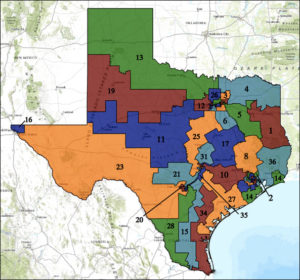
Map of US Congressional districts in Texas

March 16, 2020 — There is some budding political chatter promoting a theory that the 2020 Texas primary turnout numbers suggest Democrats are poised for a good election later this year in the Lone Star State, but a deeper dive into the numbers and patterns doesn’t clearly support such a conclusion.

The turnout theory loses its steam when actually comparing the participation numbers not only with 2020 Republican turnout and understanding that the GOP has a virtually unopposed presidential candidate for its nomination, but also when overlaying recent political history.

When studying the numbers, one sees that the 2008 Democratic primary’s participation rate between Barack Obama and Hillary Clinton far exceeded the numbers posted in this year’s primary, which was held on March 3 – Super Tuesday. In 2008, we see that 33.2 percent of the registered voters participated in one of the major party primaries. This year, the combined turnout represented 25.2 percent of the registered voter pool.

And, 12 years ago, according to figures published in this March 6 Texas Tribune article, two-thirds of those voters chose a Democratic ballot to vote in the Obama-Clinton primary versus just one-third who entered the Republican primary to support John McCain over former Arkansas governor, Mike Huckabee.

This year, 12.8 percent of the registered Texas voters chose the Democratic primary versus 12.4 percent who picked a Republican ballot even though there was no competitive GOP contest. Furthermore, the combined 25.2 percent total participation factor is actually the second-lowest turnout in the past four elections.

Most importantly, however, as a gauge toward predicting general election turnout and result, while two-thirds of the 2008 voters chose the Democratic ballot in the primary in the largest percentage turnout of the century, Republican John McCain would later post a 55-44 percent general election victory within the Texas electorate.

While Democratic statewide turnout did exceed the number of Republicans voting early or visiting the polls this year, the difference was minuscule. A total of 2,071,745 individuals voted in the Democratic primary while 2,008,385 participated on the Republican side. Since the presidential race was likely the turnout driver, the fact that a highly charged Democratic primary among several competitive contenders barely out-polled a Republican race where the incumbent president was virtually unopposed is of no tangible significance as a predictor of general election preference.

Continue reading

Biden Poised to Have Potentially Defining Day in Today’s Primaries

Former VP Joe Biden

By Jim Ellis

March 10, 2020 — During the early prognostication phase regarding the Democratic presidential nomination campaign, the two most important primary dates appeared to be March 3, Super Tuesday, and March 17. The latter date is important because more than 60 percent of the first ballot would be locked into place once St. Patrick’s Day voting ends.

That actually may not now be the case, however. Rather, the clinching primaries may be today.

The March 10 elections, featuring six states, haven’t attracted much attention, but the half-dozen results tonight could be the defining moment for coalescing around a new nominee.

Looking at today’s voting in Idaho, Michigan, Mississippi, Missouri, North Dakota, and Washington, Sen. Bernie Sanders (I-VT) looks to have his back up against the wall. It would be hard to see him continuing in viable fashion if he fails to win all of the day’s northern states, and particularly Michigan, which has 125 first-ballot bound delegates.

Late polling, however, is suggesting that former vice president Joe Biden may sweep the six states, and that might be what he needs to at least unofficially clinch the party nomination.

Three late Michigan surveys, from a place where Sen. Sanders held the lead over the Democratic field and slipped past Hillary Clinton in 2016, 50-48 percent, suggest the electorate is now turning toward Biden in a big way. In fact, the Target Insyght poll taken on Sunday, typically not a good polling day, through an automated voice response system (March 8; 600 likely Michigan Democratic primary voters) finds Biden outpacing Sen. Sanders by 41 percentage points, a breathtaking turnaround from pre-Super Tuesday research studies. The TI result finds the Biden split over Sanders at 65-24 percent.

Others don’t show this level of separation, but they are projecting Biden to be developing a substantial advantage. YouGov (March 6-8; sample size not disclosed) finds the Biden margin to be 54-42 percent. Monmouth University (March 5-8; 411 likely Michigan Democratic primary voters) sees a 15-point Biden advantage, 51-36 percent. Michigan-based pollster EPIC-MRA (March 4-6; 400 likely Michigan Democratic primary voters) finds a similar 51-27 percent. All suggest a big Wolverine State night for Biden, the exact opposite of what Sen. Sanders needs to rebound.

Continue reading

Biden Scores, Bloomberg Out;
State Primary Results

Joe Biden captured the lion’s share of the delegates on Super Tuesday.


By Jim Ellis

March 4, 2020
— Former vice president Joe Biden, with a strong close from his South Carolina victory on Saturday, captured the lion’s share of the delegates on Super Tuesday and has re-established himself as the front-runner for the Democratic presidential nomination.

Biden placed first last night in 10 states, and surprisingly topped the field in Massachusetts and Maine, right in the backyard of Sens. Bernie Sanders (I-VT) and Elizabeth Warren (D-MA). He also placed first in Minnesota where home-state Sen. Amy Klobuchar had been leading. Her endorsement of Biden clearly helped propel him to the top position. In 2016 against Hillary Clinton in Minnesota, Sanders notched a 61 percent win. Last night his popular vote percentage was only 29.9 percent.

Though the former vice president carried the day in 10 states, one still must receive a majority of the delegate votes to win the presidential nomination. He exceeded the 50 percent mark in only two of the states, Alabama and Virginia.

Sen. Sanders, disappointingly for him, placed first in only four states, his home base of Vermont, and California, Colorado, and Utah. Former New York City mayor Michael Bloomberg did very poorly after spending reportedly as much as $700 million from his own fortune. He placed first in America Samoa and qualified for delegates in just eight of the 15 Super Tuesday voting entities. This morning, Bloomberg announced his withdrawal from the race and endorsed Biden.

The Green Papers organization ran full delegate extrapolation tables based upon the preliminary results in both the at-large and congressional district votes. Delegates are earned by exceeding 15 percent in both categories from each state. Totaling all 19 entities that have now voted, Biden would lead the national delegate count with an unofficial 667 bound delegate votes as compared to Sen. Sanders’ 581.

Bloomberg earned only an unofficial 141 delegate total and Sen. Warren just 76. The remaining 34 delegates were split among three others including Rep. Tulsi Gabbard (D-HI) who won a vote yesterday in American Samoa. These numbers will adjust as official vote totals are reported. California, where potentially more than 2 million votes remain to be counted, will substantially alter the totals once the state’s laborious counting process ends in the next several weeks.

Clearly, Biden is the big winner on Super Tuesday, and the night proved very disappointing for Sen. Sanders. Where the race goes now remains to be seen, but Biden winning on the first ballot in Milwaukee at the Democratic National Convention now seems to be the most likely unfolding scenario.

Five states held their full primaries last night and nominees were chosen in many places while run-offs will occur in a number of other situations. Here’s a state-by-state breakdown:
Continue reading

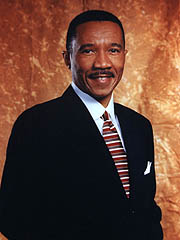
Mfume’s Maryland Comeback

By Jim Ellis

Former congressman Kwesi Mfume looks to be headed back to represent Maryland on Capitol Hill.

Feb. 6 2020 — In the midst of the Iowa counting fiasco and President Trump’s State of the Union Address, a special primary election was also held in the state of Maryland. For all intents and purposes, the Democratic primary is the determining factor regarding who will succeed the late Congressman Elijah Cummings (D-Baltimore). Twenty-four candidates qualified for the Democratic ballot, but the contest narrowed to three serious contenders.

Former US representative, Kweisi Mfume, who originally served in the House for nine years beginning in 1987, was victorious in his comeback attempt. He resigned the seat in 1996 to become president of the NAACP, a position he would hold until 2006 when he ran unsuccessfully for the US Senate, losing to current Maryland Sen. Ben Cardin in the Democratic primary. Cummings would then win the special election to replace then-Rep. Mfume, and now the tables turn.

Mfume captured 43 percent of the vote, far ahead of Cummings’ widow, Maya Rockeymoore Cummings, who posted 17 percent support. Maryland state Sen. Jill Carter (D-Baltimore) was third with 16 percent. None of the other candidates broke into double digits.

With Hillary Clinton scoring a 76-20 percent victory over President Trump in 2016, it is a foregone conclusion that Mfume will easily win the special general election on April 28. He will also seek re-nomination for the full term beginning in 2021 on that same day. Upon winning the special election, Mfume will be sworn into office and serve the balance of the current term.

The next special election will occur in Wisconsin on Feb. 18, in a race that should favor the Republicans. State Sen. Tom Tiffany (R-Minocqua) will square off against disabled Afghanistan War veteran Jason Church in the GOP primary. The winner advances to the May 12 special general election. Wausau School Board member Tricia Zunker is favored to win the Democratic primary.

The California and New York special congressional elections will follow in March and April, respectively. Resigned California representative, Duncan Hunter’s 50th District in San Diego County will remain vacant for the rest of this year.

Next Week’s Other Election

Key candidates who hope to succeed late Rep. Elijah Cummings in MD-7 iclude rom left: Maya Rockeymoore Cummings, Kweisi Mfume, Talmadge Branch, Jill Carter, Terri Hill, Jay Jalisi, Michael Higginbotham, Saafir Rabb


By Jim Ellis

Jan. 31, 2020 — The Iowa Caucus is not the only election happening next week. The day after Iowans gather in their precinct meetings on Monday, Baltimore area voters will go to the polls to choose nominees to replace the late Congressman Elijah Cummings (D-MD) who passed away in early October.

Though Tuesday hosts only the special primary election, the Democratic nominee emerging from that vote will succeed Rep. Cummings in the April 28 special general election from a seat that is virtually unwinnable for a Republican.

Which of the 24 Democrats running will win the nomination is a point of speculation, however. The field includes the late congressman’s widow, Maya Rockeymoore Cummings, who resigned her position as Maryland Democratic Party chair to run, and the man who Elijah Cummings replaced in a 1996 special election, former congressman, Kweisi Mfume. Mfume resigned from the House to become President of the NAACP, thus necessitating the special congressional election 24 years ago. He would remain in this position until he ran unsuccessfully for Senate in 2006.

Also in the race are state House Majority Whip Talmadge Branch, state Sen. Jill Carter (D-Baltimore), and state Delegates Terri Hill, a Columbia physician, and Jay Jalisi (D-Baltimore County).

The candidate who has so far spent the most money, however, is law professor Michael Higginbotham. He has raised just over $110,000 and loaned his campaign over $500,000. The $600,000+ total is almost $400,000 more than the next closest competitor, ex-congressman Mfume, who reported just over $266,000 in receipts on his Jan. 15 pre-primary financial disclosure filing. The other candidate raising over $200,000 is business consultant Saafir Rabb. All of his funds come from other individuals. Higginbotham and Mfume report having the most cash-on-hand, just over $200,000 apiece.

Continue reading

One Week Out From Iowa,
It’s Looking Like a Four-Way Split

A four-way split? 2020 Democratic presidential candidates (from left) South Bend Mayor Pete Buttigieg, Sen. Bernie Sanders, former Vice President Joe Biden and Sen. Elizabeth Warren. (PBS.org photo)

By Jim Ellis

Jan. 28, 2020 — Now, just about one week from the first votes of the 2020 presidential election campaign being cast in Iowa, the most current polling suggests that we could see a four-way split for delegate apportionment in the first two voting states. After Iowans meet in their precinct meetings next Monday, New Hampshire voters will visit their polling places in the nation’s first 2020 presidential primary eight days later on February 11th.

Two new surveys each come from the two states: YouGov/CBS News and Suffolk University/USA Today in Iowa, and the University of New Hampshire/CNN and Marist College/NBC News in the Granite State.

In Iowa, Suffolk University/USA Today (Jan. 23-26; 500 likely Iowa Democratic Caucus attenders) finds former Vice President Joe Biden leading Sen. Bernie Sanders (I-VT) and the rest of the field, 25-19-18-13-8 percent. In third place is former South Bend Mayor Pete Buttigieg, while Sen. Elizabeth Warren (D-MA) follows, and Sen. Amy Klobuchar (D-MN) takes the drop into fifth place.

Based upon this poll, Biden, Sanders, and Buttigieg would qualify for delegate apportionment, while the actual vote would likely push Sen. Warren over the minimum threshold, as well. Iowa has 41 first-ballot delegates.

Continue reading

Impeachment Politics

By Jim Ellis

Dec. 20, 2019 — As the most recent polling from national research sources and in key states shows President Trump gaining political strength, the US House last night, on a virtual party line vote, approved the resolution to send the Articles of Impeachment to the US Senate for trial.

The vote was 229-198, with three Democrats voting against the articles and one Republican-turned-Independent, Michigan’s Justin Amash, supporting the measures. Presidential candidate Tulsi Gabbard, who represents the 2nd District of Hawaii, voted “Present”. Three members, two Republicans and one Democrat, were absent. Rep. Duncan Hunter (R-CA) will soon resign his seat due to pleading guilty to a federal campaign finance charge. Retiring Reps. Jose Serrano (D-NY) and John Shimkus (R-IL) were the others who did not vote. All present and voting Republicans opposed the impeachment measures.

Two of the three opposition Democrats were expected to vote no, Reps. Collin Peterson (D-MN) who represents the strongest Trump district in the country to elect a Democrat to the House, and New Jersey’s Jeff Van Drew who is about to leave his party to join the Republicans. The third no vote came from freshman Rep. Jared Golden (D-ME), who represents the northern district in Maine that delivered its electoral vote to Trump in 2016 even though the state voted for Hillary Clinton. Maine and Nebraska are the only two states that choose to divide their electoral votes.

Two pollsters who had been showing national political support for the impeachment are now projecting a swing toward the opposite conclusion.

The CNN poll, conducted by their usual research partner, the SSRS firm, surveyed 1,005 adult respondents over the Dec. 12-15 period. A total of 45 percent of the respondents favored impeaching the president, while 47 percent said, “they don’t feel that way.” In contrast, their Nov. 21-24 survey found 50 percent favoring impeachment while 43 percent said they didn’t agree with the move. Previously, the CNN polls had reported positions consistently favoring impeachment since late September.

Continue reading

Buttigieg Tops New Hampshire Field

By Jim Ellis

South Bend Mayor Pete Buttigieg

Dec. 13, 2019 — It has been clear for some time that South Bend Mayor Pete Buttigieg is making a strong move in Iowa, perfectly understandable for a candidate hailing from the Midwest; but could an Iowa-New Hampshire sweep be in the forecast for the upstart national contender?

A new MassInc poll for WBUR radio, the public news station in Boston, finds Mayor Buttigieg, for the first time, posting a small lead in the Granite State. The survey (Dec. 3-8; 442 likely New Hampshire Democratic primary voters) gives Buttigieg a slight 18-17-15-12 percent edge over former Vice President Joe Biden, and Sens. Bernie Sanders (I-VT) and Elizabeth Warren (D-MA), respectively, as a clear four-way race is beginning to crystallize for the first-in-the-nation primary.

The latest Iowa Caucus public polling, from Nov. 8 – Dec. 10 through four different survey research firms (Selzer & Company, YouGov, Civiqs, and Emerson College), finds Mayor Buttigieg either leading or tied in three of the studies.

Should such a trend come to fruition in February, we would see the underpinnings of not only Buttigieg becoming a legitimate contender, but a serious national four-way contest taking shape.

The New Hampshire poll is significant not only because it reveals a state base for Buttigieg but also finds that neither New England stalwart politicians Sanders nor Warren have clinched the state, as one might surmise. It was only four years ago when Sen. Sanders posted a 60 percent victory over Hillary Clinton in the 2016 Democratic New Hampshire presidential primary. At this point, now exactly two months from the Granite State primary vote, it would be reasonable to believe that both would be doing better than the MassInc survey and other recent polls suggest.

The MassInc/WBUR poll also provides another key data point. Despite former New York City mayor Michael Bloomberg’s major media spending, apparently on a national basis, his favorability ratings among Democrats continue to languish. His personal index will have to substantially improve if he is to make a push to develop a five-way nomination campaign.

Yesterday, we covered a Monmouth University national poll that found Bloomberg being regarded as the most unpopular of the well-known Democratic candidates, and this MassInc/WBUR New Hampshire survey returns similar results.

Continue reading