
Tag Archives: Gallup

Presidential Popular Vote is Even

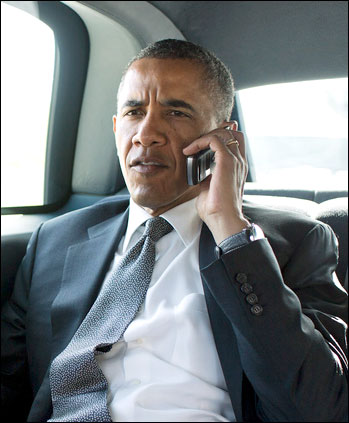
President Obama. / Photo: The White House

A series of new presidential election polls reveals a further tightening of the campaign on the national level, though President Obama maintains a lead over Mitt Romney in the most competitive states.

The two daily tracking pollsters, Gallup and Rasmussen Reports, both give the president only a one-point national lead, 46-45 percent and 45-44 percent, respectively. Looking at an actual benchmark survey, Public Policy Polling, conducting their study (July 19-22; 1,000 registered voters) for the Daily Kos national liberal blog and the Service Employees International Union, projects a flat 46-46 percent tie.

The only national poll not showing a dead heat, taken over virtually the same time frame as PPP’s survey with an identical sample size (July 18-22; 1,000 registered voters) from Republican pollster Bill McInturff and his Democratic counterpart Peter Hart, actually stakes the president to a 49-43 percent advantage. Based upon the available data, though the polling methodology appears sound, the McInturff/Hart result appears to be an outlier.

National Public Radio released their poll of the 12 commonly viewed battleground states (conducted by the Resurgent Republic and Democracy Corps organizations, July 7-12; 1,000 voters nationwide with an oversample of 462 from the battleground states) but its aggregate result is of little consequence. Though this poll, too, shows an Obama-Romney tie at 46 percent, such a figure is virtually useless because the combined popular vote in the most hotly contested states doesn’t translate into specific electoral votes.

What is valuable are battleground voters’ perceptions and attitudes about the candidates. As we have seen for months, there is severe polarization between the two major parties. By almost a 9:1 majority, Democrats believe the president has performed well in office. Conversely, the same virtual ratio of Republicans believes he has not. Independents tend to fall more on the Republican side, slightly rating Obama’s job performance more negative than positive. Also, Independents in these states generally oppose the Obama healthcare law and, by a slight margin, believe that the Supreme Court decision upholding the law is incorrect. This could prove significant as the campaign continues to evolve.

One thing that does deviate somewhat from at least the conventional wisdom, the NPR battleground state poll does show that both candidates have a strong base. Especially for Romney, this is a change. Before, most data indicated weakness among Republicans for their presumptive nominee, but the NPR data gives both contenders right around 90 percent support within their own party voter cell sample. This finding is good news for both men.

New individual key state surveys stack up relatively well for the president in the fact that he leads in most, but in no case is his advantage more than mid-level single-digit numbers.

Rasmussen Reports gives the President a six-point, 48-42 percent advantage in Michigan. Survey USA finds a similar five-point, 48-43 percent margin for Obama in all-important Florida; and We Ask America returns similar 49-42 percent and 49-43 percent spreads (in Obama’s favor) in Wisconsin and Nevada, respectively. Magellan Strategies produced a much closer 50-46 percent Nevada model. Quinnipiac University shows a tie in Virginia, and the Civitas Institute projects Romney to a one point, 49-48 percent razor-thin edge in North Carolina. Though it’s not a battleground state, Survey USA detects only a 46-40 percent advantage for the president in liberal Minnesota, which is a surprise.

The cumulative effect of the most recent survey data makes the president and his advisers uncomfortable. These are not the type of results strong incumbents would be seeing at this point in the election cycle. It’s going to be quite a remainder of the year.
State Presidential Polling Tightens

Photo: The White House

Polling in the presidential race is interesting because the national numbers have been projecting a very tight race, but not particularly so for the key states. Several surveys released yesterday now show a pattern similar to the tight nationwide margins in the core states of Florida, Ohio and Virginia, and second-tier swing state, Colorado.

Nationally, Gallup, Marist College for the McClatchy Newspapers, and the Purple Strategies organizations all give President Obama a two-point lead over presumptive Republican nominee Mitt Romney. But, Rasmussen Reports projects Mr. Romney to be holding the same two-point lead. All of the polls were conducted during the July 9-15 period, though the Rasmussen data is derived from daily tracking surveys.

While the president’s numbers in Florida, Ohio, Virginia and Colorado have exceeded his national performance, such is not the case in the latest wave of studies.

In all-important Florida, Mason-Dixon Polling & Research gives Obama only a one-point, 46-45 percent razor-thin edge, but Purple Strategies (PS) actually detects a three-point Romney lead, 48-45 percent.

Ohio, where the president’s margins have typically been in the high single digits, now brandishes only a three-point Obama lead, 48-45 percent, again according to Purple Strategies.

To the west in Colorado, a state that Obama carried 54-45% in 2008, PS sees the president’s advantage dwindling to just one point, 45-44 percent.

Finally, in Virginia, where the Obama edge has been consistent and relatively strong, Purple Strategies forecasts that his Old Dominion lead is now down to just two points, 46-44 percent.

Polls In Sync

We often bring polling inconsistencies to light and analyze why a particular survey may be more accurate than another. Right now, however, four diverse pollsters all are showing virtually the same result in the presidential race. The conclusion: The presidential campaign, in mid-May, between President Obama and Mitt Romney, is a virtual tie.

Our first comparison is between the two polling firms that track the national race on a daily basis: Gallup and Rasmussen Reports. The latest published Gallup numbers (April 15-May 6; 3,050 registered voters grouped in five-day tracking segments) show Obama and Romney with the exact same level of support, 45-45 percent. Rasmussen, which calls 500 people every night and then groups them in three-day tracking segments, arrives at virtually the same conclusion as Gallup, but their data has Romney grabbing the smallest of leads, 46-45 percent.

Next comes TIPP, the regular polling partner of Investor’s Business Daily and the Christian Science Monitor. TIPP is the acronym used for the polling section of the TechnoMetrica Market Intelligence corporation, which claims the mantra of “America’s most accurate pollster” based upon their presidential track record in 2004 and 2008 as compiled by Real Clear Politics. According to their traditional polling interview method conducted during the May 9-16 period of 778 registered voters, the President has a slight 43-40 percent lead, certainly consistent in margin of error terms with the other pollsters just cited.

Finally, Zogby Analytics, which has in the past been criticized for being among the least accurate of pollsters, and in this case polling for the Washington Times, also returns current data that agree with the rest. According to their traditional live interview survey May 11-12 of 800 likely voters, Romney has the one-point lead, 44-43 percent. Zogby also went one step further. They asked this particular sampling segment a second ballot test question that included Libertarian candidate Gary Johnson, the former New Mexico Republican governor, who will likely be on the general election ballot in many states. When adding Johnson to the mix, the result slightly changed the Romney-Obama split; the returned result showed a consistent 44-43-2 percent division, but this time in the President’s favor.

What this tells us – because the results from four such different pollsters each with their own methodological approach pertaining to sample selection and interview philosophy – is that at the present time, the national race deserves an unequivocal toss-up rating.

New Polling Shows Presidential Dead Heat

Four brand new polls suggest that Mitt Romney is pulling even with or moving ahead of President Obama in the national popular vote ballot test. According to the latest Gallup tracking study (April 12-16), Romney actually leads Obama 48-43 percent. The New York Times/CBS joint survey (April 13-17) projects both candidates to be deadlocked in a 46-46 percent tie. The Pew Research Center (April 4-15) gives Obama a 49-45 percent edge, and the Rasmussen Reports daily national track (April 17) posts the Republican challenger to a slight one point, 46-45 percent advantage over the incumbent Democrat.

The polls are diverse and were all conducted pretty much over the same time period, and therefore each showed basically the same conclusion. That is significant. The polls taken closer to today (all but the Pew Research study) show Romney in a stronger position, revealing what appears to be a significant recent swing in his direction. The Pew poll is taken over a longer period of time (12 days), which tends to lessen accuracy response. Surveys conducted within a much tighter time frame have greater reliability. Normally, three days is the optimum polling time.

It will not be surprising to see the two candidates jockey for the polling lead until the campaign issues and attack points become better defined. It is always important to remember that the national polls also mean little in determining the outcome of the American presidential contest. The state polls, particularly in battleground regions like North Carolina, Florida, Virginia and Ohio, are the better reflective factors.

Romney, Obama Both Must Contend With Weak Support

Just two days after Rick Santorum exited the presidential race, which unofficially began the Obama-Romney general election campaign, new data is showing that both candidates have work to do to improve their standing within the electorate.

According to the Gallup research organization, Mitt Romney has the second lowest level of party support after unofficially clinching a nomination since the polling firm began regular testing of the presidential candidates all the way back in 1972. Gallup’s latest poll (April 4-9; 1,149 self-identified Republican and Republican-leaning Independent voters) gives Romney only a 42-24-10-10 percent preference over Santorum, former House Speaker Newt Gingrich, and Rep. Ron Paul (R-TX-14), respectively. Again, even after seeing major publicity surrounding the Santorum exit, Romney fails by a large margin to reach the 50 percent threshold among Republican voters.

The lowest candidate score since Gallup began charting this type of research occurred in 1972 when then-Sen. George McGovern (D-SD), upon practically clinching the Democratic nomination of that year, only polled three points ahead of former Vice-President Hubert H. Humphrey, 30-27 percent. As we all remember, McGovern would go on to absorb a crushing 49-state loss to then-President Richard M. Nixon.

Even other candidates who were soundly defeated, such as John McCain in 2008 for example, recorded strong intra-party preference numbers when it became clear their nomination was secure. In the first poll after McCain unofficially claimed the Republican nomination, he posted a 63-20 percent margin over former Arkansas Gov. Mike Huckabee, the second-place finisher.

Former Vice-President Walter Mondale (D) who, like McGovern, would lose 49 states in his subsequent general election, scored a 54-39 percent Gallup mark over former Sen. Gary Hart (D-CO) when it became clear in June of 1984 that he would win the Democratic nomination. And, then-Sen. Bob Dole (R-KS) who lost to President Bill Clinton in a similar statistical manner as McCain lost to Barack Obama, also registered strong intra-party numbers when it became obvious that he would be the GOP standard bearer. Dole was the choice of 58% in the final 1996 Republican presidential poll as compared to 15% apiece for businessman Steve Forbes and national political commentator Pat Buchanan.

But Romney is not the only one with problems. The Gallup data is still recording problematic numbers for President Obama, too. According to their latest monthly presidential job approval poll (March 1-31; a rolling sample of 16,037 adults) Obama stands only with a 46:46 percent favorable to unfavorable job approval ratio.

While he shows favorability improvement over the past several Gallup monthly studies, Obama still is not yet in good stead. Even his standing among minority voters is showing diminishing strength. While African-Americans still rate him extremely high, 43 percent above the national average, his support among Hispanics is declining. This group only rates him nine percent above the national average, down from their high of 22 percent above recorded in January of 2010. Whites have consistently rated him from seven to nine percentage points below the national average during that same time period.

Additionally, even the lowest income level group, those with less than $24,000 in annual household income, rate him now just five percent above the national average. Their high number was +11 percent, also in January of 2010. All other income groups, divided into three levels with the highest being over $90,000 annually, rate the President one percentage point below the national average of 46 percent positive.

In conclusion, it appears that President Obama and Mitt Romney must each contend with his own weakness issue. Therefore, in order to compensate for a lack of enthusiasm among his own support base, expect highly contrasting negative campaign strategies to emanate from both camps as the general election begins to formulate.

Energy Policy and Presidential Politics

The energy issue, as it often does in national elections, will again be front and center in the 2012 presidential election, especially with gas prices assured to be at an all-time high. The Gallup organization just released a report about Americans’ attitudes and impressions of energy-related issues. The results suggest a movement toward the Republican position of increasing domestic energy production and reveals President Obama to be on the short side of the Keystone Pipeline controversy.

In relation to Keystone, by a margin of 57-29 percent, the respondents favored building the oil transport structure that would begin in Canada and extend to refineries in Montana, Nebraska and Oklahoma, and export terminals along the Gulf Coast of Texas. Even a plurality of self-identified Democrats (44-38 percent) support the pipeline construction.

But the swing within the electorate, and a potential electoral problem for the President, is decidedly toward energy production versus concern for the environment. For only the second sustained time since 2001, more people (47-44 percent) favored energy development than environmental protection. The swing in this direction has been marked since 2001. Today, the gap among Republicans on this question has swung 29 points in favor of production. Independents have gone from a +24 for environment to just a +8. Even Democrats have moved 10 points closer to development from a +32 pro-environment gap in 2001 to a +22 today. Continuing these trends could give the GOP a boost as the November election draws near.

Obama Approval Ratings Reach Historic Lows

While the attention of most political observers and pundits has been on the extremely volatile multi-candidate contest for the Republican presidential nomination, little attention has been paid to the standing of the certain Democratic standard-bearer, President Barack Obama.

Polling by the Gallup organization, which has been tracking presidential approval ratings since the administration of Harry S. Truman, suggests that President Obama’s approval rating is lower than each of his eleven most recent predecessors at a comparable time in their presidencies. This statistic includes: Lyndon Johnson, Gerald Ford, Jimmy Carter and George H. W. Bush, who were either not reelected or, in the case of Ford, never elected.

For the week ending Dec. 4, Obama’s approval rating stood at 42 percent, down one percent from his historically low November rating of 43 percent. The President’s disapproval rating currently stands at 50 percent, up one point from last week’s number. Again, all of these numbers are according to Gallup. Obama will need to improve his approval rating considerably during the rest of December in order to avoid numbers that are sure to initiate jitters among congressional Democrats and others sharing the ballot with him in 11 months.

The following chart provides an illustration of the presidential approval rates at the commensurate time in office (December of third year in office):

President      Year     Average approval
Eisenhower      1955                     75
Nixon                1971                      50
Carter                1979                     53
Reagan              1983                     54
Bush ’41            1991                      51
Clinton              1995                     51
Bush ’43            2003                    54
Obama              2011                      42 (through December 6)

As you can see, public approval ratings at the end of the third year of an incumbent’s presidency does not necessarily dictate his re-election result. For example, Presidents Carter (53 percent) and Reagan (54 percent) had virtually identical numbers at the end of their third year in office, but their election results one year later, as we all know, were starkly different. The same was true for Presidents Bush and Clinton, who both scored an identical 51 percent in the December preceding the election. But, Obama’s anemic 42 percent positive rating is far below any of his predecessors. It is too early to tell, however, whether or not this number will prove to be a precursor to defeat.