Category Archives: Senate

Senate Trends

By Jim Ellis — Tuesday, Oct. 15, 2024

Senate

As we get closer to early votes being cast and election day itself, several of the key Senate races are a focal point of attention.

It appears at this point the Republicans are on a path to secure at least a 51-49 majority with wins in West Virginia and Montana, while GOP challengers in Ohio, Pennsylvania, and Wisconsin are getting closer. Democrats are countering with big spending in three Republican states, Florida, Nebraska, and Texas, hoping to score an upset in order to save their small majority.

Ohio businessman Bernie Moreno (R)

Ohio Sen. Sherrod Brown (D) is running for a fourth term and has held the polling lead for the entire campaign, but recent surveys suggest a tightening of the contest. Though former President Donald Trump has established a healthy lead in the Buckeye State, a place he has twice won by eight percentage points, Sen. Brown has continued to post an advantage over GOP businessman Bernie Moreno.

The trend, however, shows a tightening of the race. While Sen. Brown led consistently by five points earlier in the cycle, the most recent nine polls suggest an average lead of only 1.5 percentage points. Therefore, with Trump doing well at the top of the ticket, and Moreno closing the gap, we definitely see a trend moving toward the GOP challenger in this hot Ohio race.

• Overcoming the Casey family political legacy in Pennsylvania is a difficult task for Republicans considering Sen. Bob Casey Jr. (D) has won three statewide campaigns and his father, the late Bob Casey Sr. (D) scored four victories, two as attorney general and two as governor.

The senator has enjoyed consistent polling leads through the election campaign, but the later polls are tightening. Instead of holding an average high single-digit advantage, Sen. Casey’s average lead has dropped to four points according to the last 10 published polls. While the trend is favorable for Republican challenger David McCormick, it may not be strong enough to deny the senator re-election.

• In a similar pattern to that of Sen. Casey, Wisconsin two-term Sen. Tammy Baldwin (D) has also seen her once more formidable lead getting smaller. Typically reaching high single to low double digits over businessman Eric Hovde (R), the senator’s average edge over the last 13 polls has dropped to four percentage points.

Since Wisconsin typically features tight statewide election results, such polling results are not surprising. Considering that both she and Sen. Casey have never trailed in the multitude of surveys conducted in their states, we can also expect Sen. Baldwin to return for another term.

The Democrat challengers in Florida and Texas — along with the Independent that the Nebraska Democratic establishment backs — are continuing to post close polling numbers, but like with the established Democratic incumbents in their competitive campaigns, the GOP incumbents remain favored.

• While polls consistently show Florida Sen. Rick Scott (R) three to four points ahead of former Rep. Debbie Mucarsel-Powell (D), the margin is likely higher. In 2018, when Sen. Scott, then the state’s governor, unseated then-Sen. Bill Nelson (D), he did so with a 10,033-vote victory from a voter pool that exceeded eight million ballots.

At that time, Democrats held a 257,000-person lead in voter registration over Republicans. Today, there are 1.05 million more Republicans than Democrats, indicating that the state has moved over 1.3 million people in the Republicans’ favor since the last time Sen. Scott was on the ballot.

With pollsters missing the Republican voter strength in the Florida statewide races by seven points in 2022, and considering the huge registration changes, the trends below the radar heavily favor a Scott re-election victory.

• A surprise Senate race always seems to appear in every cycle, and we have one forming in Nebraska. Here, Sen. Deb Fischer (R), who doesn’t even have a Democratic opponent, finds herself in a legitimately tight campaign with Independent Dan Osborn. In four polls taken since the beginning of September, Osborn holds an average lead of just under two percentage points.

This contest needs to be monitored, since the trends do suggest an upset is possible. While Trump and Sen. Pete Ricketts (R) enjoy strong double digit leads in the same polls as mentioned above, the Fischer race has become a serious contest. Sen. Fischer may be able to right her political ship since the campaign has sprung into action and is hard at work trying to paint Osborn as a liberal Democrat, but only time will tell if their strategy will be successful.

• In Texas, talk continues, just as it did in 2018, that Sen. Ted Cruz (R) is in danger of losing his seat. While Rep. Colin Allred (D-Dallas) pulls within an average of four points opposite the incumbent over the most recent 12 polls from the beginning of September, the path is still a difficult one for the challenger.

With the Biden-Harris energy policies not favorable to the dominant Texas oil and gas industry, the Lone Star State being most affected by the southern border issue, and south Texas sees Hispanic support rising for Republicans, the timing doesn’t appear favorable to reverse a Republican statewide winning streak that begin in 1996.

While the trends undoubtedly suggest a close finish, as was the case when Cruz defeated then-Rep. Beto O’Rourke (D) by just three points in 2018, the most likely outcome this year is another Cruz victory. The Democrats are increasing strength in the Houston, Dallas, Austin, and San Antonio metro areas, but their gains are not large enough to neutralize the rest of America’s second-most populous state.

All six of the races covered above are well worth increased political attention as the campaign cycle draws to a close. While the Republicans appear to be on track to secure at least a minimum majority, an upset in one of the Republican incumbent campaigns could reverse such an impending trend.

Fischer in Trouble in Nebraska;
Tight CA-16 Double-Dem Election; Congressional Leadership Fund Ponies Up; DA Gascon Headed for Defeat in Los Angeles

By Jim Ellis — Friday, Oct. 11, 2024

Senate

Nebraska Sen. Deb Fischer (R)

Nebraska: Ricketts Family to the Rescue — With the new Impact Research poll (Oct. 1-3; 600 likely Nebraska voters; multiple sampling techniques) being released and showing the same pattern we’ve seen in other recent surveys again suggests that Sen. Deb Fischer (R) is inexplicably in political trouble. Whereas the same poll finds former President Donald Trump leading Vice President Kamala Harris 58-38 percent, Independent Dan Osborn continues to forge small leads. Here, he leads Sen. Fischer 48-46 percent.

Entering the race to help boost the senator’s prospects is the ESAFund Super PAC, formerly known as the Ending Spending Action Fund. The organization announced it is laying down $2 million for further advertising in the Nebraska Senate race, likely in the form of ads to negatively define Osborn. Sen. Pete Ricketts’ (R) family were the principal funders of the organization, so it would make sense that they would come to Sen. Fischer’s aid.

House

CA-16: Double-Dem General Election Going to the Wire — An EMC Research poll for a Super PAC that supports state Assemblyman Evan Low (D-Campbell) for an open congressional seat shows a very close race between him and former San Jose Mayor Sam Liccardo (D). The survey, however, is a month old, which makes the result much less credible. The poll’s ballot test (for Equality California; Sept. 5-10; 600 likely CA-16 voters; live interview, text & email) posted Liccardo to a 48-45 percent lead.

Releasing the survey after so much time had elapsed suggests the Low supporters are possibly finding that momentum is turning Liccardo’s way. Therefore, promoting the dated poll may be serving as a way to artificially boost Low and disguise what is likely a much bigger Liccardo advantage.

This is one of three congressional double Democratic general elections that California’s jungle primary system produced in the early March qualifying election. Incumbent Rep. Anna Eshoo (D-Atherton) is retiring after what will be 16 terms of service in the House plus 10 years on the San Mateo County Board of Supervisors.

Congressional Leadership Fund: Invests $5 Million of New Money — The Congressional Leadership Fund, a major Super PAC that has a close association with the House Republican leadership, just announced additional media buys totaling $5 million for six different campaigns according to The Down Ballot political blog.

The new CLF race is that of Wisconsin freshman Rep. Derrick Van Orden (R-Prairie du Chien) who has been under heavy attack from outside groups including the Vote Vets organization. Rep. Van Orden, who converted a western Wisconsin seat in 2022 that Democrat Ron Kind had represented for 26 consecutive years, is working to repel a challenge from businesswoman Rebecca Cooke (D).

Other incumbent races slated for an influx of support are those of Reps. Juan Ciscomani (R-AZ) and Marc Molinaro (R-NY). Also receiving additional aid are the challenger efforts of state Reps. Gabe Evans (CO-8 vs. Rep. Yadira Caraveo) and Austin Theriault (ME-2 vs. Rep. Jared Golden), and former US Rep. Yvette Herrell (NM-2 vs. Rep. Gabe Vasquez).

Cities

Los Angeles County: DA Gascon Headed for Defeat: The campaign of first-term Los Angeles County District Attorney George Gascon (D), who has become the face of controversial prosecution and bail policies, is in serious trouble. A new University of California at Berkeley’s Institute for Government Studies poll (for the Los Angeles Times; Sept. 25-Oct. 1; 908 likely LA County voters; online) finds Independent challenger Nathan Hochman crushing Gascon by 30 percentage points, 51-21 percent.

In the March primary, Gascon placed first in a field of 12 candidates, but could only manage 25 percent of the vote. Such a low percentage for an incumbent is an ominous sign for the general election, and this latest survey certainly confirms such a pattern. Before moving to Los Angeles and entering the DA race in 2020, Gascon served for eight years as the San Francisco County District Attorney.

Conflicting Michigan Senate Polls; Fischer Drops in Nebraska Senate Poll; A Dead Heat in CO-8; Governor’s Race Neck-and-Neck in NH

By Jim Ellis — Monday, Oct. 7, 2024

Senate

Michigan Rep. Elissa Slotkin (D-Lansing)

Michigan: Conflicting Poll Results — Two polling firms reported results late last week from their latest polls of the Michigan electorate. The surveys were conducted during the same time interval but arrived at distinctly different conclusions. The Mitchell Research & Communications firm, polling for the Michigan Information & Research Service (Sept. 30; 709 likely Michigan voters), sees Rep. Elissa Slotkin (D-Lansing) leading former Rep. Mike Rogers (R) with a five-point cushion, 49-44 percent. Simultaneously, the Trafalgar Group was also in the field (Sept. 28-30; 1,086 likely Michigan voters; multiple sampling techniques) but sees the two candidates tied at 47 percent apiece.

This is a good example how competing sampling and data weighting methodologies can produce significantly different results even when simultaneously testing the same campaign. Both Mitchell and Trafalgar have significant experience polling the Michigan electorate, so we will have to wait until election day to see which system had the more accurate data.

Nebraska: Fischer Drops Behind — We see yet another poll that finds Sen. Deb Fischer (R) in political trouble opposite Independent Dan Osborn, who now has united support from the Nebraska Democrat establishment. The new Bullfinch Group poll (for the Independent Center; Sept. 27-Oct. 1; 400 likely Nebraska voters; live interview) is the fifth consecutive publicly released survey that finds the race falling within the margin of error.

The Bullfinch poll is the second to project a lead for Osborn, 47-42 percent in this case. The 400-size sample is small for a three-congressional district state, so the error factor is high. Regardless of such, the data is consistently showing that the Nebraska race, even with no Democratic candidate, is surprisingly close.

House

CO-8: Dead Heat Poll Result — The Colorado Independent Redistricting Commission in 2021 drew the state’s newly awarded 8th Congressional District, a seat that lies north and northeast of Denver and includes some of the city’s bedroom communities, as a political toss-up. The latest US House survey suggests that the electorate is performing as intended.

Emerson College, polling for The Hill newspaper and two Denver television stations (Sept. 29-Oct. 1; 525 likely CO-8 voters; multiple sampling techniques) sees freshman Rep. Yadira Caraveo (D-Thornton) and state Rep. Gabe Evans (R) falling into a flat tie, 44-44 percent.

In 2022, Caraveo won the seat in a plurality victory of less than one percentage point, but President Joe Biden carried the domain in 2020 with a 4.6 percent margin. It appears certain that we will see another photo finish in the current election.

Governor

New Hampshire: Ayotte Leads Again — After the most recent public poll, a mid-September release from the University of New Hampshire, found Democratic former Manchester Mayor Joyce Craig leading ex-Sen. Kelly Ayotte (R) by one percentage point, the survey result released late last week finds Ayotte re-taking the polling lead.

The new St. Anselm College poll (Oct. 1-2; 2,104 likely New Hampshire voters; online) projects a three-point lead for Ayotte, 47-44 percent, in the nation’s only seriously competitive governor’s campaign. Regardless of who is leading in which poll, both data points suggest a very close race and a result within the polling margin of error. Therefore, the most reasonable current conclusion is that both candidates have a chance to win this political contest.

A negative point for Ayotte, however, is that former President Donald Trump trails Vice President Kamala Harris by seven points in this same survey. Therefore, the top of the ticket result, which largely defines the turnout model, will probably favor the Democrats even with the partisan registration figures now slightly favoring Republicans.

Senate Recap – Part III

By Jim Ellis — Friday, Oct. 4, 2024

Senate

Our final segment of the three-part US Senate recap series covers the campaigns from Ohio through Wisconsin. At this point, the Republicans appear in favorable position to convert West Virginia and Montana while protecting Florida and Texas. Doing so would give the GOP a small Senate majority, but the question remains as to whether they can expand such a contingent beyond 51 senators.

Ohio Sen. Sherrod Brown (D)

Ohio — One of the races where movement is detected is in the Buckeye State of Ohio where three-term Sen. Sherrod Brown (D) is defending his seat against GOP businessman Bernie Moreno. For months, this race stood with Sen. Brown holding a five-point edge even though former President Donald Trump was posting leads close to 10 points within the same polling samples. Within the past two weeks, however, the race has shown tightening tendencies as detected in publicly released polling.

Sen. Brown has been concentrating his campaign and major resource advantage on driving home the image that he delivers for Ohio and that the state is his top priority. He never mentions the national ticket, Washington, or anything related to the Democratic Party. While Sen. Brown had raised just under a huge $53 million through the end of June, we now see several outside Super PACs coming into the state to help Moreno and attack Brown. Whether this race flips to Moreno in the end still remains to be seen.

Pennsylvania — Sen. Bob Casey Jr. (D) and his late father, Gov. Bob Casey Sr. (D), have together won seven statewide races in Pennsylvania, and the family is a legacy within the state. Lately, the Keystone State race has been the most polled Senate contest in the country and Casey’s once strong lead over Republican former hedge fund CEO David McCormick (R) has narrowed.

This is another key race going down to the wire, but the Casey name is still very formidable in Pennsylvania even though Sen. Casey is far to the left of his more conservative late father. While Trump may well be in position to win here again, as he did in 2016, toppling Sen. Casey will prove to be much more difficult. This remains a race to watch, but Sen. Casey should still be regarded as the favorite.

Texas — We are hearing a familiar refrain from the Lone Star State Democrats as they attempt to sell their argument that Rep. Colin Allred (D-Dallas) can upset Sen. Ted Cruz (R). While Cruz’s favorability numbers are not particularly high, and polling repeatedly shows a close race, such has been the case in many previous Texas races. Yet, in the end, Republicans prevailed with comfortable margins.

The state is changing politically. While Democrat candidates are doing well in the big cities, such as Houston, Dallas, Austin, and San Antonio, the rural areas are strongly Republican and the Hispanic voting patterns are showing further signs of moving closer to the GOP.

Expect the turnout model to favor the Republicans when voters actually cast their ballots. Because President Joe Biden’s energy policies have not been favorable to Texas’ mega oil and gas industry, and the southern border issue dominates the Lone Star issue matrix, it is likely that Rep. Allred, while an attractive candidate, picked the wrong year to attempt to reverse a statewide political trend that hasn’t seen a Democrat win a major office here since 1994.

Utah — Sen. Mitt Romney (R) is retiring after one term, and 3rd District Rep. John Curtis (R-Provo), due to his strong plurality win in a crowded GOP primary – recording 49 percent of the primary vote over three Republican opponents – is poised to easily capture the seat in November. As was the case when Curtis won his House seat in a 2017 special election, he fared poorly in this year’s Republican nominating convention but then rebounded to record a solid primary victory.

Environmental activist Caroline Gleich is the Democrat’s nominee but has little chance of winning the general election during a presidential year in solidly Republican Utah.

Virginia — Sen. Tim Kaine (D), the Democratic vice presidential nominee in 2016, seeks a third term in the Senate and should have little trouble winning in a state that has been definitively trending Democrat over the past decade with the 2021 statewide election being the lone exception. Prior to serving as a senator, Kaine had been elected governor of the state and mayor of Richmond, while being appointed as chairman of the Democratic National Committee.

The senator’s Republican opponent is retired Navy captain and ex-congressional candidate Hung Cao. While Cao over-performed in his congressional race even while losing, his Senate fundraising does not place him in the competitive realm with an accomplished incumbent such as Sen. Kaine. As was the case in his 2018 re-election campaign, expect Sen. Kaine to win re-election with a percentage in the high 50s.

West Virginia — Without Sen. Joe Manchin, now an Independent, on the November ballot, this race is a lock for GOP Gov. Jim Justice, who is ineligible to seek a third term in his current office. Running over 60 percent in the few polls taken of this contest, and seeing his Democratic opponent, Wheeling Mayor Glenn Elliott, failing to raise even $300,000 through the end of June, means the general election is a lock for the GOP and Gov. Justice, and with such a victory comes a 50-50 electoral tie in the Senate chamber.

Wisconsin — Sen. Tammy Baldwin (D) is on the statewide ballot for the third time, after serving seven terms in the US House and six years in the Wisconsin state Assembly. Her opponent is businessman Eric Hovde; potentially stronger Republican candidates such as Rep. Bryan Steil (R-Janesville), decided not to run. Hovde did bring resources to the table when dropping at least $13 million of his own money into the race.

Sen. Baldwin has been polling ahead all year but, as in Pennsylvania and Ohio, we’ve seen a recent tightening of the campaign. Wisconsin races are always close, and the state will figure prominently in the presidential election outcome. Therefore, a late Republican surge here, should it develop, would make the Senate race interesting. Barring such a vote disposition, expect Sen. Baldwin to win re-election with a percentage figure in the low 50s.

Senate Recap – Part II

By Jim Ellis — Thursday, Oct. 3, 2024

Senate

In our second of a three-part series, we examine another set of seven US Senate races that are either competitive, at least to a degree, or where a new senator will succeed an incumbent not seeking re-election. Today, we provide a quick analysis of the campaigns from Minnesota through New Mexico. Tomorrow, we end with the competitive races from Ohio to Wisconsin.

Minnesota Sen. Amy Klobuchar (D) / Photo by Gage Skidmore

Minnesota — Though the Minnesota Senate race is not particularly competitive, recent polling has suggested that Sen. Amy Klobuchar’s (D) re-election campaign is a bit closer than one would expect in a state that reliably supports its Democratic incumbents. Four polls of the Minnesota Senate contest were released in September, and Sen. Klobuchar’s average advantage is nine percentage points over former professional basketball player Royce White (R). The margin is moderately strong, but not where one would have expected a virtually uncontested senator in the most loyal Democratic state in presidential election years.

The polls also track Vice President Kamala Harris as under-performing in her VP nominee Tim Walz’s (D) home state. The five September polls and two tracking surveys yield Harris an average six-point lead, well below what one would expect in what is perceived as a non-competitive state. Sen. Klobuchar will win re-election, but possibly not in the landslide proportion that most believed would occur.

Missouri — The Show Me State of Missouri has been voting solidly Republican during the Trump years, and Sen. Josh Hawley (R) should easily win another term. There have, however, been two Democrat polls that project the senator’s lead over attorney and military veteran Lucas Kunce (D) to be just four and five points. The Hawley September average through four public polls is nine percentage points, thus reflecting two other surveys yielding the senator 12- and 15-point advantages.

This polling pattern is not much different than what we saw for Sen. Eric Schmitt (R) when he was running in the open seat two years ago. The average of the closing polls posted Schmitt with a lead right around 11 percentage points. In the actual election, he won with a 13-point margin. Expect a similar result this year for Sen. Hawley.

Montana — If the Republicans are to capture the Senate majority, unseating Sen. Jon Tester (D) in Montana becomes a must win. At this point, it appears GOP candidate Tim Sheehy (R), a retired Navy SEAL and aerospace business CEO, is well positioned to convert Big Sky Country to the Republican Senate column. If he does, Montana will become the 51st state in the GOP Conference after West Virginia Gov. Jim Justice’s (R) virtually assured win to even the partisan division at 50-50.

Surprisingly, there have been relatively few polls conducted of the Montana Senate race. One reason could be the pollsters have already seen enough to concede the race to Sheehy. From Aug. 20 to the present, we find just four poll results. Sheehy leads in all, and his polling average is seven-plus points over the three-term incumbent. Though Sen. Tester has a major resource advantage, in a small state campaign spending is typically less important than in major population states. Such appears to be the case in Montana.

Continue reading

Senate Recap – Part I

By Jim Ellis — Wednesday, Oct. 2, 2024

Senate

In a three-part series, we examine the latest in the 21 US Senate races that are either competitive or where a new senator will succeed an incumbent not seeking re-election. In alphabetical order, we begin today with Arizona and move through Michigan. Tomorrow, we look at Minnesota through New Mexico, and on Friday, end with the competitive races from Ohio to Wisconsin.

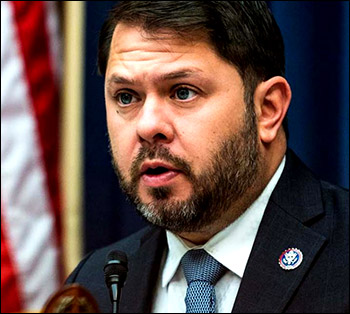
Arizona Rep. Ruben Gallego (D)

Arizona — Sen. Kyrsten Sinema (I) is retiring after one term, and it appears that Rep. Ruben Gallego (D-Phoenix) will be her successor in January. Rep. Gallego has successfully created a more moderate image than his record in the House might depict. His campaign is emphasizing his military record and addresses the border issue, which has greater effect in Arizona than most states.

Republicans, nominating former news anchor and 2022 gubernatorial nominee Kari Lake, have also yielded the inside track to Rep. Gallego. Lake’s continued accusations that voter fraud cost her the 2022 election has soured most swing voters. Rep. Gallego leads in all polls, and with an average position of 7-plus points in nine September polls and two tracks. Expect Rep. Gallego to officially claim the seat in November.

California — While former baseball great Steve Garvey (R) performed well in California’s crowded jungle primary election back in June, and even placed first in the special election to permanently replace the late Sen. Dianne Feinstein (D), he is no match for Rep. Adam Schiff (D-Burbank) in a two-way match.

Schiff’s advertising about Garvey being too conservative during the primary helped elevate the Garvey candidacy with Republicans, thus the congressman got the general election opponent he desired. A GOP candidate has virtually no chance today in a California statewide race. Schiff will win in a landslide.

Delaware — Sen. Tom Carper (D) is retiring and leaves the seat to at-large Rep. Lisa Blunt Rochester (D-Wilmington). This open race is nothing more than an easy re-election bid for the congresswoman who already represents the entire state.

Florida — Sen. Rick Scott (R) is on the ballot for a second term, after winning his initial federal election by just over 10,000 votes from more than eight million ballots cast. In that election, Scott, then the state’s governor, unseated veteran Sen. Bill Nelson (D). This time, Sen. Scott faces former Congresswoman Debbie Mucarsel-Powell (D), who held a south Florida seat for one term before current Rep. Carlos Gimenez (R-Miami) unseated her in 2020.

While polling again shows a close race – Sen. Scott leads by just over three percentage points in seven September polls and two tracks – the Florida electorate’s political composition has drastically changed from six years ago.

In 2018, when Sen. Scott was first elected, Democrats outnumbered Republicans by over 257,000 registrants. Today, Republicans hold a 956,000-plus advantage over Democrats, meaning the state has changed in the GOP’s favor by more than 1.2 million individuals. This is the main reason that pollsters underestimated the 2022 Florida statewide Republican strength by an average of seven points.

Expect Sen. Scott to win by a bigger margin than the polling currently indicates.

Indiana — With first-term Sen. Mike Braun (R) eschewing a second term to launch what appears to be a successful run for governor, Rep. Jim Banks (R-Columbia City) finds himself with one of the easiest open Senate runs in decades. Banks was unopposed in the Republican primary and is pitted against a weak Democratic contender in the general election. Rep. Banks will easily win the Senate seat in November and protect the open seat for the GOP.

Maryland — Sen. Ben Cardin (D) is retiring after a remarkable 58 years in elective office, counting his time in the state legislature, the US House, and of course the Senate. In his wake we have seen two rather astonishing campaigns, the first in the Democratic primary where US Rep. David Trone (D-Potomac) spent $62 million of his own money only to lose to Prince George’s County Executive Angela Alsobrooks by just over 10 percentage points in the May election.

The second surprise is the closeness of the general election in what has performed as one of the Democratic Party’s strongest states. Former two-term Gov. Larry Hogan (R), still a popular figure in Maryland, is clearly the best candidate the Republicans could field, and he is making the race close.

Whether he can overtake Alsobrooks now that Vice President Kamala Harris is the party nominee and has activated the base voter to a greater degree than President Joe Biden, is very much in doubt. It seems what is a potential 30-point Harris victory in Maryland might be too high an obstacle for even Gov. Hogan to scale.

While this is an expensive race and one that is clearly in play, Alsobrooks must remain as at least a nominal favorite to succeed Sen. Cardin.

Michigan — Four-term incumbent Debbie Stabenow (D) was the first 2024 in-cycle senator to announce that she would not seek re-election. She yields to what has become a highly competitive race between Rep. Elissa Slotkin (D-Lansing) and former Rep. Mike Rogers (R).

While Michigan trends Democratic, the polling has been quite close both in this race and for the presidential campaign. Unlike most of the other states where former President Donald Trump is running either ahead or in a dead heat with Harris, the Michigan Republican Senate candidate has not lagged. In the other Senate states, and particularly those with an incumbent Democrat seeking re-election, the GOP contender is running well behind Trump’s standing.

In the Wolverine State, we see 14 polls and two tracks being conducted during the month of September. Slotkin leads in all but one, with an average percentage point edge of just over five even though she has an almost 5:1 edge in campaign resources. Outside spending has been heavy, but here Republicans have more than a three million dollar edge among the $45-plus million already expended.

While Rep. Slotkin has a small but clear advantage in this statewide campaign, a stronger than expected performance from Trump at the top of the GOP ticket could give Rogers the extra push he needs to score the upset victory.

Moreno Records First Lead in Ohio Senate Race; A Dead Heat in VA-7; In Governors’ Races, Indiana Stays Close, Stein Pulling Away in NC

By Jim Ellis — Monday, Sept. 30, 2024

Senate

Ohio businessman Bernie Moreno (R)

Ohio: Moreno Records First Lead — RMG Research went into the Ohio field with a flash poll (Sept. 18-20; 781 likely Ohio voters; online) and for the first time found Republican challenger Bernie Moreno (R) leading Sen. Sherrod Brown (D). The ballot test posted Moreno to a 47-45 percent edge, and 48-46 percent when respondents who said they are leaning to one candidate or the other were added to the decided total.

Though RMG has produced some questionable recent data, the current Ohio Senate race progression suggests that the overall trend is moving in Moreno’s direction. The three September polls prior to the RMG data release found Sen. Brown’s margin to be 1, 3, and 2 points; therefore, this race is moving toward pure toss-up range.

House

VA-7: Another Dead-Heat Poll — Despite a huge 7:1 advantage in fundraising through the latest published Federal Election Commission campaign finance report (June 30), retired Army Col. Eugene Vindman (D) has not pulled away from Republican Iraq/Afghan War veteran Derrick Anderson (R) in their battle for Virginia’s 7th Congressional District. The new Ragnar Research Partners survey for the Anderson campaign (Sept. 14-17; 400 likely VA-7 voters; live interview) finds the two candidates locked in a dead-heat 43-43 percent tie. In August, the Ragnar data found the two contenders separated by only a 42-41 percent spread in Vindman’s favor.

The 7th District is one of the few competitive open seats in the country. The FiveThirtyEight data organization rates the seat as D+2. The Down Ballot research organization ranks the seat as the 17th most vulnerable seat in the Democratic Conference. Incumbent Rep. Abigail Spanberger (D-Glen Allen) chose not to seek re-election in order to concentrate on a 2025 open race for governor.

Governor

Indiana: Closer Than Expected — The Republicans strength in the Hoosier State suggested that this year’s open governor’s race would not be particularly close. It still may end that way, but a new GBAO survey, conducted for the Democratic Governors Association (Sept. 19-22; 600 likely Indiana voters; live interview & text) currently finds a close ballot test result.

Despite former President Donald Trump leading the presidential race by 10 percentage points according to this Indiana poll, Sen. Mike Braun (R) maintains only a tepid advantage over former Superintendent of Public Instruction Jennifer McCormick (D), 44-41 percent. The poll suggests that Sen. Braun is weak among Republicans, garnering only 80 percent support within his own party. McCormick, according to this data, also has the advantage with Independents by a 42-32 percent clip.

The previously released survey, from Emerson College (Sept. 12-13; 1,000 likely Indiana voters; multiple sampling techniques) found Sen. Braun holding a much more substantial 11-point lead, 45-34 percent.

North Carolina: Stein Pulling Away — Republican gubernatorial nominee Mark Robinson’s recent highly publicized controversy pertaining to past comments and actions is taking its toll. Attorney General Josh Stein (D) is now pulling away from Lt. Gov. Mark Robinson in what was once a close race.

A series of four polls from Emerson College, Victory Insights, the New York Times/Siena College, and Marist College, all conducted between Sept. 15-24, with sample sizes ranging from 600 to 1,348, projects Stein as leading the governor’s race by 8, 5, 10, and 11 points, consecutively. As Robinson’s problems continue to mount, the race moves toward Stein clinching victory. Expect the Democrats to retain control of the Tar Heel State governor’s mansion. Two-term Gov. Roy Cooper (D) is ineligible to seek a third term.