Category Archives: Senate

The Montana Senate Waiting Game

In politics, timing is everything, and there’s great speculation as to just when Montana Rep. Steve Daines’ (R-AL) open Senate window might begin to close.

Over the weekend, retiring Sen. Max Baucus’ (D) former state director, John Lewis, announced the formation of a political campaign committee destined for what he believes will be an open US House seat. Lewis had been considered a potential Senate candidate, and still conceivably could become one should Rep. Daines decide to stay put.

So far, the freshman congressman has played this election cycle like a fiddle. Ignoring advice to announce immediately upon Sen. Baucus’ retirement plans becoming public this past April, Daines adroitly waited until former Gov. Brian Schweitzer (D) made his decision. It was presumed that Schweitzer would become the prohibitive favorite if he entered the race, so everyone held their cards in anticipation. In mid-July, when he chose not to seek the seat, all of the political focus turned to the state’s lone congressman, Daines.

Relatively soon after Schweitzer took himself out of the Senate competition, state auditor, Monica Lindeen, and superintendent of public instruction, Denise Juneau, both Democrats, also decided not to pursue the contest.

But, how much longer will prospective Senate candidates wait? Since the seat came open in April, only two people have announced their candidacies, neither of whom is expected to be a major contender. For the Democrats, only rancher Dirk Adams has declared. On the GOP side, state Sen. Matt Rosendale has taken the plunge.

Previously in the race, intending to challenge Sen. Baucus when it was believed he would seek re-election, are ex-state Senate Minority Leader Corey Stapleton and state Rep. Champ Edmunds. But, it is widely believe that all three announced Republicans will move to the House race if Daines reaches for the Senate.

The Lewis move suggests that things are beginning to happen, and that the time others are yielding to Daines could soon come to an end.

Understandably, Rep. Daines wants to be politically careful. Elected for the first time last November with a strong 53-43 percent margin when the other statewide   Continue reading >

Louisiana Data Conflict; Kasich Down in Ohio

Two days ago, a pair of polls were released into the public domain projecting that Rep. Bill Cassidy (R-LA-6) is faring well against Sen. Mary Landrieu (D). Yesterday, Public Policy Polling publicized a counter-study showing the senator to be in much better political shape, thus calling the Republican data into question. Why the stark difference? We’ll explain shortly.

The two Republican polls were conducted by OnMessage for the National Republican Senatorial Committee (NRSC) and Harper Polling for a conservative website. The OnMessage data (Aug. 12-15; 800 registered Louisiana voters) gave Sen. Landrieu only a 45-41 percent advantage over Rep. Cassidy. HP (Aug. 14-15; 596 registered Louisiana voters) found even better results for the Baton Rouge congressman, actually placing him ahead of the incumbent on a 47-45 percent count.

The PPP data (Aug. 16-19; 721 registered Louisiana voters) forecasts quite a different take. According to these results, Sen. Landrieu has a comfortable lead over Rep. Cassidy, 50-40 percent, when the two are paired in a hypothetical post-primary December 2014 run-off election.

Seeing Democratic and Republican pollsters surveying the same race at the same time but arriving at drastically different conclusions happened relatively frequently during the last election cycle. Particularly in the presidential campaign, we often saw the Republican data placing GOP nominee Mitt Romney in much better position against President Obama than was actually the case.

The chief reason for the past projection disparity was the turnout screening mechanism used in qualifying those who constituted the various sampling universes, and such is undoubtedly the case with these conflicting Louisiana numbers.

In the presidential year, the Democratic pollsters were much closer to accurately forecasting the participation model in what will prove to be the higher turnout year of 2012. Now heading into the mid-term cycle, where voting participation is always lower than in presidential elections, it may be the GOP numbers that yield the more accurate prediction.

As we know, who turns out always determines an election winner, and no one suggests that election year 2014 will be any exception to that rule. Defining the most  Continue reading >

Louisiana Polling

louisiana

Several polls were just conducted about upcoming Louisiana campaigns, specifically the Senate challenge to incumbent Mary Landrieu (D) and the new House special election for resigning Rep. Rodney Alexander’s (R-LA-5) seat.

Senate

Two pollsters went into the field to test Sen. Landrieu and Rep. Bill Cassidy (R-LA-6). OnMessage, conducting an internal poll for the National Republican Senatorial Committee (Aug. 12-15; 800 registered Louisiana voters), found the senator to be leading the congressman by just a 45-41 percent count.

Party loyalty is strong for both candidates. Sen. Landrieu captures 77 percent of the Democratic vote, while Rep. Cassidy seizes 72 percent of the Republicans. In what could be a looming problem for Landrieu, Independents already break 41-37 percent in favor of Cassidy.

The one issue tested, reaction to the Obamacare mandatory health insurance program, was viewed very negatively. Of those sampled, 33 percent favor the program while a whopping 62 percent expressed opposition to the concept; and 53 percent of the 62 percent described their negative impressions as “strong.”

Meanwhile Harper Polling, during the same time frame (Aug. 14-15; 596 registered Louisiana voters) reports even better numbers for Republican Cassidy. According to HP, the Baton Rouge congressman enjoys a 47-45 percent advantage over the senator.

Two lesser known Republican candidates also poll well. Sen. Landrieu surprisingly only ties state Sen. Elbert Guillory (R), with each individual registering 44 percent preference of those polled. Retired Air Force officer Rob Maness (R) does not fare as well. In this pairing, Sen. Landrieu posts a 47-41  Continue reading >

Camp Says No in Michigan; Brown for President?

Michigan

House Ways & Means Committee chairman Dave Camp (R-MI-4), after flirting with running for his state’s open Senate seat, again says that he will remain in his current position so he can continue leading his committee’s tax relief efforts.

Back in March, when veteran US Sen. Carl Levin (D-MI) announced that he would not seek a seventh term next year, Camp immediately declined to run statewide. Last month, however, the congressman appeared to come full circle by publicly indicating that he was reconsidering his previous decision to remain in the House.

His move gave national and local Republicans reason to begin upgrading their chances to defeat Detroit Rep. Gary Peters (D-MI-14), who already appears to be the Democrats’ consensus candidate. Virtually all political analysts gave Camp higher marks as a Michigan Senate candidate than ex-Secretary of State Terri Lynn Land (R), partly due to his ability to amass funds as Ways & Means Committee chairman.

Now, Camp has yet again re-reconsidered his position and invokes his initial decision to forgo a statewide run. He again said, over the weekend, that he wants to remain in his current position to concentrate on tax relief legislation. The northern Michigan representative will continue to chair the committee until the end of this current Congress. Under party rules, his allotted service will then end.

The Republicans need six seats to wrest Senate control away from the Democrats, and the open Michigan contest is an important one if they are to achieve such a goal.

Today, it appears highly likely that GOP candidates will capture open Democratic seats in West Virginia, South Dakota, and Montana, leaving them with three more conversion victories to obtain, assuming the three aforementioned states do come through. Realistically, even with Michigan included as a target, there are only six more seats where competition is likely to occur, assuming the GOP holds their own potentially vulnerable positions in Georgia and Kentucky. A lesser Michigan Republican challenge obviously reduces their chances of gaining the majority.

Brown in Iowa
 Continue reading >

Booker Cruises to a Win

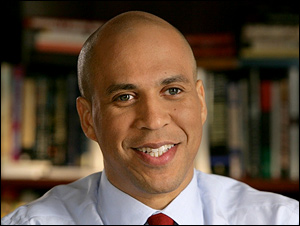
Newark Mayor Cory Booker (D)

Newark Mayor Cory Booker (D)

Yesterday, just 8.8 percent of New Jersey voters went to the polls (481,847 of more than 5.47 million registered with 98 percent of precincts reporting) to participate in the special primary election for US Senate, a process that will prove to be the determinative step in choosing the late Sen. Frank Lautenberg’s (D) successor.

As aggregate polling had almost exactly predicted since the first day of this special election cycle, Newark Mayor Cory Booker commanded the Democratic primary. He racked up 59 percent of the vote compared to second place Rep. Frank Pallone’s (D-NJ-6) 20 percent, third-place finisher Rep. Rush Holt’s (D-NJ-12) 17 percent, with Assembly Speaker Sheila Oliver tallying only 4 percent.

Under Gov. Chris Christie’s (R) special election schedule, the general election vote is Wednesday, Oct. 16, and will officially feature Booker and Republican former Mayor Steve Lonegan (R-Bogota) who easily won the GOP nomination. Lonegan attracted 79 percent of the GOP vote against physician Alieta Eck. Six Independents will also appear on the general election ballot. The national Republican Party apparatus is not expected to actively support Lonegan, virtually conceding the seat to Booker.

The Newark mayor raised close to $10 million for the special primary election ($8.6 million through the final July 24 pre-primary disclosure period) as compared to Pallone’s $729,000 through the same period, though the congressman was able to transfer some $3.3 million from his US House committee. Holt raised over $962,000 during the same time frame and transferred an additional $500,000 from his congressional account to exceed $1.4 million in total Senate campaign receipts. Oliver reported raising less than $12,000.

Of the more than 481,000 people who voted yesterday, 352,120 participated in the Democratic primary. In a state where  Continue reading >

The Affordable Care Act and the Arkansas Senate Race

As we predicted last week when Rep. Tom Cotton (R-AR-4) announced his challenge to Sen. Mark Pryor (D-AR), this campaign could conceivably draw the most attention of any political race in the country. Yesterday, as reported in several political publications, already two more Arkansas Senate surveys were released.

Both of the new studies are from Republican pollsters, The Polling Company for the Washington Free Bacon conservative political website and OnMessage for the National Republican Senatorial Committee. Both project the race to be a dead heat. The Polling Company (Aug. 6-7; 600 registered Arkansas voters) scores the battle 45-43 percent in favor of Sen. Pryor. OnMessage (July 29-30; 600 registered Arkansas voters) gives Cotton a similar 44-42 percent edge.

These numbers are on the heels of another poll, from Harper Polling (Aug. 4-5; 587 registered Arkansas voters) that shows the same two point spread, this version 43-41 percent in favor of Republican Cotton.

But the ballot test questions do not give us the most salient clues as to how this campaign will likely unfold. It is clear from examining the questions asked, and the respondents’ answers, that the new national healthcare law’s implementation can become the over-riding driver of the campaign. Looking ahead through next year, if Obamacare implementation does become the determining focal point, Cotton likely will win. Conversely, if the new healthcare law is being implemented in a satisfactory manner and other issues evolve into greater or equal importance, Sen. Pryor probably survives.

According to The Polling Company data, 50 percent of the respondent pool would be less likely to support Sen. Pryor because of his vote in favor of Obamacare, versus the 40 percent who answered more likely. The OnMessage totals are more stark. According to their data tables, 55 percent would be more likely to support Cotton because he voted to repeal Obamacare, contrasting with 33 percent who say they are more likely to support Sen. Pryor because he voted for Obamacare.

Most analysts believe that the public view of the new healthcare law will deteriorate over the next year as more people understand how the legislation will directly affect them. Therefore, Cotton must use his campaign to  Continue reading >

Re-Capping the Senate

Current Senate makeup

Current Senate makeup

With last week’s announcement that Rep. Tom Cotton (R-AR-4) would challenge Sen. Mark Pryor (D), thus setting the Arkansas field for 2014, it is a good time to check the national US Senate picture.

In 2014, 35 Senate races are on tap, including campaigns in Hawaii and South Carolina to affirm political appointments. Of the 35, the following 18 senators currently have little or no pending opposition for 2014:

Jeff Sessions (R-AL), Mark Udall (D-CO), Chris Coons (D-DE), Jim Risch (R-ID), Dick Durbin (D-IL), Pat Roberts (R-KS), Susan Collins (R-ME), Ed Markey (D-MA), Thad Cochran (R-MS), Jeanne Shaheen (D-NH), Tom Udall (D-NM), Jim Inhofe (R-OK), Jeff Merkley (D-OR), Jack Reed (D-RI), Tim Scott (R-SC), Lamar Alexander (R-TN), John Cornyn (R-TX), and Mark Warner (D-VA).

Alaska:
Despite the potential of former Gov. Sarah Palin (R) running here, the likely 2014 pairing is first-term incumbent Sen. Mark Begich (D) and Lt. Gov. Mead Treadwell (R). This will be a tight race, but Alaskans don’t often unseat incumbents.

Arkansas: The match is already set – Sen. Mark Pryor (D) vs. Rep. Tom Cotton (R). Arkansas is now trending Republican, but unseating an incumbent – especially one who ran unopposed in the previous election – is never easy.

Georgia: Michelle Nunn (D), the daughter of former Sen. Sam Nunn (D), will be her party’s nominee. The Republican side is a free-for-all among five candidates, all of whom could conceivably win the nomination. The Republican general election candidate should have the advantage, but this primary battle could turn nasty.

Hawaii: Appointed Sen. Brian Schatz is drawing serious Democratic primary opposition from Rep. Colleen Hanabusa. The Dem primary, which must be rated a toss-up, will determine who wins the  Continue reading >

NJ Senate Race: Already Over

Newark Mayor Cory Booker

Newark Mayor Cory Booker

The New Jersey special primary election to replace the late Sen. Frank Lautenberg (D) is scheduled for next Tuesday (Aug. 13), but according to Quinnipiac University’s final poll before the vote, the race is virtually over.

When Lautenberg died in early June and Gov. Chris Christie (R) scheduled the special election to choose a replacement, the early polling showed Newark Mayor Cory Booker with numbers approaching or breaking 50 percent of the Democratic vote with the other candidates, representatives Frank Pallone (D-NJ-6), Rush Holt (D-NJ-12), and state House Speaker Sheila Oliver, barely breaking past 10 percent or registering only in single digits.

In the just-released Q-Poll (Aug. 1-5; 2,042 registered New Jersey voters; 388 likely Democratic primary voters) the results have barely changed. According to the data, Booker commands support from 54 percent of the polling sample versus just 17 percent for Rep. Pallone, 15 percent for Rep. Holt, and only 5 percent for Speaker Oliver. With less than a week to go, it’s hard to conceive of any scenario that does not result in a Booker victory.

Forecasting toward the special general to be held Oct. 16, the Democrat vs. Republican results are similar. With former Bogota Mayor Steve Lonegan enjoying a commanding lead in the special Republican primary, a projected Booker-Lonegan pairing appears to be no contest. According to the Q-Poll, Booker would lead such a campaign 54-29 percent.

Though this primary battle has lacked serious competition, there are still some interesting points to be made. First, as it relates to the Q-Poll, there does appear to be some potential irregularities in the polling sample. With 2,042 people being interviewed, it’s hard to see how only 388 and 267 of them identify themselves as either Democratic or Republican primary voters, respectively. One would expect at least the Democratic number to be much  Continue reading >

Pryor vs. Cotton: It’s On in Arkansas

In what could become the premier Senate race of the election cycle, Rep. Tom Cotton (R-AR-4), as expected, officially announced his challenge campaign for the US Senate last evening. The freshman congressman spoke before a boisterous crowd in his small hometown of Dardanelle, just off Interstate 40 between Little Rock and Ft. Smith.

Anticipating the move, incumbent Sen. Mark Pryor (D) immediately launched a television attack ad (below), using the typical Democratic campaign strategy of painting his Republican opponent as favoring across the board reduction in government benefits from the farm bill to Medicare to Social Security:

http://youtu.be/OTZpvmkVRYQ

Polling here is already underway at a brisk pace. During the last two weeks, three polls have been released. The American Federation of State, County, and Municipal Employees (AFSCME) first tested the Arkansas electorate (July 23-27; 729 registered Arkansas voters) and found Sen. Pryor to be leading Rep. Cotton 43-35 percent.

The Magellan Strategies organization (July 30-31; 1,600 registered Arkansas voters) just concentrated on Sen. Pryor’s re-elect score, not even bringing forth a ballot test question. They then added push questions after the original query. According to the initial results, 37 percent of the people would vote to re-elect Pryor while 47 percent would prefer to support someone new. After posing negative push questions that attack the senator for “adding to the deficit,” being the “deciding vote for Obamacare,” and “voting for President Obama’s 93 percent of the time” the second re-elect question swings to only 30 percent supporting Pryor’s re-election and 59 percent wanting a replacement.
 Continue reading >

Polling Louisiana & Arkansas

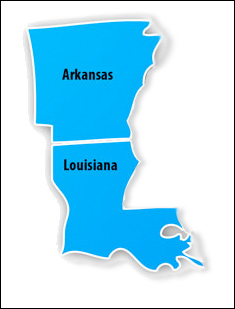
LA-ARK

Magellan Strategies just polled two 2014 focal point state electorates from which we will be hearing a great deal in the coming months. Both the Arkansas and Louisiana statewide races could well determine the outcome of the battle for the Senate majority. Realistically, if the Republicans hope to have any chance of capturing control of the body late next year they will have to defeat three-term incumbent, Sen. Mary Landrieu (D-LA), and Arkansas Sen. Mark Pryor (D) who is completing his second term in office.

The Magellan approach is interesting in that they asked virtually the same questions in each state during the same time period, and did not test either Sen. Landrieu or Pryor in a ballot test configuration. Rather, they concentrated solely on the incumbents’ re-elect score.

In both instances, the pollsters asked the respondents whether the incumbent in their state deserves re-election in 2014. After answering, several “push” questions were presented in order to determine attitudes and feelings about their senator’s support for the major Obama Administration policies. Then, a second re-elect was asked.

These are the push questions common to both surveys. In each instance, the respondent is asked if he/she is more or less likely to support the senator after hearing the statement:

1) The senator recently voted to support immigration reform legislation that offers amnesty to illegal aliens.

2) The senator supported President Obama’s agenda more than 95 percent (Landrieu) or 93 percent (Pryor) of the time.

3) The senator cast the deciding vote for Obamacare, which in some states has increased insurance premiums by 88 percent for people who buy their own insurance.

Here’s how the two senators fared:
 Continue reading >