Category Archives: Presidential campaign

Hickenlooper & Inslee:
Former Governor & Governor
Join Democratic Presidential Fray

By Jim Ellis

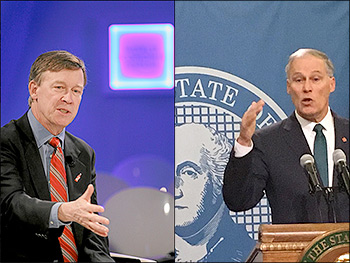
Left: Former Colorado Gov. John Hickenlooper (Photo, Moritz Hager) Right: Washington Gov. Jay Inslee

March 6, 2019 — Former Colorado Gov. John Hickenlooper joined the Democratic presidential field over the weekend, following Washington Gov. Jay Inslee who jumped in last Friday. The pair became the 12th and 13th official Democratic presidential candidates, and the first governor and former governor to join the campaign.

But what are the paths to actual nomination for each man? Neither has high national name identification and both are from states moderate in size: Washington has 107 total Democratic National Convention delegates, and Colorado 80. This places them as the 14th and 17th largest states among the 57 voting entities that will comprise the Democratic delegate pool.

It’s hard to see a viable way to the nomination for Gov. Inslee. Without a strong geographical base or high name ID, the two-term Pacific Northwest governor is attempting to carve a niche for himself as the climate change candidate, but that is a space already heavily populated. Sen. Bernie Sanders in particular stresses the climate change issues as part of his portfolio, as do most of the other candidates at least to a degree.

It’s possible Inslee also doesn’t see much of a path for himself, which explains why he answered so vociferously that he is not ruling out running for a third term in his present position when asked during his announcement event. With almost two-thirds of the bound delegate votes likely being decided on or before March 17, 2020, Inslee will have plenty of time to pivot back into a governor’s race because the Washington candidate filing deadline doesn’t elapse until May of that year.
Continue reading

As Joe Goes, So Go the Democratic Presidential Contenders

By Jim Ellis

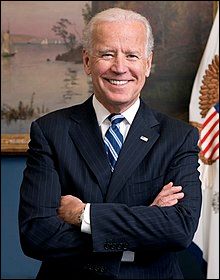
Former vice president and ex-Delaware senator Joe Biden: is he in or out of the 2020 presidential campaign?

Feb. 28, 2019 — A new national Morning Consult poll (Feb. 18-24; 15,642 registered US voters likely to vote in a Democratic primary via online questionnaire) finds former Vice President Joe Biden and Vermont Sen. Bernie Sanders pulling away from the rest of the Democratic presidential field.

Sen. Sanders is clearly getting a boost from his formal announcement. According to the Morning Consult regular tracking, he is up six points from just before he became an official candidate. It remains to be seen if his rise begins a trend or is just a polling blip because of increased media attention.

Overall, the MC data finds Biden’s national lead among the segmented Democratic voters dropping to just two points over Sen. Sanders, 29-27 percent. But, the pair are now well ahead of the remaining contenders. Sen. Kamala Harris (D-CA) drops a point in her own support, meaning she lost a net seven percent to Sanders from the last poll. Her new national total is 10 percent, three points ahead of both Sen. Elizabeth Warren (D-MA) and former US Rep. Beto O’Rourke (D-TX).

Continue reading

Tracking Trump’s Approval Ratings
Against Electoral College Results

2016 Electoral College Results map (270toWin)


By Jim Ellis

Feb. 26, 2019 — Already beginning to project where the states might fall in the 2020 presidential election, the Gallup organization released a 50-state survey tracking study Friday that summarizes their cumulative research collected throughout the past year.

Gallup finds President Trump slightly improving his standing over a similar project conducted from their aggregate 2017 data. Meanwhile, the Civiqs polling organization projects, as do all other pollsters, that Trump’s job approval remains upside-down. In the good news category for the president, however, the latter organization finds that he is viewed more positively than either of the national political parties.

Nationally, Trump carries a 44:52 percent job approval ratio according to the Civiqs poll of registered voters (polled continually from Oct. 12, 2015-Feb. 23, 2019; 181,729 responses during that multi-year tracking period). The Democratic Party, however, posts a lesser 39:52 percent rating, while the Republican Party lags behind both the president and their political party counterpart. The GOP registers a poor 26:60 percent index.

But these numbers are not particularly unusual because the same trend among the three polling subjects has been consistent for many months. The more telling conclusion is that the deviation factor among the approval ratings has remained constant for well over a year, suggesting that the electorate continues locked in a highly polarized and negative status.

Continue reading

Sanders’ Problem as an Independent

By Jim Ellis

Sen. Bernie Sanders of Vermont — an Independent, not a Democrat

Feb. 22, 2019 — A day after announcing his entry into the 2020 presidential campaign, Vermont Sen. Bernie Sanders jumped off to a strong start, raising a reported $6 million in just his first 24 hours as a repeat candidate. But, a technical problem also looms in the distance.

Last year, the Democratic National Committee adopted a new party rule that states any future presidential nominee must be an official Democratic Party member or, if an office holder, must have served as a Democrat. Sen. Sanders meets neither requirement.

Vermont has no party registration, so he is not a party member in that regard, and has continually, including during the present time, represented Vermont as an Independent. In fact, when offered the Vermont Democratic senatorial nomination for his re-election campaign in 2018, Sanders turned down the overture.

The fact that Sanders is still not a Democrat is confirmed when looking at the list of unpledged delegate slots, those commonly referred to as “Super Delegates.” An unpledged delegate is one who can vote as he or she pleases and is not subject to any binding vote law their particular state may have enacted.

Those who qualify as Super Delegates are Democratic National Committee members (430), every elected Democratic US senator (45), the two District of Columbia “Shadow” senators, all elected Dems in the House of Representatives (235 at the present time), the four Democratic delegates to the US House (District of Columbia, Guam, the Northern Marianas Islands, and the US Virgin Islands), and all of the party’s elected governors (26, including the District of Columbia mayor, and the territorial governors from American Samoa and Puerto Rico).

Continue reading

With Sanders Now a Democratic
Presidential Candidate,
What is His Path to Victory?

By Jim Ellis

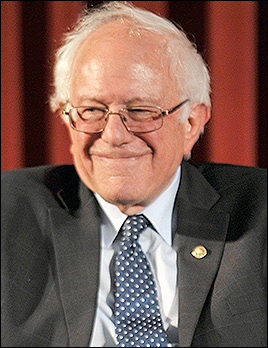
Sen. Bernie Sanders (I-D/VT)

Feb. 21, 2019 — Calling Donald Trump “the most dangerous president in modern American history,” Sen. Bernie Sanders (I-D/VT) announced his 2020 presidential campaign through You Tube and email this week.

His further virulent attack on President Trump was softened by his call to unite America under his presidential campaign, with a goal, he stated, of recruiting more than 1 million volunteers to participate in a grassroots message delivery operation.

The rhetoric notwithstanding, where is Sen. Sanders’ path to the Democratic nomination? This will only be the second time in his long career where he has actually entered Democratic Party primaries. Has his political opportunity window closed as many believe to be the case?

Though the senator is now 77 years of age and would be 79 when sworn into office, should he win the presidency next year, he still has strong support within the youngest segment of the American electorate. He also attempts to appeal to racial minorities, union workers, and climate change activists as the core constituencies of a political base that he believes can expand and carry him to the nomination.

But, unlike 2016, when he battled eventual nominee Hillary Clinton one-on-one through all of the primaries and to the Democratic National Convention only to lose 60-40 percent on the first ballot roll call, he does not have the Democratic left all to himself.

Continue reading

Poll: Harris Underwhelms in CA

By Jim Ellis

Declared presidential candidate, Democrat Sen. Kamala Harris of California.

Feb. 19, 2019 — A new Change Research poll was just released of the California Democratic presidential electorate and should former Vice President Joe Biden enter the race, he apparently would fare quite well in Sen. Kamala Harris’ home state.

According to the survey (Feb. 9-11; 948 likely California Democratic presidential primary voters) Biden and Sen. Harris would actually tie at 26 percent apiece. Sen. Bernie Sanders (I-D/VT) closely trails with 20 percent.

Considering the delegate proportionality rules, the two men would score a handsome number of committed delegates in Sen. Harris’ own backyard if this poll happens to correctly predict what could happen a year from now.

California is projected to send 495 delegates to the July 2020 Democratic National Convention, the largest contingent from any state. If Sen. Harris is to become a first-tier presidential candidate, she will have to reap a major delegate bounty in her home domain. Thus, merely breaking even with Mr. Biden would certainly be considered a disappointment in her quest for the nomination.

The rest of the field trails badly. No one, aside from the top three, even breaks into double-digits. In this survey, former Rep. Beto O’Rourke (D-TX) is fourth with eight percent, followed by Massachusetts Sen. Elizabeth Warren who posts a paltry seven percent, ahead of Sen. Cory Booker (D-NJ) with three percent, while former Housing & Urban Development secretary Julian Castro holds a two percent preference.

Continue reading

Biden Remains Ahead of the Pack

By Jim Ellis

Feb. 14, 2019 — A new Morning Consult national survey of Democratic presidential primary voters again finds former Vice President Joe Biden leading an ever-growing pack of hopefuls vying for the opportunity of facing President Trump in the 2020 general election.

The survey (Feb. 4-10: 11,627 registered voters who say they may vote in a Democratic presidential primary or attend a party caucus; 517 “early primary state” voters from Iowa, New Hampshire, Nevada and South Carolina), finds the former VP and long-time Delaware senator holding a 29-22-13 percent lead over Vermont Sen. Bernie Sanders (I/D-VT) and California Sen. Kamala Harris.

Sixteen more candidates or potential candidates were included in the poll, but none could crack double-digits. In the second tier, Sen. Elizabeth Warren (D-MA) pulled eight percent, closely followed by former Texas Rep. Beto O’Rourke (D-El Paso) with seven percent, and Sen. Cory Booker (D-NJ) who attracted five percent support. All of the others fell in between three percent and zero, inclusive.

Looking at only the four early states of Iowa, New Hampshire, Nevada and South Carolina (derived from an aggregate respondent group of 517 self-identified Democrats in those places), the order of candidates in the top tier doesn’t change, and Biden extends his lead to 33-21-11-10 percent over Sens. Sanders, Harris, and Warren. Sen. Booker gains one point to six percent, while ex-Rep. O’Rourke falls to five percent. No one else exceeds two percent.

Continue reading