Category Archives: Polling

Florida Poll Boosts DeSantis

By Jim Ellis

Florida Gov. Ron DeSantis (R) at the recent CPAC.

March 3, 2021 — Florida Gov. Ron DeSantis (R) is quickly becoming a national talking point with regard to the 2024 presidential campaign, but he first must further prove himself with a 2022 re-election victory in the always politically close Sunshine State.

Over the weekend at the annual Conservative Political Action Conference (CPAC), Gov. DeSantis was clearly the choice of the conservative base as a potential heir-apparent to former President Donald Trump.

In the future presidential straw poll, former President Trump placed first among the several thousand individuals who participated. He took 55 percent of the first-place ranked choice votes. Gov. DeSantis was a clear second pick, however, with 24 percent. Without Trump in the field, it was Gov. DeSantis running away with the lead, capturing 43 percent with South Dakota Gov. Kristi Noem a distant 11 percent second-place finisher. Donald Trump, Jr. followed with eight percent support.

Just after CPAC, Mason-Dixon Polling & Research released the findings from their Florida poll conducted during the Feb. 24-28 period. The organization surveyed 625 registered Sunshine State voters through a live interview process.

According to the M-D results, Gov. DeSantis’ job approval rating has improved to 53:42 percent favorable to unfavorable, a net 15-point gain from his standing in the July 2020 M-D survey that found him saddled with an upside-down ratio of 45:49 percent.

The job approval ratings are a precursor to his ballot test standing opposite a prospective Democratic gubernatorial nominee, of whom the two leading choices appear to be State Agriculture & Consumer Affairs Commissioner Nikki Fried and US Rep. Charlie Crist (D-St. Petersburg) who may make his third run for governor.

From 2007-11, Crist was governor of the state, but served as a Republican. He switched parties after a failed run for the US Senate as an Independent, and won the Democratic gubernatorial nomination in 2014, but lost to then-Gov. Rick Scott (R) in the general election.

Continue reading

Degrees of Uncommon Ground

Top issues of the right & left according to Echelon Insight’s recent survey. (To see full report go to: Echelon Insights in the News.)

By Jim Ellis

Feb. 26, 2021Echelon Insights just completed a national issues survey (Feb. 12-18; 1,005 US registered voters) testing Democrats and Republicans about the current events of greatest concern. The analysis reveals particularly deep divisions between the two parties upon respondents from each group being segmented, but there were some areas of agreement.

The pollsters first asked the aggregate group about several issues to gauge the individuals’ degree of concern. They found that economic damage from COVID-19 was the issue of gravest anxiety, with 74 percent of the respondents answering they are extremely or very concerned.

Next, was the spread of COVID-19 infections (69 percent extremely or very concerned); budget deficits and the national debt (58 percent); COVID-19 school closures (56 percent); COVID-19 lockdown policies (54 percent); climate change (45 percent); income inequality (42 percent); and the cancel culture (35 percent).

In some of these issue areas, we actually see a degree of agreement between respondents of the two parties. On the COVID economic damages question, 77 percent of Democrats responded extremely or very concerned as did 75 percent of Republicans. The issue of school closures also found similar responses. A total of 64 percent of Republicans and 57 percent of Democrats said they were extremely or very concerned.

Examining the issues of the COVID lockdowns and national debt, the party respondents fell apart, but are relatively within the same realm. Among Republicans, 66 percent said they are extremely or very concerned about the lockdowns; 50 percent of Democrats concurred. On the national debt issue, 67 percent of Republican and 50 percent of Democrats answered extremely or very concerned.

Their differences, however, were stark. Regarding the spread of COVID-19 infections, 87 percent of Democrats answered extremely or very concerned as opposed to 55 percent of Republicans. The cancel culture was of great concern to 48 percent of Republicans, but only 23 percent of Democrats.

Income inequality and climate change yielded similar opposite intensities. A total of 71 percent of Democrats answered affirmatively to being extremely or very concerned about climate change, but only 23 percent of Republicans responded similarly. Almost the same break occurred for the income inequality issue with 68 percent of Democrats signaling strong concern as compared to only 19 percent of Republicans who share those same feelings.

Continue reading

Newsom Recall Election Likely

By Jim Ellis

California Gov. Gavin Newsom (D)

Feb. 15, 2021 — Proponents of the recall effort against California Gov. Gavin Newsom (D), with more than a month remaining until the March 17 deadline to collect the necessary number of valid signatures, are already close to forcing a removal election.

Five other attempts have been made to recall Gov. Newsom, but this is the first that had a serious prospect of qualifying. According to the latest poll of the state’s electorate, dissatisfaction with both the governor and the state government’s response to the COVID-19 pandemic has led to the uprising.

Under California election law, state officials can be forced to stand for a recall election if a number of registered voters equal to 12 percent of the total number of votes cast in the most recent governor’s election, in this case the 2018 contest, sign a state certified petition. The total number of qualified signatures needed for the 2021 recall must equal a minimum of 1,495,709. Yesterday, the proponents reported that they have collected 1.47 million signatures. To ensure qualification, the organizing committee members have a goal of obtaining over 1.8 million signatures.

CALIFORNIA GOV. NEWSOME RECALL EFFORT:

 • Signatures Needed • Signatures Collected
 1,495,709 1,470,000
 • Signatures Reviewed • Signatures Validated
 485,650 410,087
 • Signature Approval Rate • Total Signatures Needed
 84.4% 1,772,169

At this point, the Secretary of State’s staff has reviewed 485,650 of the submitted signatures according to the FiveThirtyEight statistical website, and 410,087 have been ruled valid. This translates into an approval rate of 84.4 percent. If this ratio were to continue, the proponents would have to submit a minimum of 1,772,169 signatures. At their most recent reported gathering rate of over 100,000 signatures per week, they should easily reach their quota.

The University of California at Berkeley’s Institute of Government Studies released their latest statewide survey (Jan. 23-29; 10,357 registered voters from online stratified random samples) and compared it with the results from their September 2020 poll. The results show a significant deterioration in the governor’s support base in the short period between the two research studies.

Continue reading

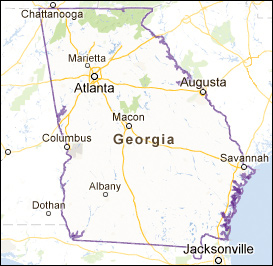
Georgia Runoffs Underway Today

By Jim Ellis

Jan. 5, 2021 — At long last, the 2020 US Senate election cycle will end today, and the determination of which party will hold the chamber’s majority for the next two years will likely become known late tonight.

To recap, Sen. David Perdue (R) and documentary filmmaker Jon Ossoff (D) battle for the in-cycle seat with the winner being awarded a six-year term. The special election winner, the race between appointed Sen. Kelly Loeffler (R) and Rev. Raphael Warnock (D), will serve the final two years of the term that resigned Sen. Johnny Isakson (R) won back in 2016. The seat will be in-cycle for the full six-year term in 2022.

The 2020 regular election outcome, current polling, and the early/mail voting count all suggest very close results to unfold this evening.

To re-cap:

2020 Regular Election Tallies – Nov 3, 2020

Seat A
Sen. David Perdue (R) 2,462,617 49.73%
Jon Ossoff (D) 2,374,519 47.95%
Shane Hazel (Lib) 115,039 2.32%
Total Cast 4,952,175
Seat B
Raphael Warnock (D) 1,617,035 32.90%
Sen. Kelly Loeffler (R) 1,273,214 25.91%
18 Others (D/R/I) 2,024,112 41.19%
Total Votes
Total R Vote 2,426,120 49.37%
Total D Vote 2,377,712 48.38%
Total I Vote 110,529 2.25%
Total Cast 4,914,361

Continue reading

Georgia Senate Races Unfold

(Sen. David Perdue Ad)

By Jim Ellis

Dec. 9, 2020 — We are over halfway into the Georgia US Senate runoff campaigns that will decide the national legislative body’s majority and it is clear that political prime time will determine the winners. Election Day is now less than a month away and the start of early voting begins next Monday, Dec. 14.

Setting the political table, the Republicans have a slight advantage coming from both Nov. 3 elections. GOP Sen. David Perdue (see ad above) placed ahead of Democrat Jon Ossoff (see ad below) by 88,098 votes but came up a quarter of a percentage point shy of obtaining the majority support necessary to win. In the 20-candidate field for the special election, when adding all of the Republican candidates and comparing that tabulation to the Democratic aggregate, we see the GOP holding a 47,808 vote edge.

(Jon Ossoff Ad)

The combined Georgia Senate runoff elections are sure to set a spending record once the campaigns end on January 5th. Already, according to the AdImpact marketing organization, as the Daily Kos Election site and Bloomberg Government reports, over $300 million has been spent since the beginning of these runoff campaigns.

(Raphael Warnock Ad)

A total of $170 million has been expended in the special election campaign, for example. Between the two candidates, Democrat Rev. Raphael Warnock (see ad above) has outspent Republican Sen. Kelly Loeffler (see ad below), $60 million to $45 million, but outside groups supporting the appointed incumbent have more than made up the difference, outlaying $53 million as compared to $13 million from left-of-center organizations.

https://youtu.be/_BylA3URYEo(Sen. Kelly Loeffler Ad)

Democrats have run approximately 42,000 commercials as compared to the Republicans’ 33,500 during the runoff period even though the latter party and its allies have spent more. Because the right-of-center organizations have dominated the non-candidate spending, and the cost to run such ads is greater than for an individual candidate’s committee, the monetary imbalance is thus explained.

Polling predictably shows a close race with virtually every study finding all four contenders within the polling margin of error, as a listing of the latest post-November 3rd election surveys reveal:

Senate – A

Trafalgar Group (Dec. 1-3; 1,083 likely voters)

• Jon Ossoff (D) 48%
• Sen. David Perdue (R) 47%

Survey USA (Nov. 27-30; 583 likely voters)

• Jon Ossoff (D) 50%
• Sen. David Perdue (R) 48%

RMG Research (Nov. 19-24; 1,377 likely voters)

• Jon Ossoff (D) 48%
• Sen. David Perdue (R) 47%

Insider Advantage (Nov. 16; 800 likely voters)

• Jon Ossoff (D) 49%
• Sen. David Perdue (R) 49%

Remington Research Group (Nov. 8-9; 1,450 likely voters)

• Sen. David Perdue (R) 50%
• Jon Ossoff (D) 46%

Senate – B – Special Election

Trafalgar Group (Dec. 1-3; 1,083 likely voters)

• Sen. Kelly Loeffler (R) 50%
• Raphael Warnock (D) 45%

Survey USA (Nov. 27-30; 583 likely voters)

• Raphael Warnock (D) 52%
• Sen. Kelly Loeffler (R) 45%

RMG Research (Nov. 19-24; 1,377 likely voters)

• Raphael Warnock (D) 48%
• Sen. Kelly Loeffler (R) 46%

Insider Advantage (Nov. 16; 800 likely voters)

• Raphael Warnock (D) 49%
• Sen. Kelly Loeffler (R) 48%

V-Creek/AMG (Nov. 10; 300 likely voters)

• Sen. Kelly Loeffler (R) 50%
• Raphael Warnock (D) 46%

Remington Research Group (Nov. 8-9; 1,450 likely voters)

• Sen. Kelly Loeffler (R) 49%
• Raphael Warnock (D) 48%

The campaign messages are also well defined. Sen. Perdue continues to emphasize the national negative themes that appeared to work well for the GOP in the down ballot races: socialism, defunding the police, packing the US Supreme Court, raising taxes, and illegal immigrant voting.

Ossoff has been concentrating his ad messages on COVID and what he claims are Perdue and President Trump’s failures in handling the issue. His latest ad linked below features film of former President Barack Obama at a rally for the Democratic candidate, along with Ossoff’s wife, Dr. Alisha Kramer, who is a physician.

Turning to the special election, the Loeffler and Warnock campaigns have been trading attacks, counterattacks, and defensive messages.

Rev. Warnock hits Sen. Loeffler on her controversial stock transactions, while she responds with an aggressive hit about him being an extremist who calls the police “thugs” and once invited Fidel Castro to speak at a church where Rev. Warnock was an assistant pastor. Warnock responds with the linked ad that shows him walking his dog and disposes of the animal’s excrement in a reference to characterizing the Loeffler attacks.

In the end, the races will come down to which side can better deliver its base votes to the polls. Turnout will be robust but certainly well under the 4.952 million people who originally voted in the Perdue-Ossoff campaign, the larger turnout figure from the two Senate contests.

At this point, the races’ conclusion is uncertain, but Republicans should still have at least a slight advantage heading into early voting period and the election itself. Such a premise is based upon past voting history even in this politically changing state, and the original vote margins recorded on Nov. 3.

Presidential Polling Report – Part II

By Jim Ellis

Nov. 30, 2020 — Last week, we covered the cumulative polling community’s 2020 accuracy in the Great Lakes region (scroll down below), and today we look at how their predictions fared in President Trump’s five core states of Arizona, Florida, Georgia, North Carolina, and Texas. If the President had been able to carry all five states, and he has now officially failed in Arizona and Georgia, he would have only needed to win one of the battleground state bordering a Great Lake to secure re-election.

In each place, we take the five publicly released polls conducted closest to the election and analyze whether the cumulative and individual survey research firms came close to the final result or missed beyond the polling margin of error.


Arizona

Canvassing is not yet complete in Arizona, but it appears Mr. Biden scored a 49.4 to 49.1% victory, a margin of just 10,457 votes. Carrying Arizona was the first conversion step for Mr. Biden to win the national election.

The final five pollsters were the NBC News/Marist College; CNBC/Change Research; Reuters/Ipsos, Emerson College, and Rasmussen Reports. Here, NBC/Marist came the closest, predicting the two candidates landing in virtually a dead heat. All five, however, were within the polling margin of error, though Rasmussen Reports did call the winner wrong, predicting President Trump would carry the state by four percentage points.

Arizona – Biden 0.3 percent

NBC News/Marist 10/29 – 11/1 717 LV 48 48 Tie
CNBC/Change Research 10/29 – 11/1 409 LV 50 47 Biden +3
Reuters/Ipsos 10/27 – 11/1 610 LV 49 47 Biden +2
Emerson 10/29 – 31 732 LV 48 46 Biden +2
Rasmussen Reports 10/27 – 29 800 LV 45 49 Trump +4

Florida

Cumulative polling predictions again projected a close Democratic win during most of the late election cycle only to see, for the fourth consecutive time in a major Florida statewide race, the Republican candidate reversing the trend and clinching a close win. The latest Florida data was much closer to the mark as three of the final five pollsters correctly forecast a win for President Trump.

The Trafalgar Group proved the closest with their Trump +2 final projection. CNBC/Change Research missed by the most, a six-plus point swing from their Biden +3 prediction to a Trump +3.3 final result.

The final five Sunshine State pollsters were: Fox 35/Insider Advantage; the Trafalgar Group; CNBC/Change Research; Susquehanna Polling & Research; and Rasmussen Reports.

Florida – Trump 3.3 percent

FOX 35/Insider Adv 11/2 400 LV 47 48 Tie Trump +1
Trafalgar Group 10/31 – 11/2 1003 LV 47 49 Tie Trump +2
CNBC/Change Research 10/29 – 11/1 806 LV 51 49 Tie Biden +3
Susquehanna 10/29 – 11/1 400 LV 46 47 Tie Trump +1
Rasmussen Reports 10/29 – 31 800 LV 48 47 Tie Biden +1

Georgia

Just about everyone missed the final count in Georgia, though pollsters throughout the election cycle were clearly forecasting a close Peach State race that certainly ended in such a manner. With the race now certified, Biden won the state, 49.5 to 49.3 percent, a margin of just 12,670 votes.

The only pollster to correctly predict a Biden victory was Public Policy Polling, while the Trafalgar Group, despite being closest in Arizona, was furthest away in Georgia. The five pollsters were: WSB-TV/Landmark Communications; the Trafalgar Group; Insider Advantage; Emerson College; and Public Policy Polling.

Georgia – Biden 0.2 percent

WSB-TV/Landmark 11/1 500 LV 50 46 Trump +4
Trafalgar Group 10/31 – 11/2 1013 LV 50 45 Trump +5
Insider Advantage 11/1 500 LV 48 46 Trump +2
Emerson 10/29 – 31 749 LV 49 48 Trump +1
PPP 10/27 – 28 661 LV 46 48 Biden +2

North Carolina

North Carolina, being one of the quintessential swing states in the country, again produced a close race in 2020 as President Trump claimed the Tar Heel State with just a 1.3 percentage margin, 49.9 – 48.6 percent. Rasmussen Reports was again closest to the mark, as they were in Pennsylvania. Most of the polling throughout the entire election cycle, however, 57 of 85 published polls with eight ties, forecast Biden as holding a North Carolina lead.

The five final pollsters were: Insider Advantage; CNBC/Change Research; Emerson College; Reuters/Ipsos; and Rasmussen Reports. While RR was the closest, CNBC/Change Research was furthest away.

North Carolina – Trump 1.3 percent

Insider Advantage 10/30 – 31 450 LV 48 44 Trump +4
CNBC/Change Research 10/29 – 11/1 473 LV 47 49 Biden +2
Emerson 10/29 – 30 855 LV 47 47 Tie
Reuters/Ipsos 10/27 – 11/1 707 LV 48 49 Biden +1
Rasmussen Reports 10/28 – 29 800 LV 48 47 Trump +1

Texas

Media report after media report continued along the theme that the Lone Star State of Texas was in play for Biden but, in the end, Texas remained red and voted for President Trump in a 5.5 percentage spread, 52.0 – 46.5 percent, which was the closest major statewide race in nearly two decades.

At the end of the race, the pollsters were detecting a clear move toward President Trump largely because the oil and gas industry issues, so important to the Texas economy, became the focal point of attack throughout most of the campaign.

The University of Houston poll called the race almost exactly correct, while two academic institution pollsters, Emerson College and Quinnipiac University, were furthest away. The five pollsters were: Emerson College; University of Massachusetts at Lowell; Siena College/New York Times; Quinnipiac University; and the University of Houston.

Texas – Trump 5.5 percent

Emerson 10/29 – 31 763 LV 49 49 Tie
UMass Lowell 10/20 – 26 873 LV 48 47 Trump +1
Siena College/NYT 10/20 – 25 802 LV 47 43 Trump +4
Quinnipiac 10/16 – 19 1145 LV 47 47 Tie
University of Houston 10/13 – 20 1000 LV 50 45 Trump +5

ME-2

For the second time in two presidential elections, the 2nd Congressional District of Maine bucked the statewide trend and supported President Trump. Biden’s larger margin in the ME-1 CD allowed him to carry the statewide count, which earned him three of Maine’s four electoral votes.

As in the US Senate election in which the polling community missed the final result by the largest margin in the country, so too did they underestimate President Trump’s strength in northern Maine.

All five final pollsters forecast a Joe Biden victory in ME-2, but the end result was a substantial win for President Trump. Each missed well beyond the polling margin of error. The five polling firms were: Change Research; Emerson College; Survey USA; Colby College; and Pan Atlantic Research.

ME-2 – Trump 7.9 percent

Change Research 10/29 – 11/2 475 LV 47 46 Biden +1
Emerson College 10/29 – 31 301 LV 50 47 Biden +3
Survey USA 10/23 – 27 509 LV 48 45 Biden +3
Colby College 10/21 – 25 453 LV 46 42 Biden +4
Pan Atlantic Research 10/2 – 6 300 LV 47 43 Biden +4

Presidential Polling Report – Part I

By Jim Ellis

Note: All the best for a wonderful Thanksgiving holiday. Political Updates will return on Monday, Nov. 30.

Former VP Joe Biden

Nov. 25, 2020 — Now that the states are certifying their election results and the numbers are becoming clearer, we can look at the key battleground regions and assess the cumulative polling community’s accuracy.

Today we look at the key Great Lakes region and the states that turned away from President Trump and landed in former vice president Joe Biden’s camp. Polling had predicted Biden to win all four of the key states, Michigan, Minnesota, Pennsylvania, and Wisconsin, which he did, but they largely missed the mark when it came to margin. In three of the five instances the pollsters predicted substantial wins for Biden, not the close result he ultimately recorded.

In each place, we take the five publicly released polls conducted closest to the election and analyze whether the cumulative and individual survey research firms came close to the final result or missed beyond the polling margin of error.


Michigan

In Michigan, where Biden scored a 50.6 to 47.8 percent victory, the final five pollsters were the Trafalgar Group, Insider Advantage, CNBC/Change Research, Emerson College, and Mitchell Research. Insider Advantage came the closest, predicting a Biden two-point victory. Three pollsters missed beyond the polling margin of error. The Trafalgar Group actually predicted a Trump win.

Michigan – Biden 2.8 percent

Trafalgar Group 10/30 – 31 1033 LV 46 48 Trump +2
Insider Advantage 10/30 – 31 500 LV 49 47 Biden +2
CNBC/Change Research 10/29 – 11/1 383 LV 51 44 Biden +7
Emerson 10/29 – 30 700 LV 52 45 Biden +7
Mitchell Research 10/29 817 LV 52 45 Biden +7

Minnesota

Though Minnesota is the most loyal state to the Democrats in the presidential race, it appeared for a time that the state could become close, just like in 2016 when President Trump came within 1.5 percentage points of capturing the domain. In 2020, however, Minnesota returned to form and awarded Biden a 52.5 to 45.4 percent win. Here, the final five pollsters were Survey USA, the Trafalgar Group, KSTP/Survey USA (two separate polls), and Minnesota Post. All fell within an acceptable accuracy range.

Minnesota – Biden 7.1 percent

SurveyUSA 10/23 – 27 649 LV 47 42 Biden +5
Trafalgar Group 10/24 – 25 165 LV 48 45 Biden +3
KSTP/SurveyUSA 10/16 – 20 625 LV 48 42 Biden +6
MinnPost 10/12 – 15 1021 LV 49 44 Biden +5
KSTP/SurveyUSA 10/1 – 6 929 LV 47 40 Biden +7

Pennsylvania

The Keystone State has been the site of the most strenuous voter fraud lawsuits, which included a Trump legal victory. In the end, however, the victorious lawsuit(s) would not be enough to overturn the projected result, which was a close 50.0 – 48.8% finish. Polling was inconsistent with Rasmussen Reports coming closest to the final result. Three of the five firms actually predicted a Trump victory. The pollsters were: Susquehanna Polling & Research, Rasmussen Reports, the Trafalgar Group, NBC News/Marist College, and Insider Advantage.

Penn – Biden 1.2 percent

Susquehanna 11/1 – 2 499 LV 48 49 Trump +1
Rasmussen Reports 10/31 – 1 800 LV 50 47 Biden +3
Trafalgar Group 10/30 – 31 1062 LV 46 48 Trump +2
NBC News/Marist 10/29 – 11/1 772 LV 51 46 Biden +5
Insider Advantage 10/30 – 31 500 LV 47 49 Trump +2

Wisconsin

The Badger State was the closest of the four regional entities that touch a Great Lake. The final result saw the two candidates coming within just 20,608 votes, or a percentage breakdown of 49.4 – 48.8 percent in favor of the Democratic nominee. Polling from four of the five entities missed badly, all predicting a substantial win for Biden.

Susquehanna was the closest of the group, missing by just over two percentage points. CNBC/ Change Research, Susquehanna Polling & Research, Emerson College, Ipsos/Reuters, and Siena College/New York Times comprised the final group of survey research entities.

Wisconsin – Biden 0.7 percent

CNBC/Change Research 10/29 – 11/1 553 LV 53 45 Biden +8
Susquehanna 10/29 – 31 450 LV 49 46 Biden +3
Emerson 10/29 – 30 751 LV 53 45 Biden +8
Reuters/Ipsos 10/27 – 11/1 696 LV 53 43 Biden +10
NY Times/Siena 10/26 – 30 1253 LV 52 41 Biden +11

NE-2

For the second time in the past four presidential elections, the 2nd Congressional District of Nebraska went against the statewide trend and awarded an electoral vote to the candidate losing the statewide count. In addition to this year, the same pattern occurred in 2008 when then-Sen. Barack Obama carried the district but not the state.

This time the Biden victory was substantial with FM3 Research projecting the correct margin of 11 percentage points. The other pollsters, while forecasting a Biden win, significantly missed the actual winning spread. The five pollsters were: UNLV Business School, Change Research, Emerson College, FM3 Research, and Siena College/New York Times.

NE-2 – Biden 11.4 percent

UNLV Business School 10/30 -11/2 191 LV 50 44 Biden +6
Change Research 10/29 – 11/2 547 LV 50 47 Biden +3
Emerson College 10/29 – 30 806 LV 50 48 Biden +2
FM3 Research 10/1 – 10/4 450 LV 53 42 Biden +11
Siena College/NYT 9/25 – 9/27 420 LV 48 41 Biden +7