Category Archives: Polling

Single Digit Difference in Washington Senate Race; Similarly Tight Races in Nevada House Races; NY Gov. Candidates in Close Battle, Too

By Jim Ellis — Thursday, Nov. 3, 2022

Senate
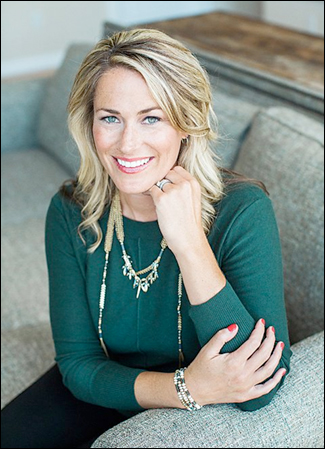
Washington Senate race challenger Tiffany Smiley (R)

Washington: Tight Single Digits Confirmed — We now see two separate polling firms coming to the conclusion that the Washington Senate race, always on the periphery of competitiveness, is closing in challenger Tiffany Smiley’s (R) favor.

The Trafalgar Group poll (Oct. 25-28; 1,207 likely Washington general election voters; multiple sampling techniques) released their results finding Sen. Patty Murray’s (D) lead over Smiley dropping to a bare 49-48 percent. Insider Advantage, in their one-day flash poll on Oct. 31 (550 likely Washington general election voters) sees a very similar 48-46 percent split. The IA polling analysis suggests a post-televised debate surge of independent voters to Smiley accounts for the status change.

House

FL-4: Senate President Pro Tem Cruising in Congressional Race — The Republican-drawn congressional map created a new open seat in the Jacksonville area that is poised to elect a new Republican member. A just-released University of Northern Florida survey (Oct. 20-27; 413 likely FL-4 general election voters) suggests that the draw will remain true. The poll finds state Senate President Pro Tempore Aaron Bean (R-Jacksonville) leading businesswoman LaShonda Holloway (D) by a double-digit margin, 50-38 percent. Bean was an easy winner in the Republican primary and should have little problem adding this seat to the GOP column next week.

Nevada: Underlying House Numbers Looking Good for GOP — We’ve seen a plethora of polling for the Nevada statewide races, and most numbers during the last month has shown the Republican candidates either tied or slightly ahead with the Democratic incumbents below 50 percent. But, we’ve seen very little data concerning the three competitive Las Vegas congressional districts.

Emerson College just released their polling results in the three districts from surveys taken during the Oct. 26-29 period, sampling between 480 to 530 likely voters. In the 1st District, Republican Mark Robertson (R) has a commanding 54-42 percent lead over incumbent Rep. Dina Titus (D-Las Vegas) — a very surprising result. At the time of the legislature passing redistricting, however, Titus warned that the new 1st District draw would endanger her.

In the new 3rd, Republican April Becker has a smaller, but substantial, 52-47 percent lead over two-term Rep. Susie Lee (D-Las Vegas). In the slightly more Democratic 4th CD, incumbent Steven Horsford (D-Las Vegas) claims a slight 51-48 percent edge over Republican businessman Sam Peters.

New Hampshire: Two Latest Polls Flip Races — The latest two polls in New Hampshire’s pair of congressional districts see flipped results in both races. Last week, we reported on the co/efficient research organization’s surveys over the Oct. 25-26 period that saw Democratic Rep. Chris Pappas (D-Manchester) leading Republican Karoline Leavitt in the 1st District race, 48-44 percent, while they found GOP challenger Robert Burns edging Rep. Annie Kuster (D-Hopkinton/Concord), 44-43 percent, in the 2nd District race.

St. Anselm College, a regular New Hampshire polling entity, released the results of their set of Oct. 28-29 surveys earlier this week, and they produce opposite results. In the 1st District, St. A’s sees Leavitt pulling ahead of Rep. Pappas in the district that has defeated more incumbents than any seat in the country since 2004, by a surprising 51-45 percent count. In District 2, St. Anselm posts Rep. Kuster to a 50-42 percent advantage over Burns. Once again, we see different pollsters arriving at differing results for the same races. Compiling the data suggests that both of these swing races are too close to call.

Governor

New York: Seriously Tight — US Rep. Lee Zeldin (R-Shirley/East Long Island) has now clearly made the governor’s race into a tight contest according to a pair of polling firms, although a third disagrees. Three more polls were released testing his candidacy against that of Gov. Kathy Hochul (D), and two of the results find a virtual tie.

KA Consulting (Oct. 27-29; 501 likely New York voters; live interview) finds Gov. Hochul’s lead to be only 46-45 percent, while the Trafalgar Group (Oct. 27-31; 1,198 likely New York voters; multiple sampling techniques) sees Rep. Zeldin actually pulling into a lead by just under one full percentage point. Conversely, Emerson College’s results (Oct. 28-31; 1,000 likely New York voters; multiple sampling techniques) claims that Gov. Hochul maintains a lead well beyond the polling margin of error at 52-44 percent. We will see which firms are closer to the end result in less than a week.

Poll Posts Walker to Small Lead; Grassley Maintains Double-Digit Lead; Tight Polls in FL-13, NM-2

By Jim Ellis — Wednesday, Nov. 2, 2022

Senate

Georgia Sen. Raphael Warnock (D) and Republican challenger Herschel Walker

Georgia: University of Georgia Posts Walker to Small Lead — The University of Georgia, polling for the Atlanta Journal-Constitution newspaper, one of the more accurate of Peach State pollsters (Oct. 16-27; 1,022 likely Georgia general election voters; live interview), now becomes the sixth of the most recent seven survey research entities to project Republican Herschel Walker as having a slight lead over Sen. Raphael Warnock (D). The result means the contest is a dead heat with Walker up only 46-45 percent.

With the early vote reports favoring an increased Democratic performance based upon the party’s 2020 performance and Republicans not doing as well at this point, suggests that, first, we will have a very close finish, and second, the chance of advancing into another post-election runoff election could well occur since it is possible that neither candidate reaches the 50 percent mark. Under Georgia election law, candidates must exceed 50 percent to claim victory. Therefore, we could see a runoff election between the two major party candidates occur on Dec. 6 with Libertarian candidate Chase Oliver eliminated.

Iowa: Sen. Grassley Maintaining Double-Digit Lead — In the closing days of this Iowa Senate race, 89-year-old incumbent Sen. Chuck Grassley (R) is looking much stronger after two separate polls suggested the race had closed to within three percentage points. The new Cygnal firm’s Hawkeye State poll (Oct. 26-27; likely Iowa general election voters) projects the senator to be holding a 54-43 percent advantage over retired Navy Adm. Mike Franken (D).

Grassley’s favorability index, however, is down to 49.9 – 43.5 percent favorable to unfavorable. The pollsters find the generic question breaks +14 for Republicans. Though this is down from their previous poll, such a rating is substantial and should prove favorable for the GOP up and down the ticket next Tuesday night.

House

FL-13: Tight Poll in GOP Must-Win — The vacant 13th Congressional District in Pinellas County has been viewed as a must-win for the GOP if they are to score big on election night. Until he resigned to concentrate on his statewide race, ex-representative and former governor, Charlie Crist (D-St. Petersburg), represented the district. After redistricting, this seat became much more Republican — R+12 according to the FiveThirtyEight data organization.

A St. Pete Polls survey (Oct. 26-27; 509 likely FL-13 general election voters; interactive voice response system) sees Republican Anna Paulina Luna only slightly ahead of former Defense Department official Eric Lynn (D), however. This will be yet another race to closely monitor on election night.

NM-2: A Virtual Tie — The Democratic redistricting operation made New Mexico’s southern congressional district as favorable as possible for the party’s 2022 nominee, but polling continually shows this race will go down to the wire. While Las Cruces City Councilman Gabe Vasquez (D) leads in surveys, his margin is only two percentage points, 47-45 percent, over freshman Rep. Yvette Herrell (R-Alamogordo) according to the latest Research & Polling company survey (Oct. 20-27; 410 likely NM-2 general election voters; live interview).

Since the poll has an error factor of 4.8 percent, this race can clearly go either way. This is the fourth poll released regarding this race since July. All show a margin for Vasquez of two points or less.

Governor

Georgia: Kemp Up Well Beyond Margin of Error — The aforementioned University of Georgia poll for the Atlanta Journal-Constitution (see Georgia Senate above) also tested the state’s competitive governor’s race. Here, incumbent Gov. Brian Kemp (R) has led former state House Minority Leader Stacey Abrams (D) in polling throughout the election cycle. The UGA poll is consistent with this common finding.

Again, running far ahead of Republican Senate nominee Herschel Walker, Gov. Kemp posts a 51-44 percent advantage, well beyond the polling margin of error for such a statewide poll. The question becomes whether Kemp’s strong partisan run will be enough to develop a turnout model that helps Walker across the finish line, as well.

Bolduc Pulls Into Tie in NH; Conflicting Senate Polls in Ohio;
PA Polls Show Dr. Oz Ahead

By Jim Ellis — Tuesday, Nov. 1, 2022

Senate

Retired Army Gen. Don Bolduc (R)

New Hampshire: Bolduc Pulls Into Tie — The co/efficient firm tested the New Hampshire electorate (Oct. 25-26; 1,098 likely New Hampshire general election voters; live interview & text) and sees retired Army Gen. Don Bolduc coming all the way back to even in what was believed to be his long-shot chance against Sen. Maggie Hassan (D). With Republican leaders coming within a percentage point of denying him the party nomination, Gen. Bolduc has successfully rebounded to competitive status in the short time since the Sept. 13 primary. The co/efficient ballot test finds both candidates pulling 46 percent preference.

Though the reported vote totals are customarily low in New Hampshire, only 21,089 recorded votes so far according to the Target Smart data organization representing 16.5 percent of the number voting early in 2020, Republicans are up 4.7 percent over their previous performance while Democrats are down .7 percent.

Ohio: Conflicting Five Point Leads — Two polling entities, surveying within the same time period, arrive at diametrically different results. In fact, both project the Ohio Senate candidate they see as the leader to a five-point advantage. Center Street PAC (Oct. 24-26; 508 likely Ohio general election voters) posts the race in Rep. Tim Ryan’s (D-Warren/ Youngstown) favor with a 47-42 percent margin. The Cygnal polling firm (Oct. 22-26; 1,817 likely Ohio general election voters; multiple sampling techniques) comes to a wholly different conclusion: Republican J.D. Vance leading 49-44 percent.

The preponderance of October polling is more consistent with Cygnal’s findings. In the last 16 surveys, Vance has led in 11 of the ballot tests, Rep. Ryan in three, and in two the candidates were tied. So far, however, early voting favors the Democrats. Based upon their 2020 performance, the Democratic participation is up 3.5 percentage points while the Republicans are down 4.4 points.

Pennsylvania: Confirming Polls — At the end of last week, Insider Advantage became the first to publish a survey after the Pennsylvania Senate debate and projected the Republican nominee, Dr. Mehmet Oz, to be holding a 48-45 percent edge. Now, we see two more pollsters coming to similar conclusions.

The Wick Insights research firm tested the PA electorate (Oct. 26-27; 1,000 likely Pennsylvania general election voters; online) and sees a 48-46 percent Dr. Oz lead. The co/efficient firm was also in the field (Oct. 26-28; 1,716 likely Pennsylvania general election voters; live interview & text) and likewise found a 48-45 percent Oz edge over Lt. Gov. John Fetterman (D).

The latter poll found both Senate candidates saddled with upside-down favorability indexes. Dr. Oz, as he has for most of the election cycle, records a higher negative than positive ratio, 37:46 percent. Fetterman now joins Dr. Oz in negative territory with an index of 43:49 percent.

House

NH-1: Rep. Pappas’ Advantage — The 1st District of New Hampshire has seen more incumbents lose since 2004 than any CD in the country. Rep. Chris Pappas (D-Manchester), however, is working on bucking that trend. Running for a third term, the co/efficient New Hampshire poll (Oct. 25-29; 525 likely NH-1 general election voters; live interview & text) projects the congressman to a four-point 48-44 percent lead over former Trump White House aide Karoline Leavitt (R).

NH-2: Upset Possibility — As part of their statewide survey, co/efficient also tested the state’s 2nd CD, which covers New Hampshire’s western sector. This sub-poll (Oct. 25-26; 573 likely NH-2 general election voters; live interview & text) finds challenger Robert Burns (R), the former Hillsborough County (Manchester) treasurer, edging five-term Rep. Annie Kuster (D-Hopkinton), 44-43 percent.

Though this is the more Democratic seat of the state’s two districts – the FiveThirtyEight organization rates NH-2 as D+2 and NH-1 as R+1 – the 2nd CD may give the Republicans their better opportunity of claiming an upset on election night.

Post-Debate Poll Shows Oz Lead

By Jim Ellis; Monday, Oct. 31, 2022

Senate

Pennsylvania Senate Republican nominee Dr. Mehmet Oz, the television doctor

Dr. Oz Ahead in Post-Debate PA Poll — The first poll conducted after the highly publicized Pennsylvania Senate debate was just released, and it reveals a lead change.

It is possible that the Pennsylvania race could well determine the next Senate majority. A Republican open seat from a politically marginal state, either major party candidate has a chance to win here next month. It is reasonable to assume, with so many other races around the country polling tight but largely in favor of the incumbent party in all but one of the other respective campaigns, that the path to the Senate majority runs through Pennsylvania.

To review, Dr. Mehmet Oz won the Republican primary back in May but it took election officials nearly a month to determine that he had defeated former hedge fund CEO David McCormick by 950 votes from the 1.346 million ballots that were cast in the statewide GOP primary.

Democrats have well-known problems here, too. Just three days before the primary election, Lt. Gov. John Fetterman, the leading Democratic senatorial candidate who would go onto win a landslide intra-party victory over US Rep. Conor Lamb (D-Pittsburgh), suffered a serious stroke. He has yet to fully recover, and this debate marked the first time he would face Dr. Oz in a one-on-one format.

To facilitate Fetterman’s rehabilitation from the stroke, both campaigns agreed that the debate administrators, Nextar Media Group, would install a closed caption system where the Democratic nominee could read what was being asked of him. Immediately after the debate, the Fetterman communications director complained that the system was not working properly, which, he said, explained the lieutenant governor’s halting and sometimes rambling answers.

The Nextar spokesman retorted that the system worked properly, and that Fetterman only participated in one of the two rehearsals they offered him. He said Fetterman attending both sessions would have allowed him to better master the system.

The Insider Advantage firm tested the Keystone State electorate a day after the Pennsylvania US Senate debate. The IA poll (Oct. 25; 750 likely Pennsylvania general election voters) projects the Republican nominee, Dr. Oz, to a 48-45 percent edge, and is only the third survey during the entire election cycle that shows him topping Fetterman. A total of 39 polls have been conducted of this Senate race since the May 17 primary from 28 different survey research firms.

A total of 83 percent of the Insider Advantage poll respondents said they saw all or part of the debate either live or in post-debate news coverage. While this post-debate poll slightly favors the Republican candidate, early vote totals portend a Democratic advantage.

According to the Target Smart data organization early vote analysis, 713,029 people have already cast their ballot in the Pennsylvania election. This number represents 49.3 percent of the total early votes cast in 2020 and just over 10 percent of the total Pennsylvania presidential election vote. Compared to the 2018 midterm, the current early vote number represents just over 14 percent of the total vote figure from that comparable election.

At this point, 73.0 percent of the Pennsylvanians voting early are registered Democrats as compared to just 23.3 percent who identify as Republican. A total of 3.6 percent of the 2022 early votes come from non-affiliated voters.

Though the numbers overwhelmingly favor the Democrats, the pattern is similar to that of 2020, which yielded a close general election result. With about half of the early vote cycle remaining, Democrats have so far increased 7.5 percent from their 2020 early vote performance, while Republicans are down 3.9 percentage points. Obviously, these numbers are a positive sign for Democrats.

It is likely, however, that the partisan gap closes to more closely align with the 2020 end total since Republicans not only vote in commanding numbers on election day, but they also tend to vote late in the early voting cycle.

Expect to see several more post-debate polls released very shortly. It is clear that the Pennsylvania race has moved into a toss-up status; hence, the closing days of this campaign are likely to be determinative.

House

PA-12: The Name Game — State Rep. Summer Lee (D-Braddock) has a unique problem. Though running in a strongly Democratic open congressional seat that includes downtown Pittsburgh, her Republican opponent’s name is the same as the long-time retiring Democratic Congressman, Mike Doyle.

Lee is running ads clearly explaining that her opponent is not the retiring congressman. Her approach is likely to work since the new 12th District is strongly Democratic. The fact that she has to advertise to warn about mistaken identity, however, tells us that Lee’s internal data is showing that the name confusion is causing her political problems.

Intriguing “Real Clear” Projections Show the GOP Winning the Senate

To see this map and the data behind it, visit Real Clear Politics (RCP).

By Jim Ellis — Thursday, Oct. 27, 2022

Senate

How Republicans Look to Claim Senate Majority — The Real Clear Politics (RCP) data group released their updated US Senate projections, and their formula suggests that Republicans will claim a surprising 53-47 majority.

Such a projection seems to cut against most of the data we currently see, and, in at least three cases, their win projection is opposite of what their own current Real Clear Politics formula shows.

The crux of their predictions lies in a field entitled “Polls Underestimated,” which factors in an average under-poll for one party or the other. In the 10 Senate races they isolated, Republicans are the under-polled party in most but not all of the targeted campaigns.

Utah, Alaska, Iowa, Washington — The two competitive Senate races not included were first, Utah, where they list Sen. Mike Lee (R) as a “likely” winner, though polling generally shows his race with Independent Evan McMullin falling to within single digits. The second is Alaska, which is excluded because the contest is evolving into a race between two Republicans; hence, the seat is not a factor in determining the overall Senate majority. Also, the race between Sen. Chuck Grassley (R) and retired Navy Adm. Michael Franken (D) is also not included, but Sen. Patty Murray’s (D) battle against Republican Tiffany Smiley in Washington is added.

As mentioned above, in three of the races the RCP prognosticators are expecting a turnaround since their own current data is suggesting an opposite result.

Nevada — The RCP current polling projection in the Silver State suggests that Republican former state Attorney General Adam Laxalt holds a slight 0.8 percent lead over Sen. Catherine Cortez Masto (D). Here, RCP estimates that Democrats under-poll in Nevada by one percentage point. This should leave Sen. Cortez Masto with a 0.2 percent edge, but the table shows Laxalt holding such a lead. This appears to be an error. In any event, their final prediction shows a Laxalt victory, which is reasonable.

Arizona — A state away, Sen. Mark Kelly (D) currently holds an RCP polling lead of 2.5 percentage points over Republican opponent Blake Masters. A Republican under-poll of 1.6 is factored from results during the last three election cycles, which reduces the senator’s advantage to 0.9 percent. In 2020, a total of 21 polls were conducted of the Kelly-Martha McSally Senate race, and Kelly’s average margin was 6.6 points, yet he won only 51-49 percent. Therefore, concluding a Republican under-poll exists in Arizona is reasonable. In this situation, while their model finds Sen. Kelly leading today, RCP predicts a Republican victory for venture capitalist Masters.

Georgia — The other conclusion that is perhaps inconsistent is their prediction for the Georgia Senate race. Showing Republican Herschel Walker with a 1.1 percentage point edge after an under-poll factor of 1.4 is added to the Republican column leads the RCP final prediction that Walker and Sen. Raphael Warnock (D) would be forced into a post-election runoff on Dec. 6. Yet, in the overall count, Georgia is counted in the Republican column. Though not stated, RCP must be predicting that Walker would win the runoff election.

Under Georgia law, as we will remember from 2020, a candidate must receive majority support to win the general election. On the ballot with Sen. Warnock and Walker is Georgia Libertarian Party chairman Chase Oliver. If Warnock and Walker split the vote to where both candidates post in the neighborhood of the 48-49 percent number, then a few points going to Oliver could send the two major party nominees into a Dec. 6 secondary election with Oliver being eliminated from the mix. Thus, we will see more even intrigue on election night coming from the Peach State.

Pennsylvania — RCP is also predicting victory for two candidates who their model suggests are currently behind but who flip after adding the under-poll factor. In Pennsylvania, Democratic Lt. Gov. John Fetterman is running ahead by 1.3 percentage points according to the current RCP survey average. Adding a 3.9 percent Republican under-poll to the aggregate gives Dr. Mehmet Oz a 2.6 percent adjusted lead. RCP predicts a Dr. Oz victory on Nov. 8.

New Hampshire — The race between Sen. Maggie Hassan (D) and retired Army Gen. Don Bolduc (R) has tightened. The RCP average sees a Hassan lead of 3.6 percent but adding a large 5.4 New Hampshire Republican under-poll actually gives Gen. Bolduc a 1.8 percent edge. Still, RCP predicts a Hassan Democratic victory on Election Day.

Other Wins — Finally, the Real Clear Politics data team predicts Republicans to win the Senate races in Florida, North Carolina, Ohio, and Wisconsin, with Democrats holding Washington.

Added up, these numbers result in a 53-47 Republican majority. Possible? Yes. Likely? No.

First Early Vote Report; NY Judge Nixes Pre-Election Absentee Ballot Counting, Zeldin Gains Momentum; Grassley’s Lead More Comfortable

By Jim Ellis — Tuesday, Oct. 25, 2022

Voting

Target Smart: First Early Vote Report — The Target Smart data organization has released their first major report highlighting the earliest of early voting figures (through Oct. 19). Though the pre-election ballot casting cycle still has multiple days remaining for the 45 states that employ some form of an early voting procedure, we already see turnout figures very similar to the 2020 partisan voting pattern.

In the Senate battleground states, Target Smart has recorded over 2.7 million ballots already cast. This is just under one-third the number of people who voted early in these states back in 2020 and already a half-million more than the total early votes cast in the 2018 midterm.

At this point, it appears that the partisan early vote complexion nationally and in the battleground states is similar to what we saw unfold in 2020. Therefore, if Republicans are headed for a significant bump in this midterm turnout, it is not yet evident from the preliminary early voting reports.

New York: Judge Strikes Down Absentee Ballot Pre-Election Counting — New York is already one of the slowest ballot counting states, and a judicial ruling rendered on Friday will likely lead to an even slower count. The legislature and governor had enacted a law that allowed election officials to count the received absentee ballots before the election with the caveat that no results were released. The judicial ruling struck down this new law, saying such a process is unconstitutional under New York law. Therefore, we can count on not receiving final returns until some six weeks post-election day.

Senate

Iowa: Sen. Grassley’s More Comfortable Lead — On the heels of the Des Moines Register/ Selzer & Company poll (Oct. 9-12; 620 likely Iowa voters) that found Sen. Chuck Grassley (R) holding only a three-point lead over retired Navy Adm. Michael Franken (D), The Tarrance Group followed with their own study. This poll (Oct. 15-19; 600 likely Iowa general election voters; live interview) restores the senator to a double-digit lead, 53-42 percent. Still, this is a competitive contest and a race to watch in this election cycle’s final days.

Washington: Big Conflict — Once again, we see two polling firms testing at exactly the same time in the same Senate race (Oct. 19-20) but arriving at radically different conclusions. Public Policy Polling, surveying for the Northwest Progressive Institute (782 likely Washington voters; live interview & text) sees Sen. Patty Murray (D) topping Republican Tiffany Smiley, 52-42 percent, which is consistent with most other surveys and the Aug. 2 jungle primary vote (Murray 54-Smiley 32 percent). Conversely, the co/efficient firm (1,181 likely Washington voters; live interview & text) sees only a three-point margin between the two candidates, 48-45 percent, in the senator’s favor.

Survey USA was also in the field during the similar period (Oct. 14-19; 589 likely Washington voters; online) and they split the difference between PPP and co/efficient. S-USA returned a 49-41 percent Murray advantage. Though this race has several times touched upon competitiveness, the jungle primary and Washington voter history again suggests an impending victory for Sen. Murray.

Governor

New York: Rep. Zeldin Takes Lead — The last week has brought new data regarding the New York governor’s race. Several pollsters are suggesting that US Rep. Lee Zeldin (R-Shirley/East Long Island) is gaining momentum against Gov. Kathy Hochul (D). The co/efficient firm (Oct. 18-19; 1,056 likely New York general election voters; live interview & text) reports their ballot test showing, for the first time, Rep. Zeldin taking a one-point, 46-45 percent, lead.

The five previously released October polls saw Rep. Zeldin trailing by 8 (Marist College), 6 (Schoen Cooperman Research), 11 (Siena College), 4 (Quinnipiac University), and 6 points (Survey USA). Now, co/efficient takes him to a one-point edge. It appears that the New York governor’s race is heading toward an interesting conclusion.

Nevada Electorate Trending to Laxalt, GOP in General; Budd Edging Beasley in NC; CO-8 Race Tight; Oregon’s Gubernatorial Race Leaning Towards Drazan

By Jim Ellis — Monday, Oct. 24, 2022

Senate

Former Nevada Attorney General and current Senate candidate, Adam Laxalt (R)

Nevada: Trending Laxalt — The latest CBS News/YouGov poll (Oct. 14-19; 1,057 likely Nevada general election voters; online panels) finds former Nevada Attorney General Adam Laxalt (R) regaining a one point lead, 49-48 percent, over Sen. Catherine Cortez Masto (D) in the race now featured as the most likely Democratic seat that potentially flips to the GOP. The CBS/YouGov poll marks the eighth of the most recent nine polls projecting Laxalt to a small lead. Considering there is likely a Republican undercount, chances are good that Laxalt’s edge is slightly larger.

The YouGov pollsters also tested the state’s tight governor’s race. There, Gov. Steve Sisolak (D) and Clark County Sheriff Joe Lombardo (R) are tied at 48 percent. Nevada becomes a critical state in determining the Senate majority along with deciding a key governor’s race. The state also features three lean Democratic seats in Las Vegas, all of which are competitive and each has some chance of flipping to the GOP, as well.

North Carolina: Budd’s Breathing Room — The new Trafalgar Group poll is following the East Carolina University survey that projected breathing room for US Rep. Ted Budd (R-Advance) in his open-seat Senate race against former state Supreme Court Chief Justice Cheri Beasley (D). The Trafalgar data (Oct. 16-19; 1,081 likely North Carolina general election voters; multiple sampling techniques) gives Budd a 48-44 percent lead over Beasley. A few days earlier, the ECU data projected a 50-44 percent Budd margin.

Until these pollsters detected a swing toward Budd, the two candidates had been tied or separated by one percentage point in the last six consecutive polls from six unique pollsters. Though the race is still rated a toss-up, a break toward Budd could be forming.

House

CO-8: As Tight as Predicted — Colorado’s new 8th Congressional District that stretches from the Denver suburbs north to the city of Greeley was drawn to be a hotly contested CD. A new Global Strategy Group survey for the Yadira Caraveo (D) campaign (Oct. 11-16; 600 likely CO-8 general election voters; live interview) finds Republican state Sen. Barbara Kirkmeyer (R-Weld County) claiming a two-point, 46-44 percent, edge over Caraveo a Democratic state representative from Adams County.

The race margin hasn’t changed since Global Strategy Group’s released August poll that also found Kirkmeyer holding a two point advantage. Expect this contest to go down to the wire.

Governor

Oregon: Drazan Still Holding Top Spot — The three-way Oregon gubernatorial campaign, featuring strong Independent candidate Betsy Johnson, who served as a Democrat in the state legislature for 20 years, is one of the nation’s most interesting campaigns. More race data is now available as a Hoffman Research Group survey (Oct. 17-18; 684 likely Oregon general election voters; live interview) produces a result that continues to post Republican Christine Drazan, the former state House Minority Leader, to a two-point, 37-35 percent lead over ex-state House Speaker Tina Kotek (D) with Independent Johnson dropping to 17 percent support.

The negative campaign ads have taken their toll on all of the candidates. Drazan fares best of the three contenders with a favorability index of just 35:32 percent favorable to unfavorable. Kotek is upside-down at 31:43 percent, while Johnson posts a 23:32 percent ratio. If successful in the three-way race that features no runoff election, Drazan would become the state’s first Republican governor since Victor Atiyeh left office in January of 1987.