Category Archives: Election Analysis

Potential Presidential Candidates:
The Moves They’re Making

By Jim Ellis

Jan. 10, 2019 — January promised to be an active month on the budding presidential campaign front, and we are already seeing movement in that regard. Below is a synopsis of the latest activity from major and not so major potential national candidates.

  • Billionaire Tom Steyer (D) scheduled a political announcement from Iowa yesterday, which yielded a statement that he is forming a presidential exploratory committee in addition to calling for President Trump’s outright impeachment and removal from office.
  • On Saturday, former Housing & Urban Development secretary Julian Castro (D) is expected to announce his candidacy after beginning the exploratory phase of his effort in early December. Should his presidential effort fizzle early, pivoting into a Senate race against three-term Texas incumbent John Cornyn (R) could become a viable political option.
  • Former US representative and Texas senatorial candidate Beto O’Rourke (D) has asked staff members, according to the Wall Street Journal, to begin developing a meeting and events schedule in states other than his own.
  • California Sen. Kamala Harris (D) is beginning a book tour next Tuesday for her publication, “The Truths We Hold”, which appears to be a precursor to officially forming a presidential exploratory committee.
  • Former Virginia governor Terry McAuliffe has changed his personal website to look like a campaign website, including a disclaimer that indicates he is paying for the site himself. The design and content makes transitioning into a presidential campaign website simple and efficient.
  • Former vice president, Joe Biden, is holding intense meetings with former staff members and campaign advisors to assess whether he will enter the 2020 nationwide contest. At this point, Biden has a substantial lead in national Democratic nomination polls, and in the key early state of Iowa, but is still nowhere close to securing majority support in any survey. It is likely that we will begin to obtain substantial clues to his ultimate intention sometime in February or early March.

Previously declaring their candidacies are former US Rep. John Delaney (D-MD), West Virginia state senator and 2018 congressional nominee Richard Ojeda (D), and entrepreneur Andrew Yang.
Continue reading

Kentucky Gubernatorial Race
Challengers Emerging

By Jim Ellis

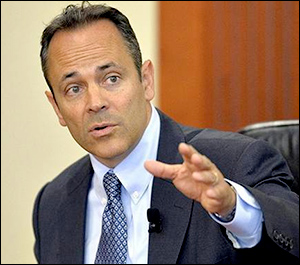
Unpopular Kentucky Gov. Matt Bevin (R)

Jan. 9, 2019 — Blue Grass State politics are beginning to boil, all centered around the 2019 governor’s race. With the candidate filing deadline fast approaching on Jan. 29 for the May 21 statewide primary, several individuals are announcing that they will challenge unpopular Gov. Matt Bevin (R), including a Republican state legislator who is expected to make his formal declaration today.

Though the governor has said he intends to seek a second term, and did so again a week before Christmas, the fact that he has yet to file a 2019 campaign committee has fueled speculation that he may decide to retire. Bevin was elected in 2015 with a relatively substantial 52.5 – 43.8 percent victory over then-Attorney General Jack Conway (D) after upsetting then-agriculture commissioner and now US congressman, James Comer (R-Tompkinsville), by just 83 votes in a May Republican primary that drew almost 215,000 voters.

Bevin’s popularity ratings, however, have largely been upside-down throughout his tenure in office. According to the Morning Consult quarterly national gubernatorial approval rankings that were released just before the November elections in mid-October, Gov. Bevin ranked 46th on the nationwide list, with a 30:55 percent positive to negative ratio.

None of those finishing below the Kentucky governor on that particular scale in October remains in office. The least popular, according to the survey, Oklahoma Gov. Mary Fallin (R), was ineligible to seek a third term last November. Republican Kevin Stitt replaced her. Connecticut Gov. Dan Malloy (D) did not seek a third term and Democrat Ned Lamont held the office. Illinois Gov. Bruce Rauner (R) was defeated for re-election, and Alaska Independent Gov. Bill Walker withdrew before the election because his political situation was hopeless.

Continue reading

Kansas Sen. Roberts Announces
Retirement; Can Seat Stay With GOP?

By Jim Ellis

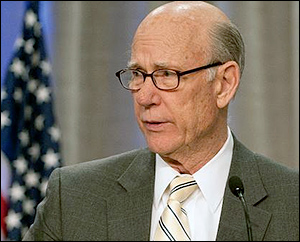
Kansas Sen. Pat Roberts (R)

Jan. 8, 2018 — Veteran Kansas Sen. Pat Roberts (R), who will turn 84 years of age before the next election, announced last Friday that he will not seek re-election to a fifth term in 2020. He becomes the second Senate incumbent to announce his retirement effective 2021, following Tennessee’s Lamar Alexander (R) who made his decision public just before Christmas.

In 2014, Sen. Roberts faced a competitive election against Independent Greg Orman who appeared to coalesce the anti-Roberts vote when Democrat Chad Taylor withdrew from the race because the latter man knew that the senator was certain to win a three-way contest.

With early October polls finding Orman leading Sen. Roberts by as many as 10 percentage points, the veteran Kansas office holder pulled out all of the stops to rebound with a 53-43 percent win. The 2014 Republican wave helped Roberts sweep to victory, overcoming what proved to be largely inaccurate polling along the way.

Pat Roberts was originally elected to Congress in 1980, winning the western 1st District, a seat he would hold for eight terms before claiming an open Senate position in 1996. At the end of the current term he will conclude 40 years of congressional service.

Continue reading

House: Opening with a Vacancy

By Jim Ellis

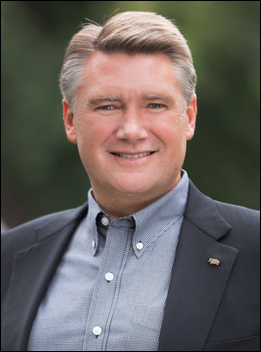
North Carolina Republican Mark Harris

Jan. 7, 2019 — When the new House of Representatives convened last week, they did so with only 434 voting members, not 435, as the situation in North Carolina’s 9th District remains unresolved.

To recap, Republican Mark Harris scored an apparent 905-vote victory over Democrat Dan McCready on election night, but the results remain uncertified due to what a majority of Board of Elections panel members are citing as voting irregularities in one county. The panel is scheduled to next meet this Friday, Jan. 11th, and organizing a new election is the likely resolution.

Previously, the Board only had the power to order a rerun of the general election. Hence, the subsequent election would have included only Harris, McCready, and Libertarian Jeff Scott. Considering the media hit that Harris has received over the election irregularity controversy, his chances of winning the rerun are slim. (He hired the Red Dome Consulting firm, which contracted with the individual accused of orchestrating the ballot harvesting operation, McCrae Dowless, the vice chairman of the Bladen County Soil and Water Conservation Board.)

Therefore, with Republicans controlling the legislature, they quickly constructed a legislative package that would give Democratic Gov. Roy Cooper largely what he wanted in naming a new Board of Elections panel, while changing the post-election law to allow open primaries. This would give the GOP the opportunity of replacing Harris in the general election.

The legislature quickly passed the reform package at the end of the year with an overwhelming margin, because most Democrats voted for the bill as it included their much-wanted Board of Elections changes. The legislation was sent to Gov. Cooper with veto-proof majorities in both houses.

Continue reading

Pelosi Returns as Speaker,
But By Just Two Votes

By Jim Ellis

Jan. 4, 2019 — California US Rep. Nancy Pelosi was returned to the Speaker’s office yesterday in a carefully orchestrated vote that allowed her to claim the gavel by a two-vote margin, while simultaneously allowing several incoming Democratic members to keep their campaign pledge to not support the returning national political leader. Pelosi received 220 votes from her conference, two more than the minimum majority figure of 218.

Rep. Nancy Pelosi (D-CA) returns as House Speaker

Fifteen Democrats voted for someone other than Pelosi in the Speaker’s roll call or answered “present.” Freshman Rep. Jeff Van Drew (D-NJ) simply voted “no” when his name was called but was recorded as voting present.

Not all of the Pelosi dissenters were freshman. Of the 15, veteran Reps. Jim Cooper (D-TN), Ron Kind (D-WI), Kathleen Rice (D-NY), and Kurt Schrader (D-OR) voted differently.

Cooper voted present. Rep. Kind supported Rep. John Lewis (D-GA), taking a page from Sen. Kyrsten Sinema’s (D-AZ) political book when she was in the House. During her three terms, Sinema voted for Rep. Lewis for Speaker to honor his civil rights career. Rep. Rice, an outspoken critic of Speaker Pelosi, voted for Georgia gubernatorial candidate Stacey Abrams. Schrader voted for Ohio Rep. Marcia Fudge (D-Cleveland). Just after the November election, Rep. Fudge briefly considered the idea of running for Speaker.

Continue reading

Senate To “Develop” Races

By Jim Ellis

Dec. 21, 2019
— Winding down 2018 allows us an opportunity to complete the coming Senate political picture.

As previously covered, the states comprising the early top tier competitive campaigns already include Alabama (Sen. Doug Jones), Arizona special (Senator-Designate Martha McSally), Colorado (Sen. Cory Gardner), Georgia (Sen. David Perdue), Iowa (Sen. Joni Ernst), Maine (Sen. Susan Collins), Mississippi (Sen. Cindy Hyde-Smith), and North Carolina (Sen. Thom Tillis).

Races that could develop or where the incumbent at least has a potential opponent being mentioned are: Kansas (Sen. Pat Roberts), Kentucky (Majority Leader Mitch McConnell), Minnesota (Sen. Tina Smith), New Hampshire (Sen. Jeanne Shaheen), Tennessee (Open: Sen. Lamar Alexander retiring), and Texas (Sen. John Cornyn).

Primary challenges are being speculated upon in Massachusetts (Sen. Ed Markey) and South Carolina (Sen. Lindsey Graham).

Minor candidates are surfacing in Arkansas (Sen. Tom Cotton), Nebraska (Sen. Ben Sasse), and New Jersey (Sen. Cory Booker), but none are expected to develop into major challenges.

So far, the incumbents from the remaining states do not even have potential opponents being cited at this early point in time:

  • Alaska (Sen. Dan Sullivan)
  • Delaware (Sen. Chris Coons)
  • Idaho (Sen. Jim Risch)
  • Illinois (Sen. Dick Durbin)
  • Michigan (Sen. Gary Peters)
  • Montana (Sen. Steve Daines)
  • New Mexico (Sen. Tom Udall)
  • Oklahoma (Sen. Jim Inhofe)
  • Oregon (Sen. Jeff Merkley)
  • Rhode Island (Sen. Jack Reed)
  • South Dakota (Sen. Mike Rounds)
  • Virginia (Sen. Mark Warner)
  • West Virginia (Sen. Shelley Moore Capito)
  • Wyoming (Sen. Mike Enzi)

Continue reading

Sinema & McSally Both Headed
to Washington as Senators

By Jim Ellis

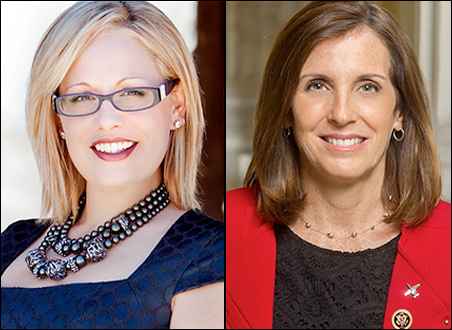
L-R — Arizona Reps. Kyrsten Sinema (D-Phoenix) and Martha McSally (R-Tucson)

Dec. 20, 2018 — Rep. Kyrsten Sinema (D-Phoenix) defeated Rep. Martha McSally (R-Tucson) for the open Arizona seat by 55,900 votes in November, but ironically now both are headed to Washington as new members of the US Senate.

Gov. Doug Ducey (R) announced that he is appointing Rep. McSally to fill the Senate vacancy after interim Sen. Jon Kyl (R) resigns on Dec. 31. McSally will then serve the next two years of the current term and looks to stand for a special election that will run concurrently with the regular 2020 election cycle. Whoever wins that election will then have the opportunity of running for a full six-year term in 2022 as the elected incumbent.

The late Sen. John McCain (R) won for the sixth time in 2016, meaning four full years remain before this seat next comes in-cycle.

The reaction to McSally’s appointment was predictably partisan. Republicans were generating positive comments mostly about her strong record of military service while Democrats responded that Arizona voters already rejected the Tucson House member, and saying they will beat her again in 2020.

While true that senator-elect Sinema did win the election just past, the battle was hard fought, and the victory spread ended close, 50-48 percent. McSally led through most of the counting and the final result was determined days after the last vote was cast. Therefore, suggesting that the state’s voters overwhelmingly rejected McSally is quite a stretch.

Continue reading