Tag Archives: Wyoming

Cheney: The Battle Intensifies

By Jim Ellis

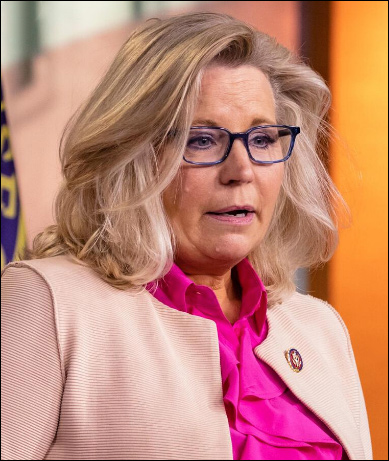
Rep. Liz Cheney, (R-WY)

July 23, 2021 –The internal Republican strife involving Wyoming at-large Rep. Liz Cheney (R-Wilson/Jackson) reached a heightened negative level Wednesday.

In what seems like a news story that won’t die, Rep. Cheney again sided with the Democrats regarding the continuing saga of reviewing the violent situation that occurred at the Capitol on Jan. 6th and this time publicly attacked her party’s top House leader.

The controversy again erupted on Wednesday when Speaker Nancy Pelosi (D-CA) rejected two of the Republican members that House Minority Leader Kevin McCarthy (R-CA) appointed to the select committee charged with investigating what occurred in the Capitol building on that January day.

Leader McCarthy had appointed Rep. Jim Banks (R-IN) as the ranking Republican for the select committee and Ohio Rep. Jim Jordan (R-Urbana) among his five designated appointments. Earlier, Pelosi had already chosen Rep. Cheney as her lone Republican committee selection, leaving McCarthy to recommend members to fill the remaining GOP slots.

After the Speaker rejected Reps. Banks and Jordan, Leader McCarthy pulled the remaining members on his slate and called the committee a partisan sham. Cheney, however, chose to remain as part of the Speaker’s contingent.

Rep. Cheney then held a news availability in front of the Capitol where she slammed McCarthy as being unfit to serve as Speaker, if the Republicans re-claim the majority in the next election, saying that “any person who would be the third in line to the Presidency must demonstrate a commitment to the Constitution and a commitment to the rule of law, and Minority Leader McCarthy has not done that.”

Those comments then led to Texas Rep. Lance Gooden (R-Terrell) tweeting, “when will Liz Cheney officially switch to the party that she truly represents? We don’t want her in the Republican Party any longer! She is a disgrace!”

Continue reading

It’s Down to a Dozen in SC-7

By Jim Ellis

South Carolina state Rep. William Bailey (R-Myrtle Beach)

June 17, 2021 — South Carolina state Rep. William Bailey (R-Myrtle Beach), who became the first individual to announce a Republican primary challenge to Rep. Tom Rice (R-Myrtle Beach) has become the first candidate to withdraw, with his announcement this past Tuesday. Bailey initially entered the race immediately after the congressman voted to impeach former President Trump in relation to the Jan. 6 assault on the Capitol.

Rep. Bailey indicated that there are ‘enough conservatives in the race to give Mr. Rice a strong challenge,’ and says he is leaving the congressional race to seek re-election to his state House position.

After Bailey’s departure, and including Rep. Rice, there are a dozen announced candidates for the Republican congressional primary in a 7th District that currently occupies South Carolina’s northeastern sector and includes the cities of Myrtle Beach and Conway. In the two Trump presidential elections, the district’s voters strongly supported the former president and with very consistent margins: 58-39 percent in 2016 and 59-40 percent last November.

Normally, a large field of opponents would help an incumbent, but maybe not under the South Carolina election system. The state, like many others in the south, adopts a secondary runoff election process, meaning the winning candidate must secure an absolute majority. If no one can achieve the mark in the primary election, the top two vote-getters advance to a secondary election.

What makes the Palmetto State’s system different is that the runoff cycle lasts only two weeks. Typically, South Carolina holds its primaries in mid-June with the associated runoffs following in the latter part of the month.

Therefore, an incumbent under attack doesn’t have much time to recover before the next election commences. This calendar likely enhances the most common pattern of incumbents generally losing a runoff election if they are forced into a secondary vote.

The large number of contenders notwithstanding, and without Rep. Bailey in the field, the two most prominent challengers appear to be Horry County School Board chairman Ken Richardson and former Myrtle Beach mayor, Mark McBride, though the latter man was defeated in a runoff election for a third term. McBride was also beaten badly in a 2020 special election for the state House of Representatives.

Continue reading

The Impeachment Ten

By Jim Ellis

Rep. Liz Cheney, (R-WY)

March 4, 2021 — Another credible opponent for Wyoming at-large Rep. Liz Cheney (R-Wilson/Jackson) came forward earlier this week, which continues the onslaught of political activity against the 10 House Republicans who voted in favor of impeaching then-President Donald Trump for his perceived role in the Jan. 6 Capitol uprising.

Already, Rep. Cheney has four credible opponents. The latest to announce is state Rep. Chuck Gray (R-Casper). He joins state Sen. Anthony Bouchard (R-Laramie), former Pavillion mayor Marissa Joy Selvig, and energy consultant Bryan Miller.

Of the four, Sen. Bouchard and Rep. Gray are the most credible, but the large field assembling against her actually helps Rep. Cheney. Considering that Wyoming is a plurality primary state, a person is nominated by simply obtaining the highest number of votes regardless of percentage attained. Therefore, with Cheney’s opposition split among multiple candidates, the chances of her winning re-nomination with less than a majority becomes a plausible outcome.

The other nine pro-impeachment members are in different situations. From this group, only New York Rep. John Katko (R-Syracuse) has not yet drawn Republican primary opposition.

Three others are from states with primary structures that will help them advance into the general election. Reps. David Valadao (R-CA), Jaime Herrera Beutler (R-WA), and Dan Newhouse (R-WA) will file under a top-two qualifying system.

Rep. Valadao represents a Bakersfield-Fresno district that voted heavily in favor of both President Biden and Hillary Clinton, the latter back in 2016. With all candidates on the same ballot, and not being from a strong Trump district, it is less likely that his vote to impeach the sitting Republican president will greatly affect him.

In the race are former Rep. T.J. Cox (D), the man who lost to Valadao by a percentage point in 2020 after defeating him by an even closer split in 2018, former state Assemblywoman Nicole Parra (D), and ex-Fresno City Councilman and 2020 congressional candidate Chris Mathys (R).

Washington Rep. Beutler, under the same top-two primary system as California’s Valadao, has already drawn three Republican opponents, none of whom have held elective office. We can expect a strong Democrat to emerge here, meaning the eventual preliminary vote division should provide Rep. Beutler with a relatively easy road into the general election.

Continue reading

CO-3: Rep. Boebert Challenge Looming

By Jim Ellis

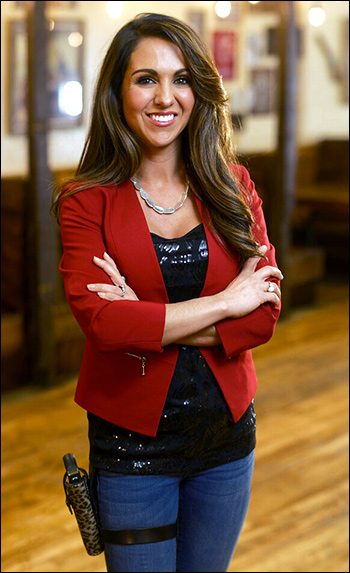
2nd Amendment activist, local restaurant owner and now US Rep. Loren Boebert represents Colorado’s 3rd CD.

Feb. 8, 2021 — Colorado freshman Rep. Lauren Boebert (R-Silt), who first upset then-Rep. Scott Tipton in the 2020 Republican primary and later overcame more than $6 million in combined spending from her general election opponent and outside organizations, can count on seeing another tough campaign in 2022.

Already, candidates are lining up, and the most prominent one in the early going announced late last week. State Senate President Pro Tempore Kerry Donovan (D-Gunnison) released a video announcing that she will forego re-election to the state legislature in order to challenge Rep. Boebert in the next congressional campaign. Rancher Gregg Smith and former state House candidate Colin Wilhelm had previously declared their intentions to compete for the Democratic nomination.

Lauren Boebert is a Florida native who moved with her family to the Denver area when she was 12 years old. She then re-located to the Western Slope region in 2003 and, with her husband, opened their restaurant, Shooters Grill, in 2013.

Congresswoman Boebert has attracted much national attention so far with her insistence of carrying a firearm on the House floor. Such is nothing new since she has always holstered a side arm in her restaurant establishment and made defending the 2nd Amendment the cornerstone of her congressional campaign effort.

Despite being heavily outspent, Boebert carried the general election against former state representative and 2018 congressional nominee Diane Mitsch Bush (D) by a 51-45 percent margin, meaning a spread of 26,512 votes. Former President Trump, who recorded only 42 percent of the statewide vote, also carried the 3rd District in a similar 52-46 percent margin.

Continue reading

Early House Outlook – Part I

By Jim Ellis

Jan. 20, 2021 — With the presidential Inauguration dominating political attention this week, it is a good time to set the upcoming electoral stage for the US House on a 50-state basis. Today, a first of a four-part series, will begin to look at the 13 western states. During the rest of the week, we will move eastward.


• Alaska – 1 Seat (1R)
Rep. Don Young (R-Ft. Yukon), the Dean of the House, won his 25th term in November with a 54-45 percent victory in a competitive race. With Alaska being an at-large state, reapportionment and redistricting won’t change the political situation. The big question surrounding the 87-year-old congressional veteran is when will he retire?


• Arizona – 9 Seats (5D4R)
The Arizona population growth rate makes them a cinch to gain a 10th District in reapportionment. It is also clear that the new seat will be placed in the Phoenix metropolitan area. Arizona has a redistricting commission comprised of two Democrats, two Republicans, and one Independent. The latter member becomes the chairman. The membership has not yet been chosen.

The state’s marginal nature suggests that we will see a very competitive state once all 10 seats are in place. Currently, there are two districts where the winning House member received 52 percent of the vote or less. This means GOP Rep. David Schweikert (2020 winning percentage: 52.2) and Democratic incumbent Tom O’Halleran (2020 winning percentage: 51.6) will be looking to add more Republicans and Democrats to their seats, respectively.

An open governor’s race (Republican Gov. Doug Ducey ineligible to seek a third term) and what should be a competitive re-election for Sen. Mark Kelly (D) could cause open seats in the House delegation should any of the sitting members attempt to run statewide.


• California – 53 Seats (42D11R)
For the first time in history, the Golden State appears positioned to lose a seat in their US House delegation. With migration exiting the state exceeding those incoming, it appears the California growth rate did not keep up with the specified threshold in order to keep all of their 53 seats. The Los Angeles area is likely to absorb the loss of the seat, but which member will be paired with another is an open question.

California voters adopted an initiative before the 2010 census that established a citizens’ commission to administer redistricting under strict parameters that emphasizes keeping cities and counties whole when possible and irrespective of where any particular incumbent may reside. Therefore, with the mapping power removed from the legislature, it is possible that inside Democratic politics might play a lesser role in the redistricting process.

Continue reading

Rep. Spano Loses; Lummis to Return

By Jim Ellis

Aug. 19, 2020 — In the wake of yesterday’s primaries, here’s a quick look and analysis of the three states where voters cast their ballots — Florida, Wyoming and Alaska:


FLORIDA

Freshman Rep. Ross Spano (R-Dover), who had been under fire and investigation for accepting improper loans to his 2018 campaign, lost his re-nomination campaign last night to Lakeland City Commissioner, local business owner, and retired Navy pilot Scott Franklin in a 51-49 percent count with over 60,000 votes tabulated.

Spano becomes the eighth House incumbent and fifth Republican to lose re-nomination this year, the highest number we’ve seen during recent times in a non-redistricting election. With Franklin now as the new GOP nominee, it is reasonable to believe that the GOP is actually in stronger position to hold the seat because Franklin won’t have the political baggage that Rep. Spano carried.

For the Democrats, former TV News anchorman Alan Cohn defeated state Rep. Adam Hattersley (D-Riverview), 41-33 percent, to advance into the general election. Franklin becomes the clear favorite in this 53-43 percent Trump district that a congressional Democrat has never won since the Lakeland-anchored seat was first created in a similar configuration for the 1992 election.

Both primary winners here were outspent. Rep. Spano raised $1.06 million as compared to Franklin’s $587,000 according to the latest available campaign finance disclosure reports (through the July 29 pre-primary reporting period). Similarly, Rep. Hattersley out-raised Cohn, $642,000 to $589,000.

Elsewhere in the Sunshine State, the two open seats look to have GOP primary winners, both of whom are now prohibitive favorites to win the general election. In retiring Rep. Ted Yoho’s (R-Gainesville) 3rd District, his former staff member and ex-campaign manager Kat Cammack scored an upset win with just over 25 percent of the vote in a field of nine other candidates. She defeated former congressional aide and businessman Judson Sapp, and physician James St. George, both of whom substantially outspent Cammack. She now faces apparent Democratic primary winner Adam Christensen.

In the open 19th District, anchored in the Ft. Myers/Cape Coral area, two-term Rep. Francis Rooney (R-Naples/Ft. Myers) is retiring. In what turned into a very close finish, and one that is likely to venture into political overtime as more votes continue to be counted, state Rep. Byron Donalds (R-Naples) clings to a small 774-vote lead over state House Majority Leader Dane Eagle (R-Cape Coral).

Closely behind Eagle are Casey Askar, who has invested over $3 million into his campaign, and local physician William Figlesthaler who supplemented his effort with over $2 million from his personal funds. Both outspent Donalds by a better than 2:1 ratio. Once this race is officially determined, the new GOP nominee will be a lock in the November election. College professor Cindy Banyai was an easy winner on the Democratic side, but she is a severe underdog in the general election.

Continue reading

Three States Vote Tomorrow

By Jim Ellis

Aug. 17, 2020 — August primary season continues tomorrow with nomination elections occurring in Alaska, Florida, and Wyoming. Today, we cover Alaska and Wyoming. Tomorrow, we look at all the races in Florida.


ALASKA

The Alaska primary is not a major event because the general elections are basically set. Here, Independent candidates have the option of coalescing with a major party, which has a major effect upon the state’s politics. This Independent/Democrat situation is likely to occur in the Senate race, as favored candidate Al Gross, an Anchorage surgeon, will run as an Independent but coalesce with the Democrats. Therefore, regardless of what happens in tomorrow’s primary, Dr. Gross is likely to have ballot position in the general election.

Sen. Dan Sullivan (R) is seeking a second term. Several early polls found a tight race, but the latest survey, from the Alaska Survey Research firm (June 23-July 7; 66 likely Alaska voters), found the senator running ahead of Dr. Gross by 13 percentage points, 53-40 percent. At a commensurate time, Public Policy Polling (July 7-8; 1,081 Alaska voters via automated response device) found a five-point spread, with Sen. Sullivan holding only a 39-34 percent edge.

The latter PPP poll is suspect because Sen. Sullivan, as an incumbent, has an abnormally low ballot test standing, especially when comparing it to the Alaska Survey Research data. Additionally, when asked about President Trump’s job approval, the nation’s chief executive scored a 46:49 percent favorable to unfavorable rating. Also asked of Sen. Lisa Murkowski (R), her ratio was a surprisingly poor 29:55 percent. Yet, when asked whether the respondents have a higher opinion of President Trump or Sen. Murkowski, by an inconsistent 48-45 percent, the sampling universe answered Sen. Murkowski.

Sen. Sullivan remains a favorite for re-election, but this race could develop and become of some interest. It is a sleeper race for the Democrats that could come home if a political tsunami forms.

At-large Rep. Don Young (R-Ft. Yukon), the Dean of the House who was originally elected in a 1973 special election, seeks a 25th term and can expect another competitive race. Should Rep. Young be re-elected he will have served a total of 50 years in the House upon completing the succeeding term. That would still place him almost a decade behind the all-time seniority leader, the late Rep. John Dingell (D-MI) who served 59 years.

Continue reading

Turnout 2020: Up, then Down

By Jim Ellis

June 8, 2020 — In most political campaigns, the final electoral result is determined not necessarily from transforming undecided individuals into positive votes, but rather ensuring that the candidate’s committed supporters actually cast their ballot. Therefore, accurately projecting and influencing voter turnout becomes critical for every campaign.

Before the COVID-19 virus struck, many analysts and political prognosticators were predicting a record turnout in the 2020 general election, thus exceeding 2016’s all-time high 136.8 million presidential election ballots. Many stated that breaking 150 million voters was possible, with some even believing that was likely. The post-COVID primary vote participation figures now suggest otherwise, however.

There is a big difference in voter turnout before and after the COVID-19 virus attack. Prior to the March 18 societal shutdown, 25 states had held presidential primary or major caucus elections, meaning up to and including the March 17 election date in Arizona, Florida, and Illinois. North Dakota and Wyoming, because of the small attendance figures in their caucuses and reporting system, are not included in this matrix.

By mid-March, former vice president Joe Biden had broken away from the pack of Democratic candidates, and all of his major opponents had either dropped out of the race or were headed down that path. When voters cast their ballots on March 17, only Sen. Bernie Sanders (I-VT) and Rep. Tulsi Gabbard (D-HI) were advancing to the April 7 primary in Wisconsin.

Through March 17, Democratic primary turnout was up substantially from 2016, and on projected pace to meet the high turnout general election predictions if such a trend continued throughout the remainder of the election year. Republican turnout was down substantially in comparison to 2016, but that is obviously because President Trump had no serious opposition for re-nomination. Therefore, only the Democratic turnout numbers are viable for making statistically relevant calculations and projections.

Through the 25 tested presidential primaries ending March 17, turnout was up 14.8 percent when compared to the open race four years ago in the 17 states that held primary or major caucus elections in both 2016 and 2020. Since the COVID shutdown, however, Democratic voter participation has fallen. In the 11 post-COVID states that held Democratic primary elections in both 2016 and 2020, turnout dropped 21.2 percent when comparing the participation figures from the aforementioned election years.

Continue reading

Late Senate Primaries

By Jim Ellis

Jan. 27, 2020 — Our final installment pertaining to the in-cycle Senate races covers the contests with primaries from mid-August through September:

AUGUST 6

Tennessee: Sen. Lamar Alexander (R) is retiring and the Tennessee open Senate seat has generated little in the way of political competition. Republican leaders, including President Trump, have joined together in support of former US Ambassador to Japan, Bill Hagerty, and he is a heavy favorite to win the party nomination and the general election. Nashville surgeon Manny Sethi is challenging Hagerty in the Republican primary, but him topping the former ambassador for the party nomination would be a major upset.
Dr. Sethi does have the wherewithal to compete, however. Through September, he loaned his campaign over $1.5 million in addition to raising almost $900,000. For the fourth quarter, Hagerty is going to report over $1.5 million raised with $3 million in the bank.
Democrats have virtually conceded the general election, largely as a response to then-Rep. Marsha Blackburn (R) defeating the person they believed was their best possible Democratic candidate in the last election, the state’s former two-term governor, Phil Bredesen. Blackburn’s strong 55-44 percent victory margin against the best they have has clearly dissuaded potential Democratic candidates who may have considered entering this year’s open contest.
Of the three who look to file on April 2, attorney and Iraq War veteran James Mackler, who exited the 2018 Senate race at the party leadership’s behest, is now their candidate of choice but he appears to be a sacrificial lamb at this point.

AUGUST 11

Minnesota: Then-Lt. Gov. Tina Smith (D) was appointed to the Senate in 2018 when then-Sen. Al Franken (D) resigned in disgrace over a sexual harassment scandal. Smith won the subsequent special election, 53-42 percent, over state Sen. Karin Housley (R-St. Mary’s County). She now stands for a full term and will likely draw former one-term US representative and radio talk show host Jason Lewis (R).
The former congressman is capable of running a credible campaign, and should the presidential race again get close in Minnesota as it did in the last election with Hillary Clinton carrying the state by less than two percentage points, the Senate race could conceivably become close. In any event, Sen. Smith is certainly favored to win again, but the campaign bears watching in case developments begin to break the Republicans’ way.

Continue reading

Cheney to Remain in the House

By Jim Ellis

Rep. Liz Cheney (R-Wilson/ Jackson)

Jan. 21, 2020 — When Wyoming Sen. Mike Enzi (R) decided to retire last May, it had been assumed that at-large Rep. Liz Cheney (R-Wilson/ Jackson), the daughter of former vice president and at-large Wyoming Congressman Dick Cheney, would run for the seat. That is not the case, however. Late last week, Rep. Cheney announced that she will seek re-election later this year instead of entering the open Senate race.

When Cheney first ventured into elective politics she looked to run for the Senate, beginning with a Republican primary challenge to Sen. Enzi in 2014 that would later end before going to the ballot. She was then elected to the House two years later when at-large Rep. Cynthia Lummis (R) decided to retire after four terms.

Now with Lummis attempting to return to elective politics with her own Senate campaign, the statewide situation may significantly change. Many were waiting on the sidelines to see what Rep. Cheney would do in order to decide whether to run for the House or the Senate. Now, we may begin to see some serious candidate action, but much time remains for individuals to decide. The Wyoming candidate filing deadline is May 29 for the Aug. 18 primary.

In addition to former Congresswoman Lummis, the only two announced Republican Senate candidates are retiree Patrick Dotson and disabled veteran Josh Wheeler. Though Democrats will be severe underdogs here in the general election, three candidates have announced: college professor Merav Ben-David, actor Chuck Jagoda, and non-profit group executive Yana Ludwig.

Continue reading