Tag Archives: Tom Steyer

Biden’s Survival Path

By Jim Ellis

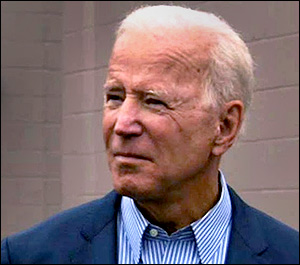
2020 Presidential Candidate and former vice president, Joe Biden (D)

Feb. 11, 2020 — Former Vice President Joe Biden said his campaign took a “gut punch” with his fourth-place finish in the Iowa Caucuses and, in the nationally televised debate on Friday night from New Hampshire, lowered future expectations when indicating that finishing close to Sen. Elizabeth Warren (D-MA) in the state’s first-in-the-nation primary would be an acceptable showing.

Recent polls suggest Sen. Warren will do no better than third place, meaning Biden, who can no longer be considered the national front runner, again looks to be lagging behind in fourth place among the Democrat candidates. Does another fourth-place finish doom his national campaign? Would Biden have a path to the nomination even if failing to win yet again in Nevada on Feb. 22?

The answers to the two queries are no and yes, and South Carolina is the key. After a win in the Palmetto State, he would then need to strongly springboard into Super Tuesday just three days hence on March 3. On that day, citizens in 14 states and one territory are scheduled to cast votes, and half of those states are in the South, a region where the former vice president has been dominant in polling.

Sen. Bernie Sanders (I-VT), the likely national leader headed to Super Tuesday, should find some relative strength in the southern states, and billionaires Tom Steyer and Michael Bloomberg will likely also break the 15 percent threshold in some of these places and others to score a limited number of bound delegate votes. If Biden wins most or all of the southern states with approximately 30 percent of the aggregate vote, it would likely give him approximately 200 delegates, a number that certainly could boost his viability within a national context.

From a delegate count perspective, even if he fails to break 15 percent to qualify for convention votes in New Hampshire tonight and doesn’t win Nevada, he is still not going to be unreasonably behind. In Iowa, the projected delegate count suggests that former mayor, Pete Buttigieg, will record 14 first-ballot national convention votes, Sanders’ 12, Warren 8, Biden 6, and Sen. Amy Klobuchar (D-MN), 1.

Continue reading

Latest Early-State Polling

By Jim Ellis

Jan. 16, 2020 — The most recent early-state polling again underscores the distinct possibility that we will not see a clear Democratic presidential leader emerge before Super Tuesday.
We are now inside three weeks before the Iowa Caucuses and the survey data and candidate messaging strategies are beginning to take firm hold. Polling is close among the top four candidates, though they appear to be in a proverbial pinball machine as the four bounce from top to bottom at least in the Hawkeye State.

It is likely that either former Vice President Joe Biden, Sen. Bernie Sanders (I-VT) or former South Bend Mayor Pete Buttigieg places first. Sen. Elizabeth Warren (D-MA) is likely to finish midway within the four leaders, seeing her support drop as we get closer to actual voting.

The Caucus rules could change some precinct outcomes. It is probable that the party will adopt a rule, as they have in the past, that allows a voter to change his or her vote if their candidate finishes last in a precinct Caucus tally. In any event, projections suggest that the top four will each exceed 15 percent of the at-large vote to qualify for delegates, and potentially achieve such a preference number in each of the four congressional districts.

This means we could well see a splitting of the 41 first-ballot delegates among the four candidates with the first-place finisher getting approximately just 12 delegates and the fourth-place qualifier earning as many as eight.

The news improves for Biden in New Hampshire, but the just released Patinkin Research Strategies study (Jan. 5-7; 600 likely New Hampshire Democratic primary voters) also shows at least three candidates qualifying for delegate apportionment. Here, Sen. Warren again appears to be falling off the pace.

Continue reading

Sen. Cory Booker Ends Run for 2020

By Jim Ellis

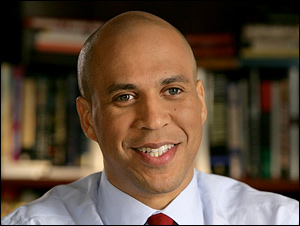
Sen. Cory Booker (D)

Jan. 15, 2020 — With less than three weeks from the first votes being cast in the Democratic presidential nomination process, Sen. Cory Booker (D-NJ) announced via Twitter that he is ending his national effort.

The move is not surprising, as Sen. Booker rarely reached or surpassed three percent support in any presidential primary poll. Like Sen. Kamala Harris (D-CA), who left the race just before the California candidate filing deadline in early December, visions of Senate re-election may have at least in part driven the timing of Booker’s move. While Sen. Harris doesn’t face voters in a strong Democratic state until 2022, Sen. Booker is on the New Jersey ballot this year.

Before the presidential race began, New Jersey legislators and Gov. Phil Murphy (D) changed the state election law to allow candidates to run simultaneously for more than one office. The move was obviously made to assist Sen. Booker’s presidential efforts. Now, however, the simultaneous filing option becomes moot.

Leaving the race now provides him an excuse for finishing poorly in the first four voting states: Iowa, New Hampshire, Nevada, and South Carolina, though he filed for each primary and caucus vote and will still be on the ballot in at least New Hampshire and South Carolina.

Though Sen. Booker appears safe for re-election, the New Jersey filing deadline isn’t until March 30. Poor finishes in all primary and caucus states could have left him in a vulnerable state, and while the Garden State is highly unlikely to elect a Republican to the Senate, it’s not out of the realm of possibility that a strong Democrat could have begun to mount a primary challenge. Now we can expect Sen. Booker to invest all of his political capital into cementing his re-election for a second full six-year term.

Continue reading

Sanders, Steyer With Momentum

By Jim Ellis

2020 presidential candidate, Tom Steyer

Jan. 14, 2020 — For the first time in this Democratic primary cycle, Sen. Bernie Sanders (I-VT) has taken the lead in an Iowa Caucus poll, while billionaire Tom Steyer is moving into contention in both Nevada and South Carolina.

Several surveys released on Friday point to these conclusions. In Iowa, Selzer & Company, polling for the Des Moines Register newspaper and Mediacom (Jan. 2-8; 701 likely Iowa Democratic primary voters) finds Sen. Sanders taking a 20-17-16-15 percent slight edge over Sen. Elizabeth Warren (D-MA), South Bend Mayor Pete Buttigieg, and former Vice President Joe Biden. The close results suggest that all four of these contenders are in position to qualify for the all-important delegate apportionment.

Des Moines based Selzer & Company has long been considered the polling industry standard for the Iowa electorate. According to their analysis, Sen. Sanders has the most committed support, and is in the best position to deliver his supporters to the individual caucus meetings on Feb. 3, which will translate into committed delegate votes.

The Selzer poll produces similar results to other pollsters in that the top four contenders are closely bunched, but the rest find a different leader. Instead of Sen. Sanders, most have recently found Mayor Buttigieg holding first position. All, however, suggest the top four finishers will likely qualify to split the 41 first ballot votes that the Democratic National Committee allots to Iowa.

Fox News conducted a series of research studies in Nevada, South Carolina, and Wisconsin over the Jan. 5-8 period and, in the two early states, Steyer has moved into a third place Nevada tie with Sen. Warren and is in sole possession of second place in South Carolina.

The Fox News Nevada poll (Jan. 5-8; 635 likely Nevada Democratic caucus attenders) gives Biden the overall edge in recording 23 percent, Sanders follows at 17 percent, and Steyer and Warren are tied with 12 percent.

Continue reading

Castro Out; Bernie Brings in $34.5M

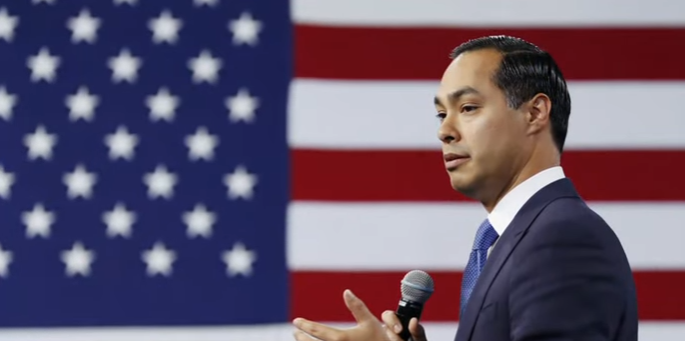
Julian Castro, 2020 Presidential candidate and Former Housing and Urban Development Secretary, bows out of the race.


By Jim Ellis

Jan. 6, 2020 — Saying that it simply “isn’t our time,” former Housing and Urban Development Secretary Julian Castro announced late last week that he is ending his bid for the Democratic presidential nomination now, exactly one month before the campaign’s first votes are cast in the Iowa Caucuses.

Castro, who served the final two-and-a-half years of the Obama Administration in the president’s cabinet after a five-year stint as mayor of San Antonio and previously being elected to one term on the city council, was one of the first candidates to enter the 2020 presidential campaign. Beginning the race as a little-known political figure despite serving in a national office, Castro couldn’t get his campaign untracked. He never came close to attaining high single digit support in any poll, even when including those from his home state of Texas.

On the money front, Castro raised slightly over $10 million for his national effort. Through Sept. 30, he attracted $7.6 million in financial backing with estimates of approximately $3.5 million for his final quarter in the race. Castro qualified for participation in four of the six national candidate forums, taking a major risk in one of them that proved to backfire.

Continue reading

Is Sen. Kamala Harris Protecting
Her California Senate Seat?

By Jim Ellis

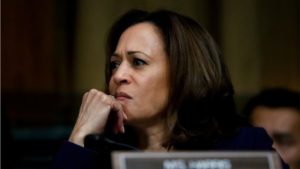
Democrat Sen. Kamala Harris of California

Dec. 5, 2019 — Sen. Kamala Harris (D-CA) became the first of what one might consider the top-tier candidates to end her presidential effort, but the announcement timing on Tuesday likely has more to do with her 2022 Senate race than the presidential contest.

The California candidate filing deadline is tomorrow, so Sen. Harris deciding to end her presidential effort means she won’t be on the Golden State presidential primary ballot, and thus avoids an embarrassing loss within her own constituency. Recent polling was forecasting her in the single-digit range even in California.

Obviously, losing any race in one’s home state reveals political weakness, and though she is virtually invulnerable against a Republican in the 2022 general election, the same might not be true if her opponent were a strong Democrat.

Under the California election system that features the jungle primary concept, variations of which are also seen in Washington state and Louisiana, members of the same party can advance into the general election. Florida voters will have the opportunity of adopting that jungle primary concept via ballot initiative next year.

Because California and Washington hold regular primaries before the general election, a pair of candidates always advance irrespective of percentages attained. Conversely, Louisiana holds one election concurrent with the general, meaning a candidate exceeding 50 percent is elected outright; otherwise the top two finishers advance into a December run-off election.

In the California 2022 Senate race, for example, two candidates will move into the general election from their March or June primary (California has continually alternated their primary election dates between the two months, depending upon the political situation at the time the legislature acted) so long as more than one candidate files. Thus, a strong Democrat — and California has many such individuals — could challenge Sen. Harris, draw a relatively meager percentage in the primary while finishing second, and then rally to make a serious general election challenge against her.

Other previous presidential candidates have often found the political going much tougher than expected when returning home to seek re-election after engaging in the national contest, and it remains to be seen if Sen. Harris will find her road to re-election any bumpier.

Continue reading

Is Buttigieg a One-State Wonder?

By Jim Ellis

South Bend Mayor Pete Buttigieg

Oct. 23, 2019 — The new Suffolk University/USA Today poll of Iowa voters (Oct. 16-18; 500 likely Iowa Democratic caucus attenders) was conducted immediately after the most recent Democratic presidential debate and confirms that South Bend Mayor Pete Buttigieg registered a strong performance.

According to the Suffolk results, former Vice President Joe Biden posts only 18 percent support, a drop of six points from their July Iowa poll, while Sen. Elizabeth Warren (D-MA) is in a virtual tie with him at 17 percent. She gained four percentage points since mid-summer. Mayor Buttigieg now moves into a close third place with 13 percent, more than doubling his support from the July poll when he registered only six percent preference. Sen. Bernie Sanders (I-VT) remains constant with nine percent and holds fourth position.

The remainder of the field includes four candidates tied with three percent support: billionaire Tom Steyer who made his first debate appearance in the October forum, Sen. Kamala Harris (D-CA) who dropped a whopping 13 percentage points from the July Suffolk U. survey, Rep. Tulsi Gabbard (D-HI), and Minnesota Sen. Amy Klobuchar who, like Mayor Buttigieg, needs to take advantage of her Midwestern roots and reap a solid support percentage from the Iowa Democratic electorate. So far, however, she has failed to generate significant support.

While Mayor Buttigieg has appreciably increased his Iowa standing, it remains to be seen if this poll is reflective of a short-term bounce from a strong debate performance or whether seeds are being sown for a legitimate push into the top tier. And, even if he proves himself in Iowa, will that momentum carry over into other states? At this point, the available data suggests that Buttigieg could be a one-state wonder.