Tag Archives: New Hampshire

New Hampshire Senate:
Toss-up Results

By Jim Ellis

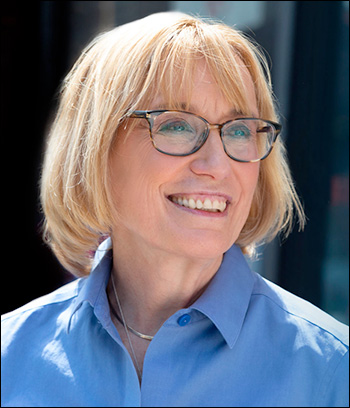
New Hampshire first-term incumbent Sen. Maggie Hassan (D)

Oct. 25, 2021 — Only needing to gain a net one seat to claim the Senate majority, Republicans face a frustrating in-cycle map that yields few 2022 Democratic targets. One of those scarce opportunities, however, lies in the Granite State of New Hampshire.

Arguably, the New Hampshire race is the party’s best conversion opportunity and becomes a Republican prerequisite toward building a winning coalition of states. The latest University of New Hampshire poll, released late last week, suggests the GOP is well positioned to compete in the “Live Free or Die” region of New England.

The regular UNH Granite State poll (Oct. 14-18; 1,061 New Hampshire panel members, 979 likely New Hampshire voters, online) tested first-term incumbent Sen. Maggie Hassan (D) against several potential Republican opponents … and she falls into an early toss-up result against all.

First, a word about the UNH polling operation. Several years ago it was among the most inaccurate of pollsters, largely because they utilized long sampling periods sometimes lasting three weeks, and small respondent universes. They have improved since that time, though their online format chosen for this poll is typically not optimal.

The FiveThirtyEight statistical organization, in their latest pollster rankings, rates the UNH operation as their 112th best pollster, with a B- rating. They assign a 2.4 percent Democratic bias factor to the organization’s polling results over 122 tested surveys.

That being said, yesterday’s survey release finds Gov. Chris Sununu (R) again leading Sen. Hassan in a hypothetical ballot test pairing. There is no doubt Republican leaders are trying to persuade Gov. Sununu to run, but so far he has not committed to the race. He has the opportunity of running for a fourth gubernatorial term – New Hampshire has two-year terms for their governors – or pursing opportunities in the private sector.

This poll finds the Sununu advantage at three percentage points, 45-42 percent, which is of course in toss-up range, but seeing an incumbent well below 50 percent does not bode well for Sen. Hassan.

UNH also tested the senator against the woman she defeated by a tenth of a percentage point in 2016, or just over 1,000 votes statewide, former Sen. Kelly Ayotte (R). The new poll virtually replays that result, posting Sen. Hassan to a bare 44-43 percent edge.

Continue reading

Q3 FEC Senate Cash Updates

By Jim Ellis

Oct. 22, 2021 — The 3rd Quarter campaign finance summaries and reports are now publicly available at the Federal Election Commission website, and we have the recap for the key competitive Senate races in this Update. As typical for political campaigns since the latter part of the previous decade, the dollar figures are again astronomical.

The amounts are in hundreds of thousands, and COH refers to the candidates’ total cash-on-hand figures since the 2022 election cycle began. The Daily Kos Election website statisticians calculated the 3rd Quarter dollar amounts.

Alaska

CANDIDATE 3rd QTR RAISED (,000) TOTAL COH (,000)
Murkowski $1,062 $3,244
Tshibaka $460 $294

Sen. Lisa Murkowski and former State Administration Director Kelly Tshibaka are the only two candidates who filed disclosure reports. Despite an endorsement from former President Donald Trump, the Tshibaka financial figures are less than expected. With Alaska’s new top four primary system, the early money is rather irrelevant since four candidates, including Sen. Murkowski and Ms. Tshibaka, will advance into the general election.


Arizona

CANDIDATE 3rd QTR RAISED (,000) TOTAL COH (,000)
Kelly $7,217 $13,001
Masters $1,008 $864
Brnovich $559 $515
Lamon $133 $3,606

Sen. Mark Kelly continues to be one of the most prolific fundraisers of all Senate candidates. His huge $13.1 million cash-on-hand figure is topped only by Majority Leader Chuck Schumer’s $31.8 million, and Sens. Raphael Warnock’s (D-GA) $17.2 million and John Thune’s (R-SD) $14.8 million. Candidate Blake Masters is rumored to be benefiting from an outside $10 million Super PAC that billionaire Peter Thiel funds. Candidate Jim Lamon self-funded most of his $3 million-plus cash-on-hand total.


Florida

CANDIDATE 3rd QTR RAISED (,000) TOTAL COH (,000)
Demings $8,351 $5,967
Rubio $5,928 $9,612

Sen. Marco Rubio had a very strong fundraising quarter, but so did his opponent, Rep. Val Demings. Both have large war chests, but each has already spent millions to achieve these totals. Both candidates will advance into a competitive and expensive general election campaign in the Sunshine State.


Georgia

CANDIDATE 3rd QTR RAISED (,000) TOTAL COH (,000)
Warnock $9,432 $17,217
Walker $3,764 $2,477
Black $564 $928

Sen. Raphael Warnock raised more money in the quarter than any Senate candidate and already has a huge war chest. Herschel Walker’s first fundraising quarter as a candidate, and a partial one at that, has to be considered highly successful, but his resources pale in comparison to the incumbent’s dollar raising machine.


Iowa

CANDIDATE 3rd QTR RAISED (,000) TOTAL COH (,000)
Finkenauer $1,019 $598
Grassley $814 $3,064

Sen. Chuck Grassley announced his intention to seek re-election just a week before the third-period fundraising cycle ended. While he didn’t raise as much as his present chief opponent during the third quarter, former US Rep. Abby Finkenauer, his resource total is substantially better than hers and sets him in strong position to launch a massive fundraising effort.


Continue reading

The Trifecta States

By Jim Ellis

In the trifecta of political parties controlling the House, Senate and Executive branches in a state, how many will actually benefit from that power in the redistricting process?

Oct. 11, 2021 — As the redistricting cycle moves forward, predictions are being made as to which party will benefit most through the decennial district boundary drawing process. Most analyses favor the Republicans as the party best positioned to gain under 2021 redistricting largely because of the number of states they control outright, but this could be an over-statement.

When a state features one party in control of the governor’s mansion, state House, and state Senate, the horse racing term of “trifecta” is used to describe such a political situation. Since Republicans hold 23 trifectas and Democrats just 15, it appears on the surface that the GOP will be the big gainer in redistricting.

Let’s look a bit closer because the aggregate trifecta number doesn’t tell the whole story.

On the Republican side, though they control 23 states, their redistricting position is lessened when examining their ability to extract a net gain of congressional seats.

Of their 23, in one, West Virginia, they are a sure bet to lose a seat. In this case, Republicans hold all three of the state’s CDs, but reapportionment reduces the Mountain State to two districts. Therefore, Republicans will unavoidably absorb the loss.

In two of their states, Arizona and Montana, a non-politician commission will draw the maps. In another dozen (Alabama, Arkansas, Idaho, Indiana, Mississippi, Missouri, Nebraska, North Dakota, South Carolina, South Dakota, Utah, and Wyoming) the GOP is already at the max level of partisan members and can’t stretch the new plan further.

In Iowa and Texas, though Republicans have trifecta control, legislative rules lessen their complete power; hence, the redistricting outcome is affected.

Finally, the GOP only has effective redistricting control in six states, and in two of those, Oklahoma and Tennessee, it could arguably backfire if the party tries to expand their ratio further. Therefore, it is in really just four states, Florida, Georgia, New Hampshire, and Ohio where we could see Republican redistricting gains.

The Democrats find themselves in similar position. From their 15 trifectas, they only have redistricting control in five, possibly, and realistically, three states. In five of their 15 (California, Colorado, New Jersey, Virginia, and Washington) redistricting goes to a citizens’ commission.

Continue reading

NH Gov. Sununu Polling Positively

By Jim Ellis

New Hampshire Gov. Chris Sununu (R)

Sept. 3, 2021 — The St. Anselm College’s New Hampshire Institute of Politics poll was released this week (Aug. 24-26; 1,855 registered New Hampshire voters, online weighted responses), and it contains good news for three-term Granite State Gov. Chris Sununu (R). From this data, Sununu records his largest lead of the early 2022 election cycle, 49-41 percent, over first term incumbent Sen. Maggie Hassan (D).

Gov. Sununu has yet to enter the race and says he will make a final decision about his political future well into next year. Since New Hampshire is one of two states that limits its governors to two-year terms, Sununu is in the middle of his third term even though completing just his fifth year in office. He is eligible to run for a fourth term, and beyond.

Because New Hampshire has one of the latest primaries on the election calendar – Sept. 13 in 2022 – it wouldn’t be surprising for the governor to wait even until the end of the next legislative session to declare his political intentions for the midterm cycle. With his win percentage increasing to 65.1 percent in 2020 after victories of 52.8 and 49.0 percent in his first two elections and with a current 64:34 percent positive favorability ratio, the governor has the luxury of waiting along with the ability to clear the GOP field regardless of the office for which he ultimately declares.

With Gov. Sununu as the GOP’s Senate nominee, New Hampshire becomes the Republicans’ best national conversion opportunity, and he is obviously under heavy pressure from party leaders to run.

For her part, Sen. Hassan is prepared for a tough fight. Through the June 30 Federal Election Commission financial disclosure period, she reported raising $11.3 million during her out-of-cycle four years, with a whopping cash-on-hand figure of $6.56 million.

The Democrats appear fortunate that the election is so far away. The poll’s underlying numbers suggest they would fare badly in the New Hampshire general election if voting were in a close time proximity, but the Granite State electorate is wholly unpredictable. Since the turn of the century, no state has swung as wildly as New Hampshire, with the electorate going heavily for both parties in different election years.

Continue reading

Former Mass. Sen. Scott Brown’s Wife Soon to be a House Candidate?

By Jim Ellis

Gail Huff Brown (R)

Sept. 2, 2021 — Television news journalist Gail Huff Brown (R), wife of former Massachusetts senator and ex-US ambassador to New Zealand Scott Brown, is reportedly preparing to run for New Hampshire’s 1st Congressional District in what can arguably be considered the most competitive CD in the United States.

Scott Brown (R) served in the Massachusetts state House and Senate before winning the US Senate seat in a 2010 special election after veteran incumbent Ted Kennedy had passed away. Current Sen. Elizabeth Warren (D) then defeated Brown in the 2012 regular general election. In 2014, Brown, after moving back to his native state of New Hampshire, challenged Sen. Jeanne Shaheen (D) but lost 51-48 percent despite running in a wave Republican election year.

Now, the Browns are looking to embark upon another political campaign, but this time the candidate will apparently be Gail Huff Brown, the former senator and ambassador’s wife of 35 years. A formal announcement is expected soon according to the NH Journal news site, which quotes Scott Brown as saying that “Gail is very close to a yes,” in responding to a question about whether his wife will run. Additionally, the ex-senator believes that former President Trump will endorse Ms. Brown, but such a move could be a long time in coming and may not be a sure bet.

Already in the Republican field hoping to challenge two-term Rep. Chris Pappas (D-Manchester) are at least two other candidates with strong Trump credentials. Matt Mowers is the 2020 GOP nominee who held Rep. Pappas to a 51-46 percent re-election victory. Mowers, along with fellow 1st District congressional candidate Karoline Leavitt, is a former Trump White House staff member. A third announced candidate is freshman state Rep. Tim Baxter (R-Portsmouth).

The 1st District electorate has defeated more incumbents since 2004 than any other. In fact, only twice in those eight succeeding elections did the incumbent win re-election. Republican optimism for 2022 is high, however, because the 2020 elections awarded the GOP both the state House and Senate and, with Gov. Sununu (R) in office, the Republicans have a redistricting trifecta.

The state has two congressional districts. The plan would be to make the marginal 1st District, the eastern seat that contains the state’s small coastline area, into a likely Republican domain while conceding the 2nd CD, or western seat, to five-term incumbent Annie Kuster (D-Hopkinton/Concord). Currently, the 2nd plays relatively marginal – Rep. Kuster has averaged 52.9 percent of the vote over her five elections – but would be made safely Democratic under this discussed redistricting concept.

According to the Census Bureau’s per congressional district population report, the 2nd District needs 8,973 individuals from the 1st to equalize the resident figures. We can, however, expect a much bigger people swap if the defined partisan split plan is to become a political reality.

Rep. Pappas was initially elected in 2018 after then-incumbent Carol Shea-Porter (D) chose to retire. Shea-Porter first won in 2006, lost in 2010, was re-elected in 2012, defeated in 2014, and re-elected once more in 2016. Prior to his election to Congress, Pappas, a restaurant owner, was an elected member of the state’s Executive Council, a five-member board that holds certain checks and balances power over the Governor.

Pappas has said that he wants to survey the New Hampshire political situation before making his own 2022 electoral plans. If he deems the 1st District as becoming too Republican, he has not closed the door on running for governor, particularly if incumbent Sununu opts to run for the Senate. Sununu has been elected governor three times but is only in his fifth year of service because New Hampshire is one of two states, neighboring Vermont is the other, that maintains two-year terms for their state chief executives.

Though New Hampshire is a small state, the redistricting process will be closely watched because the GOP will need to convert the politically seesawing seat to meet their projected national majority numbers. With Gail Huff Brown potentially becoming a candidate, we can also expect increased national political attention coming to this race.

Additionally, it will be quite some time before we see the political patterns develop. New Hampshire still has a late primary, Sept. 13 for 2022, and candidate filing doesn’t close until June 10. Gov. Sununu is also indicating he will decide about the Senate race well into next year. Therefore, this political scenario is a long way from fully unfolding, and Gail Huff Brown’s potential entry into the congressional race brings us yet another new twist.

Senate: Recapping the Latest

By Jim Ellis

June 21, 2021 — We have seen quite a few recent US Senate moves that help set the picture for a very competitive 2022 election cycle that will almost certainly break the current 50-50 chamber tie. Below is a recap of the action:

Alabama: Katie Britt (R), the former president and CEO of the Alabama Business Council joined the race and immediately secured the endorsement of her former boss, retiring Sen. Richard Shelby (R). Before joining the Business Council, Britt was the senator’s chief of staff. She joins Rep. Mo Brooks (R-Huntsville) and former US Ambassador Lynda Blanchard in the GOP field. No Democrat has yet announced.

Arizona: Two-term Attorney General Mark Brnovich (R) announced his candidacy in the past week, giving the GOP a candidate who has won statewide to face freshman Sen. Mark Kelly (D), who stands for a full six-year term in 2022 after winning the 2020 special election. Also in the Republican field are retired Air Force Major General Mick McGuire and solar energy company executive Jim Lamon. Venture capitalist Blake Masters and US Rep. Andy Biggs (R-Gilbert) remain as possible candidates.

Florida: US Rep. Val Demings (D-Orlando), the former police chief whose husband is mayor of Orange County and the former county Sheriff, formally announced her US Senate challenge to Sen. Marco Rubio (R). Former congressman Alan Grayson and Miami City Commissioner Ken Russell are also Democratic US Senate candidates, among others.

Georgia: Former University of Georgia football star and NFL player Herschel Walker (R) is re-locating back to his home state from Texas ostensibly to soon announce a challenge to freshman Sen. Raphael Warnock (D) who, like Sen. Kelly in Arizona, must stand for a full six-year term in 2022 after winning a 2020 special election. Also in the GOP nomination race are state Agriculture Commissioner Gary Black, construction company owner Kelvin King, and financial executive and former Trump White House staff member Latham Saddler.

Iowa: Sen. Chuck Grassley (R), who will be 89 at the next election, appears poised to seek an eighth term. At this point, state Sen. Jim Carlin (R-Sioux City) is an announced Republican primary challenger, and ex-Crawford County Supervisor Dave Muhlbauer (D) is the lone Democratic announced candidate. Former one-term US Rep. Abby Finkenauer is a potential candidate along with current US Rep. Cindy Axne (D-Des Moines), and Waterloo Mayor Quentin Hart.

Missouri: Six-term US Rep. Vicky Hartzler (R-Harrisonville/Columbia) is the latest Republican to join the open field with Sen. Roy Blunt (R) retiring. She will oppose former governor, Eric Greitens, Attorney General Eric Schmitt, and St. Louis attorney Mark McCloskey, with US Reps. Ann Wagner (R-Ballwin), Billy Long (R-Springfield), and Jason Smith (R-Salem) remaining as possible candidates.

Former St. Louis area state Sen. Scott Sifton is the lone prominent announced Democrat. Ex-governor, Jay Nixon, and Kansas City Mayor Quentin Lucas are potential Democratic candidates.

Nevada: The Republican leadership believes that former Attorney General and 2018 gubernatorial nominee Adam Laxalt, grandson of the late former Sen. Paul Laxalt (R), will soon announce his Senate candidacy to oppose first-term Sen. Catherine Cortez Masto (D).

Continue reading

Latest Senate News – Part II

By Jim Ellis

May 28, 2021 — Today, we complete our two-part series pertaining to the latest Senate happenings, covering the latter half of the alphabet from New Hampshire through Wisconsin.

• New Hampshire: If Gov. Chris Sununu (R) decides to challenge Sen. Maggie Hassan (D), then the Granite State will likely become the Republicans’ best national conversion opportunity. In the only two publicly released polls this year testing such a pairing, Gov. Sununu leads in both.

Though New Hampshire has trended more Democratic at the top of the ticket in the past few elections and President Biden scored a better than expected 53-45 percent win here in November, Gov. Sununu has claimed three consecutive elections, including a 65 percent victory last year. The governor indicated he will make a decision about a Senate challenge during the summer. Should Sununu not make the race, Sen. Hassan becomes a clear favorite to win a second term.

• North Carolina: In another key Republican open seat, the North Carolina race appears to feature tough primaries in both parties. For the Republicans, whose eventual nominee will attempt to hold retiring Sen. Richard Burr’s (R) seat, former Gov. Pat McCrory, Rep. Ted Budd (R-Advance), and ex-Rep. Mark Walker reside in the top tier, with the former state chief executive enjoying big leads in early polling.

For the Democrats, the primary appears to be winnowing down to a contest between former state Supreme Court Chief Justice Cheri Beasley, who lost her seat in November by just 401 votes statewide, and state Sen. Jeff Jackson (D-Charlotte).

This will be another toss-up, top-tier Senate race regardless of who emerges from each of the competitive nomination contests.

• Ohio: The Buckeye State’s open US Senate race is beginning to crystallize. The Democratic side is headed for consensus around US Rep. Tim Ryan’s (D-Warren/ Youngstown) candidacy.

The Republicans look to have at least four strong candidates, former Ohio Republican Party chair Jane Timken, ex-state Treasurer and 2012 US Senate nominee Josh Mandel, author J.D. Vance, and possibly state senator and Cleveland Indians baseball club co-owner Matt Dolan (R-Chagrin Falls).

Businessmen Michael Gibbons and Bernie Moreno are also announced candidates, but they appear as second-tier contenders at this time. US Rep. Mike Turner (R-Dayton) remains a potential candidate. It appears that former US representative and 2018 US Senate nominee Jim Renacci is moving toward a Republican primary challenge against Gov. Mike DeWine in lieu of again running for the Senate.

Continue reading