
Tag Archives: Minnesota

Four More States Vote Tomorrow

Voters head to the polls on Tuesday in four states with each featuring some close primary elections.

Connecticut voters will determine nominees for their open Senate seat (Sen. Joe Lieberman retiring). On the Republican side, 2010 Senatorial nominee Linda McMahon looks to top her opponent, former representative Chris Shays (R-CT-4). The Democrats feature Rep. Chris Murphy (D-CT-5) who is favored over his intra-party opponent, former secretary of state Susan Bysiewicz. The Democrat nominee becomes the decided general election favorite on Wednesday morning.

In the Connecticut congressional races, Murphy’s open 5th District features a tough battle among Democrats as Speaker of the House Chris Donovan has been bloodied by all sides in this campaign but is still rated as the favorite. He battles PR executive Dan Roberti and former state representative Elizabeth Esty. For Republicans, 2010 lieutenant governor candidate Lisa Wilson-Foley and moderate state Sen. Andrew Roraback appear to be the top contenders. The Democratic nominee will have the inside track in November.

• Turning to the Sunshine State of Florida, Rep. Connie Mack IV (R-FL-14) is the prohibitive favorite to secure the GOP Senatorial nomination and oppose two-term Sen. Bill Nelson (D) in the fall.

Redistricting has changed the shape of many races across the state, and several competitive races will be decided tomorrow. Rep. Cliff Stearns (R-FL-6) is trying to repel a challenge for the new 3rd District, of which he currently represents only 66 percent of the new territory. Opponents include state Sen. Steve Oelrich, veterinarian Ted Yoho, and Clay County Clerk of Court James Jett. Because of his overwhelming financial advantage, Stearns is favored. The new FL-6, which contains 72 percent of Rep. John Mica’s (R-FL-7) current constituency, is currently open and features a competitive Republican primary. The stronger candidates include state Rep. Fred Costello, attorney Ron DeSantis, chain restaurant former CEO Craig Miller, and Jacksonville City Councilman Richard Clark.

In the Orlando area’s 7th District, another incumbent pairing is occurring, this time between Mica and freshman Rep. Sandy Adams (R-FL-24). Though Adams represents a bit more of the new district (51 percent of the constituency to 42 percent for Mica), the veteran congressman and House Transportation & Infrastructure Committee chairman is likely to prevail. In the new 9th District, Republicans are fielding four candidates but most of the hype centers around Osceola County Commissioner John Quinones, who is expected to give former representative Alan Grayson (D-FL-8) a strong challenge in November despite this being a Democratic district.

Another open and safely Republican Ft. Myers area seat yields a formidable list of Republican candidates, including state Rep. Gary Aubuchon, Chauncey Goss, son of ex-representative and CIA Director Porter Goss, state Rep. Paige Kreegal, and conservative radio talk show host Trey Radel. Tomorrow’s winner will become the new 19th District congressman. Finally, in District 26, the “lean Republican” seat of freshman Rep. David Rivera (R-FL-25), several Democrats are competing for what could become a valuable nomination. The two strongest candidates are businesswoman Gloria Romero Roses and former two-time congressional nominee Joe Garcia.

• The most interesting Minnesota race comes in freshman Rep. Chip Cravaack’s (R) 8th District. The strongly Democratic nature of the seat makes this a highly competitive race in the fall, and is currently considered as a “toss-up.” Cravaack is challenged to his left by three viable candidates, including former 6th District nominee Tarryl Clark, former US representative Rick Nolan, and Duluth City Councilor Jeff Anderson. Clark is the best funded candidate but lacks any local Iron Range ties as her previous congressional attempt was against Rep. Michele Bachmann in a Twin Cities suburban district. Nolan, who left Congress in 1980, enjoys local Democratic establishment support but hasn’t run for public office in 34 years.

Wisconsin is a state that has gotten plenty of attention during the past few days because of Rep. Paul Ryan’s, (R-WI-1) selection as the Republican vice presidential nominee. The Badger State features a highly competitive Republican Senate primary to be decided tomorrow in plurality fashion, featuring former four-term governor Tommy Thompson. A “toss-up” general election will begin for the winner on Wednesday morning against Madison Rep. Tammy Baldwin (D-WI-2), the consensus Democratic candidate.

Top Wisconsin congressional races occur in the 2nd District and the northern 7th and 8th CDs. Rep. Baldwin vacating her seat leaves the Democratic primary to decide her successor. The battle is between two state representatives, Mark Pocan and Kelda Helen Roys. Freshmen Rep. Sean Duffy (R), defending his marginal WI-7 seat, will be challenged by former state senator Pat Kreitlow (D). The contest favors the Republican by only a slim margin. Freshman Rep. Reid Ribble defends his WI-8 seat against business consultant Jamie Wall. Voting history makes the new incumbent a decided favorite. Keep an eye on these two races as the general election draws closer.
Presidential Popular Vote is Even

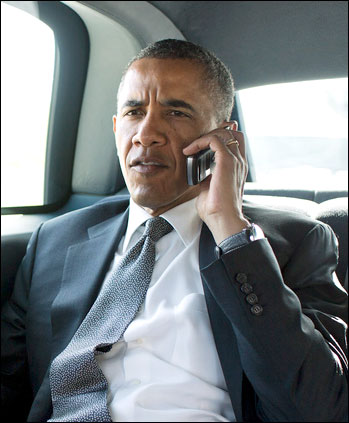
President Obama. / Photo: The White House

A series of new presidential election polls reveals a further tightening of the campaign on the national level, though President Obama maintains a lead over Mitt Romney in the most competitive states.

The two daily tracking pollsters, Gallup and Rasmussen Reports, both give the president only a one-point national lead, 46-45 percent and 45-44 percent, respectively. Looking at an actual benchmark survey, Public Policy Polling, conducting their study (July 19-22; 1,000 registered voters) for the Daily Kos national liberal blog and the Service Employees International Union, projects a flat 46-46 percent tie.

The only national poll not showing a dead heat, taken over virtually the same time frame as PPP’s survey with an identical sample size (July 18-22; 1,000 registered voters) from Republican pollster Bill McInturff and his Democratic counterpart Peter Hart, actually stakes the president to a 49-43 percent advantage. Based upon the available data, though the polling methodology appears sound, the McInturff/Hart result appears to be an outlier.

National Public Radio released their poll of the 12 commonly viewed battleground states (conducted by the Resurgent Republic and Democracy Corps organizations, July 7-12; 1,000 voters nationwide with an oversample of 462 from the battleground states) but its aggregate result is of little consequence. Though this poll, too, shows an Obama-Romney tie at 46 percent, such a figure is virtually useless because the combined popular vote in the most hotly contested states doesn’t translate into specific electoral votes.

What is valuable are battleground voters’ perceptions and attitudes about the candidates. As we have seen for months, there is severe polarization between the two major parties. By almost a 9:1 majority, Democrats believe the president has performed well in office. Conversely, the same virtual ratio of Republicans believes he has not. Independents tend to fall more on the Republican side, slightly rating Obama’s job performance more negative than positive. Also, Independents in these states generally oppose the Obama healthcare law and, by a slight margin, believe that the Supreme Court decision upholding the law is incorrect. This could prove significant as the campaign continues to evolve.

One thing that does deviate somewhat from at least the conventional wisdom, the NPR battleground state poll does show that both candidates have a strong base. Especially for Romney, this is a change. Before, most data indicated weakness among Republicans for their presumptive nominee, but the NPR data gives both contenders right around 90 percent support within their own party voter cell sample. This finding is good news for both men.

New individual key state surveys stack up relatively well for the president in the fact that he leads in most, but in no case is his advantage more than mid-level single-digit numbers.

Rasmussen Reports gives the President a six-point, 48-42 percent advantage in Michigan. Survey USA finds a similar five-point, 48-43 percent margin for Obama in all-important Florida; and We Ask America returns similar 49-42 percent and 49-43 percent spreads (in Obama’s favor) in Wisconsin and Nevada, respectively. Magellan Strategies produced a much closer 50-46 percent Nevada model. Quinnipiac University shows a tie in Virginia, and the Civitas Institute projects Romney to a one point, 49-48 percent razor-thin edge in North Carolina. Though it’s not a battleground state, Survey USA detects only a 46-40 percent advantage for the president in liberal Minnesota, which is a surprise.

The cumulative effect of the most recent survey data makes the president and his advisers uncomfortable. These are not the type of results strong incumbents would be seeing at this point in the election cycle. It’s going to be quite a remainder of the year.

Weekly Redistricting Update

Now that redistricting has been virtually completed in 36 of the 43 multi-congressional district states, the action tide has waned. During the past week significant action occurred only in Minnesota, but the state Supreme Court ruling ended the process by adopting a final map.

Here’s an update of where things stand with the states followed by a briefing on the action in Minnesota:

Congressional Redistricting Now Completed (36):

Alabama Idaho Michigan Ohio Virginia
Arkansas Illinois Minnesota Oklahoma Washington
Arizona Indiana Mississippi Oregon West Virginia
California Iowa Missouri Pennsylvania Wisconsin
Colorado Louisiana Nebraska Rhode Island
Connecticut Maine Nevada South Carolina
Georgia Maryland New Jersey Tennessee
Hawaii Massachusetts New Mexico Utah

Plans Awaiting Governor’s Signature (1):
Kentucky

Court Maps to be Drawn (1):
Texas

Completed Plans; Litigation Underway (2):
Florida
North Carolina

Legislative Action Underway (3):
Kansas
New Hampshire
New York

MINNESOTA (current delegation: 4R-4D) – The Minnesota Supreme Court issued a new set of congressional districts that will likely stand for the next 10 years. The state holds the 435th seat in the House, since they missed losing a district by only 13,000 people under the 2010 reapportionment formula calculations. As you can see when looking at the two Minneapolis-St. Paul seat statistics (Districts 4 and 5), the majority of the state’s population loss comes from its twin cities. Conversely, the growth is found in the two suburban Republican seats, CDs 2 and 6. Therefore, the Minnesota individual congressional district population target is a low 662,991.

As a result of continuing to maintain eight districts, the high court adopted a “least change” map, as you can see from the following statistics:
MN-1 – Rep Tim Walz-D: 9.97% new territory; needed to gain 18,204 people
MN-2 – Rep. John Kline-R: 13.44% new territory; needed to shed 69,524
MN-3 – Rep Erik Paulsen-R: 8.95% new territory; needed to gain 12,806 people
MN-4 – Rep. Betty McCollum-D: 17.46% new turf; needed to gain 48,367
MN-5 – Rep. Keith Ellison-D: 7.02% new territory; needed to gain 46,509
MN-6 – Rep. Michele Bachmann-R: 5.23% new turf; needed to shed 95,487
MN-7 – Rep. Collin Peterson-D: 6.05% new turf; needed to gain 37,479 people
MN-8 – Rep. Chip Cravaack-R: 0.40% new territory; needed to gain 2,649

All of the MN districts changed very little in partisan terms, too. Arguably, the big winner was Rep. Michele Bachmann, as her 6th District sees a net gain of four Republican percentage points. She retains 94.8% of her current district but, unfortunately, she lives in the 5.23% of the district that went to another seat. Her home now resides in Rep. Betty McCollum’s 4th District. Under federal law congressional candidates are not required to live in their districts hence, Ms. Bachmann has already announced for re-election in the new 6th.

With the map remaining in about the same position as it was during the last decade, we can again expect to see a Minnesota political playing field that is open to competition in potentially five of its eight seats. Should Rep. Peterson retire or run for a different office, then an open MN-7 seat would become a potential GOP conversion opportunity.

Bachmann’s New District: Good News and Bad News

The Minnesota Supreme Court issued a least-change map of the state’s eight congressional districts this week, and in doing so dealt Rep. Michele Bachmann (R-MN-6) – who, of course, came to fame in the presidential race – some very good news sprinkled with a little bit of bad.

The good news is that her 6th Congressional District, which needed to shed a whopping 96,487 people (this in a state that came within 15,000 individuals of losing a congressional district) becomes four points more Republican on the Obama 2008 scale, and she already represents 94.8 percent of the new seat. The bad news is that her home is in the 5.2 percent of the previous territory not included within the new CD. Therefore, she is technically paired with liberal Rep. Betty McCollum (D) in the new 4th District. This is a minor problem for Bachmann as federal law does not require a member of Congress, or candidate, to reside in the district in which they represent or seek election, and she has already publicly laid claim to the new 6th.

Though Minnesota has a primary, its strong party convention system generally designates the partisan nominees. Assuming Ms. Bachmann is in good standing with the 6th District state convention delegates, she should have little trouble in winning re-nomination. Since John McCain carried the new district by a 55-43 percent margin, she will be the odds-on favorite to rather easily secure a fourth term in November.

Weekly Redistricting Update

Now that redistricting has been virtually completed in 35 of the 43 multi-congressional district states, less significant action is occurring. During the past week, however, action occurred in the following five states:

FLORIDA (current delegation: 19R-6D; gains two seats) – Gov. Rick Scott (R) signed the Florida congressional map legislation, and the legal wrangling has already begun. Several lawsuits were filed. The Florida Supreme Court has approval authority over the process, so the court must determine if the legislature and governor enacted a legal plan. The unique problem with the Florida map concerns the wide criteria differences between the voter initiative passed in 2010 and the Voting Rights Act. The two measures appear to conflict in certain areas. The legal procedure will take some time and the plan just enacted will likely undergo at least some change. Still, this new 27-seat map will almost assuredly be the footprint for the final plan.

MINNESOTA (current delegation: 4D-4R) – The state court with redistricting jurisdiction, having to take action because the legislature and governor failed to agree upon congressional and legislative plans, is scheduled to unveil the final map later today. The big question concerns how freshman Rep. Chip Cravaack (R-MN-8) will fare since he represents a seat designed for Democrats. The other point of interest concerns Rep. Michele Bachmann’s 6th District now that she has exited the presidential race and announced her intention to seek re-election. More on this to come when the court makes their map public.

NEW YORK (current delegation: 21D-8R; loses two seats) – A federal court judge has assembled a three-judge panel to begin redistricting consideration. The legislature has so far failed to produce any map, and a serious deadlock between the Democratic Assembly and the Republican state Senate remains unbroken. The map is difficult to draw from a partisan perspective. The greatest population loss is in the upstate Buffalo area, where Democrats must not only try to protect two veteran members, Reps. Louise Slaughter (D-NY-28) and Brian Higgins (D-NY-27), but also must find a way to strengthen freshman Rep. Kathy Hochul’s (D-NY-26) seat that was won in a special election last year.

PENNSYLVANIA (current delegation: 12R-7D; loses one seat) – Though the congressional map has been enacted, a court has struck down the state legislative maps. It now appears that the April 24 primary, including the vote for president, could be endangered. If new legislative maps are not completed in time, this primary, too, may have to be moved to a later date.

TEXAS (current delegation: 23R-9D; gains four seats) – As time passes and it appears there is no agreement in sight between Texas Democrats and Republicans on a new congressional map, the prospects of moving the primary to May 29 increases. Originally, the nominating vote was scheduled for March 6, and then moved to April 3 because of delays in configuring a legally acceptable final map. The May 29 date means the Texas run-off election will move to sometime in July or possibly August. It also remains to be decided if the state will hold two primaries, one for the presidential, statewide and possibly county races, and another for all elections involving districts. The expense of holding the two separate votes will likely be the key reason that keeps the primary unified.

Analyzing the Turnout

There have been several media stories and reports this week discussing the alleged downward voter turnout trend in the Republican presidential primaries. As so often is the case with modern-day political reporting, the supposition doesn’t hold water. While true that turnout was down in Florida, Minnesota and Missouri this past Tuesday night, voter participation has actually increased in several other states.

Turnout was mixed on Tuesday. It was up 17.3 percent in Colorado as compared to the 2008 official results, but down 23.9 percent in Minnesota. Voter participation dropped 57.2 percent in Missouri, but that was expected because the primary had no real meaning. Four years ago, the Missouri primary was an important winner-take-all contest. This year the primary vote was merely a straw poll, and the true turnout will be measured once the county caucus votes are cast on March 17.

Overall, the 2012 Republican presidential primary/caucus turnout has increased in four states (Iowa, New Hampshire, South Carolina and Colorado) and dropped in an equal number (Florida, Nevada, Minnesota, and Missouri). The 14.2 percent drop in Florida might be the most surprising voter participation figure since many believed the state would cast the deciding votes to effectively end the entire nomination process. South Carolina, in similar position when voters in that state cast ballots just 10 days before Florida, saw a 35.5 percent gain in turnout as compared to four years ago.

Santorum Sweeps Three; Faces Challenges Ahead

Former Pennsylvania Sen. Rick Santorum swept the voting last night at the Colorado and Minnesota caucuses and in the non-binding Missouri primary. With his victories, the upstart presidential candidate has now won more states (four) than any other candidate, despite spending far less money.

Finally rebounding after his surprising Iowa win but subsequently followed with poor performances in New Hampshire, South Carolina, Florida and Nevada, Santorum topped former Massachusetts Gov. Mitt Romney 40-35 percent in Colorado, and won by a whopping 55-25 percent margin in Missouri. In Minnesota, he defeated Rep. Ron Paul 45-27 percent, as Romney could only manage 17 percent. Former House Speaker Newt Gingrich continues to fall. He performed poorly in Colorado (13 percent) and Minnesota (11 percent) last night, and failed to even qualify for the Missouri primary ballot.

The Missouri vote carried no delegate allocation. This will occur in county caucus meetings beginning March 17. In 2008, the state hosted a winner-take-all primary. The process also continues both in Colorado and Minnesota where delegates are formally apportioned at the district and state conventions later this year.

Looking at the unofficial delegate count after the first seven states to allocate (including Colorado and Minnesota), Romney has 99 delegates, Gingrich 41 (thanks to his South Carolina victory where he gathered 23 of 25 available votes), Santorum 39, and Paul 28. A candidate needs 1,144 delegate votes to secure the nomination, so only 9 percent of the total delegate pool has so far been apportioned. With his strong performance in Missouri, Santorum is in the best position to secure the majority of the state’s 52 delegates when the allocation process begins next month.

Are last night’s results an indication that Santorum can seriously challenge Romney for the nomination? It will still be difficult for him to do so, despite being in reach in the early delegate count. He will likely need to top Romney in Arizona on Feb. 28, because the former Michigan resident will likely win that state on the same day, do well on Super Tuesday (March 6), and hope he can score big later in his home state of Pennsylvania (72 delegates at stake) and conservative Texas (155). He will also have to hold his own in the remaining big northeastern states such as New York and New Jersey.

Scoring victories among some of the 10 Super Tuesday states is a necessity. The downside for Santorum on that day is Romney’s home state of Massachusetts, which is among the voting states, as is Gingrich’s Georgia. And remember, Santorum failed to qualify for the Virginia ballot. So, Ohio, with its 66 delegates becomes critically important for the Santorum cause. He will also need to do well in the Alaska, North Dakota and Idaho caucuses, as well as capturing the Oklahoma (43 delegates) and Tennessee (58) primaries.