
Tag Archives: Minnesota

A Shocking Retirement

By Jim Ellis

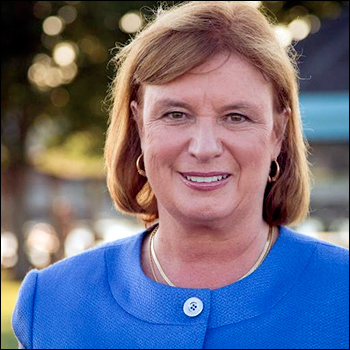
New Hampshire Rep. Carol Shea-Porter (R-Rochester)

New Hampshire Rep. Carol Shea-Porter (R-Rochester)

Oct. 10, 2017 — Since Pennsylvania Rep. Lou Barletta (R-Hazelton) announced he would run for the US Senate in late August, and after an additional eight US House seats opened in the succeeding weeks, none were as surprising as the latest one announced on Friday.

New Hampshire Rep. Carol Shea-Porter (R-Rochester), who represents the one seat that has defeated more incumbents than any other in the last decade including herself twice, announced that she will not seek re-election in 2018.

Her departure reasons were not part of the retirement statement but, for a woman who first came to Congress in 2006, was defeated in 2010, returned in 2012, and then lost again in 2014 before winning once more last November, her voluntary departure was certainly not predicted. Shea-Porter claimed another term in 2016, but with only 44 percent of the vote in part due to three Independent and minor party candidates taking more than 12.6 percent, but the number represented her lowest victory percentage.

Since the 2006 election, inclusive, the NH-1 electorate has consistently defeated its incumbent. In only 2008 was a US representative (Shea-Porter) here re-elected. The district encompasses New Hampshire’s eastern half, including the state’s largest city of Manchester, the Seacoast region, and the mountain area that hugs the Maine border. In the past six elections, the largest recorded win percentage was 54 percent (Republican Frank Guinta in 2010), while Shea-Porter never exceeded 51.7 percent.

Continue reading

Senate Candidate Review

By Jim Ellis

Sept. 25, 2017 — After Friday’s review of the open House races, today we update the first half of the 33 in-cycle Senate races in terms of serious candidate personnel. Tomorrow, we will complete the remaining 17 states.

In contrast to the House where 26 regular cycle seats are open, no current Senate incumbent has announced his or her retirement.

(Regular type means the individual is an announced contender; italics denote possible candidate.)

ARIZONA — TOSS UP
Sen. Jeff Flake (R)
Kelli Ward (R) – former State Senator
Jeff DeWit (R) – State Treasurer
Rep. Kyrsten Sinema (D) – US Representative
State Rep. Randy Friese (D) – Physician; Tucson area state legislator
• Sen. Flake is in trouble in the Republican primary largely due to his personal feud with President Trump. Rep. Kyrsten Sinema (D-Phoenix) waits in the wings. Should she enter the race, there is a strong chance the Democrats coalesce behind her.

CALIFORNIA — SAFE D
Sen. Dianne Feinstein (D)
State Sen. Kevin de Leon (D) – State Senate President
• Indications are suggesting that Sen. Feinstein, now 84 years old, will seek re-election. She should have little in the way of opposition, but state Senate President Kevin de Leon (D-Los Angeles) made public statements about challenging the senator after the latter made a favorable comment about President Trump. Unlikely such a challenge will actually happen, however.
Continue reading

A New Republican Governor

By Jim Ellis

Aug. 7, 2017 — West Virginia Gov. Jim Justice made national news the other night at President Trump’s rally in Huntington, WV, when the Democratic state chief executive took the stage to announce that he is switching to the Republican Party.

When addressing the Trump rally, Justice said, “like it or not, but the Democrats walked away from me … West Virginia, I can’t help you anymore by being a Democratic governor.”

The move now gives Republicans control of the entire West Virginia governmental apparatus, owning both houses of the state legislature and the governor’s office. Factoring Justice’s party change, the GOP holds the West Virginia chief executive post for the first time since Gov. Arch Moore (R) was defeated for re-election in 1988. There are now 26 states where Republicans control the legislature and governor’s office, including Nebraska where the legislature only has one ostensibly non-partisan legislative chamber but is clearly overwhelmingly Republican. In contrast, Democrats have full power in only five states.

The development means the Democrats drop to holding just 15 governors, an all-time low number for the party. Republicans, on the other hand, reach their historical apex with 34 governors as party members. The 50th governor, Bill Walker of Alaska, is an Independent.

Continue reading

More on the House

By Jim Ellis

June 27, 2017 — Yesterday, we examined the House’s post-special election status and speculated upon the Democrats’ chances of wresting majority control away from Republicans during the coming regular campaigns. One of the obstacles that make the Democrats’ task difficult is that only 15 early seats are open, and Republicans risk just nine of the total sum.

What could bring Democrats greater opportunity is the number of potentially open seats — that is, where members are, reportedly, considering running for another office. In this category, 18 incumbents are said to be contemplating different political moves that, if executed, would send their current seats into the open category.

Of the 18, only two are Democrats. Should Sen. Jeff Flake (R-AZ) draw a major Republican primary opponent, Rep. Kyrsten Sinema (D-Phoenix) is likely to jump into the Arizona statewide race thinking her victory chances become more realistic if Flake is forced to battle through a difficult intra-party contest. In Maryland, Rep. John Delaney (D-Potomac) is still reportedly considering entering the governor’s race to challenge incumbent Larry Hogan (R). The Democratic field is expanding, however, with former NAACP president Ben Jealous and Prince Georges County Executive Rushern Baker just recently announcing their candidacies, so Rep. Delaney’s decision is likely becoming more difficult.

Continue reading

Looking at the House

By Jim Ellis

June 27, 2017 — For a brief instant, until Rep. Jason Chaffetz (R-UT-3) resigns later this week, the House has a full compliment of 435 members, which means now is a good time to survey 2018 election cycle prospects.

There has been a great deal of speculation, particularly before the GA-6 special election that Democrats had hoped to win, that Republicans are in danger of losing their majority in the coming regular election. But, what do the numbers actually say?

In looking at the overall picture much depends upon realistic chances that congressional district maps in Pennsylvania and Texas could be changed via redistricting court rulings before the next election. Should this happen in the two states, certain districts currently rated safe or likely to go to one party or the other could be significantly altered. Therefore, this pair of domains with large Republican majorities (Pennsylvania: 13R-5D; Texas: 25R-11D) could become 2018 electoral wild cards.

Since the post-reapportionment maps were finalized after the 2010 census, three states: Florida, North Carolina and Virginia, have been re-drawn. The three new maps combined resulted in Democrats gaining a net of two seats, an increase far below what was projected. Potential exists for further re-drawing in Wisconsin and again in North Carolina, but the US Supreme Court agreeing to hear the former state’s political gerrymandering lawsuit now makes the timing for any court-directed map changes in the two places more difficult to implement for the coming election.

Continue reading

Minnesota Already in High Gear

By Jim Ellis

April 10, 2017 — We’re 19 months from the next election, yet already major Minnesota political moves are being made. Though state law does not limit its governors to eight years in office, incumbent Mark Dayton (D) has already announced he will not seek a third term next year. His retirement decision is setting political musical chairs in motion.

Additionally, the Democratic Farm Labor Party, the state’s dominant political apparatus, was shaken in November as President Trump came within just 45,000 votes of winning the state and, in fact, carried five of Minnesota’s eight congressional districts. Together, these events have put much of the state’s liberal political establishment on edge.

Last week we reported that six-term Rep. Tim Walz (D-Mankato) formally announced his gubernatorial campaign and immediately took positive steps toward becoming a major contender. Walz arranged for fellow Rep. Collin Peterson (D-Detroit Lakes) to announce his support, which has strategic value. So does former Minneapolis Mayor R.T. Rybak (D) expressing public support for Walz’s gubernatorial aspirations.

Continue reading

Democrats Play Offense

By Jim Ellis

Feb. 1, 2017 — The Democratic Congressional Campaign Committee (DCCC), in a memo from Executive Director Dan Sena, on Tuesday released their first 2018 target list of who they believe are the vulnerable Republican US House members. A total of 59 districts occupy the list; some that make sense, while others are long shots to say the least.

Included are eight freshmen members: representatives Brian Mast (FL-18), Jason Lewis (MN-2), Ted Budd (NC-13), Don Bacon (NE-2), John Faso (NY-19), Claudia Tenney (NY-22), Lloyd Smucker (PA-16), and Scott Taylor (VA-2). The freshman targets’ win percentages span from a low of 43.7 percent (Tenney) to a high 61.3 percent (Taylor), with an average of 51.9 percent among the eight.

Within the entire group of 59 targets, only five failed to reach majority support in their districts: representatives Tenney (43.7 percent), Lewis (46.9 percent), Will Hurd (TX-23; 48.3 percent), Martha Roby (AL-2; 48.8 percent), and Bacon (48.9 percent).

In the 59 Republican CDs, Hillary Clinton’s performance was better than former President Obama’s 2012 showing in 23 of them, her best Republican district being Rep. Ileana Ros-Lehtinen’s South Florida FL-27, where the 2016 Democratic nominee garnered 58.6 percent. Sophomore Rep. Carlos Curbelo’s neighboring 26th District was her second-best seat. Here, Clinton tallied 56.7 percent of the vote.

Continue reading