Category Archives: Polling

Hawaii Primary Results

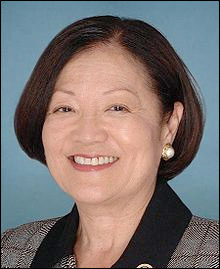
Mazie Hirono

Hawaii voters went to the polls on Saturday and selected federal nominees. Throughout the entire election cycle, polling had been erratic, to say the least. Each candidate would release polls favoring them, even up until the eve of the primary election. It appears the pollsters for Senatorial candidate and US Representative Mazie Hirono (D-HI-2) and Honolulu City Councilwoman Tulsi Gabbard, in the open 2nd District, possessed the better polling data.

Hirono won a 58-41 percent landslide victory over former representative Ed Case (D-HI-2) and wins the right to face former Republican governor Linda Lingle in the general election. The two battled each other in the 2002 governor’s race, a contest Lingle won. President Obama’s presence on the Democratic ticket, in the sense that he will likely poll in the 70 percentile here as he did last election, will be a boon to Hirono.

In the seat Hirono is vacating to run statewide, Gabbard defeated former Honolulu Mayor Mufi Hannemann (D), in what turned into a nasty campaign and could signify a changing of the guard in Hawaii politics. The old-school Hannemann was originally viewed to be the favorite but lost big to Gabbard, 55-34 percent. Gabbard will easily win the general election.

The 1st District will feature a re-match between Rep. Colleen Hanabusa (D) and former representative Charles Djou (R). Hanabusa is likely to win re-election.

Colorado Crazy


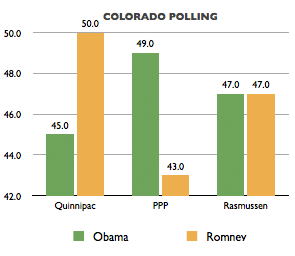
A trio of national pollsters just descended upon the swing state of Colorado and produced wildly divergent presidential campaign results. During the period of July 31 – Aug. 6, three national survey research firms each conducted a separate study of likely Colorado general election voters.

Quinnipiac University (July 31 – Aug. 6) surveyed a sample cell of 1,463 likely voters and actually found Republican Mitt Romney to be leading President Obama 50-45 percent. Public Policy Polling (Aug. 2-5; 779 likely Colorado voters), also in the field during the same period, found the exact opposite result: Obama ahead 49-43 percent. Finally, on Aug. 6, Rasmussen Reports conducted a one-day survey of 500 likely Colorado voters and projected the two candidates to be tied at 47 percent apiece.

The differing results tell us several things. First, the fact that we see the President leading by six in one poll, trailing by five in another, and tied in a third likely tells us that the Colorado electorate is split very finely between the two men. Second, all three polls reveal a very high degree of commitment. Those not expressing a defined choice were only in single-digit percentiles for all three polls. Third, the data also suggests that this state, which typically splits its votes rather evenly between candidates of the two parties, is clearly in play for both presidential contenders. In 2008, then-Sen. Barack Obama carried Colorado over his colleague John McCain by a 54-45 percent margin but, today, it appears the 2012 result will be much closer.

Primary Tipping Points: Mo., Mich., Wash.

Missouri: The polling was right. During the final week of the Missouri Senate Republican primary, late surveys from research organizations such as Public Policy Polling detected Rep. Todd Akin (R-MO-2) mounting a serious come-from-behind surge. Akin, who billed himself as the campaign’s “true conservative,” had not led for any substantial period of time, but his campaign peaked at exactly the right moment. Last night, Akin notched a 36-30-29 percent GOP nomination win over St. Louis businessman John Brunner and ex-state treasurer Sarah Steelman, respectively.

The victory sends Akin to the general election against first-term incumbent Claire McCaskill (D), who may be the weakest Democrat incumbent currently seeking re-election. While Sen. McCaskill’s party leaders and political activists believe Akin is the best Republican for her to run against, the Missouri voting trends may tell a different story come November. This will be a hard-fought campaign and one in which the presidential contest will play a major role. The real race begins today.

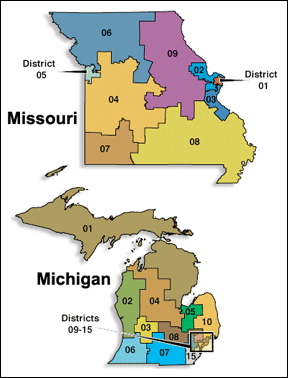
Turning to the paired House races, in Missouri’s St. Louis-anchored 1st Congressional District, veteran Rep. Lacy Clay (D) easily turned back a challenge from fellow Democrat, Rep. Russ Carnahan (D-MO-3) who chose to run in a contested primary after his seat was collapsed in reapportionment. Clay was renominated 63-34 percent, amongst a turnout of about 90,000 voters. Late polling was predicting a decisive Clay win and such occurred mostly due to overwhelming support within the African-American community.

Michigan: As expected, former Rep. Pete Hoekstra (R-MI-2) scored an easy 54-34 percent victory over charter school advocate Clark Durant in the contest for the Senate. The retired congressman will now face two-term incumbent Debbie Stabenow in what will be a major uphill battle. Sen. Stabenow is the clear favorite for re-election.

In Detroit, also as local polling predicted, two-term Rep. Gary Peters (D-MI-9), who was paired with veteran Rep. Sander Levin (D-MI-12) in the new 9th District but chose to run in the Detroit/Oakland County CD because he believed he could take advantage of a split within the African-American community, saw his strategy bear fruit last night. Mr. Peters defeated freshman Rep. Hansen Clarke (D-MI-13) 46-36 percent in a field of five candidates, three of whom are African-American.

In the adjacent 13th District, 24-term Rep. John Conyers, who will now likely complete at least 50 years of service in the House, defeated a field of four challengers, garnering a clear majority 57 percent of the vote. State Sen. Glenn Anderson, Mr. Conyers’ strongest opponent, only managed 15 percent, again just as the late polls were predicting.

North of Detroit in suburban Oakland County, former state Senate majority leader Nancy Cassis’ (R) late-developing write-in campaign fell way short as reindeer rancher and staunch Ron Paul supporter, Kerry Bentivolio, the only person who officially qualified for the Republican primary ballot, looks to be in the 65 percent range when all of the votes are finally counted. Physician Syed Taj won the Democratic primary and this has the potential of becoming a hotly contested general election campaign. Incumbent Rep. Thaddeus McCotter (R-MI-11), reeling from a disastrous six-week presidential campaign, failed to qualify for the congressional ballot and then subsequently resigned his seat. This will be an interesting general election race between two people, neither of whom was expected to be a serious candidate. Democrats have a chance to snatch this seat even though it historically votes Republican.

Washington: Sen. Maria Cantwell (D) will face state Sen. Michael Baumgartner (R) in her bid for a third term. Such is not expected to be a highly competitive race. In House races, all incumbents secured a general election ballot position in this top-two primary format. As in California and Louisiana, the candidates finishing first and second, regardless of political party preference, advance to the general election. All seven incumbents seeking re-election placed first with percentages exceeding 50 percent.

In the three open seats, Republican John Koster placed first in the new 1st District that gives the GOP a much better chance of securing a general election victory. He will face Democratic former congressional nominee Suzan DelBene who placed ahead of two-time congressional nominee Darcy Burner.

With Rep. Norm Dicks (D-WA-6) retiring after 36 years of congressional service, it appears that Democrat state Sen. Derek Kilmer, as predicted, will become his successor. Kilmer placed first in the jungle primary and becomes the prohibitive favorite in what is a heavily Democratic district.

In the new 10th District, awarded the fast-growing state in reapportionment, former state House majority leader and 2010 congressional nominee Denny Heck (D) placed first in the low 40-percentile range and will face Pierce County Councilor Dick Muri (R) in what shapes up as a reliable Democratic district. The Washington delegation is likely to split with five Democrats, four Republicans, and one marginal district (the 1st to be decided in the tough Koster-DelBene contest).

Late Primary Polling in Mo., Mich.

Several polls have just been released about today’s primary elections in Missouri and Michigan.

First, Public Policy Polling (Aug. 4-5; 590 likely Missouri GOP primary voters) gives businessman John Brunner a slight 35-30-25 percent lead over Rep. Todd Akin (R-MO-2) and former state treasurer Sarah Steelman in the Missouri Senate Republican primary. The race is anybody’s game, however. Rep. Akin actually leads Brunner by two points in the category of those most excited to vote. Brunner’s edge is much larger among lower propensity voters, thus accounting for his overall advantage. More upward momentum has been detected for Akin during the last two weeks than Brunner. Steelman, according to the PPP data, is actually losing support in comparison to previous polls of the race during the same period.

In the 1st Congressional District, Survey USA, polling for St. Louis television station KDSK (Aug. 2-4; 490 likely MO-1 Democratic primary voters), gives Rep. Lacy Clay (D) a huge 56-35 percent lead over his Democratic colleague, Rep. Russ Carnahan (D-MO-3). The two were paired because Missouri lost a seat in national reapportionment. Among African-Americans, who will be the largest demographic sector participating in the primary, Clay leads 81-12 percent.

Turning to Michigan, EPIC-MRA released two congressional polls, both for the Detroit based districts. In the 13th (Aug. 4-5; 800 likely MI-13 Democratic primary voters via automated interviews), 24-term incumbent John Conyers (D) commands a 57-17 percent lead over his nearest rival, state Sen. Glenn Anderson. The remaining three candidates are in single-digits.

In the new Wayne/Oakland County-based 14th CD, Rep. Gary Peters (D-MI-9) appears poised to win this incumbent pairing campaign as he leads fellow Rep. Hansen Clarke (D-MI-13) 52-33 percent according to EPIC-MRA (Aug. 4-5; 800 likely MI-14 Democratic primary voters via automated interviews). Even among African-Americans Clarke fares poorly, leading Peters only 38-34 percent. Peters, who is white, hoped to split the black vote among the three African-American candidates and it appears that his strategy is working.

Incumbent Pairing Too Close to Call in OH-16

Sutton | Renacci


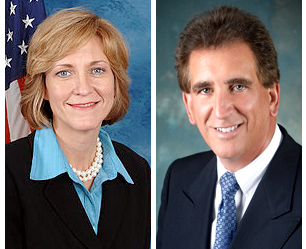
In Ohio’s only general election congressional race pitting two incumbent members against each other, a new poll reveals a very tight contest with tremendously high stakes.

A GBA Strategies internal poll (July 15-19; 500 likely OH-16 voters; margin of error plus-or-minus 4.4 percentage points) conducted for Democratic Rep. Betty Sutton shows her to be in a statistical dead-heat against GOP freshman Rep. Jim Renacci. The data gives Sutton 42 percent as compared to Renacci’s 40 percent.

Surprisingly, Libertarian candidate Jeff Blevins is taking a sizable 12 percent of the sampled voters. This latter number causes some to question the poll’s methodology because, for a sole independent candidate, these figures are much higher than what is normally seen. Third-party candidates have shown to typically under-perform in their poll results, so it is likely his actual vote total will return to the low single-digit percentages that are normally recorded for such candidates. Interestingly, GBA projects Blevins to be drawing his support equally from both Democrats and Republicans.

The current results show little change from GBA’s October poll that projected the race to be tied, with each candidate attracting 45 percent of the vote. Blevins, however, was not factored into the earlier poll. The numbers are also in line with a June poll from Normington Petts & Associates, a Democratic survey research firm, that found Sutton to be leading Renacci 41-38 percent. In July, the Democratic-leaning House Majority PAC further confirmed Sutton and Renacci were statistically tied at 40 percent, with Blevins taking a much smaller share of the vote.

The 2011 redistricting plan paired Sutton and Renacci as a result of Ohio losing two congressional seats in reapportionment due to slow population growth. With a Republican legislature in control of the redistricting pen, the two were placed in a seat that favors Renacci in a head-to-head race with Sutton. Renacci carries over 41.8 percent residents from his current seat, while Sutton has far fewer constituents in the new 16th. Her carry-over figure is half that of Renacci’s, at 20.6 percent.

With polling leaving us in a statistically deadlocked race, we turn to the importance of spending and fundraising. Renacci was the stronger fundraiser last quarter according to the latest Federal Election Commission financial disclosure reports (closed June 30). He reported raising approximately $502,000 compared to Sutton’s $293,000. Additionally, Renacci ended the quarter with approximately $1.5 million cash on hand, compared to Sutton’s $900,000. Contrary to 2010 when the Republican self-contributed more than $752,000, this year he has only invested $2,500 into his re-election campaign.

Both campaigns and outside liberal and conservative groups already have reserved millions of dollars in TV advertising time in the Cleveland media market. Groups such as the Democratic Congressional Campaign Committee (DCCC) already have reserved over $3 million in Cleveland ad time and similarly the National Republican Congressional Committee (NRCC) as well as other groups has reserved $2 million buys thus far.

This member vs. member match-up has been a tight battle since the seat was redrawn and guarantees to be a horse race until the end. Both candidates have the experience, resources, outside support, and staff to run strong campaigns. OH-16 is considered to be a top race for both the DCCC and NRCC this fall, so stay tuned.

A Change in Momentum in the Wisconsin Senate

A new Public Policy Polling survey (July 30-31; 400 likely Wisconsin GOP primary voters) shows a three-way race developing for the Republican Senate nomination as former Rep. Mark Neumann (R-WI-1) has now moved into serious contention in the Badger State. According to PPP, wealthy businessman Eric Hovde places first with 28 percent while Neumann moves into a second place tie with former governor Tommy Thompson at 25 percent. State Assembly Speaker Jeff Fitzgerald has dropped off the pace, posting only 13 percent.

Simultaneously, We Ask America also surveyed the Wisconsin race and arrived at a similar conclusion. They also see the contest closing around the three candidates. According to their poll (July 30; 1,237 Wisconsin GOP voters through automated calls) Hovde and Thompson are tied at 23 percent, and Neumann moves up to 17 percent.

The Wisconsin primary is Aug. 14, so the race’s determining factors will occur in final two weeks. Should the current trends continue and Neumann continue to gain strength – he moved up 10 points in the three weeks between PPP surveys, for example – then an interesting three-way finish with no clear leader could be on the horizon for the final few days. Obviously, this campaign is in a fluid state without a clear conclusion visible yet. The Republican winner will face Rep. Tammy Baldwin (D-WI-2), the consensus Democratic candidate, in a highly competitive general election campaign.

Texas Run-off Tomorrow

Dewhurst | Cruz

Voters go to the polls in Texas tomorrow to choose US Senate as well as several congressional nominees. The big Senate battle is on the Republican side, where three-term Lt. Gov. David Dewhurst fights to save his political credibility against former state solicitor general Ted Cruz. In the May 29 primary, Dewhurst placed first with 44.7 percent of the vote versus Cruz’s 34.1 percent.

The primary results place Dewhurst in a gray area as to whether he can develop a winning run-off coalition in a two-way race. Most often, a well-known candidate who fails to secure a majority of his own party’s vote in the primary election loses the subsequent run-off because the majority opposition only has one choice. Turnout and the candidate who has the most energized base tend to be the determining factors.

Internal polls released from both camps show their own candidate leading in the high single-digit range. The Cruz polling was conducted just among May 29 primary voters while the Dewhurst samples are from a likely voter model. The methodology difference lends more credence to the Cruz polls. The chances of seeing an upset win here are at least 50/50.

On the Democrat side, former state Rep. Paul Sadler and retired educator Grady Yarbrough battle for a ticket to the general election. Realistically, the winner of the Dewhurst-Cruz contest easily defeats the Dem winner in November, so tomorrow’s GOP run-off is likely race-determining.

On the congressional level, run-off voters in several districts will effectively choose House members. In the Dallas-Ft. Worth area, the 33rd Congressional District is one of four new seats awarded the state. A Democratic battle between Ft. Worth state Rep. Marc Veasey and former state representative and Dallas City Councilman Domingo Garcia is peaking. The race has become a rivalry contest between the two Metroplex cities. With more of the Ft. Worth area included in the new 33rd and placing first with a 37-25 percent margin, Veasey is viewed to be the favorite tomorrow. The Democrat winner claims the seat in November.

In the Rio Grande Valley, the new 34th Congressional District is anchored in the city of Brownsville and travels along the Gulf of Mexico coastline. Filemon Vela will likely win the Democratic nomination tomorrow against former congressional aide Denise Saenz Blanchard. Vela, an attorney, is the son of ex-federal judge Filemon B. Vela and former Brownsville mayor Blanca Sanchez Vela. His wife, a Republican, is a sitting district judge. Vela placed first in May with 40 percent of the vote against only 13 percent for Blanchard. The large spread suggests Vela is in strong run-off and general election position.

For the Republicans, in the district stretching from the southern tip of Tarrant County (Ft. Worth) into western Travis County (Austin), former Secretary of State Roger Williams, assuming that financial wherewithal is a determining factor, is poised to score a run-off victory against Tea Party activist and college professor Wes Riddle. Williams is projected to outspend Riddle by an 8:1 margin, but the latter should have a grassroots advantage. In a low turnout election, that could be significant but it is unlikely he can overcome Williams’ many advantages.

In the state’s fourth new district, the 36th CD to the north and east of Houston, first-place finisher Mark Takach, a financial advisor who placed just 350 votes ahead of former Rep. Steve Stockman in the primary, face each other tomorrow. The outcome here is difficult to predict. Takach is an unknown and Stockman served only one term back in 1995-97 in an adjoining area. The winner, however, becomes the prohibitive favorite for November.

In the open 14th District, the seat veteran congressman and presidential candidate Ron Paul is vacating, two strong Republicans, state Rep. Randy Weber and Pearland City Councilwoman Felicia Harris, are fighting for the right to face ex-Rep. Nick Lampson (D) in the general election. The district clearly favors Republicans, but Lampson represented the Beaumont-Galveston region for four terms until his defeat in the redistricted 2nd CD that took him out of his regional base.

From the expansive district that stretches from San Antonio all the way to El Paso, another defeated congressman, Ciro Rodriguez, is attempting yet another comeback. He placed first in the May 29 Democrat primary and now faces state Rep. Pete Gallego in tomorrow’s run-off. The Democrat establishment is clearly behind Gallego, who most believe will be the stronger opponent to freshman Republican Rep. Quico Canseco, but the San Antonio base still appears to be a Rodriguez asset. The general election will be a toss-up in what is Texas’ only real marginal congressional district.