Category Archives: House

Late Primary Polling in Mo., Mich.

Several polls have just been released about today’s primary elections in Missouri and Michigan.

First, Public Policy Polling (Aug. 4-5; 590 likely Missouri GOP primary voters) gives businessman John Brunner a slight 35-30-25 percent lead over Rep. Todd Akin (R-MO-2) and former state treasurer Sarah Steelman in the Missouri Senate Republican primary. The race is anybody’s game, however. Rep. Akin actually leads Brunner by two points in the category of those most excited to vote. Brunner’s edge is much larger among lower propensity voters, thus accounting for his overall advantage. More upward momentum has been detected for Akin during the last two weeks than Brunner. Steelman, according to the PPP data, is actually losing support in comparison to previous polls of the race during the same period.

In the 1st Congressional District, Survey USA, polling for St. Louis television station KDSK (Aug. 2-4; 490 likely MO-1 Democratic primary voters), gives Rep. Lacy Clay (D) a huge 56-35 percent lead over his Democratic colleague, Rep. Russ Carnahan (D-MO-3). The two were paired because Missouri lost a seat in national reapportionment. Among African-Americans, who will be the largest demographic sector participating in the primary, Clay leads 81-12 percent.

Turning to Michigan, EPIC-MRA released two congressional polls, both for the Detroit based districts. In the 13th (Aug. 4-5; 800 likely MI-13 Democratic primary voters via automated interviews), 24-term incumbent John Conyers (D) commands a 57-17 percent lead over his nearest rival, state Sen. Glenn Anderson. The remaining three candidates are in single-digits.

In the new Wayne/Oakland County-based 14th CD, Rep. Gary Peters (D-MI-9) appears poised to win this incumbent pairing campaign as he leads fellow Rep. Hansen Clarke (D-MI-13) 52-33 percent according to EPIC-MRA (Aug. 4-5; 800 likely MI-14 Democratic primary voters via automated interviews). Even among African-Americans Clarke fares poorly, leading Peters only 38-34 percent. Peters, who is white, hoped to split the black vote among the three African-American candidates and it appears that his strategy is working.

Missouri, Michigan Highlight Another Primary Day

Voters in four more states go to the polls tomorrow, and the most exciting races are in Missouri and Michigan. In the Show Me State, Sen. Claire McCaskill, quite possibly the most vulnerable of Democratic incumbents standing for re-election, will soon know who she will face in the fall. A close Republican contest among three candidates is trending toward an uncertain result even the day before the vote. Rep. Todd Akin (R-MO-2), former state treasurer Sarah Steelman, and St. Louis businessman John Brunner vie for the nomination.

Brunner is by far spending the most money, already over $7 million; Steelman is attempting to run furthest to the right and now brandishes Sarah Palin’s endorsement; and Rep. Akin emphasizes his conservative record as a six-term veteran member of the House. All three are leading McCaskill in the latest polling.

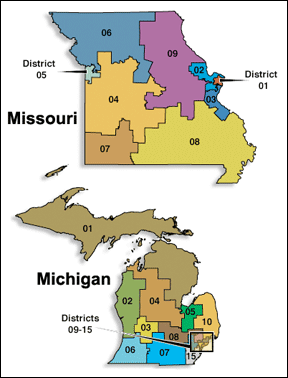
In the St. Louis-based 1st Congressional District, a Democratic incumbent pairing is occurring because the national reapportionment formula cost Missouri a seat. Reps. Lacy Clay (D-MO-1) and Russ Carnahan (D-MO-3) are pitted against each other in the city district, a re-draw that clearly favors the former. Rep. Clay has consolidated the dominant African-American constituency and enjoys the support of most of the local political establishment including St. Louis Mayor Francis Slay.
Former Republican National Committee co-chair Ann Wagner will capture the GOP nomination in Rep. Akin’s open 2nd District and is expected to win the general election, as well.

In Michigan, former Rep. Pete Hoekstra (R-MI-2) is the heavy favorite in the Senate Republican primary, but he will be a decided underdog in the general election against two-term Sen. Debbie Stabenow (D).

But the bigger Michigan story is likely to be in the Detroit area congressional districts, particularly in new Districts 11 and 14.

The resignation of Rep. Thaddeus McCotter (R) has ignited a free-for-all in the Oakland-Wayne County 11th District. Since McCotter did not qualify for the ballot, only Tea Party activist and reindeer rancher Kerry Bentivolio’s name will officially appear. Former state Senate majority leader Nancy Cassis is running an establishment-backed write-in campaign in hopes of taking the nomination and giving the GOP a stronger chance of holding the seat in November. Local physician Syed Taj is the favored Democratic candidate. The situation here is chaotic. Tomorrow’s vote will provide some answers but the 11th, which should be a reliable Republican district, is now likely to host a competitive general election.

In the Detroit-based 14th CD, another incumbent Democratic pairing will be decided. Reps. Gary Peters (D-MI-9) and freshman Hansen Clarke (D-MI-13) face each other along with three other candidates. Peters, who was originally paired with veteran Rep. Sander Levin (D-MI-12) in the new 9th CD, decided to run in the 14th with the idea of splitting the majority African-American vote among the three significant black candidates, including his colleague Clarke. The strategy may work, as Peters appears poised to win the Democratic nomination tomorrow according to several late polls.

In Rep. Dale Kildee’s (D) open 5th District, Dan Kildee, a former Genesee County official in several positions and nephew of the congressman, is unopposed for the Democratic nomination. Since the 5th is a heavily Democratic district, the younger Kildee will virtually clinch victory in November with his win tomorrow night.

House Energy and Commerce Committee Chairman Fred Upton (R-MI-6) again faces a Republican primary challenge from former state representative Jack Hoogendyk, the man who held him to a 57 percent victory two years ago. It appears Upton will win by a much larger margin this time.

Finally, in the new 13th District, 24-term Rep. John Conyers (D) finds himself facing four strong primary challengers, two state senators, a state representative, and a school board trustee. As is often the case in races where a group of candidates run in a system without a run-off, the incumbent normally wins because the pro-challenger vote is split among too many contenders.

In the state of Washington, Sen. Maria Cantwell (D) stands for election to a third term in what should be a relatively easy campaign bid. The Republicans will nominate a candidate on Tuesday. In the state’s two open congressional seats, Democrats will choose state Sen. Derek Kilmer to succeed veteran Rep. Norm Dicks (D-WA-6). In the new 10th District, the additional seat awarded to the state in reapportionment, former state House majority leader Denny Heck is poised to win the Democratic nomination, which is tantamount to election in November.

Kansas is also holding a primary election tomorrow, but all federal incumbents lack serious competition.

Incumbent Pairing Too Close to Call in OH-16

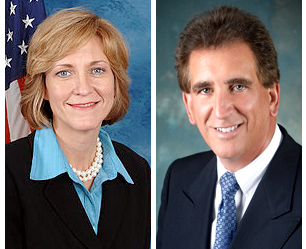
Sutton | Renacci


In Ohio’s only general election congressional race pitting two incumbent members against each other, a new poll reveals a very tight contest with tremendously high stakes.

A GBA Strategies internal poll (July 15-19; 500 likely OH-16 voters; margin of error plus-or-minus 4.4 percentage points) conducted for Democratic Rep. Betty Sutton shows her to be in a statistical dead-heat against GOP freshman Rep. Jim Renacci. The data gives Sutton 42 percent as compared to Renacci’s 40 percent.

Surprisingly, Libertarian candidate Jeff Blevins is taking a sizable 12 percent of the sampled voters. This latter number causes some to question the poll’s methodology because, for a sole independent candidate, these figures are much higher than what is normally seen. Third-party candidates have shown to typically under-perform in their poll results, so it is likely his actual vote total will return to the low single-digit percentages that are normally recorded for such candidates. Interestingly, GBA projects Blevins to be drawing his support equally from both Democrats and Republicans.

The current results show little change from GBA’s October poll that projected the race to be tied, with each candidate attracting 45 percent of the vote. Blevins, however, was not factored into the earlier poll. The numbers are also in line with a June poll from Normington Petts & Associates, a Democratic survey research firm, that found Sutton to be leading Renacci 41-38 percent. In July, the Democratic-leaning House Majority PAC further confirmed Sutton and Renacci were statistically tied at 40 percent, with Blevins taking a much smaller share of the vote.

The 2011 redistricting plan paired Sutton and Renacci as a result of Ohio losing two congressional seats in reapportionment due to slow population growth. With a Republican legislature in control of the redistricting pen, the two were placed in a seat that favors Renacci in a head-to-head race with Sutton. Renacci carries over 41.8 percent residents from his current seat, while Sutton has far fewer constituents in the new 16th. Her carry-over figure is half that of Renacci’s, at 20.6 percent.

With polling leaving us in a statistically deadlocked race, we turn to the importance of spending and fundraising. Renacci was the stronger fundraiser last quarter according to the latest Federal Election Commission financial disclosure reports (closed June 30). He reported raising approximately $502,000 compared to Sutton’s $293,000. Additionally, Renacci ended the quarter with approximately $1.5 million cash on hand, compared to Sutton’s $900,000. Contrary to 2010 when the Republican self-contributed more than $752,000, this year he has only invested $2,500 into his re-election campaign.

Both campaigns and outside liberal and conservative groups already have reserved millions of dollars in TV advertising time in the Cleveland media market. Groups such as the Democratic Congressional Campaign Committee (DCCC) already have reserved over $3 million in Cleveland ad time and similarly the National Republican Congressional Committee (NRCC) as well as other groups has reserved $2 million buys thus far.

This member vs. member match-up has been a tight battle since the seat was redrawn and guarantees to be a horse race until the end. Both candidates have the experience, resources, outside support, and staff to run strong campaigns. OH-16 is considered to be a top race for both the DCCC and NRCC this fall, so stay tuned.

Cruz Wins in Texas; Other Results

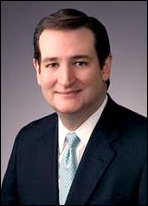
Ted Cruz


All the pre-election signs were predicting a Ted Cruz upset victory over Lt. Gov. David Dewhurst and the prognostications proved true in the Texas run-off vote last night. Cruz, identified as the clear conservative standard bearer with strong Tea Party support, racked up an impressive 56-44 percent win. Dewhurst has won three previous lieutenant governor statewide elections and another as lands commissioner. It was a crushing loss for for the wealthy lieutenant governor who spent $25+ million on the Senate race, about $17 million of which was self-contributed.

Cruz, the former Texas solicitor general, will now face former state representative Paul Sadler, who easily won the Democratic run-off. The new Republican nominee is the prohibitive favorite to capture the seat in November, winning the right to succeed retiring Sen. Kay Bailey Hutchison (R).

Turnout for the Texas run-off exceeded 1.1 million voters, about half of whom took advantage of the state’s early voting procedure. The state has a notoriously low primary and run-off history, but the raw number of ballots cast in yesterday’s election is among the highest ever recorded.

The run-off effectively produced a number of new congressmen who now will face only token opposition in the general election. In the new 25th District, former Secretary of State Roger Williams notched a 58-42 percent win to secure the GOP nomination and effectively win the seat.

In the Democratic 33rd District, Ft. Worth state Rep. Marc Veasey nipped former state representative and Dallas City Councilman Domingo Garcia in a battle of the two major Metroplex cities. Ft. Worth has the larger share of the district and each city voted overwhelmingly for their hometown candidate. Mr. Veasey effectively won a ticket to the House last night as the 33rd District is clearly a Democratic seat.

Traveling south to the Rio Grande Valley, the newly created 34th CD yielded a victory to Democratic attorney Filemon Vela. The presumptive congressman is from a prominent Brownsville family that sent his father to a federal judgeship and mother to the mayor’s office. He scored an easy 67-33 percent win. Like Veasey mentioned above, Vela will be coming to Washington as part of the new 113th Congress next January.

In new District 36, former one-term representative Steve Stockman, raising virtually no money for his run-off, nonetheless scored a win over financial advisor Steve Takach. With little in the way of general election competition, Mr. Stockman will win the general election and have a seat that he can hold, unlike the one he won back in 1994 where he lasted only one term.

In two run-offs that will yield competitive general elections, state Rep. Randy Weber easily defeated Pearland City Councilwoman Felicia Harris and now will face former Rep. Nick Lampson (D) in a seat that should favor the new Republican nominee. In the San Antonio to El Paso seat (District 23), Democratic state Rep. Pete Gallego successfully dispelled former US Rep. Ciro Rodriguez and will now face freshman GOP Rep. Quico Canseco. The 23rd is the only marginal seat in the Lone Star State.

Georgia Notes:

No real surprises came from the Georgia primary. All congressional incumbents of both parties were easily renominated in their respective elections.

In the new 9th District, the seat awarded Georgia in reapportionment, a Republican run-off will occur in what will be a safe GOP seat. State Rep. Doug Collins and radio talk show host Martha Zoller came within a point of each other, meaning the Aug. 28 run-off election will be a knock-down, drag-out brawl.

Another run-off will be held in District 12 for the right to challenge Rep. John Barrow (D) in an Augusta-based district where almost half of the territory is new to the incumbent. State Rep. Lee Anderson and businessman Rick Allen are the secondary election participants. Allen just nipped retired Navy officer Wright McLeod by under 600 votes to secure the second and final run-off position.

Texas-Sized Upset in the Making?

Yesterday, we covered the races being decided in today’s run-off (Texas) and primary elections (Georgia) and mentioned that former Texas solicitor general Ted Cruz has a legitimate chance of upsetting Lt. Gov. David Dewhurst in the Lone Star State’s US Senate Republican run-off. The release of the new Public Policy Polling data for Texas underscores that the trends are supporting an upset result. According to their survey (July 28-29; 665 Texas GOP likely run-off voters) Cruz has a 52-42 percent lead over the lieutenant governor. The Dewhurst campaign countered with their internal Baselice & Associates poll showing their candidate with a 48-44 percent lead, but these results appear out of line with the other publicly presented trends.

Perhaps most disconcerting for the Dewhurst camp, the PPP numbers report Cruz to be leading 63-33 percent among those who are most excited about voting in the run-off election. Additionally, the ex-solicitor general leads the veteran statewide office holder among those considering themselves as Tea Party voters by a huge 75-22 percent split. In a low turnout election where 70 percent identify themselves to be somewhat or very conservative, this type of spread could well be the defining factor.

Typically, Texas primary and run-off elections record very low turnouts. More than 1.4 million people voted in the May 29 primary election, but a considerable smaller number will vote in the secondary election. The likely turnout projection suggests a participation rate of less than one million voters.

Ohio’s LaTourette to Retire

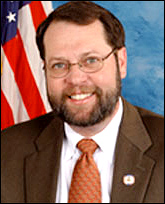
Latourette

Nine-term Ohio Rep. Steve LaTourette (R-14) abruptly scheduled a news conference for later today to announce that he will not seek re-election in November, despite winning renomination in March. Reports indicate he experienced a falling out with the majority leadership in relation to future committee assignments.

The 14th District, politically marginal in nature, is located in the northeastern corner of the state between Cleveland and the Pennsylvania border. Both President Obama and John McCain received 49 percent of the vote here in 2008.

Local Republican Party officials throughout the district will subsequently meet and choose a replacement candidate. Democrats have accountant Dale Blanchard as their nominee. Blanchard has twice lost to LaTourette and he has yet to even file a 2012 FEC financial disclosure report meaning he has yet to raise $5,000 for the campaign. Unless the Democrats can get Blanchard to withdraw from the ballot, they will be left with a sub-standard nominee in a competitive district.

OH-14 now becomes the 61st open seat in the current election cycle. Much more will be forthcoming from here in the next few days.

Eyes on Georgia’s 9th CD

In Georgia, only of a few of the state’s 14 districts are in contested situations tomorrow. The biggest news will be what happens in the newly created 9th Congressional District in the northeastern sector of the state. The seat, awarded to Georgia in reapportionment because of the state’s robust growth rate during the past decade, is drawn to elect a Republican. It is likely that state Rep. Doug Collins and radio talk show host Martha Zoller will head to a run-off contest on Aug. 21.

In the Augusta-based 12th District, in what is likely to be the most hotly contested general election race in the state, four Republicans battle for the opportunity to challenge veteran Rep. John Barrow (D) in a re-configured district. Barrow, seeking his fifth term in the House, only represents 53 percent of the new 12th CD’s constituency. A run-off is probable, most likely between state Rep. Lee Anderson and businessman Rick Allen. Much more will be heard from this campaign before the final votes are cast later this year.

In Atlanta, veteran Rep. John Lewis faces a Democratic primary foe but is expected to easily win renomination. Former judge Michael Johnson is a credible candidate, but no match for the 13-term congressman and former Civil Rights leader.