Category Archives: Election Analysis

TN-7: Special Election Today

By Jim Ellis — Tuesday, Dec. 2, 2025

Special Election

TN-7 candidates in today’s special election: Tennessee state Rep. Aftyn Behn (D-Nashville) / Republican Matt Van Epps.

Signs are prevalent that today’s special election in western Tennessee’s 7th Congressional District will be closer than the region’s voting history suggests.

An Emerson College pre-election survey (Nov. 22-24; 600 likely TN-7 special election voters; multiple sampling techniques) finds Republican Matt Van Epps, a former cabinet official in Gov. Bill Lee’s (R) administration, leading state Rep. Aftyn Behn (D-Nashville) by only a 48-46 percent margin. This, in a district that both President Trump and resigned Congressman Mark Green (R) carried with 60 percent of the vote in 2024.

Both parties see outside allies pouring in money to help their favored candidates, so the political advertising has been intense. Turnout, as always, will be the key. The early voting numbers show Democratic participation up in the Davidson County (Nashville) precincts, while Republican early vote turnout looks to be below their previous winning level benchmarks in most of the outlying counties.

Analysis parallels have been made between this campaign and the special election held last April in Florida’s 6th Congressional District. There, Republican Randy Fine, who represented a state Senate district about 100 miles from the congressional district in which he ran, appeared to be underperforming against educator Josh Weil (D) who spent almost $16 million in the special election campaign. President Trump carried the district in the previous November election with a 65-35 percent margin. The Dave’s Redistricting App statisticians calculated the district’s partisan lean at 60.7R – 37.3D.

In the FL-6 special election, despite what was viewed as “widespread Republican panic” occurring over the Fine candidacy, the GOP nominee won the seat with a 56.7 – 42.7 percent margin. While detractors pointed to President Trump’s 65 percent, a comparison to depict the Fine performance in a negative light, turning back to the last time the 6th District was open is likely a better analysis indicator. Such a comparison tells a different story. In the 2018 open election, Republican Mike Waltz’s victory percentage was 56.3, or almost a half-point below Fine’s initial vote total.

The TN-7 district is routinely characterized in media reports as a “deep red” seat. Such was the case in previous redistricting plans, but not today. In the 2011-20 map, for example, the 7th District carried a partisan lean of 66.1R – 31.6D (Dave’s Redistricting App calculations), which certainly qualifies as a “deep red” CD.

Because the 2021 redistricting map added Democratic voters to the 7th to give Republicans a chance to win the adjacent 5th CD, a better depiction of the current TN-7 would be a “reliable” red district (55.1R – 42.2D: Dave’s Redistricting App calculations).

Behn comes from the Ocasio-Cortez/Mamdani wing of the Democratic Party. Her winning would be extraordinary in a Republican district such as TN-7 and will give credence to those who believe the Democrats will easily win the House majority in next year’s midterm elections.

Such a victory tonight would be even more astonishing when understanding that Behn has previously said that she “hates Nashville and the country music scene,” and been forcibly removed from the Governor’s office for protesting. She also said that “men and women can give birth,” and favors transgenderism for children.

Tennessee’s 7th District contains part of the city of Nashville and then stretches west and south to include 11 whole counties and parts of three others. The district encompasses territory from Kentucky to Alabama. In addition to containing part of Nashville, the other major population centers are the cities of Clarksville, from where former Rep. Green hails, and Franklin. (See map at Dave’s Redistricting App.)

The Tennessee situation again dictates that the Republicans must find a better way of motivating what is termed “the casual Trump voter,” that is, the person who will vote when President Trump is on the ballot but is typically not a regular election participant.

In special elections around the country this year, and particularly in the Virginia Governor’s campaign, the Republican turnout was low based upon previous benchmarks. Thus, the GOP turnout mechanism must be more effective in Tennessee if GOP candidate Van Epps is to prevail.

Democrats are riding high with momentum coming from the Nov. 4 elections in New Jersey, Virginia, and New York City, and they believe the trend will continue in Tennessee. Van Epps should still be favored to at least win a close special election tonight, but what was heretofore an unlikely upset scenario now appears as a possibility.

Massachusetts Senate:
Another Noteworthy Challenge

By Jim Ellis — Monday, Dec. 1, 2025

Senate

Massachusetts Sen. Ed Markey (D)

Two new polls were released in the budding Massachusetts Senate Democratic primary, and both suggest that veteran Sen. Ed Markey will find himself in another tough renomination campaign.

The first poll, from the University of New Hampshire, a frequent pollster of New England political races, tested Sen. Markey and Rep. Seth Moulton (D-Salem) who announced his primary challenge in mid-October. The result shows Rep. Moulton in a competitive position in a hypothetical one-on-one challenge race against Sen. Markey.

The second poll, from Suffolk University and the Boston Globe newspaper, tested Sen. Markey, Rep. Moulton, and Rep. Ayanna Pressley (D-Boston) who is considering entering the race. This poll result puts Markey and Pressley in a dead heat, with Moulton well behind. The Suffolk poll, however, does not meet the polling reliability standard as it relates to their Democratic primary cell segment.

The University of New Hampshire survey (Nov. 13-17; 618 registered Massachusetts voters; 343 likely Democratic primary voters; online) posts Sen. Markey to a 34-25 percent lead over Rep. Moulton. While the Senator maintains a lead beyond the polling margin of error, posting a support figure of only 34 percent within his own party certainly reveals a weak standing for a long-time incumbent. Markey was first elected to the Senate in a 2013 special election, but his first election to Congress, for the US House, came in 1976.

The Suffolk University poll (Nov. 19-23; 500 registered Massachusetts voters; live interview), sees Rep. Pressley leading Sen. Markey 35-34 percent with Rep. Moulton only scoring 16 percent. This poll, however, reveals only 144 responses from Democratic primary voters, with another 88 from Independent/Non-Affiliated voters who say they will participate in the Democratic primary. Thus, 232 responses are far below the minimum 300 sample cell standard for a statewide poll in a domain with nine congressional districts. Therefore, these results should be considered unreliable.

Regardless of what early polling may reveal, Sen. Markey is a proven winner over decades of campaigns, and he scored an impressive win in the 2020 Democratic primary. In that election, Sen. Markey defeated then-Rep. Joseph P. Kennedy III, thus defeating a member of the Kennedy family in their home state within the national party that his relatives once led.

Researching the polling archives from the 2020 race, we find that Sen. Markey trailed in the early going then, too.

From February through May of 2020, Sen. Markey fell behind Rep. Kennedy in three publicly released surveys from three different pollsters. The strongest Kennedy lead came from a Boston based Emerson College poll (May 5-6; 620 likely Massachusetts Democratic primary voters) that found a 58-42 percent margin in the challenger’s favor. The others showed the race much closer, but also with Kennedy leading.

In the September 2020 primary, however, Sen. Markey recorded a 55-45 percent victory after running a strong coalition-based campaign that overcame the “Kennedy mystique” in roaring fashion.

The Massachusetts primary is one of the latest in the country. In 2026, the Bay State Democratic voters won’t choose their nominees until Sept. 1. Therefore, this race has a long maturation period during which time we shall see major change.

The key facet may be whether Rep. Pressley decides to enter the Senate race. A member of the House Democratic “Squad” that New York Rep. Alexandria Ocasio-Cortez (D-East Elmhurst) leads, Rep. Pressley identifies as a Democratic Socialist.

She publicly confirms considering the Senate race and still has plenty of time to make a decision with a candidate filing deadline of May 5. The Congresswoman would risk a safe House seat, so the decision to run statewide against a veteran incumbent is major.

Rep. Moulton, who is viewed as being closer to the ideological center, would have a difficult time overtaking Markey in a head-to-head pairing since the Senator’s liberal record is closer to the Democratic base.

In a three-way race with Rep. Pressley added, Moulton’s chances may actually improve since the far left and the liberal left bases would be split between Markey and Pressley. This would give Moulton a better victory path because he could unite a coalition of more centrist Democrats. Though lesser in number, a three-way split would require less votes to win the plurality Democratic primary.

Expect to see a diverse set of released polling results at least through next Spring. Once Pressley makes a decision and we get closer to the election, clearer patterns will emerge. In the end, Sen. Markey will be favored and should record another convincing victory irrespective of who he may ultimately face in the Democratic primary.

Two New Special Elections

By Jim Ellis — Wednesday, Nov. 26, 2025

This is our last update for the week. We’ll take a pause for Thanksgiving and pick up again Monday, Dec. 1. Wishing all a very Happy Thanksgiving!


House

Governors in two states are making moves to calendar elections to fill new congressional vacancies in their states. With Rep. Mikie Sherrill (D-NJ) resigning her congressional seat to prepare for her swearing in as the Garden State Governor, and Rep. Marjorie Taylor Greene (R-GA) declaring that she will leave Congress on Jan. 5, two more districts will soon host special elections.

Since this Congress began, we have seen four seats filled in special elections; two more are scheduled, the first on Dec. 2 (TN-7) and the other Jan. 31 (TX-18), and now the Georgia-New Jersey pair open.

Three seats became vacant because the incumbent passed away — Reps. Raul Grijalva (AZ), Sylvester Turner (TX), Gerry Connally (VA); one accepted an appointment from President Trump, Rep. Mike Waltz (FL); three resigned for other opportunities, Reps. Matt Gaetz (FL), Greene (GA), Mark Green (TN); and one, Sherrill, won election to a different office.

NJ-11

Rep. Mikie Sherrill being elected New Jersey Governor on Nov. 4 creates a new vacancy in the Garden State congressional delegation. The 11th District lies in the northern part of the state and is reliably Democratic.

Under previous redistricting plans in the early part of the century, the 11th, which now includes parts of three counties, Essex, Morris, and Passaic, and the population centers of Morristown, Parsippany-Troy Hills, and Gov-Elect Sherrill’s hometown of Montclair, was a Republican district.

The Dave’s Redistricting App partisan lean for the current NJ-11 shows a 55.6D – 42.5R ratio. Kamala Harris carried the district 53.3 – 44.6 percent. Therefore, the stats show that Gov-Elect Sherrill’s successor will very likely be determined in the special Democratic primary.

Gov. Phil Murphy (D) just announced that the District 11 special partisan primaries will be held on Feb. 5, with the special general scheduled for April 16. Candidates must file right after Thanksgiving, on Dec. 1.

A total of 14 Democrats have announced their candidacies, including former 7th District Congressman Tom Malinowski. In 2022, Malinowski, who saw his district become a touch more Republican in 2021 redistricting largely to make the 11th and now-Sen. Andy Kim’s (D) former 3rd District more Democratic. Then-Rep. Malinowski would lose to current Rep. Tom Kean, Jr. (R-Westfield) as a result.

Beyond Malinowski, the Democratic field includes former Lt. Gov. Tahesha Way, five local officials from various townships, and former Obama White House aide Cammie Croft. Only one Republican is in the race, Randolph Town Commissioner and Mayor Joe Hathaway.

GA-14

Rep. Marjorie Taylor Greene’s (R-Rome) surprise resignation means an ensuing special election will be held in northwest Georgia. Reportedly, sources close to Gov. Brian Kemp (R) say he is leaning toward scheduling a March primary.

Under Georgia election law, when special elections are held all candidates are placed on the same ballot regardless of political party affiliation. If a contender receives majority support in the first election, the individual is elected. If no one reaches such a level, the top two finishers, again regardless of political party affiliation, advance to a runoff election within 28 days of the initial vote.

With an overwhelming Republican partisan lean (Dave’s Redistricting App: 69.2R – 28.9D), meaning the 14th District is the safest Georgia Republican congressional district, the possibility of two Republicans advancing to the runoff is relatively high.

A total of six state Senate seats and 17 districts in the state House contain part of the 14th CD. Encompassing all or part of 10 counties, a multitude of Republican state and local officials are likely to enter the congressional campaign.

State Senate Majority Leader Jason Anavitarte (R-Doraville) and state Sen. Colton Moore (R-Trenton), who for a time was in this year’s US Senate campaign, are viewed as potentially strong candidates.

The field will form once Rep. Greene resigns after the first of the year and Gov. Kemp officially calls the special election.

Greene to Resign; Swalwell for Gov; Velazquez will Retire

Read Rep. Marjorie Taylor Greene’s full resignation letter on X.

By Jim Ellis — Tuesday, Nov. 25, 2025

US House

Three more US House seats became open late last week, from Georgia, California and New York.

GA-14

The recent feud between former staunch allies President Donald Trump and Georgia Rep. Marjorie Taylor Greene (R-Rome) has culminated with the latter resigning from office.

In her resignation announcement, Rep. Greene said, “I have too much self-respect and dignity, love my family way too much, and do not want my sweet district to have to endure a hurtful and hateful primary against me by the President we all fought for, only to fight and win my election while Republicans will likely lose the midterms.”

Rep. Greene indicates she will resign from the House effective Jan. 5. Once the abrupt resignation becomes official, Gov. Brian Kemp (R) will schedule a special election to fill the northwest Georgia vacancy.

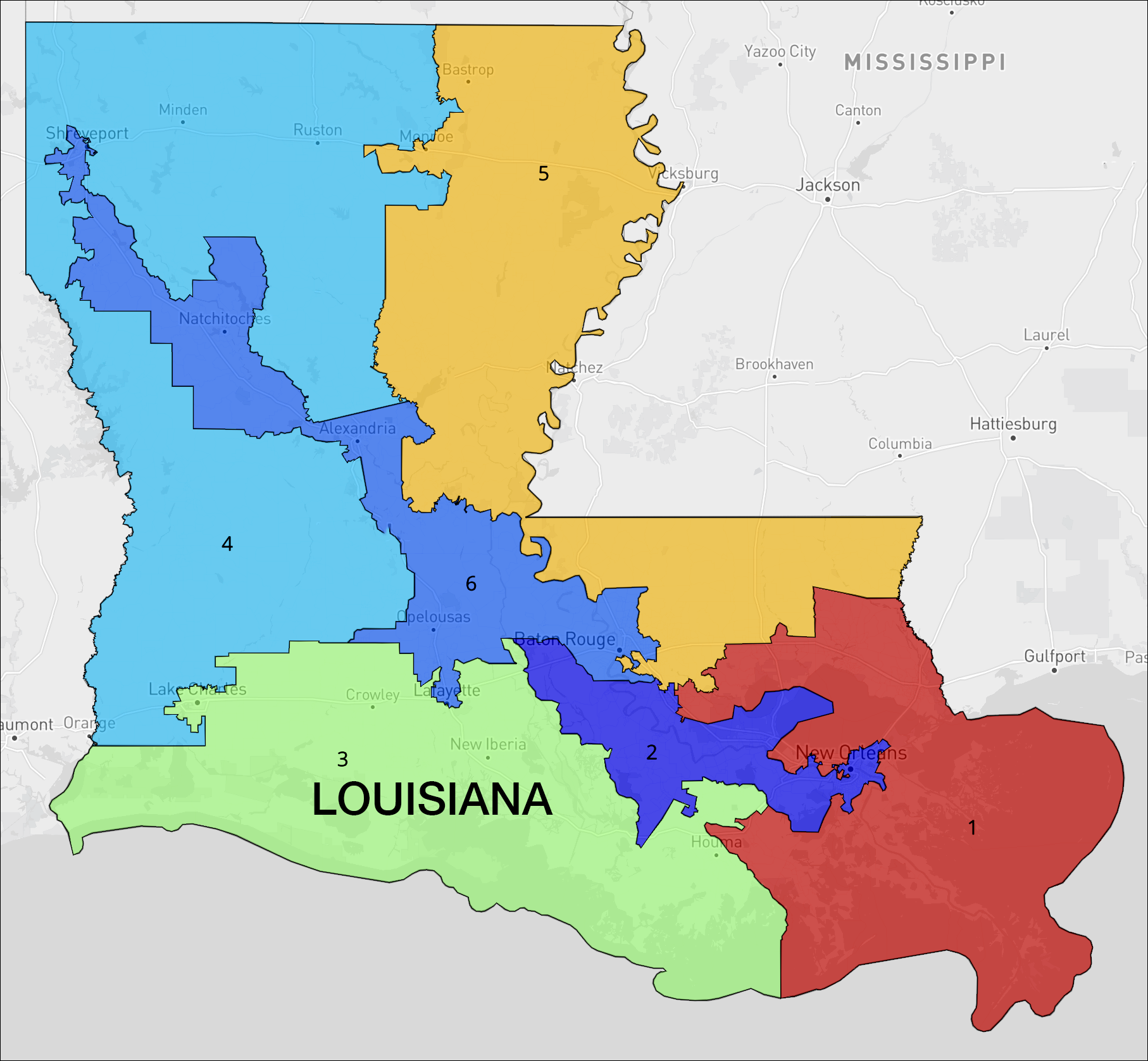
The Dave’s Redistricting App partisan lean for GA-14 is 69.2R – 28.9D, which makes the 14th the safest Republican district in Georgia. The seat contains nine full counties and part of Cobb. The CD stretches from near the city of Marietta on the district’s southern border all the way to Tennessee, encompassing the area just south of Chattanooga.

CA-14

On the heels of billionaire Tom Steyer (D) entering the open jungle California gubernatorial primary, seven-term US Representative and former presidential candidate (2020) Eric Swalwell (D-Livermore) announced on the “Jimmy Kimmel Live” program that he will also run for Governor next year.

At this point, a total of 63 individuals, 24 Democrats, 20 Republicans, and 19 independents or minor party candidates, have announced their gubernatorial intentions. It remains to be seen how many actually petition to run by the state’s candidate filing deadline scheduled for March 11 (five days later than the official March 6 deadline because the incumbent Governor is not running). The official candidates will then go on to compete in the June 2 statewide jungle qualifying election.

Under California voting procedure, all candidates are placed on the same initial election ballot regardless of party preference. The top two finishers, irrespective of party preference or percentage attained will advance to the general election.

Therefore, in such a situation with several candidates who appear capable of qualifying for the general election, i.e., Democrats Steyer, former Rep. Katie Porter, ex-Los Angeles Mayor Antonio Villaraigosa, Health and Humans Services Secretary, ex-CA Attorney General, and former Congressman Xavier Becerra, and Republicans Steve Hilton, a former Fox News host, and Riverside County Sheriff Chad Bianco, it may be difficult to conceptualize Rep. Swalwell at least capturing second place in an expensive statewide campaign.

At the end of September, the Congressman reported only $520,000 in his campaign account, so he would certainly be considered well behind in the money chase for a California statewide campaign.

In any event, his 14th Congressional District now becomes an open seat, which is the fourth in California and the second from the San Francisco Bay Area.

The new CA-14 district, which covers the East Bay area south of Oakland and is fully contained within Alameda County, houses the cities of Fremont, Hayward, Livermore, and Pleasanton. The new partisan lean, according to the Dave’s Redistricting App statisticians, is 68.4D – 30.6R. Therefore, it is reasonable to believe that two Democrats could advance into the general election from the open June 2 jungle qualifying election.

NY-7

Saying, “I love this work and I love my district, but I believe now is the right moment to step aside and allow a new generation of leaders to step forward,” Veteran Rep. Nydia Velazquez (D-NY) declared late last week that she will not seek re-election to an 18th term next year.

The Velazquez announcement means there will be over 40 open seats in the House for the 2026 election. Including Reps. Eric Swalwell (R-CA) and Velazquez, the total number of exiting Democratic members now rises to 15.

The exact open seat figure will be determined when the Texas redistricting saga finally ends, and a 2026 map is locked in place. The state of Texas immediately appealed to the US Supreme Court, asking for a stay of last week’s three-judge panel ruling that returned the state, at least temporarily, to the 2021 map.

Justice Samuel Alito, the administrator for the 5th Circuit Court of Appeals in which Texas lies, granted the state’s request. Therefore, last week’s three-judge panel decision is stayed, and unless the high court takes further action the 2025 map returns as the plan in place.

Velazquez is the ranking Democrat on the Small Business Committee, a panel that she chaired for four years during the period when her party last controlled the House majority. She will leave a Brooklyn-Queens congressional district that will remain safely under Democratic control.

New York’s 7th District finds 60 Perent of its population in Brooklyn and 40 percent in the Queens borough. According to the Dave’s Redistricting App statisticians, the NY-7 partisan lean is a whopping 85.7D – 11.5R, so the fight to succeed Rep. Velazquez will occur in the June 23 Democratic primary.

More Texas News in the Spotlight:
Latest Senate, Redistricting Updates

By Jim Ellis — Monday, Nov. 24, 2025

New polling data was just released in Texas that confirms what many observers have opined about the Lone Star State’s US Senate campaign, and a scathing dissent from one of the three-judge panel members who heard the latest redistricting case could pave the way for a Supreme Court stay.

Senate

Texas state flag

Ragnar Research (Nov. 12-17; 1,000 likely Texas voters; live interview) released a new Texas US Senate poll that supports the common political supposition pertaining to the Lone Star State Senate race. That is, Sen. John Cornyn (R) would lead both 2024 Senate nominee and ex-Congressman Colin Allred (D) and state Rep. James Talarico (D-Austin), but Attorney General Ken Paxton would be in danger of losing the general election.

In this poll, Sen. Cornyn leads Allred 47-40 percent and Talarico by a similar 46-40 percent split, both beyond the polling margin of error. As predicted, the two Democrats fare better against Paxton. Allred would lead 44-43 percent, and Rep. Talarico would tie the scandal-tainted AG at 44-44 percent.

The third announced Republican in the race, Rep. Wesley Hunt (R-Houston), was not tested, nor was Rep. Jasmine Crockett (D-Dallas) on the Democratic side. Crockett has been leading in other Texas Democratic statewide primary polls but has not yet made a decision about whether to enter the Senate race.

The latest judicial redistricting ruling from the El Paso three-judge panel suggests Rep. Crockett may stay in the House since the 2025 Texas map invalidation restores her 30th Congressional District to its previous boundaries.

According to Ragnar Research partner Chris Perkins, who conducted this poll, wrote “John Cornyn is the strongest candidate for Republicans in a general election, as he has a clear lead. Paxton is statistically tied with either of the Democrat candidates and jeopardizes the ability of Republicans to hold the seat.”

The Texas Senate race is one of the key focal points of the 2026 election cycle. It will be perhaps the only Senate contest that features a contested primary in both parties along with a highly competitive general election.

Redistricting

Fifth District Circuit Judge Jerry E. Smith, a member of the three-judge panel that invalidated the 2025 Texas redistricting map as a racial gerrymander over his objection, published a scathing dissent to the ruling. In his document, Judge Smith referred to lead Judge Jeffrey Brown’s decision as “the most blatant exercise of judicial activism that I have ever witnessed.” Judge Smith stated that he has been a federal judge for 37 years.

The dissent opinion begins by saying that, “the main winners from Judge Brown’s opinion are George Soros and Gavin Newsom. The obvious losers are the People of Texas and the Rule of Law.”

Throughout a 104-page document, Judge Smith details 11 different examples of how ruling that the 2025 Texas map is a racial gerrymander is either “false, misleading, deeply misleading, or deceptive.”

The state of Texas has already appealed, asking that the current ruling be stayed. Appealing a three-judge panel decision goes directly to the US Supreme Court and an official answer must be rendered. The justice assigned to oversee the 5th Circuit Court of Appeals, in which Texas resides, is Samuel Alito. The justices have the individual power to issue stays on cases from the circuits in which they oversee.

If Justice Alito were to grant a stay on the Brown panel redistricting ruling, the 2025 map would return as the official Texas map. With candidate filing closing on Dec. 8, a quick ruling on the stay motion is imperative since the two maps are radically different in 11 of Texas’ 38 congressional districts.

Dec. 2 Special Election
Taking Center Stage in Tennessee

Tennessee Congressional Districts (Click on map to see interactive version at: Dave’s Redistricting App.)

By Jim Ellis — Friday, Nov. 21, 2025

US House

The Dec. 2 special election to fill the Tennessee open congressional seat should be a slam dunk for the Republicans, but new polling data and outside money coming into the district for both sides infer this contest will be closer than expected.

We’ve seen two recent polls, both producing similar ballot test results. The first is from Workbench Strategies for Democratic nominee, state Rep. Aftyn Behn’s campaign (Oct. 15-19; 400 likely TN-7 special election voters), that found Republican former state cabinet secretary Matt Van Epps leading by a 51-41 percent clip.

The second poll, from Impact Research and taken within the same time frame (Oct. 16-19; 700 likely TN-7 special election voters), produced a similar 52-44 percent result in Van Epps’ favor. The polls suggest the race could become closer as the margin between the two candidates are at least slightly under where the Republican nominee should stand at this point in the campaign.

The Volunteer State’s 7th District was changed dramatically in the 2021 redistricting plan. In order to convert the Nashville-anchored 5th District to the Republicans, the 7th CD had to give up GOP territory. Therefore, what was typically a high 60s Republican seat became a high 50s district.

The 7th District from the previous decade carried a partisan lean of 66.1R – 31.6D (Dave’s Redistricting App calculations) when then-Reps. Marsha Blackburn (R) and Mark Green (R) successively held the seat. Blackburn, of course, is now in the Senate and running for Governor. Green resigned from Congress earlier in the year to pursue an opportunity in the private sector, thereby opening the current 7th District for the special election.

The 2021 TN-7 version for the current decade posts a much different partisan lean, again according to the Dave’s Redistricting App statisticians. The current numbers yield a 55.1R – 42.2D, or a net Democratic net gain of 21.6 percentage points. This means instead of a Republican candidate finishing near 70 percent, the new numbers would suggest victories in the mid to high 50s.

While the statistics show that a typical Republican candidate should still win easily under the new 7th District boundaries, and so far, they have (President Trump ’24: 60-38%; Rep. Green ’24: 59-38 percent), anything can happen in a low turnout special election. Democrats are riding high with momentum coming from the November 4th elections in New Jersey, Virginia, and New York City, and they believe the trend will continue in Tennessee.

The Virginia turnout numbers are telling and could give us an insight into what might happen in Tennessee. The final Virginia numbers actually showed a two percent drop-off in turnout when compared to 2021. The conclusion was Republican election day turnout proved poor, thus leading to the landslide Democratic victory.

The situation again dictates that the Tennessee Republicans will have to find a better way of convincing what is termed “the casual Trump voter” — that is, the person who will vote when President Trump is on the ballot but typically is not a regular voter — to participate in the special election.

While only spending $188,000 to win the special primary in a four-way Democratic field that featured two other state Representatives, Behn eked out a close victory with just 27.9 percent of the vote. The fourth-place finisher garnered 23.1 percent to illustrate how evenly distributed the votes were among contenders.

The situation is different for the special general. Though financial reports past Sept. 30 are not yet available, it is clear that Rep. Behn will have adequate resources to compete.

She can also count on support from left-of-center national organizations coming into the district to independently help her effort, but such is now being countered to a significant degree from at least two organizations on the right, the Club for Growth and an organization entitled Conservatives for American Excellence.

The stakes are now high for this special election in a Republican district. It is one thing for Republicans to lose big in three anti-Trump domains such as New Jersey, Virginia, and New York City. It is quite another if the Democratic nominee prevails in a special election from a strong Republican seat. With early voting now underway, the closing weeks for this campaign will prove quite interesting.

How Texas Changes

To see larger image, click on above map. To see interactive maps, go to Dave’s Redistricting App: Texas 2021 Plan | Texas 2025 Plan

By Jim Ellis — Thursday, Nov. 20, 2025

Redistricting

The El Paso three-judge panel ruling that invalidates the new Texas map, if allowed to stand, will greatly disrupt the Lone Star State political cycle as candidates currently prepare for an early March 3, 2026, primary election.

In reverting to the 2021 map, 37 of the state’s 38 congressional districts will change, thus altering virtually all the candidates campaign strategies and geographic targets.

Only District 19, now the open seat of retiring Rep. Jodey Arrington (R-Lubbock), remained constant between the two maps. A total of 26 districts experience only minor changes, while 11 see major alterations.

Under the 2025 Texas plan, nine seats are open, but returning to the 2021 map will likely mean that number drops to seven. It is also probable that one member who announced his retirement under the 2025 map, Rep. Lloyd Doggett (D-Austin), will return to run again if the 2021 map is formally reinstated.

In the invalidated plan, Reps. Doggett and Greg Casar (D-Austin) were paired in a new 37th District, while Rep. Casar’s 35th CD was created as an open seat that stretched into rural counties east of San Antonio. If the 2021 plan is in place for next year’s election, both will have back their previous districts. Doggett said earlier that he would return to seek re-election if the 2025 map was tossed and the previous plan restored.

In the ’25 draw, a new 9th District was created in eastern Harris County. Should the three-judge panel’s ruling be upheld, this district will go away and the candidates seeking this seat will have no place to run.

Should the previous 9th District return, Rep. Al Green (D-Houston) would again seek re-election in this district and would not be paired in a new 18th CD with the winner of the Jan. 31 special runoff election to fill the vacancy created when Rep. Sylvester Turner (D) passed away.

Rep. Michael McCaul’s (R-Austin) 10th District would still be an open seat, and though the territory is different from the invalidated map, the candidate pool would likely remain the same. This is similar to the situation in the 8th and 21st Districts where Rep. Morgan Luttrell (R-Magnolia) is retiring, and four-term incumbent Chip Roy (R-Austin) passed on re-election to run for state Attorney General.

Turning to South Texas, Rep. Monica de la Cruz (R-McAllen) will naturally see a return to her original 15th District configuration. The new 15th would have given her more Republican voters. Still, she should again be able to win re-election in the 2021 version.

Rep. Henry Cuellar (D-Laredo) saw some of the territory that gave him the most trouble go away under the new version of District 28. Rep. Cuellar had two close calls in the Democratic primary largely because of the San Antonio region. The 2025 map moved this district further into South Texas. If the previous districts are reinstated, he may again draw a more combative Democratic primary opponent, while still facing a competitive general election.

One of the districts most affected in South Texas was Rep. Vicente Gonzalez’s (D-McAllen) 34th CD anchored in Brownsville. The Congressman would have been in serious trouble under the new plan, but the 2021 version returns his much stronger Democratic base. Still, his victory margin in 2024 was only 51-49 percent over former Congresswoman Mayra Flores (R), and he can expect to face her again. She would have been favored in the new district, but Rep. Gonzalez returns to having the stronger political position under the 2021 map.

The Dallas area was changed greatly under the 2025 plan. The two members most affected were Reps. Marc Veasey (D-Ft. Worth) and Julie Johnson (D-Farmers Branch). Under the new plan, all of Rep. Veasey’s home Tarrant County turf was moved into different districts, leaving his 33rd CD as a self-contained seat within Dallas County.

Under the new plan, Veasey was looking to leave the House to run for Tarrant County Judge (Executive). If the previous map returns, it is possible that he will seek re-election.

Rep. Johnson, who saw her 32nd District moved largely into Republican East Texas, would return to the previous district under the 2021 plan. She was looking to move into Rep. Veasey’s vacated 33rd District if the new map were in place.

Republicans had calculated a gain of five seats under the new map, though some of the predictions might have been overly optimistic, such as, beating Rep. Cuellar in his new 28th CD and securing the open 35th CD.

If the three-judge panel’s decision holds, it is probable that we will see no Republican gain under the 2021 map thus making the chances of retaining their slim majority even more precarious.

Texas Redistricting Map Tossed

(Click on map to see full-size detail.)

By Jim Ellis — Wednesday, Nov. 19, 2025

Redistricting

The already complicated 2025 national redistricting scene is now even more complex.

Yesterday, in a 2-1 ruling, a three-judge federal panel in El Paso ruled that the new Texas map is a racial gerrymander and therefore voided. The panel majority ordered the previous 2021 map reinstated.

Critics say the ruling is questionable since no racial data was used in drawing the map and the decision knowingly defines the US Department of Justice officials’ intent. The 160-page ruling document also quotes liberal news sources to provide support for its supposition that Republican legislators en masse were opposed to a redraw until DOJ added a racial component regarding coalition districts, meaning those where a compilation of all minority groups create a non-white majority.

The state of Texas is expected to appeal the ruling. All appeals of three-judge panel decisions go directly to the US Supreme Court, and the justices must respond.
The ruling also creates a further potential conflicting situation when considering that the Justice Department filed a racial gerrymandering complaint against the new California map on Nov. 13. A California three-judge federal panel will be formed to hear that case.

Things will change to an even greater extent if, which is likely, a 9th Circuit three-judge panel rules that the California map is not a racial gerrymander. If so, then expect the Justice Department to appeal such a ruling, meaning the Supreme Court will be dealing with conflicting decisions within a similar issue set.

Because the Texas political calendar features an early March 3 primary, and candidate filing concludes on Dec. 8, a great deal of confusion now reigns for the candidates running in the various 38 districts. Only District 19, now the open seat of retiring Rep. Jodey Arrington (R-Lubbock), remained constant in the two maps. Under the 2025 Texas plan, nine seats are open and some of the districts are radically different from the 2021 map.

If the Supreme Court issues the requested stay, possibly because the Texas case arguments could be affected with the high court’s eventual ruling on the Louisiana racial gerrymandering case, the 2025 map would likely return for the 2026 election cycle.

Considering the chaos surrounding the Lone Star State case, what the California decision could be, and the subsequent US Supreme Court action on the coming stay motion, along with the ultimate Louisiana ruling, it is possible that Texas could postpone the state primary.

There has been precedent for postponing a primary for a set of affected political contests, in this case the congressional campaigns because of redistricting. Doing so would give the high court more time to render a final decision that hopefully would be definitive as it relates to racial gerrymandering.

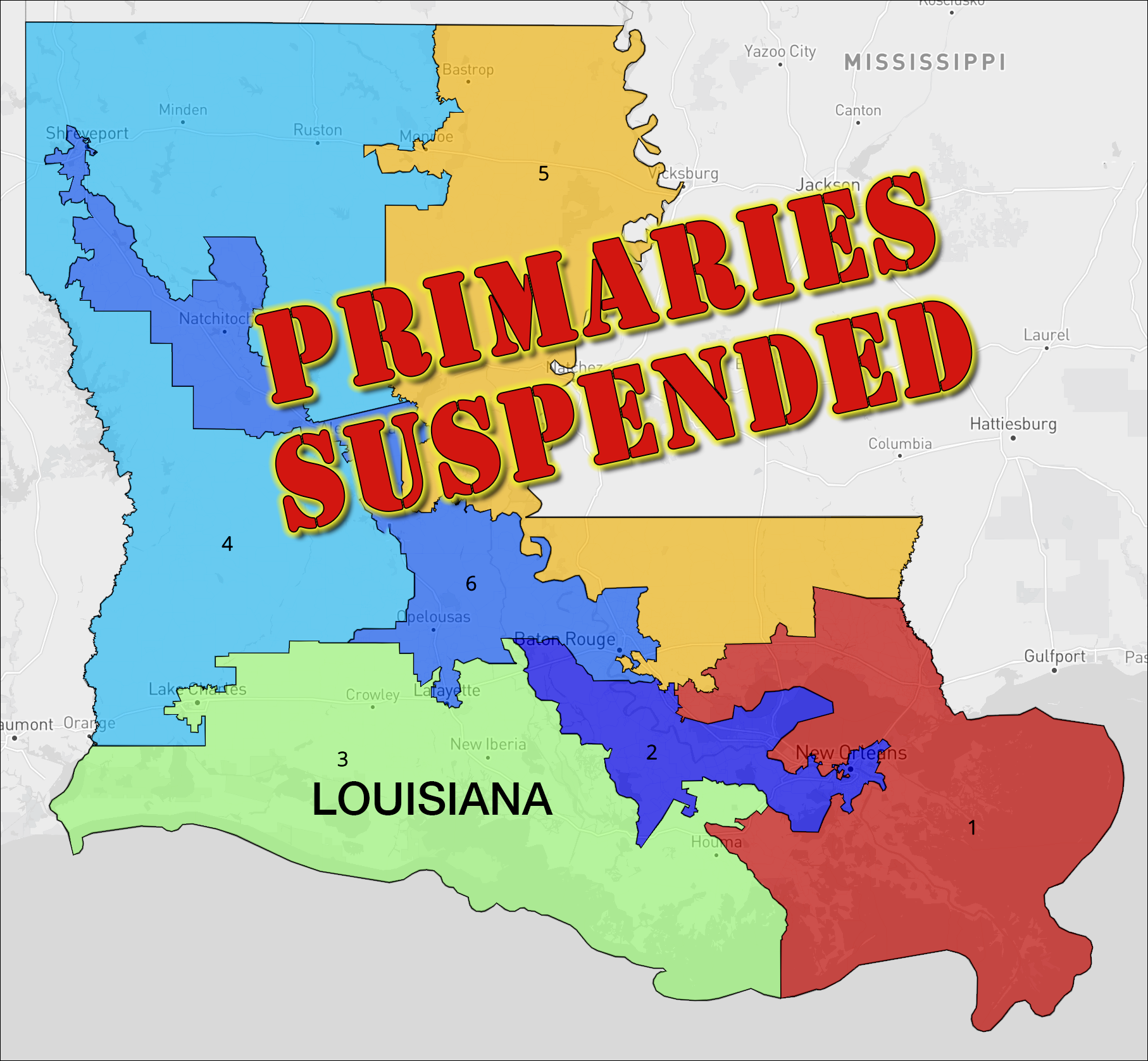
Louisiana, awaiting their SCOTUS redistricting decision after going through a second round of oral arguments, has already postponed their primary one month — from April 18 to May 16.

To further complicate matters, Gov. Greg Abbott has now ordered the special runoff election to fill Houston’s 18th District congressional vacancy to be held on Jan. 31, 2026.

The runoff features a contest between Harris County Attorney Christian Menefee (D) and former City Councilwoman Amanda Edwards (D), both of whom qualified for the secondary election in the Nov. 4 initial vote.

Immediately upon winning the special election, the victor will face Rep. Al Green (D-Houston) in the regular 2026 primary election on March 3. Now with the confusion about where the candidates must file, the District 18 special election could be one more reason the Texas regular primary might be postponed. TX-18 is vacant because incumbent Rep. Sylvester Turner (D) passed away earlier in the year.

With such a short time frame affecting so many Texas congressional candidates and electorates, firm decisions must soon be made.

New North Carolina Senate Data

By Jim Ellis — Tuesday, Nov. 18, 2025

Senate

A new Harper Polling survey of North Carolina likely voters produced positive numbers for Democrats, but other factors suggest the open Senate race is far from over.

Former North Carolina Gov. Roy Cooper (R)

Harper projects former Gov. Roy Cooper (D) to a lead beyond the polling margin of error for the 2026 Senate race. The underlying numbers, however, suggest that the Tar Heel State electorate could again generate another of its typically close finishes on Election Day.

The Harper Polling survey, conducted for the Carolina Journal online news site (Nov. 9-10; 600 likely North Carolina general election voters; live interview & online), finds Cooper posting a 47-39 percent lead over former Republican National Committee chairman Michael Whatley (R). The North Carolina open Senate race is one of only two competitive Senate campaigns — Ohio being the other — that already sees its general election pairing because currently neither party is hosting a seriously competitive nomination battle.

Clearly, the Democrats have successfully recruited their best candidate. Roy Cooper has won six statewide races, two as Governor and four as Attorney General including the 2012 contest when he was unopposed. There was some speculation that Cooper would eschew a Senate run to enter the 2028 presidential contest, but apparently the national party leadership was able to convince him to stay home and attempt to flip the Senate majority.

Cooper’s 2020 re-election race, however, was an underperformance, thus giving Republicans a potential area of weakness to probe. While being considered a heavy favorite for re-election to a second term, he only won with a 51-47 percent margin over then-Lt. Gov. Dan Forest (R).

In mid to latter October of 2020, four polls were conducted in the state and then-Gov. Cooper led by an average of just below 13 percentage points. Yet, he only won with a four-point spread. That year, however, the turnout model favored the North Carolina Republicans as both President Trump and Sen. Thom Tillis (R) carried the state by small margins.

There are several further points to consider about the current Harper Polling survey. First, the eight-point Democratic spread is not particularly unusual for an early North Carolina poll. The state typically over-polls for Democrats, at least by two percentage points, which partially accounts for the Cooper margin in this poll.

Secondly, an unusually high 54 percent of the polling universe is female, which again pushes the ballot test toward the Democratic candidate.

Third, though not tested, Whatley’s name identification is obviously low. The evidence comes from the second ballot test question that pitted retired Navy JAG officer and author Don Brown (R), who has no statewide presence, against Cooper. Brown’s chances of winning the Republican nomination are virtually nil, so testing him against Cooper provides a base GOP benchmark.

In the Cooper-Brown ballot test, the Democratic former Governor leads by a similar 48-38 percent. The fact that Whatley and Brown post similar numbers and deficit margins is an indication that the Whatley name ID is low, thus his support level reverts to a benchmark figure.

Moreover, there are warning signs detected for all Republicans from this survey. The national right track-wrong track question that tests attitude shows 55 percent of the Harper, North Carolina respondents believe the country is on the wrong track. When asked the same about the state of North Carolina, 48 percent answered wrong track.

While these numbers are an improvement over what we were seeing during the end of the Biden Administration, they are not positive for the Trump presidency and largely confirms some of the trends we saw in the Nov. 4 elections from New Jersey, Virginia, and New York City.

Another warning sign for Republicans, and the heart of the negative trend, is the impression of today’s economy. Among these respondents, 58 percent said they are not confident about the economy as compared with 40 percent who said they are.

HP also asked an interesting question to better understand how the respondents feel about the economy. They found that 67 percent said they are planning to spend less for the upcoming holidays compared to only 14 percent who say they will spend more.

Finally, and still pertaining to the economy, the tariff policy is not popular with this North Carolina polling sample. A total of 53 percent said the tariffs hurt the national economy versus 38 percent who believe they help.

This poll, in a state that more often than not votes Republican by small margins, again highlights the economy as the most difficult issue the GOP candidates face.

Unless they can tell an improved story about how the Administration’s policies are improving everyone’s lifestyle especially when remembering that President Trump predicted his policies will create a “roaring American economy,” then the 2026 election results could well reflect the recent Nov. 4 electoral outcome.

California Numbers:
Some Democrats Actually Fare Worse

California Congressional redistricting map. Click on image or here to see interactive version: Dave’s Redistricing App.

By Jim Ellis — Monday, Nov. 17, 2025

Redistricting

The Dave’s Redistricting App (DRA) statistical organization released their data figures for the new 52 California redistricted congressional districts, and their non-partisan analysis may not be quite as rosy for the Democrats as Gov. Gavin Newsom and the party leaders have boasted. The DRA is the only data organization that has already calculated a clear partisan division for all of the new Golden State districts.

Several Democratic incumbents, and surprisingly the two considered most vulnerable heading into the 2026 election, actually fare worse when compared to the previous draw. Several Republican districts have no doubt been destroyed, but the situation may not be as dire for the GOP as Gov. Newsom’s media spin leads one to believe.

Starting in Northern California, Rep. Doug LaMalfa’s (R-Oroville) 1st District has been transformed into a Democratic district. According to the DRA partisan lean calculations, the 1st moves from 60.2R – 37.7D to 55.2D – 44.1R. With state Senate President Mike McGuire (D-Sonoma County) positioning himself to challenge Rep. LaMalfa, the Republican Congressman will have a very difficult time winning an eighth term.

Rep. Ami Bera (D-Sacramento) is leaving his Sacramento County 6th District to run in District 3, which is now a point more Democratic than his home district. There, he will ostensibly challenge two-term Rep. Kevin Kiley (R-Rocklin/Sacramento). The move puts Rep. Kiley in a bad position since his 3rd CD has flipped from holding a partisan lean of 52.5R – 45.6D to one having a 53.4D – 45.7R split, a net swing of just under 15 percentage points toward the Democratic segment.

There is some speculation that Rep. Kiley will vacate District 3 and attempt to unseat fellow Republican Tom McClintock (R-Elk Grove) in District 5, one of just four safe Republican seats in the state. The new CA-5 partisan lean: 60.7R – 38.7D.

Rep. Adam Gray (D-Merced) was the closest winner of all 435 districts in the 2024 election, a 187-vote win over then-Rep. John Duarte (R). Surprisingly, the new map makes the latest version of CA-13 slightly less Democratic. The previous partisan lean was 54.0D – 44.2R, yet Duarte won the seat in 2022 and barely lost in 2024. The new partisan lean is a net 4.6 percentage points more Republican (52.4D – 46.9R).

Though the new 13th District remains more Democratic, the congressional voting history shows weakness in the Dem fortress. A strong candidate such as former Stockton Mayor Kevin Lincoln (R), who has already announced that he will run, projects another difficult race for Gray.

Fresno Rep. Jim Costa (D) has averaged only 53.4 percent of the vote in his two elections but his district, just like Rep. Gray’s, actually moves more Republican according to the Dave’s Redistricting App calculations. Instead of seeing a 58.5D – 39.9R partisan lean, the new district records a 54.4D – 45.0R swing, a net gain of 9.2 percentage points in the Republicans’ favor. Though Rep. Costa will still be favored to carry the new 21st CD, seeing a potential Republican upset develop here is not outside the realm of possibility.

Rep. David Valadao (R-Hanford) has always been a major national Democratic target since he represents one of the most Democratic districts to send a Republican to the US House. Despite facing an adverse partisan lean in the previous District 22 version of 55.5D – 42.6R, Rep. Valadao secured two consecutive victories. This is another Central Valley district where the non-partisan calculations find the Republican factor getting better on this new map.

Moving forward, the DRA partisan lean for CD-22 is 52.1D – 47.3R, representing a net Republican gain of 8.1 percentage points. Therefore, with Rep. Valadao securing a 53-47 percent victory under the previous partisan lean, his chances should improve under this new 2026 map.

Seven-term Rep. Raul Ruiz (D-Indio) also sees his sprawling desert district become a bit more Republican. According to the past and present DRA partisan lean calculations, Rep. Ruiz’s 25th District is 5.5 percentage points more Republican. The new partisan lean is 54.2D – 45.3R, which clearly still favors Democrats, but the new draw makes the seat potentially more competitive.

The new 40th District is the final domain conceded to the Republicans. At this point, it appears both Reps. Ken Calvert (R-Corona) and Young Kim (R-La Habra) may be fighting each other to capture this seat. Rep. Calvert has already declared he will run here as his 41st District was transferred to Los Angeles County from Riverside County, and Rep. Linda Sanchez (D-Whittier) has declared her intent to run in that district.

Neither Reps. Calvert nor Kim represent a great deal of the new 40th, so we will see how this paired contest eventually unfolds. It is possible that both could advance to the general election under the state’s jungle primary format so we might see a year-long campaign between the two Republicans.

Another surprising aspect on this new map is the draw for freshman Rep. Derek Tran (D-Orange) in the new 45th District. In 2024, Tran unseated two-term GOP Rep. Michelle Steel (R) by 653 votes, which made it the second-closest congressional race in California and the nation. Yet, under the new map, the partisan lean actually moves slightly more toward the Republicans. When Rep. Tran won, the DRA partisan lean was 52.2D – 45.9R. The new ratio is 51.7D – 47.5R, a net swing of 2.1 percentage points toward the GOP.

While Rep. Tran will still see more Democratic voters in his district than Republican, we can count on the GOP making a major effort here. Under the new draw, this seat could be another option for Rep. Kim.

The final district that was greatly changed is Rep. Darrell Issa’s (R-San Diego) 48th District. The seat flips from having a partisan lean of 58.3R – 39.8D to a new district, largely because of including most of the city of Encinitas, that yields a 50.6D – 48.7R partisan split. Obviously, the district is somewhat more Democratic, but the numbers are close enough that Rep. Issa will have a fighting chance to win again.

While Democrats will very likely gain seats under this new draw and reduce California’s Republican contingent to fewer than the nine seats they currently control, stretching to a Democratic gain of five might not be achieved.