Monthly Archives: December 2025

Merry Christmas & Happy New Year; Weekly Political Synopsis

Just a quick last post this holiday season before we take a break till the New Year.

All the best for a wonderful holiday season.

We’ll be back on Monday, Jan. 5, 2026!


By Jim Ellis — Dec. 24, 2025

Senate

Minnesota — While the Republican Party leadership waits for retired national sports reporter Michele Tafoya to make a decision about running for the Senate, former GOP state chairman David Hann announced that he will enter the race. Hann, who was ousted as chairman and lost his state Senate seat when running for re-election, does not have a strong base within the party. Therefore, he is unlikely to be a major threat. It will be important to watch unfolding developments around the Minnesota government benefit fraud scandal to see if the Democrats become weakened.

The Democratic Senate primary features Lt. Gov. Peggy Flanagan and US Rep. Angie Craig (D-Prior Lake). At this point, the eventual Democratic nominee will continue to have the inside track toward winning the general election.

House

CT-1 — The Democratic primary challenger field opposing veteran Rep. John Larson (D-Hartford) just got smaller. Former Southington Councilman Jack Perry ended his campaign because he did not see a path to victory. Three Larson intra-party challengers remain, however. They are: former Hartford Mayor Luke Bronin, state Rep. Jillian Gilchrest (D-West Hartford), and Hartford Board of Education member Ruth Fortune.

This is obviously a strong field, but the number of candidates in a plurality primary system could split the anti-incumbent vote to the point where Rep. Larson wins re-election with a small plurality. The Connecticut candidate filing deadline is June 9 for the Aug. 11 primary election. Therefore, much time remains for this race to develop.

FL-23 — Republicans have recruited a strong challenger to two-term Rep. Jared Moskowitz (D-Parkland). Boca Raton Mayor Scott Singer (R) announced that he will challenge Moskowitz next year. With redistricting set to happen during the next legislative session, it is clear that the GOP map drawers will add Republicans to the 23rd CD. Under the current map, the partisan lean is 52.3D – 45.5R (Dave’s Redistricting App calculation) and Rep. Moskowitz has averaged just 51.9 percent in his two elections. Therefore, this will very likely be a race to monitor throughout the campaign cycle.

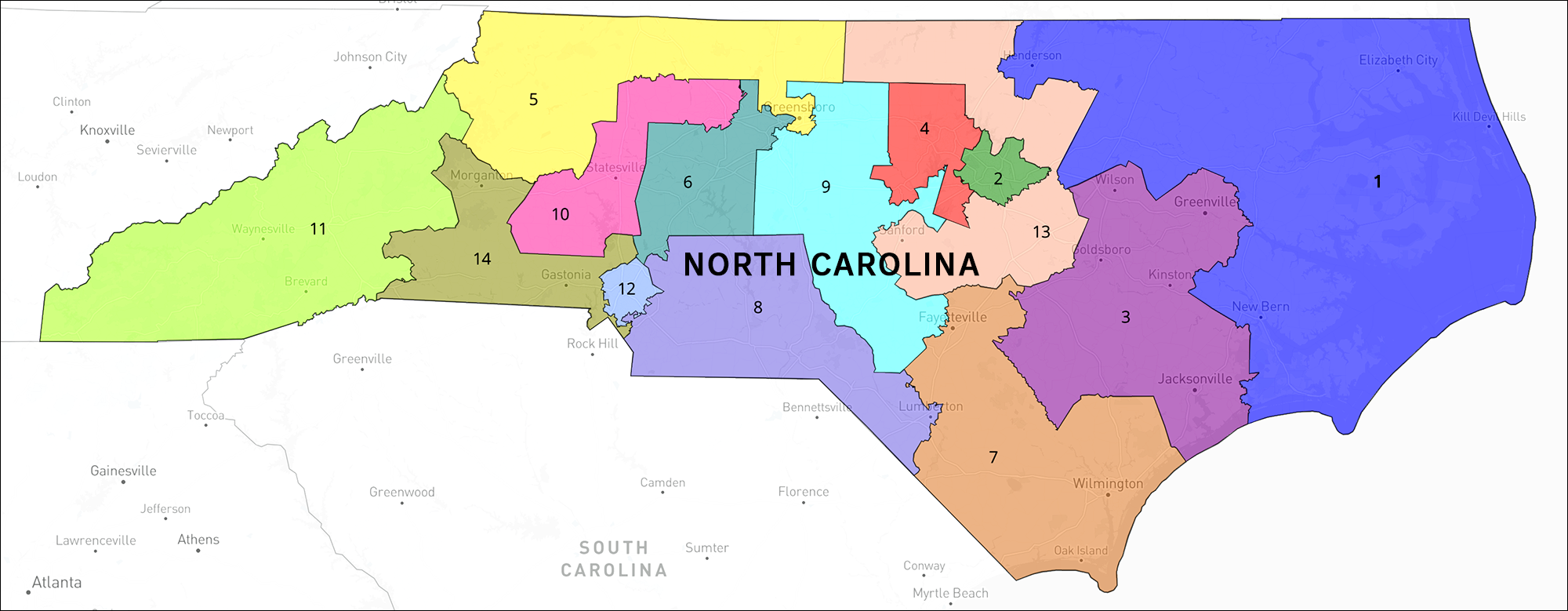
NC-3 — While the North Carolina Republican redistricting plan was geared toward making Rep. Don Davis’ 1st CD more Republican, a seat that became more Democratic is the neighboring 3rd District of Rep. Greg Murphy (R-Greenville). The original District 3 partisan lean was 57.2R – 40.7D according to the Dave’s Redistricting App statisticians. Under the new plan that makes CD-1 more Republican, CD-3 drops to 52.8R – 45.2D, a net swing of 8.9 data points in the Democrats’ favor.

Not surprisingly, two prominent Democrats jumped into the District 3 race as candidate filing closed. Ex-state Rep. Raymond Smith and the former CEO of The Iraq and Afghanistan Veterans of America organization, Allison Jaslow, both entered the Democratic primary race. The winner of the March 3 primary will then face Rep. Murphy in the general election. Though this is district is more competitive, it is still a Republican seat, and the Congressman will again be favored for re-election.

Governor

California — We see another poll release that finds the large California open jungle qualifying election field again closely bunched. The California Issues Forum just released the results of their FM3 poll (Nov. 30-Dec. 7; 632 likely California jungle election voters; live interview & online) and actually found two Republicans leading the large group.

Former Fox News host Steve Hilton (R) leads with 18 percent, followed by Riverside County Sheriff Chad Biano (R), Rep. Eric Swalwell (D-Livermore), former Rep. Katie Porter (D), billionaire Tom Steyer (D), former US Health and Human Services Secretary and ex-Attorney General and Congressman Xavier Becerra (D), and previous Los Angeles Mayor Antonio Villaraigosa (D). After Hilton’s 18 percent support figure, the remaining candidates break down respectively at 17-17-13-6-3-3 percent preference numbers.

There is a scenario, though unlikely yet this poll result shows it could possibly happen, that the large number of Democratic candidates split the vote and the two Republicans advance to the general election with small percentages. The California qualifying election is June 2. The top two finishers, regardless of party affiliation and percentage attained, advance to the general election. Gov. Gavin Newsom (D) is ineligible to seek a third term.

Ohio — For the second time in a week-long period, a newly released poll finds the presumptive Ohio open race gubernatorial nominees deadlocked. The T. Roosevelt Action group, an organization representing hunters and anglers, publicized their poll results (Dec. 3-8; 603 likely Ohio general election voters) that project Republican businessman and former presidential candidate Vivek Ramaswamy leading ex-Ohio Health Director Amy Acton (D) by a slight 45-43 percent count. Last week, Emerson College (Dec. 6-8; 850 likely Ohio general election voters; multiple sampling techniques) found Acton holding a similar 46-45 percent edge.

The purpose of the T. Roosevelt Action poll was to test a ballot proposition regarding hunting and fishing, but they also included a Governor’s race query on their questionnaire. The Ohio Governor’s race is open because incumbent Mike DeWine (R) is ineligible to seek re-election.
NC-1 Rematch;
TX-18 Special Election Overview

North Carolina 2026 Congressional District map (Click on image or here to go to: DRA-North Carolina)

By Jim Ellis — Tuesday, Dec. 23, 2025

NC-1

A surprising turn of events has occurred in North Carolina’s eastern 1st Congressional District, as we move past last week’s North Carolina candidate Friday filing deadline for the March 3 primary.

The 1st District is the focal point of the new North Carolina redistricting map. Republican legislators redrew the congressional plan several weeks ago with the goal of flipping the district from Democratic Rep. Don Davis (D-Snow Hill) to a Republican. Now, we see a major change on the candidate slate.

Rocky Mount Mayor Sandy Roberson (R), who earlier loaned his congressional campaign $2 million, decided earlier last week to end his candidacy. On Thursday, 2024 congressional nominee Laurie Buckhout, who had endorsed Roberson, decided she would make a comeback in his absence and declared her candidacy.

Buckhout had accepted a Department of Defense position from the Trump Administration but will now leave Washington, DC and re-enter the 1st District race. In 2024, Buckhout held Rep. Davis to a razor-thin 49.5 – 48.7 percent re-election margin in District 1’s more Democratic version. In the same election, however, President Trump carried the district with a 51.2 – 48.1 percent margin over Kamala Harris.

At this point, with candidate filing closed as of Friday, the announced Republican candidates in addition to Buckhout are Carteret Count Sheriff Asa Buck, state Sen. Bobby Hanig (R-Powells Point), Lenoir County Commissioner Eric Rouse, and attorney Ashley-Nicole Russell.

Rep. Davis, saddled with what is now an unfavorable district, has filed for re-election. The Dave’s Redistricting App partisan lean for the new NC-1 is 52.4R – 45.9D. The 2024 election’s partisan lean was 50.9D – 47.7R.

The North Carolina primary is scheduled for March 3. In order to avoid a runoff, the first-place finisher must exceed the 30 percent vote threshold. NC-1 is now a prime conversion opportunity for the GOP.

TX-18

The special election to replace the late Texas Rep. Sylvester Turner (D-Houston) has had the longest campaign cycle of the five 2025 US House vacancies. Turner passed away earlier this year on March 5.

Gov. Greg Abbott decided to schedule the special election concurrently with the state’s municipal elections on Nov. 4. Under Texas law, a runoff election, necessary if no candidate receives 50 percent in the first vote, is calendared once it becomes official that no contender reached the majority mark.

In this case, Gov. Abbott slotted the runoff for Jan. 31. Qualifying for that election are Harris County Attorney Christian Menefee and former Houston City Councilwoman Amanda Edwards.

Redistricting has played havoc with this Houston-anchored CD, which is fully contained within Harris County. Immediately after the special election concludes, both Menefee and Edwards, regardless of the outcome, will advance into the regular term primary election for new District 18 that will be settled on March 3. There, however, they will face 9th District veteran Congressman Al Green (D-Houston) who is running for a 12th term in new District 18.

The new map puts both Menefee and Edwards at a major disadvantage against Rep. Green because 64.5 percent of the new district constituency comes from the Congressman’s current 9th CD according to The Down Ballot political blog redistribution analysis. Only 25.8 percent carries over from the current 18th where the special election is being conducted.

Turning to the special, a new Lake Partners Research survey (Dec. 8-14; 437 likely TX-18 Democratic primary voters; live interview & text) conducted for the Jan. 31 runoff finds Menefee posting a 43-30 percent edge.

Looking at the district stats and comparing them with the new map, it appears that the special election winner will likely have only a short tenure in the House as Congressman Green will be favored to prevail for the regular term party nomination on March 3.

Sen. Lummis to Retire; Stefanik Out

By Jim Ellis — Monday, Dec. 22, 2025

Wyoming Senate

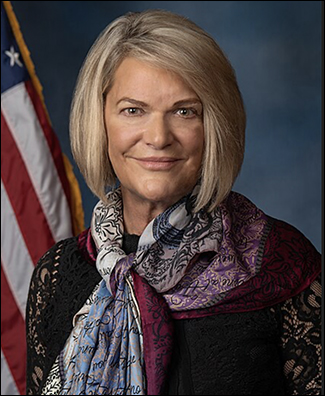
Wyoming first-term Sen. Cynthia Lummis (R)

In what had been rumored in Wyoming political circles for several weeks, first-term Sen. Cynthia Lummis (R) announced that she will not seek re-election next year. While saying it was the “honor of [her] life” to serve Wyoming in the Senate, Lummis said in her retirement release that at 71 years of age she does not have the energy to serve another six-year term at her current pace.

The Lummis decision means there are nine open US Senate seats, which is a high number in an election cycle with just over one-third of the 100-member body coming before the voters. Now, the political speculation turns toward who may run to replace Sen. Lummis.

Already at issue is whether Gov. Mark Gordon (R) will make a move to challenge the state’s two-term limit law. Based upon a legal flaw, attorneys and analysts believe that challenging the law in court would be successful. Therefore, Gov. Gordon may have a chance of running for a third term. It remains to be seen if the Lummis retirement influences his decision.

Most believe the Governor will not seek re-election and probably is not inclined to run for the Senate. With the candidate filing deadline not until May 29 for the Aug. 18 primary, much time remains to make political decisions.

Wyoming is arguably the most Republican state in the country, at least as President Trump is concerned. In the past two presidential elections, the Equality State was Trump’s best-performing domain with an average vote percentage of 70.3. In 2016, Wyoming giving him 67.4 percent of its votes was his second-best state behind only West Virginia. Therefore, the eventual US Senate Republican nominee will become a prohibitive favorite to hold the seat for the party in the general election.

This brings us to at-large Rep. Harriet Hageman (R-Cheyenne). The conventional Wyoming political wisdom suggested that if Gordon retired, Rep. Hageman would run for Governor, and the most contested political battle would be the open race to replace her in the House.

Now, should Gov. Gordon retire, Rep. Hageman could choose among entering the open Governor’s race, the open Senate campaign, or simply seeking re-election. The odds are strong that she would be a heavy favorite to win whichever contest she selects with a major open-seat Republican primary battle ensuing for the other two statewide posts.

NY Governor

On Friday, New York Rep. Elise Stefanik (R-Schuylerville) announced that she will discontinue her campaign for Governor and retire from the House at the end of the current Congress. The latter decision does not change the open-seat count because she was already relinquishing the congressional seat to enter the gubernatorial campaign.

Toward the end of last week, Siena College released their New York statewide poll (Dec. 8-12; 801 registered New York voters; live interview & online) that finds Gov. Kathy Hochul (D) re-establishing a strong lead over both Rep. Stefanik and Nassau County Executive Bruce Blakeman (R).

Against Rep. Stefanik, Siena sees the current Governor leading 49-30 percent. Polling results such as this, and assuming the Stefanik campaign internal data is producing similar totals, is likely a major factor in the Congresswoman’s decision to end her statewide bid.

In the battle for Rep. Stefanik’s open House seat, Democrats already have one candidate who has been campaigning for the better part of the year. When the Congresswoman was the President’s original nominee for US Ambassador to the United Nations, and it appeared a replacement special election would be called in CD-21, the district’s Democratic county chairs chose dairyman Blake Gendebien as their nominee.

Though holding a special election became unnecessary, Gendebien continued his campaign and reported having just over $2 million in his campaign account according to the Sept. 30 campaign financial disclosure report. Gendebien now has three Democratic opponents for the regular election, the most serious of whom appears to be former Deputy Assistant US Trade Rep. Dylan Hewitt.

On the Republican side, the current two top contenders are state Assemblyman Robert Smullen (R-Mohawk Valley) and businessman Anthony Constantino, who has already loaned his campaign $2 million.

New York’s 21st District occupies almost the entire land area of the state’s northeastern sector. According to the Dave’s Redistricting App statisticians, the partisan lean is 52.1R – 44.6D, which certainly gives the eventual Republican nominee an edge but also suggests the general election could turn competitive.

Washington Rep. Newhouse to Retire

By Jim Ellis — Friday, Dec. 19, 2025

House

Washington Congressman Dan Newhouse (R-Sunnyside) / Facebook photo

Central Washington Congressman Dan Newhouse (R-Sunnyside) announced that he will not seek a seventh term next year. Rep. Newhouse’s retirement decision increases the House open-seat count to 48.

Newhouse was originally elected to Congress in 2014 after serving as Director of the Washington Department of Agriculture. His career in electoral politics began with winning a seat in the state House of Representatives in 2002, where he served three-plus terms before being appointed to the agriculture position.

The Congressman averaged 59.3 percent of the vote in his six federal general elections, but under Washington’s jungle qualifying election system three of those contests were opposite another Republican. Rep. Newhouse’s 4th Congressional District is one of two safe Republican seats in Washington; hence, he faced a Republican opponent in three general elections, two when he was first elected and re-elected, and the last one in 2024.

As one of just 10 Republicans to vote in favor of impeaching President Trump in early 2021 over the Jan. 6 situation at the Capitol, Newhouse did face pressure from Republican contenders in both the 2022 and 2024 elections. Of the group of 10 House Republicans, only Rep. Newhouse and California Congressman David Valadao (R-Hanford) remain in office.

While Newhouse fared well in the general election, he did rather poorly in the associated qualifying elections under the jungle system. In the last two such votes, Newhouse only averaged 24.5 percent of the vote within crowded multi-candidate fields.

In 2024, the Congressman finished a full ten percentage points behind Trump-endorsed Republican Jerrod Sessler in the August qualifying election, but he managed to rebound to score a 52-46 percent win in the November general election. Retirement rumors were prevalent regarding Newhouse during the 2024 election cycle, so seeing him not seeking re-election in 2026 is unsurprising.

The 4th District of Washington lies in the central part of the state and stretches from the Canadian border to Oregon. The district contains six counties and parts of two others. In the 2024 presidential election, the WA-4 electorate voted for President Trump over Kamala Harris with a 59.0 – 38.3 percent margin, making it the strongest Trump district in Washington. The major population centers are the cities of Yakima, Kennewick, and Richland, all located in the CD’s southern sector.

We can expect a large Republican field to form with the possibility of again seeing the voters send two party members into the general election. Sessler, who ran in the last two elections, previously announced that he will return for a third campaign and must be viewed as a strong contender to qualify for the general election. Yakima County Commissioner Amanda McKinney (R) had also previously announced her intention to run.

Republican Tiffany Smiley, who challenged Sen. Patty Murray (D) in the 2022 general election and for a time was viewed as having upset potential, eventually lost in a 57-43 percent result. She then entered the 2024 jungle primary to challenge Rep. Newhouse. Smiley finished third in the jungle primary with 19 percent of the vote, thus failing to qualify for the general election. Therefore, it is possible that she will return to again compete for the congressional post. Without Rep. Newhouse in the field, Smiley would be viewed as another potentially strong candidate.

In terms of the national open-seat count, we now see 48 open seats headed to the next election with three special elections coming in late January (TX-18; replacing the late Rep. Sylvester Turner-D), February (NJ-11; replacing Gov-Elect Mikie Sherrill-D), and March (GA-14; replacing soon-to-resign Rep. Marjorie Taylor Greene-R). The remaining 45 open seats will all be filled in the regular 2026 election cycle.

From the 48 open seats, a total of 25 Republican members are not seeking re-election, 18 are Democrats, with five new seats created in California and Texas under those states’ new redistricting maps.

Within the subset of 42 serving members who are departing, a total of 15 are opting to retire from elective politics, another 14 are running for Governor of their respective states, 12 are US Senate candidates, and one is competing in an open state Attorney General’s contest, while one member passed away.

Three-Way Race Unfolding in Texas

By Jim Ellis — Thursday, Dec. 18, 2025

Senate

Rep. Wesley Hunt (R-Houston) / Facebook photo

The Texas Senate election has already drawn a great deal of attention during the 2026 early campaign segment and likely will attract more based upon recent polling.

When the Lone Star State’s Rep. Wesley Hunt (R-Houston) entered the Republican US Senate primary, most observers believed he would act as a spoiler for the battle between Sen. John Cornyn and Attorney General Ken Paxton. Rep. Hunt’s presence, it was believed, would siphon enough votes away from the two leading candidates to force a secondary runoff election in order to decide the Republican nomination.

According to four different polls, all conducted between the Dec. 1-4 period, Rep. Hunt is now attracting enough support to position himself to secure one of the runoff slots.

The four polls came from four different pollsters: three Republican companies and one Democratic research firm. The Republican pollsters were McLaughlin & Associates, J.L. Partners, and co/efficient, while Public Policy Polling was the lone Democratic firm to test the Republican primary in early December.

Public Policy Polling (Dec. 1-2; 527 likely Texas Republican primary voters; text & live interview) was the initial pollster in the field, and their result was the first of the December data to find Rep. Hunt forging into polling parity with both Sen. Cornyn and AG Paxton. The ballot test showed Paxton leading Cornyn and Hunt, 32-22-22 percent.

Both co/efficient (Dec. 1-3; 1,022 likely Texas Republican primary voters; online) and J.L. Partners (Dec. 1-3; 600 likely Texas Republican primary voters) were in the field simultaneously but arrived at different results.

The Partners find Paxton leading with 29 percent and Cornyn and Hunt tied at 22 percent; co/efficient’s conclusion found Sen. Cornyn topping the group at 28 percent support, with AG Paxton pulling into a virtual tie at 27 percent. Though co/efficient found Rep. Hunt lagging, he was still within single digits of the two leaders at 19 percent preference.

McLauglin & Associates (Dec. 1-4; 800 likely Texas Republican primary voters) then found Paxton leading Hunt and Cornyn in a closely bunched field at 33-28-27 percent.

Averaging these four polls, we find Paxton having the most aggregate support, averaging 29.7 percent per survey. Sen. Cornyn’s average was 26.3 percent, while Rep. Hunt recorded 23.7 percent. Therefore, these numbers — again derived from professional polling firms all within the same time period — find a wide-open three-way race where each of the three have a legitimate chance of qualifying for the runoff … or being left out.

The latest campaign financial disclosure reports (period ending Sept. 30) find that Sen. Cornyn is in the best financial position with more than $6 million cash-on-hand. Paxton has just over $3 million, while Rep. Hunt posts slightly more than $1.5 million in his campaign account.

With the short campaign season to the March 3 primary, we can expect heavy spending as each candidate works to position themselves to clinch one of the two runoff slots. Count on seeing a Republican mad dash to the finish beginning in late February.

We also saw the first post-candidate filing deadline poll on the Democratic side. Texas Southern University surveyed the likely Democratic voters and found Rep. Jasmine Crockett (D-Dallas) leading state Rep. James Talarico (D-Austin) beyond the polling margin of error.

According to the Texas Southern data (Dec. 9-11; 1,600 likely Texas Democratic primary voters; online), Rep. Crockett’s advantage over Talarico is 51-43 percent. Contrary to the situation on the Republican side, with two major candidates the Democratic nomination fight will very likely end on March 3 because either Crockett or Talarico should be positioned well enough to command majority support on the first vote.

Ohio’s Significance

Ohio Congressional redistricting map. To see interactive map, click on image above or here: Dave’s Redistricting App.

By Jim Ellis — Wednesday, Dec. 17, 2025

Ohio

The Buckeye State of Ohio is another key 2026 electoral state. With an open Governor’s race, an appointed Senator seeking his first federal election, and as many as three top congressional campaigns, Ohio is clearly a place of significance in determining how the 2026 election will unfold.

A new Emerson College poll (Dec. 6-8; 850 likely Ohio general election voters; multiple sampling techniques) tested both the state’s open Governor’s race and how appointed Sen. Jon Husted (R) is faring opposite former Sen. Sherrod Brown (D).

The Ohio political polling history typically features closely competing contests that tend to break, usually toward the Republican candidate, in the last two weeks of the campaign. While Ohio elections have been close over the years, few results have been forced into recounts.

The familiar polling pattern is already beginning. It remains to be seen if the elections will end in a similarly historical fashion.

According to Emerson, Democratic former state Health Director Amy Acton leads businessman and former presidential candidate Vivek Ramaswamy, 46-45 percent, meaning the open Governor’s contest is a virtual tie. Incumbent Gov. Mike DeWine (R) is ineligible to seek a third term.

Looking at the Senate race, appointed incumbent Husted records a three point, 49-46 percent, edge over former Sen. Brown. It is important to remember that in Brown’s losing 2024 effort, he received more votes than he did for his last re-election victory (2018) yet still lost to current Sen. Bernie Moreno (R) by six percentage points.

As we know, Sen. Husted, at the time of appointment was the state’s sitting Lieutenant Governor, replaced resigned-Sen. J.D. Vance who, of course, left the legislative body to become Vice President. Sen. Husted must now run in 2026 to serve the balance of the current term. He will be eligible to seek a full six-year stint in 2028.

Ohio has also enacted a new congressional redistricting map, an exercise required under state law. Because the 2021 plan was adopted with only majority support in both houses of the legislature, and not a three-fifths count, the congressional map could stand for only two elections, meaning 2022 and 2024.

Last month, the bipartisan elected official redistricting commission, which includes Gov. DeWine, unanimously agreed upon a new map. Since every commissioner supported the new plan, legislative approval was not required under the state’s procedure, meaning the new map automatically became law.

The Ohio US House delegation currently stands at 10R-5D. Republican strategists hoped a new map would yield a two-seat gain, but such a final result could be a stretch under the new design. It does appear the Republicans will net at least one new seat, that of veteran Rep. Marcy Kaptur (D-Toledo). Competition opposite Reps. Greg Landsman (D-Cincinnati) and Emilia Sykes (D-Akron) is also possible, particularly for the former.

In 2024, Rep. Kaptur, in a 9th District where the Dave’s Redistricting App partisan lean calculation was 48.8D – 48.6R, won re-election with just a 48.3 – 47.6 percent margin over then-state Rep. Derek Merrin (R). Under the new 2025 enacted plan, the DRA partisan lean is 55.2R – 44.0D, obviously a strong swing toward the eventual Republican nominee.

In Cincinnati’s 1st Congressional District, two-term Rep. Landsman sees his district transform from one that carried a DRA partisan lean 49.9D – 47.9R to a Republican majority seat at 51.6R – 47.5D. With a candidate filing deadline of Feb. 4 for the May 5 primary, the Republican leadership still has some time to find a highly credible challenger to the now vulnerable Democratic Congressman.

The original Republican plan objective called for targeting two-term Rep. Sykes, who had won two close elections from her northern Ohio 13th District. Republicans had a strong candidate in 2024 nominee and former state legislator Kevin Coughlin who came within two percentage points of upsetting Rep. Sykes.

After seeing the new partisan lean calculation of 51.0D – 48.2R, however, Coughlin decided that even this slight swing toward making the district more Democratic was a bridge too far for him to overcome in a midterm election. The previous DRA partisan lean for District 13 was 50.7D – 47.0R. Therefore, he withdrew from the race. Republican leaders are also looking to recruit a strong candidate for this seat.

As you can see, the Buckeye State has a number of crucial races that will determine the state’s direction in electing a new Governor, and possibly the federal outcome, too, with an important Senate race and several hot congressional campaigns.

Redistricting Becoming Clearer

By Jim Ellis — Tuesday, Dec. 16, 2025

Redistricting

Putting together the redistricting puzzle

The redistricting wars may be coming to a head. Recent action has occurred in several states providing a better national redistricting picture in preparation for the 2026 election.

Below is a synopsis of the latest developments:

California: After a majority of California voters approved the special election redistricting referendum, a racial gerrymandering lawsuit was filed against the state’s new map.

Meanwhile, the US Supreme Court issued a stay on the Texas racial gerrymandering lawsuit, with a rebuke from Justice Samuel Alito to the three-judge panel in El Paso for rendering a decision before the high court ruled on a related Louisiana racial gerrymandering case. Thus, it became clear that all other cases would be held until the high court issues what could be a landmark ruling.

The judicial action likely means the new California map will be in place for the 2026 election. The original map proponents believe the plan will return five more seats for the Democrats, reducing the Republicans to just four of 52 Golden State districts.

Florida: Late last week, Gov. Ron DeSantis (R) said that the state will redistrict the congressional map and do so during the Spring. The Florida primary is not scheduled until Aug. 18, so time remains to complete the redistricting process. It is possible that Republicans could gain two seats from a new map.

Georgia: A new Georgia map has been completed. The legislature made minor changes to the existing plan that will not likely affect the current partisan division (9R-5D).

Indiana: Late last week, the Indiana state Senate defeated a redistricting map that the state House passed. The plan would have converted two Democratic seats to Republican, thus sweeping the nine-member delegation. Unless the Senate reconsiders the action, the current 7R-2D map will remain intact for the 2026 election.

Louisiana: The US Supreme Court is considering the Callais racial gerrymandering case that could become the vehicle for the justices to render a landmark racial gerrymandering decision. A ruling was expected in June, but the justices postponed their opinion and ordered a second round of oral arguments. The subsequent hearing was held Oct. 15, and all await a final determination.

If the court upholds the lower court decision, the current Louisiana map will be invalidated, meaning the Republicans will likely gain one seat. Should this be the Supreme Court’s ultimate decision, then the possibility exists that the Alabama map will also be redrawn because its plan is virtually identical to Louisiana’s.

Maryland: In a situation similar to what is found in Indiana, most of the Maryland Democratic political establishment favors attempting to collapse their one Republican congressional district, but the state Senate leadership refuses to take action. Therefore, unless the Senate President completely reverses himself, a new redistricting map will not be enacted.

Missouri: The Missouri legislature and Governor have enacted a new map that will likely convert the Kansas City anchored 5th CD from Democratic to Republican. Opponents of the map, officially organized under a group name entitled People Not Politicians, have collected double the number of signatures needed to force a special election initiative vote with the goal of repealing the new map. If a ruling is made qualifying the initiative for the ballot, voters will then decide if the new map will stand.

Under Missouri procedure, simply qualifying the initiative will suspend the new map. This means the state would be forced to revert to the 2021 map for the 2026 election. An initiative vote would occur in the regular election cycle. If the voters adopt the new plan, it would take effect in the 2028 election cycle.

North Carolina: The legislature’s new congressional map will almost assuredly stand for the 2026 election. The initial complaint protesting the plan was rejected at the lower court level. The US Supreme Court’s action involving the Texas case suggests that no further judicial movement will occur on the new North Carolina plan before the candidate filing deadline on Dec. 19. Therefore, it is likely that Republicans will gain one seat in the Tar Heel delegation.

Ohio: The bipartisan elected official redistricting commission unanimously agreed upon a new congressional map, one that state law mandated be drawn. Under the Ohio procedure, a unanimous decision from the redistricting panel, which included Gov. Mike DeWine (R), means the map is officially enacted without action from the state legislature. The new plan will likely produce a one seat gain for Republicans in western Ohio, with the outside possibility of a second conversion in Cincinnati.

Texas: As discussed above, the Supreme Court stayed the three-judge panel decision that ruled the new map a racial gerrymander. Candidate filing has concluded, so the new 2025 map will be in place for the 2026 elections. The original map proponents believe the plan will return five more seats for the Republicans.

Utah: A state court ruled that the legislature ignored certain criteria that voters adopted in a previous redistricting initiative. Therefore, the 2021 map was declared invalid, a ruling that the state Supreme Court sustained. The court then adopted a new map that created a Salt Lake City Democratic seat. The new plan will produce a 3R-1D map for the 2026 election, which is a gain of one Democratic seat.

Virginia: The Old Dominion redistricting effort may determine which party wins the national redistricting wars. With the Democrats gaining full control of the state government, the new legislature must pass a referendum for the ballot when they convene in January. The measure will have to fulfill other legal requirements, and a special statewide referendum election is required. Voters would have to approve a new map before the April 2 candidate filing deadline for the June 16 primary election.

Democrats claim they can draw a map that will relegate Republicans to just one seat in the 11-member delegation. Currently, the Virginia congressional districts split 6D-5R. A four-seat swing in this state could tip the balance of power toward the Democrats in their quest for the US House majority.