Tag Archives: Rasmussen Reports

A Close Look at Swing State Electoral Votes

Let’s assume, for the sake of argument, that all of the latest publicly released presidential election state polls are accurate. If so, then the nationwide electoral vote count would post Pres. Barack Obama and Mitt Romney to within four votes of each other.

First, from a national popular vote perspective, seven polls have been completed within the past few days (Gallup, Rasmussen Reports, Investors Business Daily TIPP, Gravis Marketing, Ipsos Reuters, Public Policy Polling, and the University of Connecticut) and the president leads in four of them, Romney two, and one is tied. Obama’s largest lead is three points. Romney’s best margin, via Gallup, is six points, 51-45 percent. This tells us that with two weeks remaining, the presidential race is still undecided.

Turning to the all-important swing states, the CNN/ORC Florida poll (Oct. 17-18; 681 likely Florida voters) gives Romney a 49-48 percent lead. Fox News (Oct. 17-18; 1,130 likely Florida voters) posts the Republican to a 48-45 percent advantage. Rasmussen Reports (Oct. 18; 750 likely Florida voters) registers a 51-45 percent spread, also in Romney’s favor.

Turning to Iowa, Public Policy Polling (Oct. 17-19; 869 likely Iowa voters) finds Romney holding a 49-48 percent razor-thin margin over the president.

The Mellman Group, polling for the liberal Americans United for Change organization (Oct. 15-17; 600 likely Nevada voters) finds the president commanding the advantage within the Nevada electorate by a 51-43 percent margin. This is the largest Nevada spread shown for either candidate in quite some time, so the result should be looked at skeptically. For the sake of our model, however, we will place Nevada in the president’s column.

Public Policy Polling, also during the Oct. 17-19 period, surveyed 1,036 likely voters in New Hampshire. There, they found Romney leading Obama 49-48 percent.

In North Carolina, we have split results. Grove Insight, polling for the liberal Project New America (Oct. 17-18; 500 likely North Carolina voters) actually gives Obama a slight lead, 47-44 percent. More in line with all other polls conducted in the Tar Heel State, TelOpinion for the North Carolina Republican Party (Oct. 12-13; 500 likely North Carolina voters) projects Romney with a 49-45 percent advantage. Since the preponderance of recent polling gives Romney the edge here, we will project North Carolina in the Republican column for the purposes of this spot analysis.

Looking at critical Ohio, the Fox News Poll (Oct. 17-18; 1,131 likely Ohio voters) continues to show the president holding a small advantage, 46-43 percent. While other places seem to be leaning toward Romney, Ohio has not fully turned. It is this state that could be the determining factor, as it is one of the few big states that does vote for both parties.

Virginia is another swing state that could be determinative and the new Rasmussen Reports data (Oct. 18; 750 likely Virginia voters) puts Romney ahead of the President 50-47 percent.

And, in Wisconsin, Rasmussen Reports (Oct. 18; 500 likely Wisconsin voters) gives the president the slightest of leads, 50-48 percent.

Understanding that a two- or three-point poll is within the margin of error, the actual vote could go either way; however, we can develop an electoral vote model based upon the above data just presented. Remember, for the sake of our analysis exercise, we are going to presume that all of these polls are exactly accurate, with the one exception of placing North Carolina in the Romney column because more polls favor Romney.

Factoring the aforementioned states as they are currently polling, and using the 2008 results for the ones not recently surveyed, with the exception of adding Indiana and the 2nd Congressional District of Nebraska to the Romney column, the national count would give the president 271 electoral votes and Romney 268. This means that any additional Obama state converting to Romney would give the national victory to the challenger.

It will be an interesting two weeks.

Everything Hinges on Florida

Pres. Barack Obama in the Oval Office. (Official White House Photo by Pete Souza)

We’re now within three weeks of Election Day, and after witnessing the two presidential candidates trading direct and core-striking barbs in Debate #2, the electoral vote map continues to refine itself. As we all know, this election is very close and likely still undecided.

While Republican nominee Mitt Romney still performs well in national polls, and in fact is slightly leading most of them, it is Pres. Barack Obama who continues to hold the superior position in the key states. Though Gallup, Public Policy Polling and Rasmussen Reports all show Romney leading nationally by two to four points, the new YouGov panel back survey still gives the president a similar advantage in all-important Ohio. Returning to again survey 851 voters who answered their Sept. 7-14 polling questions (the new poll was conducted during the Oct. 4-11 period), YouGov found Obama leading among these representative Ohio respondents, 50-46 percent. Interestingly, the Obama statewide margin held despite his numbers falling among Ohio Independent voters.

As the map continues to develop and with Romney showing signs of possibly pulling ahead in three of the four key core states (Florida, North Carolina and Virginia), the trends in Ohio are not following suit. Therefore, can Romney win without carrying Ohio?

The answer is yes, but he must prevail in some non-traditional Republican states in order to do so. Clearly, the GOP nominee must carry Florida first, as this is the most important state on the Romney conversion chart. It is becoming unalterably true that he simply cannot win nationally without carrying the Sunshine State. If he adds North Carolina and Virginia but fails in Ohio, what other states must come his way in order to compensate?

Without the Buckeye State, then Wisconsin and its 10 electoral votes become extremely important. But, even with those 10, he would still need another eight votes just to compensate for Ohio, not counting the one extra Obama state he must carry to reach the minimum 270 electoral vote level that clinches national victory.

This could happen by adding Colorado to Wisconsin, which neutralizes Ohio, and then win in either Iowa or Nevada, both of which possess six electoral votes. The combination of 25 electoral votes from the trio of states would allow Romney to reach the 270 mark assuming he holds all of the places John McCain carried in 2008, which does appear likely, and keeps three of the four core states, understanding that Florida must be one of the three.

So, instead of looking at the map from the perspective that the four core states are critical to unseating Obama, the Romney camp now sees two separate viable state clusters, thus adding further victory options.

All of these secondary core states are very much in play, but the president does maintain either a small lead or remains on even footing in each of the four states (Wisconsin, Colorado, Iowa, and Nevada).

Though Romney now has alternative victory paths, in order to carry enough states to win the Electoral College he must convert about a half-dozen states where he is trailing slightly or tied (Virginia, Ohio, Colorado, Wisconsin, Nevada, Iowa), which is no small feat even considering his strong national standing. Though the national numbers are promising for the challenger, the state numbers continue to present more formidable obstacles and the difficulty factor in defeating the President is still quite high.

Romney Strikes Back

Just before the Oct. 3 presidential debate, conventional wisdom held that the national race had effectively ended and President Obama was on the threshold of clinching re-election. He was consistently ahead in all nationwide polls, and in every key swing state. Oh, what a difference a week makes.

With his debate performance as the catalyst propelling Republican nominee Mitt Romney back into contention, a series of new polls now shows a complete race reversal.

Eight national surveys were released yesterday and, for the first time, it is Romney who leads or is tied in the preponderance of them. Gallup, the American Research Group (ARG), Public Policy Polling, and the Investors Business Daily’s TIPP poll all post Romney to a lead of one or two points. Two studies, Ipsos/Reuters and Rasmussen Reports, project a tie between the two candidates, while UPI/CVoter and Zogby Research for The Washington Times still find the President leading by a lone percentage point.

But the national data tells only part of the story. In the most important core and secondary states of North Carolina, Ohio, Colorado and Nevada, Romney has gained strong momentum and leads in several polls.

North Carolina, by all accounts a critical core conversion state, yields to a Gravis Marketing study (Oct. 6-8; 1,325 likely North Carolina voters) that projects Romney to a major 50-41 percent lead, obviously his biggest margin of the campaign in the Tar Heel State. Along with Florida, Ohio and Virginia, North Carolina is in virtual must-win status for the Romney campaign.

Ohio, another of the four core states, features trends that are mixed in declaring a leader, but all polls show significant movement for Romney. The American Research Group (Oct. 5-8; 600 likely Ohio voters) gives the challenger a one-point 48-47 percent edge. Survey USA (Oct. 5-8; 808 likely and actual Ohio voters) also finds a one point difference between the candidates, but their data still has the President in front, by a scant 45-44 percent margin. Finally, in better news for Obama, the CNN/ORC survey (Oct. 5-8; 888 likely voters) gives the president a 51-47 percent lead.

In the secondary states, the places Romney would need to win should he fail to carry all four of the core states, are also turning in favorable numbers for the GOP challenger. Colorado, a state trending blue in 2008 and electing a Democratic senator in the Republican landslide year of 2010, has been showing signs of returning to the GOP column. The latest ARG poll (Oct. 5-8; 600 likely Colorado voters) gives Romney his first Centennial State lead, 50-46 percent, after following closely behind Obama even in the days when the president was beginning to break away in other places.

Staying out west in Nevada, another state showing signs of returning to the Republican fold after four years of relatively consistent Democratic voting patterns, Rasmussen Reports (Oct. 8; 500 likely Nevada voters) projects the two candidates being tied at 47 percent.

The latest swing toward Romney is actually quite consistent with voter behavior throughout this election cycle. The electorate has often moved both quickly and wildly in responding to late-breaking events. Such is the case with the Romney debate performance. It remains to be seen if this direction holds or if voters will soon snap back toward the president.

The next two presidential debates have now assumed an aura of much greater importance in determining the final outcome of this hotly contested race. Will Romney again be dominant? Will the president rebound? Is the swing toward Romney the beginning of a trend, or a mere blip? Time will soon bring us the answers.

Romney Gaining in Key States

Based upon the media coverage of the first presidential debate, it’s not surprising to witness at least a short-term tightening of the national campaign. Fortunately for Republican nominee Mitt Romney, his standing is also improving in the most important swing states.

In Florida, two polling firms now are projecting Romney to be leading President Obama. The Sunshine State is the Republican’s most important conversion entity because there is simply no way to compensate for losing its 29 Electoral Votes. According to Rasmussen Reports (RR) on the day after the presidential debate (Oct. 4; 500 likely Florida voters), the GOP challenger has taken a two-point, 49-47 percent lead. We Ask America (WAA), which ran approximately 1,200 sample automated polls in the three most important swing states also on Oct. 4, finds Romney now leading in Florida, as well. Their margin is 49-46 percent.

Similar results are found in Virginia, another of the critical four core states. Romney’s easiest path to victory is to convert each of the cores (Florida, North Carolina, Virginia and Ohio), and then take at least one more Obama state that is larger than Vermont or Delaware. The President wins re-election, for all intents and purposes, if he takes Florida or any two of the core states.

Rasmussen Reports, testing 500 Old Dominion state likely voters on Oct. 4, found a 49-48 percent Romney lead in Virginia. We Ask America, also on the same date, detected a 48-45 percent GOP challenger advantage.

In Ohio, RR still forecasts the President to be leading, but by just one point, 50-49 percent. WAA, however, sees Romney forging ahead in this critical state, up by the same one-point spread, 47-46 percent.

Regardless of whether these small margins are completely accurate, they do tell us that Romney did receive, at the very least, a quick momentum surge that penetrated into the states that will have the largest say in determining the final outcome of this presidential election.

It remains to be seen if the Romney debate bump sustains itself for more than a few days. The electorate, throughout the 2012 election cycle, seems all too willing to shift on a dime and the challenger’s improved standing could be yet one more example of this phenomenon. If so, then the vast majority of polling between now and the last week of October won’t tell us too much because we know things can quickly change based upon external events. If Romney’s improved standing holds through the next week, though, then a new, firmer Republican base may well be formulating.

What we can confidently determine is that 39 states and the District of Columbia have made their decision about this presidential contest. Among the decided states, the President enjoys a 201-176 advantage. This means Pres. Obama needs to convert 69 of the remaining 161 Electoral Votes, or 43 percent of them. Romney, on the other hand, needs 57 percent — or 94 of the remainder.

    The 11 undecided states are, from west to east:

  • Nevada (tilting Obama, but approaching toss-up status)
  • Colorado (tilting Obama, but approaching toss-up status)
  • Iowa (pure toss-up)
  • Wisconsin (tilting Obama, but approaching toss-up status)
  • Michigan (leaning Obama)
  • Ohio (leaning Obama)
  • Pennsylvania (leaning Obama)
  • New Hampshire (leaning Obama)
  • Virginia (tilting Obama, but approaching toss-up status)
  • North Carolina (leaning Romney)
  • Florida (tilting Romney, but again approaching toss-up status)

Understanding where the states currently stand, and even giving Iowa to Romney, the president would win re-election with 297 Electoral Votes. But, make no mistake, his political position is precarious. For an incumbent to be this close to losing a month away from Election Day is a bad sign for him because the majority of voters are not yet positively convinced after four years of performance from which to judge. This race remains undecided.

Two Long Shot Races Turning

A pair of under-the-radar Senate races are now becoming competitive, recent polls indicate. In Arizona and Pennsylvania new publicly released surveys put a Democratic and Republican underdog in the national spotlight for the first time.

In the Grand Canyon State for the seat of retiring Sen. Jon Kyl (R), polling results from Democratic nominee Richard Carmona, the former U.S. Surgeon General under President George W. Bush, places him in a virtual tie with his favored Republican opponent, Rep. Jeff Flake (R-AZ-6). Anzalone Liszt Research, polling for the Carmona campaign, surveyed 600 likely voters over Sept. 18-23 period and projected 44-43 percent results. Other recent surveys also put the Arizona seat in play, but their margins still favor Flake beyond the margin of error. Rasmussen Reports publicized a study earlier this week giving the congressman a six-point, 47-41 percent lead, and the international research firm YouGov posted mid-September data that projected the Republican nominee to be enjoying a similar 43-37 percent margin.

Flake, a six-term congressman from Mesa, Ariz., is best known as one of the leaders of the movement to end spending earmarks. Opposed in the late August Republican primary, he easily defeated wealthy businessman Wil Cardon. Many Democratic strategists believe that Dr. Carmona, an Independent-turned-Democrat who President Obama and Senate Majority Leader Harry Reid encouraged to run, can score an upset win. While current polling is beginning to show serious competition, voting history nonetheless yields a conclusion that the seat will stay red.

In the Keystone State of Pennsylvania, we see another Senate race growing tighter as we inch closer to Election Day. Incumbent Democratic Sen. Bob Casey Jr. has maintained a sizable lead throughout the campaign, however, his challenger, a self-funding former Democrat, appears to be making a move. Recently the seat has moved from “likely” to “lean Democratic” proving that GOP nominee Tom Smith is gaining ground against the incumbent. With President Obama polling well in Pennsylvania, Smith will have to run substantially ahead of his own presidential nominee to record a surprise win, making his uphill task even more difficult.

Tom Smith is a former coal company chief executive officer who handily won the Republican primary with multi-million dollars in personal expenditures. Smith is making a strong issue of his coal background and using recent plant closings as a way to draw a contrast between himself and Casey. Smith will attempt to take advantage of Obama’s Cap & Trade legislative initiative that proved so lethal to Democrats in the 2010 elections. Pennsylvania is the nation’s fourth largest coal producer, providing over 5 percent of the nation’s aggregate total.

Recent polls do suggest positive movement for Smith, leaving the Democrats a bit uneasy. A Quinnipac University poll (1,180 likely voters, +/- 2.9% error factor) released this Wednesday showed Sen. Casey leading the Republican just 49-43 percent, a drop all the way from 55-37 percent (a net swing of 12 points) in late July. Another contemporary Susquehanna Research survey published in the Pittsburgh Review Tribune newspaper also showed a similar split with Casey only leading 46-41 percent.

It’s clear from the political metrics that Smith is making gains, but is it too little, too late? With Obama consistently leading Mitt Romney here and Sen. Casey maintaining at least a small edge over challenger Smith, the patterns still suggest the Pennsylvania Senate seat will remain in the blue column.

GOP Panic Premature in Missouri?

Rep. Todd Akin

Missouri Rep. Todd Akin (R-MO-2), who won the Republican Senatorial nomination and the right to oppose Sen. Claire McCaskill (D) on Aug. 7 and then turned around and made what most said were ludicrous abortion-related rape comments during a St. Louis TV station interview 12 days later, is surprisingly clawing his way back into contention.

You will remember that the Akin interview gained prolonged national media coverage and was swiftly denounced with outrage from Democrats, as well as many Republicans. The race, which GOP strategists initially believed to be a contest against the weakest of Democratic incumbents seeking re-election, seemed to snap strongly in favor of McCaskill as Akin immediately took a nosedive in the polls following the interview.

The GOP establishment was quick to respond by publicly pushing Akin to exit the campaign, however he refused to do so. Now running without the institutional support he once had from the party and business allies in Washington, as well as having seen many state and local candidates separate themselves from his comments, new polls are revealing increased viability despite his troubles.

According to polls released this week, the Missouri Senate race could be returning to “toss-up” status. Public Policy Polling released a research study yesterday showing McCaskill to be holding only the slightest 45 percent to 44 percent edge over Akin. PPP surveyed 621 likely Missouri voters Aug. 28-29 with a margin of error of plus or minus 3.9 percentage points. The study revealed that approximately 77 percent of Missouri Republicans say they accept Akin’s apology. While only 33 percent of voters view Akin favorably, even that number is up 11 points from the PPP survey released the week before.

Another poll by the Family Research Council, a socially conservative group supporting Akin, actually projects the embattled congressman to be leading McCaskill 45 percent to 42 percent (surveyed Aug. 27-28; 828 likely Missouri voters; +/- 3.38 percent error margin). Conversely, however, Rasmussen Reports released their poll on Aug. 26 posting the senator to a 10-point, 48-38 percent, advantage (surveyed Aug. 22; 500 likely Missouri voters; 4.5 percent error margin).

Now national Republican leaders are in a quandary. Immediately upon Akin making his comments, Republican National Committee chairman Reince Priebus and National Republican Senatorial Committee chairman John Cornyn (R-TX) publicly called for him to withdraw from the race. Karl Rove, who had previously promised a substantial advertising campaign to support Akin and disparage McCaskill, quickly said his American Crossroads organization was canceling their Missouri media reservations. Democrats are, of course, left with video tape of the Republican leaders’ comments, which will assuredly air in commercials as we head down the stretch. As a result, Akin’s own campaign fundraising apparatus came to a screeching halt.

Though the first deadline to withdraw from the Missouri ballot without cause has come and gone, Akin still has until Sept. 25 to formally decide if he will step down and allow his party to nominate a new candidate. At this point, now armed with more encouraging polling data, it appears that he is even less likely to exit. With his seeming rebound, will those aforementioned Republican leaders so willing to pile on him before the dust settled now be in a position to absorb as much criticism as Akin himself? While the seat still appears winnable, even for Akin, the Republican brain trust has made that task all the more difficult.

There is no question that Rep. Akin has taken a substantial hit from the comments he made over a week ago, but the damage may be subsiding. His own massive stumbles, and those of the Republican Party leaders’, have made Akin’s return to credibility much more difficult; however, it appears this race is not yet over. Continued polling results as we have seen in the past few days will shortly force this campaign back into the “toss-up” domain.

Missouri Aside, Senate Polls Break Toward GOP

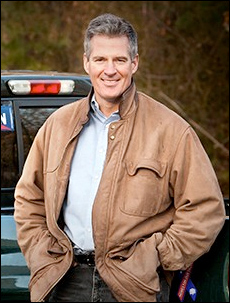
Sen. Scott Brown (R-MA)

A spate of new US Senate polls is giving Republican Party leaders some solace in the face of the Todd Akin debacle in Missouri.

Public Policy Polling (Aug. 16-19; 1,115 likely Massachusetts voters) projects Sen. Scott Brown (R) to a 49-44 percent lead over consumer advocate and Harvard law professor Elizabeth Warren (D). This is the senator’s largest lead in months. Most recent polls showed him either trailing by a point or two, or tied.

Rasmussen Reports (Aug. 20; 500 likely Montana voters) gives Republican Rep. Denny Rehberg (R-MT-AL) a 47-43 percent edge over Sen. Jon Tester (D).

Michigan-based Foster McCollum White & Associates (Aug. 16; 1,733 likely Michigan voters), for the first time, posts challenger Pete Hoekstra (R) to a 48-46 percent advantage against two-term Sen. Debbie Stabenow (D).

PPP also released data for the Wisconsin Senate race, as did Marquette University Law School. According to the former (Aug. 16-19; 1,308 likely Wisconsin voters), Republican ex-governor Tommy Thompson has the upper hand over Rep. Tammy Baldwin (D-WI-2) by a five-point, 49-44 percent, spread. The latter survey (Aug. 16-19; 706 registered Wisconsin voters) shows Thompson with an even larger lead, 50-41 percent.

And, as we reported yesterday, Foster McCollum White & Associates (Aug. 17; 1,503 likely Florida voters) gives Rep. Connie Mack IV (R-FL-14) his largest lead of the campaign, 51-43 percent, over two-term Sen. Bill Nelson (D).

If the patterns in each of these campaigns were to hold, the Republicans would surely capture the Senate majority and see their conference grow to 52 members and possibly beyond. Much will change, however, between now and Nov. 6.