Tag Archives: Iowa

Projecting Delegates

By Jim Ellis

Feb. 24, 2020 — It is becoming clearer that the Democratic presidential contest could result in an open, or “brokered”, convention. This would occur if no candidate secures majority support after the electorates in all the voting entities have cast their ballots and the delegates’ first ballot tallies are locked into place under the individual state laws.

Discounting the Nevada Caucus held over the weekend, only 65 of the 3,979 first-ballot delegate votes have been assigned. By the evening of March 3, however, the aggregate assigned delegate total will soar to 1,398 and we will begin to see sustaining patterns developing.

By March 17, 61 percent of the first-ballot votes will be locked. At that time, it is highly likely we will be able to determine if a candidate can attain majority support or whether multiple ballots will be required to choose a nominee. If this latter scenario occurs, it will be the first time since 1952 that a major party convention is forced to call for more than one ballot to choose a nominee.

Looking past Nevada and onto South Carolina on Saturday, Feb. 29, and then to Super Tuesday just three days later, we can begin to make delegate projections based upon available polling data. Of the 19 total voting entities that will record votes from the time the Iowa Caucuses began to the end of voting on Super Tuesday, relevant polling exists in 14 of those states.

Using the available data and delegate quotas that are noted from each place, rudimentary projections can be calculated regarding which candidates might receive delegate votes from the specific states for purposes of comparing aggregate totals against the 50 percent threshold.

Early in the cycle, it appeared that former Vice President Joe Biden would be in the strongest position post Super Tuesday because of what looked to be his early dominance in the South. The voting schedule appeared to favor him since half the March 3 voting states lie in that region. His trouble in Iowa and New Hampshire, plus his poor debate performances, and Sen. Bernie Sanders’ strength along with the recent emergence of Michael Bloomberg, has apparently already relegated Biden to also-ran status.

Continue reading

New Hampshire Primary Today

By Jim Ellis

Feb. 11, 2020 — At long last, the New Hampshire nomination election has arrived, and voters have already begun casting their ballots in what is often referred to as the “first in the nation primary.” The initial state in a line of 48 primaries (the other nine states and territories have caucuses), just how important is today’s vote in determining who wins the 2020 Democratic presidential nomination?

Considering the split Iowa vote where it appears that five different candidates will be awarded a certain number of first-ballot national convention delegate votes ranging from 14 to one, New Hampshire’s 24 aggregate delegates will not likely alter the current race trajectory; therefore, multiple candidates will still be battling through Nevada and South Carolina before Super Tuesday with no one having a clear early path to majority support.

First-ballot victory at the Democratic National Convention in July can only come when one candidate top 50 percent of delegate support. Therefore, regardless of the importance media analysts attempt to assign this New Hampshire race in terms of a momentum boost, it is the delegate numbers that will still tell the story.

Coming from Iowa, former South Bend mayor, Pete Buttigieg, looks to earn 14 delegates with Sen. Bernie Sanders (I-VT) close behind with 12. Now, Sen. Sanders’ team is requesting a partial recount in Iowa that might earn him an extra delegate or two, but it is doubtful the Iowa Democratic Party, with a party leadership still reeling over the vote counting debacle, will grant their request.

Continuing the projected delegate apportionment, Sen. Elizabeth Warren (D-MA) would earn eight bound delegate votes, former vice president, Joe Biden six, and Minnesota Sen. Amy Klobuchar, one.

Polling suggests that Sen. Sanders will place first tonight, but several candidates look to break the 15 percent threshold to also qualify for bound delegate votes. Polling finds scenarios where Buttigieg, Warren, Biden, and even Klobuchar will surpass the minimum threshold, though it is unlikely that all will do so. In fact, with Biden’s early support evaporating before our eyes, it is possible that he will fall short of 15 percent tonight meaning that he would be shut out of delegate votes. Though Sen. Klobuchar appears to be closing fast, it is also likely that she finishes under 15 percent.

Continue reading

Mid-Year Senate Primaries

By Jim Ellis

Jan. 24, 2020 — The second in our three-part series about the in-cycle Senate races covers the 13 contests with June and early August primary dates:

JUNE 2

Iowa: Sen. Joni Ernst (R) stands for a second term and will likely face Des Moines real estate executive Theresa Greenfield (D) in the general election. Greenfield, who aborted a congressional run in 2018 when her campaign effort didn’t collect the requisite number of legal petition signatures, enjoys at least unofficial backing from the Democratic establishment and party leadership. The leaders’ first choice to run, freshman Rep. Cindy Axne (D-Des Moines), decided to seek her first re-election instead of jumping into a statewide battle.
Sen. Ernst is favored for re-election but some of her approval ratings have been low. Much will depend upon the national political trend, particularly at the presidential level. Iowa is typically a swing state that has been moving right in most recent elections, though the Democrats did gain two congressional seats in the last election.

Montana: Sen. Steve Daines (R) stands for a second term, and with the Democrats unable to convince outgoing governor and former presidential candidate Steve Bullock to run for the Senate, most of the political attention has shifted to the open governor’s race and at-large US House contest. With Rep. Greg Gianforte (R-Bozeman) again running for governor, both the governor’s office and the state’s lone House seat are open for the coming election.
In fact, when looking at the entire statewide ticket, mostly due to term limits and statewide officials running for other offices, five of the seven statewide races are open contests in 2020. Therefore, the lack of attention and concentration on the Senate race certainly helps Sen. Daines. At this point, with the March 9 candidate filing deadline less than a month away, the type of candidate who could give the senator a serious run has not yet emerged.

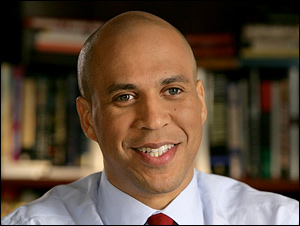
New Jersey: Sen. Cory Booker (D) backed away from the presidential contest in order to concentrate on his re-election campaign. While state law was changed to allow candidates to run for offices simultaneously, Sen. Booker decided the time to exit the presidential race was upon him before embarrassing losses in Democratic primary states encouraged stronger primary competition for his re-election back home. Now concentrating on New Jersey full-time, Sen. Booker looks safe for re-election.

Continue reading

Sen. Cory Booker Ends Run for 2020

By Jim Ellis

Sen. Cory Booker (D)

Jan. 15, 2020 — With less than three weeks from the first votes being cast in the Democratic presidential nomination process, Sen. Cory Booker (D-NJ) announced via Twitter that he is ending his national effort.

The move is not surprising, as Sen. Booker rarely reached or surpassed three percent support in any presidential primary poll. Like Sen. Kamala Harris (D-CA), who left the race just before the California candidate filing deadline in early December, visions of Senate re-election may have at least in part driven the timing of Booker’s move. While Sen. Harris doesn’t face voters in a strong Democratic state until 2022, Sen. Booker is on the New Jersey ballot this year.

Before the presidential race began, New Jersey legislators and Gov. Phil Murphy (D) changed the state election law to allow candidates to run simultaneously for more than one office. The move was obviously made to assist Sen. Booker’s presidential efforts. Now, however, the simultaneous filing option becomes moot.

Leaving the race now provides him an excuse for finishing poorly in the first four voting states: Iowa, New Hampshire, Nevada, and South Carolina, though he filed for each primary and caucus vote and will still be on the ballot in at least New Hampshire and South Carolina.

Though Sen. Booker appears safe for re-election, the New Jersey filing deadline isn’t until March 30. Poor finishes in all primary and caucus states could have left him in a vulnerable state, and while the Garden State is highly unlikely to elect a Republican to the Senate, it’s not out of the realm of possibility that a strong Democrat could have begun to mount a primary challenge. Now we can expect Sen. Booker to invest all of his political capital into cementing his re-election for a second full six-year term.

Continue reading

Sanders Leading in California

By Jim Ellis

2020 Presidential candidate Sen. Bernie Sanders takes the lead in California

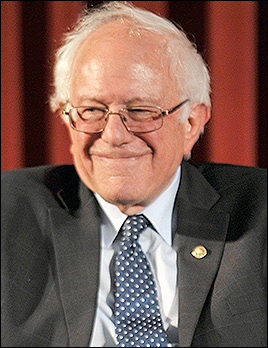
Jan. 13, 2020 — The new Capitol Weekly research survey (Jan. 1-9; 1,053 likely California Democratic primary voters) finds Sen. Bernie Sanders (I-VT) taking a slight polling lead in the California Democratic primary over Sen. Elizabeth Warren (D-MA), former Vice President Joe Biden, and South Bend Mayor Pete Buttigieg in what is consistently becoming a closely bunched field.

With two months to go before the Golden State primary is conducted but less than a month before early voting begins there on Feb. 3, the possibility of multiple candidates receiving portions of the state’s 415 first ballot delegates is becoming very real.

Sanders leads Warren, Biden, and Buttigieg by a 24-21-20-11 percent spread. Under party rules, a candidate must secure 15 percent of the statewide vote to earn at-large delegates. Therefore, Buttigieg must work to gain strength during the remaining time in order to reap the all-important mandated delegate commitments.

If he were to obtain 15 percent, and the others remained constant with these present percentages, the at-large delegate division would break 43 for Sanders and 38 for Warren, while Biden would earn 36 and Buttigieg 27 votes.

Should only the top three qualify for at-large delegate apportionment, Sanders would earn 53 votes, Warren 46, and Biden 45. Therefore, Buttigieg qualifying would significantly change the state and overall race because the large California delegation will be a major presence at the Democratic National Convention.

Scoring at-large delegate commitments is not the only way to earn votes, however. A larger total of 271 delegates will be awarded through the state’s 53 congressional districts. Each district, based upon its historical support performance for Democratic candidates, is awarded between 4 and 7 delegates, inclusive.

Continue reading

Impeachment Politics

By Jim Ellis

Dec. 20, 2019 — As the most recent polling from national research sources and in key states shows President Trump gaining political strength, the US House last night, on a virtual party line vote, approved the resolution to send the Articles of Impeachment to the US Senate for trial.

The vote was 229-198, with three Democrats voting against the articles and one Republican-turned-Independent, Michigan’s Justin Amash, supporting the measures. Presidential candidate Tulsi Gabbard, who represents the 2nd District of Hawaii, voted “Present”. Three members, two Republicans and one Democrat, were absent. Rep. Duncan Hunter (R-CA) will soon resign his seat due to pleading guilty to a federal campaign finance charge. Retiring Reps. Jose Serrano (D-NY) and John Shimkus (R-IL) were the others who did not vote. All present and voting Republicans opposed the impeachment measures.

Two of the three opposition Democrats were expected to vote no, Reps. Collin Peterson (D-MN) who represents the strongest Trump district in the country to elect a Democrat to the House, and New Jersey’s Jeff Van Drew who is about to leave his party to join the Republicans. The third no vote came from freshman Rep. Jared Golden (D-ME), who represents the northern district in Maine that delivered its electoral vote to Trump in 2016 even though the state voted for Hillary Clinton. Maine and Nebraska are the only two states that choose to divide their electoral votes.

Two pollsters who had been showing national political support for the impeachment are now projecting a swing toward the opposite conclusion.

The CNN poll, conducted by their usual research partner, the SSRS firm, surveyed 1,005 adult respondents over the Dec. 12-15 period. A total of 45 percent of the respondents favored impeaching the president, while 47 percent said, “they don’t feel that way.” In contrast, their Nov. 21-24 survey found 50 percent favoring impeachment while 43 percent said they didn’t agree with the move. Previously, the CNN polls had reported positions consistently favoring impeachment since late September.

Continue reading

Buttigieg Tops New Hampshire Field

By Jim Ellis

South Bend Mayor Pete Buttigieg

Dec. 13, 2019 — It has been clear for some time that South Bend Mayor Pete Buttigieg is making a strong move in Iowa, perfectly understandable for a candidate hailing from the Midwest; but could an Iowa-New Hampshire sweep be in the forecast for the upstart national contender?

A new MassInc poll for WBUR radio, the public news station in Boston, finds Mayor Buttigieg, for the first time, posting a small lead in the Granite State. The survey (Dec. 3-8; 442 likely New Hampshire Democratic primary voters) gives Buttigieg a slight 18-17-15-12 percent edge over former Vice President Joe Biden, and Sens. Bernie Sanders (I-VT) and Elizabeth Warren (D-MA), respectively, as a clear four-way race is beginning to crystallize for the first-in-the-nation primary.

The latest Iowa Caucus public polling, from Nov. 8 – Dec. 10 through four different survey research firms (Selzer & Company, YouGov, Civiqs, and Emerson College), finds Mayor Buttigieg either leading or tied in three of the studies.

Should such a trend come to fruition in February, we would see the underpinnings of not only Buttigieg becoming a legitimate contender, but a serious national four-way contest taking shape.

The New Hampshire poll is significant not only because it reveals a state base for Buttigieg but also finds that neither New England stalwart politicians Sanders nor Warren have clinched the state, as one might surmise. It was only four years ago when Sen. Sanders posted a 60 percent victory over Hillary Clinton in the 2016 Democratic New Hampshire presidential primary. At this point, now exactly two months from the Granite State primary vote, it would be reasonable to believe that both would be doing better than the MassInc survey and other recent polls suggest.

The MassInc/WBUR poll also provides another key data point. Despite former New York City mayor Michael Bloomberg’s major media spending, apparently on a national basis, his favorability ratings among Democrats continue to languish. His personal index will have to substantially improve if he is to make a push to develop a five-way nomination campaign.

Yesterday, we covered a Monmouth University national poll that found Bloomberg being regarded as the most unpopular of the well-known Democratic candidates, and this MassInc/WBUR New Hampshire survey returns similar results.

Continue reading

Pompeo for Senate?

By Jim Ellis

US Secretary of State Mike Pompeo

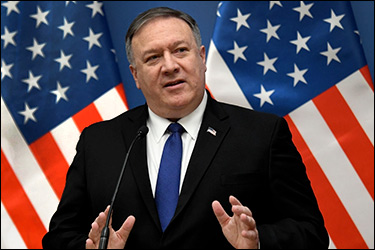
Nov. 25, 2019 — Ever since Kansas Sen. Pat Roberts (R) announced last January that he would retire at the end of the current Congress there has been consistent speculation that US Secretary of State and former Wichita area congressman, Mike Pompeo, would resign his national position and return to Kansas to run for the open seat. Despite repeated denials from Secretary Pompeo, the speculation would not die.

Now, it appears the rumors of him entering the race have greater foundation, as more concrete stories that he will soon resign and announce his candidacy are regularly surfacing. The Senate Republican leadership is clearly in favor of the Pompeo move, originally fearing that former Kansas Secretary of State Kris Kobach could win a crowded August Republican primary with only a vote plurality and then perform as badly in the general election as he did when he lost the 2018 open governor’s race.

With Republicans holding 53 of the chamber’s 100 seats but having to defend 23 incumbents and open seats on the 2020 Senate election map versus only 12 for the Democrats, the GOP cannot afford an electoral debacle in what should be a safe seat. It was only two years ago that another flawed Republican Senate candidate bungled the Alabama special election, thus allowing Democrat Doug Jones to win the position that Sen. Jeff Sessions had resigned to become US Attorney General.

Currently, eight individuals have announced for the Republican nomination led by Kobach, US Rep. Roger Marshall (R-Great Bend), and state Senate President Susan Wagle (R-Wichita). Polling and local political intel suggests that Pompeo would have little trouble winning the nomination, and the seat, if he were to enter the race. If he does become a candidate, some of the others, and particularly Rep. Marshall, would have time to exit the race and pivot back toward seeking re-election to their current position.

Originally, state Treasurer Jake LaTurner (R) had been in the Senate race – in fact, he was the first to enter the contest immediately after Sen. Roberts made public his intentions – but he has already exited and, at the behest of former Gov. Jeff Colyer (R), is now challenging freshman Rep. Steve Watkins (R-Topeka) for re-nomination in the 2nd Congressional District.

Continue reading

Buttigieg Pulls Ahead

By Jim Ellis

South Bend Mayor Pete Buttigieg

Nov. 14, 2019 — As more potential Democratic presidential candidates, like former New York City mayor, Michael Bloomberg, ex-Massachusetts Gov. Deval Patrick, and even Hillary Clinton begin to re-emerge on the campaign’s outer horizon, the party nomination contest is moving into a sustained state of flux.

It is obvious that the potentially returning candidates are flirting with a new effort because they don’t perceive any of the active contenders as being in position to win the nomination outright or who can successfully oppose President Trump in the general election.

Now, we see a new complicating factor as an Iowa poll released Tuesday finds South Bend Mayor Pete Buttigieg grasping the lead away from both former Vice President Joe Biden and Sen. Elizabeth Warren (D-MA).

According to the new Monmouth University survey (Nov. 7-11; 451 likely Iowa Democratic caucus attenders) Buttigieg claims first place with a 22 percent preference factor. Biden and Warren follow with 19 and 18 percent, respectively. Sen. Bernie Sanders (I-VT) secures fourth position with 13 percent.

The Monmouth poll is attracting headlines because it produces a new leader, and thus a new story line for a media horde always looking for a different narrative or angle. It may, however, be premature to suggest this one poll is the beginning of a new trend in the Democratic battle especially when it is the only survey drawing such a conclusion.

Two other pollsters ran surveys in a similar time frame and arrive at entirely different results. The Morning Consult large sample online survey (Nov. 4-10; 16,400 likely Iowa voters) projects a ballot test standing like we saw when the campaign was in its early stage: Biden 32 percent; Sanders 20 percent; Warren 19 percent; Buttigieg eight percent.

Continue reading

With Beto Out … Will the Rest
of the Dominoes Start to Fall?

Beto O’Rourke | Facebook Photo

By Jim Ellis

Nov. 5, 2019 — Former US Rep. Beto O’Rourke (D-TX) ended his presidential campaign Friday, joining Rep. Eric Swalwell (D-CA), ex-Colorado Gov. John Hickenlooper, Washington Gov. Jay Inslee, US Rep. Seth Moulton (D-MA), New York Sen. Kirsten Gillibrand, New York City Mayor Bill de Blasio, and US Rep. Tim Ryan (D-OH) as 2020 national contenders who are no longer in the race.

O’Rourke’s concession statement made reference to departing because he no longer possesses adequate resources with which to compete. Beginning as a top tier candidate with a strong financial base, his effort rapidly crumbled largely due to ill-advised comments, poor debate performance, and calling for assault weapon confiscation, which did not reinvigorate his campaign as he expected. O’Rourke had hoped to use the latter issue to begin cracking into the party’s far-left faction that Sens. Elizabeth Warren (D-MA) and Bernie Sanders (I-VT) seemingly have cornered.

Democratic leaders had from the outset attempted to persuade O’Rourke to challenge Texas Sen. John Cornyn (R) instead of running for president, but they were ignored. In his statement announcing the end of his national campaign, the former congressman addressed the speculation that he might return to Texas to challenge Cornyn, but again ruled out running for that office or any other in 2020.

How does the Democratic race change now that O’Rourke has departed? Largely, his move could be a precursor of many more exits to come. At this point, it is clear three candidates occupy the top tier and separation exists between them and the rest of the pack. Former Vice President Joe Biden and Sens. Warren and Sanders maintain the top three positions in virtually every poll, and it is reasonable to expect that one of them will eventually become the Democratic nominee.

South Bend Mayor Pete Buttigieg has recently made a resurgence after lagging in single digits since the second nationally televised debate in July. Concentrating on fundraising and organization, Buttigieg’s efforts have proven worthwhile. Raising $19.1 million just in the third quarter, placing him behind only Sanders ($25.3 million raised in Quarter 3) and Warren ($24.6 million) during that period, the mid-size city mayor has brought in over $51.5 million since the onset of his presidential campaign.

Continue reading