Tag Archives: Barack Obama

Ex-Rep. Issa Forms Exploratory Committee For Crowded CA-50

Ex-California US Rep. Darrell Issa

By Jim Ellis

Sept. 3, 2019 — Ex-California US Rep. Darrell Issa, who represented the state’s 49th CD for 18 years, just filed a new congressional exploratory committee with the Federal Election Commission. But he is not looking to run in his former seat. Rather, the exploratory committee is organized to survey his chances of winning the adjacent 50th CD, the district that indicted Rep. Duncan D. Hunter (R-Alpine) currently represents.

This congressional district’s political soap opera continues to unfold. Hunter is facing a trial after the first of next year to defend himself against campaign finance charges, certain ones for which his estranged wife and former campaign manager have already negotiated a plea agreement with the government. And, with the early March 3 state primary scheduled concurrently with the presidential Super Tuesday vote, candidates are already announcing their intentions.

Anticipating that the court case will go against the congressman, five Republicans have announced their candidacies. And, with the trial now postponed until after the first of the year (it was originally scheduled for mid-September) there is a strong chance that Rep. Hunter will file for re-election before the state’s Dec. 6 candidate filing deadline. Should Issa decide to enter the race, then at least seven Republicans will be competing.

So many are coming forward because the 50th is one of the safest Republican seats in California, a state that now has a congressional delegation of 46 Democrats and just seven Republicans. However, quite possibly, and largely due to the state’s jungle primary law, the seat could fall into Democratic hands under a very realistic scenario.

Under California law, similar to the system in Louisiana and Washington, all candidates appear on the primary ballot regardless of political party affiliation. In the California process, the top two finishers in the first election, which is in reality a qualifying election as opposed to a partisan primary, advance to the general election.

Because there will be seven Republicans or more on the ballot and, at this point, just one Democrat — 2018 nominee Ammar Campa-Najjar, who posted 48.3 percent of the vote against Hunter — Campa-Najjar’s chances of advancing to the general election are quite favorable.
Continue reading

Wisconsin Rep. Sean Duffy to Resign

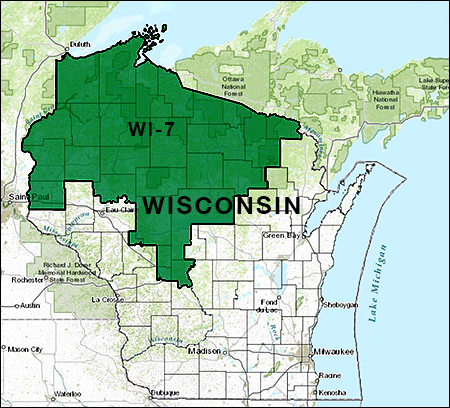
Wisconsin’s US 7th Congressional District

By Jim Ellis

Aug. 28, 2019 — Five-term Wisconsin Rep. Sean Duffy (R-Wausau) announced Monday that he is resigning from Congress effective Sept. 23. Rep. Duffy indicated his reason for leaving mid-term is that his wife and his expectant child, their ninth, has already been diagnosed with challenging health issues.

Therefore, his 7th Congressional District will go to special election once Gov. Tony Evers (D) sets the schedule. The congressional vote will likely coincide with the state’s spring election, where statewide and district judges are on the ballot and many localities use the dates to hold their own elections. The Wisconsin calendar pinpoints the Spring Primary for Feb. 18, 2020, while the Spring General election will run concurrently with the Wisconsin presidential primary on April 7.

The Badger State’s 7th CD occupies a full quarter of the state’s land area, beginning on the shores of Lake Superior and stretching to Buckhorn State Park close to Wisconsin’s center. The district covers a large land mass and is populated with small towns spread throughout the 26 counties that it covers or touches. WI-7 contains 21 whole counties and parts of five others. Its largest city, Wausau, which is Congressman Duffy’s hometown, has just under 40,000 people.

The district’s electorate now votes solidly Republican but, before Rep. Duffy was elected in 2010, this seat remained in Democratic hands for 41 consecutive years in the person of former Rep. David Obey (D) who first won in a 1969 special election and retired in the 2010 cycle. The district’s pre-Obey history, however, was solidly Republican. A member of the GOP had represented the seat for 82 of its first 96 years of existence.

Since the Duffy resignation was unexpected, no potential successors are being discussed, but that situation will quickly change.

Continue reading

Hickenlooper: Heading Out and In?

Former Colorado Gov. John Hickenlooper – running for Senate after all? (Photo Moritz Hager)

By Jim Ellis

Aug. 6, 2019 — Some politicos are saying that former Colorado Gov. John Hickenlooper is poised to end his failed presidential campaign and return home to challenge Sen. Cory Gardner (R-CO). The speculation is largely coming because new Hickenlooper for Senate campaign domain names were just registered in the past few days. That, and in an interview Sunday on satellite radio, Hickenlooper said he would “be a fool” to continue running for president if he couldn’t see improvement in the polls.

Democratic leaders had long attempted to recruit Hickenlooper into the Senate race, but he steadfastly refused to be swayed from becoming a presidential candidate. He went further than rejecting the idea of running statewide in 2020 when he even expressed some disdain for the Senate as a political body. Hickenlooper seemingly ruled out serving in the Senate saying in February that, “I’m not cut out to be a senator,” and that, “Senators don’t build teams. Senators sit and debate in small groups…”

In his absence, no less than 14 Colorado Democrats have come forward to seek the party nomination to oppose Sen. Gardner, who began the 2020 cycle as arguably the most vulnerable Republican incumbent because his state is moving decidedly leftward. Ten months later, however, Sen. Gardner’s re-election chances appear stronger.

Of the 14 active candidates, six have electoral experience and seven have served in either elective, appointed, or political party positions. Colorado Secretary of State Jena Griswold leads the group, and former state House Speaker and statewide candidate Andrew Romanoff, ex-state House Majority Leader Alice Madden, former state senator and gubernatorial candidate Mike Johnston, state Sen. Angela Williams (D-Denver), ex-US Ambassador Dan Baer, and former Boulder County Democratic chair Ellen Burnes follow.

It is unclear just how many from this group, if any, would step aside for Hickenlooper, who is certainly a weakened political figure considering his national performance and given that he previously has said he doesn’t want the federal office. Therefore, it is conceivable that he will have to face what could be a difficult Democratic primary, and then Sen. Gardner, who is widely regarded as the best campaigner in the Republican candidate stable. According to the latest Federal Election Commission disclosure report, Sen. Gardner’s campaign account possessed just under $5 million at the June 30 deadline.

Though money will be no object for either Sen. Gardner or the eventual Democratic nominee, Colorado voting history is a major factor. The state has been trending much more Democratic since the turn of the century, and President Trump only recorded 43 percent of the vote in his loss here to Hillary Clinton. Prior to that, the last Republican to carry Colorado was George W. Bush in 2004.

Continue reading

Another One Bites the Dust:
Rep. Martha Roby to Retire

By Jim Ellis

Alabama Rep. Martha Roby (R-Montgomery)

July 30, 2019 — In the past week, three Republican House members made public their intention not to seek re-election including one this weekend. The action brings the grand total of open seats to 13, still a low number but one that is beginning to grow exponentially.

Now joining Reps. Paul Mitchell (R-MI) and Pete Olson (R-TX) in the recent retirement category is Alabama Rep. Martha Roby (R-Montgomery). The congresswoman released an electronic message indicating that she will not seek a sixth term and thanked her family and the people of her state’s 2nd District for the opportunity of serving in the US House for what will be a full decade.

Unlike in 2018, Roby looked to have a clear path to re-election. In the last campaign cycle, she drew a significant primary challenge because of negative comments she made about President Trump during the 2016 electoral contest. But the president endorsed her in the ’18 GOP nomination campaign and she scored a solid 68-32 percent win opposite former Democratic Congressman Bobby Bright in the Republican run-off.

Against four primary opponents, however, Rep. Roby only managed 39 percent of the vote, thus forcing the run-off. She rebounded nicely in the secondary election, and then went onto post a 61 percent victory in the general election. So far, no one from either party has come forward to challenge her, thus, Roby announces her retirement devoid of political pressure.

Alabama’s US Congressional Districts

Alabama’s 2nd District occupies the southeastern corner of the state, from the capital city of Montgomery to the Florida border on the south and Georgia to the east. It contains 14 whole counties and almost two-thirds of Montgomery County.

The seat is solidly Republican. President Trump posted a whopping 65-33 percent win here against Hillary Clinton, even topping Mitt Romney’s 63-36 percent margin over President Obama in 2012. In her five congressional general elections, Roby averaged 58.4 percent of the vote, but that figure is a bit misleading. She unseated then-Rep. Bright in 2010 with 51.1 percent and then survived a surprisingly close call in 2016 when she defeated a relatively unknown Democrat with only a 48.8 – 40.5 percent point spread. In her other three generals, she recorded victory percentages of 64, 67, and 61.

While the open seat figure is creeping upward, the majority of what will be incumbent-less campaigns are still non-competitive for next year’s election season. The overwhelming number of the 13 opens are Republican-held (10R-3D), and it appears at this early point in the election cycle that five of the districts will feature seriously contested general election contests, including four currently in GOP hands.

Continue reading

Michigan Rep. Paul Mitchell to Retire:
“Rhetoric Overwhelms Policy …”

Michigan Rep. Paul Mitchell (R-Dryden)

By Jim Ellis

July 26, 2019 — Michigan Rep. Paul Mitchell (R-Dryden) who represents the eastern part of the state known as “the thumb of Michigan”, announced Tuesday that he will not seek a third term in the US House.

His reason for departing after what will be only four years in office and spending over $7 million of this own money to win election to Congress over three campaigns is to spend more time with his family because of his special needs son. Rep. Mitchell also expresses displeasure and frustration with Washington because, he says, “rhetoric overwhelms policy, and politics consumes much of the oxygen in this city.”

Rep. Mitchell was originally elected in 2016, replacing Rep. Candice Miller (R) when she retired after 14 years in the House. He won a five-way Republican primary that year with 38 percent support, or more than 8,000 votes beyond he and his closest competitor, state Sen. Phil Pavlov (R-Port Huron). Mitchell won the ’16 general election with a 63-32 percent margin and was re-elected last year, 60-35 percent.

In his first venture into elective politics, Mitchell ran in the vacant 4th District when former Ways & Means Committee chairman Dave Camp (R-Midland) retired in 2014 after his time leading the panel had reached its term limit. In the three-way Republican primary, Mitchell lost 52-36 percent to current Rep. John Moolenaar (R-Midland). After the defeat, he moved across the state to Lapeer County, an area where Mitchell had business interests.

Continue reading

Murphy Wins Run-off in NC-3

By Jim Ellis

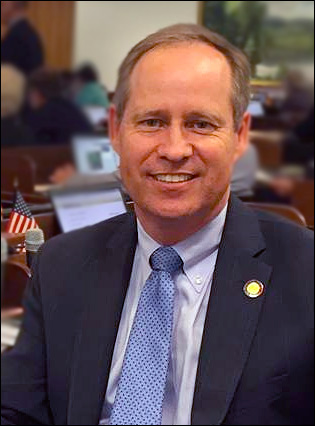
North Carolina state Rep. Greg Murphy (R-Greenville)

July 11, 2019 — North Carolina state Rep. Greg Murphy (R-Greenville) scored an easy 60-40 percent victory over Dr. Joan Perry in the special Republican congressional run-off Tuesday night, thus becoming the party nominee in a special general election to succeed the late Congressman Walter Jones, Jr. (R-Farmville) who passed away in February.

The run-off campaign was particularly low key. Neither candidate raised nor spent a huge amount money throughout the entire nomination process. Rep. Murphy will have expended approximately $600,000, while Dr. Perry only reached the $400,000 mark. Both, however, saw independent expenditures conducted on their behalf.

Originally, it appeared the conservative groups would be lining up behind Dr. Perry, and particularly pro-life groups, but when House Freedom Caucus chairman Mark Meadows (R-Skyland/Asheville) publicly endorsed Rep. Murphy the ideological lines appeared to break down.

Murphy carried 12 of the district’s 17 counties, and scored big in his home county of Pitt, with an 82-18 percent victory margin that accounted for more than half of his district-wide 6,972 vote win from a low turnout of 35,916 Republican run-off ballot casters.

Dr. Perry rebounded in her own home county of Lenoir, registering 75 percent of the vote there and cutting Murphy’s district vote margin by 1,482 votes. Though Murphy won 70 percent of the district’s counties, several were by very close margins: 4, 26, 61, 93, 127, and 227 votes.

Now, we move to the Sept. 10 special general election. Back in the April 30 primary, former Greenville Mayor Allen Thomas won the Democratic primary outright and automatically advanced into the general election. Now he and Rep. Murphy will battle for the seat in a campaign that should favor the new Republican nominee.

Continue reading

The Amash Factor

By Jim Ellis

Michigan Rep. Justin Amash

July 9, 2019 — Michigan Rep. Justin Amash (I-Cascade Township) officially left the Republican Party as the 4th of July approached, but what does his decision mean for the 3rd District’s political future?

Rep. Amash has served his whole career as a Republican, being first elected in an open congressional seat back in 2010 after winning a state House district in 2008. Though he left the GOP, he did not affiliate with the Libertarian Party, which many expected. Still, he has the option of running for that party’s presidential nomination even if he does not serve in Congress as a Libertarian.

But Amash’s decision clearly changes the congressional race. If he ultimately decides to seek re-election, his decision to leave the GOP is somewhat curious, at least from an electoral perspective. At this point, already four Republicans have announced, with at least three of them clearly credible. Two are sitting state representatives and one an heir to the Meijer retail store chain that features more than 200 stores predominantly in the Midwest. With no run-off required under Michigan election law, a large competitive field would have played to Rep. Amash’s favor since the contest would have been a base vote nomination election.

Should he decide to seek re-election as an Independent, then all bets might be off. Under the same premise that a crowded field could have helped Amash win a Republican primary, at least a three-way general election candidate field could conceivably allow him to win re-election in similar plurality fashion. But, either major party candidate might have the same advantage making this a wild card race.

Additionally, the three-way set-up could put what is typically a reliable Republican seat in play for the Democrats. Should Amash and the eventual Republican split the right-of-center base, it is conceivable that the Democratic nominee could find him or herself in position to score the plurality victory.

Continue reading

Indiana Rep. Susan Brooks to Retire

By Jim Ellis

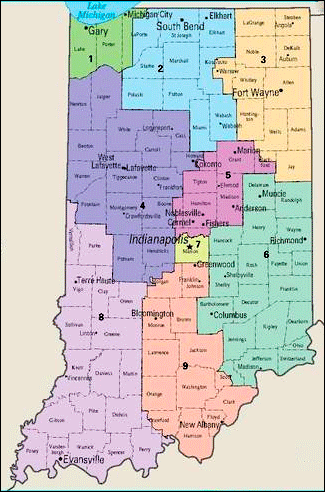
Rep. Susan Brooks represented Indiana’s 5th District, a reliably Republican district over the years.

June 18, 2019 — The 2019-20 House open seat count reached double-digits as Indiana Rep. Susan Brooks (R-Carmel) announced late last week that she would not seek a fifth term next year.

With Brooks retiring and Montana at-large Rep. Greg Gianforte (R-Bozeman) announcing that he will run for governor, the open seat count grows to 10 including the two North Carolina special congressional elections that will be filled on Sept. 10.

Most news outlets were reporting the Brooks announcement as a surprise, in large part because she chairs the National Republican Congressional Committee’s candidate recruitment operation. But, rumors of Brooks moving on from the House have circulated before, and she did attempt to become governor when incumbent Mike Pence left office after being selected as Donald Trump’s running mate. There was also speculation that she could leave the House next year in order to run for state attorney general.

Immediately after Pence left his Hoosier State gubernatorial re-election effort to campaign for vice president, an Indiana Republican Party committee was empowered to choose a new gubernatorial nominee. Rep. Brooks, along with fellow US Rep. Todd Rokita, declared for the special nomination, but the party committee members instead chose then-Lt. Gov. Eric Holcomb who would go onto win the general election and now stands for re-election in 2020.

Rep. Brooks says her retirement decision is primed because of a desire to begin devoting her life to interests outside of politics. She will, however, continue in her NRCC role to lead the party’s recruitment apparatus in serving the balance of this current term.

Continue reading

Electoral Vote Compact Takes a Hit

By Jim Ellis

June 3, 2019 — Recently, Sen. Elizabeth Warren (D-MA) spoke one of her strongest applause lines on the presidential campaign trail, when she talked about eliminating the Electoral College. And the National Popular Vote Interstate Compact organization had been gaining significant energy when Colorado, Delaware, and New Mexico officially joined its ranks earlier this year. But, that momentum hit a major roadblock yesterday.

The National Popular Vote Interstate Compact, or NPVIC, began soon after the 2000 presidential election when Democratic nominee Al Gore won the popular vote count but fell to George W. Bush in the Electoral College. The result marked the first time since the 1888 election when the popular vote winner failed to win the presidency.

By 2007, Maryland became the first state to officially join the NPVIC. Today, 14 states are Compact members, representing 189 Electoral Votes. The organization’s stated goal is to recruit enough states to equal a majority of 270 EVs that will agree the respective members will deliver its Electors to the national popular vote winner regardless of how their own electorate votes.

However, the Maine House of Representatives, on a 76-66 vote, defeated legislation late last week to add their state to the growing NPVIC organization. And, Nevada Gov. Steve Sisolak (D), in a surprise move to some, vetoed the compact legislation that had reached his desk. Earlier in the Oregon legislative session, the state Senate passed its bill to join the compact and action is awaited in the House before the legislative session’s scheduled end on June 21.

Continue reading

NC-3: Republicans Generate a Run-off, While Democrats Have a Nominee

By Jim Ellis

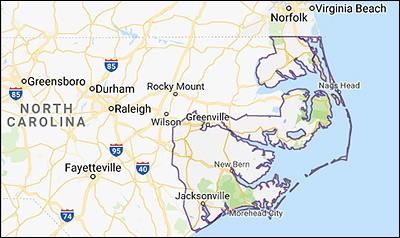
North Carolina’s 3rd Congressional District

May 1, 2019 — Almost 69,000 eastern North Carolina voters cast ballots in the special Republican and Democratic primaries yesterday to choose a successor to the late Rep. Walter Jones (R-Farmville) who passed away in February.

Since Republicans featured a field of 17 candidates, it appeared obvious that no one would reach the 30 percent threshold necessary to nominate. That proved to be true, and second-place finisher, Joan Perry, confirmed last night that she will petition the NC Board of Elections for a run-off election. Perry, a Kinston area physician in Lenoir County, will face state Rep. Greg Murphy (R-Greenville), another physician and first-place finisher, in a secondary Republican nomination election to be scheduled for July 9.

The Democrats, on the other hand, chose their nominee last night. Former Greenville Mayor Allen Thomas easily captured the party nod garnering just over 50 percent of the vote, 20 percentage points more than he needed. He defeated retired Marine Corps Colonel Richard Bew (25.2 percent), New Bern Mayor Dana Outlaw (12.6 percent), and three minor candidates. none of whom reached double-digit support. Thomas now directly advances to the Sept. 10 special general election.

Rep. Murphy took advantage of his Greenville base, the largest population center in the 3rd District that encompasses most of coastal North Carolina, including the Outer Banks region. Dr. Murphy scored 22.5 percent of the vote, or 9,507 votes. Dr. Perry, with support from outside national and state pro-life organizations, drew 15.4 percent translating into 6,515 votes.

Continue reading