North Carolina Redistricts

North Carolina redistricting map / Click on image to go to interactive version on Dave’s Redistricting App.

By Jim Ellis — Friday, Oct. 24, 2025

Redistricting

The Tar Heel State of North Carolina has joined the redistricting wars as members in both the state House of Representatives and state Senate voted this week to adopt a new congressional map.

Republican legislative leaders saying the need to protect President Trump’s agenda and counter what states like California are doing to help Democrats became the impetus for the North Carolina legislators’ action of revising their state’s federal district plan.

Since North Carolina law gives only the legislature the power to redistrict, Democratic Gov. Josh Stein had no role in the process. Therefore, upon passing each chamber –the House followed the Senate’s lead and voted favorably yesterday – the new map became law.

The 2025 congressional plan shifts 10 counties between Reps. Don Davis’ (D-Snow Hill) 1st District and Greg Murphy’s (R-Greenville) 3rd CD. The shift makes the 1st District — which President Trump carried in 2024 before the electorate switched back to Rep. Davis — more Republican while the overwhelmingly Republican 3rd District becomes more Democratic.

The Republicans’ political mark is clearly Rep. Davis. In November, the incumbent was re-elected with only a slim 49.5 – 47.8 percent margin over Republican nominee Laurie Buckhout. With such a small Democratic congressional win in a district that President Trump carried, and bordering a solidly Republican district to the south, made the 1st District an easy GOP target.

The 1st CD begins at the Virginia border and covers most of northeast North Carolina. To make it more Republican, the map drawers drove the district further south along the coast to annex additional GOP counties. This forced Rep. Murphy’s 3rd CD to move west and further inland. The remaining dozen Tar Heel congressional districts remain untouched.

The changing counties transform the 1st from one where President Trump defeated Kamala Harris 51-48 percent, into a seat where the electorate would have posted a 55-44 percent Republican margin. Conversely, the Trump percentage in District 3 would recede from 57.9 to 53.5. While Rep. Murphy’s district clearly becomes more competitive, he will still have enough of a partisan margin to win comfortably in a region that is likely to grow more Republican as the decade progresses.

Rep. Davis took to social media, according to the Down Ballot political blog reporters, to indicate that he would seriously consider remaining in the District 1 race even though his hometown of Snow Hill in Greene County would move to CD-3.

The Congressman said, “as we look at new congressional districts, I am considering every option, drawing on my local roots, experience in the military, and commitment to education,” in deciding what political move to make. Davis’ problem is there are no other available offices for which he can compete in 2026.

Though North Carolina has a dozen statewide offices, only one, Sen. Thom Tillis’ (R) open seat, is on the ballot next year. Since Democratic former Gov. Roy Cooper is already in that race and a consensus candidate, Davis has virtually no other political option than to run for the US House in a more difficult district.

With Buckhout accepting a job in Washington with the Trump Administration, she will not return for a 2026 rematch. In the race are Rocky Mount Mayor and former congressional candidate Sandy Roberson and state Sen. Bobby Hanig (R-Currituck).

Lenoir County Commissioner Eric Rouse (R) recently announced his congressional candidacy, but Lenoir County moves to the 3rd District under the new redistricting plan. It is unclear whether Rouse will continue now that his home political base is no longer in the 1st District.

Redistricting is nothing new in North Carolina. In the previous decade, the maps kept changing almost every election cycle. The reason was the dispute between the Republican legislature and the Democratic state Supreme Court. The preponderance of members in each body held different redistricting legal opinions. When the Republicans captured the court majority in the 2022 election, a unified redistricting approach was adopted.

We can expect lawsuits to be filed over the new map, but the chances of overturning the plan clearly drawn for partisan and not racial reasons means the 2025 version will very likely be the footprint upon which the candidates will run next year.

The Pelosi Challenge Deepens

By Jim Ellis — Thursday, Oct. 23, 2025

House

California state Sen. Scott Weiner

Early this year, former Alexandria Ocasio-Cortez campaign manager Saikat Chakrabarti announced that he would challenge 20-term California Representative and former US House Speaker Nancy Pelosi (D-San Francisco) in the state’s 2026 jungle primary. A new development makes this challenger race more interesting.

Aside from Chakrabarti, who is independently wealthy and loaned his campaign $755,000, a new challenger is coming forward. Three-term state Sen. Scott Weiner (D-San Francisco) is now saying that he too will join the race to unseat Pelosi, who can be described as a national Democratic political icon.

Weiner, who was elected to the San Francisco City and County consolidated Board of Supervisors in 2010, ran for and was elected to the state Senate in 2016. Under California election law, state legislators may serve six two-year terms in the state Assembly, or three four-year terms in the state Senate. Should one run for the Assembly and then move to the Senate, the time of service carries over from one house to the other.

While Sen. Weiner can remain in his present position through 2028, he no longer is eligible to seek re-election; therefore, his political situation instills greater impetus to become a congressional candidate.

It has long been surmised that Sen. Weiner would run for Congress as soon as Pelosi retired. Their constituencies almost perfectly overlap, though California state Senate seats are approximately 30 percent larger than US House districts. Many expected the Congresswoman to retire from politics after she left the Speakership, but she has twice been re-elected to the House since publicly deciding to leave her leadership position.

The 2026 11th District congressional race now becomes intriguing. The California jungle primary law requires two individuals to move into the general election regardless of political party affiliation or vote percentage attained. With an overwhelmingly large Democratic CD-11 constituency (a percentage beakdown of 63.5D – 7.5R) it is quite possible for two Democrats to advance into the general election.

Because her political longevity is fundamentally based upon maintaining a strong base at home, Pelosi would assuredly clinch one of the general election slots. With his own strong vote history, one would surmise that Sen. Weiner would be the betting favorite to clinch the second slot. Should such occur, we would see Pelosi facing a competitive opponent for virtually all of calendar year 2026.

Regardless of who eventually runs, Rep. Pelosi must be considered the favorite for re-election even against strong opponents. As we know, she has dominated San Francisco politics for four decades, and rarely has even drawn a credible opponent.

This being the case, why would Sen. Weiner want to enter a race that he would lose especially with so few policy differences existing between he and the former House Speaker? Positioning may be the answer.

Because Sen. Weiner has a four-year term, he can run for Congress in 2026 and not risk his state Senate seat. Secondly, taking advantage of Chakrabarti already spending money against Pelosi, a Weiner entrance may encourage the Congresswoman to retire in order to avoid a competitive campaign at her advanced age. If so, Sen. Weiner becomes the candidate to beat in an open seat situation.

Third, should the former Speaker remain in the race and Weiner loses, he is virtually guaranteed to fare better than any other person to have ever challenged her. Thus, he would be well positioned as the heir apparent when she eventually retires, which could be as soon as the 2028 election assuming she runs again next year.

Fourth, Weiner can begin to prepare a congressional campaign now but then decide to run only if Pelosi does not. In California, if an incumbent does not officially file for re-election, the candidate filing period is extended for five additional business days. Therefore, Weiner would have an opportunity to file even if the Congresswoman decides to retire right before the candidate filing period expires.

While a Weiner congressional candidacy would make interesting political news copy, he is likely merely testing the waters for a future run. There is a good chance the final decision as to whether he runs would occur at the candidate filing deadline.

In 2026, California candidates must fulfill filing requirements by March 6 for the June 2 jungle primary, or March 13 should the incumbent not seek re-election.

Competitive Senate Finance – Part II

By Jim Ellis — Wednesday, Oct. 22, 2025

Senate

Continuing from yesterday’s update, the Federal Election Commission has released new Senate campaign finance numbers, which help us preview the resource standing of the key 2026 US Senate contests. Today’s installment covers the most competitive contests from Massachusetts through Texas.

Massachusetts

Just in the past week we see a Democratic primary emerging between Bay State Sen. Ed Markey and Rep. Seth Moulton (D-Salem). Both men have equivalent cash reserves ($2.7M for Markey; Moulton: $2.1M) but it is clear that Sen. Markey begins as the favorite.

Rep. Moulton will try to make the incumbent’s age (Markey will be 80 years old at the time of the next election) an issue, but it is unlikely that such an attack will dissuade a majority of Democrats from voting for the veteran politician who first came to Congress in 1976.

This primary challenge is a very long shot but the Massachusetts primary cycle is lengthy, and much can change. The nomination election is not scheduled until Sept. 1, 2026.

Michigan

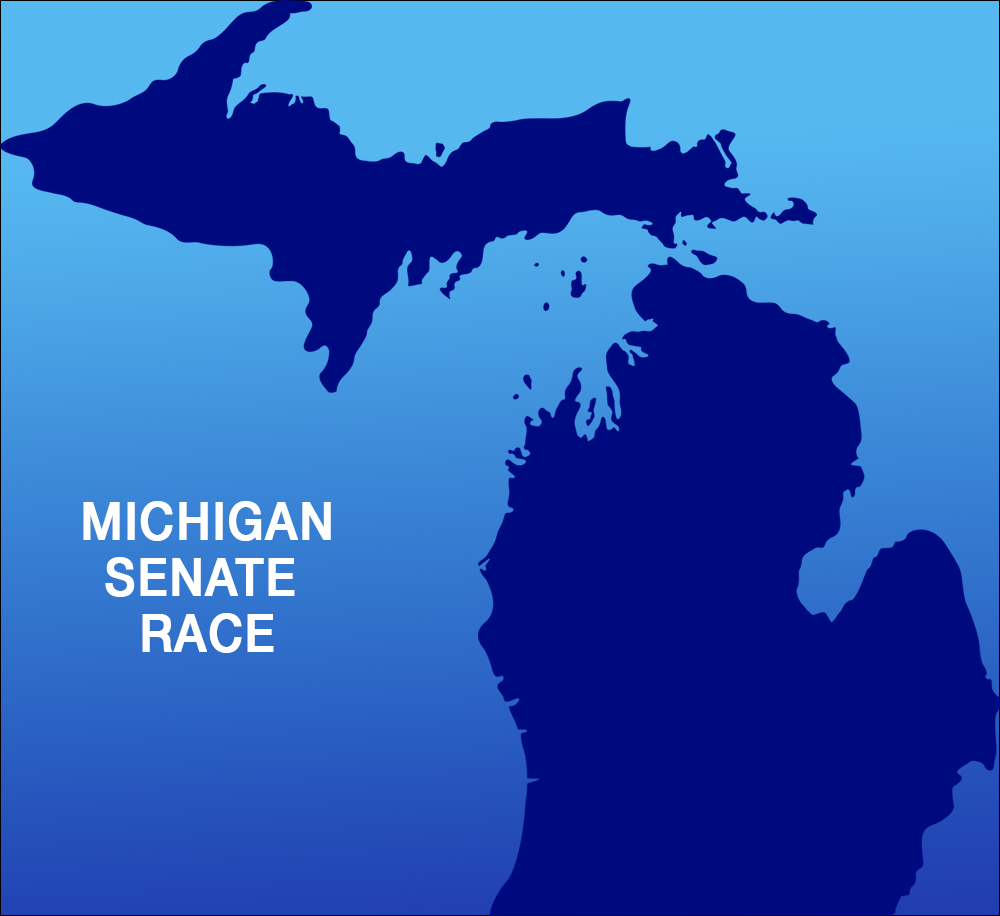
The open Michigan Senate race will be one of the top national contests next year. Republicans have successfully given former US Representative and 2024 US Senate nominee Mike Rogers a clear path to the nomination which helps solve one of their key past problem areas: fundraising. The fact that Rogers does not have to spend much to secure the nomination means virtually all fundraising assets will be directly applied to the general election. At this point, Rogers holds $2.7 million in his campaign account.

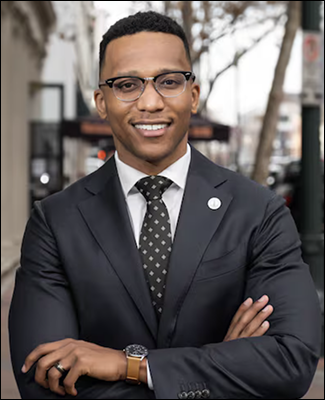
The Democrats, on the other hand, are embroiled in a tough primary that won’t be decided until Aug. 4. The three major candidates have equivalent resources. Rep. Haley Stevens (D-Birmingham) holds $2.6 million, state Sen. Mallory McMorrow (D-Royal Oak) reports $1.4 million cash-on-hand, and former Wayne County Health Director Abdul El-Sayed has also proven himself a strong fundraiser. His campaign account reports $1.8 in available resources.

The Democratic primary is a toss-up at this point. Expect a tough campaign before a nominee is crowned and financial resources will be exhausted. Democrats are adept fundraisers, however, so the winner’s campaign treasury will be quickly replenished after the party unites post-primary.

Minnesota

The Land of 10,000 Lakes also features a competitive Democratic Senate primary. In this case, the candidates are vying to replace the retiring Sen. Tina Smith (D). Today, it appears the nomination contest is evolving into a two-way affair between Lt. Gov. Peggy Flanagan and Rep. Angie Craig (D-Prior Lake).

In Minnesota, the state political party endorsements are very influential. Usually, a candidate not obtaining the party endorsement withdraws from the race but is not required to do so. For this Senate primary, it is likely that both of these candidates will advance into the Aug. 11 primary irrespective of the party endorsement process.

According to third quarter (Q3) financial reports, Craig has a significant fundraising advantage. She posts $2.9 million cash-on-hand as compared to just under $836,000 for Lt. Gov. Flanagan.

Nebraska

In 2024, Independent Dan Osborn became the election cycle’s surprise Senate candidate when he took several polling leads over Nebraska Sen. Deb Fischer (R). In the end, Sen. Fischer claimed a six-point win, but Osborn’s strong fundraising effort and populist appeal turned what should have been an easy Fischer win into a competitive contest.

Now, Osborn returns for another Senate campaign, this time against Sen. Pete Ricketts (R). Once again, Osborn is likely to enjoy Democratic Party official support; therefore, the party won’t field its own candidate. Sen. Ricketts is still a strong favorite, but this contest is likely to again draw national attention.

The Q3 financial disclosure reports show Sen. Ricketts holding $1.2 million in his campaign account while Osborn posts just under $517,000.

New Hampshire

Democratic Rep. Chris Pappas (D-Manchester) has successfully defined himself as the consensus party candidate to replace retiring Sen. Jeanne Shaheen (D).

Republicans are likely to soon see a new entry, possibly later this week. Former Sen. John E. Sununu, the son of former Governor and White House chief of staff John Sununu and brother of former four-term Gov. Chris Sununu, is likely to enter the campaign very soon. At this point, the leading Republican is former Massachusetts Senator and 2014 New Hampshire Senate candidate Scott Brown.

Early polling puts Sununu in position to tighten the race against Rep. Pappas, while the Congressman appears poised to easily defeat Brown. Rep. Pappas reports $2.6 million in his campaign account as compared to just under $803,000 for Brown. Since Sununu is not an official candidate, he is not yet required to file a disclosure report.

North Carolina

In what promises to be one of the defining national Senatorial contests, the general election candidates in the Tar Heel State are unofficially set: Democratic Gov. Roy Cooper and former Republican National Committee chairman Michael Whatley are virtually unopposed for their respective nominations.

Cooper has a major fundraising advantage. He already holds $8.6 million in his campaign account. Whatley, who started later, has just $1.1 million. Expect this race to go down to the wire. All North Carolina statewide races are tight, and this one will be no exception.

Ohio

The Ohio special election is another race where the general election is virtually set. Appointed Sen. Jon Husted (R) will run to serve the final two years of the current term. Opposing him will be former Sen. Sherrod Brown (D), who lost his seat in 2024.

This will be an expensive race, since then-Sen. Brown raised over $100 million for his last campaign. At this point, Brown has $5.9 million in cash-on-hand. Sen. Husted posts a similar $5 million. While Sen. Husted has the advantage because Ohio has been moving decidedly rightward in recent elections, we can count on seeing a very competitive contest here next year.

Texas

The Texas Senate situation has recently changed. With Rep. Wesley Hunt (R-Houston) joining the Senate Republican primary, the race is no longer solely a battle between Sen. John Cornyn and Attorney General Ken Paxton. The chances of the Republicans heading to a post-primary runoff are now high.

For the Democrats, former Congressman and 2024 Senate nominee Colin Allred is no longer a lock for the 2026 party nomination. Polling shows him dropping. Announced candidate James Talarico, an Austin state Representative, is making significant gains. Rep. Jasmine Crockett (D-Dallas), while not an announced candidate, is the clear polling leader. Not only is the Republican primary in a state of flux, but now the Democratic nomination battle is as well.

On the financial front, Sen. Cornyn is the strongest among all candidates. He holds $6.0 million in his campaign account, which compares favorably against AG Paxton ($3.2M) and Rep. Hunt ($1.5M).

For the Democrats, it is Talarico who possesses the most money at $4.9 million. Rep. Crockett, again not officially in the race, has $4.8 million, and Allred finds himself trailing in this category too, with $1.8 million. In 2024, Allred was one of the top Democratic fundraisers in the country.

The Texas Senate race will be a race to watch from the March 3 primary until the campaign concludes on Election Day, Nov. 4, 2026.

Competitive Senate Finance – Part I

By Jim Ellis — Tuesday, Oct. 21, 2025

Senate

The Federal Election Commission has released new Senate campaign finance numbers and today we begin to preview the resource standing of the key 2026 statewide contests. This Update covers the most competitive campaigns from Alabama through Maine. Tomorrow, we’ll look at Michigan through Texas.

Alabama

Sen. Tommy Tuberville (R) running for Governor has opened the in-cycle Senate contest, and the Republican primary will be the determinative election. Attorney General Steve Marshall, Rep. Barry Moore (R-Enterprise), and retired Navy SEAL Jared Hudson are the major contenders.

Hudson has $357,000 cash-on-hand, while Marshall and Moore each have just over $555,000 in their campaign accounts. It is probable the May 19 primary will end with no candidate having majority support. If such is the case, the top two finishers will advance to a June 16 runoff election.

Florida

Appointed Sen. Ashley Moody (R) must run in 2026 to fill the final two years of the current term. At the end of third quarter 2025, she held $3.6 million cash-on-hand.

The most credible Democrat appears to be technology company executive Hector Mujica. He just announced his candidacy last week; therefore, he is not yet required to file a campaign financial disclosure report. Former Congressman Alan Grayson (D), who has tried and failed several times to win statewide office, holds only $127,000 in his campaign account.

Sen. Moody has won two statewide elections as state Attorney General. In a state turning safely Republican, she is favored to hold her seat.

Georgia

First-term Sen. Jon Ossoff (D) is the 2026 election cycle’s leading fundraiser, having raised more than $54 million. From the gross receipts total, he holds $21.3 million in his account.

The Republicans are headed for a competitive primary, which will likely culminate in a June runoff. Reps. Buddy Carter (R-Pooler/Savannah) and Mike Collins (R-Jackson) along with former University of Tennessee football coach Derek Dooley, son of former University of Georgia legendary coach Vince Dooley, are the top contenders.

Rep. Carter has done best on the fundraising circuit and holds just under $4 million in his campaign account. Rep. Collins has $2.3 million, and Dooley, $1.7 million.

The Republicans’ collective problem is their candidates will have to spend heavily just to win the nomination while Sen. Ossoff can continue to build in unopposed fashion for the general election. Irrespective of who becomes the Republican nominee, the general election promises to evolve into a tight finish.

Illinois

Retiring Sen. Dick Durbin (D) leaves a contested March Democratic primary in his wake, one that will effectively elect the state’s next Senator.

At this point, Rep. Raja Krishnamoorthi (D-Schaumburg) has a commanding lead in fundraising and polling. According to the third quarter FEC report, he has raised just under $25 million and holds a touch over $18 million in the bank.

His two major opponents, Rep. Robin Kelly (D-Matteson/Chicago) and Lt. Gov. Julianna Stratton, are well behind in cash-on-hand. Rep. Kelly reports $2 million in available funds and Stratton just under $1 million. This means that Rep. Krishnamoorthi enjoys a respective 9:1 and 18:1 cash advantage over his two main opponents.

Kentucky

Without Gov. Andy Beshear (D) in the open Senate race, the May Republican primary for all intents and purposes will determine retiring Sen. Mitch McConnell’s successor.

Three candidates are vying for the nomination: Rep. Andy Barr (R-Lexington), former Attorney General and 2023 gubernatorial nominee Daniel Cameron, and businessman Nate Morris. Norris has already been spending heavily and running attack ads, particularly against Rep. Barr.

While Cameron enjoys significant polling leads, it is Rep. Barr who is in the best financial position. He holds $6.7 million in his federal campaign account, while Cameron has just under $630,000. Morris, who is self-financing, reported $1 million at the Sept. 30 disclosure deadline.

Louisiana

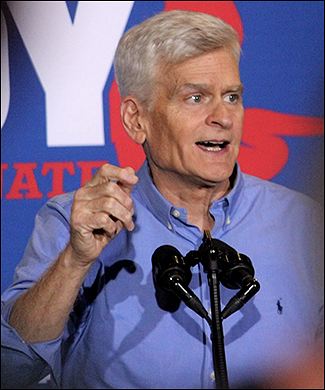
Sen. Bill Cassidy (R) may have dodged his toughest general election opponent (former Gov. John Bel Edwards (D) last week announced he would not run for the Senate), but the same can’t be said for the new partisan Republican primary. Louisiana changed its election law, so instead of a jungle primary in November, we will see an April 18 primary followed by a May 30 runoff election if no one reaches the majority support level in the first vote.

At the end of last week, state Rep. Julie Emerson (R-Carencro), who chairs the House Ways and Means Committee, announced her Senate candidacy. This very likely means that Rep. Julia Letlow (R-Start) will not run, as the two were unlikely to oppose each other. Already in the race are State Treasurer, former Deputy White House chief of staff and ex-Congressman John Fleming; state Sen. Blake Miguez (R-New Iberia); and Public Service Commissioner Eric Skrmetta.

Sen. Cassidy is well ahead in fundraising, but President Trump clearly wants to settle a political score with him since the Louisianan was one of seven Republican Senators to vote for impeachment regarding the January 6 US Capitol controversy. Only two of those seven, Sens. Cassidy and Susan Collins, will be on the ballot in 2026. Four are no longer members — Sens. Ben Sasse (NE), Richard Burr (NC), Pat Toomey (PA), and Mitt Romney (UT). Sen. Lisa Murkowski (R-AK) is not in-cycle but is at least a potential gubernatorial candidate.

In terms of fundraising, Sen. Cassidy posts $9.5 million in cash-on-hand. This compares to Sen. Miguez’s $2.5 million and Fleming’s $2.1 million. Rep. Emerson and Skrmetta are not yet required to file disclosure reports.

Maine

Sen. Susan Collins (R) overcame $60 million of spending against her in 2020 and can expect another difficult campaign next year. She is well prepared, with $6.7 million in the bank.

Her principal opponent will be Gov. Janet Mills (D), who just announced her candidacy last week. Like several others in this report, the Governor is not yet required to file a financial disclosure report.

Expect this race to be hot all the way through November and will carry at toss-up rating.

Massachusetts Rep. Seth Moulton
To Challenge Sen. Ed Markey

By Jim Ellis — Monday, Oct. 20, 2025

Seante

Massachusetts Rep. Seth Moulton (D-Salem)

Six-term Massachusetts Rep. Seth Moulton (D-Salem) made a major announcement late last week officially challenging Sen. Ed Markey (D) in next year’s Democratic primary.

Though recent political stories have indicated that this race might come to fruition, it is still a surprising move. The challenge from Rep. Moulton’s perspective appears to be a long shot considering Sen. Markey dispatched a member of the Kennedy family in the 2020 Democratic primary with a decisive margin in come-from-behind fashion.

The Massachusetts primary is not until Sept. 1 of next year, so much time remains for this campaign to develop, but Rep. Moulton begins in a severe underdog position. The Congressman, with his strong military background, is known as a more moderate member and one who was even drawing his own congressional seat primary opposition because he defied his party’s position on the men in women’s sports issue after his daughters found themselves facing transgender athletic opponents.

Attempting to move left, Moulton immediately after announcing for the Senate rejected the support and money given to him from the American Israel Public Affairs Committee (AIPAC) even though he has been a supporter of the group during his entire tenure in the House.

Running in a closed Democratic primary from one of the party’s strongest states that has repeatedly elected liberal Senate stalwarts such as Ted Kennedy, John Kerry, Elizabeth Warren, and now Markey, the Moulton victory path appears very narrow. In an open primary, he might draw crossover Republican and Independent votes to neutralize the hard left faction within the Massachusetts Democratic Party, but without such an option Moulton could soon find his task overwhelming.

In 2020, Sen. Markey faced a similar primary challenge from then-Rep. Joseph P. Kennedy, III. In that election, Sen. Markey trailed in early polling but used his veteran political experience to build a winning coalition. In the end, he scored a 55-45 percent victory over a member of the Kennedy family in their home state.

In that 2020 race, the Markey strategy revolved around drawing on his years of experience and coalition building particularly through the climate change issue of which he was a national leader and spokesman. He was even able to recruit Rep. Alexandria Ocasio Cortez (D-NY) to come to Massachusetts to campaign for him since Markey was her climate change counterpart in the Senate. Against Rep. Moulton, Sen. Markey will again reconstruct his ideological coalition, which should translate into another victory.

In Democratic primaries around the country, we are already seeing younger politicians challenging veteran incumbents and using the age issue as a contrast point. We can expect Rep. Moulton, who is 47 years old, to draw the generational contrast with Sen. Markey since he would be 86 years old if he secures and finishes another term. At this point, however, it appears ideology will top age.

Sen. Markey is far from being a Massachusetts political novice. He was first elected to the state House of Representatives in 1972 and won his congressional seat in 1976. He would stay in the House until then-Sen. John Kerry (D-MA) was appointed US Secretary of State in the second Obama Administration. Rep. Markey entered the special US Senate election and his effort proved victorious in 2013.

Rep. Moulton will leave his 6th Congressional District seat open in the 2026 election, and already three Democrats have said they will run. Former state Rep. Jamie Belsito, ex-Andover Selectman and 2018 3rd District congressional candidate Dan Koh, and attorney Kevin Larivee all announced their congressional bids.

The MA-6 open means there are currently 35 such seats headed into the next election. Of those, two are headed to special elections: TN-7 on December 2nd and TX-18 concurrent with the municipal election day of Nov. 4. From the 35, a total of 21 seats are currently Republican held and Democrats are risking 11, while three new seats were created from the Texas redistricting map.

Allred’s Texas Primary Trouble

By Jim Ellis — Friday, Oct. 17, 2025

Senate

Former Texas Rep. Colin Allred (D-Dallas) / Photo: ReformAustin.org

Former Congressman Colin Allred ran a strong 2024 Texas US Senate campaign and was one of the nation’s top campaign fundraisers, but a new university survey finds him trailing an entire field of 2026 announced and potential Democratic candidates in the statewide party primary.

The surprising poll result comes from a rather exhaustive study from a pair of Lone Star State universities who partnered in conducting the survey. The academic institutions are the Hobby School of Public Affairs at the University of Houston, and the Barbara Jordan-Mickey Leland School of Public Affairs at Texas Southern University.

According to the queries asked of a sampling universe of likely Democratic primary voters, Allred’s preference figure ranks behind Rep. Jasmine Crockett (D-Dallas); former Congressman, ex-presidential and previous Texas statewide candidate Beto O’Rourke; and state Rep. James Talarico (D-Austin).

Allred and state Rep. Talarico are announced Senate candidates. Both Rep. Crockett and O’Rourke confirm they are considering joining the race. Crockett has intensified her interest in the Senate race after the new Texas redistricting map placed her home outside of the new TX-30 district, while O’Rourke has seemingly appeared less interested about joining the race in recent weeks.

With a March 3 primary schedule, final decisions will soon be made. Considering the kind of polling data we are seeing in this survey, it is plausible that Crockett and maybe even O’Rourke will look more favorably toward entering the Senate race.

The two university survey research teams polled 1,650 YouGov respondents between Sept. 19 and Oct. 1. The sampling universe was then winnowed to include 478 likely Democratic primary voters and 576 likely Republican primary voters. The pollsters do not indicate the method in which the interviews were conducted.

The large sample size, and the fact that they used the online pollster YouGov’s pre-identified respondents, suggest the poll was administered online. The notation, however, that the interviews were conducted in English and Spanish leads one to believe that the data responses were from live interviews. A combination of the two methodologies is also possible.

The Republican ballot test — understanding that this poll was conducted prior to Rep. Wesley Hunt (R-Houston) officially becoming a GOP Senate candidate — adds little new information. The addition of Hunt leads to the conclusion that the Republican primary will produce two runoff participants, likely Sen. John Cornyn and Attorney General Ken Paxton. This university data fails to suggest otherwise.

The interesting information comes from the Democratic responses. While Allred was commonly viewed as the leading 2026 Democratic Senate candidate based upon his 2024 performance where he raised almost $95 million and ran close to Sen. Ted Cruz (R) in polling until the closing days, the university survey’s likely Democratic voter base unexpectedly places him at the bottom of the list.

According to the ballot test results, Rep. Crockett leads state Rep. Talarico, former Congressman O’Rourke, and Mr. Allred, 31-25-25-13 percent.

To make matters worse for Allred, he also does very poorly when the likely Democratic respondent pool was segmented. Among, men, women, whites, Latinos, Baby Boomers, Gen-X, Gen-Z, those with some college, those with an advanced graduate degree, those who self-identify as Democrats, and those who consider themselves Independent but will vote in the coming Democratic primary, Allred places last among the candidates and potential candidates.

Only among blacks and those with a high school degree does Allred finish either tied or ahead of one of the others. Among blacks, Allred and O’Rourke are tied at 16 percent preference. State Rep. Talarico draws 17 percent, and Rep. Crockett leads the group with 45 percent support. In the high school graduate segment, Allred nips Talarico, 15-14 percent. Crockett leads within this segment with 33 percent followed by O’Rourke’s 31 percent preference figure.

While the recent entrance of Rep. Hunt has attracted greater attention to the Republican side of the ’26 Senate race, this new university poll finding Colin Allred dropping to last place within a Democratic likely voter pool could be the precursor to seeing a trajectory change within the party primary.

US Supreme Court Hears
Louisiana Redistricting Case

Louisiana’s 6th Congressional District / Graphic by VeriteNews.org

By Jim Ellis — Thursday, Oct. 16, 2025

Redistricting

Yesterday, the nine United States Supreme Court justices heard oral arguments for the second time on the Louisiana racial gerrymandering case. How this case is decided could have a major impact on the 2026 US House election cycle and in district elections throughout the remainder of the current decade.

At issue is Louisiana’s 6th Congressional District (in red on above map), which stretches from Baton Rouge to Shreveport. This CD was put in place before the 2024 election in response to a court order to create a second majority minority district that would elect an African-American Representative. Ironically, this very draw was rejected in a 1994 ruling, but the 2024 map drawers reinstated the same district 30 years later.

A lawsuit was filed over the redraw and the plaintiffs earned a favorable decision from the initial three-judge federal panel constructed to hear the case, but the US Supreme Court stayed the ruling. After briefs and oral arguments were conducted, the high court chose not to rule in June opting for a second round of oral arguments, which were held yesterday.

According to news stories and observations, impressions suggest that several justices appear favorable toward changing the particulars that heretofore have governed the parameters relating to minority district construction. Whether a majority exists to do so and to what extent change may be forthcoming remains unanswered.

The eventual decision could have wide-ranging ramifications to maps in several other states, and not just those where legislators are currently either drawing new districts or contemplating such action.

A SCOTUS decision to uphold the three-judge panel ruling would allow the Louisiana legislature to return to the previous map, or a similar one. That particular map produced a 5R-1D partisan division. The current Louisiana congressional delegation consists of a 4R-2D split.

If the three-judge panel ruling is upheld or expanded upon, the Alabama map would be affected because that state is in virtually the same situation as Louisiana with regard to minority district composition. Such a decision would also virtually eliminate any serious challenge to the new Texas map.

Therefore, with the updated Lone Star State map projected to net Republicans five seats — and should the previously described scenario in Louisiana and Alabama come to fruition and before the 2026 election — the Republicans could net seven seats from the three states. Even if the California redistricting referendum passes and the Democrats net five seats to neutralize the GOP’s Texas gains, the net Republican increase from the four domains would be two. Adding the new completed Missouri map, and the Republicans would see a net three-seat national gain.

Other states in some way, shape, or form considering redistricting either with a special legislative session or when their next regular session begins, or through a court directive are Florida, Georgia, Indiana, Kansas, Nebraska, North Carolina, and Ohio. These could favor Republicans. While Illinois, Maryland, and Utah would likely produce Democratic gains.

Not all of these states will move forward, but should the Supreme Court ruling on the Louisiana case be of a landmark proportion, some of these states and others may then be compelled to follow suit.

Another factor is when SCOTUS rules. Louisiana now has an April partisan primary schedule, so one would think the ruling will be revealed in time for the nomination elections to be conducted as scheduled. A later ruling would suggest that a great deal of the redistricting action will greatly affect the 2028 House election schedule instead of 2026.

We can expect many future political twists and turns in the pending redistricting war, but the catalyst to developing clear district construction criteria lies with the US Supreme Court.